REVIEW · ROME
Rome Uncovered: Private City Highlights, Catacombs & Wine Tasting
Book on Viator →Operated by Eternal City Private and Guided Tours · Bookable on Viator
Your Rome gets smarter when you leave the center. This private 7-hour drive-by-day packs major early Christian sites, the quieter stretch of the Appian Way, and Rome’s ancient roadside leftovers, then closes with Castelli Romani wine tasting in the hills. You also get hotel pickup and a dedicated driver, which makes the schedule feel efficient instead of rushed.
I also like the balance here: you get iconic names (St Peter Square, Colosseum) but you spend real time on what most people skip, like the Catacombs of San Callisto and the Aurelian Walls area. One thing to consider: several stops are short photo-and-walk segments, and the Colosseum ticket is not included, so you’ll want a plan if you want to go inside.
In This Review
- Key points at a glance
- Private car day: what the 9:00 start really means
- Basilica Papale di San Paolo Fuori le Mura: how a Roman emperor shaped worship
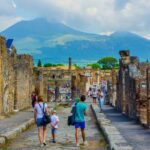
- Appian Way (Via Appia Antica): Rome’s highway system, explained on the ground
- Aurelian Walls and the Pyramid of Caius Cestius: Rome’s fortification leftovers
- Catacombe di San Callisto: the Crypt of the Popes in real time
- St Peter Square: quick orientation in the Vatican’s public space
- Castelli Romani wine tasting: the hills break up the long day
- Colosseum stop (entry not included): how to handle that 20 minutes
- A driver who actually connects the dots (Alessandro)
- Price and value: what $440.71 buys you in the real world
- Who this Rome Uncovered route suits best
- Should you book this tour?
- FAQ
- What’s the duration of the tour?
- What time does the tour start?
- Is hotel pickup included?
- Is this tour private?
- What language is the tour offered in?
- Are tickets included for the Colosseum?
- How long is the catacombs stop?
- How long is the wine tasting in Castelli Romani?
- Are there any stops with free admission?
- Is there a cancellation policy?
Key points at a glance
- Private, car-based route that reaches sites beyond central Rome without fighting transfers
- Hotel pickup and a dedicated driver to keep the day moving
- Catacombs of San Callisto plus the Crypt of the Popes area in about 45 minutes
- Castelli Romani wine tasting at a family winery dating back to 1712
- Roman road + walls stops that explain how Rome actually worked outside the city core
- Colosseum time is brief and entry isn’t included, so manage expectations
Private car day: what the 9:00 start really means
This is a private experience, so the day is built around your group—not a long bus lineup. The tour starts at 9:00 am, with pickup from your hotel (send your hotel name when you book). You’ll get a dedicated driver, which matters in Rome because traffic and walking distance can turn a simple plan into a time squeeze.
You’re not just getting “transport between monuments.” You’re getting a smooth route that strings together sites that are far apart, especially the ones on or near the Appian Way and the Castelli Romani countryside. You also get a mobile ticket, which simplifies check-in when entries are involved.
One more practical point: most stops are designed for quick orientation and a short walk, not marathon museum time. If you like to linger, treat the day as your big overview day, then save longer inside visits for a separate half-day.
You can also read our reviews of more food & drink experiences in Rome



Basilica Papale di San Paolo Fuori le Mura: how a Roman emperor shaped worship
Stop one is Basilica Papale di San Paolo Fuori le Mura, one of the most important early Christian sites connected to the story of Saint Paul. The site’s tradition links directly to the Roman Emperor Constantine I, tied to Saint Paul’s burial area, with a memorial (cella memoriae) mentioned in the early account.
From there, you get the timeline that makes the basilica more than just a church stop: the first basilica was consecrated by Pope Sylvester in 324. That date gives you a fast “why this matters” framework as you look around.
The ticket note here is nice: admission is free, so you’re not losing time negotiating payments before you even start seeing. The visit is about 20 minutes, which is enough for a meaningful look if you’re guided through what to notice. If you want to read everything slowly, you might wish you had more time—but as an opening act, it sets the tone for the rest of the day.
Appian Way (Via Appia Antica): Rome’s highway system, explained on the ground
Next up is the Appian Way, or Via Appia Antica. This is where Rome stops being a collection of buildings and starts looking like a working system.
The Appian Way was built as a main route for military supplies starting in 312 BC. It was also among the first roads constructed specifically for getting troops out of the city and beyond earlier Etruscan routes. Standing on this kind of road, you get why “All roads lead to Rome” became more than a slogan. Rome literally engineered its reach.
You’ll have about 20 minutes, and admission is free for this stop. That time is short, but the driver-and-guide format helps. If you pay attention to where the road runs and how it connects to the larger area, you’ll leave with a mental map that makes later stops (walls, tombs, catacombs) feel logically connected instead of random.
If you’re sensitive to walking on uneven surfaces, it’s a good idea to wear comfortable shoes. This is ancient stone, not a smooth city sidewalk.
Aurelian Walls and the Pyramid of Caius Cestius: Rome’s fortification leftovers
After the road history, the route pivots to what Rome built to protect itself and what still survives.
First, you’ll see the Roman Walls, known as the Aurelian Walls. These were built between 271 AD and 275 AD during the reign of emperors Aurelian and Probus, replacing the older Servian Wall from the 4th century BC. Even with a short stop (about 15 minutes), the story is valuable. You start to understand Rome as a city that repeatedly re-forged its boundaries as it changed.
Then there’s the Pyramid of Caius Cestius, near Porta San Paolo and the Protestant Cemetery. This one catches people because it looks less like “typical Rome” and more like a single-purpose monument. It was built as a tomb for Gaius Cestius, associated with the Epulones religious corporation. What’s especially useful is that it’s preserved in part because it was incorporated into the city’s fortifications.
Your visit here is also about 15 minutes, free to access, and positioned well for quick photos and context. If you only visit the biggest famous sites, you miss how odd and specific Roman funerary architecture can be. This stop helps fill that gap without turning your day into a scavenger hunt.
Catacombe di San Callisto: the Crypt of the Popes in real time
If you’re choosing just one “wow” stop in the morning half, this is the one. The Catacombs of San Callisto (also called the Cemetery of Callixtus) are among Rome’s most notable catacombs on the Appian Way.
What makes this visit special is the Crypt of the Popes, where tombs of several popes from the 2nd to 4th centuries are associated. You’ll spend about 45 minutes here, and admission is listed as free for this stop. That’s a solid chunk of time for catacombs, because you need a little patience: the space is narrow, details matter, and the atmosphere asks you to slow down.
Even if you’re not a specialist in early Christianity, you’ll get the bigger picture fast: these sites show the underground reality behind early faith communities, and they show why Rome’s history isn’t just what’s above ground.
Practical tip: catacombs can feel cooler than the street, so if you’re visiting in warm months, bring a light layer you can manage.
You can also read our reviews of more city tours in Rome



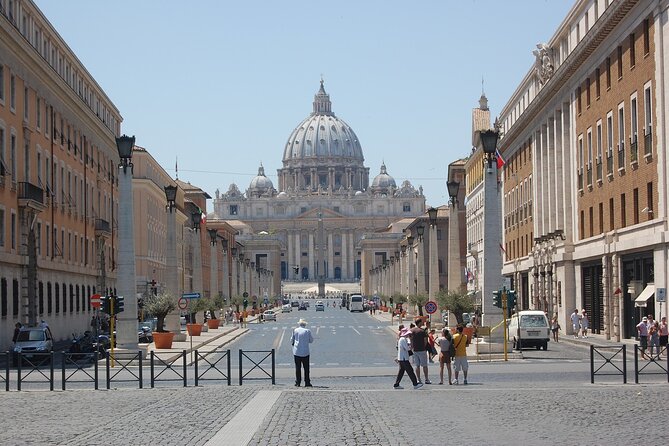
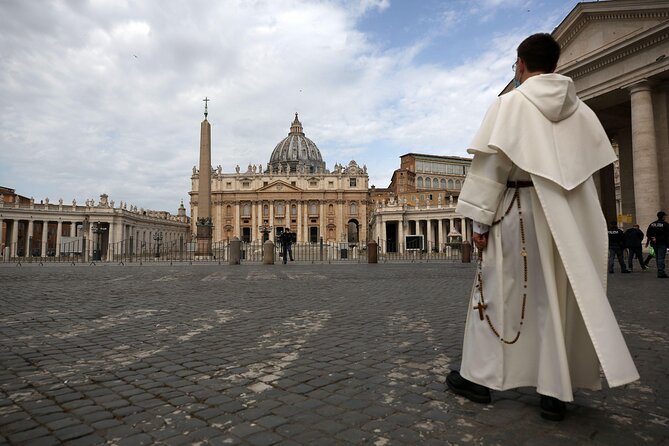
St Peter Square: quick orientation in the Vatican’s public space
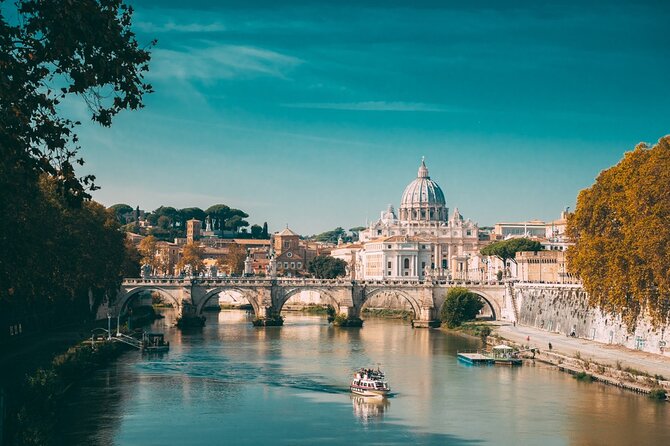
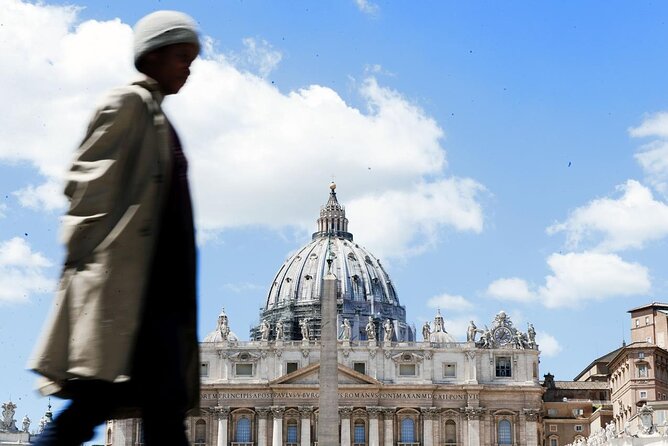
After catacombs and ancient infrastructure, the day brings you to Vatican City—St Peter Square. This is a 20-minute, free stop, so think of it as an on-the-map moment rather than a deep Vatican experience.
This time works well here because you’ve already been walking through layers of Roman history; the shift to a modern-religious center feels like a contrast tour. You’ll likely have enough time to get your bearings, take a few photos, and connect the spiritual geography of Rome with what you’ve been seeing earlier.
If you want to tour inside the Vatican museums or basilica, this stop won’t replace that. It’s more about seeing the public square and moving on.
Castelli Romani wine tasting: the hills break up the long day
Now for the part that many people quietly hope for: a break from Rome traffic and city density.
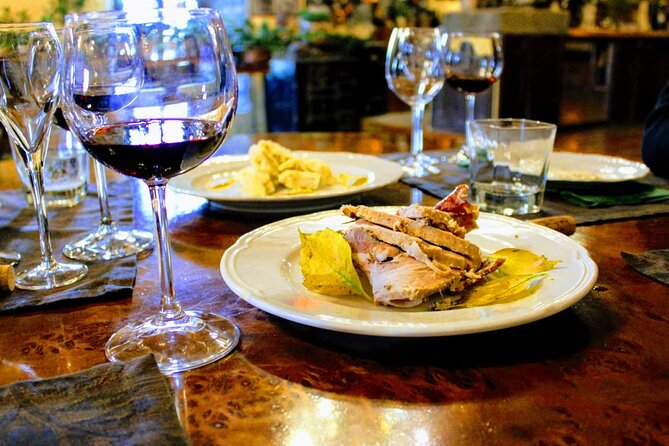
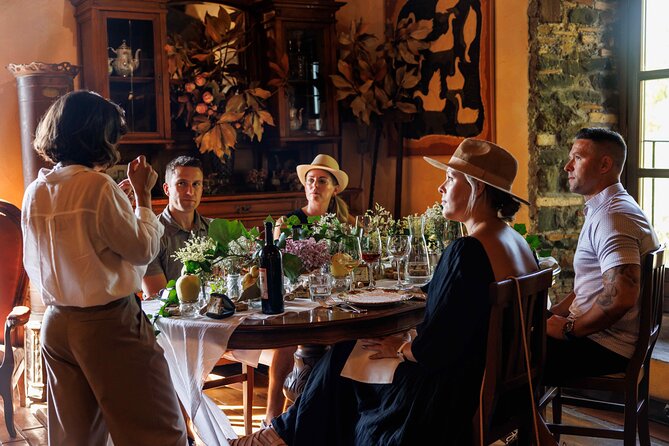
The Castelli Romani stop is about 1 hour 30 minutes, and it includes a visit to a historic family-owned winery that’s been producing wine since 1712. You’ll taste regional wines and you’ll also get local snacks, which is a smart way to handle the day’s timing. This is not a rushed toast; it’s built to be a proper reset.
The hills here matter for more than scenery. You’re ending the day in a different rhythm—cooler air, open views, and a pace that matches wine tasting. You’ll come away remembering the taste, but also remembering that Rome is not only stone monuments. It’s also rural production and food culture sitting just beyond the city lines.
If you’re traveling as a wine-lover, this timing is ideal: you’re not trying to drink early in the morning. You hit it after the heavy history stops, when you actually want a calm, social break.
Colosseum stop (entry not included): how to handle that 20 minutes
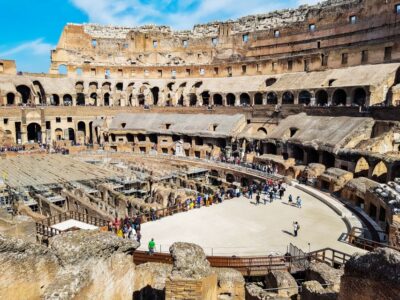
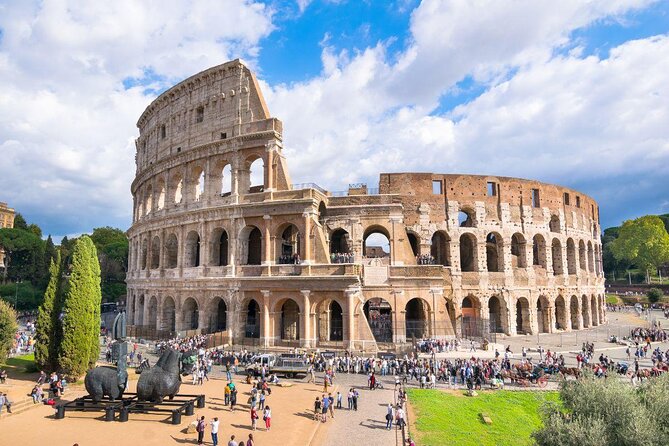
The day ends with the Colosseum, with a 20-minute stop. The important detail is that admission ticket is not included, so entry is not guaranteed.
That means you should decide ahead of time: do you want the Colosseum as a skyline-and-photo stop, or do you want to go inside? If you want inside access, plan separately and give yourself extra time another day, since the tour doesn’t promise that ticketed entry.
Even without entry, the Colosseum works as a final punctuation mark. After catacombs, walls, and roads, you’ve seen Rome’s “why” and “how.” Then the Colosseum hits as the “show” part—public spectacle, crowds, and the city at full display.
If you only have one trip to Rome and you strongly want inside access, you may prefer a tour that includes timed Colosseum tickets. If you mainly want to understand Rome’s layers, this works fine.
A driver who actually connects the dots (Alessandro)
Quality makes a big difference on a packed route like this. One guide example that shows up in the strongest feedback is Alessandro—punctual, charming, and able to show you what you might miss even after multiple previous Rome trips.
That last part matters. Some Rome tours only work if it’s your first time. This route tends to be better on a second or third trip too, because it takes you outside the most standard loop. A good guide helps you notice patterns: how roads set movement, how walls define space, how tombs survive, and how early Christian sites fit into the broader Roman geography.
When you book, treat the guide like your “day filter.” Ask small questions like: what’s the key thing to notice here, and how does it connect to the next stop? It turns a short stop into something you actually remember.
Price and value: what $440.71 buys you in the real world
At $440.71 per person for about 7 hours, this is not a bargain-basement sightseeing bus. But you are paying for a few things that add up in Rome: private transport, hotel pickup, a dedicated driver, and multiple included experiences or free-access stops.
Here’s how the value stacks:
- Catacombs visit is included as a listed free admission stop, and catacombs take planning on your own.
- Wine tasting is included and features a winery dating back to 1712—this isn’t just handing you a cup with no context.
- Several major sites along the route are listed with free admission tickets, which reduces the “ticket math.”
- The route reaches areas most people skip because getting there can be annoying without your own car.
Also, the tour lists group discounts. If you’re booking with friends or family, it may be worth checking what discount applies to your party size, because private tours can swing in value depending on how many people share the cost.
A balanced take: if you only want the biggest central monuments and you plan to spend hours inside major venues, this price might feel steep. If you want a smarter Rome route with included experiences and less transit hassle, it’s easier to justify.
Who this Rome Uncovered route suits best
This experience fits best if you:
- Want Rome history that’s not only Coliseum-and-Pantheon heavy
- Like driving through different neighborhoods and landscapes to understand how the city sits in its region
- Care about early Christian sites and ancient infrastructure (roads and walls)
- Want a built-in country break with wine tasting in Castelli Romani
It might not be your best match if you:
- Want long, slow museum-style time at major attractions
- Need guaranteed Colosseum interior access as part of the package
- Prefer a day with minimal walking on uneven ancient surfaces
For most people, it hits a sweet spot: intense enough to feel like a highlight day, structured enough to avoid decision fatigue.
Should you book this tour?
I’d book it if you want a day that makes Rome feel bigger than the downtown postcard. The Catacombs stop, the Appian Way context, and the wine tasting in the Castelli Romani hills are a strong three-part combo: underground history, Roman logistics, then a real taste of the region.
I’d pause and compare if Colosseum interior access is your top priority. Since admission is not included, you’d need a separate plan to get inside.
If you’re the kind of traveler who returns to Rome more than once, this route is especially appealing. It keeps you from repeating the same central checklist—and with a guide like Alessandro guiding the connections, you’ll leave with a clearer sense of how Rome worked across centuries.
FAQ
What’s the duration of the tour?
The tour is listed as approximately 7 hours.
What time does the tour start?
The start time is 9:00 am.
Is hotel pickup included?
Yes, pickup is offered. You provide your hotel name when booking.
Is this tour private?
Yes. It’s a private tour/activity, and only your group participates.
What language is the tour offered in?
The tour is offered in English.
Are tickets included for the Colosseum?
No. The Colosseum stop notes that an admission ticket is not included.
How long is the catacombs stop?
The Catacombe di San Callisto stop is listed as 45 minutes.
How long is the wine tasting in Castelli Romani?
The Castelli Romani wine tasting stop is listed as 1 hour 30 minutes.
Are there any stops with free admission?
Several stops list admission ticket free, including Basilica Papale Di San Paolo Fuori le Mura, Appian Way, St Peter Square, Roman Walls, Pyramid of Caius Cestius, Catacombe di San Callisto, and Castelli Romani.
Is there a cancellation policy?
Yes. You can cancel for a full refund up to 24 hours before the experience’s start time. Cancellation within 24 hours isn’t refunded.