REVIEW · ROME
Rome: Small Group City Highlights Tour in Electric Cart
Book on GetYourGuide →Operated by Etuk Tours Rome · Bookable on GetYourGuide
Rome hits you fast, even at street level. This small-group electric cart tour is a practical way to cover major sights in about 3 hours without turning your feet into pasta. I like the 7-seater, small-group feel plus the live guide, so you get context instead of just photos. One thing to plan around: it is not suitable for people with mobility impairments, and you should pack light since large bags are not allowed.
The route keeps the focus on the big icons plus a few off-the-main-path moments you would not stumble on from a bus window. You’ll pass key stops like the Colosseum area, Pantheon area, Trevi Fountain, Navona Square, and Campo dei Fiori, with a short walk and time for gelato. A possible drawback: traffic can be chaotic and the terrain can be a bit rough, so it helps to feel comfortable on a vehicle while the driver threads the city.
In This Review
- Key Things I’d Watch For on This Electric Cart Tour
- Why an Electric Cart Works So Well for First-Time Rome
- Meeting Near the Colosseum: Easy Start, Central Position
- The Guide Factor: Eugenio’s Style and What You’ll Gain
- Stop by Stop: What the Route Is Really Like
- Colosseum Area and the Start of Your Rome Orientation
- Piazza del Popolo: A Major Square Break in the Route
- Pantheon and the Kind of Surprise You Don’t Get on a Bus
- Trevi Fountain: Seeing the Icon Without Letting It Eat Your Whole Day
- Navona Square: The Scene You’ll Actually Want to Remember
- Campo dei Fiori: Quick Access to a Very Roman Pocket
- Hills and Views: Why the Cart Tour Feels More Like Rome
- The Short Walk and Gelato Time: Don’t Underestimate This Part
- Traffic, Safety, and Comfort on the Cart
- How Much Value You’re Really Getting for $135.94
- What Kind of Traveler Should Book This
- After the Tour: Use It as a Springboard
- Should You Book This Rome Electric Cart Highlights Tour?
- FAQ
- How long is the Rome small group city highlights tour?
- How many people are in the small group?
- Where do we meet for the tour?
- Where does the tour end?
- What attractions are included in the route?
- What languages are offered for the live tour guide?
- Is luggage allowed?
- Is this tour suitable for people with mobility impairments?
- Can I cancel if my plans change?
Key Things I’d Watch For on This Electric Cart Tour
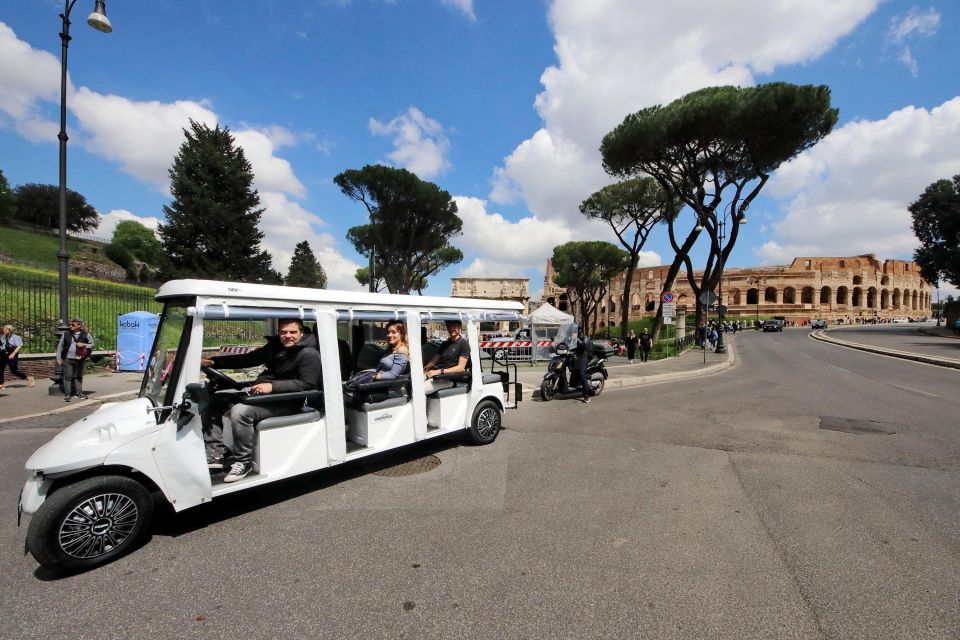
- 7 participants max keeps the tour feeling personal and easier for Q&A
- Live guide in English, Spanish, Portuguese, or Dutch means you’re not guessing what you’re seeing
- Colosseum-area start makes it simple if you’re already near the historic center
- A short walk plus ice cream time breaks up the ride so it doesn’t feel like sightseeing-by-grid
- Electric cart touring hills helps you get city views and variety without a full day of walking
Why an Electric Cart Works So Well for First-Time Rome
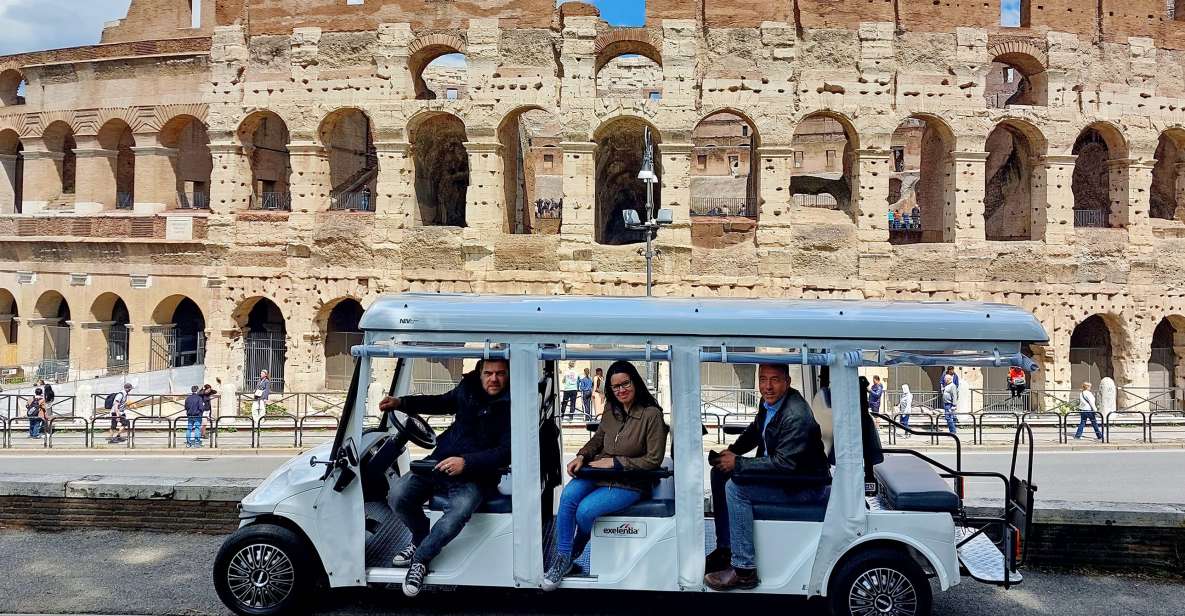
Rome is famous, yes. But it can also be a little overwhelming at first: crowds, scooters, tour groups, and long walking stretches between monuments. A 7-seat electric cart tour solves that in a very “real trip” way.
In roughly 3 hours, you get a guided route across the areas you’ll likely want to prioritize anyway. That matters if you’re only in Rome for a short stay, arriving with limited energy, or traveling with someone who doesn’t want to walk for miles. The cart also helps with timing. You’re not waiting in long lines for an attraction you might not be ready to commit to yet. Instead, you’re building a mental map you can use later.
And because this is a small group rather than a big bus, the guide can adjust the pace more easily. You’ll still be close to the major sights, but the experience feels calmer and less like you’re being processed.
You can also read our reviews of more city tours in Rome


Meeting Near the Colosseum: Easy Start, Central Position
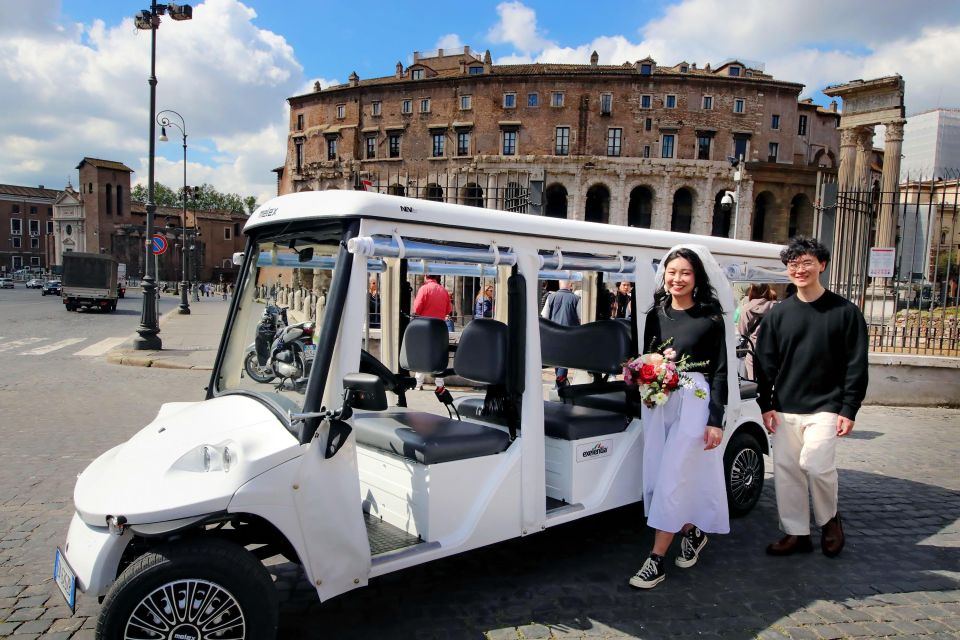
The tour starts at the Big Bus stop at Piazza del Colosseo corner Via S. Giovanni in Laterano. That location is handy for two reasons.
First, it’s genuinely central. If you’re staying anywhere in the historic core, you’re not fighting a long commute. Second, it puts you right at the beginning of the classic Rome circuit. You’re not spending your first hour getting oriented; you’re using it.
Also note the practical rule that luggage or large bags are not allowed. Bring a small day bag, keep essentials accessible, and plan to travel light. On a cart, that makes the ride smoother for everyone.
The Guide Factor: Eugenio’s Style and What You’ll Gain
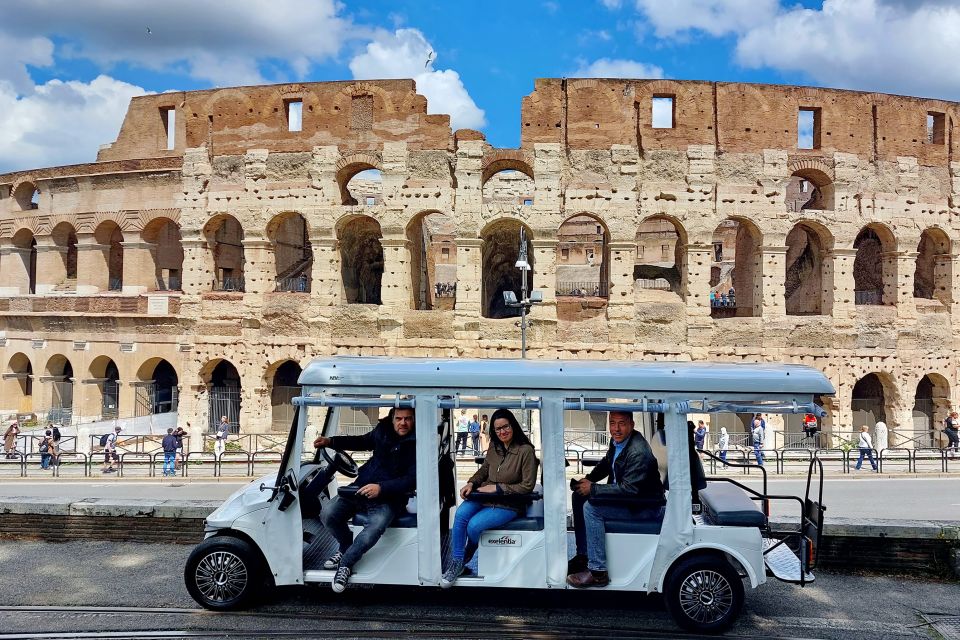
A live guide changes the whole tone of a monument visit. You’re not just seeing buildings; you’re hearing how they connect and why they matter. One standout from the experience is the guide’s combination of driving skill and history storytelling.
Eugenio is mentioned as both a stellar guide and a great driver. That combination is important in Rome. The city can feel intense from behind the wheel: traffic is chaotic, and the terrain can be a bit rough. When the person controlling the cart is confident, you feel safe enough to relax and listen.
You’ll also get real helpful travel input. In one case, the guide suggested a restaurant and the group had what was described as their best meal in Italy. Another review notes a dinner reservation was arranged at the end. Even if you don’t expect that level of service, it’s a strong sign that the guide isn’t treating you like a checklist. You’re getting local direction you can actually use.
Stop by Stop: What the Route Is Really Like
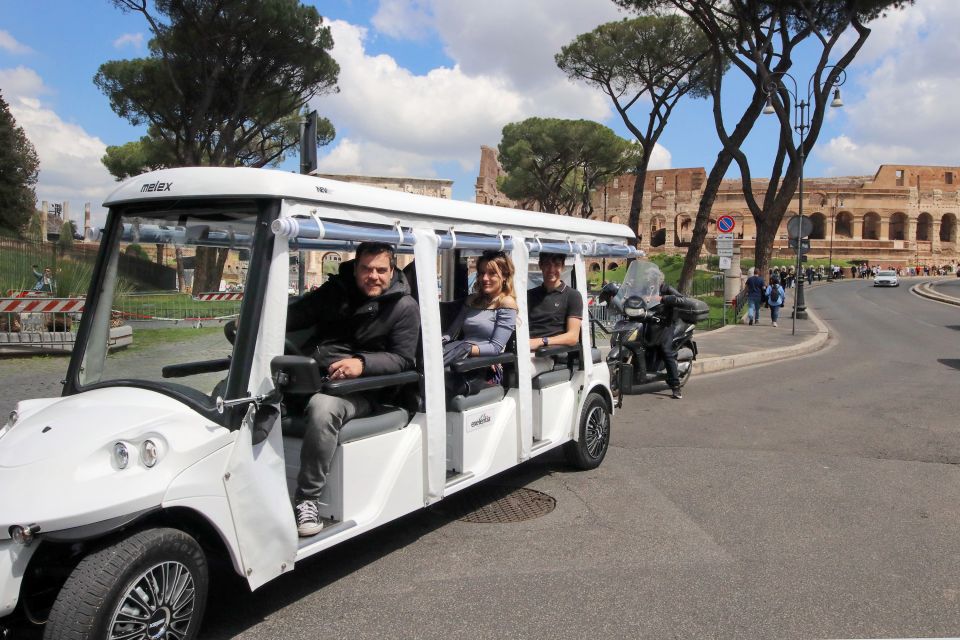
This tour works as a highlights loop with smart variety: major landmarks, a couple of major squares, and time to step out briefly for an on-foot moment. You’ll also head toward different parts of the city, including some hill areas, so Rome feels less flat and more layered.
Here’s how the highlights translate into your time on the ground.
Colosseum Area and the Start of Your Rome Orientation
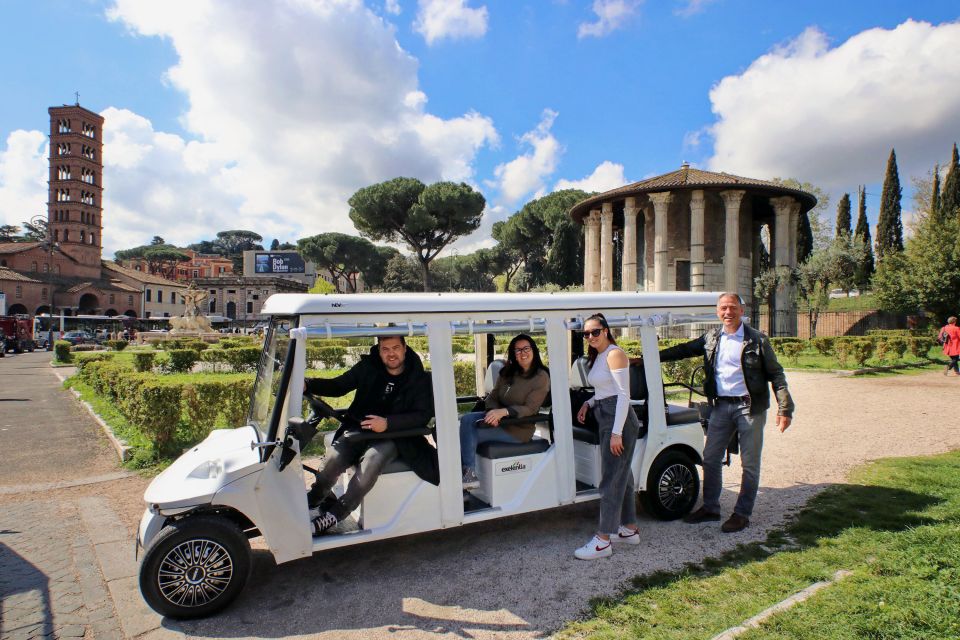
You begin next to the Colosseum area, which is one of the most useful places to start for orientation. Even if you’ve seen photos, being there in person is different. You get scale immediately. And because the guide starts the tour here, you’re likely to understand the flow of the route as it unfolds.
Practical takeaway: use this first segment to orient your sense of direction. After the ride and brief explanations, you’ll usually have an easier time choosing where to go next on your own.





Piazza del Popolo: A Major Square Break in the Route
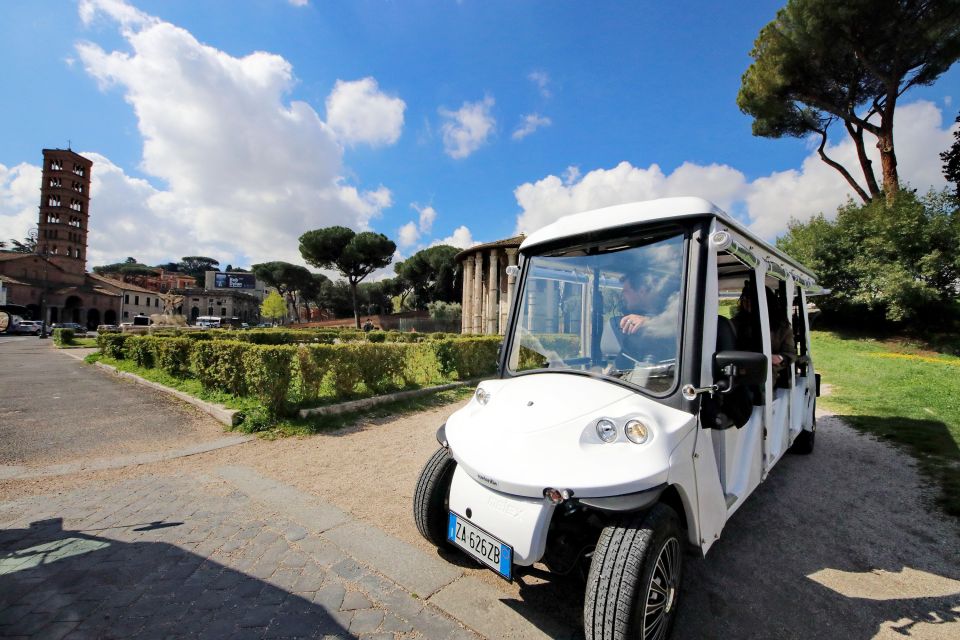
The itinerary includes Piazza del Popolo. Even if you don’t spend hours there, landing in one of Rome’s big public squares gives you a breather and a change of perspective. Squares in Rome are where you can see the city’s layout more clearly, and they help you understand how different neighborhoods connect.
Consideration: since this is a short tour, you might not get a long stop to wander. But you will likely get the value of seeing where it sits in the larger Rome picture.
Pantheon and the Kind of Surprise You Don’t Get on a Bus
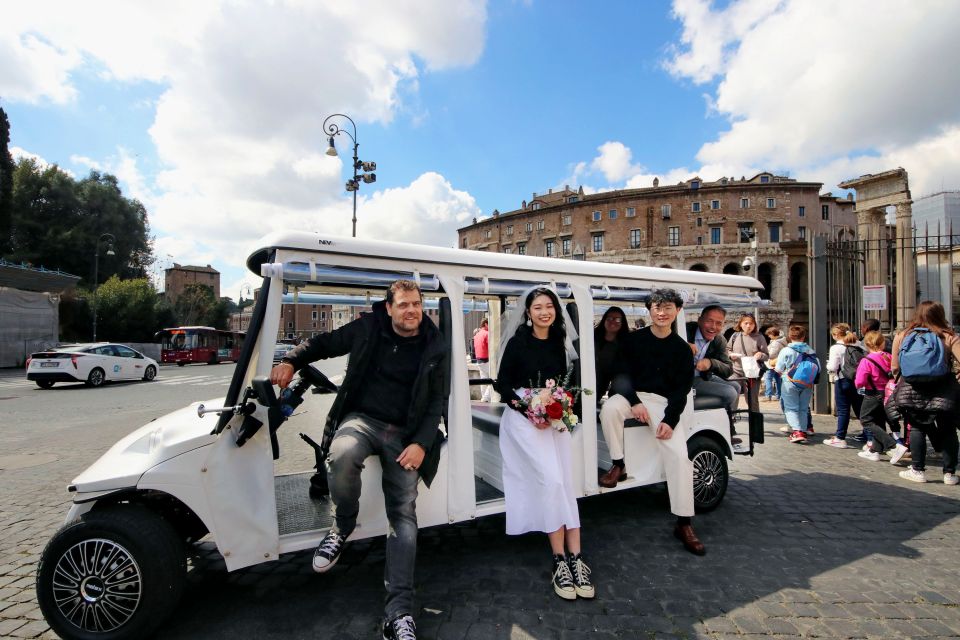
The Pantheon is one of those sights where your expectations are high and still somehow not enough. The big win on a cart tour is that you get guided setup while you’re moving through the area, which makes it easier to notice details instead of just snapping pictures.
What I like about including the Pantheon in a highlights route: it shifts the trip from “Roman ruins” to a different era of Rome’s architectural thinking. If you’re building a first impression of the city, that balance matters.
Trevi Fountain: Seeing the Icon Without Letting It Eat Your Whole Day
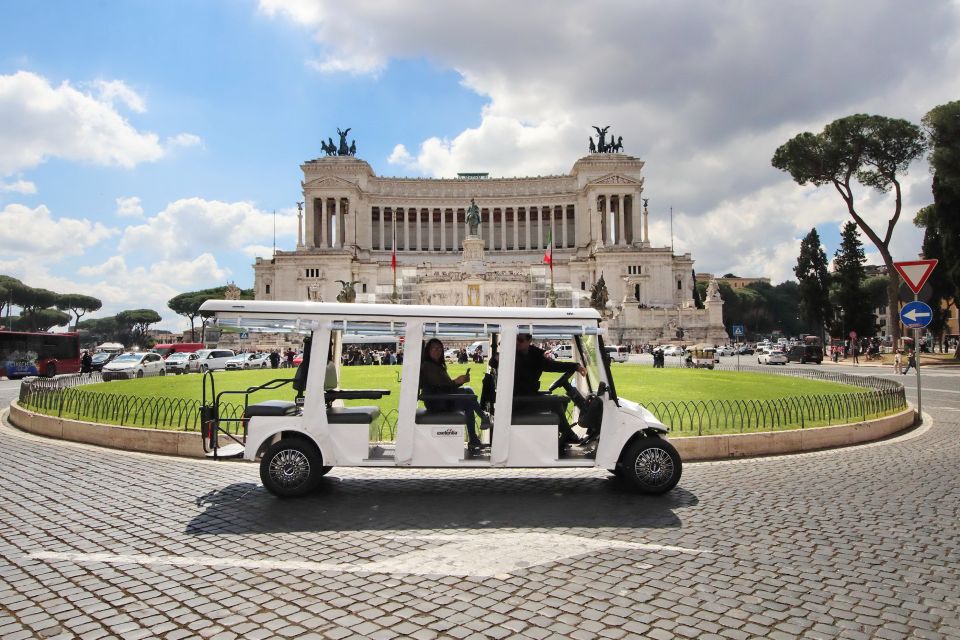
Trevi Fountain is probably at the top of your list, and it’s also one of the most crowded places in Rome. A cart tour handles this smarter. You’re not turning your day into a long wait just to say you were there. Instead, the guide brings you into the right area, you get a sense of the fountain’s presence, and then you move on.
One practical note: this is still the center of attention for tourists, so if you’re sensitive to crowds, keep your expectations realistic. You might not control the flow completely, but you can avoid spending your entire day stuck.
Navona Square: The Scene You’ll Actually Want to Remember
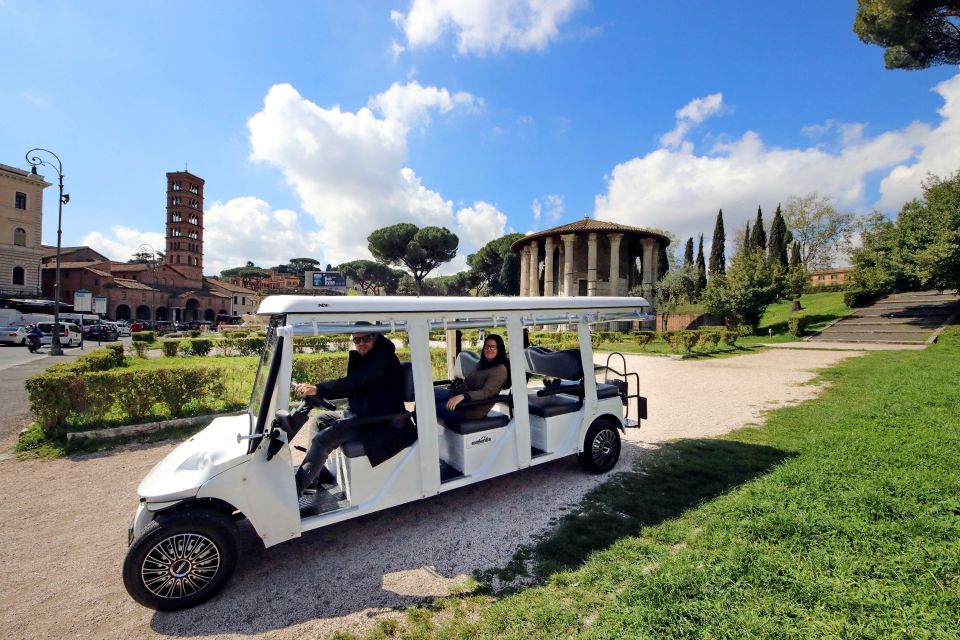
Navona Square is less about “one building” and more about the feeling of the place. The best thing about including it in a highlights tour is that it gives you a snapshot of Rome as a lived-in city, not only a historical site.
If you like to picture how people actually spend time outdoors, this stop helps. You’ll likely walk briefly and get oriented for a later return if it’s your style.
Campo dei Fiori: Quick Access to a Very Roman Pocket
The route includes Campo dei Fiori, which adds variety. It’s a different vibe than the monument-heavy stops, and it’s useful if you want at least one “normal Rome” moment instead of only famous landmarks.
If you’re planning to eat later, this is also a smart stop to remember. Even without a long visit, getting your bearings here can make it easier to pick where to go after your tour ends.
Hills and Views: Why the Cart Tour Feels More Like Rome
One of the tour’s promises is that you get to see not just flat central sights but also some of the hills to get a better impression of the city. That matters more than it sounds.
Rome is all about elevation changes and how streets twist and open. When you get even a small taste of those contrasts, Rome stops feeling like a set of disconnected postcards and starts feeling like one connected place.
It’s also the reason the electric cart works better than a purely walking-only highlights plan. You keep your energy for the parts you want to linger at later.
The Short Walk and Gelato Time: Don’t Underestimate This Part
You’ll have time for a walk and there’s also an ice cream moment. That might sound like a “nice bonus,” but it’s actually essential to keeping a highlights tour enjoyable.
A sit-down ride can blur together. The brief on-foot time helps your brain switch gears: see, readjust your attention, then keep going. Gelato time does the same thing for your energy level. You can treat it as a reward break, and then keep your tour focus instead of dragging through the end.
Traffic, Safety, and Comfort on the Cart
This is where the reviews help you make a smart decision. People have pointed out that traffic is chaotic and the terrain can be rough. The good news is that the driver is described as excellent, and you feel safe.
If you’re prone to motion discomfort, consider that this is a ride through active city streets. Short carts feel stable, but Rome is not a theme park road. Sit back, hold steady, and keep your expectations grounded: this is urban travel, just with a fun format.
How Much Value You’re Really Getting for $135.94
At $135.94 per person for about 3 hours, the price might look steep if you compare it to a public transport ticket. But cart tours like this are priced for something specific: convenience, route planning, a live guide, and a small-group size that avoids the bus chaos.
Here’s how I’d judge whether it’s good value for you:
- If your trip includes only a few days in Rome, this can function like an efficient orientation pass.
- If you want to hit the big monuments but don’t want your legs to take over your whole day, it reduces fatigue.
- If you care about explanations and not just scenery, the guide time increases the value.
If you’re already planning to spend hours doing monuments on foot, you might not need this. But if you want a strong overview fast, it’s a solid way to spend time.
What Kind of Traveler Should Book This
I think this fits best if you:
- Have limited time and want a practical route through Rome’s biggest hits
- Prefer a small group with a live guide rather than a large bus crowd
- Want at least one walk break and gelato time, not only sightseeing from seats
- Value comfort and planning over all-out walking mileage
It is not suitable for people with mobility impairments, and it also has the luggage restriction (no large bags). If either of those applies, you’ll want to look for a different style of tour.
After the Tour: Use It as a Springboard
A highlights tour is best when it helps you choose what to do next. After you leave, you’ll have the kind of map in your head that makes independent exploration easier. You’ll know where the monumental zone is, where the more everyday squares feel nearby, and what direction different neighborhoods run.
If your guide has shared restaurant suggestions or even helped with dinner timing, that’s another reason to treat the end of the tour like a reset point. Rome is easier when dinner isn’t an open-ended decision.
Should You Book This Rome Electric Cart Highlights Tour?
Book it if you want to get bearings quickly, see major monuments like the Colosseum-area sights, Pantheon area, Trevi Fountain, Navona Square, and Campo dei Fiori, and still keep the day efficient. The combination of a 7-seater group, live guide, and the cart format is a practical win.
Skip it only if you’re happy walking everywhere anyway and you don’t care about guided context. Also skip or rethink if mobility needs are an issue, since this one is not suitable for people with mobility impairments and it has strict limits on large bags.
FAQ
How long is the Rome small group city highlights tour?
The duration is 3 hours.
How many people are in the small group?
The tour is limited to 7 participants.
Where do we meet for the tour?
You meet at the Big Bus stop at Piazza del Colosseo corner Via S. Giovanni in Laterano.
Where does the tour end?
The activity ends back at the meeting point.
What attractions are included in the route?
You’ll visit key sights such as the Colosseum area, the Pantheon, Trevi Fountain, Navona Square, and Campo dei Fiori, along with stops like Piazza del Popolo.
What languages are offered for the live tour guide?
The live guide is available in English, Spanish, Portuguese, and Dutch.
Is luggage allowed?
No. Luggage or large bags are not allowed.
Is this tour suitable for people with mobility impairments?
No, it is not suitable for people with mobility impairments.
Can I cancel if my plans change?
You can cancel up to 24 hours in advance for a full refund.