REVIEW · ROME
Castel Sant’ Angelo: The most famous Fortress of Rome
Book on GetYourGuide →Operated by Vivicos International Travel · Bookable on GetYourGuide
One fortress, two empires, and a killer view. Castel Sant’Angelo is one of Rome’s most dramatic buildings, from Hadrian’s tomb to a papal escape route, and you can see it all at your own pace. I love that you get Angel’s Terrace views over Rome without rushing, and I also like the way the route takes you through rooms that explain why this place mattered. The main thing to consider: if you choose the audio guide, you’ll need the right setup (smartphone + headphones) and to download it before you start.
You’ll walk through key parts of the fortress, including the Papal Rooms and the Spiral Staircase, then end with the terrace where the city opens up. One possible drawback is simple but real: if something goes wrong with your audio or tickets, it can be frustrating to sort out on the day, so check your access details early.
In This Review
- Key things to know before you go
- Castel Sant’Angelo in plain terms: why this fortress matters
- Ticket value: what you pay for (and what you’re not)
- Your self-paced route: from Papal Rooms to Hadrian’s Ashes to the Terrace
- 1) Papal Rooms: where power feels close
- 2) The Spiral Staircase: why you slow down here
- 3) Hall of Emperor Hadrian’s Ashes: the Roman center of gravity
- 4) Angel’s Terrace: the view you’ll remember
- The story inside the stones: tomb, fortress, prisons, and escape
- Audio guide reality check: how to avoid wasting your time
- Skip-the-line: the convenience you feel right away
- Things to bring (and things to leave behind)
- Who this suits best (and who may want a different format)
- Price and logistics: is $39 worth it?
- Should you book Castel Sant’Angelo?
- FAQ
- How long is the Castel Sant’Angelo visit window?
- Is a live guide included?
- Do I get an audio guide automatically?
- What languages are available for the audio guide?
- Do I need headphones for the audio guide?
- Does the audio guide work offline?
- Is skip-the-line entry included?
- What do I need to bring to enter?
- What items are not allowed inside?
- Do tickets require full names?
Key things to know before you go

- Skip-the-line entry via a separate entrance helps you start seeing faster
- Angel’s Terrace is the payoff: standout city views from the fortress
- Hadrian’s tomb to papal fortress is the story you’ll feel as you move through rooms
- Smartphone + headphones are required if you picked the audio guide option
- Nominative tickets mean you must enter every participant’s full name correctly
- Self-paced visit in about 2 hours means you control how long you linger
Castel Sant’Angelo in plain terms: why this fortress matters
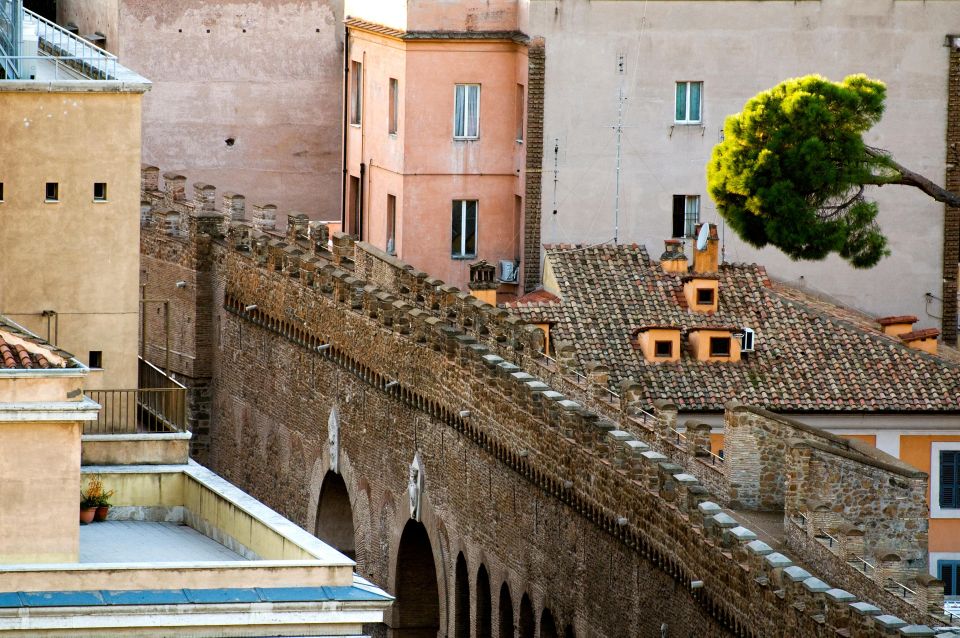
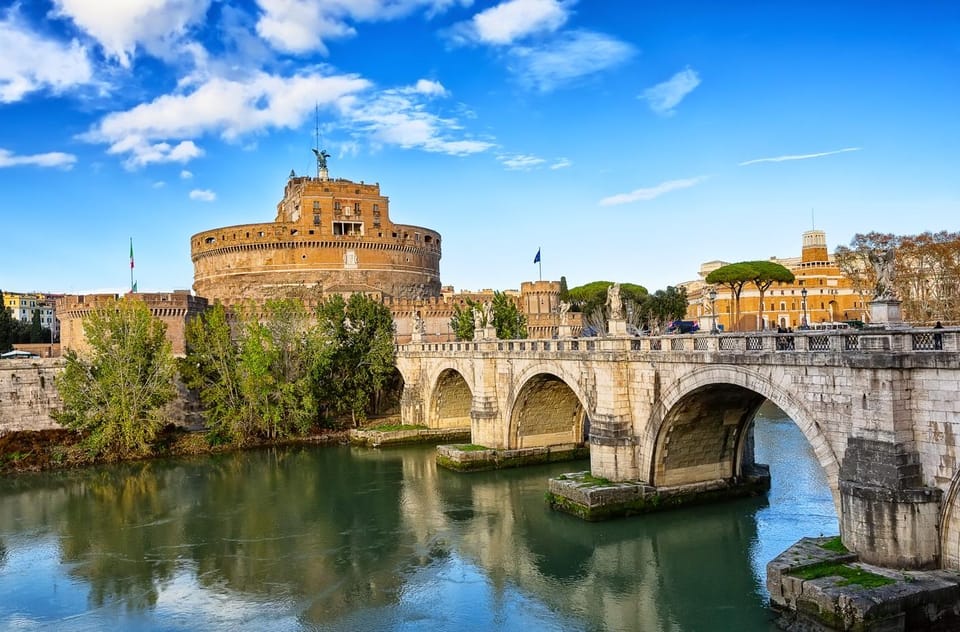
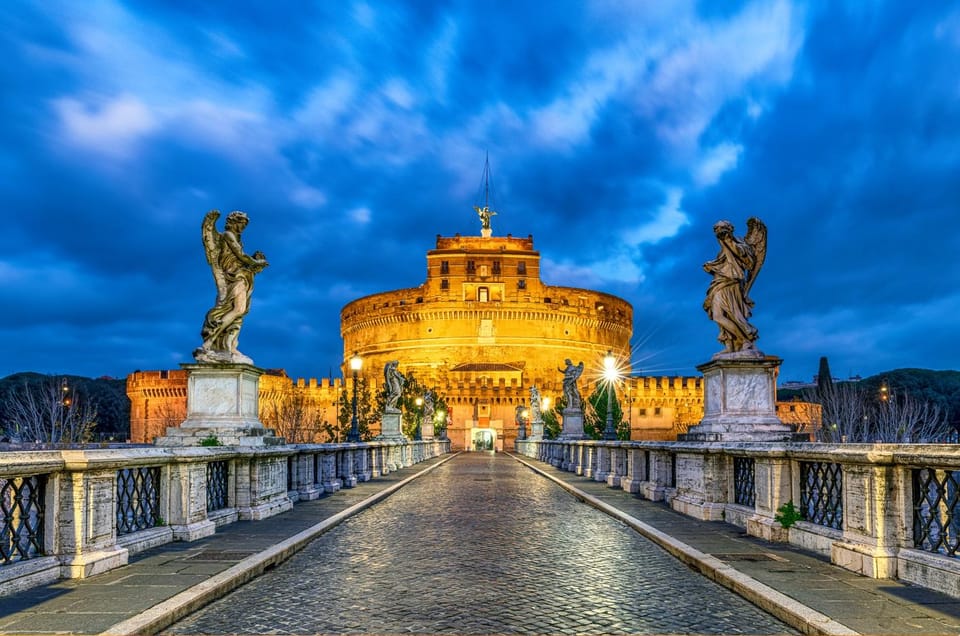
Castel Sant’Angelo sits right in Rome’s core and tells a clear story if you know what to look for. It began in Roman times as the tomb of Emperor Hadrian. Later, in the early Renaissance, it was converted into a papal fortress—so the building shifts from “imperial resting place” to “power and protection” in a way you can actually trace through what you see.
That mix is what makes the visit more than just a viewpoint. You’re not only climbing stone corridors. You’re walking through a structure that held prisons and even a place of execution. And it connects to the Vatican Palace via an elevated walkway, which meant popes could escape in case of danger. It’s a fortress with backstage access to the Vatican era—so even a self-guided stop feels story-driven.
You can also read our reviews of more tours and experiences in Rome.



Ticket value: what you pay for (and what you’re not)
The price you’ll see for this experience is listed as $39 per person, and the key value is that it bundles entry with a smoother start. The actual entrance ticket cost for Castel Sant’Angelo is €16 per person, and additional charges cover service and processing fees. So you’re paying more than the raw ticket—but you’re also buying convenience.
Here’s what that convenience looks like:
- You get skip-the-line entry through a separate entrance.
- If you choose that option, you get an audioguide included (otherwise, it’s not a live-guided tour).
- The visit is timed: your ticket is valid for 2 hours, and you can use that window to explore at your own pace.
What you should expect not to get:
- A live guide (it’s self-paced).
- Transportation (you’ll handle getting there on your own).
If you like moving independently—pausing for photos, taking your time with the rooms you care about most—this style works well. If you want someone to answer questions on the spot, you’ll need to add a different guided option elsewhere.
Your self-paced route: from Papal Rooms to Hadrian’s Ashes to the Terrace
The visit is designed as a sequence of major stops, and you’ll feel the rhythm of the fortress as you go. Here’s the “what you’ll likely experience” flow, in the order that makes sense for understanding the site.
1) Papal Rooms: where power feels close
You start inside the fortress spaces associated with the papacy. The Papal Rooms are where the building’s function shifts from Roman to Renaissance-era control. Even without a live guide, the layout helps you understand the castle as a working stronghold, not just a monument.
If you care about how buildings reflect politics, these rooms are your first clue. Look at how the spaces are organized and imagine the day-to-day movement of people inside a fortress designed for security.
2) The Spiral Staircase: why you slow down here
Then comes the Spiral Staircase—a feature that’s more than architectural decoration. Fortresses are meant to channel movement. Stairs like this make you conscious of direction and vantage: you’re being guided upward in a way that feels intentional.
This is a great moment to catch your breath, reset your pace, and decide how long you want to spend at the next stops.






3) Hall of Emperor Hadrian’s Ashes: the Roman center of gravity
Next is the Hall of Emperor Hadrian’s Ashes. This is where the building’s original purpose becomes impossible to ignore. The fortress doesn’t fully hide its Roman origin. The site keeps a memory of the emperor at its core, even after centuries of repurposing.
This room is a big reason the fortress is famous. It’s a reminder that Rome repeatedly builds over itself—sometimes in the same footprint, sometimes with the same symbolism turned into something else.
4) Angel’s Terrace: the view you’ll remember
Finally, you reach Angel’s Terrace, the place for wide city views. This is the stop most people picture when they think of the experience, and it’s easy to see why. The terrace gives you an elevated perspective that makes the fortress feel like part of the city, not just a separate site.
Take a few minutes here even if you’re not a photo person. The value is in seeing how the fortress relates to Rome’s scale.
The story inside the stones: tomb, fortress, prisons, and escape

Castel Sant’Angelo isn’t just “Roman then Medieval.” It’s a layered machine for control. The building was originally Hadrian’s tomb, but it became a papal fortress in the early Renaissance. That shift matters because it changes what you’re walking through: from monumental burial space to defensive headquarters.
A detail that makes the fortress feel real is the elevated walkway connection to the Vatican Palace. The idea is simple: when danger threatened, popes could escape via this link. You don’t need extra explanation to see why that mattered—this is a building designed to keep authority moving when the situation got ugly.
And then there are the darker chapters: the fortress houses prisons and a place of execution. That’s not just trivia. It changes the tone of the visit. You’re in rooms that served real human confinement and real consequences, which is why the site can feel heavier than other “viewpoint” monuments.
The fortress also held famous prisoners such as Benvenuto Cellini and Cagliostro. Knowing those names adds a layer of human drama. Even if you only spend a minute thinking about who those people were, the castle stops being just a “pretty fortress” and becomes a historical stage.
Audio guide reality check: how to avoid wasting your time
If you choose the audioguide option, the experience includes it—but setup is your responsibility.
You’ll want to know these rules before you arrive:
- If you bought the audio guide option, download it before you start where you have wifi.
- Once downloaded, it works without wifi.
- You’ll need a smartphone and headphones to use it properly.
- Languages offered include Spanish, French, Italian, English, German, and Chinese.
Why I think this matters: audio guides work best when they load fast and you don’t have to troubleshoot with tired feet and a busy entrance. If you show up without headphones or without downloading, you may end up hearing nothing at the moment you want guidance most.
Also, based on one booking problem that showed up in the experience record: one person reported buying two tickets with audio guide but receiving only one usable audio guide. Another traveler reported tickets being unusable due to missing QR codes for both entry and audio, though a refund request was handled afterward. Those cases are not the norm—but they’re a strong argument for checking your access details the moment you get your confirmation.
My practical tip: arrive with your phone ready, your headphones packed, and your ticket details verified early. If anything looks off, act quickly rather than waiting until you’re stuck at the entrance.
Skip-the-line: the convenience you feel right away
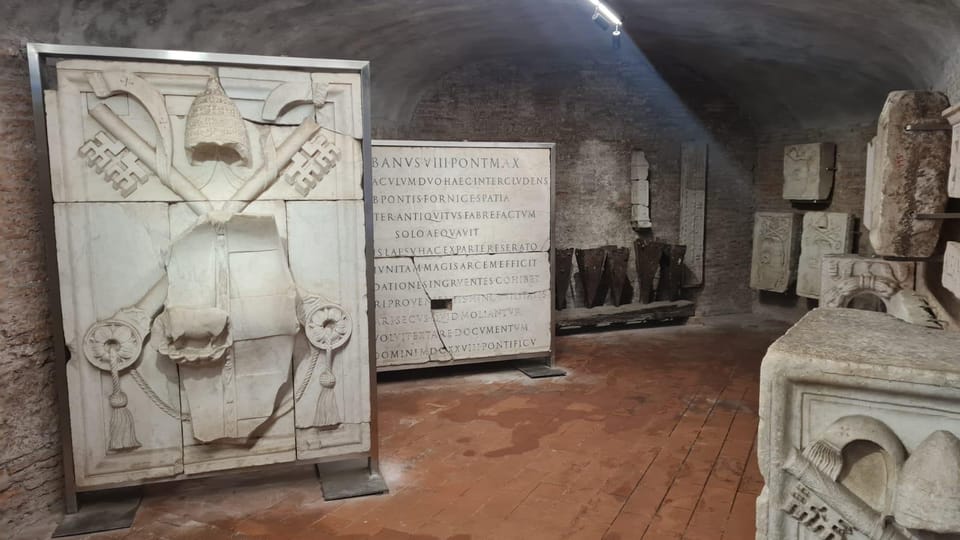
This ticket includes skip-the-line entry through a separate entrance. That matters in Rome, where lines can eat your energy fast.
A separate entrance usually means:
- less waiting right when you arrive,
- more time for the rooms you actually want to see,
- and a smoother start for audio guide use (because you can begin while you’re fresh).
Because the visit is about 2 hours, shaving even 15–20 minutes off waiting can be the difference between a quick look and a satisfying walk with time on the terrace.
Things to bring (and things to leave behind)
This site has clear rules. Plan for them so you don’t lose time at security.
Bring:
- Passport or ID card
Not allowed:
- Weapons or sharp objects
- Baby strollers
- Luggage or large bags
- Pets (assistance dogs are allowed)
- Alcohol and drugs
If you’re traveling light, this is easy. If you’re not, you’ll feel it. Big bags can turn a “quick visit” into a hassle.
Also, double-check ticket accuracy: the ticket is nominative, which means you need to include each participant’s full name to purchase entrance.
Who this suits best (and who may want a different format)
This experience fits best if you:
- enjoy self-paced sightseeing,
- want a structured route without the pressure of a group schedule,
- care about both Rome’s Roman layer and the later papal fortress period,
- and like ending with a view from Angel’s Terrace.
It may not be ideal if you:
- want a live guide to explain details as you go,
- rely on someone else to handle ticket/audio problems,
- or you hate the idea of using a smartphone and headphones for the audio option.
If that last point scares you, you can still go without the audio. The site still has major visual anchors. But if you want the context inside the rooms, the audioguide is part of the value.
Price and logistics: is $39 worth it?
Let’s talk value without hand-waving. You’re paying $39, while the entrance ticket itself is €16 per person. The difference goes to service and processing fees, plus whatever audio option you chose.
In plain terms, you’re buying:
- a smoother entry experience (skip the line),
- and convenience around starting the visit with your chosen format (ticket alone vs ticket + audio).
If you were planning to buy entry anyway, then the skip-the-line and the optional audio can make the package feel fair. If you’d rather figure everything out on your own, you might compare the cost against buying the entrance separately—but based on the way this visit is built (short, self-paced, high-value terrace), the packaged start is the part that often feels worth it.
One last note: fast-track options exist, but if you go that route, they must be booked at least one day before your visit.
Should you book Castel Sant’Angelo?
Book it if you want a short, satisfying fortress visit that mixes Roman origins with papal power—and you care about getting to the views without spending your morning in lines. This is especially smart if you’re comfortable using an audioguide and you’ll remember your headphones.
Think twice or plan extra carefully if:
- your phone is your weak link (no headphones, low battery, or no wifi for downloading),
- you’re bringing a group and names could be mistyped (tickets are nominative),
- or you can’t risk access confusion on the day (one record mentions missing QR code issues).
If you want a practical “yes,” here’s the rule I use: if you can handle a smartphone audio setup and you like exploring at your own pace, Castel Sant’Angelo is a strong booking.
FAQ
How long is the Castel Sant’Angelo visit window?
Your ticket is valid for 2 hours.
Is a live guide included?
No. A live guide is not included.
Do I get an audio guide automatically?
Only if you select the audio guide option. It’s listed as included when that option is chosen.
What languages are available for the audio guide?
Spanish, French, Italian, English, German, and Chinese.
Do I need headphones for the audio guide?
Yes. You must have a smartphone and headphones to use the audio guide properly.
Does the audio guide work offline?
Yes. If you download it before you start (using wifi), it works without wifi afterward.
Is skip-the-line entry included?
Yes. You enter through a separate entrance for skip-the-line access.
What do I need to bring to enter?
Bring a passport or ID card.
What items are not allowed inside?
Weapons or sharp objects, baby strollers, luggage or large bags, pets (assistance dogs allowed), and alcohol or drugs.
Do tickets require full names?
Yes. The ticket is nominative, so you must include all participants’ full names to purchase entrance.