REVIEW · ROME
Rome Golf Cart Tour from Villa Borghese Gardens
Book on Viator →Operated by ROME GOLF CART TOUR · Bookable on Viator
Three hours, a whole lot of Rome. I love the English guide commentary and I love the photo-friendly pace that lets you cover big-name sights without burning your feet on uneven streets. This small-group golf cart route links scenic Villa Borghese viewpoints with central Rome landmarks from ancient tombs to Trevi Fountain.
The only real drawback is time. With a 3-hour run and lots of stops, you’ll get brief looks—this is for admiring, not for slow museum-style wandering.
In This Review
- Key Highlights You’ll Feel Right Away
- Why a 7-Person Golf Cart Tour Works in Rome
- Villa Borghese Gardens: Your Scenic Warm-Up for the Whole City
- Piazza del Popolo: A Big Square With a City-Gate Sense
- Augustus and the Power of Reuse at the Mausoleum
- Column of Marcus Aurelius: Military Reliefs You Can Actually Read
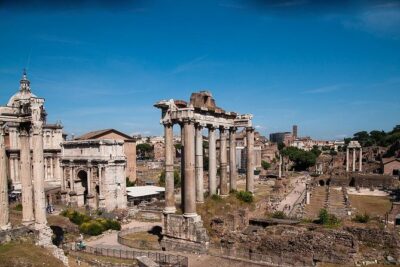
- Piazza Venezia and the Imperial Core: Where Old Rome Meets Modern Rebuilding
- Mercati di Traiano and the Imperial Forums: Tech Helps, You Still Get Real Artifacts
- Circo Massimo to Giardino degli Aranci: From 300,000 Spectators to a Viewpoint
- Bocca della Verità: The Lie-Detector Myth With Real Atmosphere
- Forum Boarium: Temple of Hercules and Temple of Portunus
- Theatre of Marcellus: One Stop That Explains the Colosseum
- Piazza Navona, the Pantheon, and Trevi: Three Centers of Gravity
- Piazza di Spagna: A Rest Stop That Feels Like a Scene
- Price and Value: Is $171.68 Worth It for 3 Hours?
- Tips to Get the Most From Your Golf Cart Afternoon
- Should You Book This Rome Golf Cart Tour?
- FAQ
- How long is the Rome Golf Cart Tour from Villa Borghese Gardens?
- Is the tour offered in English?
- What is the group size limit?
- Where do I meet for the tour, and where does it end?
- Are there admission fees at the stops?
- Can I cancel for a full refund?
Key Highlights You’ll Feel Right Away
- Max 7 riders keeps the mood calm and gives you room for questions.
- English guide storytelling turns quick viewpoints into clear context.
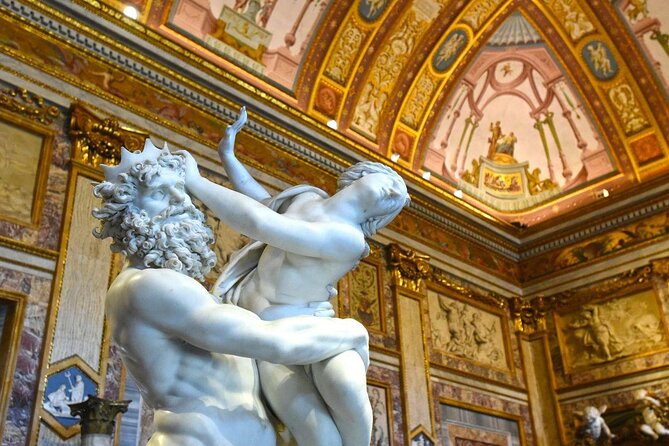
- Free-entry listed stops at places like Villa Borghese and the Pantheon keep the budget steadier.
- View breaks matter: Villa Borghese outlooks and the Orange Garden panorama are the kind of stops you remember.
- Less walking, more Rome makes hills and heat easier, especially for people who want a lighter day.
- On-board help for photos and small needs shows up with many guides, including water and picture-taking.
Why a 7-Person Golf Cart Tour Works in Rome
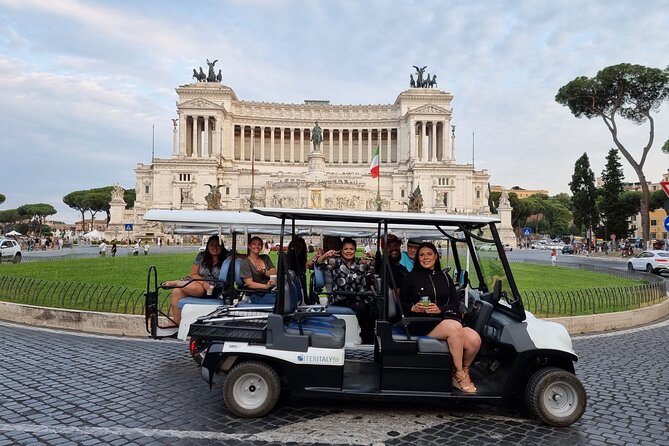
Rome is a study in contrasts: glorious monuments, tiny lanes, sudden stairs, and traffic that makes timing feel personal. A golf cart tour turns all that chaos into a simple plan. In about three hours, you get an organized circuit through Rome’s must-sees with commentary while you’re moving.
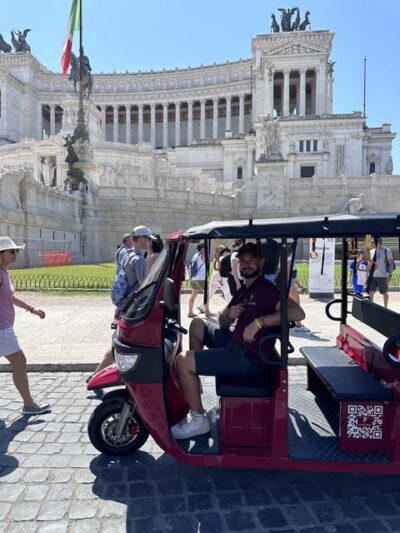
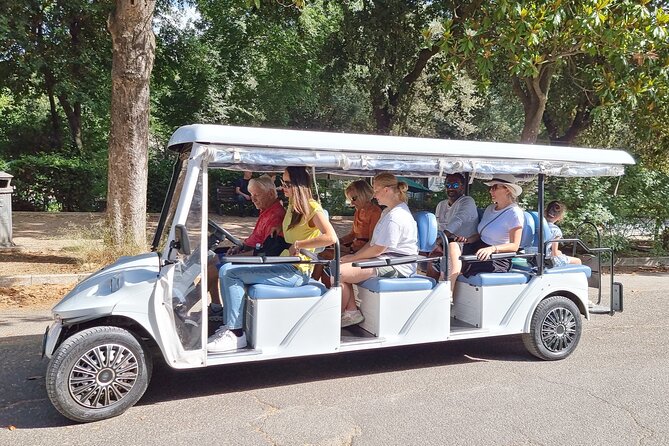
The small size (up to 7 people) is the secret sauce. You’re not shoulder-to-shoulder with a bus group, and the guide can actually steer the experience to what you care about—views, quick photo stops, and the story behind what you’re seeing.
You’ll also appreciate the comfort factor. Several guides are described as pacing the day with the weather in mind—think hot afternoons, occasional rain, and the value of taking short breaks instead of pushing through long walks. And if walking is tough for you, the cart lets you stay in the action while still seeing real neighborhoods, not just the easiest main streets.
You can also read our reviews of more tours and experiences in Rome.
Villa Borghese Gardens: Your Scenic Warm-Up for the Whole City
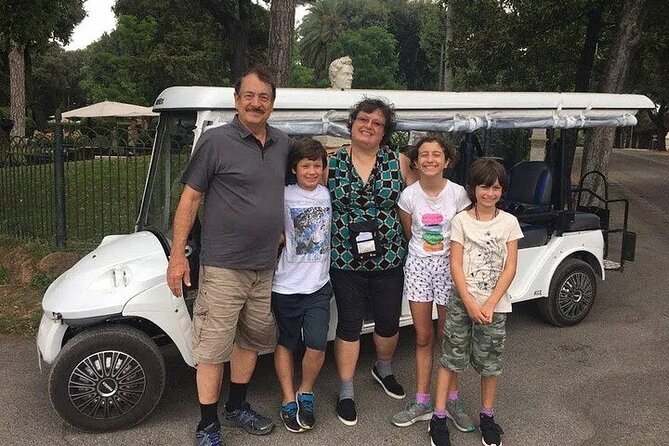
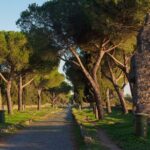
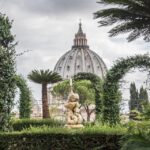
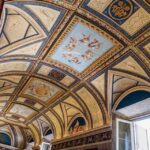
Your route starts at Villa Borghese, one of Europe’s big urban parks. It’s not just a pretty stop. During the 19th century the park was reshaped into an English-style garden, with ponds and fountains that create a calmer rhythm than the city around it.
This is where you reset your brain before hitting the denser ancient core. In a short 15 minutes, you get the feeling of Rome as a layered city—nature and grand architecture sharing the same space.
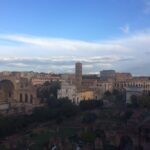
If you’re the kind of visitor who likes a skyline moment early, this is a good move. Even a quick look toward the city helps later stops click into place, because you’ll start recognizing how neighborhoods sit relative to the hills and the river.
Piazza del Popolo: A Big Square With a City-Gate Sense
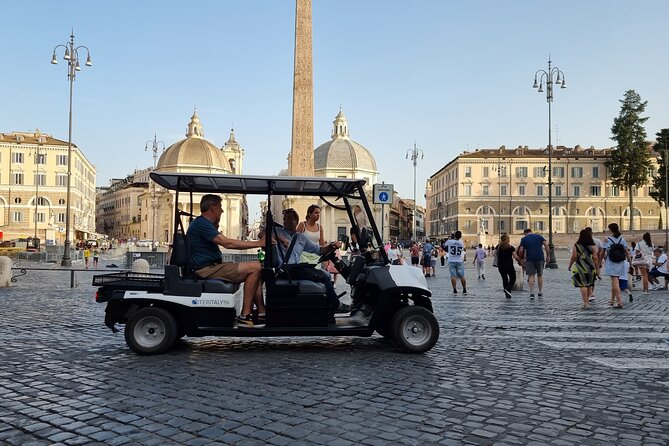
Next is Piazza del Popolo, one of Rome’s most familiar squares. It feels like a stage, with the Porta Flaminia north gate of Rome referenced as part of the story of this area.
In a short stop (about 10 minutes), you’re not chasing a museum. You’re getting your bearings in central Rome. The square gives you a visual anchor for the routes that feed into major monuments, and it’s one of those places where even a quick pause feels worth it.
For photographers, this is a useful stop because the open space makes it easier to capture the grand scale of Rome without squeezing into a tight street corridor.
Augustus and the Power of Reuse at the Mausoleum
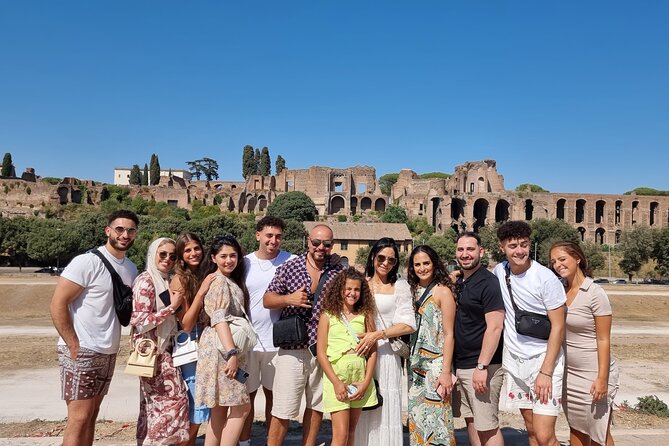
One of the more interesting shifts on the tour is stopping at the Mausoleum of Augustus. This isn’t just another ancient structure. It’s a large circular tomb with a long, complex history tied to how antiquities were reused, reinterpreted, and rediscovered over time.
That framing changes how you look at the building. Instead of treating it as a frozen relic, you see it as a monument that kept meaning through centuries of change.
The stop is brief, so you’ll want to do your part. If you’re curious, ask your guide what to notice first—shape, setting, and how the site has been understood across time. The value here is the quick context that helps you look past the postcard version.
Column of Marcus Aurelius: Military Reliefs You Can Actually Read

Then comes the Column of Marcus Aurelius and Faustina in Piazza Colonna. The column is linked to a specific historical idea: it’s thought to have been erected by Commodus in memory of his father and mother around 180 CE.
What you’ll notice is the carved storytelling. The high-relief scenes depict successful military campaigns against the Quadi across the Danube between 172 and 175 CE. It’s Rome showing its power in a way that was meant to last—an empire narrative carved into stone.
In about 10 minutes, you won’t master all the details, but you will understand what you’re looking at. That makes the difference between seeing a column and seeing a monument with a message.


Piazza Venezia and the Imperial Core: Where Old Rome Meets Modern Rebuilding
From here you transition to Piazza Venezia / Ancient City, between Via del Corso and Via dei Fori Imperiali. The square’s shape comes from remaking the area around the turn of the 19th and 20th centuries, including planning tied to the Monumento a Vittorio Emanuele II.
This stop is important because it helps you understand Rome as a layered city, not a single time period frozen in place. You’ll get a sense of why it can feel confusing at street level: later construction shapes how earlier ruins are approached and seen.
The tour’s pacing helps you make that mental map without getting overwhelmed. Even with short stop time, you’ll leave with a clearer picture of how major routes stitch together the center.
Mercati di Traiano and the Imperial Forums: Tech Helps, You Still Get Real Artifacts
Next up is a stop connected to the Mercati di Traiano (Trajan’s Markets), plus an introduction to the Imperial Forums. The site experience includes multimedia displays, explanatory panels, and archaeological objects.
This is one of the stops where the cart format still makes sense. You’re not trying to walk for hours through complex museum areas; you’re getting a guided entry into a huge topic in a manageable amount of time. In a few minutes, you can connect the dots between the markets and the forum world.
If you’re the type who thinks you only want the big outdoor sights, don’t skip this one. It gives you a shortcut to understanding what you’ll see and why it matters, and it helps the later ancient-town stops feel more grounded.
Circo Massimo to Giardino degli Aranci: From 300,000 Spectators to a Viewpoint
Circo Massimo is next, located between the Aventine and Palatine Hills. It once served as an extended precinct with space for about 300,000 spectators. Even if you’re not a sports-history person, the scale is hard not to feel.
Right after that, the tour pivots to something calmer: Giardino degli Aranci, the Orange Garden on the Aventine hill. The park covers nearly 8,000 square meters, and it’s beloved for its panorama over Rome.
This is where the tour earns its keep as a “few hours” experience. You go from ancient spectacle to modern calm, and you get a viewpoint that lets you see the city as a whole.
If there’s time, you may also get a quick stop for the Keyhole of Rome. It’s a small moment, but it fits the tour’s style: quick, interesting, and made for photos without requiring a long detour.
Bocca della Verità: The Lie-Detector Myth With Real Atmosphere
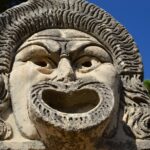
Then it’s Bocca della Verità, the Mouth of Truth. The story is playful and a little brutal: long before any modern lie detector, it was said that liars faced a fate between the jaws.
That myth makes the stop memorable, but the real value is your guide’s framing. With a short, timed pause, you learn the legend and also learn how this kind of ancient object became part of later culture.
It’s a quick stop (about 5 minutes), but it’s also one of the rare Rome moments that feels light. If you’re traveling with kids—or you just want a break from monumental seriousness—this is the sort of stop that restores your energy.
Forum Boarium: Temple of Hercules and Temple of Portunus
The tour shifts into the Forum Boarium area near the Tiber, where two standout sacred structures sit close enough to feel connected.
First is the Temple of Hercules, described as the only surviving sacred structure in ancient Rome made of Greek marble. It’s also believed to be linked to the Greek architect Hermodoros of Salamina, which is a fascinating cross-cultural detail you don’t always hear on quick sightseeing runs.
Then you move to the Temple of Portunus, one of the best-preserved Roman temples. The temple overlooked the fluvial port of Rome, so it watched over goods entering the city.
That port-side detail matters. It turns the temple from a static landmark into part of how Rome functioned—movement of people, goods, and power along the river.
Theatre of Marcellus: One Stop That Explains the Colosseum
As the route continues, you’ll reach the Theatre of Marcellus, completed in the late 1st century BCE during Augustus. It was the largest and most important theatre in Rome, and its architecture shaped theatres across the empire.
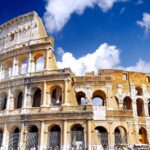
The guide’s explanation connects it to what you’ll recognize later, including how the look of theatres influenced façades like the Colosseum. That’s a big value moment in a short time: you leave with an internal map of design influence instead of just a list of sites.
If you like seeing how ideas traveled in Roman building, this is the stop that often makes people feel like they learned something real.
Piazza Navona, the Pantheon, and Trevi: Three Centers of Gravity
The final stretch rolls into the city’s most famous central squares and monuments.
Piazza Navona is next, commissioned by Domitian in 86 CE. Its elongated shape comes from its original function as the stadium for athletics competitions (Circus Agonalis), with stands for around 20,000 spectators.
Then comes the big one: the Pantheon. It’s dated to the early 2nd century AD and is considered one of the best-preserved historic buildings in Rome. The dome is famous for the oculus, the central hole—an engineering highlight that still makes people pause, because it’s hard to believe the scale and accuracy in masonry.
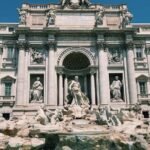
After that, you hit Fontana di Trevi, a late Baroque masterpiece designed by Nicola Salvi and completed by Giuseppe Pannini in 1762. The legend says if you toss a coin into the fountain’s water, you’ll return to Rome.
This is exactly where the golf cart pacing pays off. You get quick access and context, and you’re not arriving with zero knowledge of why the city looks the way it does.
Piazza di Spagna: A Rest Stop That Feels Like a Scene
The route ends with Piazza di Spagna and the Spanish Steps area. The plaza name connects to the Palazzo di Spagna, the Spanish embassy’s seat for the Vatican since the 17th century.
In a short stop (about 5 minutes), you’re mainly there to absorb the atmosphere and grab a final photo before returning to the meeting point. It’s also a good place to sit for a minute if you need to cool down or just watch Rome at a slower tempo.
Price and Value: Is $171.68 Worth It for 3 Hours?
Let’s talk money plainly. At $171.68 per person for about 3 hours, you’re paying for two things: an English-speaking guide and a vehicle that reduces time wasted moving between far-apart sights.
If you tried to recreate this route on your own, you’d spend time figuring out logistics, managing longer walks, and bouncing between areas without a clear narrative. The cart turns that into a focused sprint with built-in context.
Is it worth it for everyone? If your idea of Rome is slow, quiet, and long museum sessions, you might prefer fewer stops with more time per site. But if you’re visiting for the first time and want a confident overview—plus a lot less walking—this is a strong value.
Also, many stops are listed as admission ticket free in the route information. Even with that, the guide’s added context and the “you see a lot without getting exhausted” factor are what you’re really buying.
Tips to Get the Most From Your Golf Cart Afternoon
Rome rewards preparation, even on a cart tour.
Wear sunscreen and bring water, especially in warm months. Several guides are described as managing the day with heat in mind, and you’ll feel the benefit of that planning when you’re not cooking in direct sun.
Have your phone charged for photos. This route gives you multiple view-and-monument moments, including the Orange Garden panorama and major central sights like the Pantheon and Trevi.
If you’re traveling with mobility limits, the cart is a smart choice. Still, be ready for short transfers and brief steps where you’ll stand for photos.
Finally, keep your questions ready. One guide style that shows up in real examples is answering extra curiosities, even things like asking what everyday objects are called in English. That turns the tour from sightseeing into real understanding.
Should You Book This Rome Golf Cart Tour?
I’d book it if you want an efficient first taste of Rome with less walking and a guide who gives you the why behind what you’re seeing. It’s also a solid pick if you’re visiting with kids, traveling with someone who tires easily, or you just don’t want to spend your limited time stuck figuring out how to stitch ancient sites together.
I’d think twice if you’re chasing deep museum immersion or you prefer long, unhurried time at one place. In that case, you may want to pair Rome’s big indoor sites with separate, longer outings.
If you want a “get your bearings fast” day that still feels fun and scenic, this tour is a good bet.
FAQ
How long is the Rome Golf Cart Tour from Villa Borghese Gardens?
It runs for about 3 hours.
Is the tour offered in English?
Yes. The guide is listed as English-speaking.
What is the group size limit?
The tour has a maximum of 7 travelers.
Where do I meet for the tour, and where does it end?
You meet at Pic Nic – Just Amir srl, Piazzale delle Canestre, SNC, 00197 Roma RM, Italy, and the tour ends back at the same meeting point.
Are there admission fees at the stops?
The stop details list admission ticket free for multiple sights in the route, including Villa Borghese, Piazza del Popolo, the Column of Marcus Aurelius area, the Pantheon, Trevi Fountain, and others. The route information does not spell out entry costs for every single stop in equal detail.
Can I cancel for a full refund?
Yes, you can cancel for free up to 24 hours in advance for a full refund. If you cancel less than 24 hours before the start time, the amount paid is not refunded.