REVIEW · ROME
Rome by Vespa Semi Private Tour | MAX 6 PEOPLE GUARANTEED
Book on Viator →Operated by LivTours · Bookable on Viator
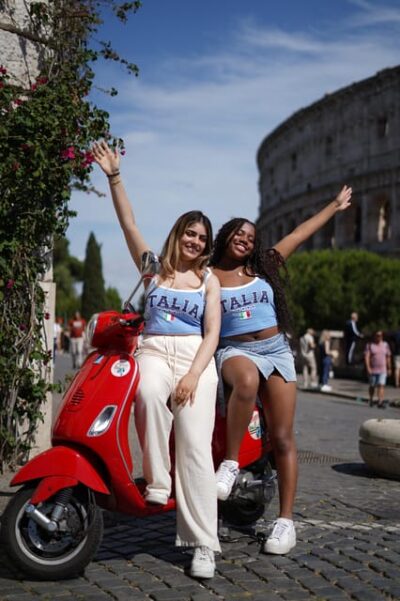
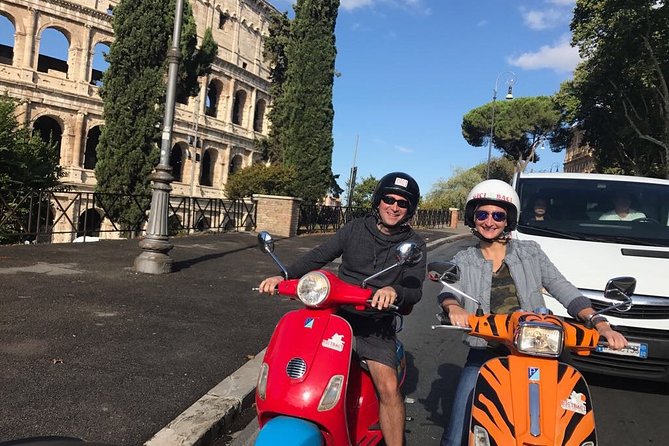
Rome on a Vespa feels like Rome’s own soundtrack.
This semi-private 3-hour tour lets you zip past major sights without spending the day on foot, and the max 6 group size keeps things personal with time for real commentary. One consideration: you’ll need the right driving credentials and comfort on busy streets, including a valid IDP, a deposit hold, and at least a year of license experience.
I especially like how the route mixes Rome’s headlines (Colosseum, Trevi Fountain, Pantheon) with hilltop panoramas that you’d be hunting for on your own. If your guide is Xander, you can expect an energetic ride with clear, history-rich storytelling that turns quick stops into real context.
The only “watch out” is practical, not scenic: this is a scooter tour first. If you’re not ready to drive, the passenger rules are strict, and you’ll want to be sure you can follow the helmet-and-traffic reality for the full ride.
In This Review
- Key things I’d watch for before you go
- Why a Vespa beats walking for Rome’s top sights
- The starting point: Piazza della Repubblica and the helmet-up moment
- How the Colosseum to Circus Maximus loop really works
- Aventine Hill, the “7 hills” viewpoint, and the payoff views
- Pyramid Cestia and the Aurelian Walls stretch
- Testaccio to the Mouth of Truth: fun legend, quick moment
- Campidoglio and the Michelangelo staircase effect
- Piazza Venezia, Vittoriano nicknames, and Roman politics in stone
- Largo Argentina to Piazza di Spagna: politics and pageantry
- Trevi Fountain and the coin-throw tradition
- Finishing at the Pantheon: ancient engineering still in use
- Price and value: why $247.84 can make sense
- Driving rules you must plan for (this is not a casual scooter ride)
- Who this tour is best for
- Should you book Rome by Vespa semi private (max 6 people)?
- FAQ
- Do I need an IDP to drive the Vespa?
- How many people are in the group?
- Where does the tour start and end?
- How long is the tour?
- What time does the tour begin?
- Is a helmet provided, and do I have to wear it?
- What’s included in the price?
- What’s the deposit requirement for the Vespa?
- Can I ride as a passenger instead of driving?
- What do I need to be allowed to drive?
- Is the ticket digital?
Key things I’d watch for before you go
- Small group, big coverage: A guided loop that hits Rome’s most recognizable sights while still feeling low-key.
- You’ll drive if you’re booked as an adult rider: Each adult/student booking gets a Vespa to operate themselves.
- IDP is mandatory for driving: No IDP (with a photo) means you can’t drive the scooter in Italy.
- Helmet stays on the entire time: Plan on wearing it for the full ride.
- Deposit hold for insurance: There’s a €500 per Vespa security deposit blocked on your credit card.
Why a Vespa beats walking for Rome’s top sights
Rome is gorgeous, but it can also be a leg workout. This tour is built around one simple idea: cover a lot of ground in a short time, while still seeing the city at street level. You’ll feel the rhythm of Rome—vans, scooters, pedestrians—without needing to fight your way through constant turns and crosswalk math.
What I like most is that you’re not just “transported” between monuments. The guide rides with you, which means you’re getting history as you move, not only when you pause for photos. And since the group is capped at six, it doesn’t feel like a conveyor belt.
You can also read our reviews of more private tours in Rome



The starting point: Piazza della Repubblica and the helmet-up moment
You meet at Via del Viminale, 5, then get going from Piazza della Repubblica, where the helmet-and-Vespa setup happens. From there, the tour kicks off with a big visual anchor in the city center: Santa Maria ai Martiri, a huge basilica designed by Michelangelo on the ruins tied to Emperor Diocletian’s ancient thermal baths.
This opening matters. You start with a site that connects art, architecture, and Roman-era leftovers, so the rest of the route clicks faster. It also gives you a buffer to get comfortable with the scooter and your position behind the guide before things get busier.
How the Colosseum to Circus Maximus loop really works
The route swings toward the Roman icons in a way that’s hard to replicate on foot in a few hours. You’ll ride around the Colosseum, then pass the Arch of Triumph of Constantine. From there, you head down Via di San Gregorio, with Palatine Hill to one side and Celio Hill to the other.
One detail I’d call out: you’ll also see an above-ground Roman aqueduct, which is the kind of thing people miss when they only look straight at the famous buildings. Then the ride climbs up toward Circus Maximus, the largest stadium the Romans ever built.
At the top, you get a view of the Imperial Villas on the Palatine overlooking Circus Maximus. That view is the payoff for the effort. It’s also where the tour feels like more than sightseeing—it starts to feel like you’re reading the city’s layout.
Practical note: because you’re on a scooter, you’ll be moving through traffic. If you hate that feeling, this tour may not be your style. But if you like the energy of riding through Rome, this section delivers.
Aventine Hill, the “7 hills” viewpoint, and the payoff views
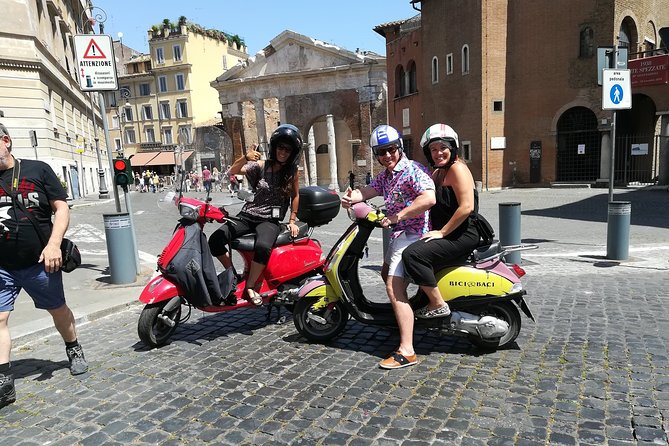
After the early origins story, the tour climbs Aventine Hill, one of Rome’s famous “seven hills.” This is where the experience shifts from monument-hopping to perspective-hunting. You get that elevated sense of Rome’s rooftops and city-center geometry, which is tough to recreate quickly by bus or by foot.
The itinerary mentions a special surprise here, but it keeps the details within the ride. That’s actually a good thing, because it means you’re not walking in expecting one photo. You’ll reach a moment where the guide’s explanation clicks, and you’ll know why the stop is timed the way it is.
If you’re short on time in Rome, this hilltop segment is one of the best uses of your 3 hours. The city looks different when you’re above it, and you don’t need to plan a separate viewpoint trip.
Pyramid Cestia and the Aurelian Walls stretch
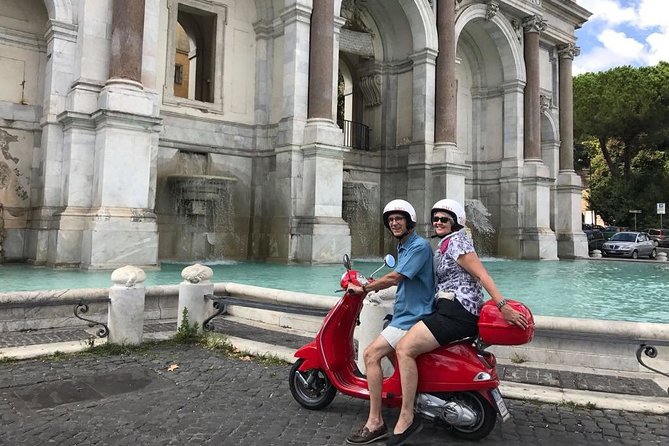
Next you ride down Viale Aventino and encounter something you might not expect to see in Rome: a pyramid, the Piramide Cestia, followed by the Aurelian Walls. Rome is famous for repeating layers, and this section is a perfect example—one monument pulls you into another era of defense and empire.
You’ll also get a view toward Porta Ostiense, which helps you grasp how the city’s fortifications functioned at the edges. On a walking route, that kind of “why here” context is hard to get in a short window. On the scooter, you move from clue to clue quickly, and the guide fills in the missing logic.
This stop is also a good photo opportunity, especially if you like architectural oddities rather than only the usual postcard angles.
You can also read our reviews of more tours and experiences in Rome

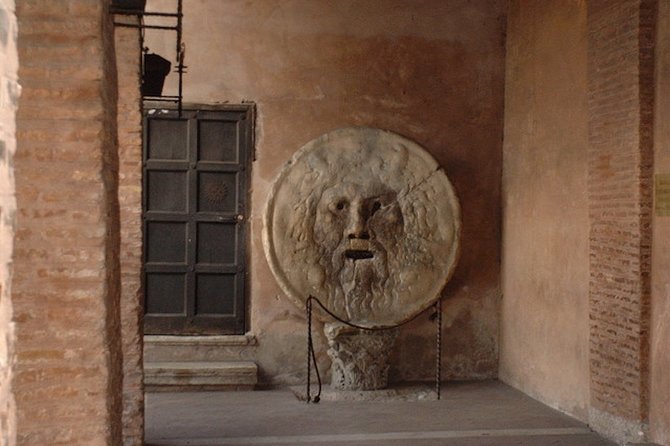
Testaccio to the Mouth of Truth: fun legend, quick moment
As you continue through Testaccio, you’re reminded that Rome isn’t only ancient monuments—it’s neighborhoods and everyday identity too. Testaccio is known for recipe heritage, and that flavor-connection idea fits the tour’s pacing: not every stop needs to be a temple to matter.
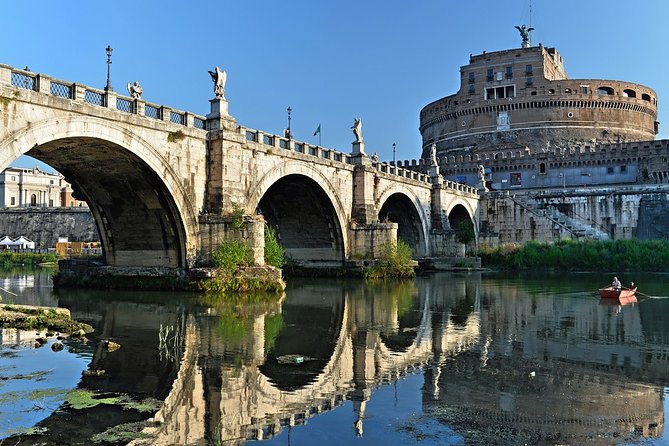
Then you head toward the Mouth of Truth. The tour leans into the legend: if someone puts their hand in the mouth, claims a lie, and breaks the story’s rules, the hand gets bitten off. Since you’re riding past instead of doing a full museum-style visit, the moment stays playful and light, and you keep moving.
This is a nice contrast after the heavier ancient architecture. It’s the kind of stop that keeps your brain from overheating, which matters on a scooter tour when you’re already focused on traffic and helmet comfort.
Campidoglio and the Michelangelo staircase effect
After that, you go up Via del Teatro Marcello to the base of Capitol Hill, the Campidoglio. This is the historic center of ancient Rome, and it’s still tied to civic power today, with the mayor’s seat.
The guide connects the hill to the temples that once decorated it, and then to the Renaissance transformation—specifically the famous staircase by Michelangelo. Even if you’ve seen images before, standing near it gives you a different sense of intention and design, because you’re seeing how people flow up and around the space.
The rider perspective helps here. From the scooter route, you’re continuously framed by what’s above and what’s below, so you understand why topography mattered to Roman power.
Piazza Venezia, Vittoriano nicknames, and Roman politics in stone
The tour circles Piazza Venezia and points out the monumental Vittoriano—often nicknamed the Altar to the Country. The guide explains the history behind it and why Romans came up with those nicknames.
This stop is useful because Vittoriano is one of those structures people either love or shrug at, depending on whether they know what it was meant to do. Having context makes it more than a background building—it becomes a statement. On a scooter loop, you also get to appreciate it from angles that a single walking approach can’t match.
Largo Argentina to Piazza di Spagna: politics and pageantry
From Piazza Venezia, you move into the tight streets of central Rome and arrive at Largo Argentina, the site where Julius Caesar lost his life. This is one of those locations where history feels close to the ground. You’re moving fast, but the guide’s story helps you picture the political shock under the modern street layout.
Then the route continues to Piazza di Spagna, with the Spanish Steps as the obvious focal point. Even if you only get a short look, you get the scale and the visual rhythm that made this one of Rome’s most famous meeting spots.
These stops work well because they balance the ancient world with a later Rome that still shapes daily life—fashion districts, tourist energy, and public space. You’re seeing how Rome stayed Roman even after the empire fell.
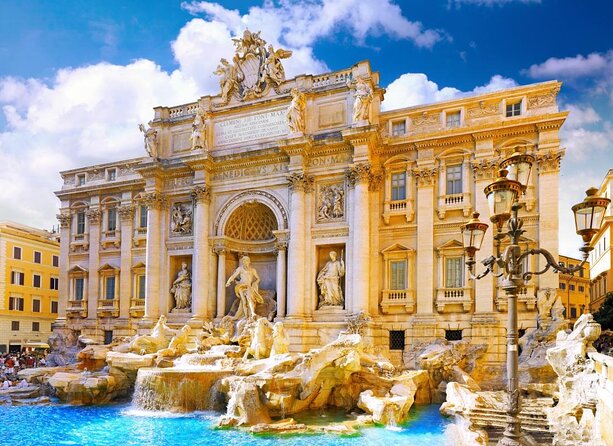
Trevi Fountain and the coin-throw tradition
Next comes Rione Trevi, and then the Trevi Fountain itself. The guide explains how the fountain was conceived and built, and then you get the fun superstition: throwing a coin as a ritual.
The best part of this moment isn’t just the fountain. It’s the way the guide ties the story to the tradition, so it feels like a small cultural habit rather than a tack-on tourist move. You’ll want to keep an eye on where you’re parking and stopping so you don’t feel rushed if you want one or two good photos.
Finishing at the Pantheon: ancient engineering still in use
The tour ends with the Pantheon, one of the best-preserved ancient Roman temples. It’s still standing and still used as a church since the 6th century, so it has that rare mix of ancient structure and living function.
This is a smart closer. After the ride and the quick stops, you end somewhere you can slow your eyes down. The dome, the openings, the way it feels inside—those are the kinds of details that make the whole day feel worthwhile, even if you didn’t stop at every single famous building you could list.
If you’re the type who hates rushing at the end of a tour, this works in your favor. It’s a high-impact stop to wrap up a tight 3-hour route.
Price and value: why $247.84 can make sense
At $247.84 per person for about 3 hours, the price might look steep if you think of it like just transportation. But you’re paying for a guide, a classic Vespa rental, and a route built to compress a lot of Rome into one loop.
This is where the semi-private max 6 matters. You’re not sharing the ride with dozens of people, and you get more focused attention and explanation than you would on a large bus-style tour. In a city where you can easily lose time to finding entrances, crossings, and parking, the guided scooter format is often where the value lives.
Still, it’s not for everyone. If you don’t meet the driving requirements—or if you’d rather walk slowly and browse shops—then this might not be the best use of your time or energy.
Driving rules you must plan for (this is not a casual scooter ride)
This tour includes a Vespa, but driving it comes with clear requirements:
- You need a valid International Driving Permit (IDP) with a photo (this is required to drive in Italy).
- You need a driver’s license with at least 1 year of experience.
- You must have experience driving a scooter on busy roads to take the tour without a driver.
- The rental company requires a €500 security deposit per Vespa, blocked on your credit card for insurance purposes. Bring an active card.
- Helmet must stay on the entire ride, and you should wear comfortable clothes.
Also, know how seating is handled: each Vespa has two seats (driver and potential passenger). Each adult/student booked gets a Vespa to drive. If you want someone to ride as a passenger, you can add a private driver—but you can’t book more passengers than drivers. The guide rides their own Vespa and does not carry a passenger.
If you’re going with a friend or partner who’s nervous about riding, you’ll want to sort these roles out in advance. It’s better to plan for the math now than to scramble at the start.
Who this tour is best for
This is a strong match if you:
- want to see a lot of Rome fast without wearing yourself out on foot
- like your history explained while you move through the streets
- are comfortable riding scooters in city traffic and meet the IDP and experience requirements
It’s not ideal if you:
- don’t want to drive and you’re not able to arrange a driver
- get stressed by busy road conditions
- would rather spend a long afternoon wandering on your own pace
If you like structure but still want authentic street-level Rome, this one fits.
Should you book Rome by Vespa semi private (max 6 people)?
I’d book it if your priorities are time, variety, and that street-energy feel. In about 3 hours, you go from major landmarks to hilltop viewpoints to a finale at the Pantheon, with a guide steering the route so you don’t waste energy figuring it out.
Skip it if you’re not ready for the driving reality: IDP rules, credit card deposit, helmet-on, and the expectation that you can handle scooters in busy areas. This tour rewards confident riders and careful planners.
If you do book, prepare like you’re going to ride, not just sightsee. Comfortable clothes, your IDP in hand, and a clear plan for who drives and who rides will make the whole loop feel smooth—and a lot more fun.
FAQ
Do I need an IDP to drive the Vespa?
Yes. A valid International Driving Permit (IDP) is mandatory to drive a Vespa in Italy, and it must contain a photo.
How many people are in the group?
The tour is limited to a maximum of 6 travelers, with a semi-private setup and guaranteed small-group size.
Where does the tour start and end?
The tour starts at Via del Viminale, 5, 00184 Roma RM, Italy. The activity ends back at the same meeting point.
How long is the tour?
The tour is approximately 3 hours.
What time does the tour begin?
The start time listed is 10:00 am.
Is a helmet provided, and do I have to wear it?
You’ll strap on a helmet at the start, and you must wear the helmet the entire ride.
What’s included in the price?
Included: a safe, intimate semi-private group (max 6), a professional local expert guide, and Vespa rental.
What’s the deposit requirement for the Vespa?
The rental company requires a €500 security deposit per Vespa, blocked on your driver’s credit card for insurance purposes. Bring an active card.
Can I ride as a passenger instead of driving?
If you book as a passenger, you must have a driver. You may not book more passengers than drivers. The guide will not carry a passenger.
What do I need to be allowed to drive?
You need a driver’s license with at least 1 year of experience, and you must have experience driving a scooter on busy roads to take the tour without a driver.
Is the ticket digital?
Yes. The tour uses a mobile ticket. Confirmation is received at the time of booking.