REVIEW · ROME
Rome: Appian Way & Catacombs Golf Cart Tour – Shared|Small groups
Book on Viator →Operated by EcoBike S.r.l. - Centro Servizi Appia Antica · Bookable on Viator
The Appian Way feels like a time machine. You roll out on a golf cart with a max of 7 people, then pair it with a visit to the catacombs and the Circus of Maxentius, plus stops that make the whole area feel connected. It’s a very “Rome beyond the postcard” kind of outing that still stays fun and manageable.
I love the mix of wow-factor sites and the small, interpretive stops that help you understand what you’re actually looking at. I also like how the guiding connects the route—so the Via Appia doesn’t turn into just another checklist.
One possible drawback: since you’re on a cart for most of the ride, it can be harder to hear the guide if you’re seated farther back.
In This Review
- Key Highlights Worth Showing Up For
- Why This Appian Way Golf Cart Tour Works (Even If You’ve Been to Rome Before)
- Start at Domine Quo Vadis: Footprints, Faith Stories, and a Fast Context Clue
- Catacombs of St Callixtus or St Sebastiano: The Underground World You Can Still Follow
- The Circus of Maxentius: A Roman Arena With Film-Familiar Feel
- Cecilia Metella’s Tomb and Caetani Castle: Hill Views Without Extra Ticket Hassles
- Capo di Bove and the Quintili Villa Area: Reading Wealth and Power on the Edge of Rome
- The Via Appia Antica Run-Out: Turning Ruins Into a Real Sense of Distance
- Price and Value: What You Pay For (and What You’ll Might Need to Budget Separately)
- Who This Tour Best Fits (And Who Might Want a Different Plan)
- Should You Book This Rome Appian Way Golf Cart and Catacombs Tour?
- FAQ
- How long is the Rome Appian Way & Catacombs golf cart tour?
- What does the tour cost?
- Is the tour in English?
- How many people are in the group?
- Which catacombs will I visit?
- Are catacombs tickets included?
- Are entrances to Cecilia Metella’s tomb and the Quintili villa included?
- Is bottled water included?
- Can I get a full refund if I cancel?
Key Highlights Worth Showing Up For
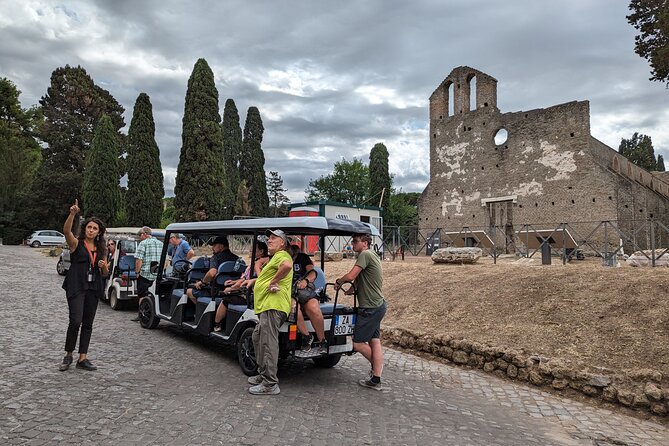
- Max 7 travelers keeps questions easy and the pace relaxed
- Catacombs visit included with a guided tour of St Callixtus or St Sebastiano (depending on availability)
- Domine Quo Vadis church stop adds context before you go underground
- Circus of Maxentius is well preserved and very easy to picture from Roman spectacle
- Cecilia Metella and Caetani Castle hill viewpoint is explained without needing extra tickets
- Bottled water (1/2 L) means you can focus on the sights, not refueling
Why This Appian Way Golf Cart Tour Works (Even If You’ve Been to Rome Before)
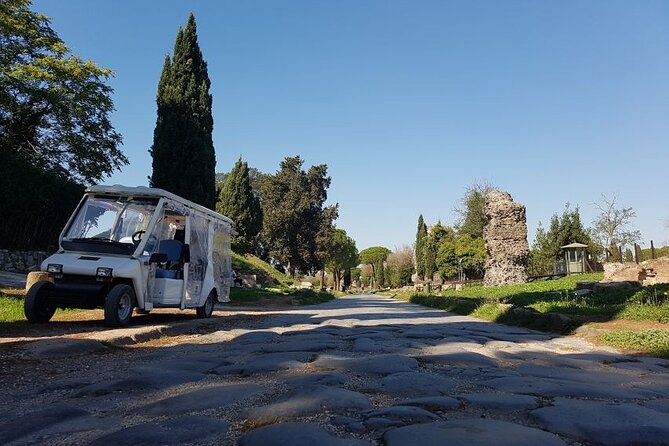
Rome’s headline sights are impressive, but they can also be exhausting: lines, noise, and crowds that make it hard to think. This tour trades that energy for something calmer and more “out in the real world of ancient Rome.” You spend about 3 hours cruising the Via Appia Antica area, with enough stops to make it feel like a full experience—without turning into a marathon.
The small-group size (up to 7) matters more than you’d think. It gives the guide room to tailor explanations, answer questions, and keep everyone oriented. And the golf cart is the secret weapon. The Appian Way stretches a long way, and walking that distance would drain you. Riding lets you actually look around: the tombs, the churches, the ruins, and the way the road itself tells a story.
English is offered, and the tour uses a mobile ticket, so you’re not scrambling with paperwork. If you’re someone who already did the big center sights, this is a great second act: a chance to see how Romans lived and died far from the theater of central Rome.
You can also read our reviews of more tours and experiences in Rome.



Start at Domine Quo Vadis: Footprints, Faith Stories, and a Fast Context Clue
The experience begins with a quick stop at the Chiesa del Domine Quo Vadis (often spelled Domine Quo Vadis). This is the church tied to the apocryphal Acts of Peter, where Saint Peter meets the risen Christ while fleeing persecution in Rome.
Even if you’re not chasing religious legend, I like this stop because it sets a tone. You’re about to go into Rome’s underground world of burial and memory, and the story here frames how people thought about Rome, danger, and return. The tradition is that Peter asked, Lord, where are you going?—and the answer referenced Rome being crucified again.
The church visit is brief (about 10 minutes) and free. It’s not meant to replace a major church visit in central Rome. Think of it as a quick “why this place matters” moment before you move from street-level to underground.
Catacombs of St Callixtus or St Sebastiano: The Underground World You Can Still Follow
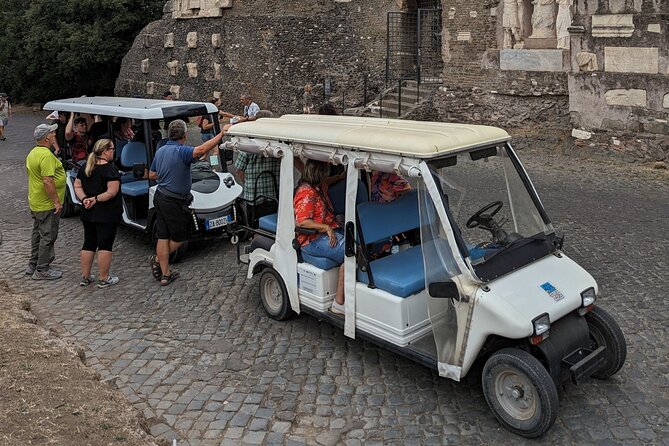
Next comes the big emotional shift: the catacombs. You’ll visit either Catacombe di San Callisto (St Callixtus) or Catacombe di San Sebastiano (St Sebastiano), depending on availability. The important part for your planning: the entrance and guided tour are included.
If you land on St Callixtus, you’re stepping into one of Rome’s most significant cemeterial complexes. It traces back to the mid–second century and spreads through an area of about 90 acres with a network of galleries roughly 12 miles long, across four levels and more than 20 meters deep. You’ll hear about the large number of Christians buried there over time, including tens of martyrs and 16 popes.
If St Sebastiano is the one you get, the same idea applies: you’re touring an underground burial network that tells you how Roman and early Christian communities used space, ritual, and remembrance.
Practical note: catacombs can be tight and dim, so wear comfortable shoes and be ready for “guided storytelling” rather than casual wandering. The tour is built for moving with the group and listening—so go in ready to pay attention for the details the guide points out.
The Circus of Maxentius: A Roman Arena With Film-Familiar Feel
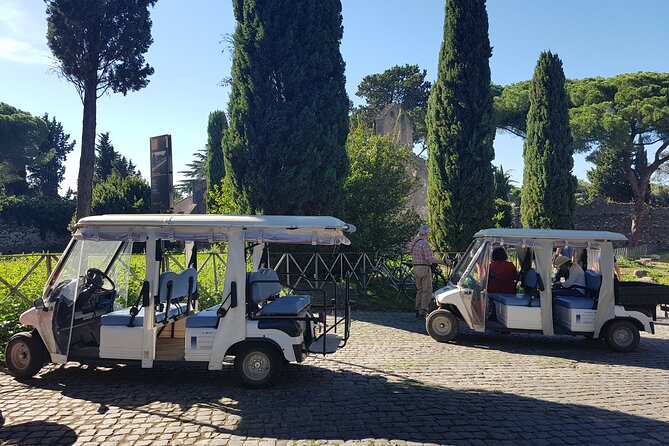
After the underground part, you go back up and return to the Appian Way for a stop at the Circus of Maxentius. This is the second biggest Roman circus in the area and one of the best-preserved.
One of my favorite things about this stop is that it’s one of those ruins where your imagination doesn’t have to work overtime. The guide helps you picture what happened here, and you can understand the scale without getting lost in technical details.
It’s also described as being used for events that likely had a funerary character. The circus is closely tied to the memory of Maxentius’ son Valerius Romulus, who died in AD 309 at a young age, and is probably connected to burial in the adjacent cylindrical tomb associated with Romulus. And yes—this site is tied in people’s minds to film imagery, including the set for Ben-Hur.
This stop is short (about 20 minutes) and free to enter. But it’s long enough to make the catacombs feel like part of a bigger picture: Rome’s burial culture, public spectacle, and elite power all lived side by side.
Cecilia Metella’s Tomb and Caetani Castle: Hill Views Without Extra Ticket Hassles
Then you reach one of the best “photo + understanding” moments: a hill stop at Mausoleo di Cecilia Metella e Castrum Caetani, inside the Parco Archeologico dell’Appia Antica.
Here’s the good news for your budget and timing: the explanations and viewpoints are included, and the plan notes that you don’t need to buy a ticket to enjoy the stop. The entrance itself is not included (so if you want to go in), that’s on you).
From this position, you can grasp why Cecilia Metella’s tomb is such an iconic anchor point along the Appian Way. On one side, you’re focused on the tomb and the Caetani castle. On the opposite side, the guide takes you close to S. Nicola Church, described as a one-of-a-kind example of Cistercian Gothic style.
Expect about 15 minutes here—enough to orient yourself and connect the hilltop structures to the road below. If you love views, this is the kind of stop that makes the whole day feel worth it even if the weather isn’t perfect.






Capo di Bove and the Quintili Villa Area: Reading Wealth and Power on the Edge of Rome
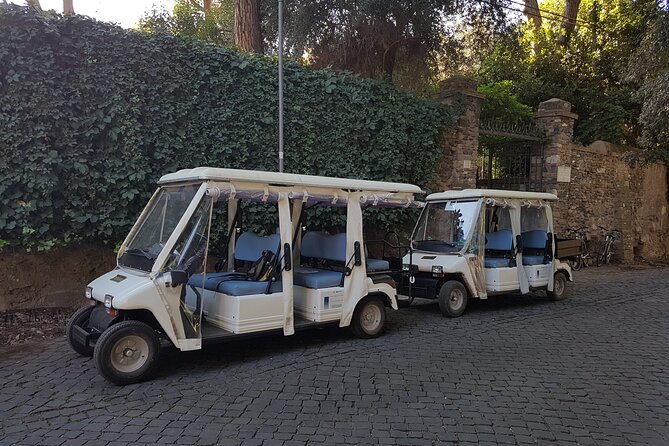
Two more stops keep the route grounded in how Romans lived outside the city center.
First: Complesso di Capo di Bove. This is described as the private villa of a wealthy philosopher and preceptor of Marcus Aurelius. It’s a reminder that this road wasn’t only about funerals and monuments—it was also about education, wealth, and influence.
Second: Villa dei Quintili and Santa Maria Nova. This area is described as one of the biggest residential zones of the Appian suburb, originally owned by brothers killed on Emperor Commodus’ orders. Again, entrance is not included, and you don’t need tickets just to see the stop and get your bearings.
These segments are quick (around 15 minutes for Capo di Bove and about 10 minutes for the Quintili area). That’s actually a plus. The tour is designed so you don’t spend half your time sitting through explanations without moving. Short stops keep the pace light while still giving you enough context to understand what you’re seeing.
And if you’ve got an archaeology-nerd streak, this is where your understanding starts clicking: tomb culture and villa wealth appear as parallel chapters along the same road.
The Via Appia Antica Run-Out: Turning Ruins Into a Real Sense of Distance
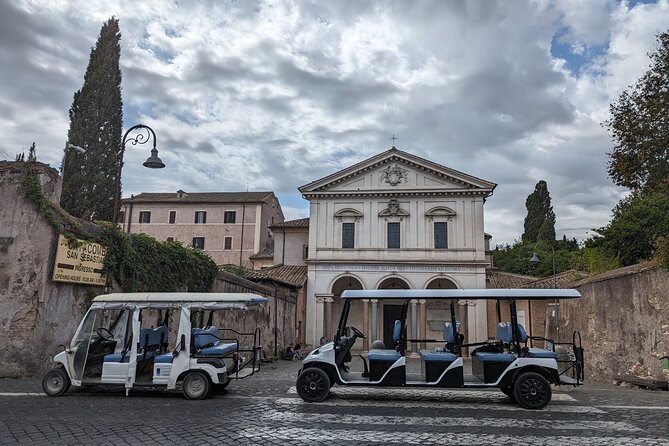
The tour doesn’t just drop you at points of interest and send you on your way. After the last main stops, you’ll spend time driving back along the Appia Antica Archaeological Park area, heading back toward the start point on the Via Appia Antica.
This drive segment matters. The Appian Way is long. When you ride it, you feel the distance in your body—not just on a map. It changes how the tombs, churches, and mausoleums relate to each other. You start thinking like the Romans did: a road is a system, not a single destination.
At roughly 30 minutes for the return drive, you get one more chance to spot details you might have missed at the first look. It’s also where the guide’s storytelling can tie things together, so the day ends with a clearer mental picture rather than scattered facts.
The whole tour ends back at the meeting point on Via Appia Antica, 60, 00179 Roma.
Price and Value: What You Pay For (and What You’ll Might Need to Budget Separately)
This tour costs $91.32 per person for a roughly 3-hour shared experience with a max group size of 7. It includes 1/2 liter bottled water and includes a guided catacombs visit plus access to the included sites.
Not everything is all-in, though. You’ll likely want a little flexibility in your budget because:
- Cecilia Metella’s tomb entrance is not included
- Quintili’s villa entrance is not included
- Coffee/tea is not included
For me, the value comes from the structure: you’re getting guided interpretation of major sites plus transportation by golf cart that makes the distances manageable. If you tried to DIY this whole day, you’d be spending time figuring out how to get between burial sites, dealing with public transit schedules, and trying to stitch together tickets and entry rules.
Also, this tour is in English and uses a mobile ticket, which reduces friction on the day.
Who This Tour Best Fits (And Who Might Want a Different Plan)
I’d recommend this tour if you:
- Want something history-heavy but not mentally exhausting
- Prefer small-group guiding over a big bus experience
- Want to see the Appian Way without burning energy on long walking stretches
- Are returning to Rome and want a different side of the city than the “big center” circuits
You might consider a different option if you:
- Need very long free time at just one location (this tour is stop-and-go by design)
- Struggle with enclosed, dim spaces like catacombs
- Care most about museum-style interiors and less about outdoor ruins and roadside monuments
Should You Book This Rome Appian Way Golf Cart and Catacombs Tour?
If your goal is to see the Appian Way and the catacombs in a way that feels organized, paced, and not too physically demanding, I think this is an easy yes. The small group size, the included catacombs guided visit, and the golf cart pacing make it a strong value for a 3-hour window.
My main caution is simple: if you care about hearing every detail, choose seating closer to where the guide is most audible (especially if you’re prone to straining over engine noise and wind). Also, decide in advance whether you want to add optional entrances like Cecilia Metella’s tomb or the Quintili villa—they’re not included, so it’s good to plan for that.
If you like Rome off the main drag—on a road that literally connects death, power, and daily life—this tour fits that mood.
FAQ
How long is the Rome Appian Way & Catacombs golf cart tour?
It lasts about 3 hours.
What does the tour cost?
The price is $91.32 per person.
Is the tour in English?
Yes, it is offered in English.
How many people are in the group?
It has a maximum of 7 travelers.
Which catacombs will I visit?
You’ll visit Catacombe di San Callisto or St Sebastiano, depending on availability.
Are catacombs tickets included?
Yes. The catacombs entrance and guided tour are included.
Are entrances to Cecilia Metella’s tomb and the Quintili villa included?
No. Cecilia Metella’s tomb and Quintili’s villa entrances are not included. You don’t need to buy tickets just for the stops and explanations.
Is bottled water included?
Yes. You get 1/2 L bottled mineral water per person.
Can I get a full refund if I cancel?
Yes. You can cancel for a full refund up to 24 hours before the experience’s start time.