REVIEW · ROME
Private Tour of the Vatican Museums and Sistine Chapel
Book on Viator →Operated by City Lights Tours · Bookable on Viator
Two hours can feel like a lightning sprint through Vatican City. This private tour strings together the Vatican Museums, Raphael’s Rooms, and the Sistine Chapel with a guide who can answer your art questions while you keep moving.
I like how efficiently it packages admission tickets and reservations into one guided visit, so you’re not stuck figuring out what to buy or where to stand. I also like the built-in focus on Raphael’s Rooms and the exact Sistine Chapel ceiling scenes people actually come to see.
The only real catch is the pace: with roughly 2 hours total, you’ll get meaningful highlights rather than slow wandering, so plan for a tight timing schedule.
In This Review
- Key things to know before you go
- How the two-hour Vatican Museums route works (and why it’s smart)
- Gallery stops: Maps, Candelabra, and Tapestries
- Raphael’s Rooms and the Constantine Room in one pass
- Sistine Chapel: Creation of Adam and the Last Judgment
- Your guide changes the whole Vatican experience
- From Viale Vaticano to St. Peter’s: logistics that affect comfort
- Price: what you’re really paying for at $650.91 per person
- Who this tour suits best (and who should rethink it)
- Should you book this private Vatican Museums and Sistine Chapel tour?
- FAQ
- How long is the tour?
- What language is the tour offered in?
- Is admission to the Vatican Museums and Sistine Chapel included?
- Is this a private tour or a shared group tour?
- Where does the tour start?
- Where does the tour end?
- What should I know about the 2025 Jubilee celebrations?
- Are snacks included?
Key things to know before you go
- Timed, private format: it’s just your group, with a dedicated guide in English.
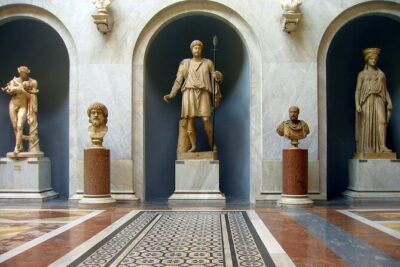
- Top museum rooms included: Gallery of Maps, Gallery of Candelabra, Gallery of Tapestries, plus Raphael’s Rooms.
- Raphael + Constantine Room: you’ll see the School of Athens and the recently opened Constantine Room.
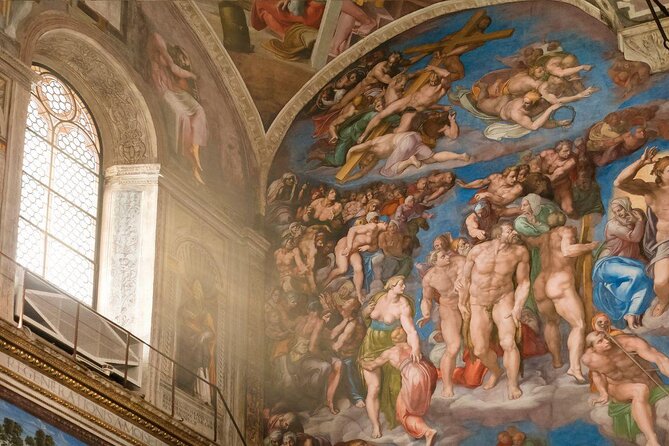
- Sistine Chapel ceiling priorities: Creation of Adam and the Last Judgment are part of the plan.
- Jubilee routing may affect the ending: the path from the Museums to St. Peter’s Basilica can vary in 2025.
- Moderate walking: you’ll move through a lot of ground in a short time.
How the two-hour Vatican Museums route works (and why it’s smart)
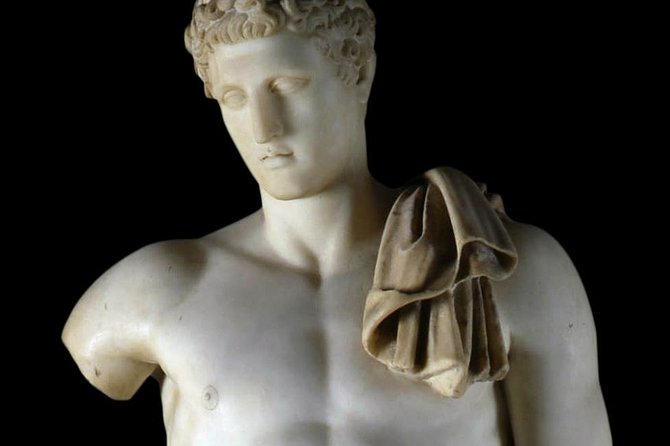
Rome’s biggest museum problem is simple: too much to see, too little time. This tour tackles that by narrowing your Vatican visit to the most meaningful rooms and giving you a guide to connect the dots fast.
The total time is about 2 hours, split into three focused chunks: about 1 hour 30 minutes for the Vatican Museums galleries and Raphael’s Rooms, then around 25 minutes for the Stanze di Raffaello area (including the Constantine Room), then roughly 20 minutes in the Sistine Chapel. That structure matters because you’ll finish with the Sistine Chapel while it’s still vivid in your head—rather than feeling mentally fried by hours of museum corridors.
Because this is private, your guide can adjust how much you want to ask. That’s a big deal here. Without guidance, you can end up staring at ceiling-to-floor artwork like it’s a test you didn’t study for. With guidance, you’re more likely to know what you’re looking at and why it was painted.
And you get practical extras that reduce stress: tickets and reservations are included, along with all fees and taxes, plus you’ll receive a mobile ticket after booking. That keeps your morning simpler.
You can also read our reviews of more private tours in Rome

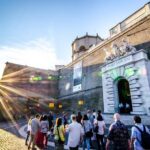

Gallery stops: Maps, Candelabra, and Tapestries
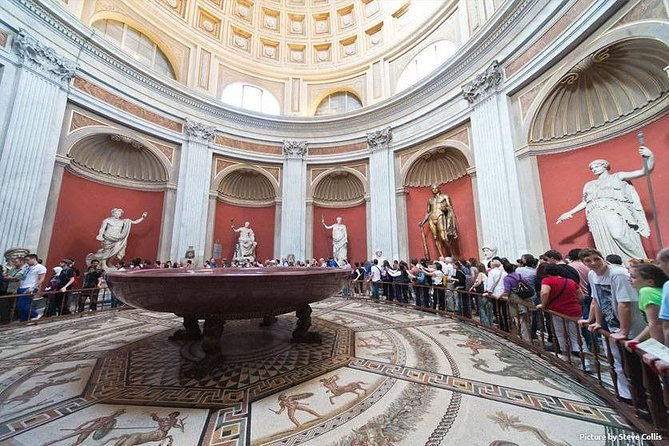
The Vatican Museums portion is designed around three major gallery experiences, and each one gives you a different flavor of how Renaissance and religious ideas were packaged for visitors.
First up is the Gallery of Maps. Even if you’ve never studied geography in your life, it’s eye-opening because it shows how maps were about power and worldview—not just distance. You get a clearer sense of how the Vatican wanted its audience to imagine the world.
Next comes the Gallery of Candelabra. It’s a visual breather in the best way: lots of architectural and decorative detail that helps you shift from “historical facts” mode into “art as design” mode. If you’re the type who notices patterns and materials, this stop will feel like a palate cleanser before the more famous paintings.
Then there’s the Gallery of Tapestries. Textiles might sound like a side quest, but here they fit the Vatican’s storytelling skill. They help you understand how art wasn’t always just painted on walls—sometimes it was made to be seen as luxury, texture, and symbolism. It’s a nice reminder that museums can teach you how people lived with images, not just how they preserved them.
A small practical note: these rooms are close together, but they still require steady walking and looking up or moving your focus around. Since the tour lists moderate physical fitness as the requirement, go into it expecting you’ll be on your feet and navigating crowds without a long sit-down break.
Raphael’s Rooms and the Constantine Room in one pass
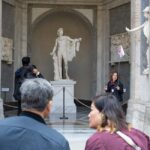
After the galleries, the tour moves into the Stanze di Raffaello—the Raphael Rooms. This is where you’ll feel the shift from lots of “wow” objects to a more concentrated story about art, ideas, and patronage.
The headline painting you’ll be pointed to is School of Athens. This work is famous for a reason, but what makes it land is the context you get from a guide who can connect figures and themes to the world Raphael was responding to. You’ll likely spend most of your attention here not just on the people in the scene, but on the composition—how the painting organizes attention and suggests a debate among disciplines.
What’s especially valuable is the time you get in the Raphael Rooms area—about 25 minutes for this second segment. That’s long enough for a real explanation, not just a photo-op.
Also included is the Constantine Room, described as recently opened in the tour details. That’s one of those practical advantages you can’t always predict when you book a generic Vatican tour: you want the itinerary to cover the rooms that are currently available in a meaningful way, not just the oldest headline list.
One more thing I like here: the tour encourages you to ask questions about the arts. That’s where this stops being a checklist. If you want to know what symbolic choices mean, or why these painters used specific visual strategies, you’re in the right room at the right time.
Sistine Chapel: Creation of Adam and the Last Judgment
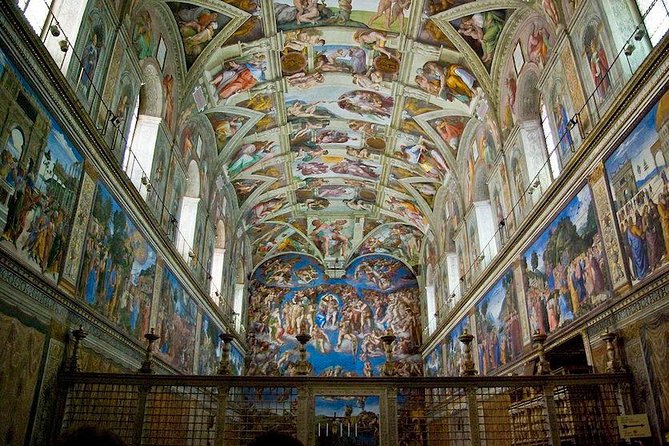
The last stop is the Sistine Chapel, with about 20 minutes inside. That’s a short window, but it’s also the right window—especially if you’re coming from a full day of other sightseeing.
You’ll have the chance to admire two major ceiling works: Creation of Adam and the Last Judgment. The key to getting value in a short time is to know where your attention should go. Creation of Adam is all about gesture and closeness—so your eyes will naturally work from the center outward. The Last Judgment is more crowded and intense, so having a guide help you decide what to look for first keeps you from getting overwhelmed.
Photos are tempting, but this chapel is also about looking closely and letting the art sit with you. If you’re walking in with a game plan—two focal works—you’ll leave feeling like you actually processed something, not just “stood in a famous room.”
Because you’re finishing after the chapel, it’s a good moment to slow down emotionally, even if you can’t slow down physically. You’ll likely feel the scale of the ceiling the moment you tilt your head up, and the contrast between the Raphael Rooms and Michelangelo becomes obvious: one is about intellectual design, the other is about spiritual drama and human emotion.
Your guide changes the whole Vatican experience
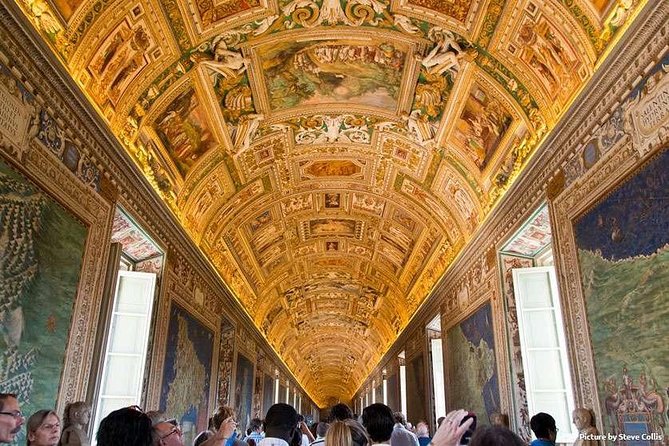
The Vatican can overwhelm you fast. That’s why the guide matters more than you might think.
In the past, guides from this company you might encounter have been described as friendly, organized, and very good at turning complicated art into something you can actually follow. Names that show up include Emma, Alberto, Alessandra, and Arnaldo. One guide, Alessandra, was noted as a former journalist in a way that made her answers clear and question-friendly.
Here’s what that usually means in practice for you: you’ll spend less time wondering what something is called and more time understanding why it looks the way it does. When a guide can explain details on the spot, you stop treating the Vatican like a museum you pass through and start treating it like a place with internal logic.
Also, private tours are better when you have specific interests. If you care about Renaissance art techniques, theology in imagery, or just want to ask basic questions without feeling rushed, this setup is built for that.
You can also read our reviews of more museum experiences in Rome



From Viale Vaticano to St. Peter’s: logistics that affect comfort
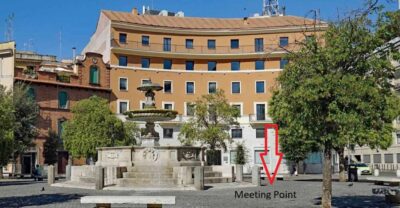
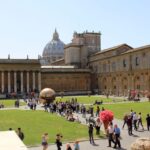
The meeting point is Viale Vaticano 104, 00165 Roma RM, and the tour ends at Saint Peter’s Basilica, Piazza San Pietro, 00120 Città del Vaticano. It’s near public transportation, which is useful because Vatican-area traffic can be unpredictable and walking can be faster than you’d expect.
Your route is also shaped by the 2025 Jubilee celebrations. The tour notes that the passage from the Vatican Museums to St. Peter’s Basilica might not always be open. On certain days, groups may be able to enter the Basilica directly from the Sistine Chapel. If that option is available during your visit, your guide will lead you through so you can skip the long line for a smoother end.
That detail is more than administrative trivia. It can decide whether your final hours feel calm and guided or chaotic and time-wasting. If you’re visiting during Jubilee season, this flexibility is a real value.
One more practical point: snacks aren’t included. With a two-hour tour, you can usually time it around a meal, but if you’re sensitive to long waits or you’re prone to low energy while walking, plan a snack before you meet.
Price: what you’re really paying for at $650.91 per person
Let’s talk money without pretending it’s cheap.
At $650.91 per person, this is a premium-priced Vatican tour. For a solo traveler, it may feel steep. For a small group, it starts to make sense because you’re paying for several things at once:
- a private guide
- tickets and reservations (included)
- all fees and taxes (included)
- a short, structured route that reduces wasted time
So the value is not just access—it’s how the experience is packaged. You’re buying time efficiency and interpretation, not just the right to enter rooms.
There’s also mention of group discounts. Since this is private and only your group participates, ask yourself a simple question: can you share the cost with others in your travel party? If yes, this kind of guided, ticket-included Vatican tour can feel like less of a splurge and more like smart planning.
If your schedule is tight—like you have only one shot at the Vatican—this price often feels more reasonable because it prevents the most common failure mode: doing the Vatican “on your own” and leaving with a blur instead of a clear set of highlights.
Who this tour suits best (and who should rethink it)
This tour fits best if you:
- want a guided art experience rather than just museum entry
- have limited time and want to see Museums + Raphael Rooms + Sistine Chapel
- like asking questions while you look
- appreciate finishing near St. Peter’s Basilica with a guide
It may not be your best match if you:
- need hours to wander slowly and read everything without limits
- want to spend extra time in one single room (this itinerary is intentionally compact)
- prefer a fully self-directed visit without guidance
Also, the stated requirement is moderate physical fitness, so if you know you struggle with steady walking and standing for short stretches, you might want a slower plan.
Should you book this private Vatican Museums and Sistine Chapel tour?
If you’re thinking about booking, here’s my simple decision checklist.
Book it if you want your Vatican day to feel planned: timed, guided, ticketed, and focused on big artistic moments like School of Athens, Creation of Adam, and the Last Judgment—without losing time to confusion. This kind of structure is especially helpful during the busy 2025 Jubilee period, when routes can shift and ending at St. Peter’s might be smoother on days when direct access from the Sistine Chapel is possible.
Consider alternatives if you’d rather spend a half-day wandering at your own speed or you’re the type who enjoys learning through a guidebook and audio. You’d get more flexibility from a longer, self-paced plan.
Bottom line: if you want the Vatican to make sense quickly and you’re happy to move at a brisk, guided pace, this private tour is a strong choice.
FAQ
How long is the tour?
The tour lasts about 2 hours.
What language is the tour offered in?
The tour is offered in English.
Is admission to the Vatican Museums and Sistine Chapel included?
Yes. Admission tickets and reservations are included for each stop.
Is this a private tour or a shared group tour?
This is a private tour/activity. Only your group will participate.
Where does the tour start?
The meeting point is Viale Vaticano, 104, 00165 Roma RM, Italy.
Where does the tour end?
The tour ends at Saint Peter’s Basilica, Piazza San Pietro, 00120 Città del Vaticano, Vatican City.
What should I know about the 2025 Jubilee celebrations?
The passage from the Vatican Museums to St. Peter’s Basilica might not always be open. On certain days, groups may enter the Basilica directly from the Sistine Chapel if that option is available.
Are snacks included?
No. Snacks are not included.