REVIEW · ROME
Private Personalized Architecture Tour of Rome with an Architect
Book on Viator →Bookable on Viator
Rome looks different when someone points out the design choices, not just the headlines. This private architecture-focused walk links major landmarks with the “why” behind their shapes, proportions, and materials, with a pace that fits a tight day.
I especially like the personalized guidance. You’re not stuck in a one-size-fits-all script, and the tour can shape itself around what you care about most. Second, I like that it’s built for time-crunched schedules: the route hits several big sights without turning your day into a slow drag.
One thing to consider: you’ll spend a chunk of time inside the Pantheon and other churches, and that means lines can slow things down. The Pantheon entry isn’t free (it’s €5), so budget for that before you go.
In This Review
- Key highlights worth planning for
- Why an architect-led walk beats a standard Rome highlights tour
- Spanish Steps start: the best opening act in the city
- Pantheon stop: the design you can feel (and the ticket you must plan for)
- Sant’Ignazio di Loyola: architecture as theatrical storytelling
- Trevi Fountain and the photo rush you can outsmart
- Piazza Venezia and Vittorio Emanuele II: looking at power in stone
- Colosseum viewing: what you get, what you skip, and how to make it count
- Il Portico di Octavia: the Roman marketplace story in columns
- Teatro di Marcello: a blueprint for how Romans reused ideas
- Basilica stops that slow you down: Santa Maria in Aracoeli and Trastevere
- Santa Maria in Aracoeli
- Santa Maria in Trastevere
- Price and value for a private 3h40 architect-led route
- Who this tour fits best (and who might want a different style)
- Should you book this private architecture tour?
- FAQ
- What is the duration of the private architecture tour?
- How much does the tour cost per person?
- Is pickup available?
- What language is the guide?
- Where does the tour start and where does it end?
- Are tickets included?
- Does the tour enter the Colosseum arena?
- How many people are on the tour?
- Is the tour suitable for people who need accessibility consideration?
- What’s the cancellation policy?
Key highlights worth planning for
- Private, architect-led pacing: only your group, more questions, less standing around
- Spanish Steps viewpoint + quick photo time: start with the city’s best “first look”
- Pantheon entry included for the tour experience: expect line timing and a separate €5 ticket
- Baroque and Renaissance church details: Sant’Ignazio’s famous mirror area gets special attention
- Colosseum viewing with context: you see it from outside the arena but get the architectural connections
- Rome’s layers in order: Octavia’s portico, Teatro di Marcello, and two basilicas round it out
Why an architect-led walk beats a standard Rome highlights tour
Most Rome tours tell you what something is. This one leans harder into how it was built and what that means—from the big public statements (like the Pantheon and the Colosseum) to the smaller design puzzles inside churches.
You start with a classic “Rome postcard” landmark, then you move into structures where the architecture does the talking. That’s the real value for me: once you learn a few visual clues—arches vs. post-and-lintel shapes, how columns create rhythm, why domes and openings matter—you start seeing the city’s logic everywhere.
And since it’s private, the guide can slow down for questions or speed up when you’ve got your photos and you’re ready to move. I also like that the tour is only about 3 hours 40 minutes, so it doesn’t swallow your entire day in the name of “comprehensive Rome.”
You can also read our reviews of more private tours in Rome


Spanish Steps start: the best opening act in the city
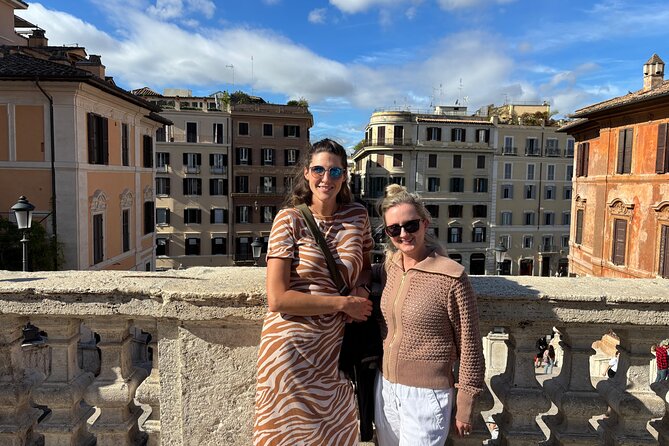
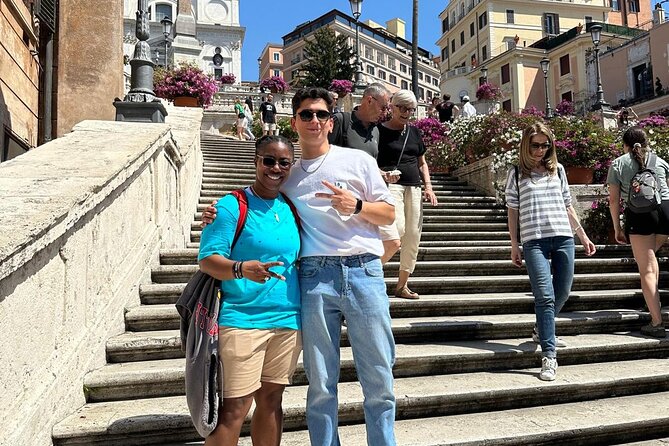
The meeting point is Piazza di Spagna, right where the Spanish Steps begin. From there, you ascend together up to Trinità dei Monti, getting that sweeping Rome view that makes you understand why this spot became famous in the first place.
You’ll get around 20 minutes for this first segment, including a brief visit to soak up the feel of the church and the terrace views. It’s a smart warm-up: you’re not starting with museum-stress; you’re starting with orientation, angles, and skyline.
Practical tip: wear shoes you can trust on stone steps. Rome’s “quick start” can still mean uneven surfaces and lots of stair steps before you even reach the first landmark.
Pantheon stop: the design you can feel (and the ticket you must plan for)
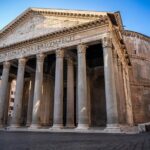
Next up is the Pantheon, one of the best places in Rome to learn architecture by observation. You’ll go inside and spend about 20 minutes appreciating its structure and details with your guide.
This is also where you should manage expectations on time. There can be a long line, and the admission isn’t free. The info you need is straightforward: Pantheon entry costs €5, paid at the ticket area.
Once inside, you’ll have the kind of experience that sticks: the Pantheon isn’t just old—it’s engineered. Even in a short visit, you can spot how the space is shaped for drama and clarity: the way the opening draws your eye, the way the scale makes you feel the building’s confidence.
Camera tip: bring your phone and a camera app that handles indoor light well. The interior contrast can be tricky, and you’ll want at least a couple of solid shots.
Sant’Ignazio di Loyola: architecture as theatrical storytelling
After the Pantheon, you shift to the Chiesa di Sant’Ignazio di Loyola, a church where the design feels like performance. Your stop here is shorter—about 10 minutes—but it’s packed with details.
The highlight is the famous mirror inside. Your guide will point out where to look for it, and the timing matters because there’s usually a line around that spot too. Even if the line slows you down, it’s worth it because the mirror is one of those architectural tricks that turns sight into part of the experience.
This stop is also a good reminder that architecture in Rome isn’t only ancient. It’s religious, theatrical, and made to guide attention. That theme keeps returning through the route.
One note: since the time is tight, if you want to linger over side details, you’ll need to do it with intention—say what you want to see and let the guide adjust.
Trevi Fountain and the photo rush you can outsmart
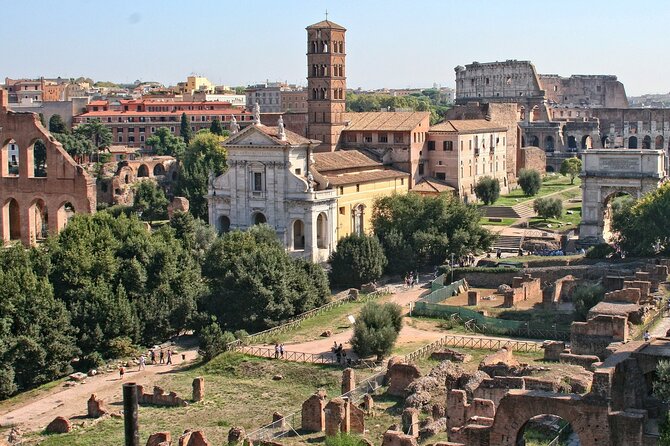
Then it’s Trevi Fountain, with about 10 minutes to enjoy the baroque drama and snap the iconic photos. The guide focuses on the architectural brilliance: carved sculptures, cascading water, and the way the whole design pulls you toward the center.
And yes, there’s the tradition of tossing coins. But beyond the “do the ritual” part, this stop is useful for learning how a public monument creates movement—where crowds naturally flow, how angles work for pictures, and how the setting supports the architecture.
If you’re photo-minded, aim to capture:
- at least one wide shot (showing the whole façade and fountain frame)
- one tighter shot (so the detail work reads)
Trevi gets crowded fast. The shorter stop can feel rushed if you’re sightseeing slowly, but with a guide steering you, you can get what you came for without losing 45 minutes to indecision.






Piazza Venezia and Vittorio Emanuele II: looking at power in stone
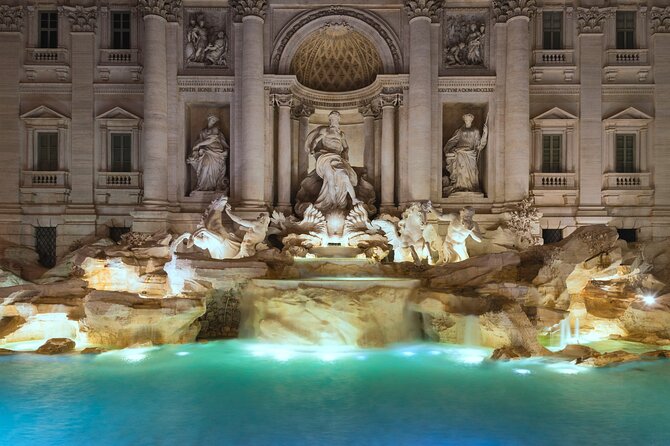
From Trevi you head to Monumento a Vittorio Emanuele II, located in Piazza Venezia. You’ll have about 20 minutes here.
This monument is dedicated to Italy’s first king, and your guide explains its architectural significance—especially the façade details, including columns and sculptural elements. You’ll also get panoramic views over Rome’s core, which helps put the scale into perspective.
For me, this stop is useful if you want more than “ancient stuff.” Italy’s nation-building history shows up in stone too. The architecture here is about identity and visibility, and the guide’s job is connecting that symbolism to what you can actually see in front of you.
Colosseum viewing: what you get, what you skip, and how to make it count
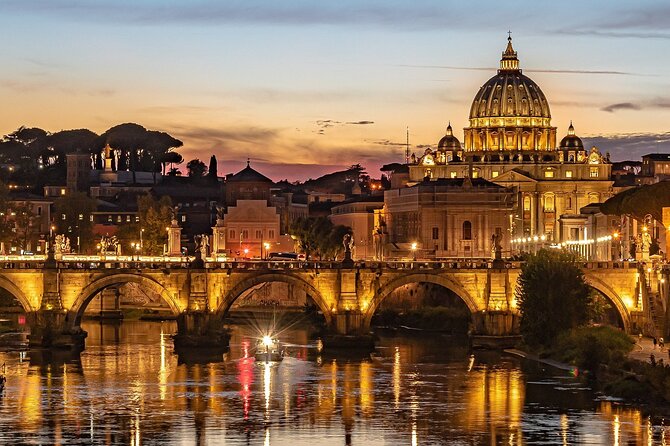
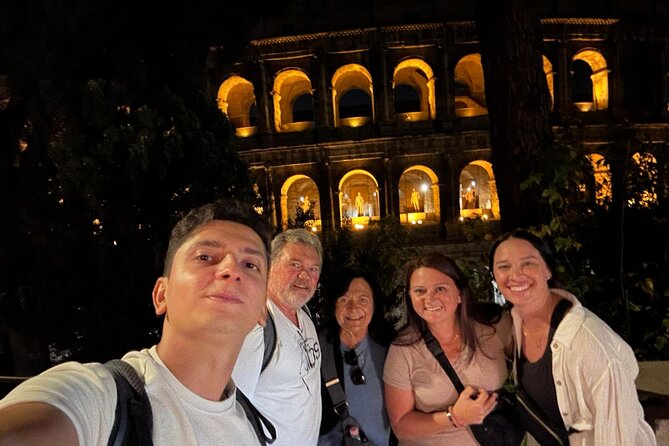
The tour continues to the Colosseum area, with about 30 minutes on site. Here’s the key detail: the tour does not enter the arena. You’ll experience the Colosseum as an architectural space and historical structure, and the guide provides the context you’d miss if you just wandered around.
For those who want the interior experience, a separate option exists, but this tour keeps you moving and focused.
One practical win: Colosseum entrance ticket and reservation fee are included (valued at €18 per person and €2 per person for the reservation). That’s real value if you’ve been quoted high prices elsewhere for entry plus timed booking help.
Also, the tour’s approach is smarter than it sounds. If your time is limited, it’s better to understand what you’re looking at—arches, layers of construction, and the building’s role—than to spend the whole visit stuck in a slow ticket or arena line.
Comfort tip: the Colosseum area can be breezy and busy. Bring a light layer if you’re touring in shoulder season.
Il Portico di Octavia: the Roman marketplace story in columns
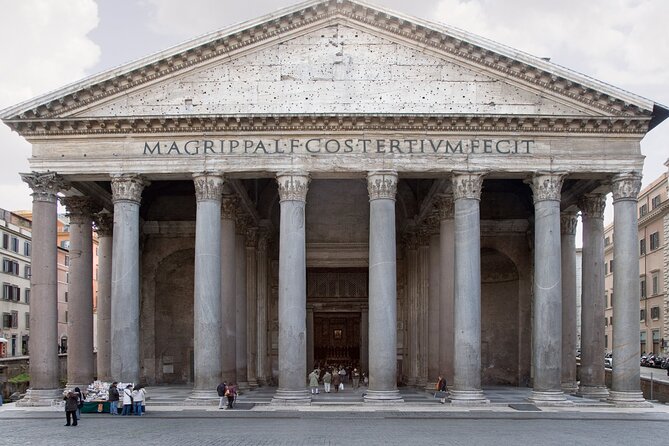
Next comes Il Portico di Ottavia, with about 20 minutes. This is one of those stops where architecture education pays off quickly.
Your guide explains its origins as a grand entrance connected to an ancient temple, then its later role connected to the medieval Jewish Ghetto. You’ll also look at the ancient Corinthian columns and hear how the area functioned as a marketplace.
This kind of layered storytelling is exactly what I like about an architecture tour. The building isn’t only beautiful—it’s meaningful because it changed with the city.
If you enjoy tracing how places shift over time, this stop will feel especially rewarding.
Teatro di Marcello: a blueprint for how Romans reused ideas
After Portico di Ottavia, you’ll see Teatro di Marcello, also about 20 minutes.
This is an ancient open-air theater built under Julius Caesar and Augustus. Your guide walks you through the arches and explains how this theater’s design influenced later structures, including the Colosseum.
You’ll also hear how the site transformed into a medieval residence. That’s the recurring theme here: architecture in Rome often survives by adapting.
This stop can be a favorite if you like architectural “connections” more than photo spots. If you only want the most famous façade, you might find yourself wishing for more time at the big names. The trade-off is that you leave with a clearer mental map of how Rome’s forms evolved.
Basilica stops that slow you down: Santa Maria in Aracoeli and Trastevere
The final stretch mixes two churches in a way that creates variety.
Santa Maria in Aracoeli
You spend about 20 minutes at Basilica di Santa Maria in Aracoeli on the Capitoline Hill. This stop is presented as a “hidden” kind of church experience: your guide connects the site’s ancient Roman origins to its medieval transformation into a church.
You’ll see frescoes and the revered Santo Bambino statue. If you like when a guide explains why a statue matters to the building’s emotional tone, you’ll likely enjoy this part.
Santa Maria in Trastevere
Then you head to Basilica di Santa Maria in Trastevere, again about 20 minutes. This church is described as one of Rome’s oldest, and you’ll focus on the golden mosaics, early Christian roots, and the Romanesque architecture.
It also has a quieter atmosphere compared with the major monuments outside the church. That’s a nice reset after the more crowded, “everyone’s here” sites.
If you’re a “church person,” this portion can feel like the best payoff. One review note that the guide was a specialist in church architecture, and that’s a theme that comes through in how these basilicas are guided.
Price and value for a private 3h40 architect-led route
At $113.56 per person for a private, English-speaking architecture tour lasting about 3 hours 40 minutes, you’re paying for three things that add up fast in Rome:
- Guide attention (private means you’re not sharing your questions with strangers)
- Planning and timing, especially for key timed entry spots like the Colosseum reservation
- Included ticket components where they matter (Colosseum entry and reservation fees are included)
The only major ticket you’ll reliably plan for is the Pantheon (€5), since the tour notes that other listed admissions are free. That means your spending stays predictable.
Where the value can depend on you: if you’re the type who can handle churches and architecture details without getting bored, this tour’s format fits well. If you mainly want “big monument selfies,” you might wish the route spent more time at fewer stops.
Who this tour fits best (and who might want a different style)
This private architecture tour is a strong match if you:
- love seeing how a city’s buildings relate to each other
- want a guide who can explain design choices clearly
- prefer an efficient route that doesn’t eat your whole day
It’s also good if you’re booking for a small group, since private time is the point. You can ask follow-up questions and get answers tailored to what you actually want to notice.
It may feel less perfect if:
- you dislike line-dependent stops (the Pantheon can involve waiting)
- you want extended time at only one or two famous sites
If you get an architect specialist like Bado (name mentioned in past guide feedback), you can expect extra focus on church architecture and how details work up close. That kind of guide style can turn “a few minutes inside” into real learning.
Should you book this private architecture tour?
I’d book it if you want Rome with structure—a route that ties landmarks together through design, materials, and historical layers, not just a list of sights. The private format and the included Colosseum reservation value make it easier to say yes, even on a busy trip.
I’d think twice if you’re walking Rome slowly and hate waiting, because the Pantheon can add friction with lines and the €5 entry. Also, note that the tour does not enter the Colosseum arena, so if that’s your must-do, you’ll want a different Colosseum option.
If your goal is to leave with a clearer eye—arches, domes, mosaics, and why each one was built the way it was—this is a smart use of your time in Rome.
FAQ
What is the duration of the private architecture tour?
The tour lasts about 3 hours 40 minutes.
How much does the tour cost per person?
The price is $113.56 per person.
Is pickup available?
Pickup is offered. You’re told to reach out with the provided number/email, and the guide confirms pickup details about one hour and one day prior to the pickup time.
What language is the guide?
The tour is offered with an English guide.
Where does the tour start and where does it end?
It starts at Piazza di Spagna and ends at the Colosseum, Piazza del Colosseo 1.
Are tickets included?
Colosseum entrance and the Colosseum reservation fee are included. The Pantheon ticket is not included and costs €5. Other stops are listed as free admission.
Does the tour enter the Colosseum arena?
No. The tour does not include entering the arena, though a separate tour is available for those who want to see the interior.
How many people are on the tour?
It’s a private tour/activity, so only your group participates.
Is the tour suitable for people who need accessibility consideration?
Most travelers can participate, and service animals are allowed.
What’s the cancellation policy?
You can cancel for free up to 24 hours in advance for a full refund. If you cancel less than 24 hours before the start time, the amount paid is not refunded.