REVIEW · ROME
Private Guided Walking Tour of Rome
Book on Viator →Operated by Raphael Tours & Events · Bookable on Viator
Rome’s top sights, timed to perfection.
I like this private walking tour for two big reasons: you get a truly customizable route with a guide who can steer the day toward what you care about, and the whole thing fits an easy half-day window (about 3 hours) even when your calendar is packed. The other plus is the guide lineup: you’re not just getting a talk on sidewalks—you get a mix that includes a blue badge guide plus a local perspective and even professional art-historian input. One possible drawback: it’s a walking tour with multiple major photo stops, so you’ll get great orientation, but you shouldn’t expect long, slow museum-style lingering at every site.
You start near Via dei Condotti at a typical Roman coffee bar in the city center, which feels like the right way to enter the day rather than meeting at some far-off office. You can choose a morning or afternoon departure to match your energy level, and the route is designed for efficient sightseeing: cobbled lanes, charming squares, ornate fountains, and viewpoints that many visitors miss because they don’t know where to turn.
Plan for comfort and flexibility. Wear comfortable shoes, because you’ll be moving for the full 3 hours, and the tour runs in all weather (so you’ll want to dress for sun, wind, or rain). Also, food is on you: gelato and pastries are part of the fun, but they’re not included—though that’s often a win since you can pick the vibe you like.
In This Review
- Key things I’d circle before you book
- Why this 3-hour highlights walk is such good value
- Getting started at the Via dei Condotti meeting point
- Piazza di Spagna: cobbled streets, fountains, and the first big wow
- Practical note
- Trevi Fountain: the coin toss, plus the movie-famous context
- The Column of Marcus Aurelius: history with a government-district twist
- The Pantheon: one-stop orientation to art and engineering
- What to know
- Piazza Navona: from ancient stadium to Bernini’s Fountain of the Four Rivers
- Campo de’ Fiori finish: where you can keep enjoying Rome
- Who’s leading, and why the guide mix matters
- Pace, comfort, and weather reality
- What’s included (and what’s wisely not)
- Is $215 per person a smart buy?
- Who this Rome tour suits best
- Should you book this private Rome highlights walking tour?
- FAQ
- How long is the private guided walking tour?
- Where do we meet, and where does the tour end?
- Is the tour offered in English?
- What landmarks are included in the walking route?
- Are entrance tickets included?
- Can I cancel for a full refund?
Key things I’d circle before you book
- Private, just-your-group format: you’re not squeezed into a big herd.
- Customizable experience: your guide can shape the pacing and focus.
- A guide team with credentials: blue badge guide plus local guidance and art-historian context.
- Classic Rome highlights, efficiently linked: Spanish Steps to Trevi to the Pantheon to Navona.
- Built-in stops for food breaks: gelato and pastries are suggested between landmarks.
- All-weather operation: dress appropriately and you’ll be fine.
Why this 3-hour highlights walk is such good value
Rome is big, and your time is limited. What I like about this tour is that it turns the “first-day chaos” feeling into something organized. In about three hours, you cover the sights that shape how people remember Rome, plus you learn the small rules and context that make the rest of your trip smoother.
Let’s talk money, because private tours can look steep at first glance. At $215.08 per person, you’re paying for one-on-one direction and interpretation, not just access to landmarks. For many people, that’s the real bargain: a good guide helps you avoid wasted effort—wrong turns, confusing routes, and time spent staring at things without understanding why they matter. You’re also paying for something you can’t buy at a ticket booth: a conversation that answers your questions in real time.
One detail that matters for value: this is a private tour with your group only, and it’s offered in English. If you’re traveling with family or friends, private format tends to scale better than you’d expect, especially when you factor in how much more you get from your walking time.
You can also read our reviews of more walking tours in Rome

Getting started at the Via dei Condotti meeting point
You begin at Via dei Condotti, 86, 00187 Roma, at a typical Roman coffee bar in the city center. That’s smart. Meeting in the middle of the action means you spend your tour time seeing instead of commuting.
It also sets the tone: Rome is a city where small streets matter. Starting at a café makes it easier to launch into the walking rhythm right away—coffee-bar energy, then cobblestones.
The tour ends back at the meeting point according to the operator info. The walking route, though, finishes at Campo de’ Fiori. In practice, that usually means you’re not left stranded across town when you’re done. You’ll be positioned to keep the afternoon or evening going with minimal effort.
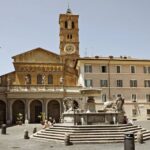
Piazza di Spagna: cobbled streets, fountains, and the first big wow
The tour’s first major stop is Piazza di Spagna, and it’s a strong choice for a kickoff. You get right into one of the most recognizable Rome areas—perfect for orientation when your brain is still figuring out the city’s angles and elevations.
From there, the guide leads you through Rome’s narrower lanes, with charming squares appearing at the ends of walkways you might otherwise miss. The itinerary highlights time spent on foot, including moments to drink fresh mountain water from Fontanelle fountains—those elegant public water points scattered around the city.
This is where a private guide really matters. You don’t just “see” sights; you learn what to notice. For example, you’ll be alerted to photo-friendly moments and the kind of small visual details that usually go unnoticed when you’re wandering without a plan.
Expect a short, satisfying rhythm here: you’ll have time to grab pastries and gelato at your own expense between stops, so you can take pictures without turning it into a snack marathon.
Practical note
If you’re the type who wants to maximize photos, this first stretch gives you a strong base. If you’re prone to getting distracted by side streets, tell your guide early—you’ll still enjoy them, but you’ll keep control of timing.
Trevi Fountain: the coin toss, plus the movie-famous context
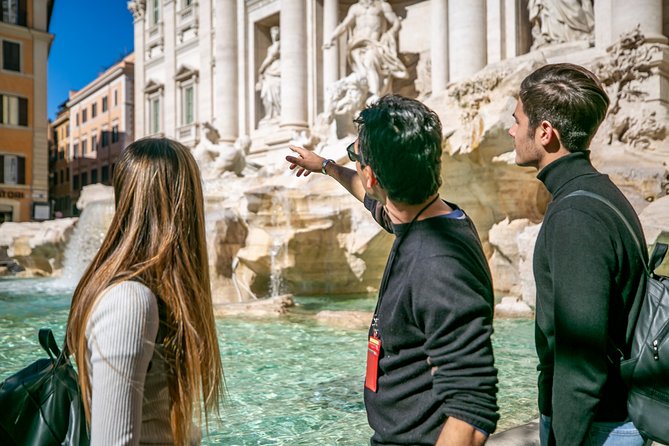
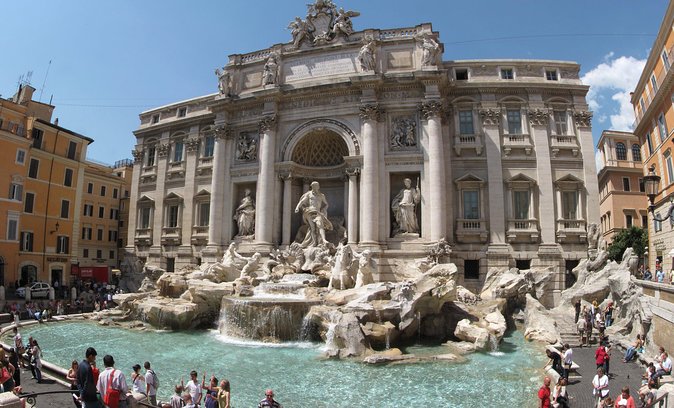
Next up is Fontana di Trevi. This is one of those places where just being there can feel like stepping into a set, because it’s been filmed and referenced so many times. The tour ties Trevi to that pop-culture layer—specifically mentioning Fellini’s La Dolce Vita—and then connects it to the legend.
You’ll spend about 30 minutes here, which is enough time to do the real work: get a good look, understand the story behind the ritual, and take photos without constantly feeling rushed. Tossing a coin is the classic move, but the bigger value is that your guide gives the story so it becomes more than a tourist habit.
Tip for your photo plan: if you love wide shots, arrive ready to frame from different angles, because the space around the fountain pulls you in from multiple directions. A private guide can help you pick a spot quickly, instead of spending half your time circling.
You can also read our reviews of more guided tours in Rome






The Column of Marcus Aurelius: history with a government-district twist
From the postcard center, the tour shifts into a different kind of Rome—more official, more monumental. You’ll make a beeline to the government district area, where you’ll see the Parliament Building and other administrative sites listed in the route context.
The focal point is the Column of Marcus Aurelius. The itinerary also points you toward the nearby Temple of Hadrian, built by Antoninus Pius in appreciation for his ancestor.
This stop is valuable because it shows Rome isn’t only ancient ruins and baroque fountains. It’s also an active capital that layers old and new functions into the same city blocks. A guide helps you read that layering: what’s ancient, what’s political-era monumentality, and why the city looks the way it does.
If you’re studying Rome for a trip later in the week—cathedral day, museum day, or even just neighborhoods—this stop gives you a clean mental map of how the city organizes power and space.
The Pantheon: one-stop orientation to art and engineering
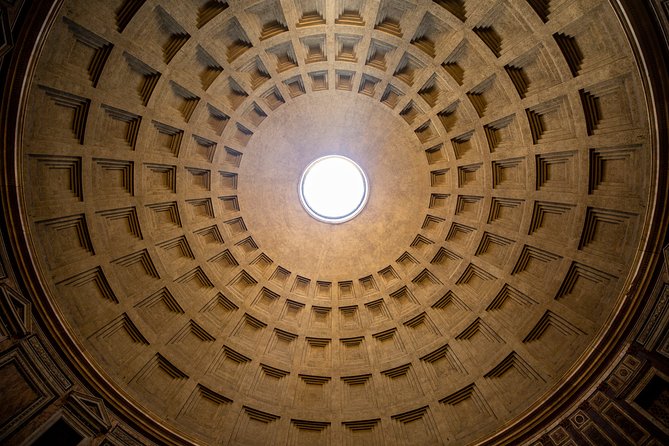
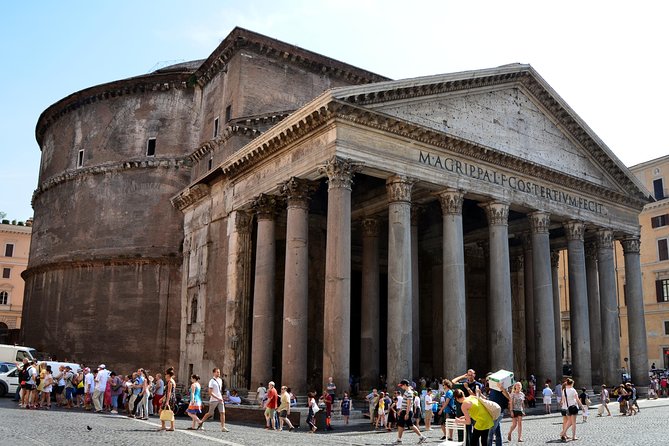
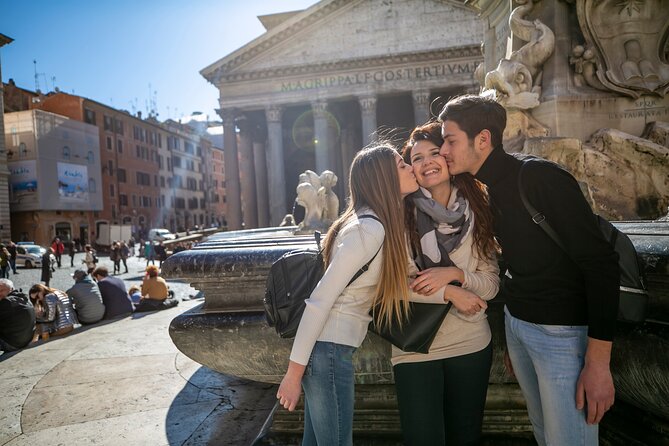
Time to hit one of the most important structures in the city: the Pantheon. Your tour includes a specific note tying the site to Raphael, who lies buried there.
Even if you’ve seen photos, the Pantheon tends to land differently in person. The space feels designed to make you slow down. And because this is a guided stop, you’re not just looking—you’re learning what to pay attention to, which can massively change how you remember it.
The tour schedules about 30 minutes for this stop, so it’s enough for that initial impact and a few well-chosen questions, without derailing the rest of the walk.
What to know
You’ll want your attention here. This is the kind of stop where you’ll learn more if you’re present instead of multitasking on your phone. If you’re the type who likes to ask lots of questions, this is a good moment to do it.
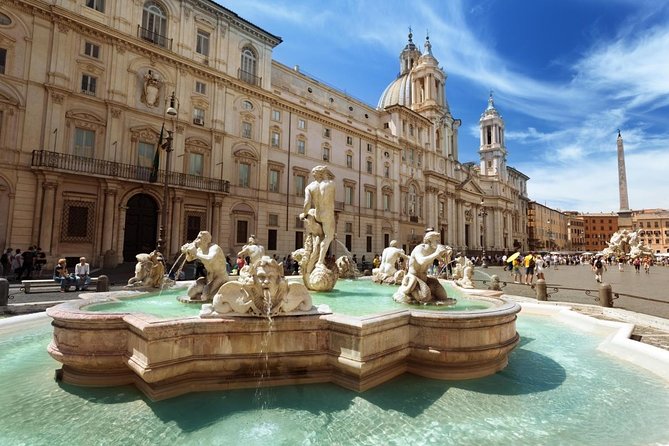
Piazza Navona: from ancient stadium to Bernini’s Fountain of the Four Rivers
You finish the major landmark sequence at Piazza Navona, and this is one of the most fun stops on the whole walk because it explains Rome as a story you can walk through.
The itinerary describes how Piazza Navona sits above the ruins of a huge stadium built for Emperor Domitian, with space for about 30,000 spectators. That detail matters. It reframes the piazza: it’s not just a pretty square—it has athletic, civic, and theatrical energy baked into the site.
Then you focus on a major visual star: the Fountain of the Four Rivers, designed by Gian Lorenzo Bernini in 1651 for Pope Innocent X. Your guide will talk about the Bernini masterpiece while you stand in the square and actually see how the design dominates the space.
You also see St. Agnes church in the piazza setting, tying the baroque-era look to the way this square functions as a stage for daily life.
This stop is ideal because it combines:
- spectacle (the fountain),
- context (the stadium past),
- and immediate beauty (the piazza layout you can enjoy in real time).
Campo de’ Fiori finish: where you can keep enjoying Rome
The tour concludes at Campo de’ Fiori, which is a great place to land because it’s active and easy to move from. When you’re done walking, you’re not stuck in some remote area; you’re in a neighborhood where you can keep going—whether that means a late lunch, a drink, or simply wandering.
The finish also gives you a natural “break point” in your day. If you’re doing a second activity later—another sightseeing stop, a neighborhood exploring plan, or dinner reservations—Campo de’ Fiori is a helpful launchpad.
Who’s leading, and why the guide mix matters
The experience includes a professional guide, and you’ll also find mention of blue badge guidance, plus both a local guide and a professional art historian guide. In plain terms: you’re getting interpretation from more than one angle.
That’s not just fancy wording. When you have multiple strengths (local knowledge, art context, historical framing), you’re less likely to get the kind of tour where everything is either purely factual or purely aesthetic. You’ll get stories you can use—how to understand what you’re seeing, and what questions to ask next.
You might even encounter specific guide styles highlighted by name in the tour’s past experiences, such as Tommaso, Irene (described as an archaeologist and a native Roman), Fabio, and Paola. If you book, you don’t get to choose a specific person from the info provided, but these examples show the kind of background you should expect.
Pace, comfort, and weather reality
This tour runs in all weather conditions, so you should treat “weather readiness” as part of the packing plan, not an afterthought.
Because it’s a walking tour with a tight schedule, I strongly recommend:
- comfortable shoes (the info explicitly calls this out),
- a light layer you can manage if the day is hot or breezy,
- and a rain plan if forecasts look iffy.
Service animals are allowed, and the tour operates near public transportation. That’s useful if you want to arrive early, pop into a nearby stop, or keep your day flexible.
What’s included (and what’s wisely not)
Included:
- professional guide support
- blue badge guide guidance
- local guide
- professional art historian guide
- private tour format
Not included:
- food and drinks
- hotel pickup and drop-off
That split makes sense for city walking. Skipping hotel pickup keeps the route efficient and keeps the tour start anchored in the city center. And because food isn’t included, you can choose exactly what you want during the gelato and pastry breaks instead of being funneled into a single option.
For value-minded travelers, this is the sweet spot: you’re paying for guidance and context, not for overpriced “tour meals.”
Is $215 per person a smart buy?
For a private, 3-hour highlights walk, $215.08 per person can be a solid value—especially if:
- you want a first-day orientation,
- you care about context behind the big landmarks,
- and you’d otherwise spend time piecing together routes and stories on your own.
It’s not a bargain if you’re mostly satisfied by looking at famous sites from a distance. But if you like understanding why things look the way they do, and you want your walking time to count, paying for a guide tends to pay you back quickly.
Also keep this in mind: this tour is on average booked about 30 days in advance. That usually signals demand, so if you’re planning around a specific day (first day in Rome, for example), book earlier rather than later.
Who this Rome tour suits best
This tour is a great match if you’re:
- in Rome for a short time and want high-impact sightseeing,
- visiting famous landmarks for the first time and want the story behind them,
- traveling as a group that wants privacy and flexibility,
- and the kind of person who enjoys walking through city life, not only standing in museum lines.
It’s less ideal if you want a slow, deep museum day or if you don’t enjoy walking. The schedule is tight by design.
Should you book this private Rome highlights walking tour?
I’d book it if you want a smart start to your trip—Spanish Steps to Trevi to the Pantheon to Navona in a time window that won’t swallow your whole day. The private format plus guide depth is the difference-maker: you’ll walk away with a mental map and a set of stories you can build on during the rest of your stay.
I’d skip it (or at least consider another format) if you’re planning to visit only a couple sites and spend the rest of your time wandering without structure. In that case, you might not get full value from the guide time.
If you’re aiming for that balanced middle ground—see the classics, learn the basics, and keep your day moving—this tour is a very practical choice.
FAQ
How long is the private guided walking tour?
It lasts about 3 hours.
Where do we meet, and where does the tour end?
You meet at Via dei Condotti, 86, 00187 Roma RM, Italy. The tour ends back at the meeting point.
Is the tour offered in English?
Yes, it’s offered in English.
What landmarks are included in the walking route?
The tour includes stops at Piazza di Spagna, Fontana di Trevi, the Column of Marcus Aurelius, the Pantheon, Piazza Navona, and it concludes at Campo de’ Fiori.
Are entrance tickets included?
The itinerary lists the stops as Admission Ticket Free, so you should not need separate paid entrance tickets for these parts.
Can I cancel for a full refund?
Yes. You can cancel up to 24 hours in advance for a full refund.