REVIEW · ROME
Medieval Rome & trastevere walking tour w/personal tour guide
Book on Viator →Operated by Easitalytours · Bookable on Viator
Rome has two speeds: postcard and lived-in. This tour leans hard into the lived-in part, with medieval lanes, story-rich stops, and a local art historian guiding the walk. You get the big names like Trastevere and Teatro di Marcello, plus the smaller streets where Rome feels like it still works the way it always has.
I especially like how the route threads together the Jewish Ghetto area, Trastevere, and the riverside stops, so you’re not just checking boxes. I also like that it’s a private tour, which means the guide can pace you and spend time on the parts you care about most, from ancient structures to the squares you’ll likely pass again later for dinner.
One consideration: this is a walking tour, and the info calls for moderate physical fitness. If you’re prone to knee pain or hate cobblestones, you’ll want to prepare (good shoes help a lot) and keep an eye on the weather, since the experience requires good conditions.
In This Review
- Key Things I’d Book This For
- Medieval Rome, Without the Usual Detour Drama
- Price and Value: When $254.67 Works Best
- From Campo de’ Fiori to Trastevere: How the Route Flows
- Your Private Local Art Historian Guide: What That Actually Changes
- Stop 1: Antico Quartiere Ebraico (Jewish Ghetto) and Its Long Memory
- Stop 2: Piazza di Santa Maria in Trastevere and Bramante’s Fountain
- Stop 3: Trastevere Streets, Cobblestones, and Night-Ready Character
- Stop 4: Teatro di Marcello, Where Ruins Feel Like City Blocks
- Stop 5: Isola Tiberina, the Calmer Pause on Tiber Island
- Stop 6: Campo de’ Fiori Again, for Day Market Energy and Evening Mood
- What to Wear and Bring So You Enjoy the Walk
- Who This Tour Suits Best (and Who Should Choose Something Else)
- Should You Book This Medieval Rome and Trastevere Walk?
- FAQ
- Where does the tour start and end?
- How long is the walking tour?
- Is this a private tour?
- What’s included in the price?
- What should I wear?
- Is the tour ticket mobile?
- Is transportation included?
- When to Book
Key Things I’d Book This For
- Private guide time: you only share the walk with your group
- Jewish Ghetto focus: Antico Quartiere Ebraico is treated as a full neighborhood, not a quick stop
- Trastevere landmarks: Piazza di Santa Maria in Trastevere and the surrounding feel are the heart of the day
- Ancient-meets-city ruins: Teatro di Marcello shows how Roman structures became part of everyday life
- Tiber River moment: Isola Tiberina offers a calmer pause between streets and squares
- Easy start, clear finish: begins at Campo de’ Fiori and ends at the Basilica area in Trastevere
Medieval Rome, Without the Usual Detour Drama
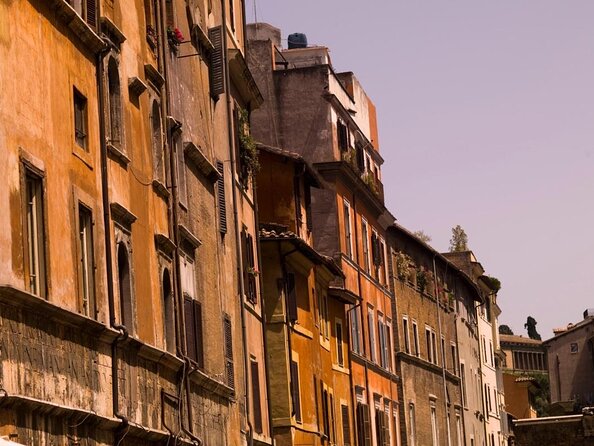
A lot of Rome tours feel like a fast hop between famous ruins. This one feels different because it’s built around neighborhoods and streets you can actually picture yourself wandering later. You’ll move through medieval Rome using small squares and connected alleys as the roadmap. That changes how the city lands. Instead of asking what you saw, you start asking how people lived here.
The other thing I like: you’re not pushed into constant museum stops. Yes, you’ll touch major historical points, but the experience is shaped by walking rhythm. Squares give you a breather. Streets force you to slow down and look. And when your guide points out what you’re seeing, it’s easier to remember because your feet were doing the work.
It’s priced at $254.67 per person, which is not the cheapest option. But you’re paying for a private guide with an art historian background, and for a route that mixes meaningful historical context with neighborhood time.
You can also read our reviews of more walking tours in Rome



Price and Value: When $254.67 Works Best
At $254.67 per person, the question is simple: are you getting enough guide time to justify the cost? Here, the answer is mostly yes because you’re not buying a long list of separate ticketed attractions. You’re paying for a personal walking experience that uses knowledgeable interpretation across multiple key sites.
Also, there are group discounts mentioned as part of the booking. That matters if you’re traveling with friends or family. A private tour can be expensive per person, but it often turns into good value once you share the cost.
You’ll also see this tends to sell out-ish in advance, with an average booking window of about 55 days. If your dates are fixed, I’d lock it in early rather than waiting for a last-minute deal.
From Campo de’ Fiori to Trastevere: How the Route Flows
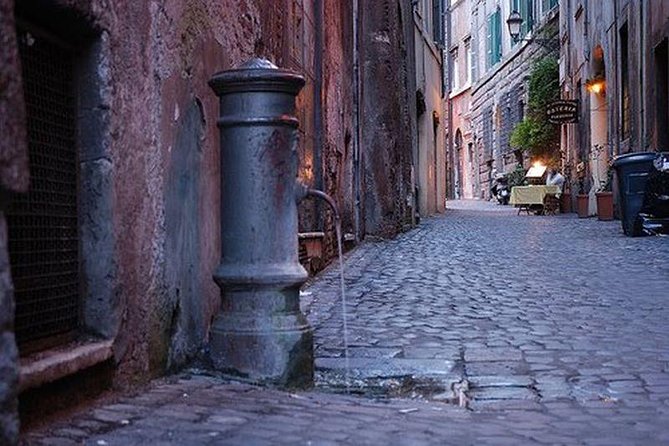
You start at Campo de’ Fiori, near the center of the city. That’s a smart place to begin because you’re already in an area full of street life and easy connections. The walk then gradually leads you toward Trastevere, so the final section feels like you’re transitioning from Rome’s daytime energy into an evening-friendly neighborhood.
The tour ends at Piazza di Santa Maria in Trastevere, right by the basilica area. That’s practical. Once you finish, you’re basically positioned for dinner without needing a whole new transport plan. It also means the tour gives you a “landing pad” neighborhood to explore after.
Duration is listed as about 3 hours. In Rome, that’s long enough to feel like a real experience, not just a 90-minute taste. But it’s also short enough that you can still plan other activities the same day.
Your Private Local Art Historian Guide: What That Actually Changes
The tour includes a professional local art historian guide. That matters because art history in Rome isn’t only about paintings and frescoes. In this city, it’s about how buildings, facades, and urban design evolved over time—and how that evolution still shapes what you see today.
In a private format, the guide can:
- adjust the pace if your group wants more time in a square
- explain the why behind what you’re looking at
- point out details that you’d likely miss on your own
One name that came through in the feedback is Stephanie. People highlighted her as fun and extremely informed, and that kind of energy helps a walking tour feel lively instead of lecture-heavy.
Dress code is listed as smart casual, and the tour expects moderate physical fitness. That combination is common for Rome walking tours: not a hike, but enough pavement and uneven ground to matter.
Stop 1: Antico Quartiere Ebraico (Jewish Ghetto) and Its Long Memory
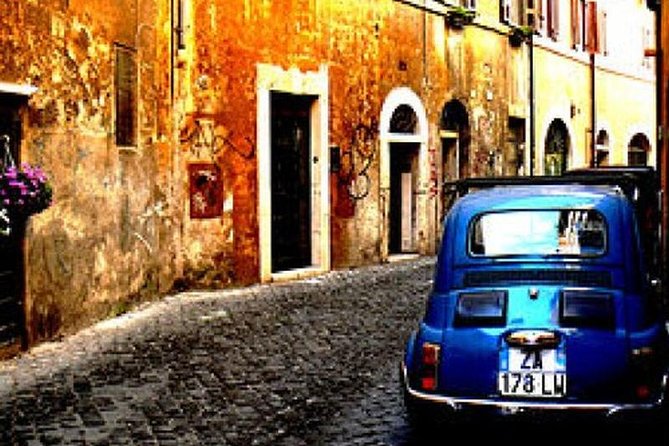
Your first major stop is Antico Quartiere Ebraico, described as one of Rome’s most traditional neighborhoods. This area is especially meaningful because it’s not treated as a single monument. It’s presented as a walkable neighborhood with layered history you experience through the street layout and the local atmosphere.
What I’d want from this stop is exactly what the description suggests: an enriching and enjoyable walk with your guide connecting stories to what you’re seeing. If you’re visiting Rome for the first time, this is also a strong way to broaden your understanding beyond the usual empire-only narrative.
Practical note: this stop is scheduled for about 1 hour. That’s a lot of time for an early segment, and it’s a clue that the guide won’t treat it like a quick photo moment. You’ll likely get more context before moving on to the lighter, more social feel of Trastevere.
If you’re sensitive to heavier historical material, this is still a thoughtful format because you’ll have time to process with a guide close by.
You can also read our reviews of more guided tours in Rome



Stop 2: Piazza di Santa Maria in Trastevere and Bramante’s Fountain
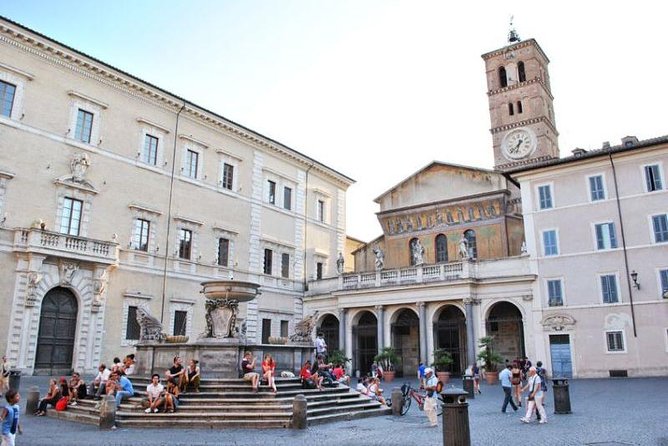
Next up is Piazza di Santa Maria in Trastevere, around 20 minutes. This is the kind of square that makes you stop even if you didn’t plan to. You’ve got the Basilica of Santa Maria in Trastevere and the fountain by Bramante.
Why this stop works: squares are Rome’s pause buttons. You can reset your eyes after narrow lanes. And because the basilica and fountain are well-known landmarks, your guide can use them as reference points for describing how the neighborhood developed.
This segment is short, so if you love architecture, you might be tempted to look longer on your own after the tour. A good move is to jot down what catches your eye and come back later when you’re not on a timed walking schedule.
Stop 3: Trastevere Streets, Cobblestones, and Night-Ready Character
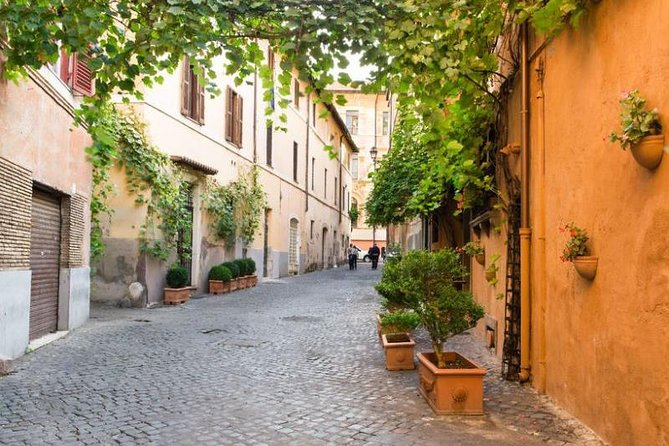
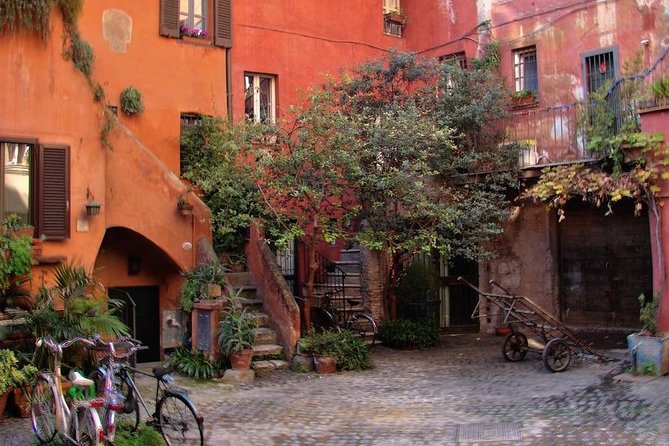
You then spend about 40 minutes in Trastevere. The description calls out old buildings and cobbled streets, plus a dense mix of restaurants. It also notes that at night Trastevere is one of Rome’s liveliest areas.
Here’s why I think this segment is valuable: Trastevere helps you understand Rome as a place people still inhabit. The streets are not just scenery. They’re routes. They tell you where people go to eat, meet, and wander.
Since this tour is only about 3 hours total, Trastevere is given a realistic amount of time. You get the feel without being stuck in one spot for too long. Wear shoes you trust on cobblestones. That’s not optional advice in Rome.
Stop 4: Teatro di Marcello, Where Ruins Feel Like City Blocks
Teatro di Marcello takes about 20 minutes. It’s described as an architectural marvel and an ancient theater whose facade and ruins can make you feel that pull of the past.
What makes this stop interesting is the framing: you’re not just looking at an isolated artifact. You’re seeing an ancient structure’s scale and how it still dominates the surrounding space. This is the sort of site where scale matters. Even if you’ve seen photos, your eyes need the street-level perspective.
The drawback here is that photos can easily make Teatro di Marcello feel flatter than it is. If you want the full effect, take in the facade proportions first, then look for the ruins and edges after. Your guide should help you orient quickly.
Stop 5: Isola Tiberina, the Calmer Pause on Tiber Island
Your next stop is Isola Tiberina, or Tiber Island, again around 20 minutes. The description highlights its small, picturesque setting and calls it a peaceful oasis in the middle of busy Rome. It also notes the island’s Basilica of St. Bartholomew.
This is a smart scheduling choice. After Trastevere’s street intensity and the ancient theater stop, you get a break in atmosphere. A river island gives you space to re-center your thoughts, plus it changes the visual angles. Even on a short stop, it can reset how you experience the city.
If your group loves photography, this is the place to take a breath and slow down. The tempo is different here, and that’s part of the value of the route.
Stop 6: Campo de’ Fiori Again, for Day Market Energy and Evening Mood
The final stop is Campo De’ Fiori, about 20 minutes. This is one of those places Rome keeps reinventing throughout the day. It’s known for a bustling market in the daytime and a lively nightlife in the evening.
Even though it’s also where you started, it lands differently later. Early in the tour, it sets context. Later, it becomes a recap point where you can think about what you’ve learned and how the city feels now that you’ve seen its medieval layers.
One thing to keep in mind: because it’s tied to market and nightlife energy, it can be crowded. If your guide’s plan includes a tight wrap-up, be ready to move quickly to catch the story beats, then linger after you finish if you want.
What to Wear and Bring So You Enjoy the Walk
The tour calls for smart casual, and it requires moderate physical fitness. Translation: you’ll be on your feet for about three hours, likely with uneven ground. So I’d pack it like a normal day of neighborhood walking in Rome.
My quick checklist:
- comfortable walking shoes for cobblestones
- water if you tend to get thirsty while walking
- a light layer if weather is changeable (especially since the tour requires good conditions)
- your phone charged for the mobile ticket
Also, because it’s private, you can usually adapt your pace if your group needs a brief stop. Still, don’t treat it like a long museum day. Keep expectations aligned with walking-first.
Who This Tour Suits Best (and Who Should Choose Something Else)
This is a great pick if you want Rome with texture. You’ll enjoy it if:
- you like medieval streets and neighborhood atmospheres
- you’re curious about the Jewish Ghetto area and want a guided, respectful walk through the context
- you want Trastevere not as a random stroll, but as a structured experience
- you prefer a private tour where your guide can focus on your interests
It might be less ideal if you want strictly ancient monument time with minimal walking, or if you don’t do well with cobblestones and uneven surfaces.
Should You Book This Medieval Rome and Trastevere Walk?
I’d book this if you’re the kind of traveler who remembers a city by how it feels while walking. The strongest selling points here are the neighborhood focus—Jewish Ghetto to Trastevere—and the structure provided by a local art historian. Also, ending near the Basilica in Trastevere is a practical gift for your evening plans.
If you’re price-sensitive, compare it to other tours that rely heavily on ticketed sites. This one’s value comes from interpretation and route design, not from access to a stack of paid attractions. And if you’re traveling with a group, the group discount factor can help a lot.
If the weather is questionable, don’t ignore that. The experience requires good conditions, so plan for flexibility if you can.
FAQ
Where does the tour start and end?
The tour starts at Campo de’ Fiori, 00186 Roma RM, Italy and ends at the Basilica of Santa Maria in Trastevere area, Piazza di Santa Maria in Trastevere, 00153 Roma RM, Italy.
How long is the walking tour?
It runs for about 3 hours.
Is this a private tour?
Yes. It’s a private tour/activity, and only your group participates.
What’s included in the price?
The tour includes a professional local art historian guide.
What should I wear?
The dress code is smart casual.
Is the tour ticket mobile?
Yes, it includes a mobile ticket.
Is transportation included?
No. Transportation to/from attractions is not included.
When to Book
If you can, book ahead. The average booking timing is about 55 days in advance, and private tours can fill up when schedules line up. If your dates are close, confirmation timing depends on availability.
If you want, tell me your travel dates and group size, and I’ll help you decide whether this route fits well with your other Rome plans.