REVIEW · ROME
Rome:Appian Way E-bike Tour, Catacombs, Aqueducts & Transfer
Book on GetYourGuide →Operated by Bicycle Roma · Bookable on GetYourGuide
Stone roads, underground secrets, and pedal power. I like how this trip swaps Roman traffic for a car-free style ride along the Appian Way, most of it on ancient stone. I also love the mix of wow-factor stops: a guided catacomb visit plus open-air riding through Roman countryside. One thing to consider: the ride is not all smooth pavement, so you should feel comfortable on a bumpy, sometimes gravelly route (the e-bike helps, but you still steer).
You start with a private van transfer, about 20 minutes each way, so you spend less effort getting out of central Rome and more time actually cycling and listening. Guides such as Emanuele, Alessandro, and Sabrina tend to make the stops feel personal, from the little stories to the way they set up your bike and help with your comfort.
Finally, the tour runs about 4.5 hours, which makes it a great use of a half-day. Just remember: it’s activity-heavy—cycling plus walking in a few spots—so don’t plan a big dinner sprint right after.
In This Review
- Key things to watch for
- Meeting the guide and getting out of the city fast
- Cycling Via Appia Antica: the car-free feel that makes it special
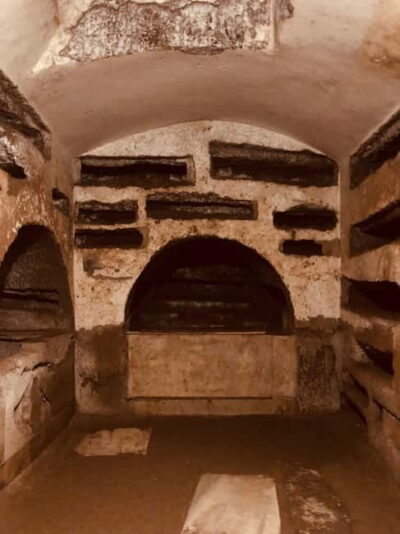
- Catacombs of Rome: what the guided underground visit adds
- Photo-stop Rome: Caracalla, Circus of Maxentius, and Cecilia Metella
- Parco Regionale Appia Antica: the “countryside Rome” stretch
- Aqueducts Park: Roman engineering you can actually see while moving
- Safety, bike handling, and the real meaning of an e-bike tour
- Price and value: why $86.66 can make sense for Rome
- Who this tour suits best (and who should skip it)
- Should you book the Rome Appian Way e-bike tour?
- FAQ
- How long is the Rome Appian Way e-bike tour with catacombs and aqueducts?
- Where do I meet the guide?
- How long is the private shuttle transfer?
- Is the catacombs visit included?
- What’s included with the e-bike?
- Is the tour suitable if I’m not an experienced cyclist?
- What language is the live guide?
- What group sizes are offered?
- What should I bring, and are there restrictions?
- Are refreshments included?
- Is this tour refundable if my plans change?
Key things to watch for
- Traffic-light routing: the route avoids most road chaos, with the longest stretch on Via Appia Antica stone.
- Catacombs with a guide: you get a structured visit (not just a quick peek).
- E-bike support that actually matters: you’ll still ride, but hills and long stretches feel manageable.
- Photo stops that aren’t random: Circus sites and tomb viewpoints are built into the ride.
- Aqueduct-area engineering views: the aqueduct zones are great for photos and slow-looking.
- Guide support on the ground: many guides handle bike setup and help capture your shots with your phone.
Meeting the guide and getting out of the city fast
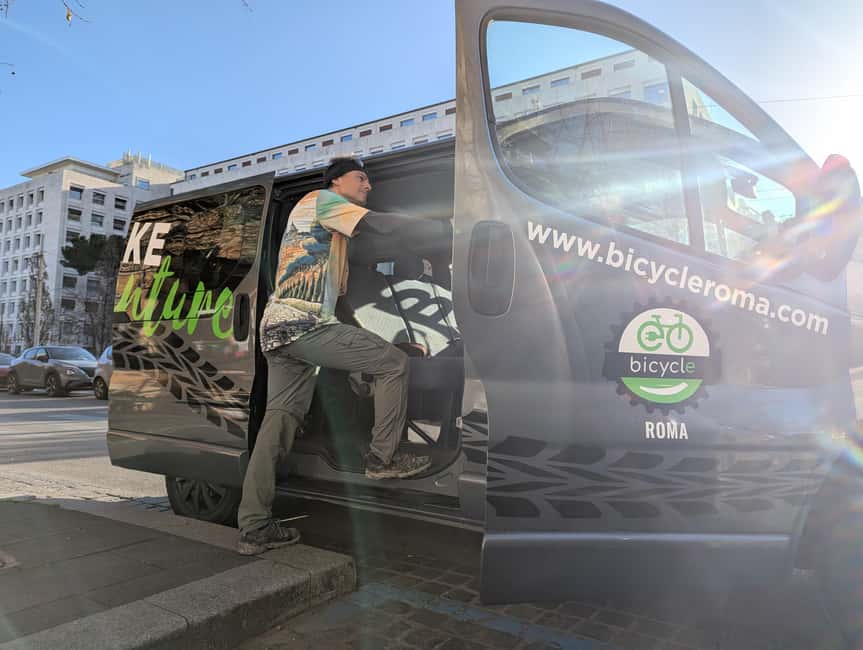
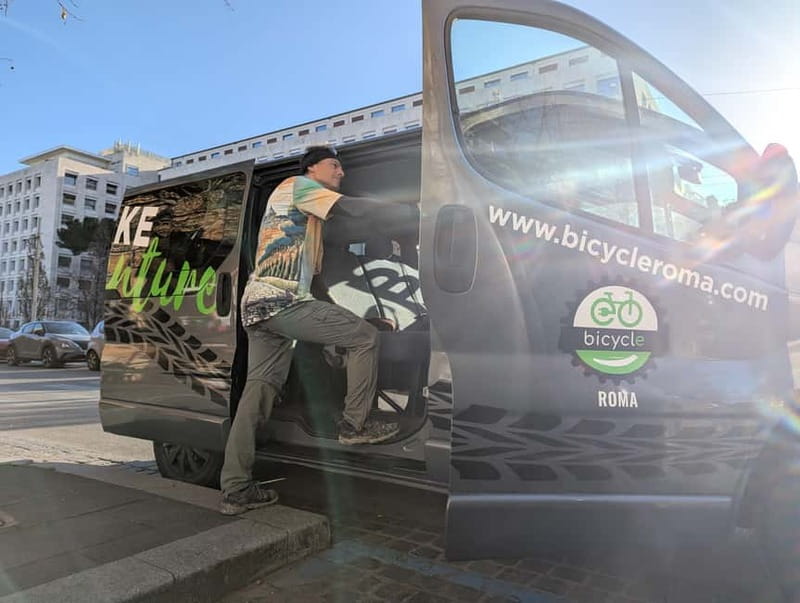
The experience starts with a simple meet-up near the action: you locate the Bike Adventure van in front of the RUVER Teglia Frazionata pizzeria, and the guide welcomes you from there. The vehicle is a 9-seater minivan, and you’re transferred by van for roughly 20 minutes to the start area near the Appian Way zone. That transfer time is key for two reasons: it reduces stress, and it keeps the cycling portion focused on the historic route you came for.
Once the bikes are sorted, the tour feels organized without being rigid. Helmets are provided, and there’s also a bike lock, which is handy if you need to step away briefly at a stop. One small practical detail I appreciate: you’re not expected to figure out timing and navigation yourself. Your guide controls the pacing and takes care of the handoffs between walking, photos, and the next cycling segment.
If you’re doing this as a first-time bike trip in Rome, I’d still advise you to arrive ready to ride with at least basic-medium comfort. It’s an e-bike tour, but you’re still riding a real road and steering through real conditions.
You can also read our reviews of more cycling tours in Rome
Cycling Via Appia Antica: the car-free feel that makes it special
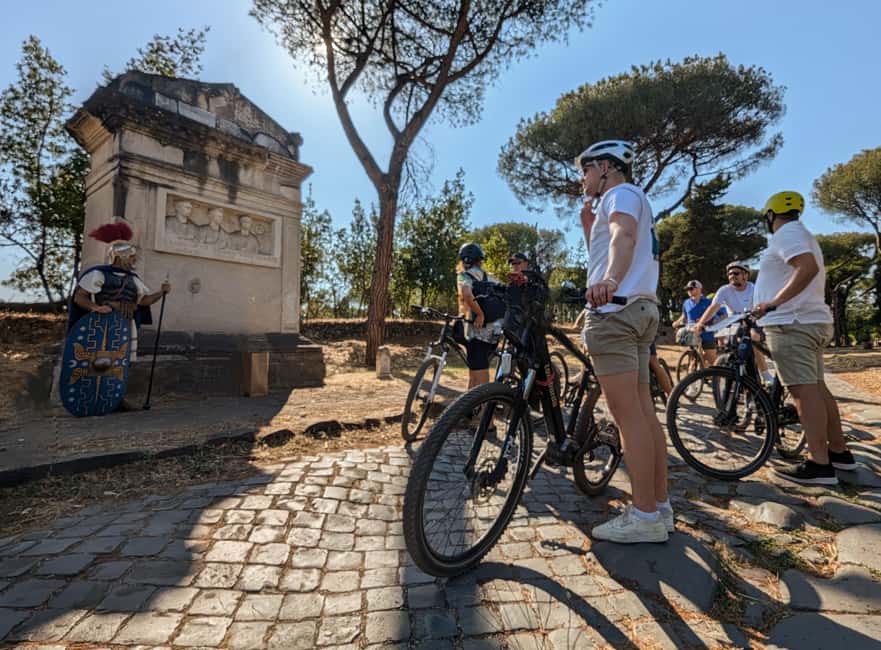
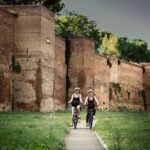
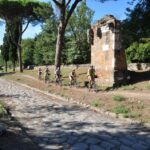
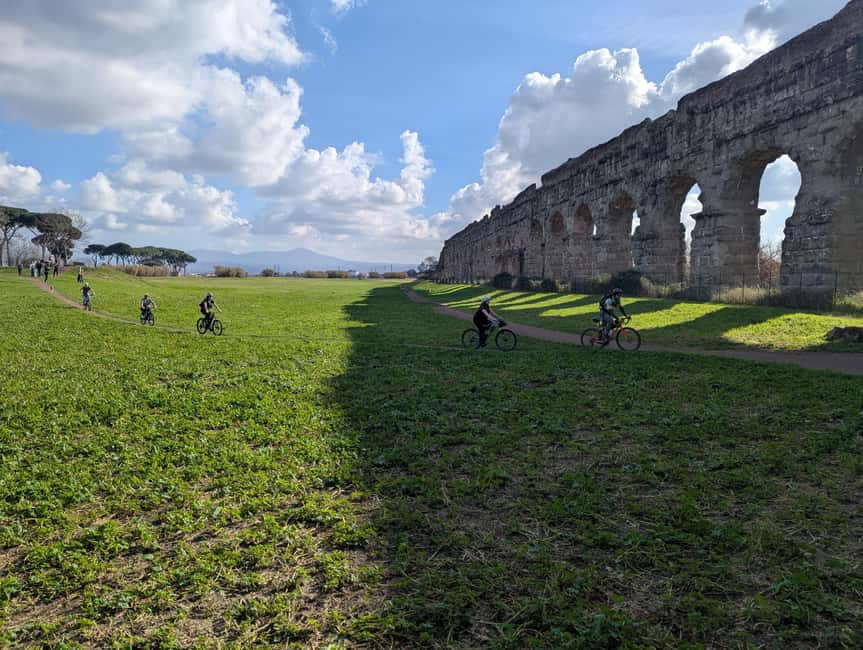
The headline here is Via Appia Antica, the legendary Appian Way. About 90% of the route runs along the Roman paving, and the big advantage is that it’s mostly free from car traffic. Only residents’ cars have access, and even then, crossings are limited. In other words, you get the sensation of being in a historic corridor without the constant threat of modern traffic right on your shoulder.
This is where the e-bike changes the whole vibe. You don’t just “get to” the countryside—you can actually enjoy it while moving. With electric assist, you keep enough energy to pay attention to what the guide points out: monumental tombs, the road’s history, and the logic behind how ancient Rome built and moved people and goods.
A few details matter while you ride:
- The old stone road can be bumpy. You’ll feel it more than you would on asphalt.
- If you’re on the route during busier times (like weekends), you may encounter more walkers, strollers, or cyclists. Your guide will route you to quieter segments, but speed drops.
- On some departures, you may also spot extra countryside details (like animals on the path or small local moments). One highlight from past groups was a sheep crossing, and it’s exactly the kind of “Roman countryside, not city Rome” moment this tour is good at delivering.
If you like history but also want fresh air, this part is the payoff.
Catacombs of Rome: what the guided underground visit adds
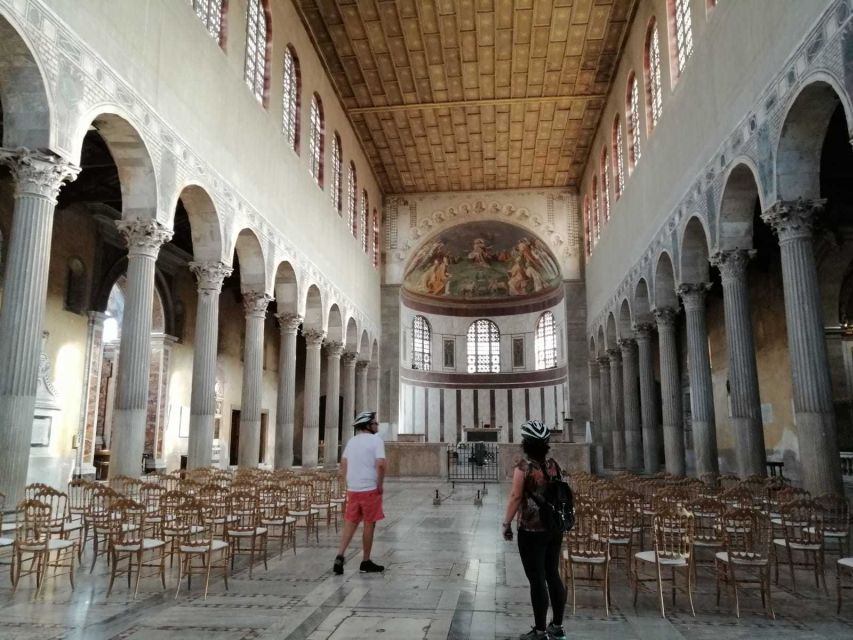
The catacombs visit is not a random add-on. It’s a guided tour timed to fit the flow of the ride: you stop, park the bike with your group, then head underground for about 45 minutes.
What makes this segment work is the structure. You’re not just looking at dark corridors and hoping the story makes sense. A guide helps connect the scenes to the bigger picture—how these underground spaces were used and why they matter in Rome’s long timeline.
Also, the underground stop resets you mentally. After bright stone roads above, going into the catacombs feels like stepping into a different world. Several groups have noted how the cold air underground can be a welcome break mid-tour.
One practical thing: wear the same mindset you’d use for a museum visit. You’ll want to listen, not just take photos. The guide’s job is to slow the moment down enough for you to actually process it.
Photo-stop Rome: Caracalla, Circus of Maxentius, and Cecilia Metella
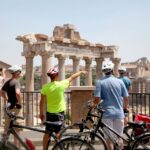
Before you settle fully onto the Appian Way, you’ll pass by the Baths of Caracalla. It’s a quick pass rather than a deep visit, but it sets the tone: this is the kind of Rome where major sites line up like chapters.
Then you start hitting the small, high-impact stops:
- Circus of Maxentius: you get a short walk and a photo pause.
- Tomb of Cecilia Metella: another short walk and photo moment.
These aren’t long detours. They’re designed to give you landmarks you’ll recognize later when you look at maps or history books. And they work well with bike pacing—quick enough to keep the ride smooth, long enough that you leave with more than vague impressions.
What I like about these stops is how they help you visualize the road’s purpose. Standing near major monuments makes the Appian Way feel less abstract. The stone road stops being just a path and becomes a corridor of power, memory, and engineering.
Parco Regionale Appia Antica: the “countryside Rome” stretch
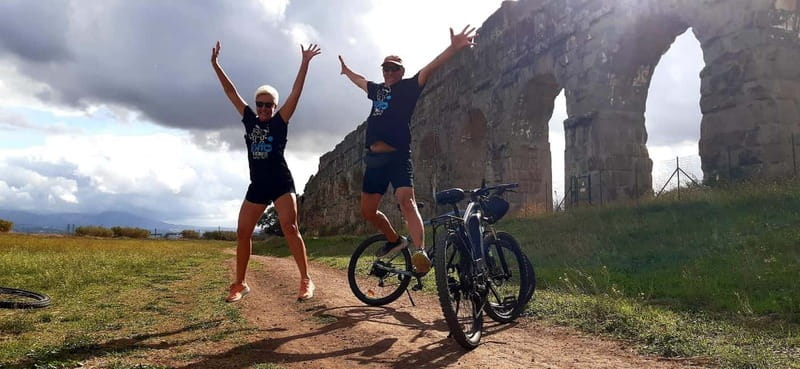
Once you’re in the Appian countryside, the tour shifts into a calmer rhythm. This is where you’ll spend a lot of your time riding through the regional park area, moving from landmark to landmark with a guide explaining what you’re seeing.
Even if you don’t consider yourself a “history person,” this stretch is still valuable. The main reason: it’s a change of setting. You’re out of the city walls and away from the constant buzz of central Rome. The combination of quiet roads, open air, and the ancient road under your tires creates the tour’s signature feeling—Rome, but not the postcard Rome.
In past departures, guides like Alessandro have been especially good at spotting interesting details along the route, then timing short stops so you don’t lose momentum. This is one reason many people call the day a highlight: you get meaningful sights without spending hours waiting for lines or slow bus transfers.
You can also read our reviews of more tours and experiences in Rome





Aqueducts Park: Roman engineering you can actually see while moving
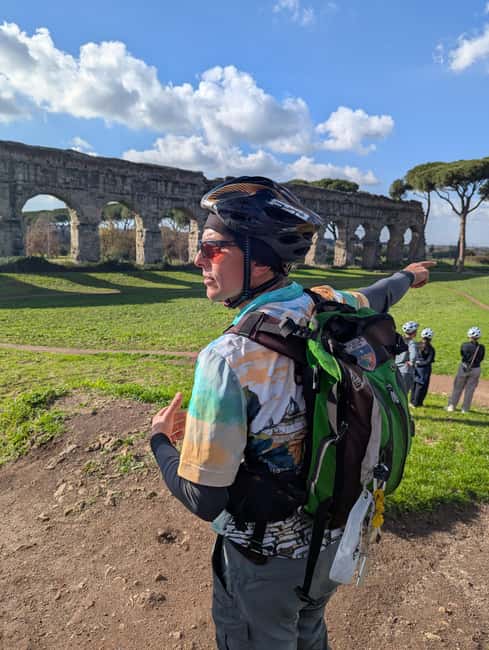
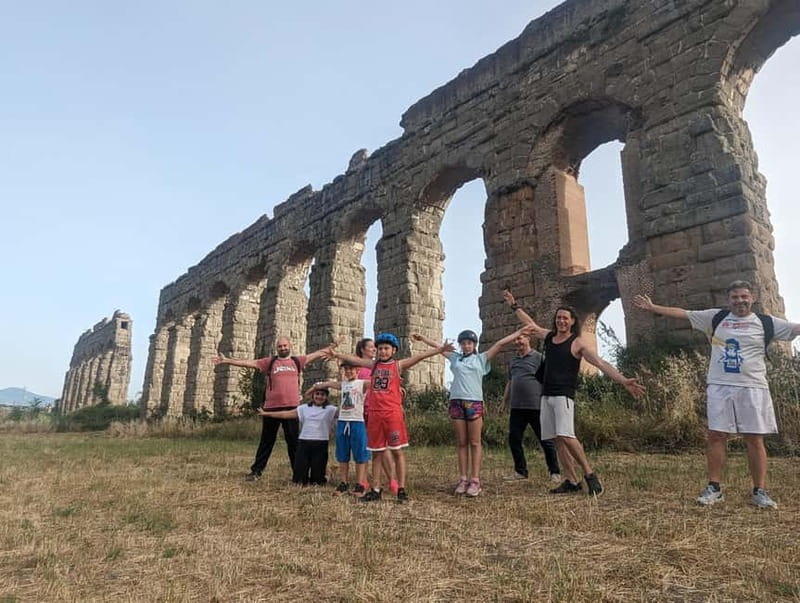
Later on, you’ll ride into the aqueduct area—Parco degli Acquedotti—with photo stops along the way, including Torre Fiscale Park and then onward to the Caffarella area.
This is a strong part of the experience because aqueducts are one of those ancient inventions that feel obvious only after you see them. When you ride near the structures, you understand the scale and the intent. It’s not just an old wall; it’s a machine for delivering water across difficult terrain.
What to expect here:
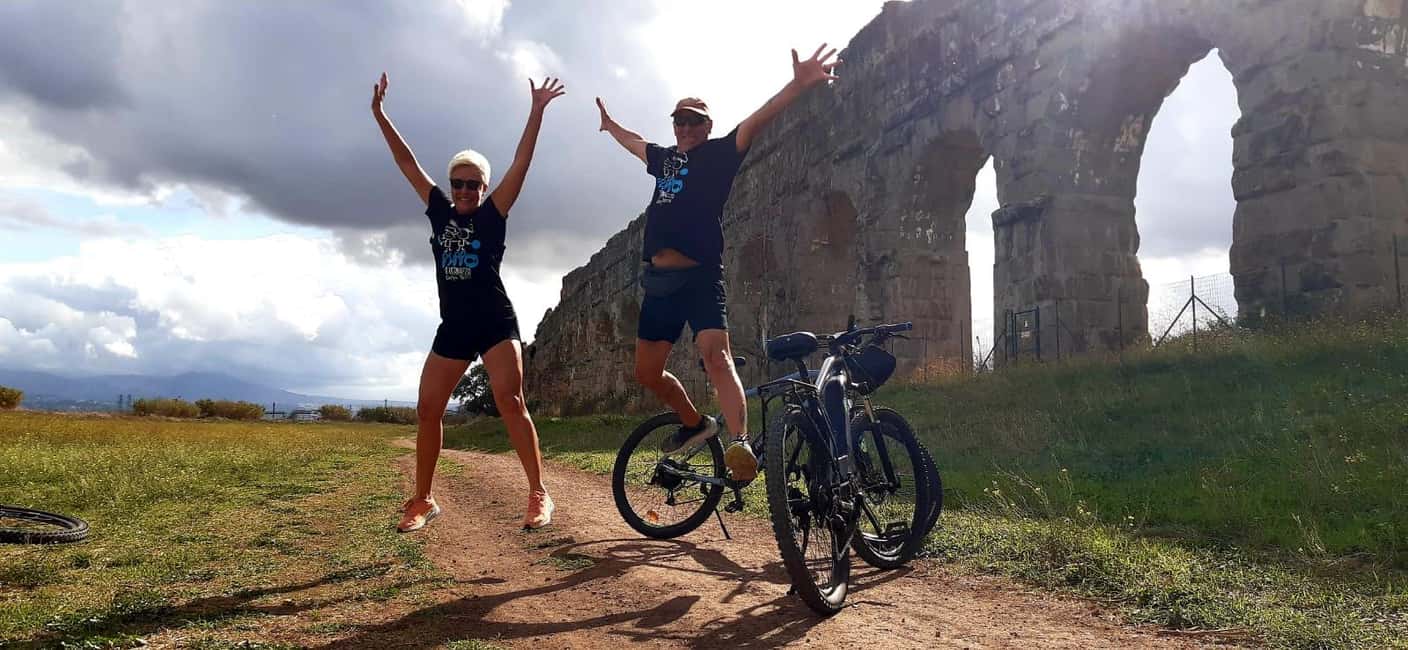
- Photo pauses help you frame the aqueducts and the surrounding park views.
- The ride is still active, so you’re not stuck only looking from one spot.
- The route tends to be calmer than you’d expect for a day that includes major Roman landmarks.
If you enjoy taking photos, this section gives you a lot of opportunities to stop without feeling rushed. In several groups, guides have helped with pictures using participants’ phones and even suggested the best spots for action-style shots.
And yes—on a good day, it feels like you’re riding through layers of time at a human pace.
Safety, bike handling, and the real meaning of an e-bike tour
Let’s talk about what “comfort” really means on this kind of tour.
The route is chosen to be quiet and safe, with limited crossings when leaving one park zone to another. That reduces the stress level compared to cycling in the center of Rome. Still, the road under you is not always smooth. Via Appia Antica’s paving can be uneven, and some parts can include gravely textures depending on conditions.
That’s why the tour requires basic-medium bike riding skills. You don’t need to be a cyclist racer, but you should be able to:
- Maintain balance on uneven ground.
- Ride predictably in small-group formation.
- Stop and start smoothly at short stops.
The e-bike helps a lot, especially for hills and longer distances, but it doesn’t replace good bike control. If you’re unsure about your comfort level, try to practice a little before the tour—simply riding and braking confidently can make the whole day feel easier.
One more practical plus: the tour includes a helmet and bike lock, and guides typically make sure your bike fits well. Several past groups praised guides for setting bikes up correctly, which is exactly how you avoid sore wrists and awkward posture.
Price and value: why $86.66 can make sense for Rome
At $86.66 per person, this tour can feel like a splurge—until you look at what’s bundled into those 4.5 hours.
You’re paying for:
- An e-bike plus helmet and lock.
- A local guide who walks you through the story at multiple key stops.
- Catacombs ticket entry and a guided underground visit.
- Aqueduct park access/visit time.
- A private transfer by 9-seater minivan (about 20 minutes each way).
The value is strongest if you want one day that combines transport out of Rome, tickets for a major attraction (catacombs), and a guided cycling route on historical ground. If you tried to stitch this together yourself—bike rental, finding the right route, getting catacomb entry, and sorting transport—you’d likely spend more time and energy than the difference in price is worth.
It’s also good value if you don’t have a lot of days in Rome. A half-day format lets you see more than one “big ticket” without burning your whole day on transit.
The only thing not included is refreshments, so plan to bring water if you’re the kind of person who likes to sip often.
Who this tour suits best (and who should skip it)
This is one of those tours that fits best when your goal is movement plus story.
You’ll enjoy it if:
- You want to get out of the city crowds and ride on a historic road.
- You like guided interpretation (especially underground history).
- You’re comfortable riding a bike for a few hours with some uneven surface under tires.
It may not be the right fit if:
- You’re pregnant. This is listed as not suitable.
- You’re under 140 cm tall (you need to meet the height requirement).
- You don’t feel comfortable with basic-medium bike riding skills.
If you’re traveling with kids, the tour provides options: infants up to 20 kg can travel free in a child seat, and children up to 139 cm can join with a trailer bike. Children can ride the e-bike from age 12. That can make it a very family-friendly way to see more of Rome without switching to trains and buses every hour.
Should you book the Rome Appian Way e-bike tour?
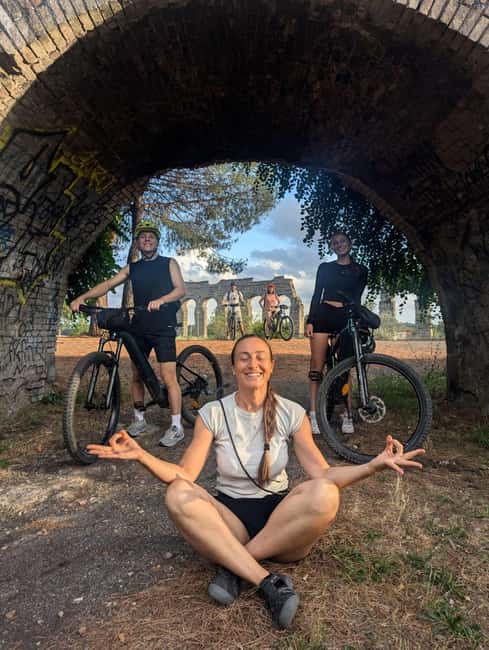
Book it if you want the classic Rome highlights with a real change of pace. The combination of Appian Way cycling, a guided catacomb visit, and aqueduct-region views is a smart use of limited time. The private shuttle also reduces friction—less time wrestling with logistics, more time experiencing.
Skip it if you’re expecting perfectly smooth paths or you want an easy, seated sightseeing day. This is active and requires bike comfort, even with electric assist.
If you’re the type who likes to learn while walking and to photograph while riding, you’ll probably love this one. And if a guide like Emanuele or Sabrina helps you set up the bike, points out the right details, and gets you to the best photo moments, the day can turn into a real highlight rather than just another tour stop.
FAQ
How long is the Rome Appian Way e-bike tour with catacombs and aqueducts?
The tour lasts about 4.5 hours.
Where do I meet the guide?
The private transfer van (with the Bike Adventure sign) waits in front of RUVER Teglia Frazionata pizzeria. The tour ends back at the meeting point.
How long is the private shuttle transfer?
The private shuttle journey is about 20 minutes each way.
Is the catacombs visit included?
Yes. You get the catacombs ticket entrance and a guided tour.
What’s included with the e-bike?
You receive an e-bike, helmet, and a lock. A local guide is also included, along with the aqueduct park visit.
Is the tour suitable if I’m not an experienced cyclist?
You need basic-medium bike riding skills. The route is selected for quiet and safe roads, but the experience includes riding on Roman paving that can be bumpy.
What language is the live guide?
The live tour guide is available in English.
What group sizes are offered?
A small group tour typically runs with a minimum of 4 and a maximum of 8 participants. A private tour is also available.
What should I bring, and are there restrictions?
Bring a passport or ID card. Pets are not allowed, and alcohol and drugs are not allowed.
Are refreshments included?
No. Refreshments are not included.
Is this tour refundable if my plans change?
Free cancellation is available up to 24 hours in advance for a full refund.