REVIEW · ROME
Daily life in Ostia Antica (private tour)
Book on Viator →Operated by Visit Ostia Antica · Bookable on Viator
Ancient streets, real daily life. That is the point of this private Ostia Antica tour, where a guide helps you read the ruins as places people actually lived, worked, shopped, and worshipped. Guides like Paola and Maria Rita are praised for turning messy stone piles into clear stories, so you leave with a mental map of how the port city functioned.
I especially like the way this tour spotlights mosaics and public buildings and then explains what they were for, not just what they look like. The one thing to consider is simple: the visit needs good weather, and you should be ready for a fair amount of walking across archaeological paths for the full 3 hours.
In This Review
- Key highlights you’ll care about
- Ostia Antica in three hours: what you’ll realistically get
- Parco Archeologico di Ostia Antica: start with the right frame
- Necropolis: the city’s afterlife wing
- Terme di Nettuno: baths as technology, status, and routine
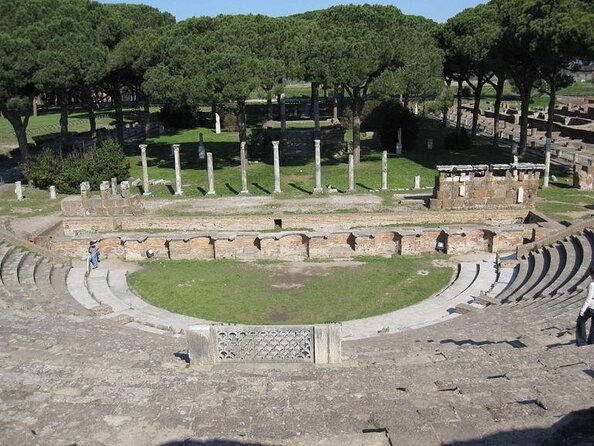
- The theater: civic life with an audience
- Piazzale delle Corporazioni: commerce made visible
- Terme del Foro: where business life and bath life meet
- Capitolium: power and religion in one neighborhood
- Tabernae: street-level work and shopfront reality
- What makes the guide style the real value
- Price and value: $187.06 for a private 3-hour site visit
- Timing tips: when Ostia Antica fits best in your Rome trip
- Who should book this private daily life tour
- FAQ
- Is this a private tour?
- How long is the tour?
- What language is the tour offered in?
- Is the admission ticket included?
- Where do we meet, and where does it end?
- What’s the deal with transportation?
- Is it okay if I travel with a service animal?
- Do I need good weather?
- Should you book this Ostia Antica daily life private tour?
Key highlights you’ll care about
- Private guide focus so you can ask questions and set the pace for your group
- Daily-life interpretation that connects homes, shops, baths, theaters, and civic space
- Bathhouse mosaics described in a way that makes the art feel practical, not decorative
- Marketplace and guild clues from tilework that hints at specialized commerce
- A calmer alternative to Rome’s biggest crowd magnets, especially if you want a quieter morning
Ostia Antica in three hours: what you’ll realistically get
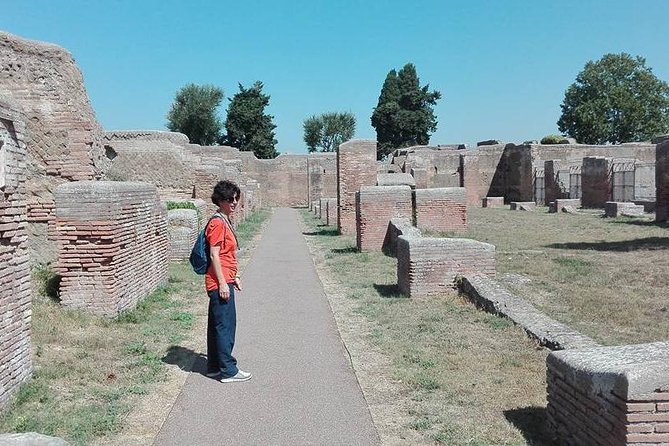
Ostia Antica is one of those places where a guide makes a big difference. The site is spread out, and without context it can feel like “more ruins.” With a guide, it becomes a working city you can follow with your eyes: necropolis to baths to theater to civic space to shopfronts.
This is a private, 3-hour visit, and that time is used for interpretation. You’re not sprinting from photo spot to photo spot. The goal is to understand what you’re looking at—how the spaces were laid out, how people used them, and why certain buildings mattered.
If you’re the type who enjoys history but wants it to connect to real life, you’ll probably feel right at home. The standout theme is everyday routines: hygiene in the baths, meals and meetings in public spaces, and work visible along street-level shops.
You can also read our reviews of more private tours in Rome



Parco Archeologico di Ostia Antica: start with the right frame
Your tour starts at the Parco Archeologico di Ostia Antica, in the heart of the ruins. Getting the frame early matters. Ostia Antica is not just a “Roman city” in general terms—it’s a specific port city with its own rhythm, economy, and neighborhood layout.
This is where your guide helps you interpret the complex remains. Expect explanations that make things click: what a room likely functioned as, how mosaics fit into daily use, and how the city’s main civic ideas showed up in stone.
A practical bonus: the tour is offered in English, and it’s designed so most travelers can participate. It’s also near public transportation, which makes the planning less stressful if you’re staying in Rome.
Necropolis: the city’s afterlife wing
The tour begins with the necropolis, and that choice is smart. Death might be the last topic you want when you’re on vacation, but starting here sets up how Romans thought about presence, memory, and community beyond daily routines.
As you move through this area, your guide’s job is to connect the dots: who was buried here, how burial spaces fit near the city, and how everyday people were still part of public life even after death. It’s a reminder that the city’s story wasn’t only about temples and emperors. It was also about ordinary families and their routines.
If you’re hoping for only cheerful scenes, you might find this section heavier than the baths or marketplaces. But if you want the full picture of daily life in an ancient Roman port city, this is one of the pieces you cannot skip.
Terme di Nettuno: baths as technology, status, and routine
Next come the Terme di Nettuno. Bathhouses are one of the best places to understand how Romans spent time. This isn’t modern gym culture. It’s social time plus hygiene, and the architecture shows how seriously they took it.
This is also where the tour shines for art lovers. Reviews highlight the remarkably well-preserved mosaics, including striking designs connected to bathhouse spaces. More than one guide description praises pointing out symbolism and craftsmanship—so you see these floors as designed experiences, not random decoration.
One thing to watch: mosaics can become “look, another mosaic” if no one explains them. With a strong guide (many guests mention Paola and Maria Rita by name), the mosaics become clues—about style, wealth, and how people moved through the space.
The theater: civic life with an audience
From baths to the theater, you get a shift from personal routine to community gathering. Theater spaces in Roman cities were places where people came together, where civic identity and culture showed up in stone.
What you’ll get from the guide here is the reasoning behind placement and design. You’re not just noticing the remains—you’re learning why this space belonged in the everyday flow of the city.
This stop is also a nice pacing change. If you’ve been walking through open spaces, the theater helps your eyes reset. It’s a good moment to slow down and absorb how the city’s social life worked.






Piazzale delle Corporazioni: commerce made visible
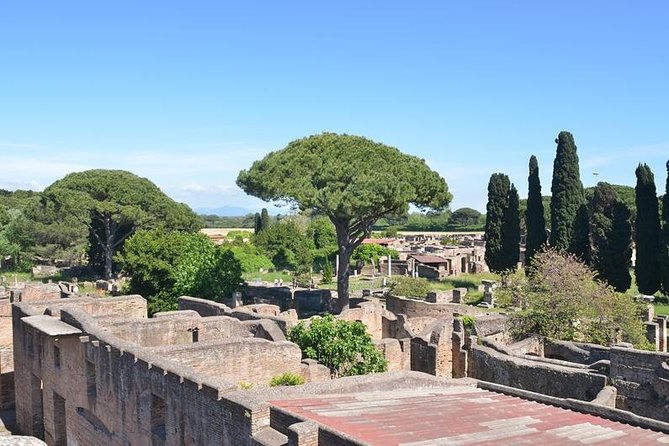
Then comes Piazzale delle Corporazioni, a key stop for anyone who likes the “who did what” side of history. This is where you can start feeling the port city’s economy.
One of the most memorable details pulled from visitor experiences involves mosaic tilework that labels professional groups with words and images. The pattern of those labels points toward specialized guilds tied to shipping and marine commerce. Even if you don’t read every fragment, you get the idea: the city’s economy wasn’t vague. It was organized, branded, and public.
The best part of this stop is the mental upgrade it gives you. Ostia Antica stops being just a scenic ruin field. It starts behaving like a place with jobs, industries, and community identity.
Terme del Foro: where business life and bath life meet
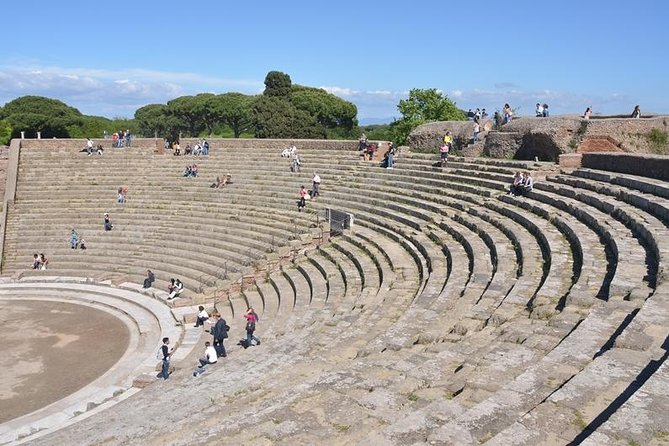
Next is Terme del Foro. You’ve seen the idea of baths already, but this adds contrast. Baths near civic and public areas show how quickly daily life moved between the social and the functional.
Again, your guide matters. You want explanations that tie the building features to how people likely used them. In tours like this, the storytelling tends to connect rooms and movement patterns to everyday habits—where you’d go first, how you’d occupy time, and how baths fit into the larger city structure.
This is also a good section for art-focused visitors. If the Nettuno baths made you notice mosaics, the Forum baths help you see the idea repeating with different emphasis.
Capitolium: power and religion in one neighborhood
Then you’ll reach the Capitolium, the civic-religious center point in the city layout. This is where the tone changes. The guide’s job here is to connect worship, government identity, and how Romans expressed authority in built form.
It’s not just “a temple.” It’s a statement. You’ll likely get practical explanations for what made this area important and how it shaped daily behavior in the surrounding zones.
If you’re visiting after a lot of central Rome sightseeing, this stop offers a different flavor. Instead of grand scale and tourist crowds, you get a city-size version of how religion and power were physically embedded in life.
Tabernae: street-level work and shopfront reality
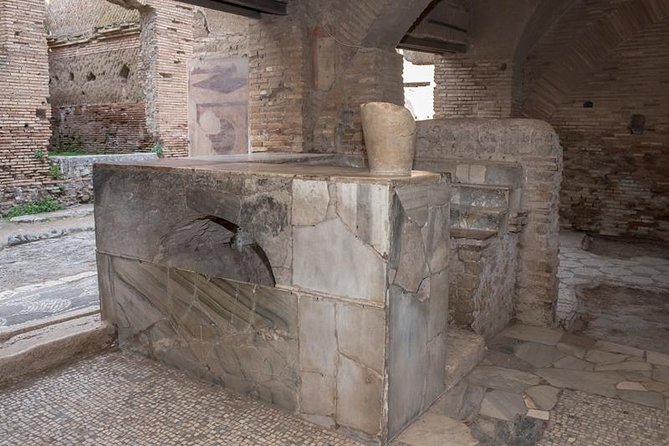
The last stop is Tabernae, the shopfront area. This is where the tour becomes very human. Roman neighborhoods didn’t live only in big monuments. They lived at street level.
Shopfronts and street businesses tell you what the city needed day to day. You start thinking about customers, merchants, deliveries, and the flow of people. It’s an excellent final shift because it brings everything back to routine—things you can picture, even as the buildings crumble.
If you like the idea of “how did people spend a normal day,” this ending works. It turns the whole visit into a story: morning routines and hygiene in the baths, community life at the theater and civic center, then commerce and services visible right on the streets.
What makes the guide style the real value
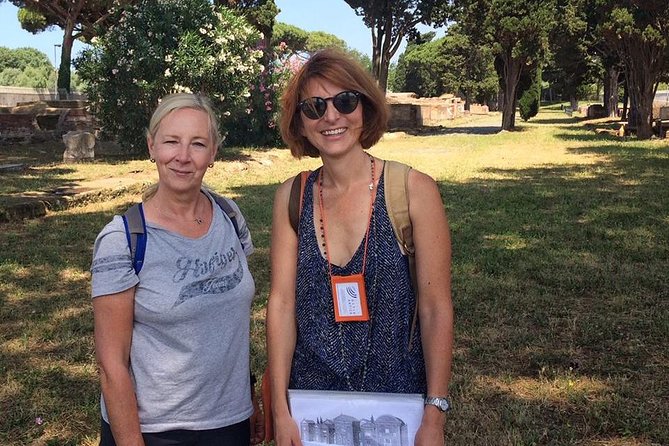
Let’s talk about the thing that keeps coming up: guides who can interpret ruins into daily life. In the reviews you can see a pattern—Paola, Maria, and Maria Rita are named often, and several descriptions highlight that at least one guide is a trained archaeologist.
What you should expect with a guide like this is not just facts. You’ll get explanations you can carry with you while you walk. That means:
- You’ll hear how spaces likely functioned, not just what the space is called
- You’ll learn why certain art appears where it does, including mosaics in bath and public zones
- You’ll understand how religion and civic life shaped everyday movement
The other subtle benefit: this is a private tour, so the guide can customize the itinerary to suit the ages and interests of your group. If your group is more art-focused, expect more time on mosaics and decorative programs. If your group is more about daily life, the guide can emphasize routine and layout over architecture jargon.
Price and value: $187.06 for a private 3-hour site visit
At $187.06 per person for about 3 hours, the only way this feels like a good deal is if you’re getting real interpretation, not just a ticket-with-a-walk. And that’s what this tour is built around: an expert guide reading the site for you, plus admission included.
Here’s how I’d judge value before you book:
- If you can split the cost among a small group, private guiding becomes much more affordable
- If you care about how people lived (not just big sights), the guide’s storytelling saves you time and confusion
- If you want a calmer experience than the major Rome draw cards, Ostia Antica’s quieter feel can make the price feel easier to justify
It’s also booked about 45 days in advance on average. That’s a soft clue that this tour sells well. It’s not a guarantee, but it suggests good demand for exactly what you’re paying for: a focused, low-stress way to understand the ruins.
Timing tips: when Ostia Antica fits best in your Rome trip
Ostia Antica is an easy day to plan around. It’s accessible via public transportation, so you’re not forced into complicated transfers. Many people also treat it as a “last day” outing because it’s not far from Rome-area travel routes.
For you, the best timing is when you want relief from the heaviest crowds. If you’re tired of standing in long lines for the big classics, this tour offers something different: a working city feel with fewer people around.
Also, because good weather is required, you’ll want to think about what day you’ll choose. If your schedule has one flexible slot, that’s usually the one you assign to outdoor archaeological sites.
Who should book this private daily life tour
This tour fits well if you:
- Want to understand daily Roman life through real places (not just dates and rulers)
- Appreciate mosaics and public art enough to want help reading them
- Prefer a private, low-crowd experience over a bus-to-bus schedule
- Enjoy guided walking where questions are welcome
It may not fit perfectly if you’re looking for a totally unstructured “walk on your own” visit. This is a guide-led reading of the city. The payoff comes from following the interpretation thread.
If your group includes mixed ages, the ability to customize the pacing and emphasis is a big plus. It’s also a reasonable choice for visitors who want a break from the busiest Rome zones while still getting a meaningful historical hit.
FAQ
Is this a private tour?
Yes. This is a private tour/activity, so only your group participates.
How long is the tour?
It runs for about 3 hours.
What language is the tour offered in?
The tour is offered in English.
Is the admission ticket included?
Yes. Admission ticket is included.
Where do we meet, and where does it end?
You start at 00119 Ostia Antica RM, Italy. The activity ends back at the meeting point.
What’s the deal with transportation?
The meeting area is near public transportation.
Is it okay if I travel with a service animal?
Service animals are allowed.
Do I need good weather?
Yes. The experience requires good weather. If it’s canceled due to poor weather, you’ll be offered a different date or a full refund.
Should you book this Ostia Antica daily life private tour?
If you want ruins with context, this is a smart buy. The best reason to book is the guide-led focus on how people lived, plus the strong emphasis on mosaics and the way public and private spaces connect. It’s also a practical choice if you’re trying to escape some of Rome’s crowd pressure while still seeing a major archaeological site.
If you hate walking on uneven ground or you’re betting on shaky weather, then hold off until you can pick a stable day. Otherwise, this is the kind of tour that turns a pile of stones into a place you can understand.