REVIEW · ROME
Colosseum Arena tour with Roman Forum and Cesar’s Palace
Book on Viator →Operated by Atlas Tours · Bookable on Viator
The Colosseum is loud even when it’s quiet. This guided route lets you walk the same arena footprint and then connect it to the Roman Forum and Palatine Hill, so the Empire story clicks into place fast. I like that you get a focused walkthrough of the site’s big moments, not just photo stops, and the guide’s commentary turns violence and power into something you can actually picture.
One thing to keep in mind: entry is strict, and some problems can be logistical. Double-check that your full name matches your passport or ID exactly, and be ready for the kind of crowd-and-security day that can slow everything down.
In This Review
- Key things I’d watch for on this tour
- How this Colosseum plus Forum plus Palatine Hill route helps you understand Rome
- Entering the Colosseum: what you actually see and why it matters
- Palatine Hill (Caesar’s Palace): the emperor’s address, not just ruins
- The Roman Forum: where politics, religion, and power overlap
- Guide impact: how you’ll experience the story depends on who’s leading
- Price and logistics: what $89.87 buys you, and what can go wrong
- Where to meet and how to plan your day so you don’t feel rushed
- Is this tour for you? Best fit (and best skip)
- Should you book this Colosseum Arena + Roman Forum + Palatine Hill tour?
- FAQ
- FAQ
- How long is the tour?
- Is the tour offered in English?
- Where do I meet, and where does the tour end?
- Are admission tickets included for each stop?
- What do I need for entry to avoid being turned away?
- What is the cancellation window for a full refund?
Key things I’d watch for on this tour
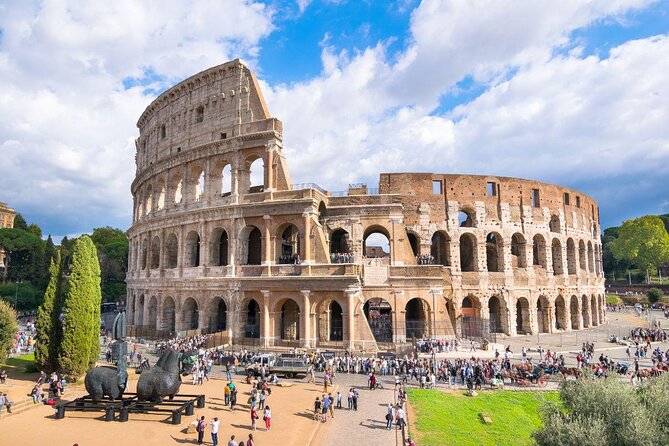
- Colosseum first and second levels in about 30 minutes, with guide-led explanations that make the arena make sense.
- Palatine Hill (Caesar’s Palace) for about an hour, where you see layers from very old Rome through later rebuilding.
- Roman Forum highlights around major power centers like temples, tombs, the Vestal Virgins’ area, the Senate House, and Julius Caesar’s tomb.
- Small-group size (max 24), which helps your guide keep the flow of the story.
- English-language tour with a pace set for “see the highlights” rather than a slow, lingering museum day.
How this Colosseum plus Forum plus Palatine Hill route helps you understand Rome
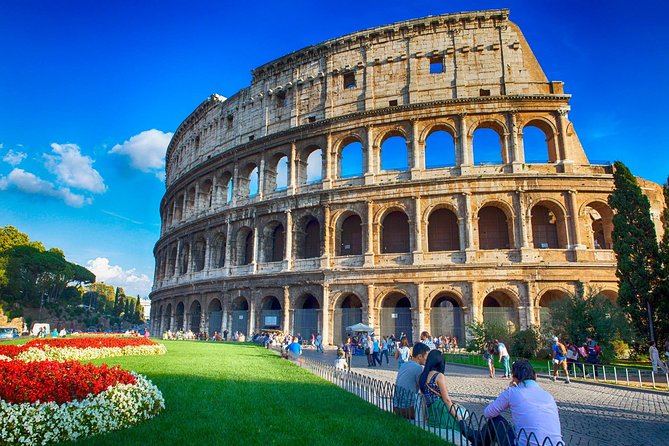
This is the kind of tour that works because it keeps linking cause to effect. You start in the Colosseum—where entertainment and propaganda met. Then you move to Palatine Hill, tied to the personal power of emperors. Finally, you end in the Roman Forum, where decisions were made and politics played out in public space.
Instead of treating these as three separate “top attractions,” the format helps you read Rome like a timeline. You’ll spend about 2 hours 30 minutes total, with the schedule broken into three clear chunks: Colosseum, Palatine Hill, and Roman Forum. That structure matters if you’re trying to protect one good day in a city where most things are also “popular attraction days.”
It’s also built for a moderate-activity level. You should expect standing and walking through archaeological areas, with less time than you’d want if you plan to stop for long breaks or detailed, independent exploring.
You can also read our reviews of more tours and experiences in Rome.



Entering the Colosseum: what you actually see and why it matters
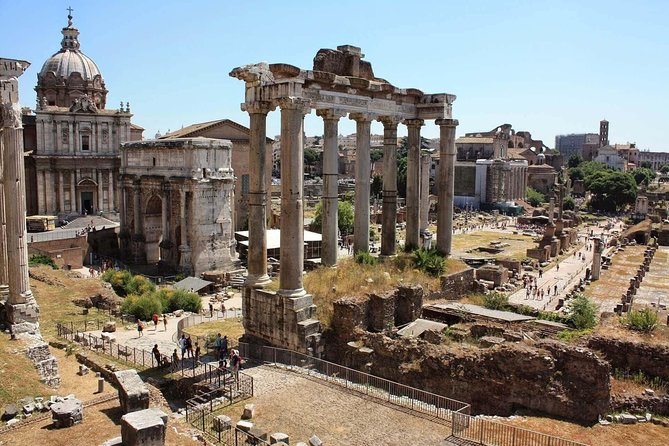
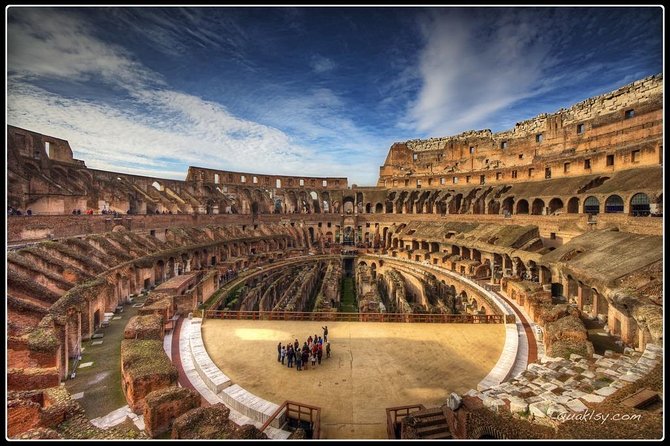
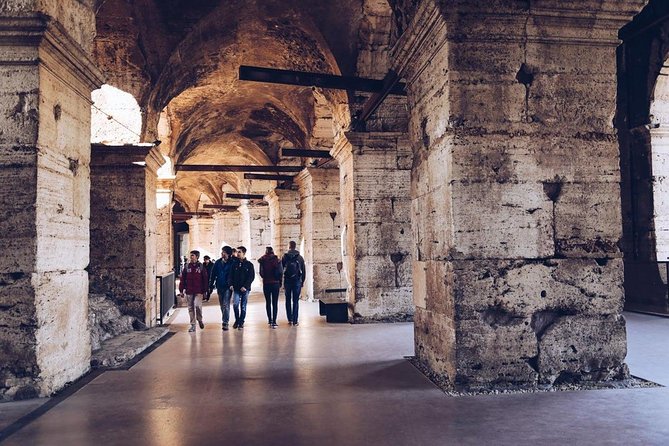
You go inside and visit the first and second levels, which is the sweet spot for most first-timers. You’re not trying to cover every corner of the site in a sprint, but you do get enough of the arena architecture to understand how it worked.
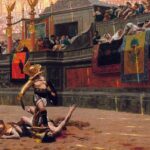
Your guide’s job here is crucial. The Colosseum wasn’t just a big amphitheater—it was a machine for spectacle. You’ll hear about the kinds of deadly games that took place, including animal hunts, beheadings, and gladiator battles. The point isn’t to sensationalize violence; it’s to understand how the ruling class used entertainment to enforce authority and keep the city focused.
And yes, the emotional tone can feel heavy. That’s where good guiding makes the difference. One guide name that shows up positively in real-world feedback is Natasha—people praised her as informative with a great sense of humor. Humor is not the same thing as trivializing. In a place like this, it can help you stay present while the guide explains details you might otherwise skim past.
Practical timing note: this stop is about 30 minutes. That’s short enough that you’ll want a plan for what you do next after you exit—either continue your Forum walk or grab food near the end point rather than hopping across town.
Palatine Hill (Caesar’s Palace): the emperor’s address, not just ruins
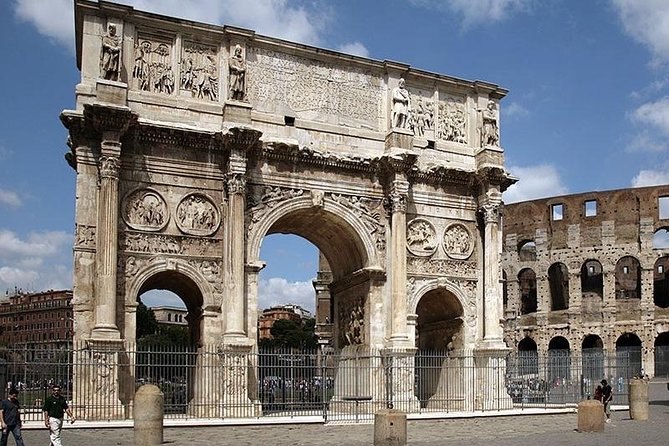
Palatine Hill is where the tour shifts from public spectacle to personal power. You’ll explore Caesar’s Palace, which is essentially the famous emperor-linked zone within Palatine Hill. The big value here is context: you get to connect why emperors mattered in Rome, not just what they did.
This stop is about 1 hour, and it’s described as a walk through different eras of construction. The hill is tied to the founding story of Rome—nearly 3,000 years ago—and you’ll also see how structures continued through periods like the Renaissance and more recent buildings associated with Benito Mussolini.
Even if you don’t consider yourself a “ruins person,” Palatine Hill tends to land well because it feels like the place behind the throne. It’s not only about seeing stones; it’s about noticing how power changes its preferred look over time, and how later Rome kept reusing old prestige.
A small drawback: because you’re covering many viewpoints in limited time, you might feel a little rushed if you love reading every plaque or you’re the type who needs long pauses for photos. The upside is that you’ll leave with a clearer mental map for what you’ll see next on the Forum.
The Roman Forum: where politics, religion, and power overlap
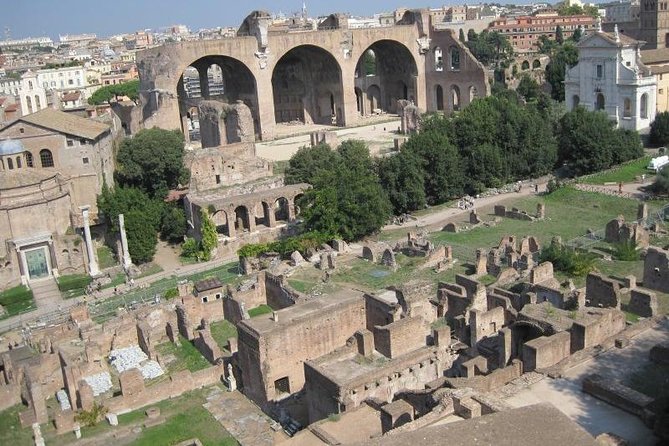
The Roman Forum stop is about 1 hour, and it’s the part of the tour that rewards attention. This wasn’t just a market or a street; it was the central stage for public life in ancient Rome.
You’ll visit major areas such as:
- important pagan temples
- tombs
- the house of the Vestal Virgins
- the Senate House
- Julius Cesare’s tomb
That list is helpful because it hits multiple categories at once. Temples and the Vestal Virgins connect politics to religion. The Senate House connects authority to procedure. And Caesar’s tomb turns history into a real destination you can point to.
One line in the description frames the Forum as the place where decisions to control territory across the Roman Empire were made. Whether you’re a military-history buff or you’re just curious how an empire managed such distance, you’ll feel the theme here: this was governance in the open.
End point advantage: the tour concludes in the center of the ancient city area, which is convenient for continuing your day. In practical terms, that means less cross-city shuffling and easier access to transport, shops, and restaurants around the Forum.
Guide impact: how you’ll experience the story depends on who’s leading
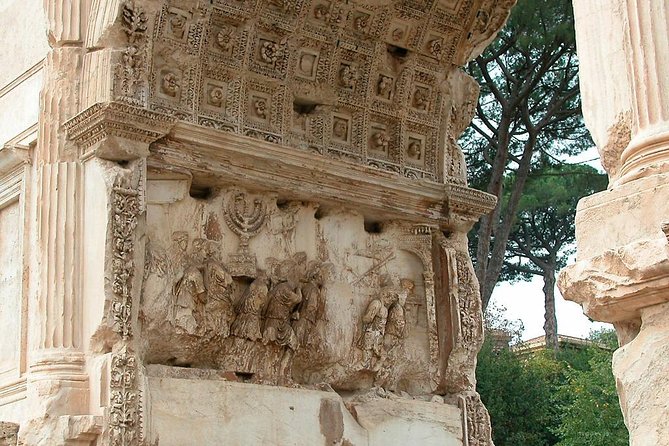
A Colosseum + Forum + Palatine Hill day lives or dies by the guide’s ability to keep the story moving. The tour format gives the guide a built-in arc: spectacle → emperor’s seat → political center. When the guide nails that arc, the whole experience feels smoother and more meaningful.
From feedback you’ve got to work with, Natasha is one of the names that came up positively, with people noting her as informative and funny. That kind of guide style can be a big deal on a day filled with grim topics. You want information you can remember without getting overwhelmed.
On the flip side, some negative experiences point to communication breakdowns and guide licensing issues, including moments where people were left waiting at the entrance or the tour was canceled close to the start time. That doesn’t mean every departure has problems. It does mean you should treat “meeting at the Arch of Constantine” as something to take seriously.
If you’re booking with limited time in Rome, my rule is simple: confirm details the day before, and keep your phone handy so you can react quickly if anything changes.






Price and logistics: what $89.87 buys you, and what can go wrong
This tour lists at $89.87 per person for an experience around 2 hours 30 minutes. You’re not only buying a walk-through—you’re also buying timed access tied to tickets.
Here’s the balance check:
- Included admissions: the Colosseum ticket is included, Palatine Hill ticket is included, and Roman Forum admission is listed as free.
- Value depends on smooth entry: if everything runs as planned, the time you save and the guide-led pacing can make the price feel reasonable.
- If entry or timing gets messy, the value evaporates fast: one major complaint was people feeling charged more than official ticket pricing. Another set of issues involved last-minute cancellations or missing guides.
Also pay attention to the strict identity rules. You must provide full traveler names at booking, and entry requires a valid passport or ID document that matches those names. If the name doesn’t match, entry can be denied.
Small-group size is a plus: the max is 24 people. That usually keeps the guide in control of timing and helps you avoid chaos. But it doesn’t eliminate Rome crowding or security lines.
Where to meet and how to plan your day so you don’t feel rushed
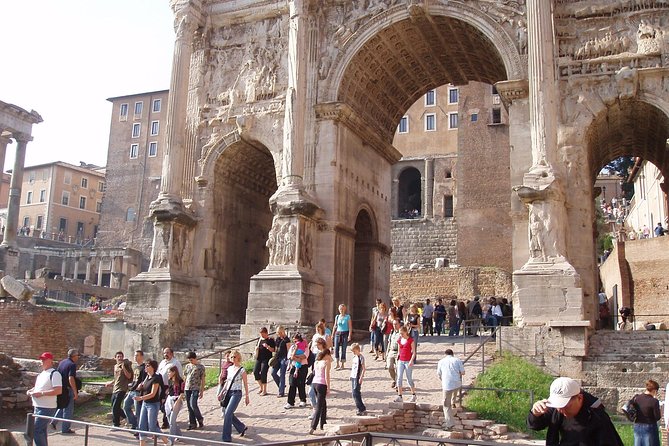
The meeting point is at the Arch of Constantine, Piazza del Colosseo, 00184 Rome. The tour ends at the Roman Forum area (00186 Rome).
That layout is good if your goal is to spend time in the ancient core without bouncing around. It also means you should structure your day so you don’t have a hard commitment immediately after the tour.
Because the Colosseum and Forum area can get busy, I’d plan buffer time. Aim to arrive early enough to handle security lines and any last-minute coordination. Your tour runs about 2.5 hours, but your real day depends on how smoothly you move from security to the start point.
One more detail that helps: this tour is commonly booked about 29 days in advance on average. If your dates are firm, don’t treat this as a “maybe” booking.
Is this tour for you? Best fit (and best skip)
You’ll probably like this tour if:
- you want a guided “big hits” route across three major ancient Rome zones
- you like learning the story behind what you’re seeing, including dark topics explained in context
- you want an efficient timeline rather than a half-day of independent wandering
You might want to reconsider if:
- you’re extremely sensitive to delays or you have tight scheduling with no buffer time
- you’re counting on the tour operator to resolve problems instantly on the ground
- you need lots of time for slow, detailed museum-style reading at every stop
If you do book, your best move is to keep your documents ready, follow the name rules precisely, and build a small cushion into the rest of your Rome itinerary.
Should you book this Colosseum Arena + Roman Forum + Palatine Hill tour?
I’d book it if you’re aiming for a guided route that links the Colosseum, Palatine Hill, and the Forum into one coherent Rome story. The included admissions and the moderate 2.5-hour format make it a practical choice.
I’d hesitate only if you can’t handle possible friction like last-minute changes, strict ID matching problems, or crowd-related delays. If you go in prepared—documents exact-match, arrive early, confirm details—you’re set up to get real value from the time you spend inside the sites.
FAQ
FAQ
How long is the tour?
It runs about 2 hours 30 minutes total, with approximately 30 minutes at the Colosseum, 1 hour at Palatine Hill, and 1 hour at the Roman Forum.
Is the tour offered in English?
Yes. The tour is offered in English.
Where do I meet, and where does the tour end?
You meet at the Arch of Constantine, Piazza del Colosseo, 00184 Rome. The visit concludes in the center of the Ancient City at the Roman Forum area (00186 Rome).
Are admission tickets included for each stop?
Yes. Admission for the Colosseum and Palatine Hill is included. Roman Forum admission is listed as free.
What do I need for entry to avoid being turned away?
You must provide full names when booking. On arrival, each person needs a valid passport or ID document that matches the name used at booking. If a voucher doesn’t include all full names or names don’t match the ID, entry may be denied.
What is the cancellation window for a full refund?
You can cancel up to 10 days in advance of the experience for a full refund. If you cancel less than 10 full days before the start time, the amount paid will not be refunded.