REVIEW · ROME
Rome: Private Leonardo da Vinci Exhibition Guided Tour
Book on GetYourGuide →Operated by Mostra di Leonardo da Vinci · Bookable on GetYourGuide
Leonardo feels modern here. This private tour in Rome’s Palazzo della Cancelleria makes Da Vinci’s inventions feel close-up, with 3D holograms and full-scale builds. You’re not just reading labels; you’re walking through four idea-based sections of his engineering thinking.
I especially love the mix of 9 holograms that animate his paintings and inventions in 3D, and the chance to see 65+ full-scale machines made from Leonardo’s designs. It’s the kind of museum experience that stays in your head because it’s physical, not abstract.
One thing to consider: because the tour is packed into about 1.5–2 hours, it moves at a lively pace. If you prefer a slow, quiet art museum mood, you may want extra time there on your own afterward.
In This Review
- Key Highlights at a Glance
- Palazzo della Cancelleria: the building sets the tone for Leonardo
- Private guide + skip-the-line flow (and why it’s worth it)
- The 9 holograms in 3D: art meets engineering
- Full-scale machines: what you learn when you can see size and structure
- Four sections built around Water, Air, Fire, and Earth
- Hands-on workshops: touch, play, and build a bridge
- Auro Irzio’s tomb and the pond: a historical stop with atmosphere
- Price and value: what $93 gets you for up to 1
- Who should book this tour (and who might skip it)
- Should you book this Rome Leonardo da Vinci tour?
- FAQ
- How long is the Leonardo da Vinci private guided tour?
- Is this tour private, and how big is the group?
- What does the ticket include?
- Which languages are available for the live guide?
- Is the tour wheelchair accessible?
- When should I arrive at the meeting point?
Key Highlights at a Glance
- 3D holograms that bring paintings and inventions to life in a way flat images never do
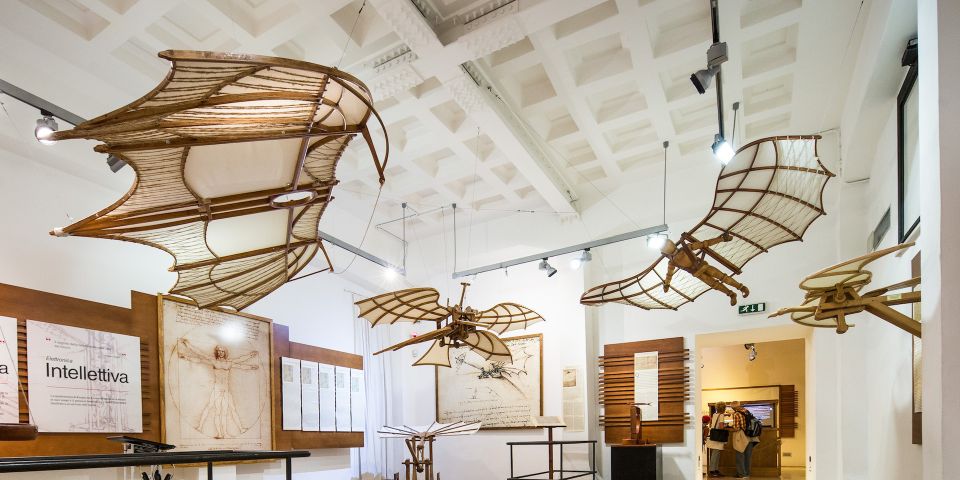
- 65+ full-scale machines built from Leonardo’s ideas, not just sketches
- Hands-on access: touch and play with many machines, plus an activity where you build a bridge
- Four science sections tied to Leonardo’s thinking about Water, Air, Fire, and Earth
- The tomb of Auro Irzio (43 B.C.) set in a space connected to an underground pond
- Art historian-style guidance with child-friendly explanations, plus multilingual live interpretation
Palazzo della Cancelleria: the building sets the tone for Leonardo
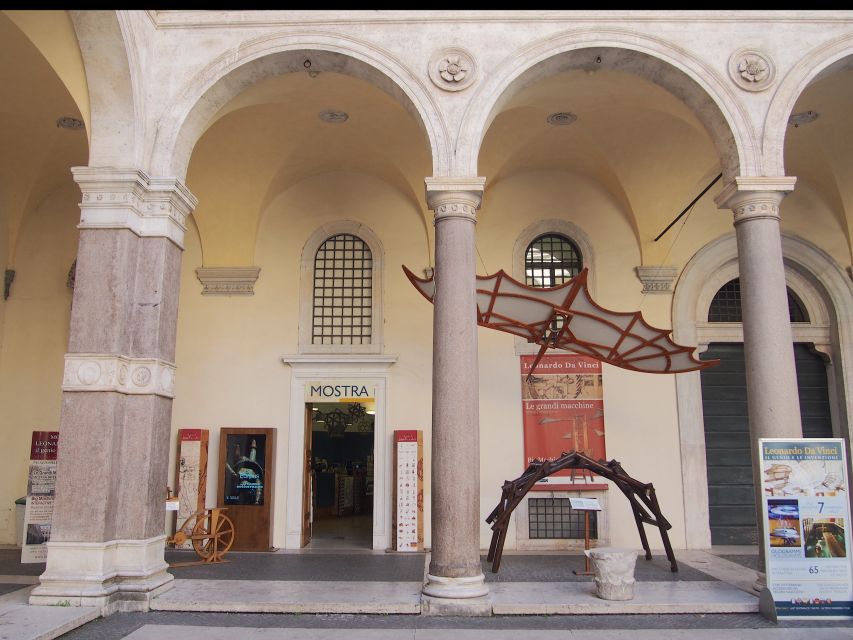
The setting matters, and this tour uses one of Rome’s most interesting backdrops: the Palazzo della Cancelleria. It’s a palace owned by the Vatican, and even if you’re focused on Leonardo, you’re still in a place with serious architectural presence.
On the upper floor, the church’s marriage-dissolution work happens at the Sacra Rota. You won’t spend time doing legal history here, but knowing the palace’s role helps the visit feel grounded in real Rome—not just a themed show.
That building context pairs nicely with what the exhibition is trying to do: take Renaissance genius and make it readable through engineering logic. You go from art to mechanism fast, and the palace helps it feel like you’re stepping into a working world rather than a display case.
You can also read our reviews of more guided tours in Rome



Private guide + skip-the-line flow (and why it’s worth it)
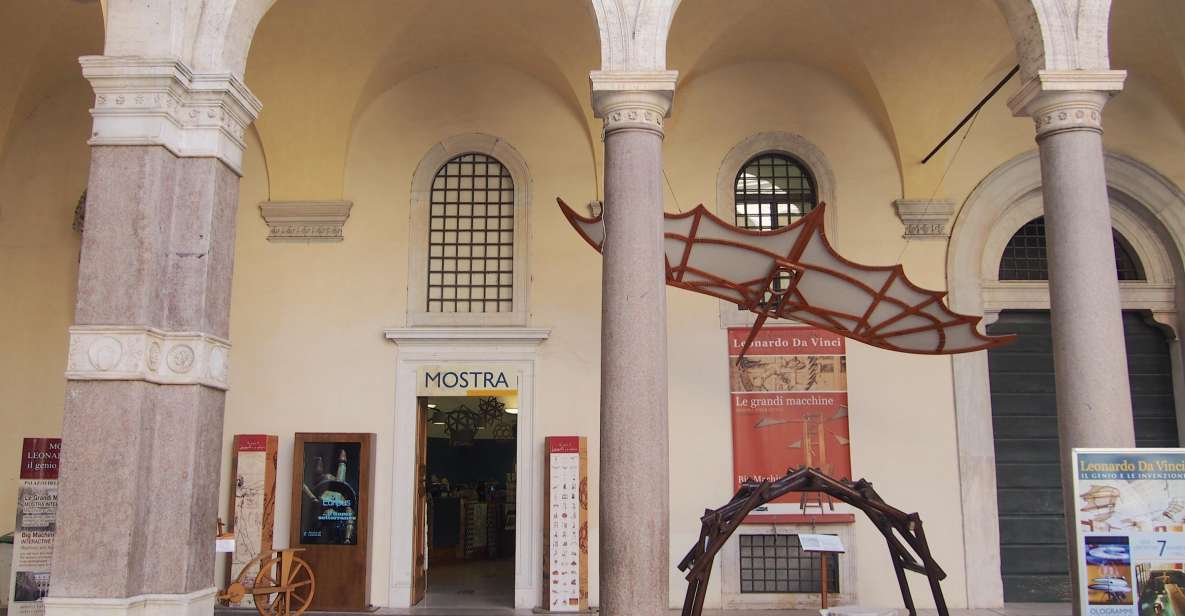
This is a private guided tour, with live interpretation available in Italian, French, Spanish, English, German, and Portuguese. You also get skip-the ticket line entry, which matters in Rome where queues can steal time from the parts you care about.
The tour runs about 1.5–2 hours, and it’s structured in four sections inside the exhibition space. That means you’re not wandering. Your guide keeps you moving from one theme to the next—typical “museum pacing” but tighter and more purposeful because it’s guided.
One practical tip: plan to arrive 15 minutes early at the meeting point. You’ll get set up without feeling rushed, and you’ll be ready when the group starts.
On guide quality, you can see a clear pattern from real experiences: guides tend to be patient, answer questions, and adjust for kids when needed. Names that pop up include Barbara (great storytelling and helpful photo moments) and Julia (a strong German-language guide who handled lots of questions calmly). Even if your guide is different, the standard is clearly interactive and attentive.
The 9 holograms in 3D: art meets engineering
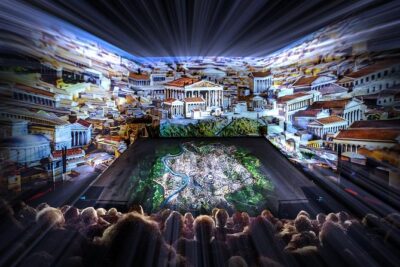
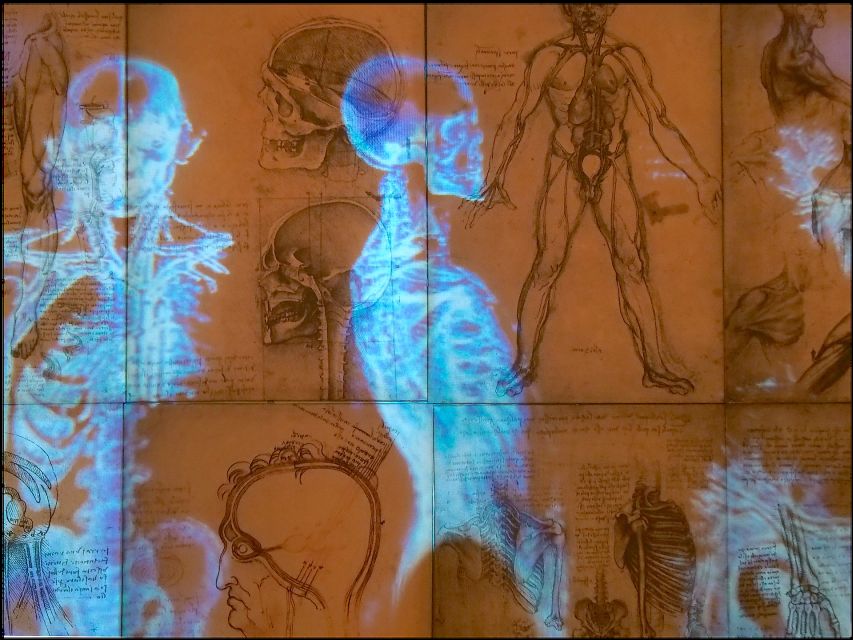
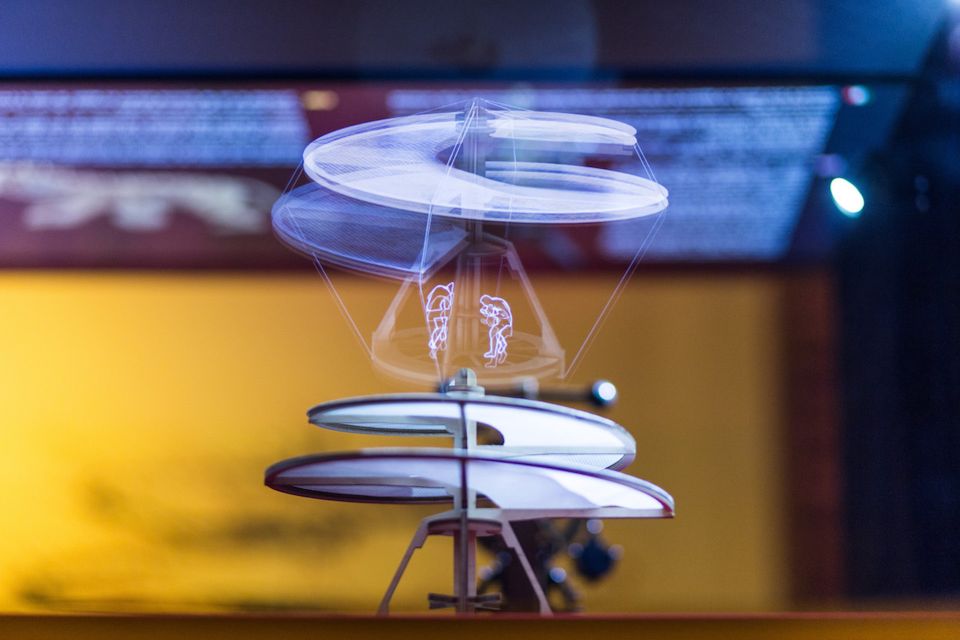
The headliner moment for many people is the set of 9 holograms showing Da Vinci’s paintings and inventions in 3D. The point isn’t just wow-factor. It helps you notice how Leonardo worked across categories: visual observation, mechanical ideas, and design thinking all feed each other.
In a traditional gallery, you might see a drawing and move on. Here, the holograms support the idea that Leonardo was thinking in motion—how parts relate, how surfaces behave, and how a concept could become a mechanism.
If you’re traveling with kids, this part often becomes the anchor of the entire visit. More than one experience focuses on how children responded to the visuals and the guided energy around them. For adults, it’s a good reality check: Leonardo’s work isn’t only “old art,” it’s also prototype thinking.
Full-scale machines: what you learn when you can see size and structure
After the holograms, the exhibition shifts into something much more hands-on: more than 65 full-scale machines built according to Leonardo’s designs. These aren’t tiny models you interpret with guesswork. Seeing them at full size helps you understand proportions and how certain mechanisms would actually work.
This is where the tour becomes more than a lecture. You’re meant to treat the machines like a system. The exhibition experience includes the chance to touch and play with many of the displays, so you can understand how they move instead of only reading how they’re supposed to work.
It also helps that your guide connects the machines back to Leonardo’s broader interests. When you learn that he studied inventions for science, aviation, and even military-related applications, the exhibition stops feeling like random “cool gadgets.” It starts feeling like one long line of investigation.
For best value, don’t skim. Spend a little time comparing different devices in your mind: which parts look similar, which ones change, and what problem each machine is trying to solve.
Four sections built around Water, Air, Fire, and Earth
One reason this museum experience sticks is that it doesn’t treat Leonardo like a single-genius brand. It treats him like a researcher.
You’ll work through sections tied to Water, Air, Fire, and Earth—which is a direct way to understand how he tried to model the world. That structure gives you a framework: you’re seeing Leonardo’s curiosity as pattern-based thinking rather than disconnected sketches.
In practical terms, this setup is great for different learning styles:
- If you love science, you’ll focus on how ideas connect to physical effects.
- If you love art, you’ll notice how observation and design show up again and again.
- If you’re with kids, the theme sections help the guide keep explanations organized.
Your tour also includes a video about Leonardo’s inventions and his study of anatomy. Even if you don’t become a Renaissance anatomy fan by the end (some people do), the inclusion matters. It reinforces that Leonardo wasn’t only building machines—he was also studying the human body as a structure with systems.
You can also read our reviews of more private tours in Rome





Hands-on workshops: touch, play, and build a bridge
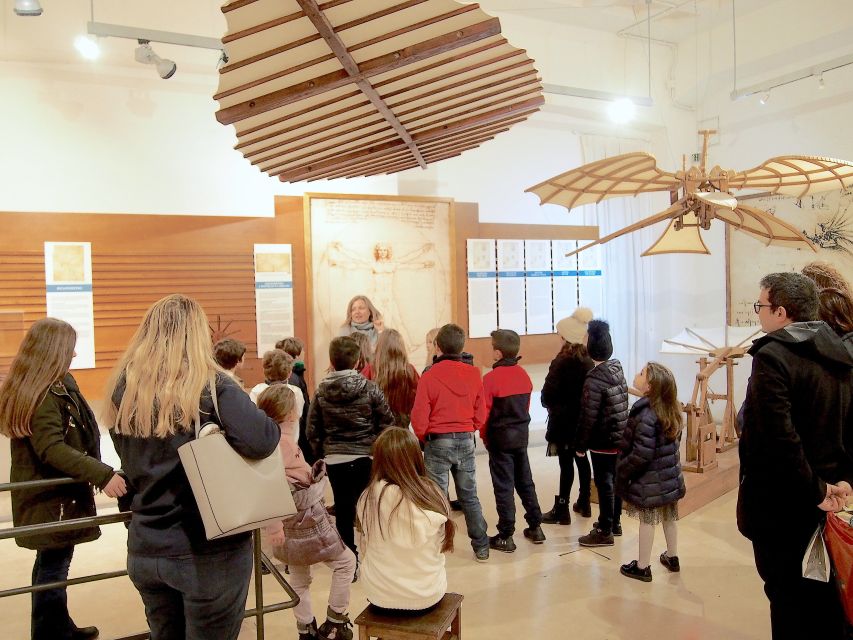
The museum leans hard into interactivity. A big chunk of the experience is built around workshops where you can interact with the displays. The tour notes that you can touch and play with almost all of the machines on display, and there’s also an activity where you can build your own version of a bridge based on a Leonardo design.
This is where the private format really earns its keep. With a guide steering the timing, you’re not just waiting your turn to try something. You can ask questions, and the guide can explain what you’re seeing while you’re doing it.
A bridge-building moment also gives you a different kind of respect for Leonardo. It’s easy to admire the sketches. It’s harder to forget how engineering actually depends on force, balance, and structure when you’re constructing something yourself.
If you’re traveling with children, the tour’s design is explicitly friendly to kids, with child-friendly explanations available. One helpful consideration: if your kids need frequent breaks to reset, you might want to keep an eye on time since the tour is compact.
Auro Irzio’s tomb and the pond: a historical stop with atmosphere
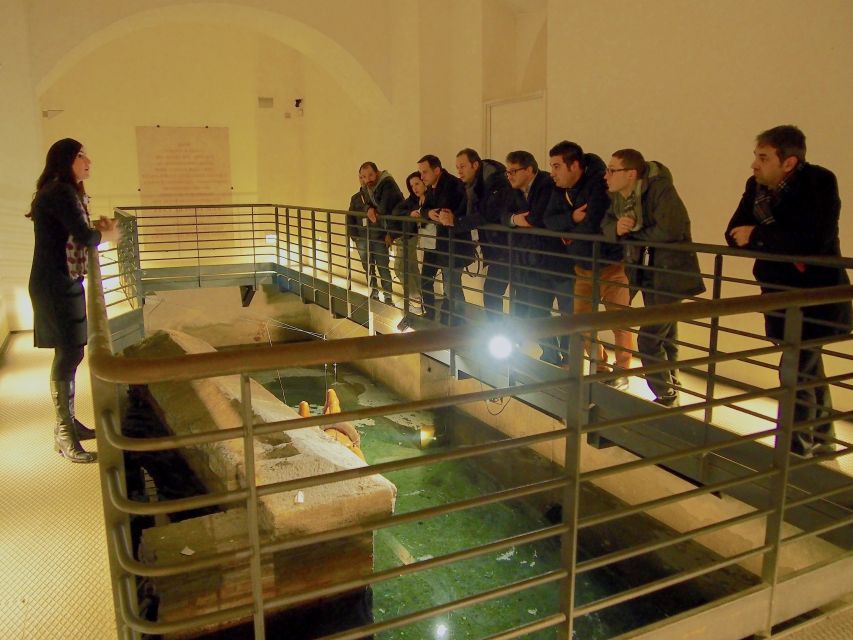
Between machines and science themes, the tour includes a very Roman surprise: the tomb of architect Auro Irzio, dating back to 43 B.C. The tomb is connected to an underground natural pond setting.
This part is valuable because it changes the texture of the experience. You’re not just watching Leonardo’s world; you’re standing in a layer of Rome’s history from a completely different era, all within the same exhibition experience.
Even if you’re there for Da Vinci alone, this stop adds depth. It reminds you that “Rome history” isn’t a single timeline—it’s multiple eras layered into spaces that still hold meaning.
If you’re sensitive to dimmer underground environments, just know this section has a more atmosphere-driven feel than the brighter workshop areas.
Price and value: what $93 gets you for up to 1
At $93 per group up to 1, the pricing is clearly built for private attention. That can feel steep compared to group museum tickets, but the value is in the combination:
- Guided interpretation through the whole exhibition
- Skip-the-ticket line
- Hands-on access to many machines
- Multiple themed sections, holograms, and interactive workshop moments
When you travel solo or with one other person, private can actually be the smarter deal because you’re not paying for a large group that moves at a slower pace for you. Also, the tour includes a gadget, which adds a small extra perk.
If you’re traveling as a larger group, the price model may matter more. In that case, compare the cost per person of a private tour versus a group option, and also factor in how much your group likes interactive learning.
Who should book this tour (and who might skip it)
This experience is a strong fit if you want:
- Hands-on learning instead of passive museum time
- A guided path through Da Vinci’s engineering ideas
- A mix of 3D holograms, full-scale machines, and workshops
- Family-friendly explanations when kids are involved
It’s also a great match for science-curious adults who like seeing concepts translated into real mechanisms. The focus on Air, Water, Fire, and Earth gives it a structure beyond “look at this invention.”
You might consider skipping if:
- You prefer silent galleries and lots of unhurried looking
- Your main goal is purely art history without the science/engineering framing
- You only have time for one quick museum stop and want to keep your schedule very flexible
Should you book this Rome Leonardo da Vinci tour?
If you want a museum that feels active, structured, and truly interactive, I think this is a good booking. The biggest payoff is the pairing of holograms + full-scale machines + workshops, all guided in your language, with guides who tend to be patient and responsive—whether you’re asking questions or keeping kids engaged.
Book it if you’ll actually use the interactive side. If you’re the type who hates touching displays or wants long quiet time, plan for a different kind of museum visit.
FAQ
How long is the Leonardo da Vinci private guided tour?
It runs about 1.5 to 2 hours.
Is this tour private, and how big is the group?
It’s a private guided tour, priced per group up to 1.
What does the ticket include?
You get exhibition entrance, a guided tour, and a gadget. You also skip the ticket line.
Which languages are available for the live guide?
The tour is offered in Italian, French, Spanish, English, German, and Portuguese.
Is the tour wheelchair accessible?
Yes, the tour is wheelchair accessible.
When should I arrive at the meeting point?
Please arrive 15 minutes before your tour departure time.