REVIEW · ROME
Dark Heart of Rome: Facts, Legends, and Mystery Tour
Book on GetYourGuide →Operated by City Wonders Ltd. · Bookable on GetYourGuide
Dark Rome stories turn cities into puzzles at night. This 1.5-hour guided walk uses evening lights, real landmarks, and ghostly tales to show a side of Rome most people skip. I like the story-first approach at night, especially the way Campo de’ Fiori’s past comes alive after sundown.
I also like the built-in variety of stops: you move from Piazza Farnese to Renaissance street planning on Via Giulia, then end at Castel Sant’Angelo. One possible drawback: it’s a walking tour on historic streets, so expect uneven ground and bring shoes you can trust.
In This Review
- Key highlights at a glance
- Why a dark Rome walk feels different after dark
- Meeting on Corso Vittorio Emanuele II: find the blue outfit
- Campo de’ Fiori at night: executions, legends, and a darker rhythm
- Piazza Farnese and the granite fountain basins
- Via Giulia: walking one of Renaissance planning’s early wins
- Via del Governo Vecchio: narrow lanes and a photo moment
- Castel Sant’Angelo: from Hadrian’s Mausoleum to night views
- The value of a $14 evening tour (and who it’s for)
- Pace, comfort, and the small accessibility realities
- Who should skip it
- Should you book the Dark Heart of Rome?
- FAQ
- How long is the Dark Heart of Rome tour?
- How much does the tour cost?
- Where does the tour meet?
- Where does the tour finish?
- Is hotel pick-up or drop-off included?
- Is the tour guided in English?
- What should I bring?
- Is this tour stroller-friendly?
- Is it suitable for wheelchair users or people with mobility impairments?
- Can I cancel for a refund?
- Does the booking allow pay later?
Key highlights at a glance
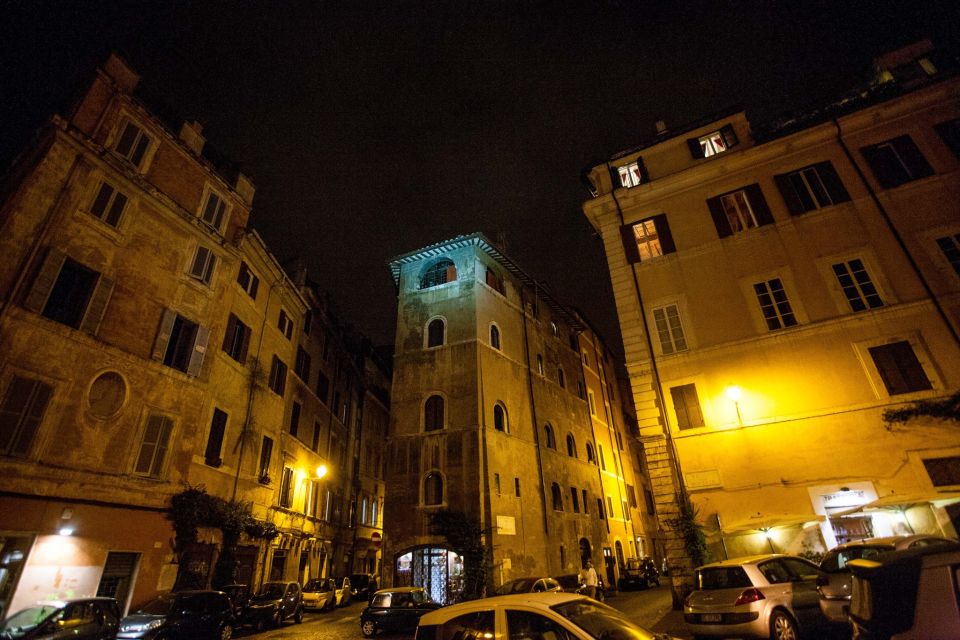
- 90 minutes at night: quick enough to fit your evening, long enough to feel like a real stroll
- Legends tied to specific places: Campo de’ Fiori, Piazza Farnese, Via Giulia, and Castel Sant’Angelo
- Renaissance Rome planning on Via Giulia: one of the first planning projects from the Renaissance era
- Hadrian’s Mausoleum site: Castel Sant’Angelo’s bigger meaning beyond the views
- Photo stops in the middle of the walk: Via del Governo Vecchio and Castel Sant’Angelo viewpoints
- English-speaking guide wearing blue at the meeting point
Why a dark Rome walk feels different after dark
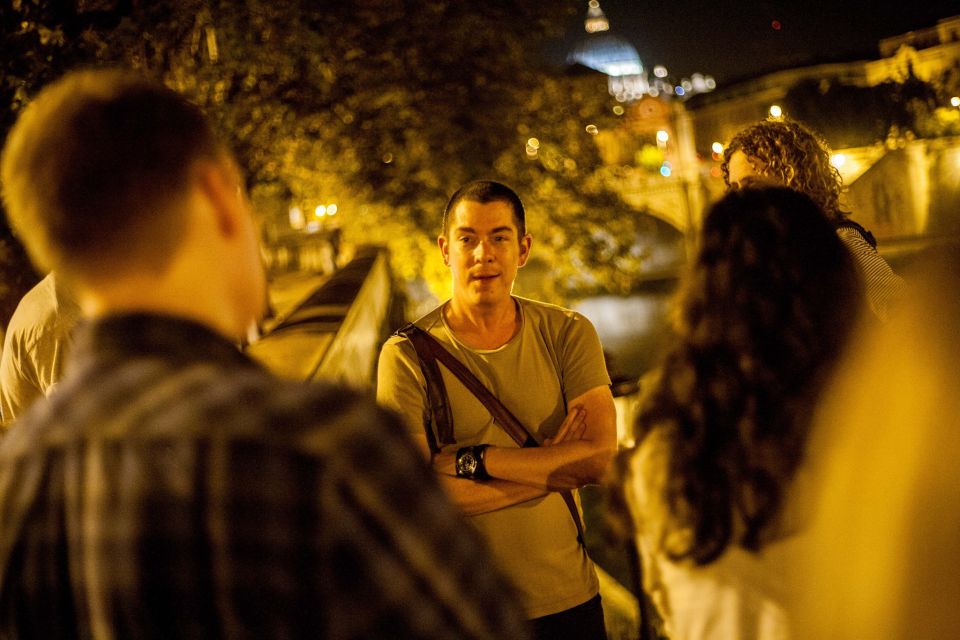
Night changes how Rome reads. The landmarks are the same, but the shadows do half the work. This tour leans into that with facts and legends that are meant to spark your imagination, not just recite dates.
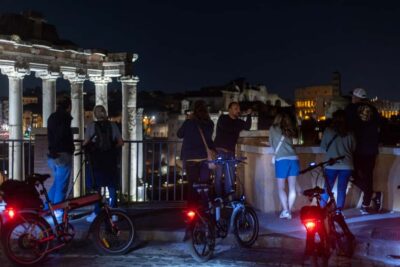
I also like that the tour is built around atmosphere. You’ll walk through the historic center at evening illuminations, so you’re not just checking boxes like a daytime postcard run. The result feels more personal, like you’re learning how Rome thinks when the day visitors are gone.
Finally, the pacing is designed for an evening outing: 1.5 hours is long enough to connect the dots, but short enough that it stays fun instead of exhausting. You’ll finish near the Tiber, which makes it easy to keep wandering after the tour ends.
You can also read our reviews of more tours and experiences in Rome.



Meeting on Corso Vittorio Emanuele II: find the blue outfit
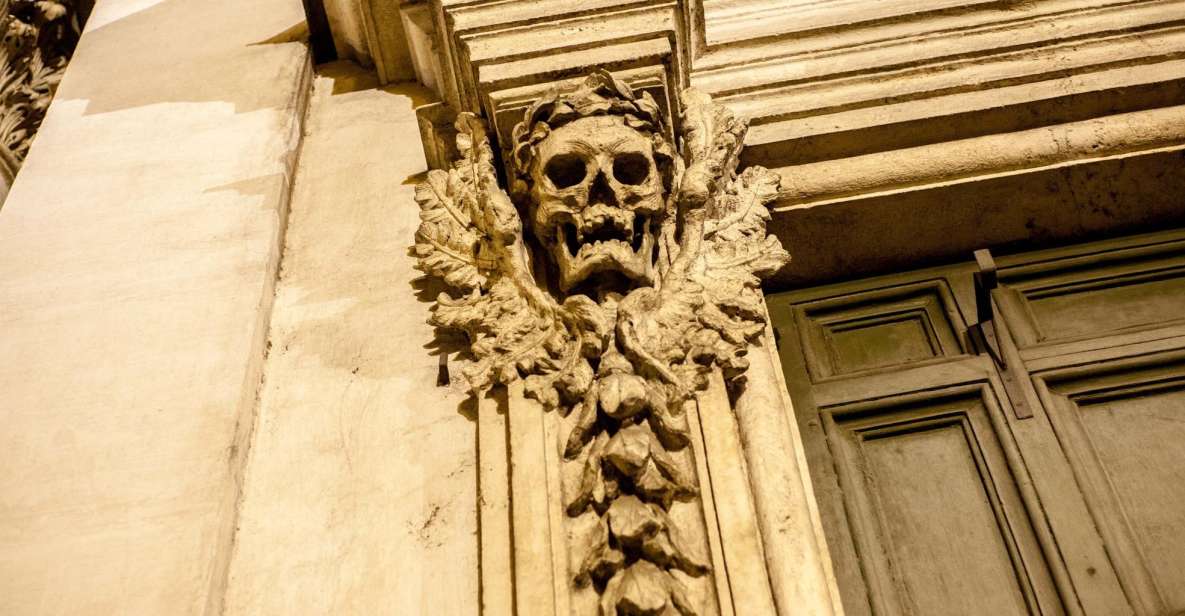
You’ll meet on the steps of San Andrea della Valle Church on Corso Vittorio Emanuele II. The meeting point is about 150 meters from Largo di Torre Argentina on the left-hand side heading toward the Tiber River, and the church is next to Piazza Vidoni and Piazza Sant’Andrea della Valle.
A small but useful detail: your guide will be wearing blue attire. That matters in a city where it’s easy to lose each other, especially at night.
If you’re planning your evening, I’d build in a few minutes for standing close by and getting oriented. The tour starts from a dense area, and you’ll want to be there early enough to settle your bearings without stress.
Campo de’ Fiori at night: executions, legends, and a darker rhythm
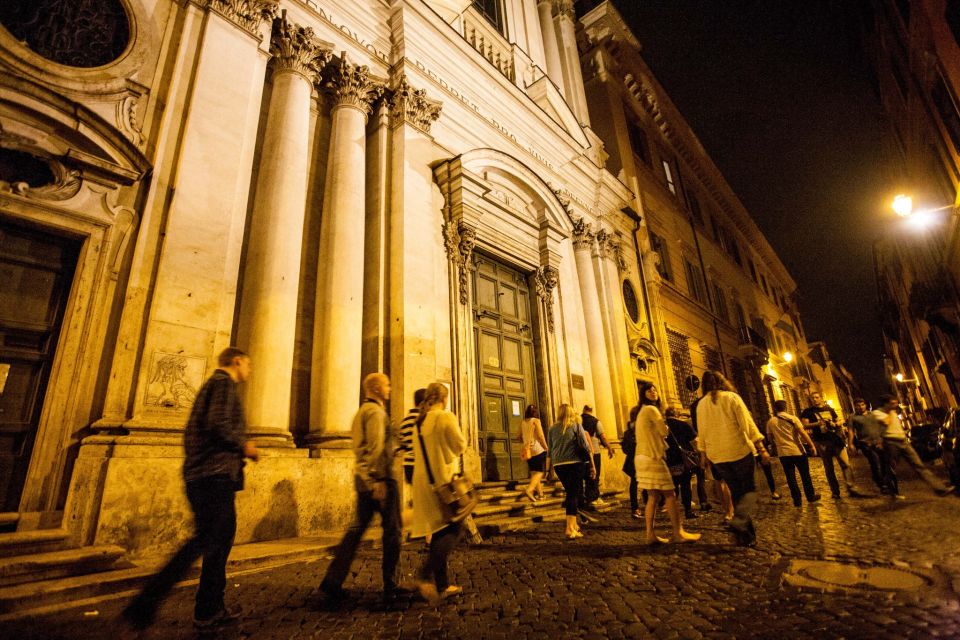
Your walk puts you near Campo de’ Fiori, one of Rome’s most famous squares. The big context here is unsettling: public executions used to take place in this area. On an evening stroll, that history lands harder because the square feels less like a daytime hangout and more like a stage.
This is also where you’ll get the tone of the tour. Expect the guide to connect the place to the stories—facts on the surface, legend underneath—so you can follow along without feeling lost in vague spooky talk. The winding lane approach helps too: you don’t arrive at Campo de’ Fiori like you’re on a bus tour.
Practical tip: if you’re the kind of person who likes to look up while walking, do it carefully. The tour includes time spent moving through lanes and squares, so keep your head up only when you can still watch for steps and uneven paving.
Piazza Farnese and the granite fountain basins
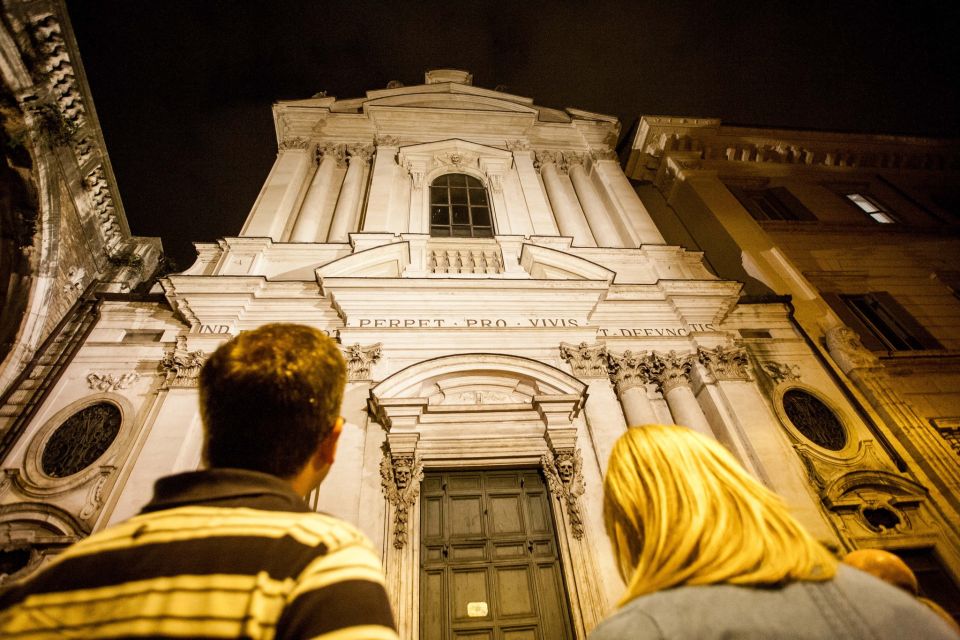
Next up is Piazza Farnese, one of those Rome squares that looks like it was designed for lingering. It’s dominated by fountains built from granite stone basins, giving the place a solid, sculptural look even under nighttime lighting.
What makes this stop valuable isn’t just the scenery. It’s a change in pace and mood—less open, more composed. The guide’s stories here help you connect why the area matters in the city’s broader story, not just why it’s photogenic.
If you’re taking photos, consider using the moment to frame the square as a whole first, then zoom in for details on the fountain basins. Night can be tricky for camera settings, so having a wide shot helps if your close-up is slightly blurry.
Via Giulia: walking one of Renaissance planning’s early wins
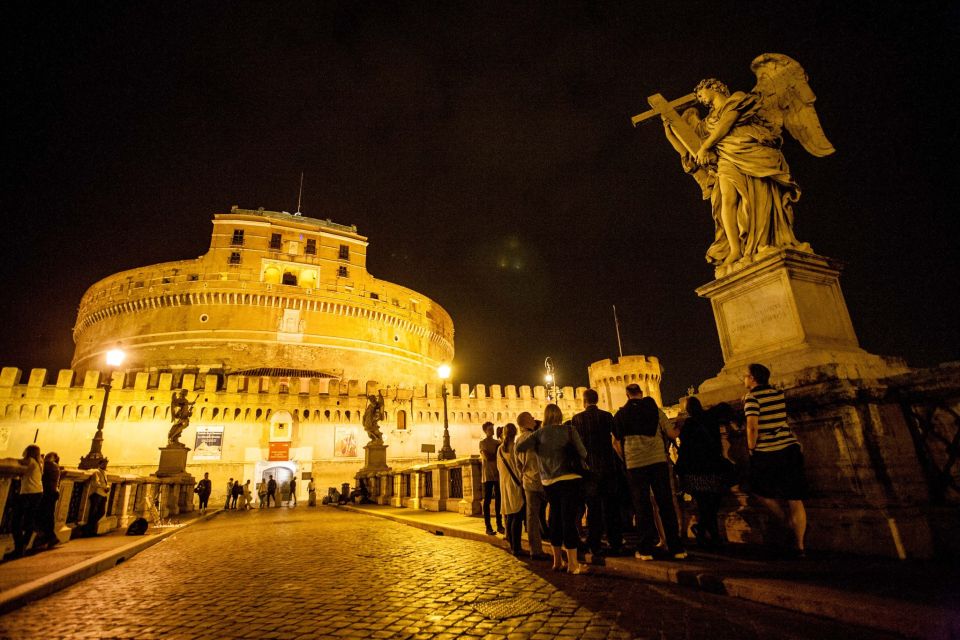
Then you’ll head to Via Giulia, highlighted as one of the first planning projects of Renaissance Rome. That’s a key idea for you to keep in mind while walking: you’re not only seeing a street, you’re seeing a design concept in motion.
This part of the tour is where “darker Rome” broadens beyond ghost stories. Even if the legends are the hook, the Renaissance planning angle gives you a real-world structure. You start noticing rhythm—street direction, sightlines, and how the built environment guides movement—so the city feels intentional instead of chaotic.
This stop also works for people who like history but don’t want a museum-style lecture. You’re outdoors, walking, and getting a story that makes the street itself feel meaningful.



Via del Governo Vecchio: narrow lanes and a photo moment
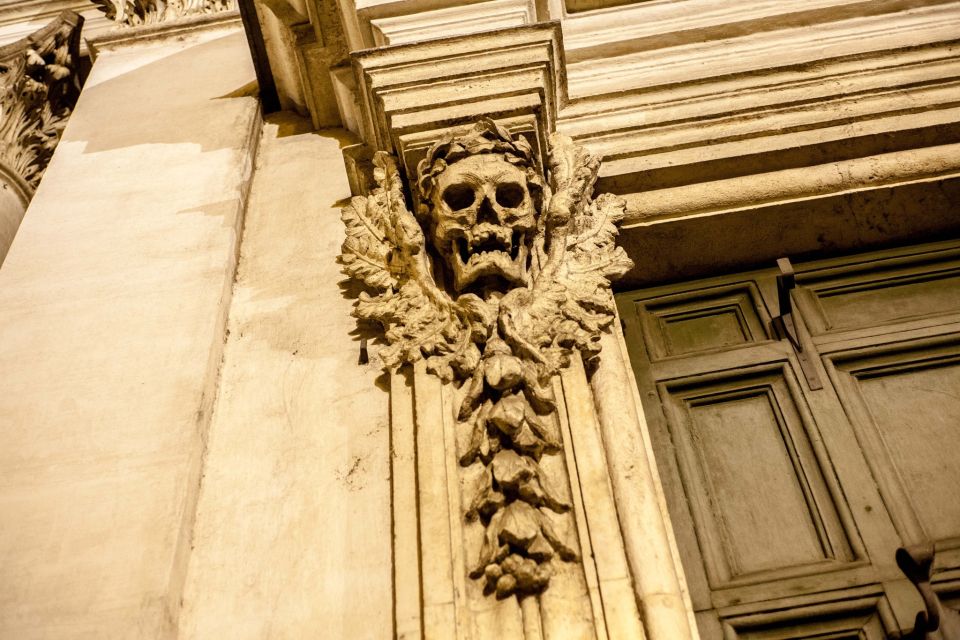
You’ll pass through Via del Governo Vecchio, with a photo stop built into the schedule. This is the kind of narrow street Rome does well: tighter spaces, sharper shadows, and a “you could miss this if you blink” feeling.
The practical benefit of having a photo stop here is that it breaks up the walk without turning it into a long halt. You get a chance to capture the mood, then move on while the tour energy stays high.
If you’re sensitive to tight lanes or crowds, keep your awareness up around intersections and corners. At night, you’ll still encounter other pedestrians, and this part of central Rome can get narrow quickly.
Castel Sant’Angelo: from Hadrian’s Mausoleum to night views
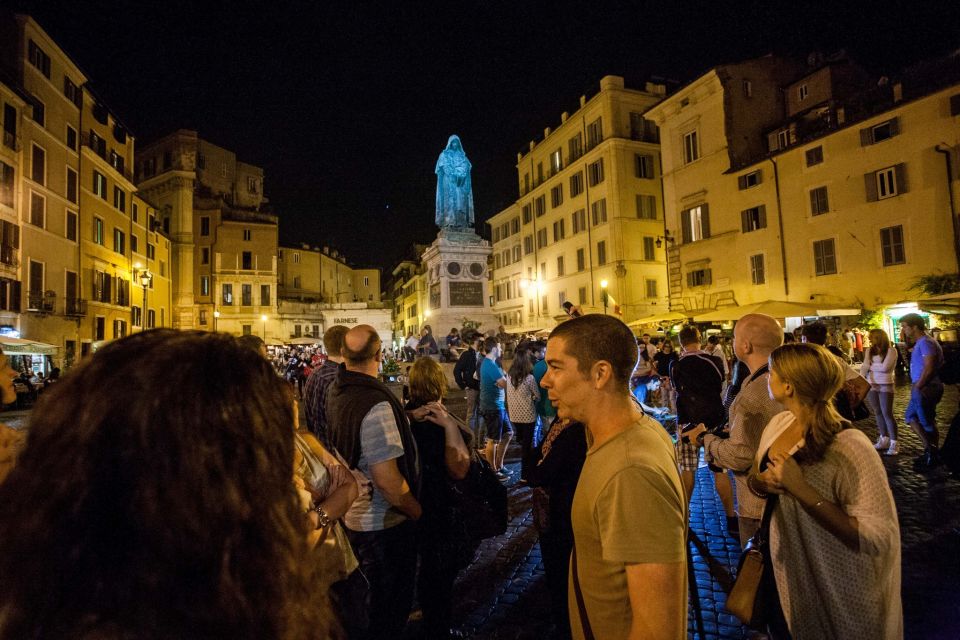
The tour’s biggest landmark payoff is Castel Sant’Angelo, visited with more guide-led storytelling and another photo stop. This site is tied to Hadrian’s Mausoleum, which changes how you view the building. You’re not just looking at a fortress or a scenic endpoint—you’re seeing a structure connected to an emperor’s final resting place.
I like that the tour doesn’t treat Castel Sant’Angelo as a standalone “wow” moment. The walking route builds context first, then you arrive with your brain already primed for meaning. When you finally look out from the area around it, the views feel earned rather than random.
Night also helps here. The castle’s mass and lighting create strong silhouettes, so even quick photos can look good. Just remember: you’re still in a walking tour, so plan for short stops rather than long photo sessions.
The value of a $14 evening tour (and who it’s for)
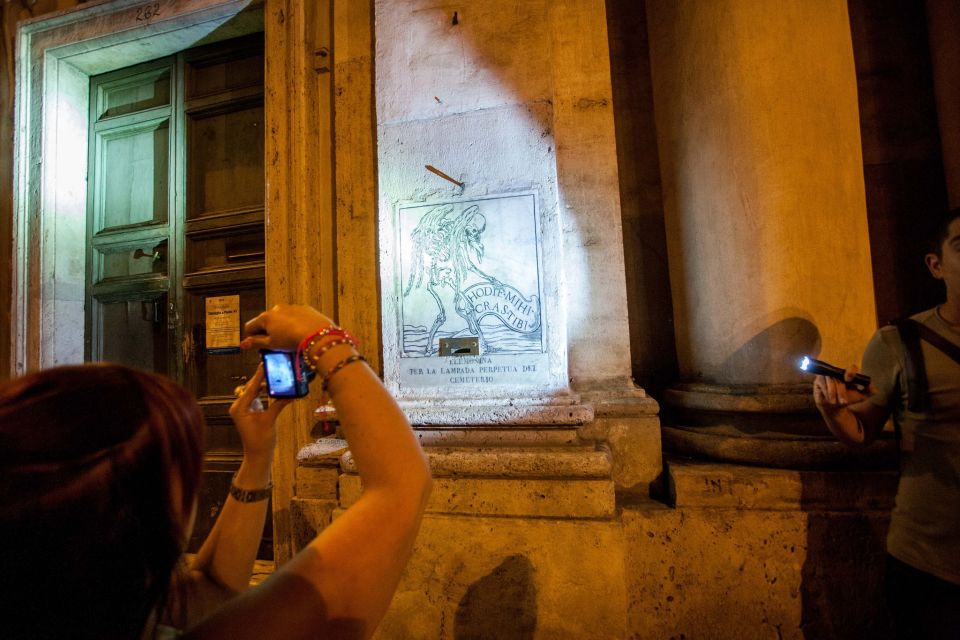
At $14 per person for about 1.5 hours, this tour is priced like an efficient evening activity—one that competes with dinner alone. You’re paying for two things: an English-speaking guide and a curated route that includes places you might not prioritize on your own.
This isn’t a “check the biggest monuments” tour. It’s for people who enjoy stories tied to everyday streets and squares. If you like walking while learning, and if you enjoy a slightly theatrical style of storytelling, this hits the sweet spot.
It also fits adults and teens, based on what people describe enjoying. If you’re traveling with a history lover, a film-noir fan, or someone who likes true-crime style narratives, you’ll likely appreciate how the guide frames the darker side of Rome.
Pace, comfort, and the small accessibility realities
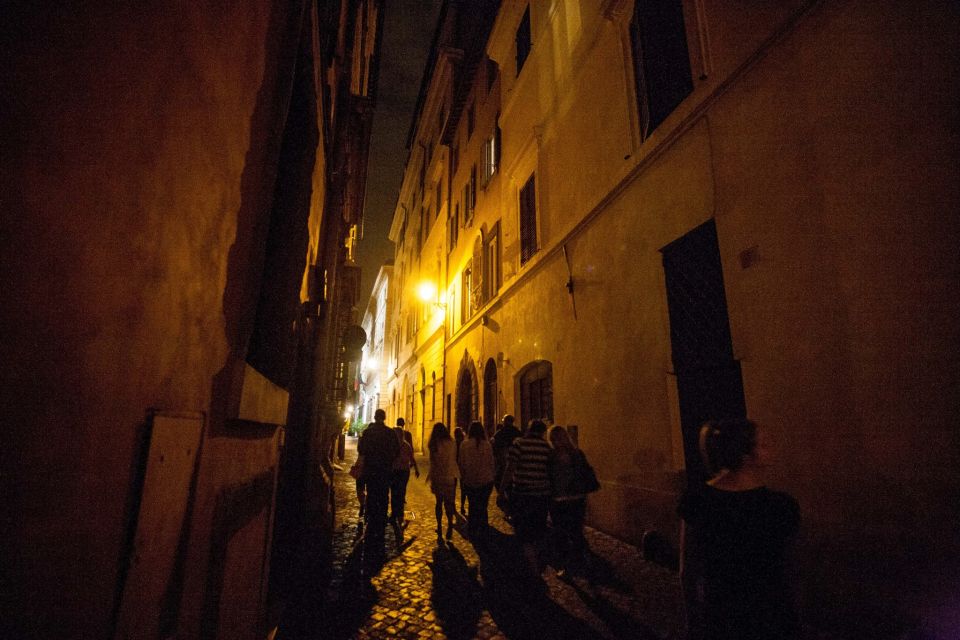
This is a nighttime walking format on historic surfaces, so your body needs to cooperate. Bring comfortable shoes and expect you’ll be on your feet for the full route.
Two limits matter for planning:
- No strollers (pushchairs are not accommodated)
- Not suitable for wheelchair users or mobility impairments
Also, one possible consideration to keep in mind: the tour is story-driven, and some people have felt certain departures can run fast or feel more rehearsed than flexible. If you like your history purely factual and slow, you might find the delivery more performance-like than classroom-like. On the other hand, if you came for the atmosphere, that theatrical storytelling is probably exactly what you want.
Who should skip it
If your travel style is strictly museum-only or you can’t handle uneven walking surfaces, this probably won’t be a comfortable fit. The same goes if you need stroller support or wheelchair access on your tours.
If you’re pressed for time and want a dense, major-monument itinerary packed with long viewpoints, you may prefer a longer daytime route. This one is compact by design, so it’s best as an evening add-on that changes how you see the city.
Should you book the Dark Heart of Rome?
Yes, if you want Rome with a shadow side. I’d book it for the combination of evening atmosphere and specific stops like Campo de’ Fiori, Via Giulia, and Castel Sant’Angelo tied to Hadrian’s Mausoleum. The price is easy to justify, and the short duration makes it a smart way to use one evening well.
I’d think twice if you need wheelchair or stroller-friendly access, or if you dislike story-telling that can feel a bit rehearsed. Also, bring shoes and plan to move.
If you want Rome that feels like a living mystery instead of a standard sightseeing checklist, this is the kind of tour that turns an evening walk into a real memory.
FAQ
How long is the Dark Heart of Rome tour?
It lasts about 1.5 hours.
How much does the tour cost?
The price listed is $14 per person.
Where does the tour meet?
Meet on the steps of San Andrea della Valle Church on Corso Vittorio Emanuele II, about 150 meters from Largo di Torre Argentina, on the left-hand side heading toward the Tiber River. The church is next to Piazza Vidoni and Piazza Sant’Andrea della Valle.
Where does the tour finish?
The tour finishes at Lungotevere Castello, 50, 00186 Roma RM, Italy.
Is hotel pick-up or drop-off included?
No, hotel pick-up and drop-off are not included.
Is the tour guided in English?
Yes, it includes an English-speaking live guide.
What should I bring?
Wear comfortable shoes.
Is this tour stroller-friendly?
No. The tour does not accommodate pushchairs or strollers.
Is it suitable for wheelchair users or people with mobility impairments?
No. The tour is not suitable for wheelchair users or guests with mobility impairments.
Can I cancel for a refund?
Yes. You can cancel up to 24 hours in advance for a full refund.
Does the booking allow pay later?
Yes. You can reserve now and pay later.