REVIEW · ROME
Rome Imperial Past Colosseum, Forum and Palatine Tour
Book on Viator →Operated by Show Me Italy · Bookable on Viator
Rome’s biggest ruin makes sense.
This 2.5-hour guided walk through the Colosseum, Roman Forum, and Palatine Hill is a smart way to get orientation fast and understand what you’re seeing. I love that you get an official live guide plus headsets for clear commentary in crowds, and I also like that admission is built in for the Colosseum, Roman Forum, and Palatine Hill. The one possible drawback: it’s a set-time route with a lot packed in, so you’ll have less freedom than a solo visit.
You’ll also appreciate that it runs rain or shine unless the monument is closed, and that you can choose a morning or afternoon start. In real-world Rome terms, that flexibility matters. Just don’t count on lingering for long picture stops or drifting off to explore every corner at your own pace.
In This Review
- Key points before you go
- A smarter way to read the Colosseum complex
- Price and what’s actually included for $54.19
- Meeting point: Via dei Fori Imperiali to Largo della Salara Vecchia
- Entering the Colosseum: your 1-hour “main act”
- Mobility note you can plan around
- Roman Forum stop: making sense of temples, shrines, and markets
- Palatine Hill: where elite Rome lived (for about 45 minutes)
- Pace, crowds, and the headset check (this is where tours live or die)
- Morning vs afternoon: choosing the start time wisely
- Who this tour is best for
- Should you book this Rome Imperial Past Colosseum, Forum and Palatine Tour?
Key points before you go
- Official guide + headsets for better listening in noisy, busy ruins
- All major stops in one loop: Colosseum, Foro Romano, and Palatine Hill
- Admission included for the Colosseum, Roman Forum, and Palatine Hill
- Small-group feel with a cap of 25 travelers
- Time-boxed pacing that’s great for seeing a lot, but not for slow browsing
- You’ll need the exact name on your ID/voucher for ticketed entry
A smarter way to read the Colosseum complex
The Colosseum is big. The Forum is bigger. The Palatine Hill is a whole neighborhood made of stone and stories. The trick in Rome is not just seeing ruins, but understanding what order they come in and why they mattered.
That’s what this tour is built for. You get a guided storyline through three sites that normally feel like separate sightseeing tasks. With headsets, you’re not stuck guessing what your guide is saying when groups surge around you.
Two standout strengths show up again and again with this kind of route: learning the “why” behind the stone, and keeping yourself from wandering in circles. You’ll also benefit from the shared momentum—when the group moves, you move, and you actually get through the major sights.
You can also read our reviews of more tours and experiences in Rome.



Price and what’s actually included for $54.19
This tour costs $54.19 per person for about 2 hours 30 minutes. That sounds “tour-ish,” but the value is in what’s bundled: you get the official live guide, headsets, and entrance ticket coverage for the Colosseum, Roman Forum, and Palatine Hill.
The Colosseum reservation fee and the Colosseum ticket value are spelled out as part of the total pricing (with the remaining amount covering other services). Translation: you’re not paying extra on the day for the biggest-ticket hurdle.
One more practical benefit: the group timing is designed to reduce the amount of time you spend standing around deciding what to do next. Even if you’ve visited Rome before, the Colosseum area can overwhelm you without a plan.
Meeting point: Via dei Fori Imperiali to Largo della Salara Vecchia
You start at Santi Cosma e Damiano, Via dei Fori Imperiali, 1, 00186 Roma RM, Italy. You end at Largo della Salara Vecchia, 00186 Roma RM, Italy.
Two timing details matter here:
- Arrive 15 minutes early. If you show up late, you may not be able to join.
- Your meeting time can change, and you’ll be contacted by email if it does.
Also note the “no drama” Rome rule: confirmation is at booking, but ticket entry is name-sensitive. The names used at booking can’t be changed, and the entry documents need to match the full names on your voucher.
Tip: keep your ID/passport ready, and don’t plan a tight connection right after. The end location puts you close to the Forum/Colosseum zone, but you’ll still want a buffer before your next reservation.
Entering the Colosseum: your 1-hour “main act”
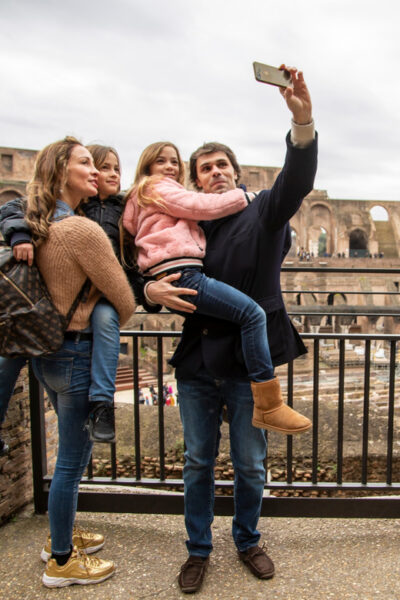
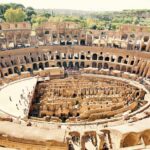
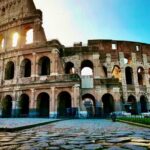
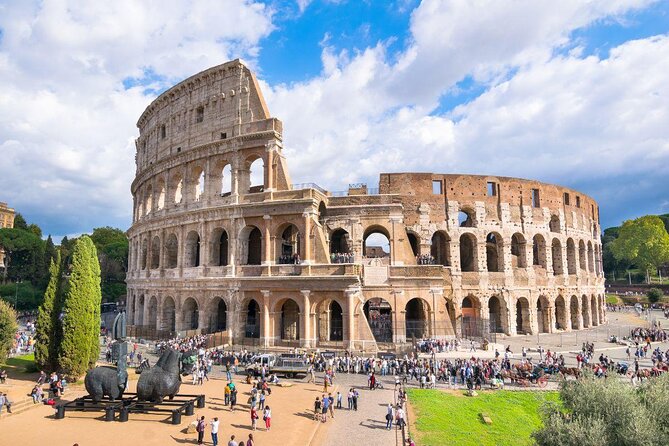
You spend about 1 hour at the Colosseum with an official guide. This is the part everyone wants to see first, and it’s also where you need context the most.
Here’s how a guided Colosseum hour usually pays off:
- You stop seeing it as just an iconic photo spot.
- You start noticing architectural logic—levels, entrances, and how crowds would have moved.
- You get the historical framing that makes the scale feel real.
Crowd reality: even when you have a reservation, you’ll still be in a thick flow of people. That’s why the headsets matter. If you’re hard of hearing or your headset volume feels low, adjust it early and keep it in position.
Also plan for a brisk walk. This tour format is designed to cover the Colosseum, Forum, and Palatine Hill in one go. If you love slowing down to read every plaque, you might feel the pinch here.
Mobility note you can plan around
One guest experience highlighted that the Colosseum involves lots of uneven surfaces and steps, but there’s also a lift that can help you reach levels. If mobility is a concern for you, don’t be shy about asking your guide what the easiest route is once you’re inside.



Roman Forum stop: making sense of temples, shrines, and markets
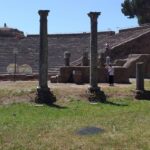
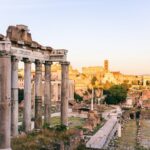
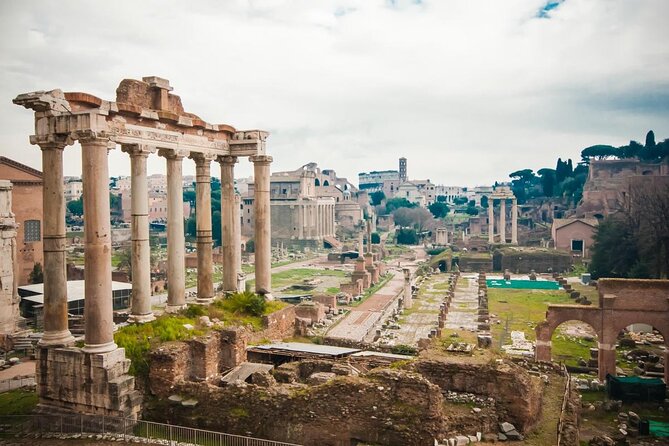
Next comes the Foro Romano for about 45 minutes. This stop is less about one single monument and more about a “read-the-city” experience.
The Forum is where Rome shows up as a living system: places of worship (temples and shrines), civic life, and the marketplace energy that kept the city running. With a guide, you’re less likely to see random ruins and more likely to understand the layout and what activities happened where.
45 minutes is a good time window for the Forum because it forces focus. You’ll get the key landmarks your guide wants you to see, without getting lost in side paths. The drawback is that you won’t have time to linger at every corner you personally find fascinating—this is a tour route, not a free roam day.
If you’re a photographer, ask (quietly) for a moment at standout viewpoints when the group pauses. The best results often come when you’re not scrambling with a crowd behind you.
Palatine Hill: where elite Rome lived (for about 45 minutes)
Then you head to Palatine Hill for about 45 minutes. This is the “big view” portion of the tour and often the part where ruins start to feel like neighborhoods.
Palatine Hill is valuable because it helps you picture status and power. The Forum explains public life; Palatine explains where the influential elite wanted to be close to everything. Walking through remains on the hill gives you a different perspective than the Forum floor.
This stop also tends to feel smoother than the busiest crush zone around the Colosseum, because the group is moving through open sight lines. You’ll still be walking, and you’ll still be dealing with uneven ground, but the story often feels clearer by now.
If you care about details, know that 45 minutes is still time-boxed. Use it to get the map in your head. If you want to go deeper later, you can always return on your own after you’ve learned the basics.
Pace, crowds, and the headset check (this is where tours live or die)
This tour is designed for efficiency. That’s good. It’s also why a few issues can pop up when you’re in a crowded site.
From real-world experiences tied to this kind of group format, here’s what to watch for:
- Audio problems happen. Some guests reported trouble hearing through the microphone unless it was very close. You can reduce the risk by checking your headset right away and keeping an eye on your guide’s position.
- Meeting point confusion happens. A few people struggled to find their guide at the start. Arriving early helps, and so does staying alert to the guide’s group markers.
- A rushed feeling can happen if the group is moving fast to stay on schedule. You’ll learn plenty, but if you want long pauses, you may have to plan that time elsewhere.
One guest also noted that the tour didn’t include the top floor and found it later by chance while looking for an elevator. I’d treat that as a planning cue: if upper-level access is a must for you, consider doing extra time on your own after the tour.
Crowd note: if you’re visiting during a high-demand period, the lines and crowd density can slow everything down, even with reservations. Your guide can’t control foot traffic, but they can help you navigate it.
Morning vs afternoon: choosing the start time wisely
You can choose either a morning or afternoon start, and that matters in Rome more than people think.
Morning tends to feel calmer for walking and photos, especially when the day is younger and crowds are slightly less intense. Afternoon can work better if you’ve got other morning plans, but the heat can ramp up fast in the summer months.
If weather is in the forecast, good news: the tour runs rain or shine unless safety closures force changes. Bring a light rain layer if you’re going to the Colosseum area. Wet stone can also make surfaces a bit slick, so watch your footing.
Who this tour is best for
This works well if you want:
- A structured plan through the Colosseum complex
- A guide-led explanation so the ruins stop being random stone
- A tour that’s not just “walk and look,” but gives you context
It’s also a good fit for first-timers to Rome who only have a single day to tackle ancient sites. If your goal is to connect the dots between the public city (Forum) and the elite zone (Palatine Hill) around the giant symbol (Colosseum), this format is efficient.
It may be less ideal if you:
- Want a slow, sit-and-read experience
- Have mobility limits and need a lot of extra time
- Are hoping to explore every level and corner without time pressure
Should you book this Rome Imperial Past Colosseum, Forum and Palatine Tour?
If you want a guided, ticketed route that covers the big three ancient stops in one outing, I’d say yes—book it, especially if you’re the kind of traveler who likes learning while you walk.
I’d especially recommend it when:
- You’re short on time and want maximum value from a single half-day block
- You’d benefit from headsets in noisy sites
- You’d rather trust a plan than guess your way through the ruins
Think twice if:
- You’re set on taking your time through every nook, including upper levels that might not fit into a tight schedule
- You’re very sensitive to audio issues or dislike fast pacing
Bottom line: this is a practical way to make Rome’s ancient headline sites click. Plan for crowds, check your headset early, and keep a little flexibility after the tour so you can enjoy what you learned instead of racing to your next stop.