REVIEW · ROME
Rome: Appian Way & Catacomb Sunset E-bike Tour with Aperitif
Book on GetYourGuide →Operated by the Red Bicycle · Bookable on GetYourGuide
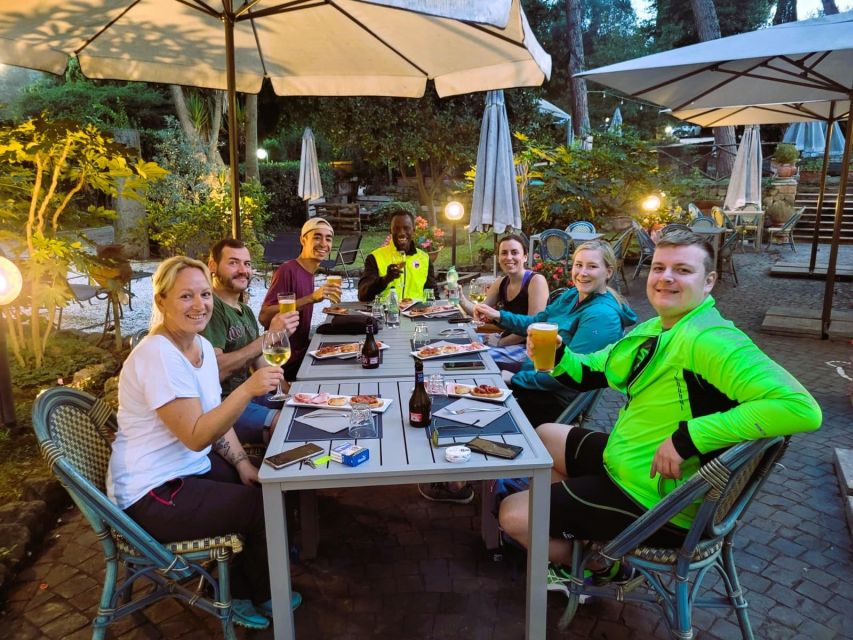
An ancient road, plus a sunset snack ride.
I love how this tour pairs Appian Way scenery with a guided Catacombs of St. Callisto visit, so you get history you can actually see and feel, not just read. It’s also one of those rare Rome experiences where you ride out fast into open air, then come back with a full meal-in-a-bite taste of Italy at the end.
My only caution: the route can include cobblestones and dirt paths, and you’ll need to be comfortable riding steadily. If you’re nervous about traffic at the start, expect your guide (like Adriano, who many groups rave about) to break things into manageable steps and keep the group together with a close, watch-your-line rhythm.
In This Review
- Quick takeaways before you go
- Why the Appian Way on an e-bike beats a normal Rome day
- Starting at Circo Massimo: getting set up fast
- Porta San Sebastiano: the quick gateway out of the city
- Catacombs of St. Callisto: what the guided hour is really like
- Villa di Massenzio and the Cecilia Metella stop: photos with real atmosphere
- Riding the Appian Way: the ancient road you can feel
- Parco degli Acquedotti at sunset: the aqueducts become the main event
- Caffarella Park break: a breather before the aperitivo
- The aperitif stop: snacks, drinks, and that open-air Rome feeling
- Bikes, safety, and who this tour suits best
- Price and value: what $89.50 really buys
- Booking basics that matter (without the fine print drama)
- Should you book this Appian Way sunset e-bike tour?
- FAQ
- How long is the e-bike tour?
- Where do we meet for the tour?
- What does the tour include besides the bike ride?
- Which catacombs are visited?
- Is the aqueduct portion timed for sunset?
- What kind of food and drinks are served at the aperitif?
- What languages are the guides available in?
- Is it suitable for kids?
- Are there any footwear rules?
Quick takeaways before you go
- E-bike help means you can cover real ground in 4 hours without feeling crushed.
- Catacombs of St. Callisto are timed with a guided visit, not a rushed wander.
- Aqueducts at sunset turns classic ruins into a real golden-hour experience.
- Aperitif stop in open air includes local snacks like bruschetta, olives, cheese, fruit, and bread.
- Photo-stop pacing keeps you moving while still letting you soak in Villa di Massenzio, Cecilia Metella, and the Appian Way.
- Practical riding notes matter: helmets and safety gear are used, and open-toed shoes aren’t allowed.
Why the Appian Way on an e-bike beats a normal Rome day
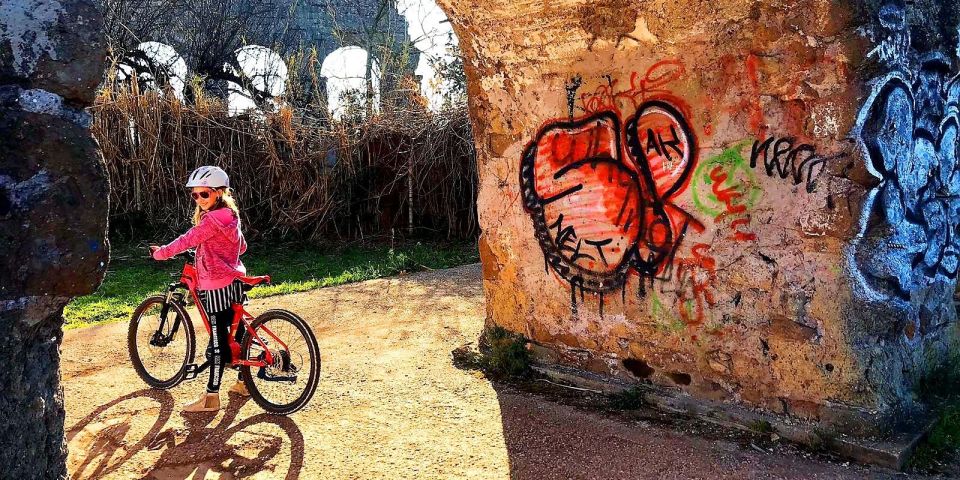
Rome can feel like it’s all stone buildings and indoor crowds. This tour flips the script. Instead of spending hours dodging lines and buses, you hop onto an electrically assisted bike and roll out toward the edges of the city where the air changes.
What makes it work is the balance: you get a proper underground stop (the catacombs) and then you transition to open-space Rome—the kind of green, quiet surroundings that make you realize how close the countryside really is. And yes, the sunset timing on the aqueduct route is a big part of the magic.
The value also sneaks up on you. At $89.50 per person, you’re paying for more than a ride: you’re covered for the bike, the guide, catacombs entry, a guided catacombs visit, and the aperitif snacks and drinks along the way. That’s a lot bundled into one 4-hour outing.
You can also read our reviews of more cycling tours in Rome
Starting at Circo Massimo: getting set up fast
You meet at the coffee shop Ristretto 35 Bistrot, close to the Circo Massimo metro area. There’s street-side parking available, which is handy if you’re arriving by taxi or renting a car nearby. You’ll start from there and then move into the early streets toward the historic gates.
This is one of those practical Rome moments: you don’t want to spend your first 20 minutes confused about bikes, helmets, sizing, and where to line up. The tour is built to get you moving quickly, and a good guide will make the first part feel organized rather than chaotic.
One practical note: the tour isn’t suitable for people who can’t ride a bike. Also, it’s not for people with mobility impairments, so don’t plan it as a flexible alternative.
Porta San Sebastiano: the quick gateway out of the city
A short ride takes you past Porta San Sebastiano. This isn’t a long stop, but it matters because it signals the shift from city to region—Rome on the edge, where ancient roads begin to reappear in your line of sight.
Think of this segment as the warm-up. You’ll get used to the bike handling (including any traffic basics) before you hit the more scenic stretches. If you’re anxious about riding in urban conditions, this is where a careful guide earns their keep—slowing down the steps and keeping you from feeling rushed.
Catacombs of St. Callisto: what the guided hour is really like
The highlight for many people isn’t even the bike—it’s what’s underground. You’ll spend about an hour on a guided visit to the Catacombs of St. Callisto, and you’ll have entry tickets included, so you’re not juggling paperwork or waiting at the door.
In practice, a guided catacombs tour changes everything. You’re not just looking at dark walls and old inscriptions; the guide helps you follow the logic of how the burial complex worked and what you’re seeing as you move through the space. That turns the catacombs from a gloomy checkmark into a story you can track step by step.
One thing to watch: you’ll still be on a bike day, so you’ll want to wear something comfortable under the rules of the day. Open-toed shoes aren’t allowed, so choose closed footwear even if the weather is warm.
Villa di Massenzio and the Cecilia Metella stop: photos with real atmosphere
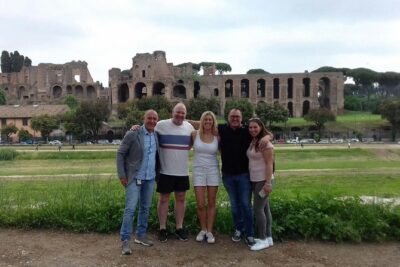
After the catacombs, the route becomes more “stop and see,” with short breaks to take photos and reset your eyes. You’ll have a photo stop at Villa di Massenzio (about 10 minutes) and another at the Tomb of Cecilia Metella (about 10 minutes).
These are good stops because they’re brief but meaningful. You’re right in the Appian Way orbit here—ancient structures that feel like they belong to the same long corridor of Roman power and memory. Even if you’re not the type to memorize dates, you can still feel the scale and purpose of these sites.
Practical tip: photo stops are short. If you want a clean shot without sprinting, keep your camera/phone easy to grab and take a wide shot first, then go for details. Then move on before the group has to pull you out of the best angle.
You can also read our reviews of more evening experiences in Rome
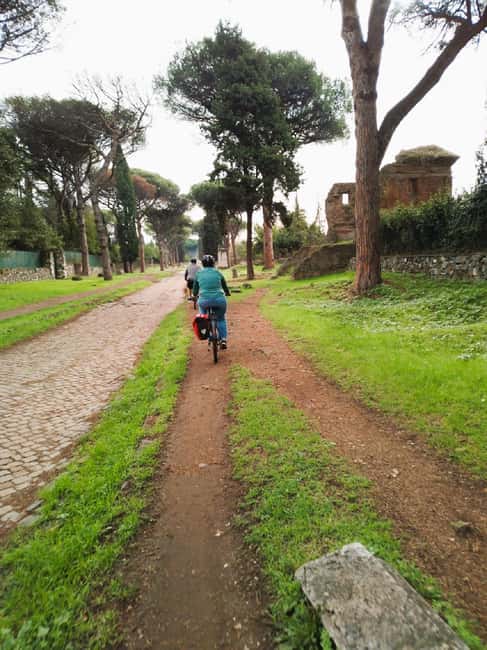
Riding the Appian Way: the ancient road you can feel
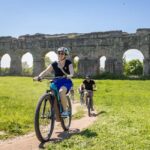
You’ll follow the remains of the ancient Appian Way, including a photo stop along the way. This road is famous for a reason: it’s one of those places where the idea of Rome isn’t trapped behind ropes. You ride along a line that goes back roughly 2,300 years.
That’s the big advantage of a bike tour here. On foot, you’re stuck with a slower pace and fewer miles. By bike, you can actually connect multiple landmarks into one continuous experience. You don’t just visit the Appian Way—you ride part of its physical path.
If you like history, this is the moment to pay attention to what your guide points out. Many details only make sense when you’re moving and can see the surrounding context: the road surface, the direction of the ruins, and how the landscape still carries traces of old life.
Parco degli Acquedotti at sunset: the aqueducts become the main event
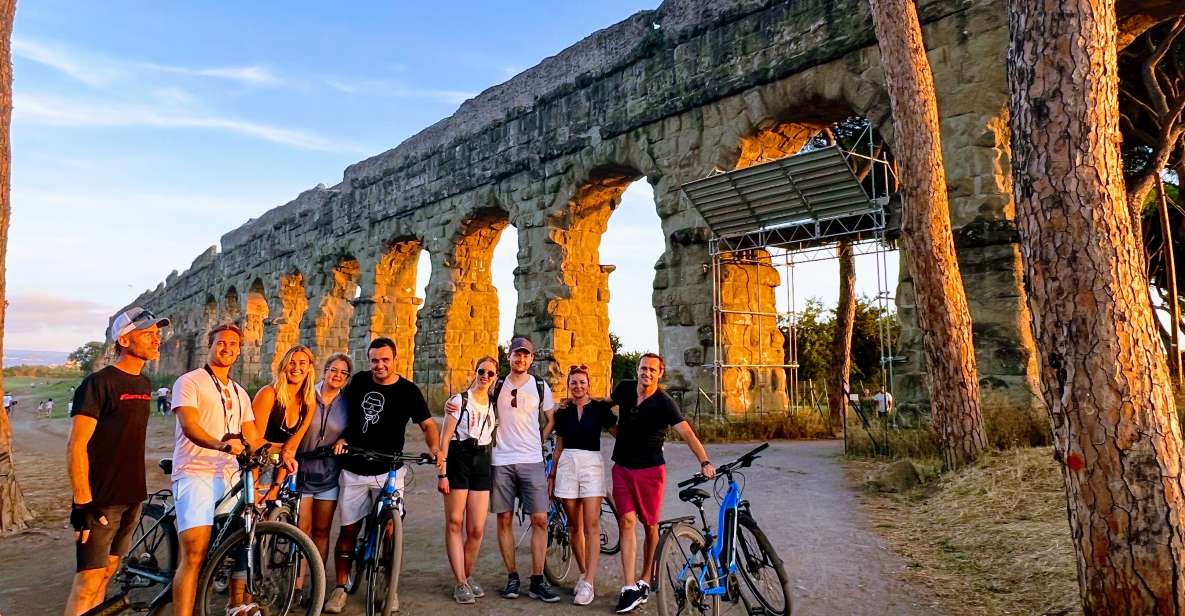
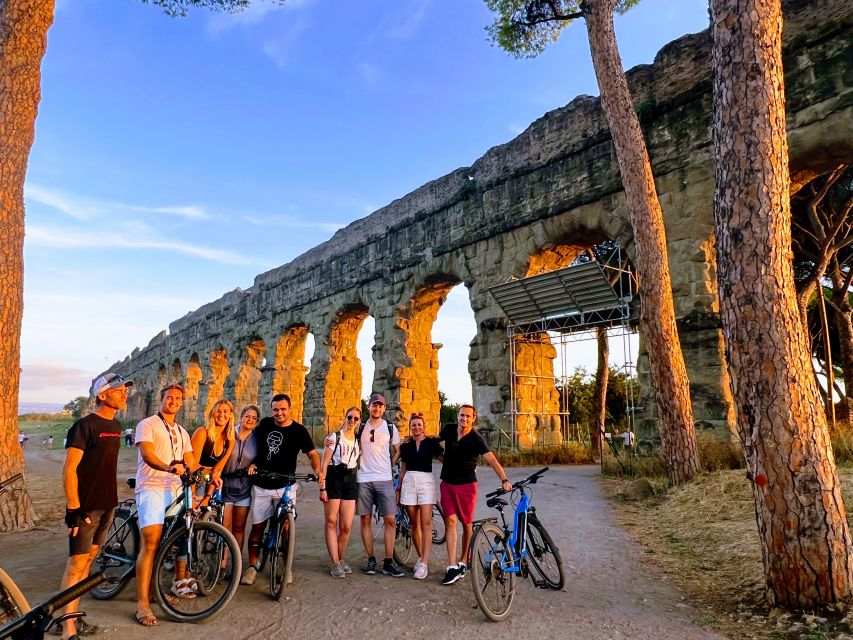
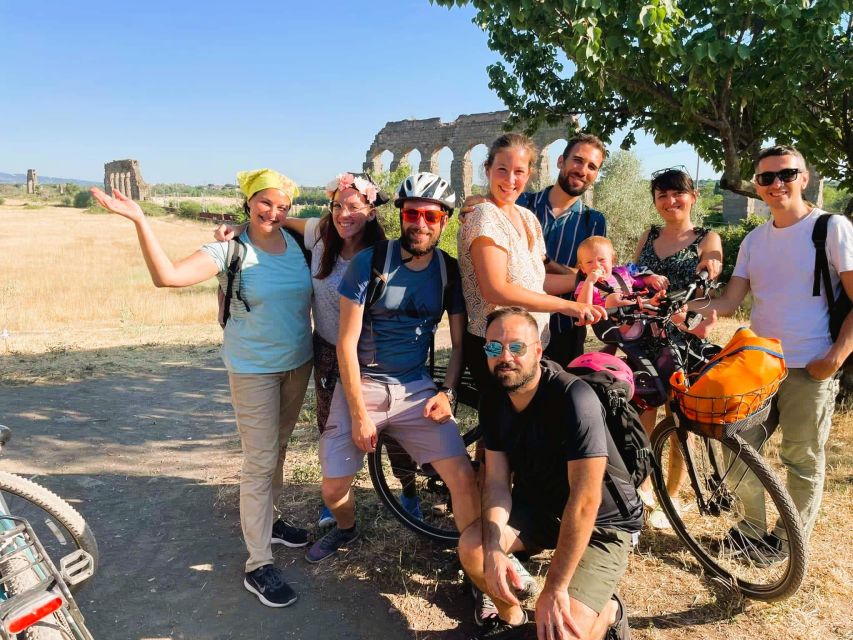
Then comes the part that turns this tour from good to memorable: sunset views around Parco degli Acquedotti. You’ll get a scenic segment with a photo stop in that area (about 10 minutes), timed for that soft late-day light.
Aqueducts are impressive even in daylight. At sunset, they feel cinematic. The long stone lines stretch farther, and the surrounding open air makes the structures look less like museum pieces and more like working infrastructure that once powered the city.
This is where the e-bike shows its value again. You’re not fighting a long walk to chase light. You’re arriving when the light is right, then you can enjoy it instead of racing it.
Caffarella Park break: a breather before the aperitivo
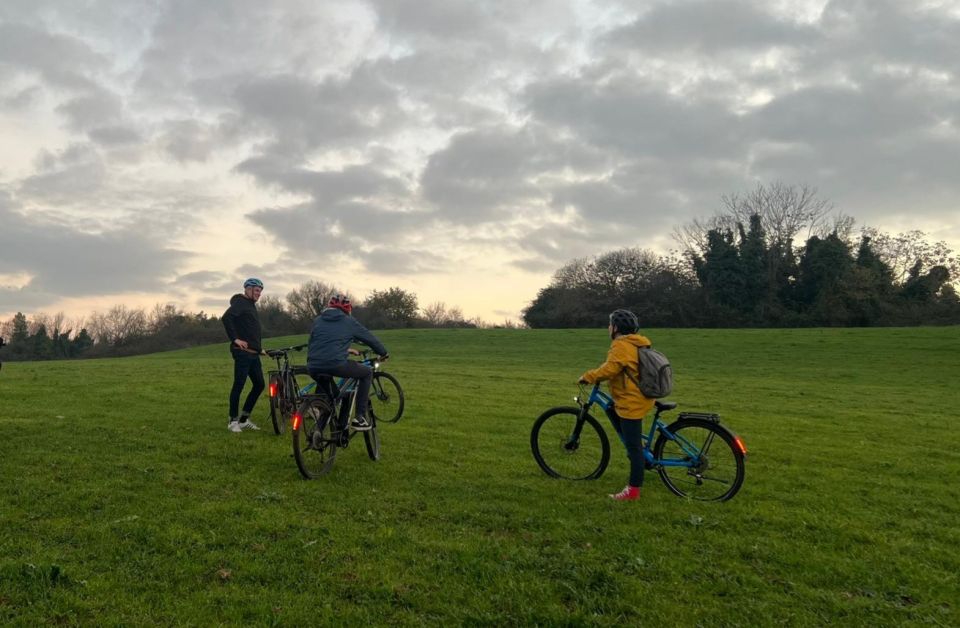
You’ll stop in Caffarella Park for a break (about 15 minutes). This pause helps you reset physically—especially after time underground and then riding on mixed surfaces.
It also helps you mentally. When you’re out of Rome traffic and riding through park spaces, you start noticing sounds, smells, and the way the route changes. That break time gives you space to notice it instead of staying in full “ride focus” mode.
Use this window wisely: refill water if you need it, grab a snack from what’s offered later, and take a few easy photos. Then you’ll be ready for the final tasting moment.
The aperitif stop: snacks, drinks, and that open-air Rome feeling
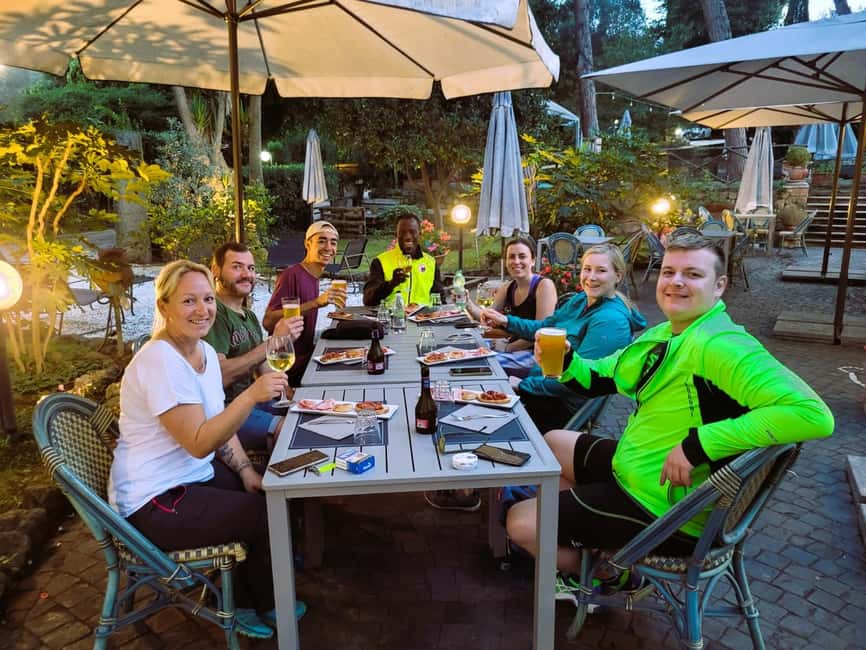
The tour ends with a “secret stop” for an aperitif in the park, with local snacks served for about 20 minutes. The food lineup is the kind of classic Italy that tastes better when you’re outdoors: bruschetta, olives, cheese, fresh fruit, and breads, plus drinks.
This is the part I think is hardest to replace with a DIY plan. You could try to replicate the sites with transit and your own snacks, but you’d miss the pacing and the built-in moment to sit down. Here, you’re guided back into a social, relaxed rhythm right as the day ends.
It also helps that the drinks and food are included. After several hours of stops and riding, you’ll appreciate not having to figure out where to eat at the exact moment you’re ready to.
Bikes, safety, and who this tour suits best
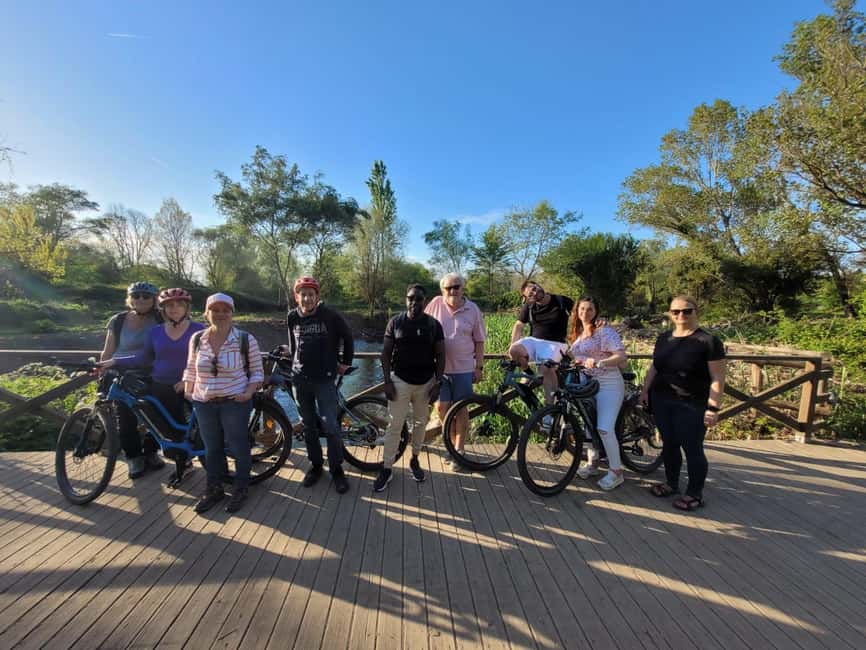
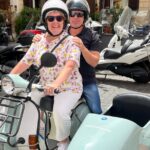
This tour runs on electrically assisted bicycles. That’s a big deal in Rome because the ride includes different road textures. Expect cobblestones, stone roads, and some dirt-path style segments. You’ll also be grouped together, and helmets and bright safety vests are used for visibility.
Still, the route can be technically challenging for some people. Several guides seem to emphasize pacing and safety, and one guide’s job is to keep you from getting separated on rougher sections. If you’ve ridden before, you’ll likely feel comfortable. If you’re new to cycling, take your time and follow instructions exactly—especially on uneven stretches.
Who I’d say should book:
- Adults and families with kids over 10 who can ride a bike confidently
- Travelers who want fewer lines and more outdoor time
- People who want history with a physical component, not just a lecture
Who should skip:
- Anyone who can’t ride a bike
- People with mobility impairments (not suitable)
- Anyone needing very low-impact routes
Also, bring closed-toe shoes because open-toed footwear is not allowed. It sounds minor, but on a bike day it’s the difference between stable comfort and irritation.
Price and value: what $89.50 really buys
At $89.50 per person for a 4-hour guided experience, the price makes sense if you add up what’s included. You get the e-bike, a bicycle tour leader, catacombs entry tickets, and a guided tour inside the catacombs. On top of that, drinks and appetizers are included at the end.
Many Rome tours only bundle the guide and basic transportation. Here, the “hard-to-organize” items are handled for you: timing the catacombs portion and including admission means you can focus on the experience instead of logistics.
If you’re doing this on a day when you’d otherwise buy several separate tickets and then spend time figuring out dinner, the bundled approach feels like good value. It also turns one “booked time slot” into a full half-day of meaningful sights.
Booking basics that matter (without the fine print drama)
The tour runs for 4 hours, and starting times vary by availability, so check the schedule before you commit to a specific plan. You can reserve now and pay later, and there’s free cancellation up to 24 hours in advance for a full refund.
The tour guide is live and operates in multiple languages, including English, French, Italian, and Spanish. Private or small groups are available, which can make the ride more comfortable if you don’t want a large crowd feel.
And yes, there’s a skip-the-ticket-line component for the catacombs portion, which is a real time-saver in Rome.
Should you book this Appian Way sunset e-bike tour?
Yes, if you want Rome that feels less like a checklist. This is a smart mix of countryside air, major ancient landmarks, and a guided catacombs visit that actually explains what you’re seeing. The sunset aqueduct segment and the aperitif stop are the two moments that tend to stick in people’s memory, because they feel both special and easy.
Book it if:
- You can ride a bike comfortably (and you’re okay with mixed surfaces)
- You want a break from museums and indoor crowds
- You’d enjoy ending with classic Italian snacks outdoors
Skip it if:
- You need fully accessible, low-impact travel
- You can’t handle cobblestones and uneven paths
- You’re looking for an easy, stroll-only pace
If you line it up with one of your lighter days in Rome, this tour gives you that rare feeling of being in the city and away from it at the same time. And when the aqueducts catch the last light, you’ll understand why the Appian Way stays famous.
FAQ
How long is the e-bike tour?
The tour lasts about 4 hours.
Where do we meet for the tour?
You meet at the coffee shop Ristretto 35 Bistrot, near the Circo Massimo metro station.
What does the tour include besides the bike ride?
It includes a bicycle tour leader, the e-bike, catacombs entry tickets, a guided tour of the catacombs, and drinks and appetizers at the aperitif stop.
Which catacombs are visited?
The tour includes the Catacombs of St. Callisto, with a guided visit.
Is the aqueduct portion timed for sunset?
Yes. You’ll have a sunset and scenic views segment in Parco degli Acquedotti.
What kind of food and drinks are served at the aperitif?
You’ll have an aperitif with local snacks, including bruschetta, olives, cheese, fresh fruit, and breads, plus drinks.
What languages are the guides available in?
Guides are available in English, French, Italian, and Spanish.
Is it suitable for kids?
It’s suitable for adults and families with children above 10 years old.
Are there any footwear rules?
Open-toed shoes aren’t allowed.