REVIEW · ROME
Rome: La Traviata at St. Paul’s Within the Walls
Book on GetYourGuide →Operated by Musica&Musica srl · Bookable on GetYourGuide
Verdi in a church changes everything. You get La Traviata in the prestige setting of St. Paul’s Within the Walls with professional singers and a top-level orchestra. The big plus is the acoustics and the drama of a real church space, but the tradeoff is that bench seating and sightlines can be rough from the wrong angle.
I like this for the value: for about $47, you’re seeing one of the world’s best-known operas without needing a full “big opera night” budget. One extra note—food and drinks aren’t included, so plan your evening accordingly.
The show runs about 130 minutes, and it’s performed in Italian. If you don’t speak Italian, you can still follow the story through acting, music, and character dynamics; just don’t expect everything to land the same way as a fully translated theater performance.
In This Review
- Key highlights you’ll actually care about
- St. Paul’s Within the Walls: Why this venue feels different
- Verdi’s La Traviata in three acts: what the story gives you
- What’s included (and what isn’t): tickets, costumes, and real expectations
- The musicians: I Virtuosi dell’opera di Roma
- Seating categories in a flat-floor church: how to pick better than average
- Timing and how the night flows: from voucher exchange to curtain call
- Price and value around $47: who this is a good deal for
- Practical tips for a smoother Rome evening
- Should you book La Traviata at St. Paul’s Within the Walls?
- FAQ
- Where does the La Traviata performance take place?
- How long is the show?
- How much are tickets?
- Do I need to exchange my voucher before I enter?
- Is food or drinks included?
- What language is the opera performed in?
- Is the venue wheelchair accessible?
- Are pets allowed?
- Can I film or use flash photography?
Key highlights you’ll actually care about
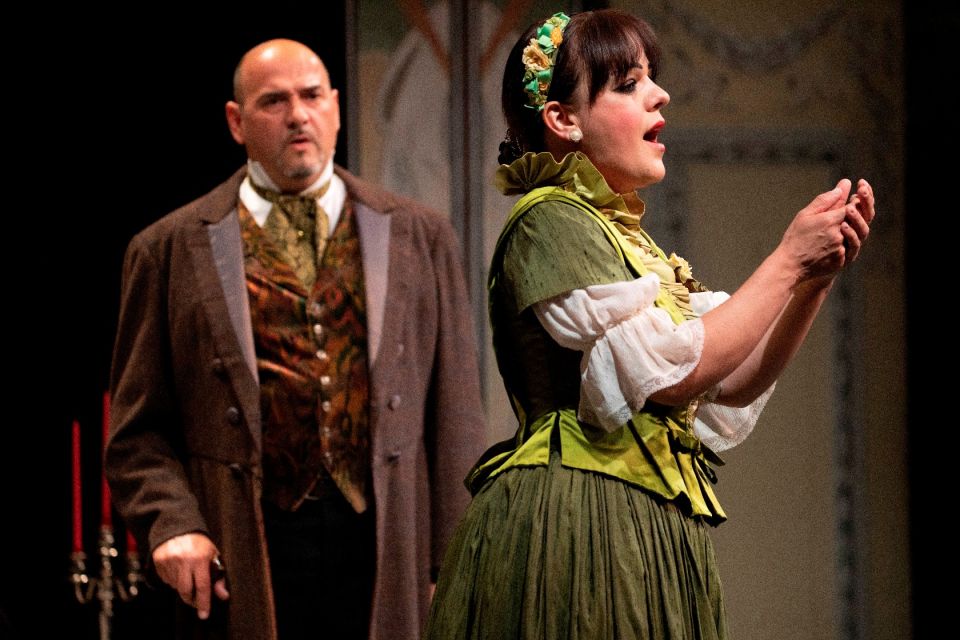
- La Traviata in a church: a historic setting that shapes how the sound travels and how the emotion hits
- Full production (costumes and scenes): it’s not a concert-only version
- Pro-level orchestra: I Virtuosi dell’opera di Roma, made up of professors from leading Italian conservatories
- Choose your seating category: front areas tend to make a major difference in what you can see
- 130 minutes, no intermission snack: bring your patience and expect a long, focused sit
- Strict photo rules: no video/flash is enforced, even if a few people ignore it
St. Paul’s Within the Walls: Why this venue feels different
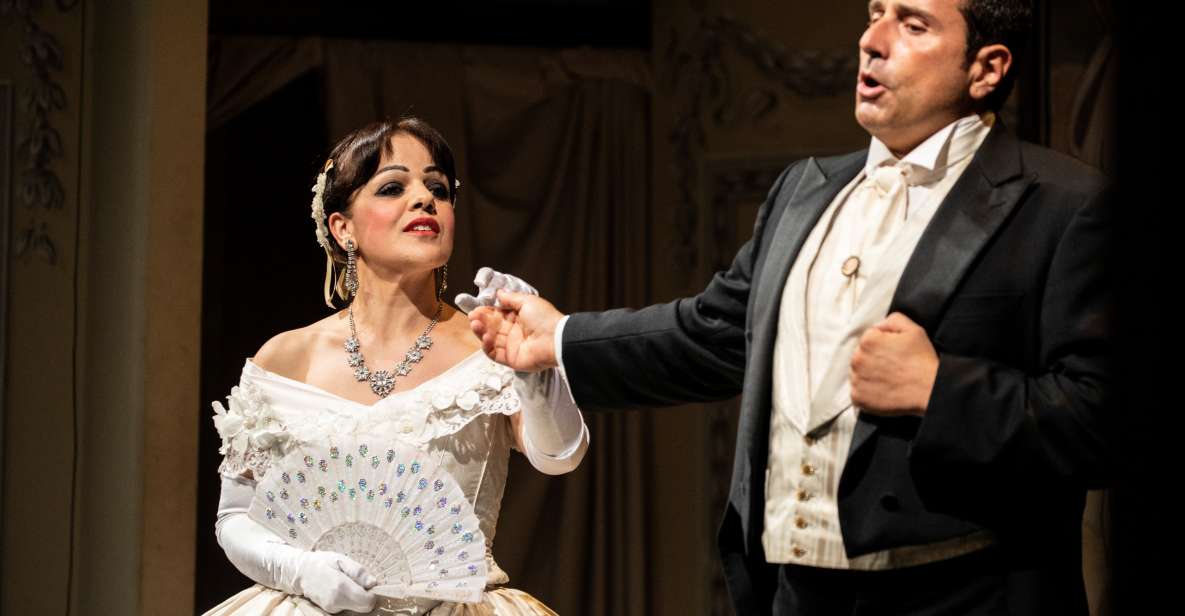
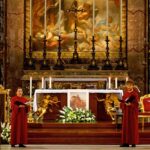
St. Paul’s Within the Walls is one of those Rome churches where the architecture isn’t just “backdrop.” It affects everything you experience—sound, staging, even your sense of scale.
I love how the setting makes the whole thing feel closer and more human than a huge theater. Several performances reviews specifically call out the acoustics and lighting working well, so you’re not stuck guessing whether you’re hearing the real thing.
The drawback is practical: church seating is often simple benches with limited sightlines. A few people found the seating uncomfortable for a long sit, and the church floor isn’t set up like a modern auditorium with tiered, sloped rows. If you end up farther back, you may spend the evening doing the classic travel move—tilting your head and trying to see around other people.
You can also read our reviews of more tours and experiences in Rome.



Verdi’s La Traviata in three acts: what the story gives you
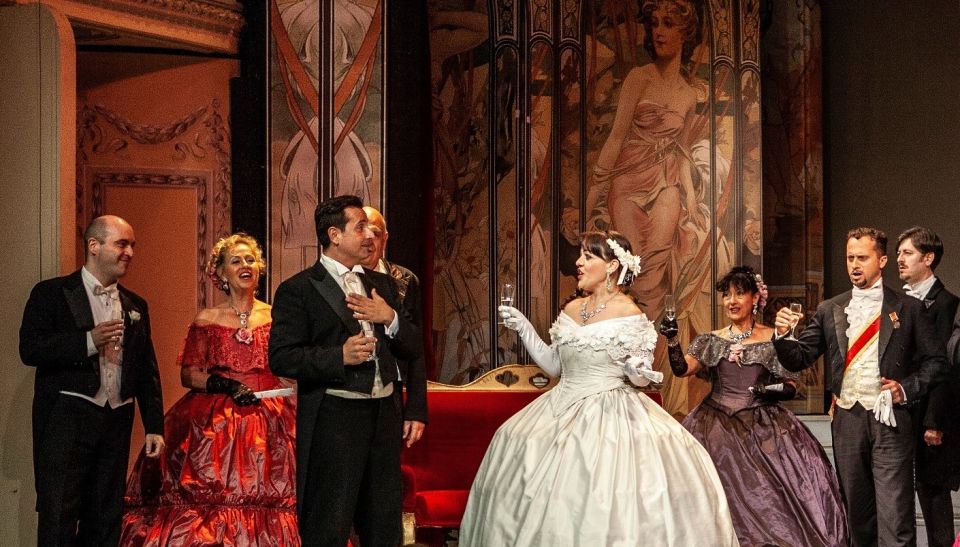
This is La Traviata by Giuseppe Verdi, the famous opera you’ve probably heard about even if you never bought a ticket before. It’s set in Paris in the mid-1800s, and it’s a love story that the title tells you already won’t end happily.
The opera focuses on Violetta, a well-known courtesan, and Alfredo, a young nobleman. Their relationship is described as impossible from the start, and the story is built to drive straight toward tragedy—so it’s not a light, “background music” kind of night.
You’ll likely appreciate the structure even if you don’t understand every word. Music and acting do a lot of the work here, and one non-Italian speaker review still said the story came through clearly. So if you’re wondering whether Italian opera is a barrier, it doesn’t have to be.
What’s included (and what isn’t): tickets, costumes, and real expectations
Your ticket includes entrance. That’s it on the practical side—no meal bundled in, no drinks included.
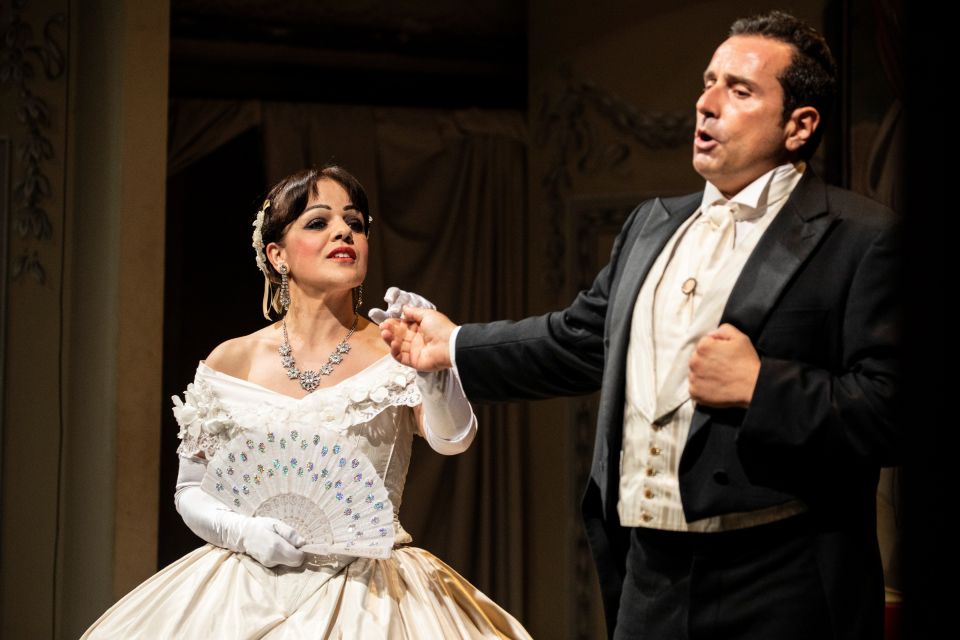
The good news: the production itself is described as a complete version with costumes and scenes. So you’re not getting a stripped-down recital where you stare at a conductor and hope for the best.
The “what to expect” reality check is that this is still an opera in a church, not a stagehouse. Reviewers talk about an intimate vibe—some call it raw and emotional—while also warning that the orchestra can sometimes overpower the singers. That can happen in any space with strong reverberation, especially if the balance isn’t perfect.
Also, expect the evening to feel long. Even though the total duration is listed as 130 minutes, people mention warm conditions and the pacing can feel drawn out with breaks. Bring a calm attitude and treat it like a full evening ritual, not a quick stop.
The musicians: I Virtuosi dell’opera di Roma
This performance is backed by the orchestra I Virtuosi dell’opera di Roma. The special detail here is that it’s described as a group formed by professors of prestigious Italian conservatories. That’s a big deal: it usually means steady technique and musicians who know how to shape phrasing in a way that supports singers.
I like this setup because Verdi needs more than volume—it needs control. Reviews highlight excellent playing, and several people are impressed by the cast’s technique and ability to project. There’s also mention of a Brindisi moment where an encore can involve audience participation, which helps make a church performance feel less like a museum visit and more like a shared experience.
Do keep one caution in mind: a few reviews say the orchestra was drowning the singers in places, and another mentions that reverberation can remove crispness of sound. That doesn’t mean the performance is bad—it means the acoustics are powerful, and the balance might not feel “perfect pop clarity.”
Seating categories in a flat-floor church: how to pick better than average
This is the section that can make or break your night. The reviews are consistent: the venue doesn’t have a slanted floor, which changes everything for visibility.
If you can choose, aim for front rows / VIP-style seating. People specifically say front seats are worth it because you can watch the musicians and see performers’ faces more clearly. Even when someone bought front seats, they still noted that visibility isn’t guaranteed from every angle—so choose carefully.
Here’s what you should remember:
- Sightlines aren’t theater-style: heads may block parts of the view.
- Distance matters more than you think: farther back makes it harder to follow staging.
- Stage is limited by the room: if a person/prop blocks you, you might not fix it with a simple lean.
Some seating comments also mention uncomfortable wooden benches and cushions that could be better. That’s not universal, but it’s frequent enough that you should assume you’ll be sitting for a while.
If you’re sensitive to comfort, arrive ready to sit tight, and consider paying extra for better sightlines rather than hoping you’ll “figure it out” from the back.





Timing and how the night flows: from voucher exchange to curtain call
Plan to show up with enough time to exchange your voucher at the St. Paul’s Within the Walls ticket counter before the performance begins. That exchange step matters because it’s the moment you convert your booking into a real entry spot in the venue.
Once you’re inside, you’ll settle in and get oriented. This church set-up doesn’t give you the same “straight line view” you’d expect in a classic opera house, so it’s worth taking a minute to check your real sightline before you sit down fully.
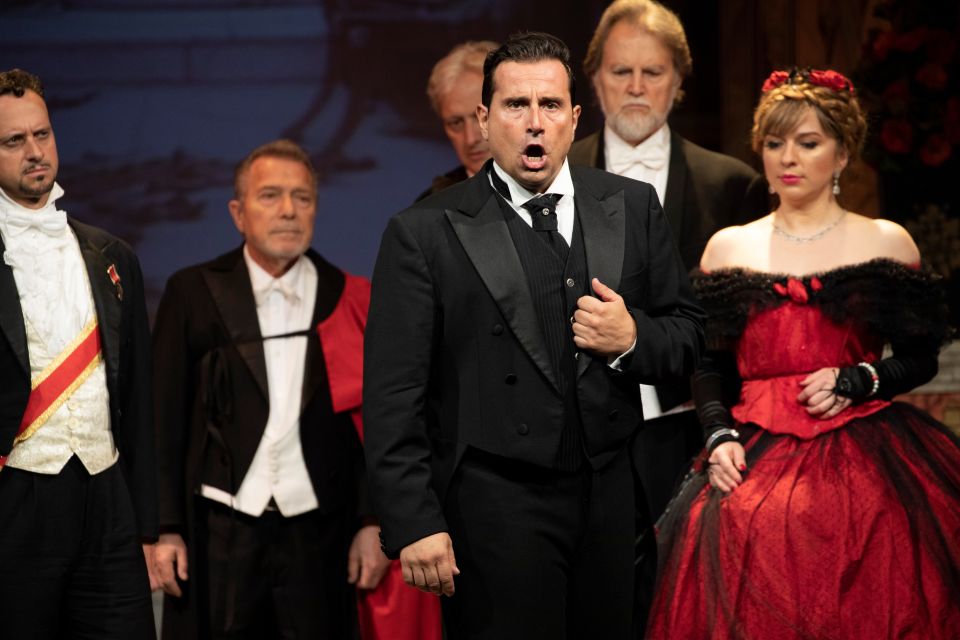
Then you get the opera in full form, with costumes and scenes, and the story begins in Paris. The emotional arc is constant—love, conflict, and tragedy—so even if the language is Italian, you’ll feel the plot shape.
Finally, reviews mention an encore element connected to the opera’s famous moments, with performers sometimes inviting audience participation. In a smaller, church-based format, those moments can feel surprisingly lively.
Price and value around $47: who this is a good deal for
At about $47 per person, the value is strong if your goal is “see real opera in a real Roman landmark setting.”
You’re paying for three things:
- A world-class work (Verdi’s La Traviata)
- A professionally trained orchestra (top-conservatory professors)
- A unique stage (a prestigious church with acoustics people actually praise)
This is also a smart choice if you want to try opera without jumping straight into an expensive, full-scale production. Several reviews mention it as a first-time opera experience that exceeded expectations.
Where the value can shrink is if you’re very picky about perfect visual staging and crisp sound. If you’re the kind of opera fan who needs ideal orchestral balance and immaculate sightlines from anywhere in the row, you may find the church limitations frustrating.
Practical tips for a smoother Rome evening
- Arrive with seat strategy: because the floor isn’t sloped, earlier can help you get the better category you want.
- Expect strict rules: videoing and flash photography are explicitly called out as not allowed, and staff will ask people to stop.
- Dress for long sitting: some reviews mention warmth, and you’ll be in one place for the full runtime.
- Don’t plan on food: food and drinks aren’t included. One review says there’s no drinks available on site, while noting you could bring your own—so don’t count on purchasing refreshments there.
- Know it’s Italian: the performance language listed is Italian. If you don’t speak it, follow the story through music, facial expression, and dramatic action.
Also, a small but useful detail: the host/greeter is Italian. If you have a voucher or seating question, you’ll likely get a direct, practical answer.
Should you book La Traviata at St. Paul’s Within the Walls?
Book it if you want a high-impact opera night in a distinct Rome setting, and you’re willing to trade “perfect theater sightlines” for church acoustics and a close-up, emotional atmosphere.
Think twice if you’re very sensitive to long seating discomfort, you need guaranteed views from every angle, or you’re easily annoyed by balancing issues in reverberant spaces. In that case, your success will depend heavily on choosing the right seating category early.
If you’re on the fence, here’s my simple decision rule: pay extra for the better seats if your budget allows. In this venue, the seat choice isn’t a small upgrade—it’s the difference between watching the opera and constantly recalculating where to look.
FAQ
Where does the La Traviata performance take place?
It takes place at St. Paul’s Within the Walls in Rome (Lazio, Italy). You’ll exchange your voucher at the St. Paul’s Within the Walls ticket counter before the performance begins.
How long is the show?
The duration is 130 minutes.
How much are tickets?
Tickets are priced at $47 per person.
Do I need to exchange my voucher before I enter?
Yes. You must exchange your voucher at the St. Paul’s Within the Walls ticket counter before the experience starts.
Is food or drinks included?
No. Food and drinks are not included.
What language is the opera performed in?
The listed language is Italian.
Is the venue wheelchair accessible?
Yes, it is wheelchair accessible.
Are pets allowed?
No, pets are not allowed.
Can I film or use flash photography?
Videoing and flash photography are described as not allowed, and staff may ask people to stop.