REVIEW · ROME
Discover the Jewish Ghetto of Rome on a Small Group Walking Tour
Book on Viator →Operated by Roman Vacations · Bookable on Viator
Rome has a Jewish chapter most miss. This small-group walk threads from Trajan’s old Rome into the Jewish Ghetto, with clear guide commentary and a kosher treat break.
I love the routing: you start with famous Roman landmarks, then work your way into the ghetto through places like the Portico d’Ottavia and the Tempio Maggiore. I also like the format—up to 15 people means you hear everything and get real Q&A, plus you finish in Trastevere where your guide shares where to eat next. One possible drawback: meeting up can be confusing if the guide’s presence isn’t clearly obvious, so arrive a little early and make sure you’re with the right group.
In This Review
- Key highlights to look forward to
- Why this Jewish Ghetto walk feels different from a museum day
- Starting at Foro Traiano: Trajan’s world, then step by step forward
- Teatro di Marcello: the little Colosseum with real homes above it
- Fontana delle Tartarughe plus a kosher gelato pause
- Tempio Maggiore di Roma: the synagogue you’ll actually understand
- Il Portico di Ottavia: Augustus to the fish market to the ghetto edge
- Isola Tiberina finish: hospital history and an easy dinner start
- Food stop expectations: kosher gelato and coffee without fuss
- Guides and pacing: small-group history with real heart
- Price and value for a 2-hour small group
- Getting the most out of the walk (and avoiding common headaches)
- Who should book this Jewish Ghetto of Rome tour
- Should you book this tour?
- FAQ
- How long is the Jewish Ghetto of Rome walking tour?
- What does the tour cost?
- What language is the tour offered in?
- What’s included in the price?
- Where does the tour start and where does it end?
- Are tickets needed for all the stops?
- Is the synagogue (Tempio Maggiore) part of the tour?
- What’s the group size limit?
- FAQ
- Can I cancel and get a full refund?
- Is the tour close to public transportation?
Key highlights to look forward to
- Small group size (max 15): easier to hear commentary and ask questions.
- A route that changes time periods: ancient Rome → Renaissance fountains → 1500s ghetto → today.
- Kosher gelato or coffee stop: a simple break with a local food moment.
- Tempio Maggiore area: the ghetto’s spiritual and cultural anchor is part of the walk.
- Finish at Tiber Island: great spot to head toward Trastevere for dinner.
Why this Jewish Ghetto walk feels different from a museum day
Rome can be loud. This tour keeps the focus on streets and stones you can actually see, with a guide who ties each stop to the larger story. You’re not just collecting photos—you’re building a timeline as you go.
What makes the experience click for me is the order of things. You begin in the Roman imperial zone and gradually shift into the neighborhood where Roman Jews were forced to live. That walk-in sequence helps the history land in a way that feels grounded, not abstract.
And yes, you also get the food moment. A kosher gelato stop doesn’t fix heavy history, but it gives your brain a break and lets you enjoy Rome’s day-to-day life.
You can also read our reviews of more walking tours in Rome



Starting at Foro Traiano: Trajan’s world, then step by step forward

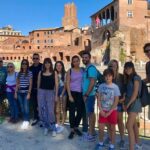
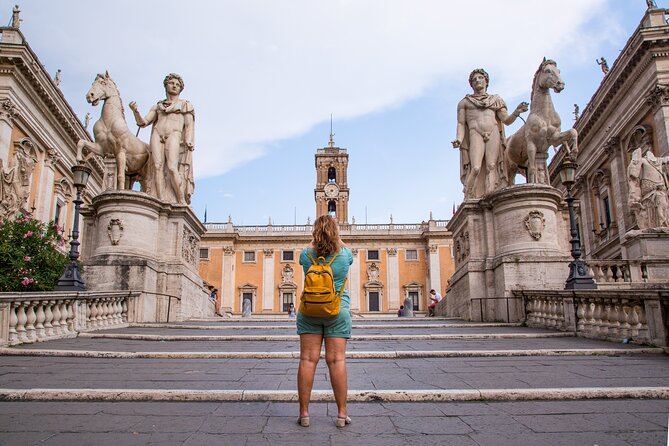
You kick off at Foro Traiano, near Trajan’s column. From there, you head through Piazza Venezia and then up gentle steps toward Piazza del Campidoglio, designed by Michelangelo. It’s a smart start because it frames the “big Rome” that existed long before the ghetto was created.
In practical terms, this first stretch sets the pace. It’s an easy way to get your bearings early in the day, especially if you’ve just arrived and your feet are still deciding whether they like Rome.
You’ll also pass through some of the classic viewpoints where the city’s layers are visible. Modern streets don’t hide the past here. They sit on top of it. That matters when you later reach the ghetto area and realize the neighborhood is part of the same city—not a side note.
Teatro di Marcello: the little Colosseum with real homes above it
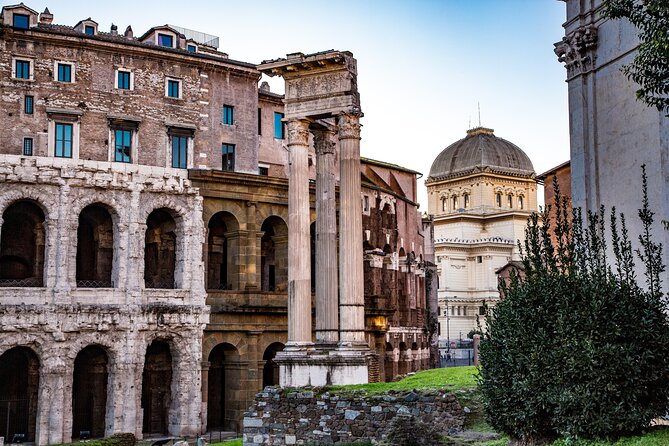
Next comes Teatro di Marcello, often nicknamed the little Colosseum. The scale is impressive, but what grabs you is the difference in purpose and era. This theater is older—dating back to 12 BC—and it didn’t host the kind of blood sports associated with the Colosseum.
Now for the modern twist: parts of the site are lived in. You’ll see residents above the ancient structure, which gives the place a lived-in feel instead of a frozen-in-time museum look.
This stop works as a contrast to what comes later. It’s a reminder that Rome kept repurposing spaces. In the ghetto story, that same idea shows up again—except this time it’s forced, political, and painful.
Fontana delle Tartarughe plus a kosher gelato pause

After more wandering through the neighborhood, you’ll reach Fontana delle Tartarughe, the Turtle Fountain. It’s a late Italian Renaissance masterpiece, and the fun detail you’ll hear is how it was famously constructed in just one day. Even if you don’t remember the date later, you’ll remember the look—this fountain is made for stopping, pointing, and noticing.
Then comes the best kind of travel break: an authentic kosher gelato (or coffee) stop. It’s included, and it lands at just the right time. By now, your brain has been taking in serious context, so this is where you reset.
Because this is a walking tour, you’ll appreciate that the stop isn’t a long detour. It’s a short break that keeps the day’s momentum, not a snack that turns into a half-hour sit-down project.
Tip for getting the most out of it: treat the gelato stop like an information moment too. Ask what to try next in the neighborhood. Guides often have sharp, practical food recommendations for after the tour.
Tempio Maggiore di Roma: the synagogue you’ll actually understand
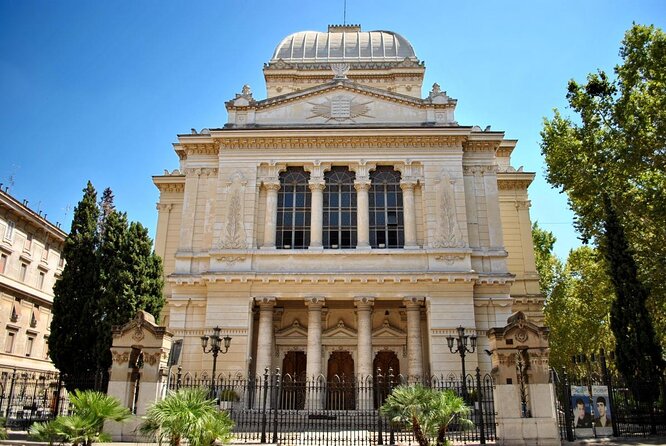
Your tour reaches Tempio Maggiore di Roma, built in 1555. This is tied to the creation and survival of the early Jewish community in Rome. You’ll hear how the pope revoked rights granted to Roman Jews, restricting work and real estate ownership—yet the community adapted and built trade, food culture, and even its own dialect of Italian within the walls.
Here’s why I think this stop is so important on a walking tour: the architecture gives the story a physical center. Without it, the ghetto history can feel like a concept you read about. With it, you can see why this place mattered emotionally and socially.
You’ll also learn how the synagogue still functions today as a place of prayer and a cultural touchstone. The Great Synagogue is still one of the largest in Europe, and that fact helps you understand this wasn’t a small, forgotten community.
One note: the synagogue visit itself is not included (admission not included). You’ll still get the context and the exterior/area time built into the walk. If you want to go inside, plan for that as an optional add-on.






Il Portico di Ottavia: Augustus to the fish market to the ghetto edge
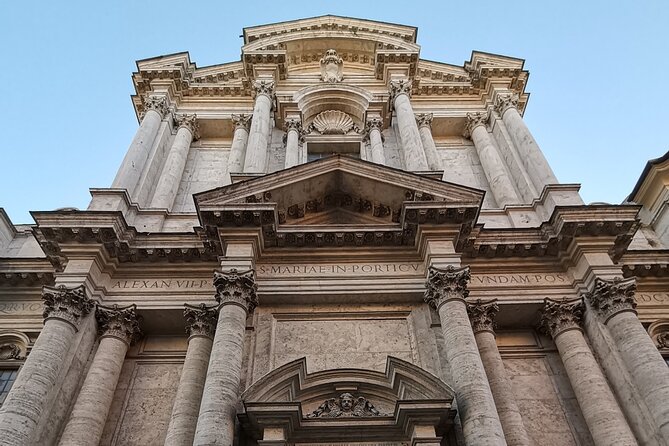
Then you head to Il Portico di Ottavia (the Portico d’Ottavia), an enormous structure built by Augustus in honor of his sister Octavia. It’s one of those Rome structures that keeps changing roles across centuries.
From the 15th to early 20th century, it was home to Rome’s fish market. So before you even enter the ghetto area, you get a sense of how the neighborhood functioned as commerce—markets, daily movement, and food culture.
Then, from there, you enter the ghetto itself. This is one of the most meaningful transitions on the whole tour: your guide moves you from the wider Rome context into the space where Jewish life was restricted by law.
The best way to take this section in is to slow down your walking pace a bit. Look around at street scale and building height. It’s easier to understand daily life when you notice the neighborhood’s physical feel rather than rushing from one caption to the next.
Isola Tiberina finish: hospital history and an easy dinner start

The tour concludes at Isola Tiberina (Tiber Island). You’ll learn how ancient Romans used the island as a hospital site, with the river acting as a natural barrier against disease spread. Today, you can still find a major hospital presence in the same area.
It’s a smart finish for two reasons. First, it keeps the theme of real-world health and survival relevant. Second, it’s practical: Tiber Island sits between the ghetto and Trastevere, so you’re perfectly positioned for dinner either direction.
Your guide also provides tips for where to eat, which is genuinely useful here. This part of Rome has a lot of options, and after a couple hours of walking, you’ll want guidance that’s based on neighborhood reality rather than generic recommendations.
Food stop expectations: kosher gelato and coffee without fuss

The food included is simple: authentic kosher gelato or coffee. The key is that it’s timed for the tour flow. You’re not stuck waiting while a group argues over flavors. You grab it, refuel, and keep walking.
If you’re picky about food labels or religious requirements, this stop is a relief. You know it’s aligned with kosher standards, and it’s part of the experience rather than a random snack.
Also, don’t treat the gelato as your only plan. The tour ends where you can keep eating—Trastevere is right there. If you tell your guide what you like (sweet, coffee-based, sit-down vs quick), you’ll get more useful advice than from a map screenshot.
Guides and pacing: small-group history with real heart
One reason people rate this tour so highly is the guide quality. Different guides have been highlighted by name—Jamie, James, Paul, Angela, Daniel, and Brian—and the common thread is how they connect Rome’s broader history to Jewish life in the city.
A lot of guides on this route are praised for being empathetic and clear about difficult history, while still keeping the pace manageable. You’ll feel that in how the group moves: slower when the story needs space, faster when you’re simply shifting to the next key location.
It’s also a tour where questions matter. With fewer than 15 people, you’ll actually get answers instead of hearing your question dissolve into the crowd noise. If you care about how the ghetto worked day to day—business restrictions, community life, culture—this is where you’ll get it.
Price and value for a 2-hour small group
At $48.37 per person for about 2 hours, the price sits in the mid-range for Rome walking tours. What makes it feel fair is what’s included: an expert local guide plus the kosher gelato or coffee.
If you were to do this on your own, most of the walking stops are free to look at, but you’d pay in other ways—time, confusion about what you’re seeing, and the risk of missing the connections between the sites. The tour gives you those connections as you go.
The only extra “ticket-style” cost to think about is the synagogue area: Tempio Maggiore’s admission isn’t included. Everything else on the route is free. So you’re paying for guidance and the food moment, not for a stack of paid entries.
Getting the most out of the walk (and avoiding common headaches)
Because this is a guided meeting at a specific address—Foro Traiano, 84—you should show up ready to start. Wear shoes that handle cobblestones, and bring a layer. Rome weather can change fast.
Also, keep an eye on guide identification. One past experience included confusion due to signage not matching expectations right away. I’d rather you prevent that stress than correct it later—arrive early enough to confirm you’re with the right guide and group.
Finally, remember this is a history-and-culture walk. It includes serious themes. If that’s heavy for you, you’ll still find it worth it, but plan a lighter evening afterward so your body can catch up with your brain.
Who should book this Jewish Ghetto of Rome tour
This is a great fit if you want:
- A focused walk through the Jewish Ghetto area without spending all day on trains or ferries.
- Context that links major Roman sites to Jewish life over time.
- A small-group experience where you can ask questions.
- A food break with real meaning—kosher gelato or coffee.
It also works well for families and mixed groups. Guides are praised for keeping information age-appropriate, and you’ll still get depth as an adult.
If you’re the type who likes jumping from monument to monument and doesn’t care about story, you might find walking tours slower than you like. But if you want to understand what you’re seeing, this format clicks.
Should you book this tour?
Yes—if you’re ready to connect the dots. The route gives you a rare walk from Roman imperial Rome into the streets tied to the Jewish community’s history, and the pacing fits a meaningful two hours.
Book it especially if this is your first time in the area and you want help interpreting what you’re looking at, from Trajan’s zone to Portico d’Ottavia, then finishing at Tiber Island with an easy dinner plan in Trastevere.
Just do yourself a favor: arrive early to match up with your guide. Once you’re walking, the day moves fast in the best way.
FAQ
How long is the Jewish Ghetto of Rome walking tour?
It’s about 2 hours.
What does the tour cost?
The price is $48.37 per person.
What language is the tour offered in?
The tour is offered in English.
What’s included in the price?
You get an expert local guide and an authentic kosher gelato or coffee.
Where does the tour start and where does it end?
It starts at Foro Traiano, 84, 00187 Roma RM, Italy and ends on Tiber Island, 00186 Rome.
Are tickets needed for all the stops?
Admission tickets are free for most stops. The Tempio Maggiore di Roma admission is not included.
Is the synagogue (Tempio Maggiore) part of the tour?
It’s included as a stop in the experience, but admission to the synagogue is not included.
What’s the group size limit?
The tour has a maximum of 15 travelers.
FAQ
Can I cancel and get a full refund?
Yes. You can cancel up to 24 hours in advance for a full refund.
Is the tour close to public transportation?
Yes, it’s near public transportation. Service animals are allowed, and most travelers can participate.