Rome’s power games start on a single column. This 2.5-hour walk strings together emperors, popes, artists, and everyday politics through story-first guiding and off-limits access. I especially like how the route mixes famous postcards (Trevi Fountain, Pantheon, Piazza Navona) with quieter places tied to real families and their fortunes.
I also love the tone: the guides (think Iris, Jacopo, and Simone) use dark humor and scandal-level stories, but they still keep it grounded in art, architecture, and why monuments were built in the first place. One drawback to plan for: it’s a tip-based, pay-what-you-want style tour, so your final cost depends on what you feel the guide’s work was worth.
In This Review
- Key highlights you’ll actually feel on the walk
- How this pay-what-you-want Rome tour works in real life
- Meeting at Chiesa del Santissimo Nome di Maria al Foro Traiano
- Trajan’s Column to Piazza Venezia: the empire’s messaging system
- A secret stop, then a monastery pause with Papal private gardens access
- Trevi Fountain: famous, yes, but explained like propaganda
- Sant’Ignazio di Loyola and the Pantheon: church art as political design
- Piazza Navona finale: where the stories land
- Guides make the difference: humor, languages, and real Q&A time
- Price and value: what $3.77 really means once you tip
- Who this tour suits best (and who might want a different style)
- Should you book this Rome alternative city-center walk?
- FAQ
- How long is the Alternative Walking Tour of Rome’s City Center & Hidden Gems?
- Where is the meeting point?
- Where does the tour finish?
- Is this a tip-based tour?
- What languages are available?
- Can I cancel for free?
Key highlights you’ll actually feel on the walk
- Trajan’s Column as the launch point so Rome’s big ideas start early, not mid-tour
- Secret stops and off-limits locations that you won’t stumble into on your own
- Papal private gardens admission folded into a calmer break from the crowds
- Trevi, the Pantheon, and Piazza Navona explained through power (not just photo spots)
- Family dynasties as the thread, from emperors to popes to Renaissance patrons
- Pay-what-you-want tips model, with common tips around 10€ to 50$
How this pay-what-you-want Rome tour works in real life
This tour starts with a low booking price, but it’s not the full story of what you’re paying for. The guides work on a pay-what-you-want model, meaning your tip is the main support for the experience. The tour notes typical tips fall between 10€ and 50$, which is a helpful guidepost when you’re budgeting.
For you, that usually means two things. First, you should treat the tour like a service you’re choosing, not a cheap “product” you’re consuming. Second, if you ask questions, engage with the stories, and time your pauses well, you’re more likely to feel the experience was worth your tip.
Also, keep expectations aligned with the vibe: the highlights call out dark humor and politically incorrect jokes. If you’re easily offended, you may want to read your own comfort level for that kind of storytelling.
You can also read our reviews of more walking tours in Rome


Meeting at Chiesa del Santissimo Nome di Maria al Foro Traiano
You meet on the steps of Chiesa del Santissimo Nome di Maria al Foro Traiano, right by Trajan’s Column and the Trajan Forum area. The guide holds a tour sign, and the setting matters: you start in a part of Rome where the stones still feel like they’re making a point.
This first location is smart because it frames what comes next. Rome’s power wasn’t just political. It was architectural. It was propaganda in marble. Starting here trains your eyes early, so when you see later fountains and churches, you’ll notice the “why,” not only the “what.”
And because the tour is only 2.5 hours, you don’t get dragged into long transit blocks. You’re walking through the city center in a focused loop, with short, purposeful stops instead of endless wandering.
Trajan’s Column to Piazza Venezia: the empire’s messaging system
The first major stop is Trajan’s Column. You get time for photos, then a guided look that’s built around context, not a dry lecture. Think of it as Rome training you how to read the past: how leaders used public monuments to control memory, influence opinion, and project strength.
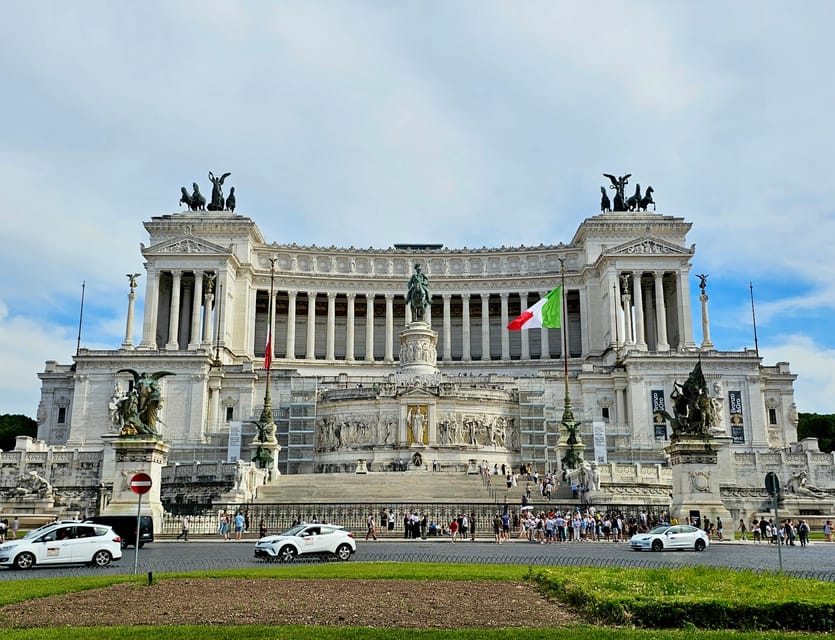
After that comes a quick visit and photo stop at Piazza Venezia. The duration is short, but that’s part of the design. Piazza Venezia functions like a crossroads of stories—where the guide can connect older imperial decisions to later shifts in religious and political power.
A big theme of the tour is how Rome got rebuilt again and again by different groups. By the time you reach Piazza Venezia, you should already be primed to understand that it isn’t one Rome. It’s layered Rome—each era leaving its fingerprints on street grids, church placements, and civic symbols.
A secret stop, then a monastery pause with Papal private gardens access
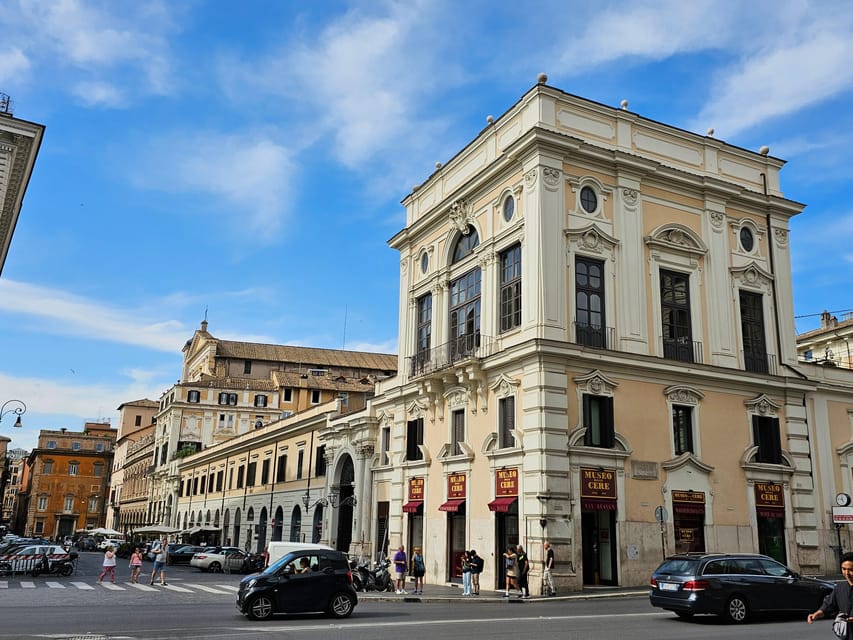
Then you hit one of the most fun parts: a secret stop. This is one of those “blink and you miss it” areas where a normal self-guided walk often turns into a photo and a shrug. Here, the guide leads you in, gives you the background, and uses it to continue the thread of families, influence, and public image.
Right after that, there’s a longer monastery stop (about 25 minutes). This is where you get a breather from the flow of main streets. It’s also where the tour’s included Papal private gardens admission fits into the experience.
Why that matters: Rome can feel like a museum you’re racing through. Garden space—and the kind of access that usually isn’t on everyday schedules—changes the pace. You see a different side of power: not only monumental stone, but controlled quiet, curated space, and the way institutions shaped daily life.
This portion is a good moment to reset your brain before the tour returns to the headline attractions.
Trevi Fountain: famous, yes, but explained like propaganda
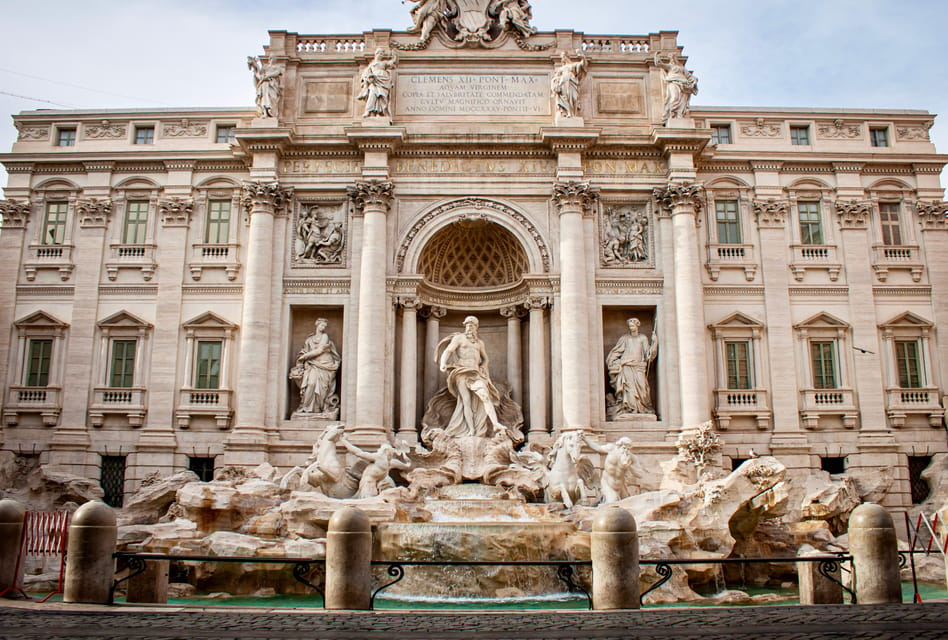
Next is Trevi Fountain, with a break time that’s built into the stop. You’ll get photos, guided context, and free time. The tour doesn’t treat Trevi like a landmark you “already know.” It treats it like a statement—because it is.
The guide connects fountains to power and propaganda, and you can feel that logic as you look at the sculpture program and the setting. The point isn’t to make you hate the postcard version of Trevi. It’s to help you see what the designers wanted people to believe.
One practical tip: this is a crowded site, so having guided “what to look for” directions helps you use your limited time. Instead of standing there hoping the right story clicks, you’re given a map for your eyes.
You can also read our reviews of more city tours in Rome





Sant’Ignazio di Loyola and the Pantheon: church art as political design
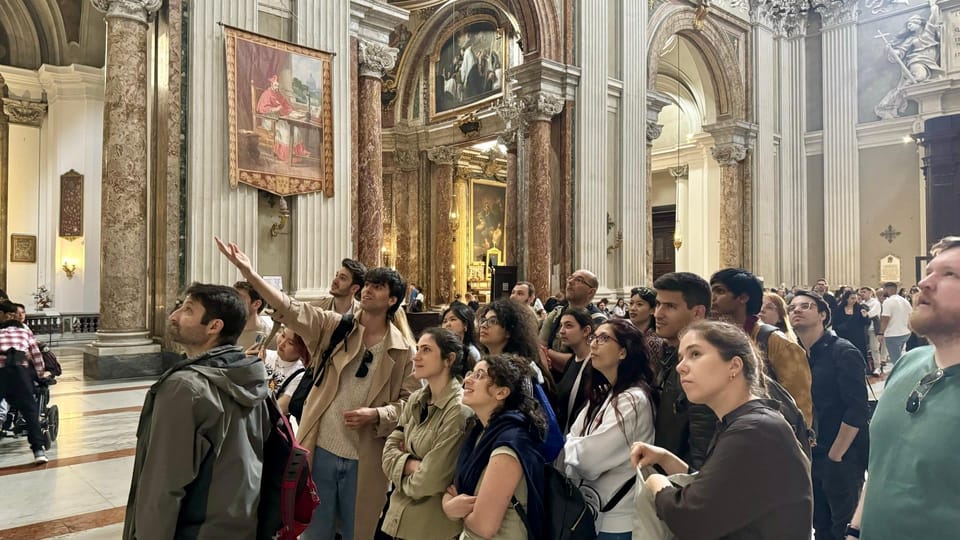
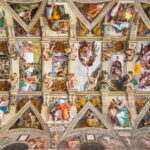
After Trevi, you visit Church of Sant’Ignazio di Loyola. The time is short (about 10 minutes), but the stop is a favorite because the guide can point out how art and architecture communicate authority. One guest specifically mentioned the ceiling fresco of St. Ignatius of Loyola as a highlight, and that matches the church’s reputation for visual storytelling.
Then you move to the Pantheon. The official time here is brief, about 5 minutes, but don’t treat that as a limitation. A short stop can still be a strong “aha” moment when a guide helps you interpret what you’re seeing—especially the building’s geometry, its symbolism, and why it keeps drawing people in even after centuries of change.
This tour’s focus on why Rome has so many churches makes these stops click together. You’ll learn to think of churches as more than religious sites. They’re public identity, patronage, and political messaging—stone versions of a headline.
Piazza Navona finale: where the stories land
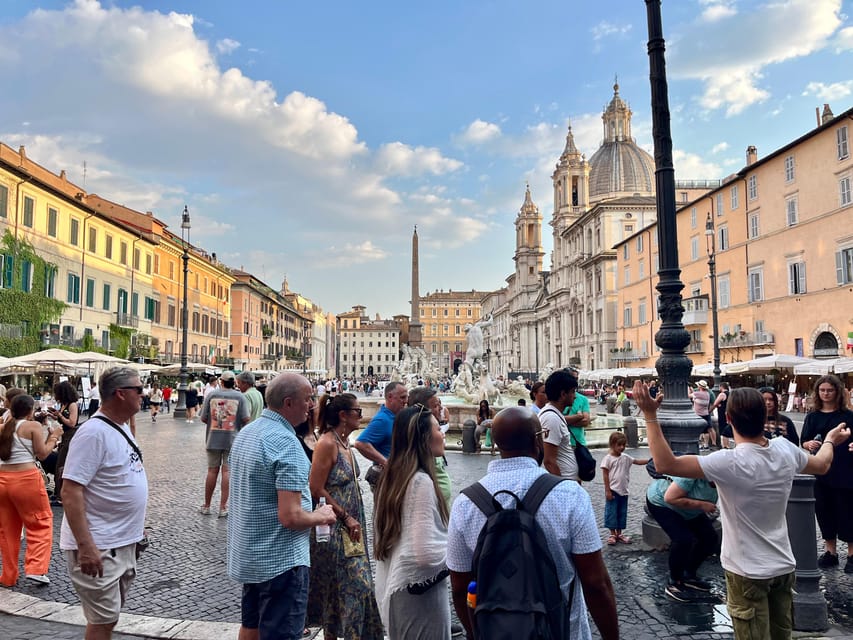
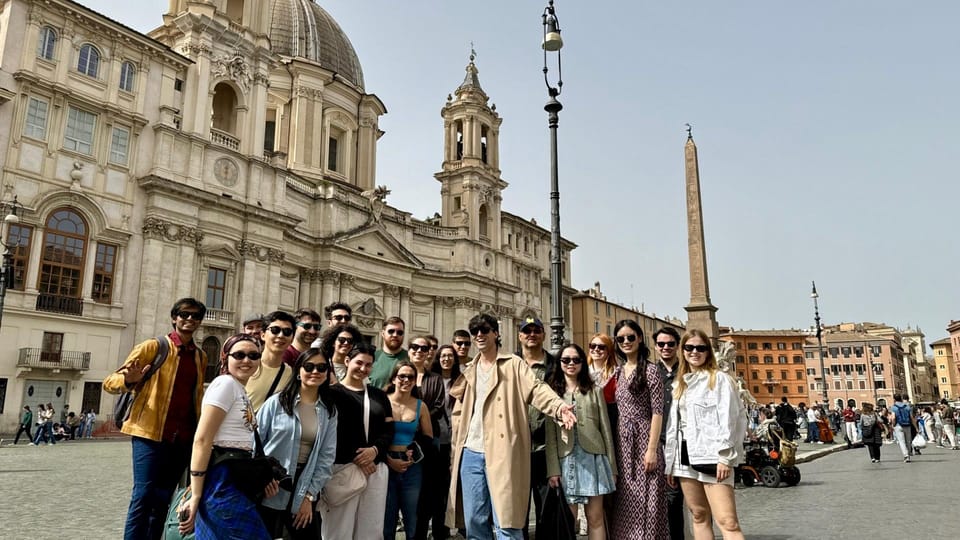
The last stop is Piazza Navona, with time to visit, guided walk-through points, and a finish at the square. If you’ve been following the “families and power” thread, Piazza Navona usually lands as a payoff.
By the time you reach the end, you’re not only thinking about one monument. You’re thinking about how Rome’s leaders kept borrowing tools from earlier eras—using art, ceremonies, and major civic spaces to reinforce who mattered.
The tour’s closing rhythm also helps you leave with momentum. You’ll finish in one of the most social squares in central Rome, which makes it easy to continue your own walk afterward.
Guides make the difference: humor, languages, and real Q&A time
What you’ll notice in the reviews is that the guides aren’t just reciting facts. Iris is praised for mixing information with humor. Jacopo and Simone are repeatedly described as story-driven, with a knack for expanding into related topics when people ask questions.
There’s also a standout detail: one guest noted Simone can read Latin and Ancient Greek, and that ability showed up through translations of old marble inscriptions. That kind of specificity can turn a quick stop into something you remember later—because you’re not only hearing the story. You’re seeing how the story was written.
And one more practical plus: several reviews mention the pace as comfortable, with a group size that can feel small and intimate. You’re walking city center, so noise and crowds are inevitable. But a good guide helps you navigate the busy areas without feeling swallowed by them.
Price and value: what $3.77 really means once you tip
The listed starting price is $3.77 per person, which sounds almost too small to be real—until you remember the tip-based structure. Because the guide’s work is supported through your tips alone, the real “cost” is your decision at the end.
If you tip within the typical 10€ to 50$ range, your total ends up closer to a mid-range guided experience than a budget walk. For many people, that’s fair value when you consider the mix: famous landmarks, story-heavy interpretation, secret access, and Papal private gardens admission.
In other words, you’re not paying for distance. You’re paying for interpretation plus access.
Who this tour suits best (and who might want a different style)
This is a strong choice if you want more than a checklist. The tour is designed for first-time visitors and also people returning to Rome who feel like they’ve already seen the big sights.
You’ll likely enjoy it most if you like:
- history explained through people and influence (families, rulers, patrons)
- art and architecture as propaganda and politics
- a guide who tells stories with a sense of humor (including dark humor)
You might skip it if you want a quiet, strictly neutral museum-style walk, or if politically incorrect jokes are a hard no for you.
Should you book this Rome alternative city-center walk?
Book it if you want Rome to make sense fast. Starting at Trajan’s Column, then moving through Trevi, the Pantheon, and Piazza Navona, you get a guided “story thread” that helps your photos mean something. Add secret stops and Papal private gardens admission, and you’ve got value beyond the obvious postcard route.
Don’t book it only if the tip-based model makes you uncomfortable or if the humor style won’t fit your tastes. Otherwise, this is the kind of tour that leaves you looking at the city differently, and it gives you ideas for what to chase next after your walk ends.
FAQ
How long is the Alternative Walking Tour of Rome’s City Center & Hidden Gems?
It lasts about 2.5 hours.
Where is the meeting point?
Meet on the steps of Chiesa del Santissimo Nome di Maria al Foro Traiano, right by the Trajan Column and Trajan Forum. The guide will hold a tour sign with the tour name.
Where does the tour finish?
The tour finishes at Piazza Navona.
Is this a tip-based tour?
Yes. It uses a pay-what-you-want model, and guides work on tips alone. The tour notes that tips are usually between 10€ and 50$.
What languages are available?
The live tour guide offers Spanish and English.
Can I cancel for free?
You can cancel up to 24 hours in advance for a full refund.