REVIEW · ROME
VIP Vatican Museums: Sistine Chapel Afterhours Private Tour
Book on Viator →Operated by Eyes of Rome · Bookable on Viator
The Sistine Chapel hits different after the crowd. This VIP after-hours Vatican Museums tour is built for a calmer experience, with time in the Raphael Rooms and the Sistine Chapel once the public has gone home. I love the after-hours calm—it makes even familiar masterpieces feel new.
I also love that you get an official private guide plus hotel pickup and transfers, so you’re not spending your energy wrestling the city and the lines. One drawback: the price is steep, and you’ll need to follow strict rules like a dress code and no photos in the Sistine Chapel.
In This Review
- Key things that make this tour work
- After-hours Vatican Museums: what VIP time really buys you
- Hotel pickup and transfers: the underrated luxury in Rome
- Cortile del Belvedere: Bramante’s courtyard stage setting
- Cortile della Pigna: the Bronze Pinecone and the “how big is that?” moment
- Laocoön: classical sculpture that helped shape the Renaissance
- Galleria degli Arazzi (Gallery of Tapestries): woven stories you can finally study
- Gallery of Maps: Italy’s geography as Renaissance theatre
- Raphael Rooms and the Vatican’s big-name artists
- Sistine Chapel: peace, symbolism, and the no-photo rule
- Exiting via the Vatican Library and the double spiral staircase
- Price and value: $5,703.79 per person isn’t casual, so what are you really paying for?
- Tour rules that affect your comfort (dress code, photos, food)
- The guide factor: why names like Rosalba and Barbara matter
- Should you book this VIP after-hours Vatican Museums tour?
- FAQ
- How long is the VIP Vatican Museums: Sistine Chapel after-hours private tour?
- Is hotel pickup and drop-off included?
- Is this tour private or shared?
- What is included in the price?
- What is not included?
- Do I need to follow a dress code?
- Can I take photos in the Sistine Chapel?
- Is food or drink allowed during the visit?
- What if I need to cancel or change my booking?
Key things that make this tour work
- After-hours access means the galleries feel less like a queue and more like a focused museum visit.
- Hotel transfers from the historical center reduce stress in Rome, especially if you hate rushing between bookings.
- Real emphasis on story: you’re guided through Vatican context, not just left to wander.
- The route is designed for flow, from classic courtyards into major galleries and finally the Sistine Chapel.
- Sistine Chapel etiquette is part of the experience, including a strict no-photo policy.
After-hours Vatican Museums: what VIP time really buys you
Rome’s Vatican Museums can be a sensory overload. Even when you’re excited, the crowd noise and constant foot traffic can turn art viewing into a timed event: look fast, move fast, repeat.
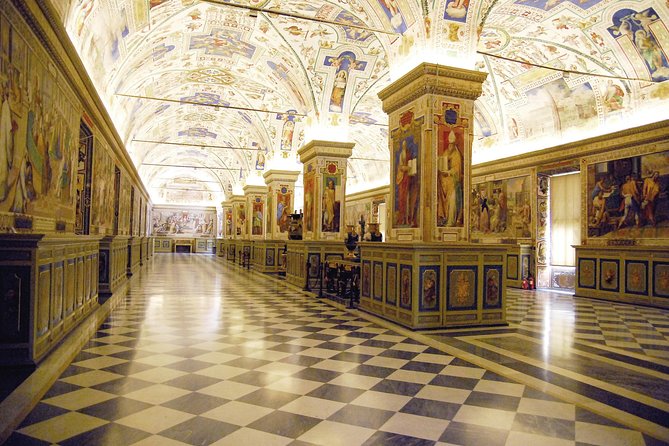
This tour changes the rhythm. You’re in the museums after public hours, with a private-access schedule that’s built to keep you moving without the constant interruption of tour groups. The biggest payoff isn’t just fewer people. It’s space for attention—standing back to see a fresco like Michelangelo’s work from the right distance, noticing how Raphael’s rooms feel different from the sculpture-filled areas, and actually reading the symbolism instead of skipping it.
The Sistine Chapel is the headline, but the real win is how you get there. When you experience the lead-in rooms with breathing room—courtyards, classical sculpture, tapestries, and the Map Gallery—you arrive at the ceiling with a fuller sense of the Vatican’s visual world.
You can also read our reviews of more private tours in Rome


Hotel pickup and transfers: the underrated luxury in Rome
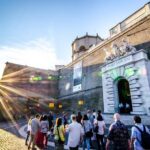
One reason this tour earns its VIP label is how smoothly it handles logistics. You get pickup within Rome’s historical center, and you’re dropped off at your hotel (or preferred city-center location) afterward.
Why it matters: Rome is great, but it’s not set up for “grab a quick taxi and hope.” When you’re on a tight schedule, transfers keep you from losing energy to timing, navigation, and “where is the entrance again?” moments. The tour also uses a mobile ticket, which can be a practical time-saver on the day.
Cortile del Belvedere: Bramante’s courtyard stage setting
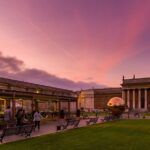
Your visit starts in the Cortile del Belvedere, an important Renaissance courtyard associated with Bramante’s architecture. This is one of those places where you can feel the planning behind the art. Courtyards like this were meant to stage attention—wide sightlines, balanced proportions, and that calm feeling that tells your brain to slow down.
Even if architecture isn’t your thing, this stop is a useful warm-up. You’re letting your eyes reset from street-level motion into museum pacing. And when you’re already past the main crowds, the courtyard becomes almost cinematic—just you, the space, and the sense of how the Vatican structured movement and attention.
Time here is short, but it’s purposeful.
Cortile della Pigna: the Bronze Pinecone and the “how big is that?” moment
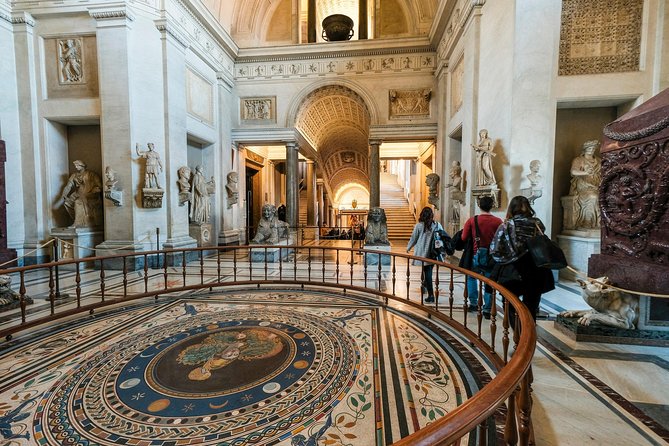
Next is the Cortile della Pigna, home to the Bronze Pinecone. It’s not just the object—it’s the scale and placement. The pinecone’s mass feels surprisingly physical once you’re standing in the courtyard, and it’s the kind of piece that makes you pause because your brain expects “small museum object” and gets “big ancient presence” instead.
This stop also works as a palate cleanser between sculpture zones. After this, the tour heads toward the classical heart of the Vatican’s sculpture world, and your eyes are already in the right mode: looking at form, material, and how Renaissance and later artists were influenced by the ancient past.
Laocoön: classical sculpture that helped shape the Renaissance
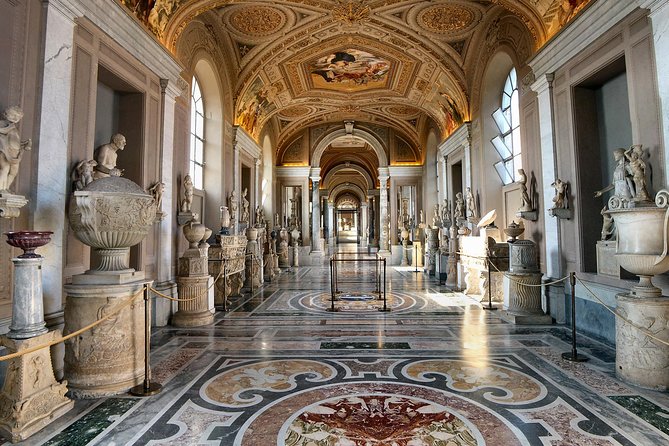
Then you get to the Laocoön Group. This is a high-impact stop because the Laocoön sculpture is famous for a reason: it’s dramatic, it’s expressive, and it pushed artists for centuries after it was admired by collectors and scholars.
In this after-hours setting, you’re not fighting crowds for a half-second glance at the dramatic torsion and emotion. You can actually circle the piece with your guide’s context in mind. That matters, because the Laocoön isn’t only about what you see—it’s about how later art learned from it.
You can also read our reviews of more tours and experiences in Rome

Galleria degli Arazzi (Gallery of Tapestries): woven stories you can finally study
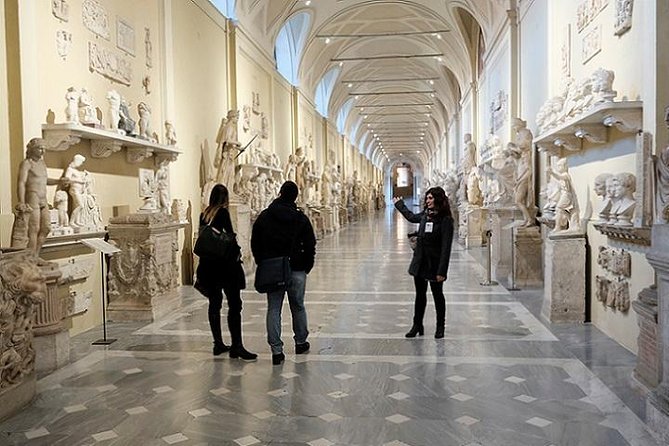
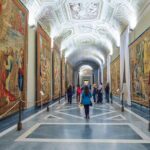
The Gallery of Tapestries is one of those rooms people rush through when they’re surrounded by tour groups. Here, you get a quieter moment with the woven works that depict biblical and historical scenes.
Tapestries are easy to underestimate until you see them up close. The texture, the fine detail, and the way the figures and backgrounds are built from threads become obvious when you have time. And because you’re not constantly pushed along, you can pick one scene, follow it, and understand what you’re looking at.
It’s a good reminder that “famous museum building” doesn’t always mean “famous museum experience.” This is the kind of room that becomes special when the pace matches the craft.
Gallery of Maps: Italy’s geography as Renaissance theatre
Next comes the Gallery of Maps—Galleria delle Mappe. The corridor is lined with large-scale frescoes that depict the geography of Italy.
This room is a favorite for many reasons. Visually, it’s striking because it’s both functional and decorative: it’s geography rendered as art. Mentally, it’s interesting because it reflects how 16th-century artists and patrons thought about place, identity, and power.
In a crowded museum, people tend to stand back and snap a quick photo and move on. With fewer interruptions, you can actually read the idea of the paintings: the careful attention to regions, waterways, and the sense that the Vatican was staging knowledge as much as showing beauty.
Raphael Rooms and the Vatican’s big-name artists
From the Map Gallery, you move into the Raphael Rooms. This is where the Vatican Museums shift from “amazing objects” into “major art programs,” because Raphael’s rooms are all about how painting can communicate learning, theology, and authority.
These rooms connect directly to what the Vatican collected and commissioned over time. You’ll also see work linked to Perugino, Botticelli, and Michelangelo—plus more sculpture moments and highlights along the route. The point isn’t to list artist names. The point is that the Vatican’s collection feels like one long conversation between artists and ideas.
If you’ve ever thought of art history as dates and names, these rooms are where it becomes human. You start understanding why certain styles mattered, and why certain works were placed where they were.
Also, don’t sleep on the small moments. One guide-style strength here is that your private escort can point out what to notice in each room so the visit doesn’t become “I saw it, I guess.”
Sistine Chapel: peace, symbolism, and the no-photo rule
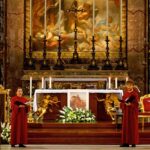
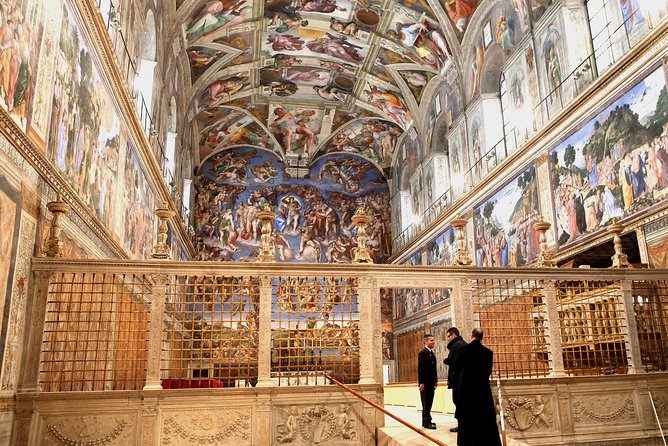
Finally, you reach the Sistine Chapel. This is the moment everyone comes for, and in an after-hours format it lands differently.
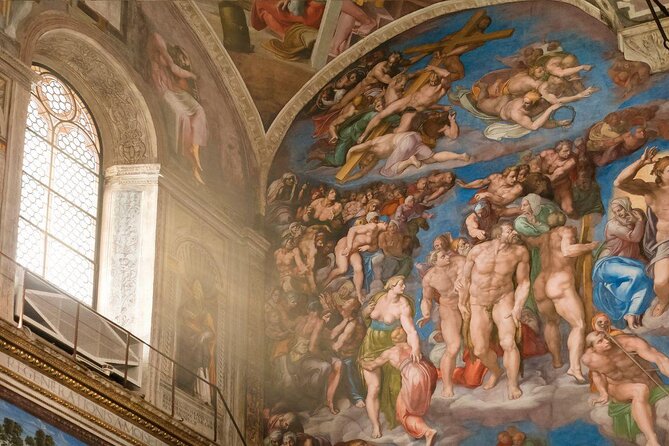
Your guide will explain the symbolism in Michelangelo’s frescoes. Two of the big headline works are the Creation of Adam and The Last Judgment. If you’ve only ever seen these images on screens, seeing them in person is a real calibration moment. The scale forces you to look up, and the ceiling’s storytelling becomes physical.
The chapel also has a strict no-photo policy. That rule is annoying for some people, but it also creates a better viewing mood. You’re not competing with your camera; you’re watching people, listening to your guide’s cues, and letting the frescoes work on you.
There’s also room for stillness. The tour experience allows you to meditate, think, pray, or simply sit with the space. In a place like this, “taking a moment” isn’t a side quest—it’s part of the design.
Exiting via the Vatican Library and the double spiral staircase
After the Sistine Chapel, you don’t just leave like a checkout line. You exit through the Vatican Library and down the double spiral staircase.
This is a quiet payoff stop. The double spiral staircase is one of those features that feels engineered for drama, and it gives you a gentle visual ending to a visit that started with courtyards and ancient sculpture. You’re not just escaping—you’re transitioning out through another meaningful space, which helps the whole tour feel like a designed path instead of a hit-and-run checklist.
Price and value: $5,703.79 per person isn’t casual, so what are you really paying for?
At $5,703.79 per person, this is not a bargain. This is a premium experience, and you should judge it by what you get that standard tickets don’t.
Here’s where the value comes from:
- After-hours entry: less crowd friction usually means better attention.
- Official private guide: you get context for what you’re seeing, not just access.
- Private transfers: hotel pickup and drop-off in Rome’s historical center saves real time and stress.
- A route that hits major highlights (Raphael Rooms, Gallery of Maps, classic sculpture highlights, and the Sistine Chapel) within a short, focused 2-hour format.
Your money is buying time, attention, and convenience. You’re paying to spend your energy on art instead of logistics.
Who tends to find this worth it?
- Couples who want a once-in-a-lifetime Vatican visit without crowd chaos.
- People who want a guided explanation but don’t want a long day.
- Small groups who can share the cost—this tour requires a minimum of 2 people per booking, and group discounts may apply.
Who should think twice?
- Anyone who loves drifting without a guide. You’re paying for interpretation and a structured route.
- Anyone who can’t follow the strict rules (dress code, no photos in the Sistine Chapel, and no food inside the attractions).
Tour rules that affect your comfort (dress code, photos, food)
A few practical points can make or break your day.
You’ll need to meet a dress code for places of worship and select museums. If you arrive in flip-flops and a tank that doesn’t cover enough, you’ll waste time fixing it or getting turned away.
In the Sistine Chapel, pictures are strictly forbidden. Build your expectations around looking and listening instead of documenting.
Also, food and drinks aren’t allowed inside each attraction. Plan a proper meal outside the museum spaces. Bring only what you need so you aren’t stuck with heavy items when you should be focused.
Finally, during the Jubilee period, some monuments could be under restoration or closed due to extraordinary celebrations. If the operator messages you about changes, take it seriously.
The guide factor: why names like Rosalba and Barbara matter
One reason this tour stands out in feedback is the role of the private guide. Different guides bring different pacing and style, and people often remember specific details—how they handled time, how clearly they explained the Vatican, and how comfortably they guided the visit.
From past experiences, names that come up include Rosalba and Barbara De Rosa, along with Denis Pasolini, Roberta, Katie, Serena, Fabiana, and Giuliano Catapano. The consistent theme in that kind of praise is good pacing and clear explanations that make the Vatican feel less like a blur.
You can’t choose your guide from the information here, but you can choose your attitude. Go in with questions: What do you want to understand—religious symbolism, Renaissance art, classical influence? A good guide will steer you to the answers fast.
Should you book this VIP after-hours Vatican Museums tour?
Book it if you want the Vatican Museums to feel human instead of rushed. If your priority is the Sistine Chapel with quiet time, and you value a private guide plus hotel transfers, this tour is a strong match.
Skip it (or consider alternatives) if:
- You’re mostly happy self-guiding and don’t care about structured context.
- Your budget is tight and you’d rather spend money on multiple Roman experiences.
- You’re not willing to follow rules like the dress code and the no-photo policy.
My best advice: treat this like a dedicated art appointment. Plan your day around it, keep your expectations realistic (2 hours goes fast in a giant museum), and let the after-hours timing do the heavy lifting.
If this is your once-a-year Vatican moment, and you want to remember how it felt more than just what you checked off, this is the kind of splurge that can deliver.
FAQ
How long is the VIP Vatican Museums: Sistine Chapel after-hours private tour?
It lasts about 2 hours.
Is hotel pickup and drop-off included?
Yes. Private transfers from and to your hotel are included, with pickup within Rome’s historical center.
Is this tour private or shared?
It’s private. Only your group participates.
What is included in the price?
You get VIP after-hours access to the Vatican Museums, an official private guide, and private transfers from and to your hotel.
What is not included?
Food and drinks are not included, and the tour does not include a visit to St. Peter’s Basilica.
Do I need to follow a dress code?
Yes. A dress code is required to enter places of worship and select museums.
Can I take photos in the Sistine Chapel?
No. Pictures are strictly forbidden inside the Sistine Chapel.
Is food or drink allowed during the visit?
No. Food and drinks are not allowed inside each attraction.
What if I need to cancel or change my booking?
This experience is non-refundable and cannot be changed for any reason.