REVIEW · ROME
Vespa Tour – Explore Ancient Rome
Book on GetYourGuide →Operated by Roman Vespa · Bookable on GetYourGuide
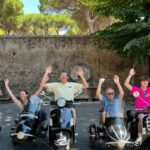
Vespas and ancient Rome in 90 minutes. This Vespa tour feels like a best-of route without the long lines, and it’s built for people who want to see the city fast and still stop for photos. You’re in a small group (up to 10), which makes it easier to hear the guide and move smoothly through busy streets.
Two things I like a lot: the live guide keeps every stop practical and story-based, and the photography session helps you turn the ride into real memories. One possible drawback: it’s experience only for passengers, and the tour is not suitable for children under 10 or people over 95.
In This Review
- Key highlights to look forward to
- A Vespa Through Ancient Rome: why this works
- Where you start near the Colosseum: Via Cavour 207
- Colosseum stop: a guided 10-minute introduction
- Palatine Hill and Circus Maximus: the views without the detour
- Giardino degli Aranci: where the Terrazza Aventino moment lands
- Trastevere and the Rome vibe shift
- Fontana dell’Acqua Paola: a quieter, scenic 10 minutes
- Janiculum Hill: Rome’s highest point and the skyline payoff
- Castel Sant’Angelo pass-by and a real finish at Piazza Navona
- The photography session: how it adds value to a short tour
- Price and value: $53 for 1.5 hours of Vespa time
- Guides make the day: the difference between fun and chaos
- Who should book this (and who should skip it)
- Quick heads-up: what to expect day-of
- Should you book the Vespa Tour – Explore Ancient Rome?
- FAQ
- Is this tour for passengers only?
- How long is the Vespa Tour – Explore Ancient Rome?
- Where does the tour start and where do you finish?
- What stops are included on the route?
- What language options are available for the live guide?
- What should I bring, and is anything not allowed?
Key highlights to look forward to
- Passenger-only Vespa riding: you follow the driver and enjoy the sights without steering
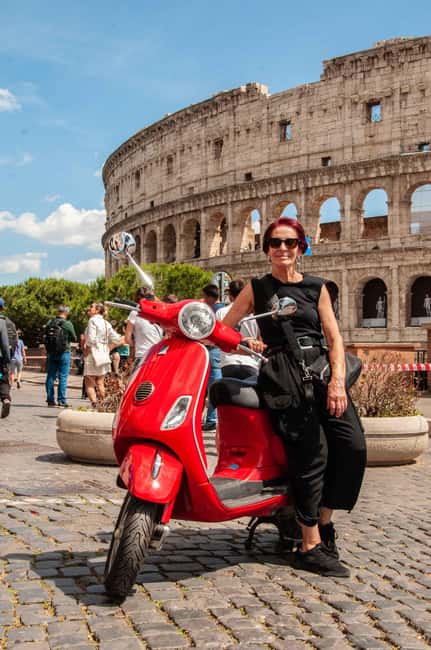
- Iconic stops in a tight route: Colosseum, Circus Maximus area, Aventine viewpoints, and more
- Giardino degli Aranci viewpoint time: 20 minutes that’s timed for photos and skyline views
- Janiculum Hill and Vatican/City views: a planned climb to Rome’s highest point
- English, Italian, Russian, Turkish live guide: plus guides can switch styles for your group
- Finish at Piazza Navona: a classic place to wrap up and keep exploring on foot
A Vespa Through Ancient Rome: why this works
Rome is big. If you try to cover it all by foot, you burn time walking between landmarks and end up tired before you’ve even reached the good parts. This tour uses a Vespa-style ride to connect the dots—then adds short guided moments so you still get context, not just motion.
I also like that it’s paced for real viewing. You’re not stuck “seeing everything” from a scooter helmet. You get scheduled time at several key places, including viewpoints that are famous for a reason.
And because it’s a small group capped at 10, you’re less likely to get lost behind the crowd. That matters in Rome, where one wrong turn or a bottleneck can eat your whole plan.
You can also read our reviews of more tours and experiences in Rome

Where you start near the Colosseum: Via Cavour 207
The action begins at Via Cavour, 207, close to the Colosseum area. This is a smart start point because it puts you near the center of Rome’s ancient story right away. You’re also positioned so the route can loop through the city efficiently without spending the first part of the tour in transit.
Come with water. That’s the one “bring” item listed, and it’s a good one—especially if the day is warm. You’ll be stopping and riding, so you’ll want something simple and reliable in your bag.
Colosseum stop: a guided 10-minute introduction
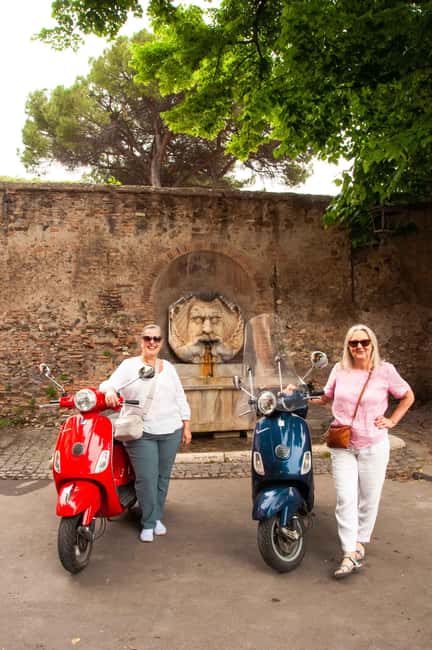
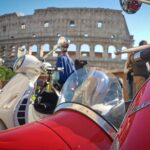
Your first major anchor is the Colosseum, with a guided tour around 10 minutes. That timing is intentional. It’s long enough to get oriented—where to look, what to notice, and how to read the space—without turning your tour into a museum marathon.
Also, you’re starting on the back end of a short ride day, not after hours of wandering. If you’re the type who likes to get bearings fast, this kind of first stop helps you see the Colosseum as part of a larger route, not a one-off selfie spot.
If you’re hoping for hours inside the Colosseum itself, this won’t match that. It’s a tour moment, not a deep inside ticket-and-tread session. But for a 1.5-hour itinerary, it hits the main idea: you get the landmark and the meaning, then you move.
Palatine Hill and Circus Maximus: the views without the detour
After the Colosseum, you pass by Palatine Hill for about 5 minutes, then you move along toward Circus Maximus for another 5 minutes pass-by stop.
These are exactly the kinds of stops that make sense on a Vespa-style route. Palatine Hill and Circus Maximus are spread through Rome’s ancient core, and spending time trying to stitch them together on foot can eat energy. Here, you get a guided pass that helps you place what you’re seeing.
A tip for how to enjoy pass-by segments: focus on orientation. Look at how the guide explains the layout—where the ancient world sat, and how the modern streets line up. Even if you’re only looking for a few minutes, that mental map makes the whole city feel clearer later.
Giardino degli Aranci: where the Terrazza Aventino moment lands
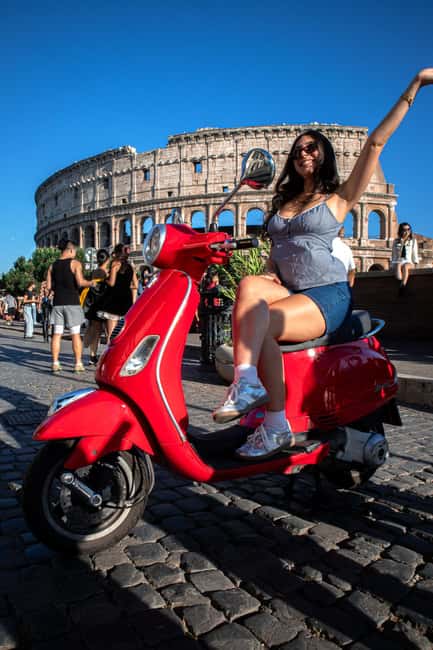
The itinerary then brings you to Giardino degli Aranci (Orange Garden), Rome for a guided tour of 20 minutes. This is one of the planned “stop-and-stare” segments, and that’s why it matters.
You’re going to get a panoramic feel from here, tied to the Terrazza Aventino viewpoint concept mentioned in the route. In plain terms: you’re not just looking at Rome—you’re seeing the city stretch out behind it. That makes the ancient sights you’ve just been introduced to feel bigger, because Rome’s scale becomes visible.
This is also the kind of stop where the photo session can make sense. If you want pictures that look like you actually planned the day (not just caught between traffic lights), this is a strong part of the route to lean into.
If you hate viewpoint stops because they feel too “touristy,” I get it. But this is one of the few times the tour gives you time to enjoy the scene instead of rushing through.
You can also read our reviews of more tours and experiences in Rome
Trastevere and the Rome vibe shift
Next comes Trastevere, with a guided segment of about 15 minutes. This is where Rome starts to feel more lived-in compared to the monumental core.
Trastevere is the kind of neighborhood where the streets have personality. Even during a short stop, you can usually sense the difference—how people move, how the buildings frame the street, and how the vibe changes once you leave the biggest landmark zone.
The value here is balance. A route that only hits ancient ruins can feel like a checklist. Trastevere gives your day a different texture, so the story of Rome doesn’t flatten into stone and dates only.
Fontana dell’Acqua Paola: a quieter, scenic 10 minutes
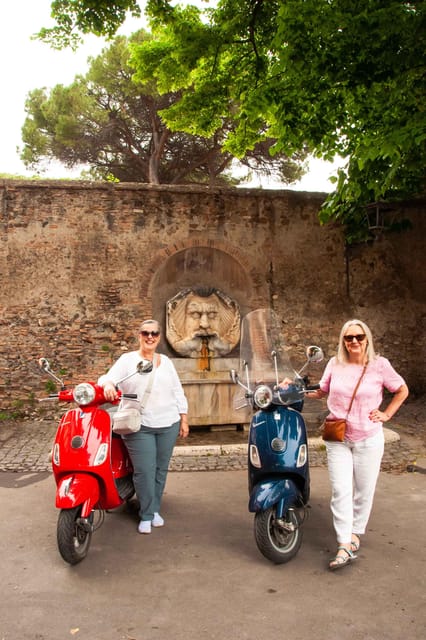
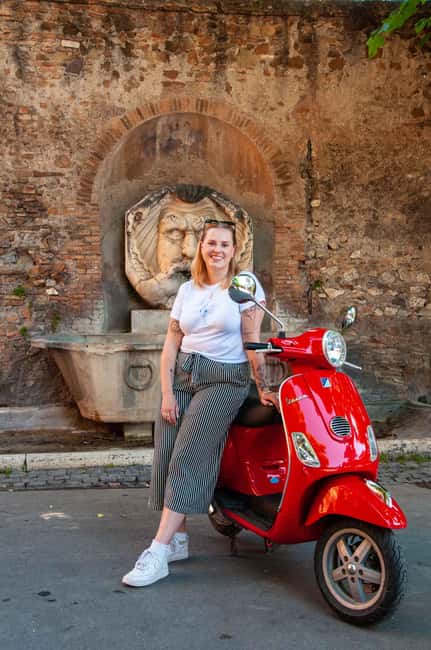
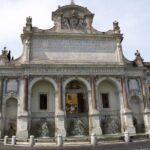
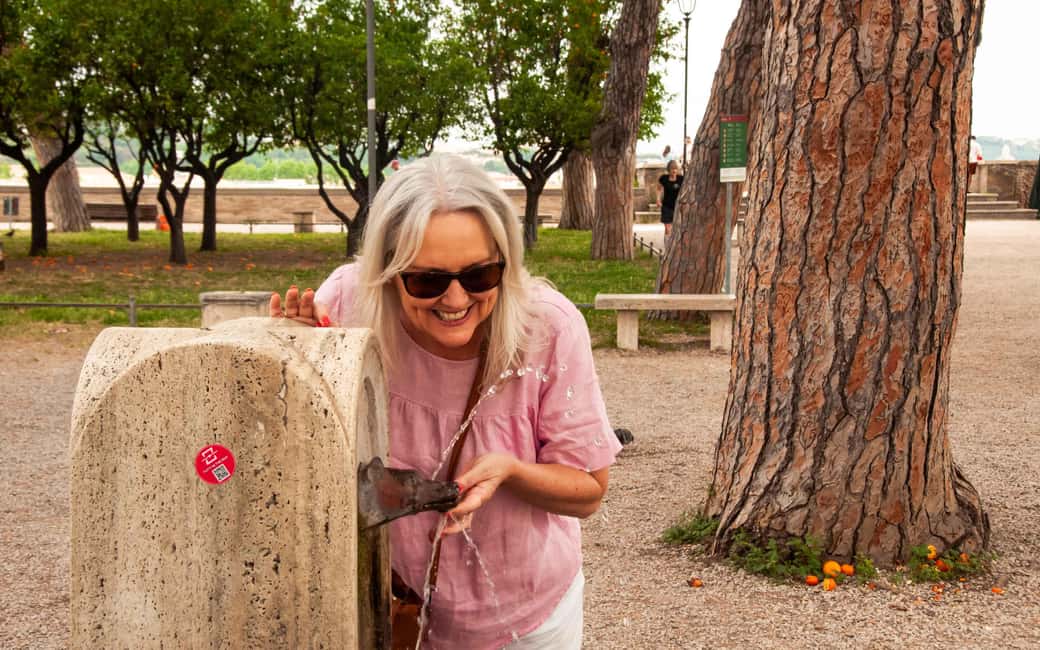
Your next named stop is Fontana dell’Acqua Paola, described as a beautiful hidden fountain. You have about 10 minutes to visit.
This is a classic kind of tour win: you trade a big landmark crowd for something more local-feeling. Even if you don’t know the fountain beforehand, the “why it’s here” explanation from the guide can turn it from background into a real stop.
A quick note: a short fountain visit works best if you use it for intention. Spend a little time looking at details, not just snapping a photo and moving on. Ten minutes goes fast, but it’s long enough to let the stop sink in.
Janiculum Hill: Rome’s highest point and the skyline payoff
Then you head to Janiculum Hill for about 15 minutes. The route notes that this is the highest point of Rome and that you get terrace-style views including the Vatican and the wider city panorama.
This is the part of the tour that can feel like the reward. After ancient streets, fountains, and neighborhood wandering, you finally get the wide view that helps everything click.
If you’re a skyline person, this is your time to slow down. Look for the sightlines the guide points out, then take your photos once you understand the layout. That’s how you end up with pictures that show more than you would from a random corner.
Castel Sant’Angelo pass-by and a real finish at Piazza Navona
On the way to the last stop, you’ll pass by Castel Sant’Angelo for around 5 minutes. Then you finish at Piazza Navona.
This ending choice is practical. Piazza Navona is a place you can keep enjoying on your own afterward—walking, lingering, and eating without needing to immediately plan your next transportation step.
If you want to turn the tour into a full outing, finishing here helps. You’ll naturally be in a central zone for further exploration, and the vibe is perfect for winding down.
The photography session: how it adds value to a short tour
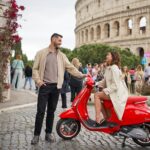
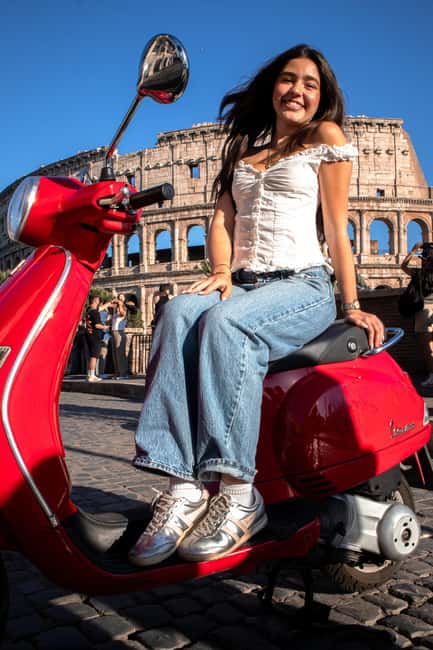
The experience includes a dedicated photography session along the way. That’s a big deal for a Vespa tour because riding time can be chaotic for your phone. When you’re balancing speed, helmets, and city traffic, it’s hard to get a clean photo of you enjoying the moment.
A photographer also changes the feel of the stops. Instead of rushing because you’re thinking about your next landmark, you can focus on enjoying the ride and letting the moment get captured.
One note: the tour duration is 1.5 hours, so the photography isn’t likely to turn into a long production. Think of it as a boost for your day, not a replacement for your own photo time.
Price and value: $53 for 1.5 hours of Vespa time
At $53 per person for a 1.5-hour experience, you’re paying for three things at once:
1) transportation via Vespa through central Rome,
2) a route with planned stops (not just random sightseeing), and
3) a live guide plus a photography moment.
Could you see some of these sights on your own for free or cheaper? Sure. But you’d likely spend more time stitching together transit, dealing with crowd flow, and figuring out what to pay attention to at each stop.
Where this price feels fair is the efficiency. You get iconic highlights (Colosseum area and other major reference points), plus a viewpoint (Giardino degli Aranci) and a higher panoramic payoff (Janiculum Hill), all in one tight run.
Also, the small group cap at 10 participants helps justify the per-person cost. This isn’t a massive bus situation. It’s built to keep the experience personal enough that you can actually hear what the guide is saying.
Guides make the day: the difference between fun and chaos
The guides are a major part of the appeal. In recent experiences with this tour, I’ve seen names like Sam and Emilio mentioned as warm, fun, and careful about safety. That matters because Vespa riding adds a layer of movement you don’t get on a walking tour.
The guides also take the time to make sure you’re okay while riding and give room for pictures at the scenic points. That’s the practical side of “good guiding”: not just facts, but flow. You’re not left guessing when to stop, where to look, or how to fit photos into the ride.
Languages are also flexible. The tour lists English, Italian, Russian, and Turkish, and guides have been reported as speaking English, Spanish, and Italian on at least one booking. If you’re multilingual or just want something that feels easy to follow, that’s a plus.
Who should book this (and who should skip it)
This tour is a strong fit if you:
- want a short, efficient Rome overview with guided context
- like the idea of getting skyline views in the same outing as ancient sights
- prefer a small group instead of a large crowd tour
- enjoy “on the move” sightseeing where the guide helps you time photos
Skip it if:
- you don’t meet the age fit (not suitable for children under 10, babies under 1, and people over 95)
- you need to bring items that are not allowed, like baby strollers or bikes
- you’re not comfortable being an experience-only passenger (you won’t be driving)
Also, if you’re the type who wants long, slow museum time, this is not that. The tour is designed around short visits—about 10 to 20 minutes at several stops—and then movement again.
Quick heads-up: what to expect day-of
This is a Vespa tour around Ancient Rome, and the route includes both guided moments and pass-by segments. Some parts of the itinerary are quick by design: 5-minute passes help you see landmarks without wasting your limited tour time.
Bring water, skip bulky items, and plan to dress for street-level touring. Even though the time window is short, you’ll still feel the rhythm of Rome—stop, ride, look, photo, move.
And yes, the tour is designed for passengers only. If you’re traveling with someone who expects to drive or ride in a different way, double-check expectations early so everyone’s on the same page.
Should you book the Vespa Tour – Explore Ancient Rome?
I’d book it if you want an easy, efficient way to see a lot of Rome in 90 minutes, with a guide guiding you at key points and enough time for views and photos. It’s especially worth it if you like the idea of seeing Rome as a route—Colosseum to viewpoints to classic finishing streets—rather than as separate, disconnected stops.
I’d think twice if you want extended time at each monument, or if your needs don’t match the passenger-only format and age guidance. But for most people looking for a fun, practical Rome highlight, this one hits a nice balance: iconic sights, a real viewpoint payoff, and a small-group ride that doesn’t drag.
FAQ
Is this tour for passengers only?
Yes. The experience is explicitly for passengers only, following the knowledgeable drivers during the ride.
How long is the Vespa Tour – Explore Ancient Rome?
The duration is 1.5 hours.
Where does the tour start and where do you finish?
The tour starts at Via Cavour, 207 and finishes at Piazza Navona.
What stops are included on the route?
The route includes the Colosseum, a pass by Palatine Hill, a pass by Circus Maximus, Giardino degli Aranci (Orange Garden), Trastevere, Fontana dell’Acqua Paola, Janiculum Hill, a pass by Castel Sant’Angelo, and it ends at Piazza Navona.
What language options are available for the live guide?
The live tour guide is available in English, Italian, Russian, and Turkish.
What should I bring, and is anything not allowed?
Bring water. The tour does not allow baby strollers, bikes, alcohol and drugs, baby carriages, or diving.