REVIEW · ROME
Venice Day Trip from Rome: Private Tour by High Speed Train
Book on Viator →Operated by ROMAETRAVEL · Bookable on Viator
Venice in one day sounds impossible, but this is the plan that makes it work. You leave Rome early, ride the high-speed rails to the lagoon, and spend your daytime walking Venice’s best-known sights along the Grand Canal and beyond. It’s private, guided, and designed to help you hit the big landmarks without losing your bearings.
I love two things about this day trip. First, you get a professional guide who can steer you through the chaos of Venice’s bridges and squares. Second, the route focuses on signature scenery fast—starting with the water at the Grand Canal, then stacking major stops like Rialto and St. Mark’s while you still have energy.
The main trade-off is time and ticket value. You’re looking at a long day with roughly 4 hours train time each way, which means less time in Venice than you’d want for a slow wander, and some key sights (like St. Mark’s Basilica) are not included.
In This Review
- Key points before you book
- Rome departure: what the 12-hour rhythm feels like
- Second-class high-speed train: the comfortable part, plus the seat reality
- Venice’s first impression: Grand Canal views and Rialto momentum
- Canal Grande (the Grand Canal): where Venice makes sense
- Ponte di Rialto: the old economic heart
- San Giorgio dei Greci and Strada Nova: Venice beyond the postcard core
- Chiesa di San Giorgio dei Greci: the leaning clocktower
- Strada Nova: the wide street that was engineered
- St. Mark’s Basilica and Piazzas: the day’s biggest wow factor
- St. Mark’s Basilica: mosaics that feel like they’re lit from within
- The Bridge of Sighs and San Zaccaria: Venice’s stories in stone
- Ponte dei Sospiri: the bridge between power and punishment
- Chiesa di San Zaccaria: late-Gothic meets Renaissance harmony
- Accademia bridge, San Trovaso shipyard, and Venice’s small corners
- Ponte dell’Accademia: one of only four Grand Canal crossings
- Squero di San Trovaso: the gondola repair world
- Campo San Pantalon and Campo Santa Margherita: street art and daily life
- Piazzale Roma: the end of Venice, and the part you shouldn’t ignore
- Guides are the difference: what to expect from the private part
- Price and value: what you’re really paying for
- Should you book this Rome-to-Venice private train day trip?
- FAQ
- How long is the Rome to Venice day trip?
- Is this tour private?
- What language is the tour guide?
- Where do we meet in Rome for the tour?
- Are the train tickets included, and what class are they?
- Are entrance tickets for places like St. Mark’s Basilica included?
- Is food and drinks included?
- Are gondola ride tickets included?
- When will I receive the train tickets?
Key points before you book
- Private guidance: you’re not stuck in a large crowd loop; your guide can adjust your pace.
- Grand Canal first: you start where Venice is easiest to understand—water, bridges, and skyline.
- Fast pacing in a short window: expect a lot of “look, walk, move on” once you’re in Venice.
- Some entries cost extra: several churches/specific sights are marked as not included.
- Second-class train ride: seats can be assigned by the rail company, not hand-picked.
- Early start: the 6:30am meeting time shapes the whole day.
Rome departure: what the 12-hour rhythm feels like
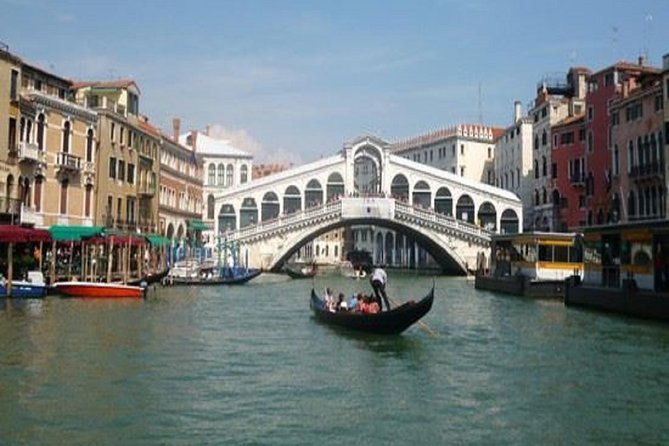
This is a true day-trip, so plan around the clock. The meet-up point is Roma Termini, Via Giovanni Giolitti 40, 00185 Rome, and the start time is 6:30am (it may shift a bit earlier). You’re back at the same meeting point at the end of the experience.
The upside of the early start is simple: you get to Venice while the city is still waking up. The downside is you’ll feel the day as one long stretch: the train ride is a big chunk of the total time, and Venice time is the smaller chunk.
Bring a comfy plan for your body. Comfortable shoes matter because this day involves lots of walking between bridges, squares, and churches. Also, the tour runs in all weather, so pack for rain or cool mornings if the forecast turns.
You can also read our reviews of more private tours in Rome


Second-class high-speed train: the comfortable part, plus the seat reality
The tour includes transport by high-speed train in 2nd class, and a lot of the experience hinges on how smoothly this part goes. The tour provider purchases train tickets 48 hours in advance, and you’ll receive the details by email the day before.
Here’s the key practical note: seat selection isn’t guaranteed. Even when you buy a “private tour,” the rail company can assign seats randomly for second class. That means you should go in expecting a solid ride, but not expecting you’ll get the best seats the way you might on a premium train ticket.
Also, rail timing matters in Italy. Plan to be at the station early enough to find your platform without stress. Many train systems board before departure, so arriving too late can turn a smooth trip into a scramble.
Venice’s first impression: Grand Canal views and Rialto momentum
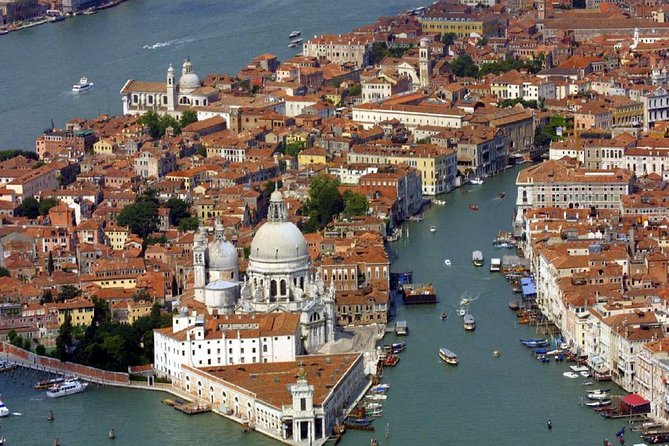
Once you arrive, the itinerary builds in a smart order: start with Venice’s biggest visual idea, then move into the iconic bridge-and-square landmarks.
Canal Grande (the Grand Canal): where Venice makes sense
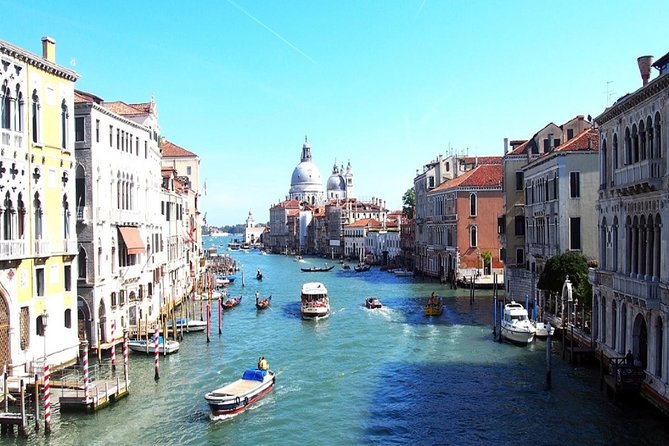
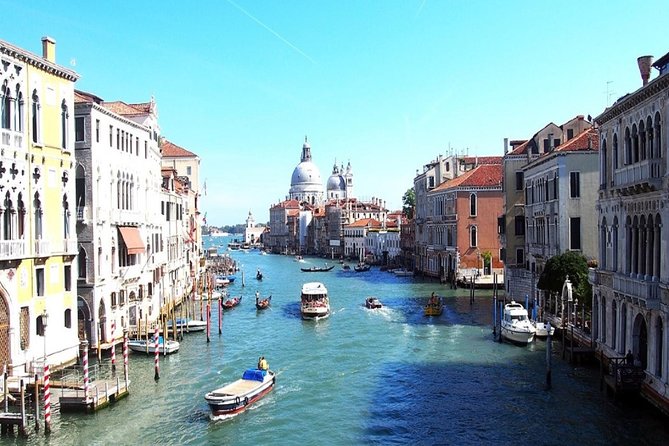
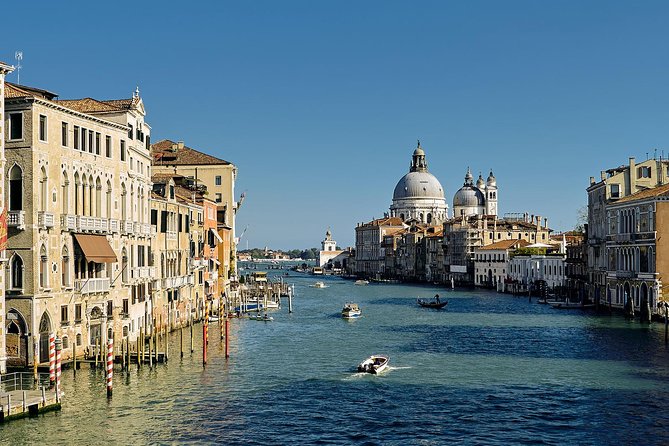
Your first stop is the Canal Grande, Venice’s main waterway (about four kilometers long) that splits the city into two halves. If you’re new to Venice, this is where your brain goes from maze mode to map mode. The canal’s Venetian-Gothic buildings along the water give you that instantly recognizable skyline.
This is a good “settle in” stop. You get a chance to orient yourself visually before you start hopping bridges.
Ponte di Rialto: the old economic heart
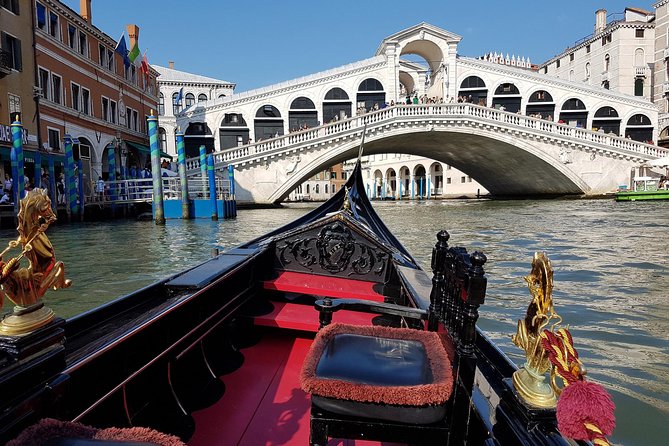
Next up is Ponte di Rialto, the oldest of the main Grand Canal bridges. It’s famous for architecture, but it’s equally famous for what it represented: for years, Rialto was the hub of Venice’s economy.
Why this matters on a short trip: Rialto is one of the places that anchors your understanding of how Venice functioned. After seeing it, a lot of the city’s other details feel less random.
You can also read our reviews of more tours and experiences in Rome
San Giorgio dei Greci and Strada Nova: Venice beyond the postcard core
Venice isn’t just St. Mark’s and canals. This itinerary slips in a couple of stops that add texture.
Chiesa di San Giorgio dei Greci: the leaning clocktower
You visit Chiesa di San Giorgio dei Greci, a church tied to Venice’s Greek community—especially sailors and merchants. The standout is the bell tower, known as the leaning clocktower, designed by Simone Sorella and completed in 1592. The tower appears to have started tilting right from the beginning.
This stop is also a reminder that Venice was a trading city with connections all over the Mediterranean. You’ll also see the Sanctuary of St. Lucy during this portion.
What to watch for: don’t treat this as a quick photo stop only. The value is in understanding that Venice’s communities shaped its architecture.
Strada Nova: the wide street that was engineered
Then comes Strada Nova, the widest street in Venice. This wide stretch (and the bridges connecting wide routes) was created in the 19th century to speed up pedestrian movement between Rialto and the railway station, replacing a more tortuous path through narrower streets.
In other words, this is modern problem-solving in an ancient setting. On a jam-packed day, it’s useful because wide streets make it easier to keep pace without losing time.
St. Mark’s Basilica and Piazzas: the day’s biggest wow factor
From here the itinerary moves into the classic “Venice center” landmarks.
St. Mark’s Basilica: mosaics that feel like they’re lit from within
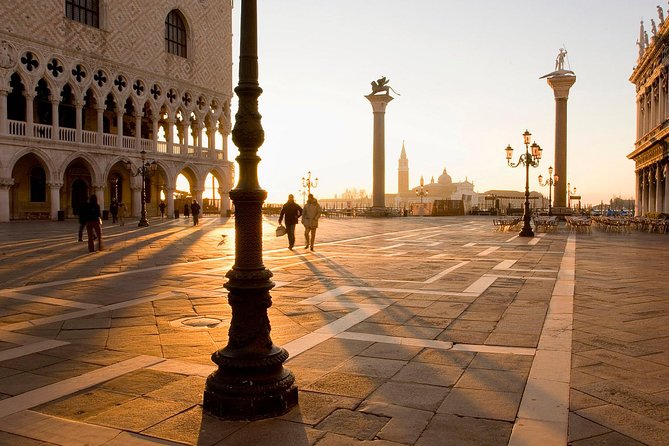
Your stop at St. Mark’s Basilica puts you in the thick of Venice’s most famous visual language. The tour highlights the inside: domes, vaults, and upper walls covered with gold-ground mosaics of saints, prophets, and biblical scenes.
The catch: admission is not included for St. Mark’s Basilica on this tour. So treat this as an “expect extra cost” stop and don’t let it surprise your budget.
Even if you’ve seen photos, a big church like this is different in person because the mosaics change with light. On a tight day, it’s still worth choosing what you can see carefully rather than trying to sprint through everything.
The Bridge of Sighs and San Zaccaria: Venice’s stories in stone
If St. Mark’s gives you splendor, these stops give you story.
Ponte dei Sospiri: the bridge between power and punishment
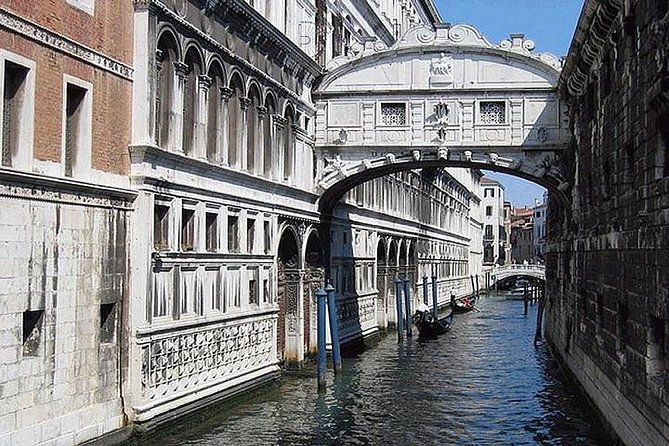
Ponte dei Sospiri (the Bridge of Sighs) connects the Doge’s Palace to the historic prison across the canal. It was built in the 1600s, and the name comes from a tradition: prisoners sighed as they crossed, knowing they might never see the outside world again.
This stop adds emotional weight to the postcard scenery. It’s also one of those places where your brain starts connecting the dots between architecture and what Venice chose to do with authority.
Chiesa di San Zaccaria: late-Gothic meets Renaissance harmony
Next is Chiesa di San Zaccaria, a former monastic church. The present facade blends late-Gothic and Renaissance styles, and the church was built between 1458 and 1515.
Again, admission is not included. But this is a good contrast to St. Mark’s—less ticket-driven, more “notice the shape, the facade style, the mood of the square.”
Accademia bridge, San Trovaso shipyard, and Venice’s small corners
The middle-to-late portion of the day shifts from “big ticket monuments” into “Venice texture.”
Ponte dell’Accademia: one of only four Grand Canal crossings
You’ll stop at Ponte dell’Accademia, one of only four bridges spanning the Grand Canal. It crosses near the southern end and is named for the Accademia di Belle Arti di Venezia.
Why include this on a short day: it gives you another view down the Grand Canal without doubling back too much.
Squero di San Trovaso: the gondola repair world
Then comes one of the most interesting practical cultural stops: Squero di San Trovaso. A squero is a classic Venetian shipyard where small boats (including gondolas) are repaired.
This is the kind of stop you remember because it’s not just “look at the building.” You get a peek at how gondolas are made or repaired, and that turns Venice’s beauty into a real craft story.
Campo San Pantalon and Campo Santa Margherita: street art and daily life
Next, Campo San Pantalon gives you a chance to see the Banksy painting often referred to as the shipwrecked/migrant child. Then you move to Campo Santa Margherita, a student-gathering square in Dorsoduro.
These are quieter breaks that keep the day from feeling like pure sightseeing treadmill. Campos also matter because they reset your sense of space in Venice. You stop, look around, and realize you’re in a lived-in city, not a theme park.
Piazzale Roma: the end of Venice, and the part you shouldn’t ignore
Your final stop is Piazzale Roma, the square at the entrance to Venice, at the end of the Ponte della Libertà. It’s one of the few places in the insular core where you’ll find ground vehicle access—cars and buses—because Venice itself is car-free.
It’s a fitting ending point. When you’re done, you’re not walking deeper into the city forever—you’re moving toward the return. And on a day trip, that matters.
Guides are the difference: what to expect from the private part
The itinerary is tight, but the most praised element is the guide. Names that come up often include Sneh Wayne, Su Aydin, Mehmet, Alessandra, Giada, and Dogan Acar. What they tend to share in their approach:
- They meet you in Venice and keep you on the correct train timing for the return.
- They explain what you’re seeing—bridges, churches, neighborhoods—so the city feels connected instead of like random stops.
- They can handle adjustments when trains run late.
You’ll also see a recurring theme in advice: schedule stress drops when the guide handles the handoffs. On a Rome-to-Venice day trip, the “how do we get from here to there” questions can become your whole trip. This tour tries to remove that.
Still, be realistic: a private guide can only do so much with the short Venice window. If you’re hoping for slow wandering and long stops at each monument, this might feel rushed. If you want a strong highlights sweep with context, it’s a good fit.
Price and value: what you’re really paying for
At about $602.39 per person, this tour isn’t cheap. The value comes from bundling several things:
- high-speed train transportation (2nd class),
- a private guide service in Venice,
- and the Venice visitor fee.
That’s different from just buying a return train and walking sights on your own. You’re paying for guided pacing and for avoiding the “I’ll figure it out when I get there” stress.
But here’s the budget reality check. Several stops have admission not included, including St. Mark’s Basilica and other church-linked sights. So your total day cost may rise once you add entry fees and any optional experiences you choose.
Also, some people feel the price doesn’t match the train ride comfort and the limited Venice time. Second class can be fine, but you shouldn’t expect luxury. And because Venice time is capped by the rail schedule, you’re buying efficiency, not leisure.
If you’re the kind of traveler who wants one perfect city at your own pace, you might feel less satisfied. If you want a structured day that hits the major landmarks and makes sense of them, the price starts to feel more reasonable.
Should you book this Rome-to-Venice private train day trip?
Book it if:
- you want a highlights-first Venice day and you have limited time in Rome,
- you prefer a guide to help connect the dots between bridges, churches, and neighborhoods,
- you like the idea of seeing Venice without planning train timing and station navigation.
Consider skipping or customizing if:
- you hate long travel days (this one runs about 12 hours total),
- you want long sits and slow exploring in Venice rather than short stops,
- you’re sensitive to extra costs since key entries like St. Mark’s Basilica aren’t included.
If you do book, I’d go in with two rules: wear comfortable shoes, and decide in advance what you care about most (St. Mark’s, a church like San Giorgio dei Greci, or a shipyard stop). Then let the guide handle the moving parts.
FAQ
How long is the Rome to Venice day trip?
It runs about 12 hours (approx.). The meeting time is 6:30am in Rome, and the experience ends back at the same meeting point.
Is this tour private?
Yes. This is listed as a private tour/activity, meaning only your group participates.
What language is the tour guide?
The tour is offered in English.
Where do we meet in Rome for the tour?
You meet at Roma Termini, Via Giovanni Giolitti 40, 00185 Rome, RM, Italy.
Are the train tickets included, and what class are they?
Yes, transport by train (2nd class) is included. Train tickets are purchased 48 hours in advance.
Are entrance tickets for places like St. Mark’s Basilica included?
No. St. Mark’s Basilica is marked as admission not included. Other listed church-linked stops also show admission not included.
Is food and drinks included?
No. Food and drinks are not included.
Are gondola ride tickets included?
A gondola ride is not included in what’s listed for the tour. Some guided visits can include help arranging it, but gondola ride tickets are separate.
When will I receive the train tickets?
You receive an email the day before the tour with the information and train tickets (as stated in the additional info).