REVIEW · ROME
Vatican Museums & St. Peter’s Basilica Skip the line Private tour
Book on Viator →Operated by VIVICOS INTERNATIONAL TRAVEL SRL · Bookable on Viator
Three hours in the Vatican can feel sane. This skip-the-line private tour points you to the works that matter most, so you don’t spend your day wandering and guessing. I like the way the route focuses on clear highlights—Borgia Apartments, the Maps, Candelabra, and Tapestries—and saves you from getting swallowed by the museum maze.
Second, I really appreciate the one-on-one feel. Even with a private group experience, the guide’s pacing is what makes the difference: you can ask questions, slow down for details, and keep your energy for the Sistine Chapel finish. One thing to weigh: there’s a dress code and a moderate amount of walking, so plan ahead if you have mobility or clothing constraints.
In This Review
- Key things to know before you go
- Getting in fast at Via Vespasiano: skip the line, save your energy
- Vatican Museums highlights without getting lost in the galleries
- Upper Galleries: Maps, Tapestries, and the Candelabra-style rooms
- A quick orientation break on the Panoramic Terrace
- Sistine Chapel at the end: what to look for in Michelangelo’s frescoes
- St. Peter’s Basilica option: adding the next major sight
- Price and value at $488.95 per person (with group discounts)
- Guides that make a difference: Matteo, Chiara, Letizia, Valentina, Grace
- What to wear and bring: dress code, photos, and the no-drama checklist
- Who this tour suits best (and who should think twice)
- Should you book this skip-the-line private Vatican tour?
- FAQ
- How long is the Vatican Museums and Sistine Chapel skip-the-line private tour?
- Where do I meet the guide?
- What is included in the price?
- Is St. Peter’s Basilica included?
- Does this tour include entry tickets?
- What should I wear to enter the museums and places of worship?
- Can I take photos during the tour?
- Is there a lot of walking?
- Is the booking refundable or changeable after purchase?
Key things to know before you go
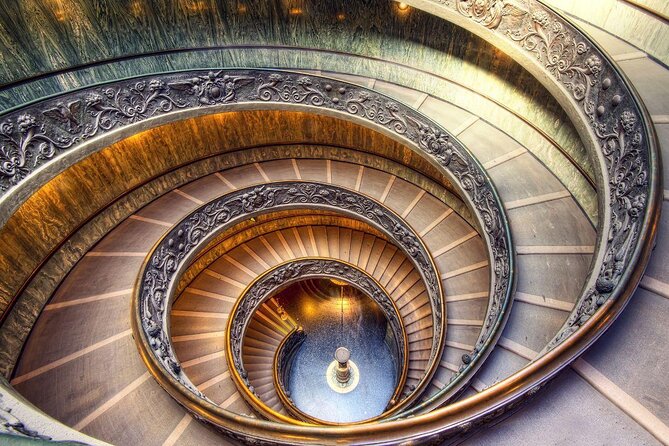
- Prebooked skip-the-line entry gets you past the long queues so you start strong
- Private guide for ~3 hours means better flow and time for your questions
- Upper galleries route hits signature rooms like the Maps, Tapestries, and Candelara areas
- Sistine Chapel is last with a focused, time-boxed visit to Michelangelo’s ceiling and Last Judgment
- Dress code is strict (no shorts or sleeveless tops; shoulders and knees covered)
- Moderate walking is involved and strollers may need to be carried in some areas
Getting in fast at Via Vespasiano: skip the line, save your energy
Your day starts at Via Vespasiano, 28 (00192 Rome). Meet there outside the Vatican Museums, then get ushered in without wrestling with the general line. That alone is the biggest practical win. The Vatican Museums are enormous, and time evaporates fast once you’re stuck waiting.
Arrive on time. The tour depends on your scheduled entry, and showing up late can mean you miss the window you paid for. Bring comfortable shoes and a refillable water bottle—this is walking-heavy. Also, pack light. No big backpacks, no big umbrellas, and avoid pointed objects, since those can create problems at security.
One more small tip: you’re going to be outside and in galleries with lots of other people. If you like having a calm start, aim to show up a bit early so you can settle, check your clothes match the rules, and get ready to move.
You can also read our reviews of more private tours in Rome


Vatican Museums highlights without getting lost in the galleries
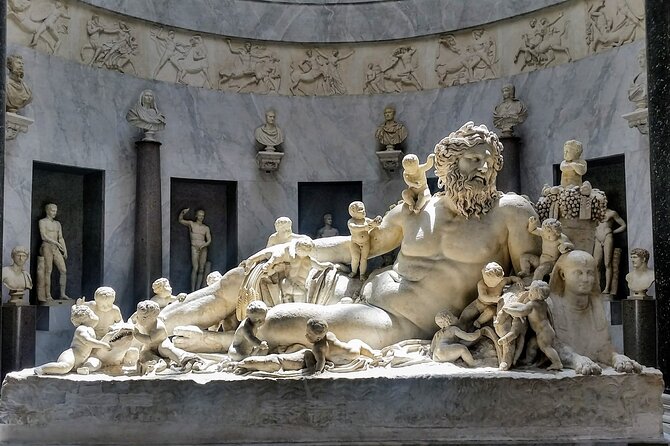
The Vatican Museums can feel like a choose-your-own-adventure where every hallway looks identical. The value here is that your guide keeps you on a sensible route through the “greatest hits,” without turning the visit into a speed-run.
You’ll learn how the collection was built over time, including the popes who assembled the artwork and antiquities. That context matters because the museum isn’t just a warehouse of masterpieces. It’s a story about power, patronage, and taste—played out through sculpture, paintings, and rooms designed to impress.
You’ll also be pointed toward major names you’ll recognize, including Raphael, Caravaggio, and da Vinci. The point isn’t to see everything. It’s to see the most important things in a way that doesn’t leave you tired, overwhelmed, and unable to remember why a particular room was famous.
There’s also a special “Vatican City” moment before the museum portion. The Vatican is its own tiny state—49 hectares, with a population of about 825—separate from Italy under the Lateran Treaty (1929). Getting that snapshot early gives the rest of the day sharper meaning. You’re not just touring buildings; you’re moving through a sovereign world that operates on its own rules.
Upper Galleries: Maps, Tapestries, and the Candelabra-style rooms
The museum focus continues in the Upper Galleries area, where you’ll see rooms linked to the north section of the Vatican Palace and connected toward the Sistine Chapel. This is the part of the visit where your guide’s structure really shows.
You’ll move through standout gallery themes:
- Gallery of the Maps
- Gallery of the Tapestries
- Gallery of the Candelabra
These aren’t random stops. They’re designed to keep you oriented. Instead of drifting through the Vatican like a tourist with no roadmap, you get a mental framework as you go. That means when you see something later—like a ceiling, a statue, or a wall with heavy symbolism—you can connect it to what you heard earlier.
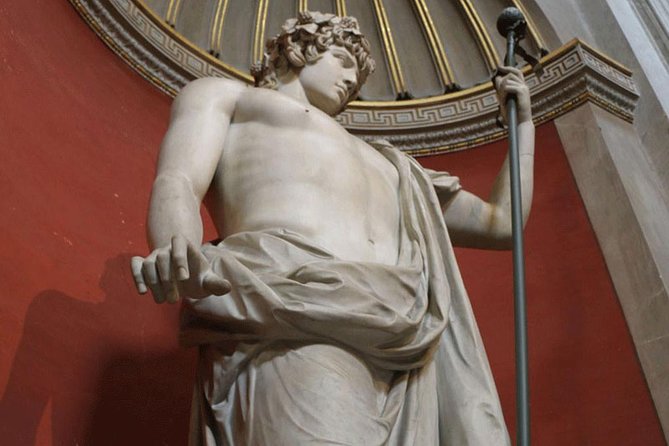
One detail I like in the description of this route: you’re shown rooms that preserved Roman statues found during excavations, plus painted rooms with standout design. That’s where the Vatican Museums can feel extra “real.” You’re not only looking at famous painting subjects—you’re also seeing how ancient fragments and decorated spaces sit together.
Time here is about 1 hour 10 minutes for the museum and upper galleries portion, with admission ticket included. It’s long enough to feel like a proper tour, but not so long that you lose the plot.
A quick orientation break on the Panoramic Terrace
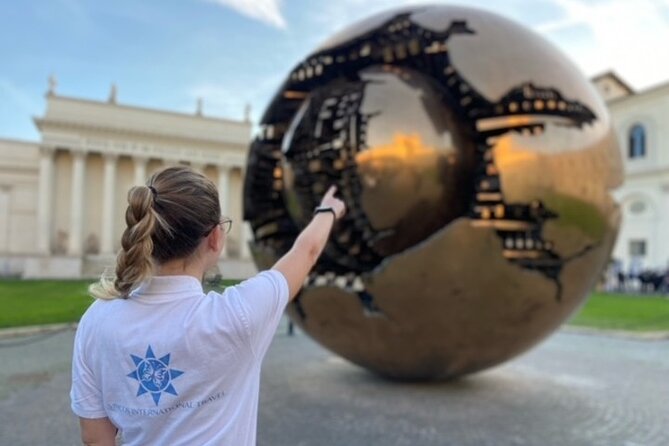
Between gallery time and the Sistine Chapel finale, there’s a short stop at a Panoramic Terrace. You get about 20 minutes and a view of the Basilica, the Gardens, and the Dome.
I love this kind of pause near the middle of a big museum day. It gives you a visual reset. After hours indoors, you finally get a sense of spatial relationships—where you are, what you’re aiming for next, and how the Basilica fits into the Vatican complex. It also tends to be a great moment to take a few photos (since the no-photo rule is mainly tied to the Sistine Chapel).
Sistine Chapel at the end: what to look for in Michelangelo’s frescoes
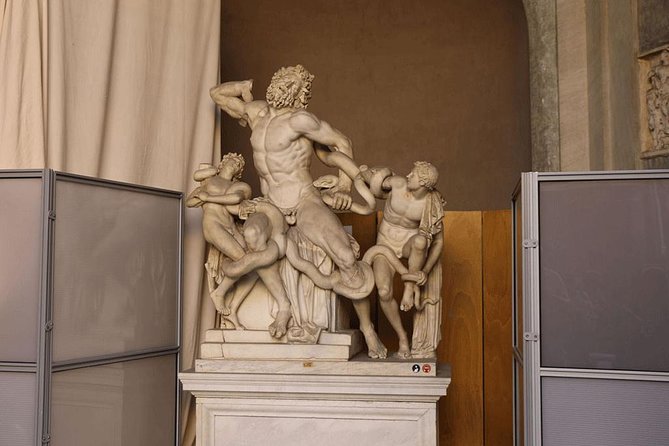
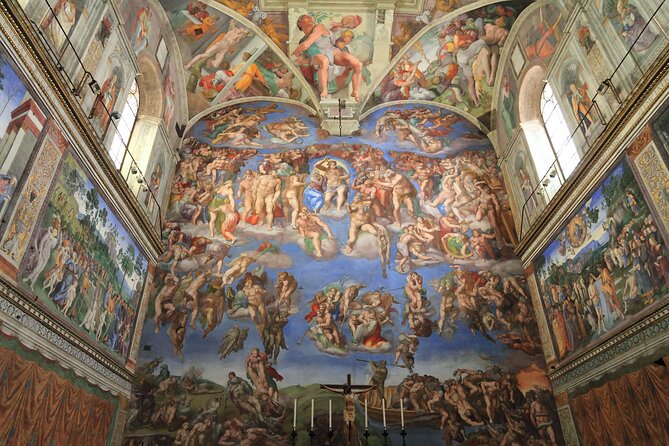
The Sistine Chapel visit is about 30 minutes. This is the emotional finish line for most people, and the structure of this tour helps: you arrive without rushing, and you’re not trying to fit the Chapel into a chaotic free-for-all.
Inside, you’re there for Michelangelo’s fresco cycle, painted in the 1500s for Popes Julius II and Paul III. The ceiling stories focus on the Creation of the World (Genesis) and Noah’s life. Then, behind the altar, you’ll see the Last Judgment wall fresco.
Two practical points that matter here:
- No photography is allowed in the Sistine Chapel. Plan to enjoy it with your eyes only.
- Dress code still matters, since this is a place of worship. Keep shoulders covered and knees covered so you don’t risk being turned away.
Because the Chapel is time-limited on tours like this, your guide’s job is to help you look efficiently. Instead of scanning the ceiling like a test sheet, you’ll likely focus on the main story elements—so you leave remembering what you saw, not just that it was impressive.
You can also read our reviews of more museum experiences in Rome




St. Peter’s Basilica option: adding the next major sight
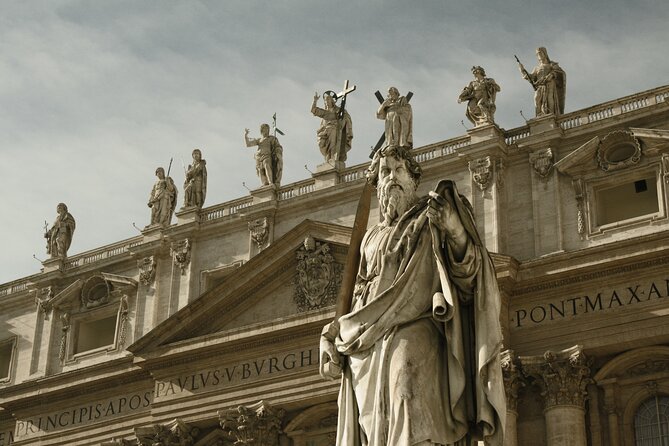
This experience includes access to St. Peter’s Basilica only if you choose that option. If you do add it, it’s a logical pairing. The Vatican Museums give you the art and context; the Basilica is the spiritual and architectural anchor.
Even though your tour ends at the Sistine Chapel area, the Basilica add-on can make the day feel more complete—like you didn’t just see art in rooms, you also walked into the place that shaped the church’s visual language.
One caveat: keep your day flexible in your own head. The Basilica visit may be additional time on top of the core museum experience, so you’ll want to be rested enough to enjoy it.
Price and value at $488.95 per person (with group discounts)
At $488.95 per person, this isn’t a budget choice. But it’s also not just a “fancy ticket.” You’re paying for three big things that affect your whole day:
- Guaranteed skip-the-line entry: this can save hours of frustration, which is worth real money in time and stress
- A professional guide for ~3 hours: the museum becomes understandable when someone helps you prioritize
- A private tour: your pacing stays yours, and you can ask questions while you’re actually looking at things
There are also group discounts, which can make this feel more reasonable if you’re traveling with friends or family and can keep the “private” vibe.
If you know you’ll struggle to navigate the Vatican’s scale—if you want a structured route and don’t want to fight crowds—this price can start looking fair. If you’re the type who enjoys wandering without much structure and has the patience for lines, you might decide differently. But for most first-timers, “time saved + better flow” is the core value.
Guides that make a difference: Matteo, Chiara, Letizia, Valentina, Grace
A private tour rises or falls on the guide. In this case, the strongest praise tends to come from guides who combine detail with clear storytelling.
For example, you might encounter Matteo, who brings archaeology-focused detail and story delivery that helps the collection feel alive. Or Chiara, who’s praised for guiding discussion and making the Chapel part feel more meaningful before you even walk in. Letizia is noted for using the wait time to educate you on what to look for in the Sistine Chapel, which helps you arrive ready. Valentina is praised for being approachable, answering questions, and using a tablet to support explanations. Grace is mentioned as an excellent guide while the museum opens, making the whole start feel smooth.
You can treat these names as reassurance that the tour often pairs guests with guides who know how to turn art history into something you can follow in real time.
What to wear and bring: dress code, photos, and the no-drama checklist
This tour comes with clear rules, and you’ll want to follow them exactly. To enter places of worship and selected museums, plan on covering shoulders and knees. That means no shorts and no sleeveless tops for both men and women. If you don’t comply, you risk refused entry.
Packing rules also matter. Avoid big backpacks, big umbrellas, and pointed objects. And yes, bring comfortable shoes and a refillable water bottle—there’s walking and you’ll want hydration.
Photography: personal photos are allowed during most of the tour, but not inside the Sistine Chapel.
Strollers: the description notes that in some Vatican areas a stroller must be carried by yourself. If you’re traveling with a stroller, think carefully about whether you want to handle that during a museum day.
Who this tour suits best (and who should think twice)
This is a strong fit if you:
- want a structured route through the Vatican Museums without getting lost
- prefer a private guide you can ask questions to
- care most about seeing the standout masterpieces and finishing at the Sistine Chapel
It may not be the best fit if you:
- have limited mobility, since there’s a moderate amount of walking
- need very stroller-friendly routes, given the potential “carry it yourself” rules in parts of the complex
- want a low-cost plan, because the price includes guide time and skip-the-line access
That said, the private nature can help with pacing for people who need extra time. If you have specific mobility needs, it’s smart to ask directly before booking so you can align expectations with what the route requires.
Should you book this skip-the-line private Vatican tour?
Book it if you want your Vatican day to feel organized, efficient, and focused on the art that will actually stick in your memory. The combination of prebooked skip-the-line entry, a dedicated guide, and a Sistine Chapel finish is exactly the kind of structure that turns a chaotic museum complex into a smooth experience.
Pass or consider alternatives if you’re very budget-focused, not comfortable with a dress code, or you know you’ll struggle with moderate walking. Also, plan your clothing carefully—this is one of the easiest ways to ruin a good day fast.
If you want a day that respects your time and keeps the “what am I looking at?” questions answered while you’re standing in front of the real masterpieces, this is a solid choice.
FAQ
How long is the Vatican Museums and Sistine Chapel skip-the-line private tour?
The tour is approximately 3 hours.
Where do I meet the guide?
You meet at Via Vespasiano, 28, 00192 Rome, Italy.
What is included in the price?
A professional guide for the tour, guaranteed skip-the-line entry, and the private tour experience are included.
Is St. Peter’s Basilica included?
Access to St. Peter’s Basilica is included only if you select that option.
Does this tour include entry tickets?
Yes. The Vatican Museums and Upper Galleries admission ticket is included, and Sistine Chapel admission is included.
What should I wear to enter the museums and places of worship?
You need to cover shoulders and knees. No shorts or sleeveless tops are allowed. You may risk refused entry if you do not follow the dress requirements.
Can I take photos during the tour?
Personal photography is allowed during the tour except in the Sistine Chapel.
Is there a lot of walking?
Yes, there is a moderate amount of walking, and it is not recommended for customers with limited mobility.
Is the booking refundable or changeable after purchase?
This experience is non-refundable and cannot be changed for any reason.