REVIEW · ROME
Tivoli: Hadrian’s Villa and Villa d’Este Guided Tour
Book on GetYourGuide →Operated by Welcome Italy by Spare Tour S.r.l. · Bookable on GetYourGuide
Tivoli turns Rome into a quieter day. This guided tour strings together two UNESCO sites, Hadrian’s Villa and Villa d’Este, plus a stroll through Tivoli that feels like stepping out of the empire’s rush. It’s a focused 5-hour reset: archaeology in the morning, Renaissance waterworks later, all handled with hotel pickup and a small-group guide.
I like two things right away. First, you get real time at both places without feeling rushed—about 1.5 hours at Hadrian’s Villa and about an hour at Villa d’Este. Second, the guide makes the sites make sense, including the stories behind Roman power and the way Renaissance architects treated water like theater. Guides named Fabio and Catherine come through in the feedback for exactly that kind of clear, place-based explanation.
One thing to consider: this is not a sit-and-watch tour. You’ll walk, and the tour is not suitable for wheelchair users or people with mobility impairments, so plan for uneven ground and stairs at the villas.
In This Review
- Key things to know before you go
- Why Tivoli feels like a break from Rome
- Hadrian’s Villa: pools, power, and planned viewpoints
- Villa d’Este: fountains as Renaissance performance
- Walking Tivoli: the calm between the icons
- Getting there in comfort: pickup, van, and pacing
- Tickets, guides, and what the price actually buys you
- Who should book this Tivoli tour (and who should skip it)
- Simple planning tips for your 5-hour day
- Should you book this tour?
- FAQ
- How long is the Tivoli guided tour?
- Where does pickup happen?
- Do I pay for entrance tickets separately?
- Will I wait in ticket lines?
- What languages are the guides available in?
- How big is the group?
- What should I bring?
- Is the tour wheelchair accessible?
Key things to know before you go
- Two UNESCO stops, timed for sightseeing: about 1.5 hours at Hadrian’s Villa and 1 hour at Villa d’Este.
- Skip the ticket line so you spend more time inside and less time waiting.
- Hotel pickup and drop-off in Rome keeps the day smooth.
- Small-group feel with limited participants and an air-conditioned minivan.
- Fountains are part of the experience: bring water or a bottle you can refill at the fountains.
Why Tivoli feels like a break from Rome
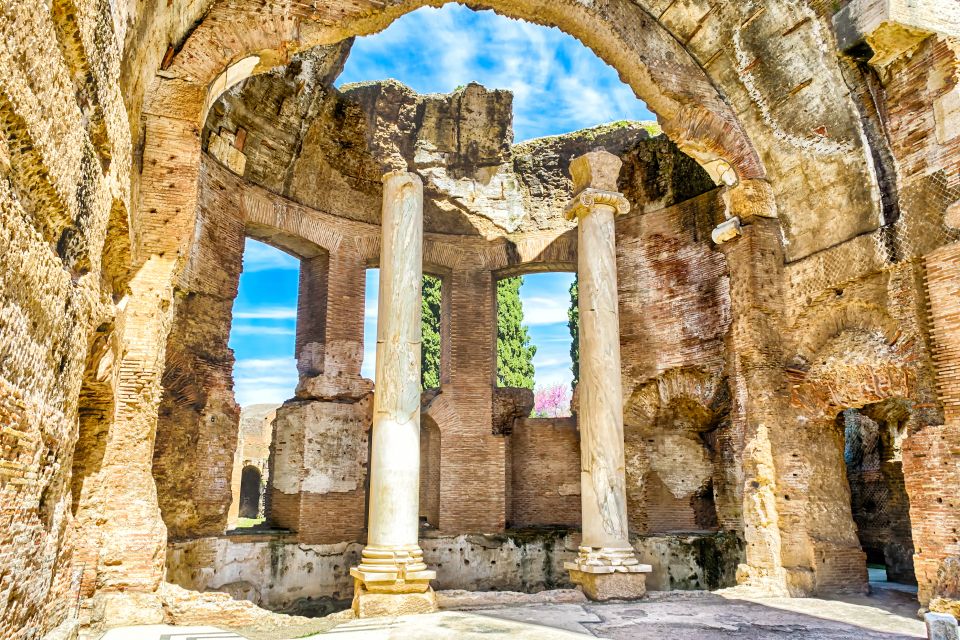
Tivoli sits to the east of Rome, tucked into the Tiburtini hills. That positioning matters because the air can feel cooler than in the city, and the area’s water helped it become a go-to summer retreat for wealthy Romans. Translation: you’re not just driving to something pretty. You’re going to a place shaped by water, leisure, and status.
Rome has crowds, noise, and constant movement. Tivoli gives you a different rhythm. At Hadrian’s Villa you’re looking at the footprint of an emperor who could commission an entire world—gardens, pools, and planned views—just for getting away. Then Villa d’Este shifts the mood into the Renaissance, where water becomes a designed spectacle. In one day, you go from Roman engineering to Renaissance showmanship.
There’s also a practical reason this works: the tour is built as a straight shot outside the city. Hotel pickup means you don’t have to solve transportation, ticket logistics, or timing while you’re figuring out where to stand and what to see.
You can also read our reviews of more guided tours in Rome



Hadrian’s Villa: pools, power, and planned viewpoints
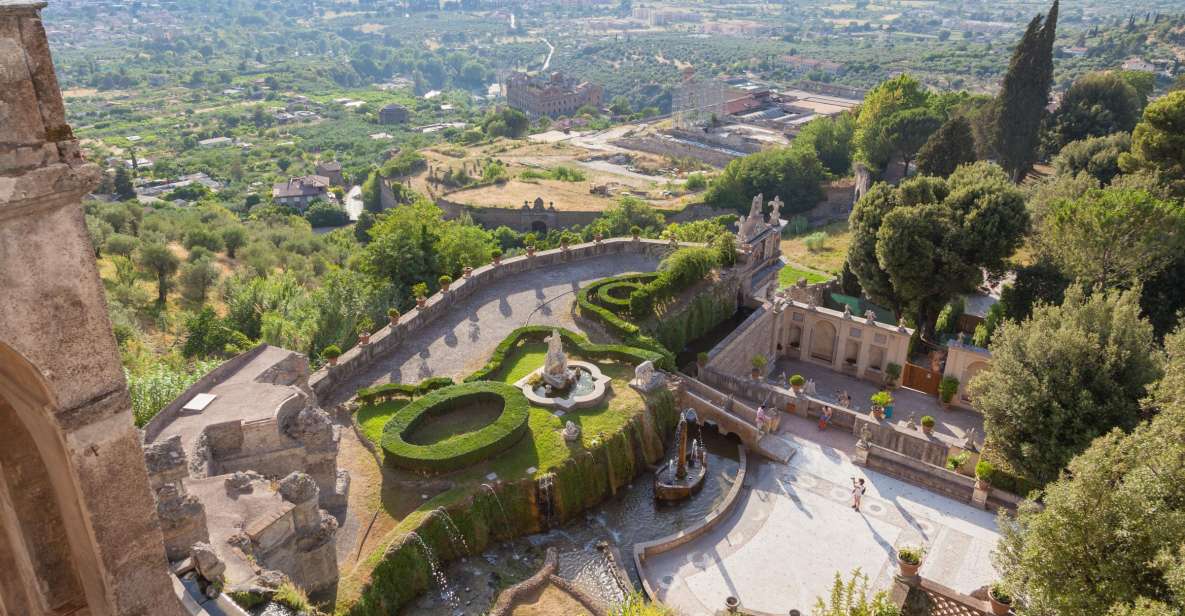
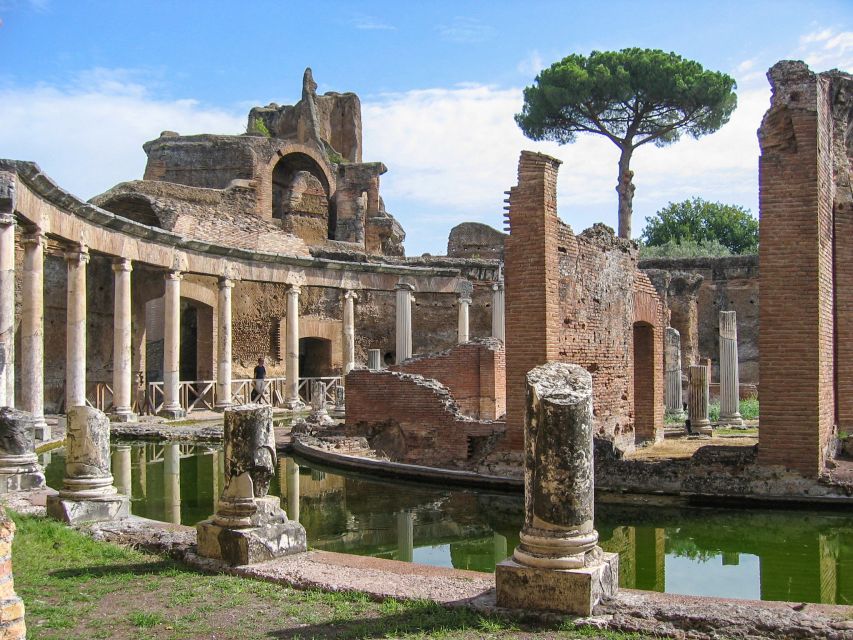
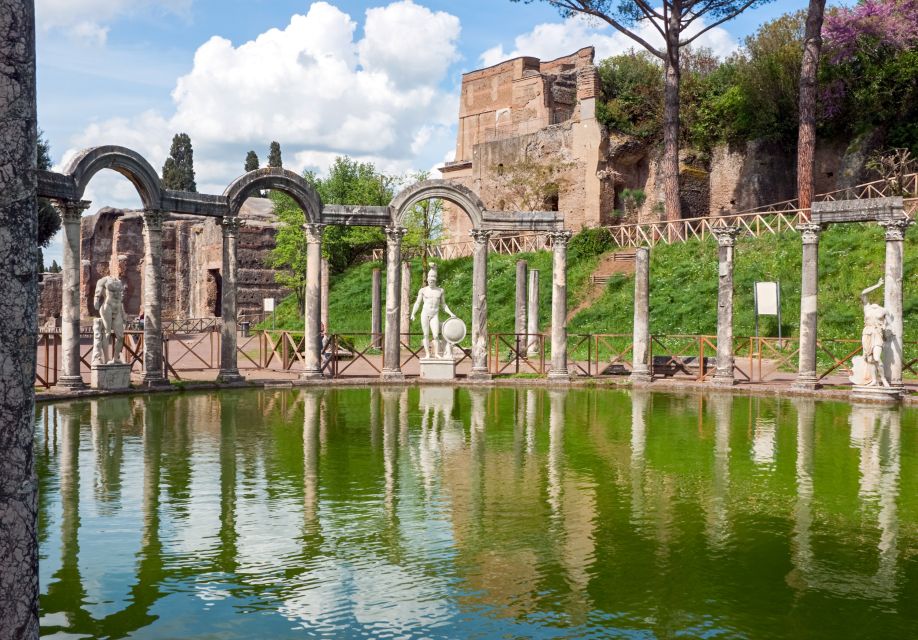
Hadrian’s Villa (also called Villa Adriana) is the Roman stop that people remember because it’s huge—and because the guide helps you read what you’re looking at. The site is described as the most beautiful Imperial villa, built by Emperor Hadrian in the early 2nd century AD, set within gardens and swimming pools. That combination is the whole point: it isn’t just ruins. It’s a designed retreat.
You start with a photo stop and then a guided visit and walk of about 1.5 hours. Expect a mix of standing, walking, and looking at the shapes of structures rather than a single perfectly restored building. That’s why having a guide matters here. A good explanation helps you understand why the layout feels intentional—why certain areas align with views, how water and leisure fit together, and why this was a summer base for someone at the top of Roman society.
The tour also leans into story. One of the most compelling angles is how the guide connects the site to Roman family politics and the scandals swirling around wealthy circles. That tone can be surprisingly fun for a morning at archaeological ground. You’ll be hearing about how these places were built, who used them, and what kind of power games played out around the empire.
In the feedback, Fabio gets highlighted for strong ability to explain Roman history, archaeology, and Renaissance art. Even if you don’t consider yourself a history person, that kind of interpretive guidance tends to turn a “big set of ruins” into a place you can picture in use.
Villa d’Este: fountains as Renaissance performance
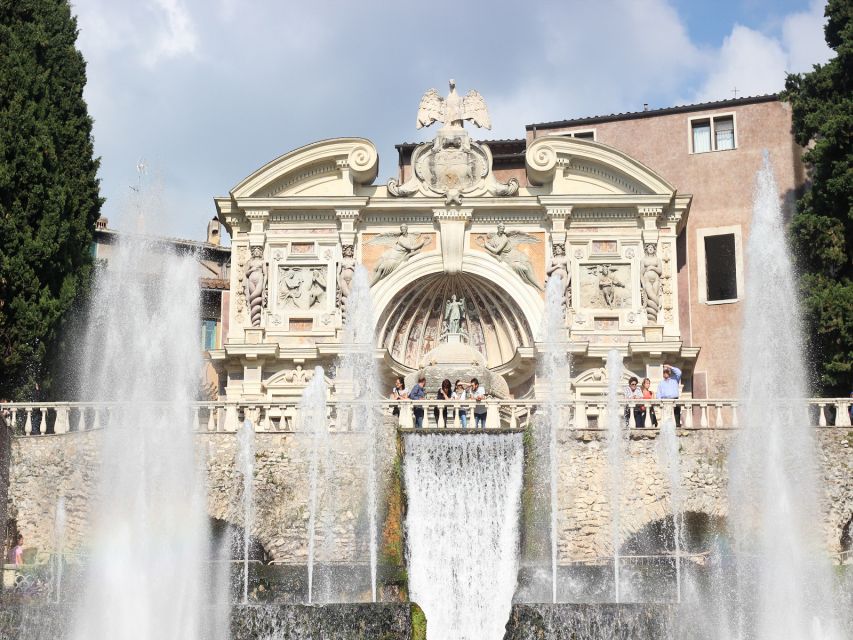
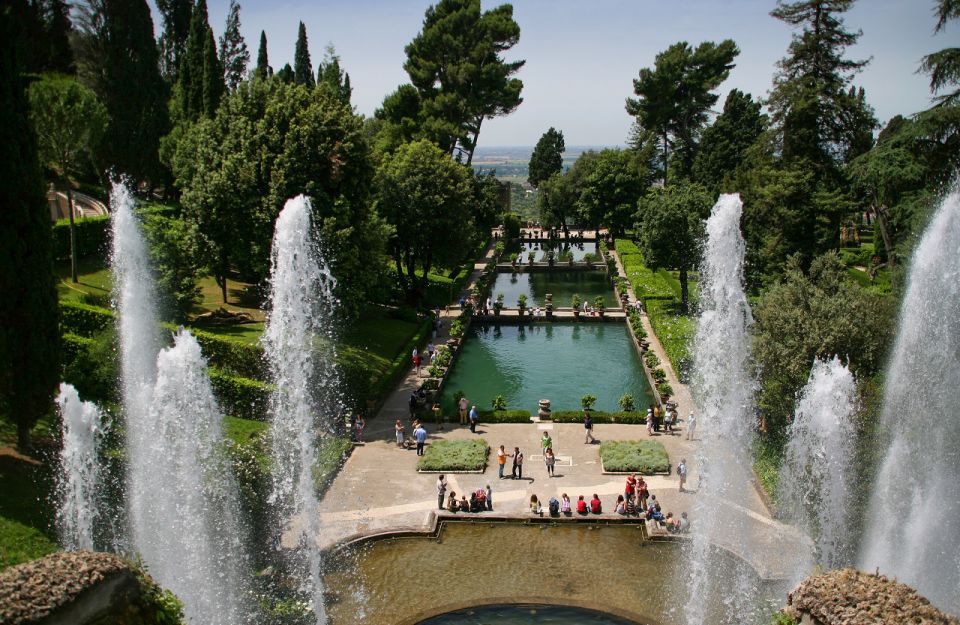
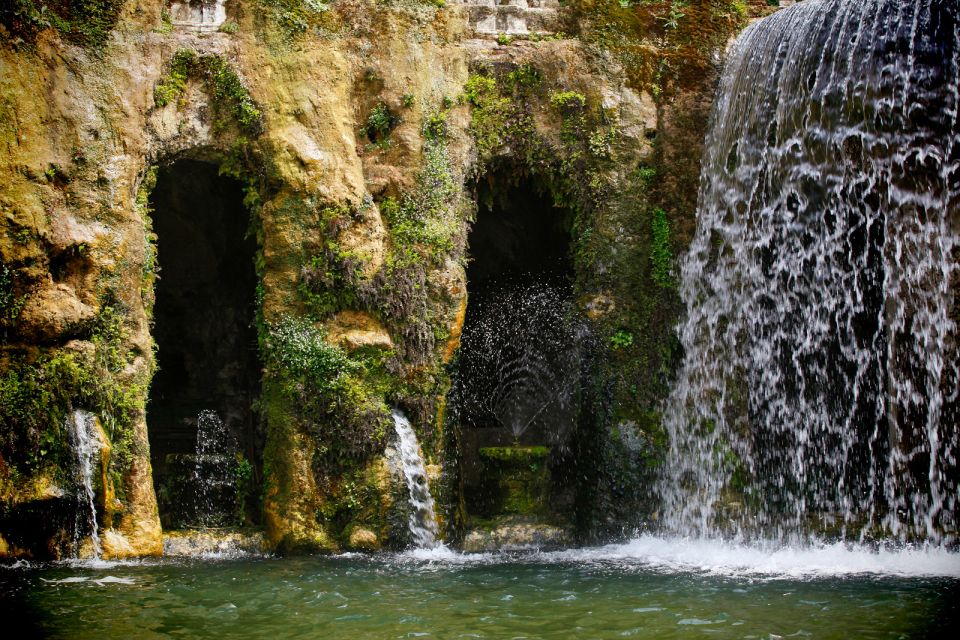
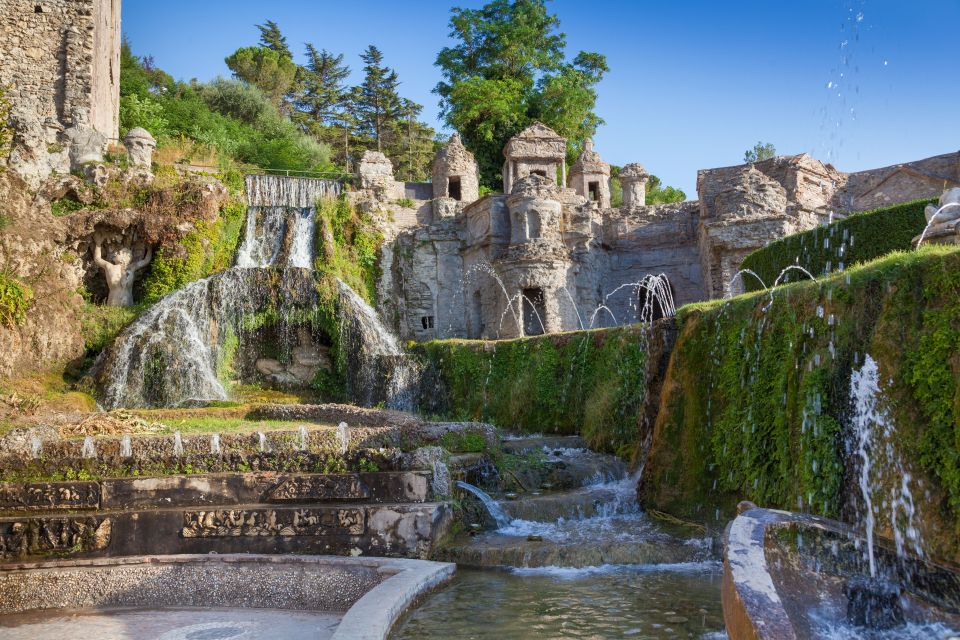
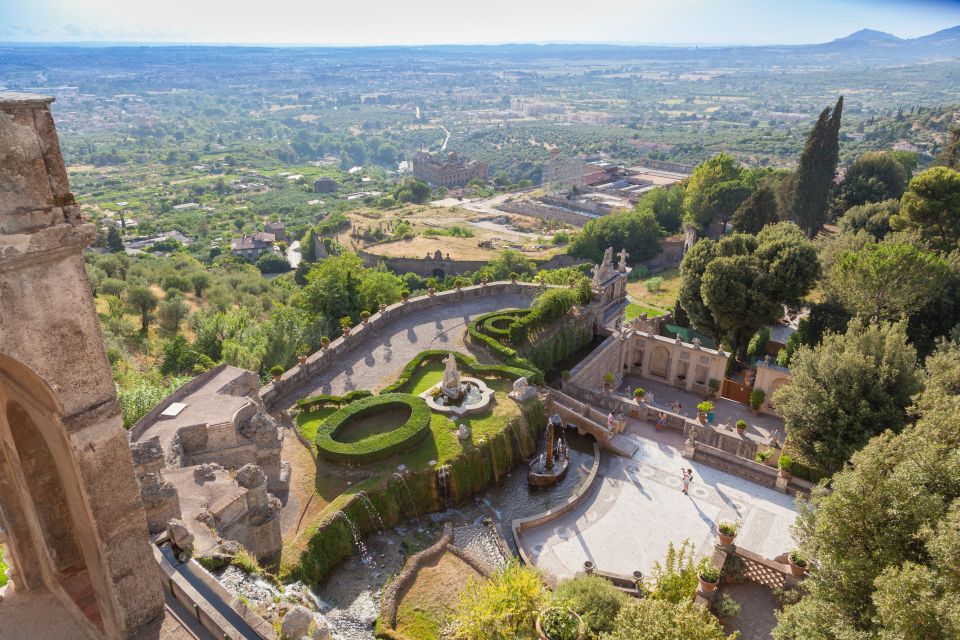
If Hadrian’s Villa is about Roman retreat, Villa d’Este is about controlled drama. This Renaissance villa is known for its fountains, water features, waterfalls, and Italian garden setting. You get about an hour here—enough time to see the main water spectacle and still wander the grounds without feeling you’re sprinting.
Because it’s water-driven, lighting and sound matter. Even if you aren’t a fountain expert, you’ll likely find yourself pausing more than you planned. The design funnels your attention from one feature to the next. Paths guide you like a script: look, descend or shift position, then catch the next view. That’s the Renaissance trick—turning engineering and water pressure into a walking experience.
Villa d’Este is also on UNESCO’s list, which reinforces that this isn’t just a pretty garden. It’s an art-and-architecture complex where the garden is the main attraction, and the water features are the payoff. Your guide’s job is to help you spot what was built for effect and why it mattered in its time.
One small practical tip comes up in the guidance people share: take water with you, and if you have a bottle you may be able to refill at the fountains. It’s a simple move that makes the walk more comfortable, especially on a warm day.
Walking Tivoli: the calm between the icons
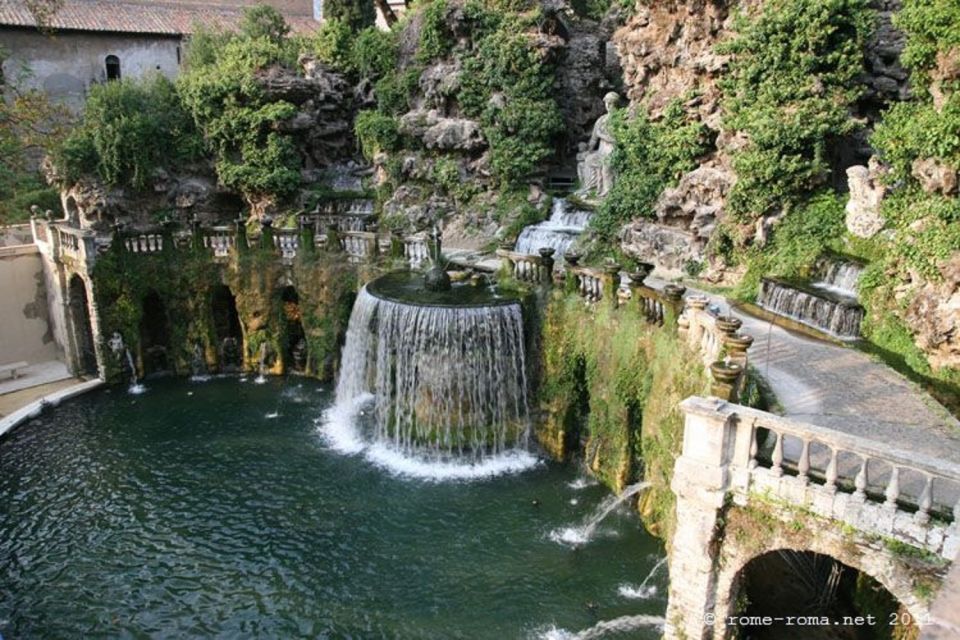
The tour includes time to get oriented in Tivoli itself, and that matters more than it sounds. Rome is loud and fast; Tivoli is calmer, and the cooler conditions in the hills can make walking easier than you expect.
You’ll be moving through a historic area tied to centuries of residence and status. The guide’s storytelling helps you connect the dots between what you see at the villas and what life likely felt like in the town surrounding them. Instead of treating Hadrian and the Renaissance as separate worlds, you get one thread: elite Romans and later patrons using Tivoli’s setting—especially its water—to create places designed for pleasure and control.
That narrative approach also helps you enjoy the small details. When you know why something was built, you stop thinking of it as “just a structure.” You start imagining it as part of a routine: where people walked, where they looked out, where water carried sound and sensation through the garden spaces.
Getting there in comfort: pickup, van, and pacing
The tour is set up for convenience. It starts with pickup from your hotel in Rome, with meet-up outside the hotel lobby or outside your apartment. You’re asked to be ready about 15 minutes before departure, so set aside buffer time.
Transportation is by air-conditioned minivan, and the group size is kept small—limited to 12 participants overall, with the van capped at a maximum of 6 people. That combination is one of the better value points here: you get comfort without the feeling of being packed in like luggage.
Pacing is part of the design. You’re not trying to cram everything into the tiniest windows. Hadrian’s Villa gets about 1.5 hours, Villa d’Este about 1 hour, and the rest of the schedule goes into travel and the human part: listening, asking questions, and taking photos without rushing every step.
Also, the tour includes skip-the-ticket-line entry. That means you’re not burning time managing queues across two major sites. On a day trip, those minutes add up fast.
One more practical note: luggage or large bags are not allowed. If you’re traveling light anyway, fine. If you’ve got a big bag you want to haul around, you’ll need to rethink packing.



Tickets, guides, and what the price actually buys you
The price listed is $303.60 per person for a 5-hour, small-group day that includes hotel pickup and drop-off, entrance fees for both Villa d’Este and Villa Adriana, a live guide, and transportation in an air-conditioned minivan. On paper, that can look like a lot—until you break down what you’d otherwise have to coordinate yourself.
Here’s what you’re paying for in real terms:
- Two guided UNESCO visits where interpretation matters, especially at Hadrian’s Villa.
- Entrances included to both sites, plus skip-the-ticket-line entry.
- Transport from your hotel so you’re not arranging multiple legs of getting there and back.
- Small-group time that keeps it conversational, not just a lecture from the front.
When people mention satisfaction with this tour, it’s usually the same theme: the guide adds depth and makes the sites feel understandable. Fabio is praised for knowledge and explanation of Roman and Renaissance elements. Donald is mentioned for steering the day with both information and humor, plus directing people toward a great pizza place for lunch. Catherine gets credit for taking time so you could imagine what the places looked and felt like in their prime.
That’s the value. You’re not paying just to enter buildings. You’re paying to get a guided reading of two massive, different worlds.
Who should book this Tivoli tour (and who should skip it)
This is a great fit if:
- You want a day outside Rome that still feels structured.
- You care about Roman and Renaissance architecture, fountains, and how water shaped elite living.
- You like asking questions and getting answers on the spot. The tour’s small-group or private-style vibe can make that easier.
You might want to choose something else if:
- You need step-free access or have mobility limitations. The tour isn’t suitable for wheelchair users or people with mobility impairments.
- You dislike walking on historical ground. Even with guidance, you’ll be moving through villa sites that aren’t designed for slow rollouts.
If you’re the type who likes to understand places by context—why something was built, who used it, what it meant—this tour can feel like the best kind of guided sightseeing: time well spent, explanations that connect, and no chaotic planning.
Simple planning tips for your 5-hour day
You’ll be out about 5 hours total, including travel. Pack with that in mind:
- Comfortable shoes are a must. The walking adds up over two big sites.
- Sunglasses help, since you’ll be outdoors a lot.
- Camera ready for photo stops and for the fountain views.
- Plan on no large bags—so keep luggage minimal.
And bring your own water plan. The fountains are part of the story, but your body still does the walking. If you like, bring a bottle you can refill at the fountains when possible.
Should you book this tour?
I’d book it if you want two top Tivoli sights handled in one clean day, with guided interpretation that makes the scale and design click. The best reason is the combination: Hadrian’s Villa plus Villa d’Este, both UNESCO, with entrance fees included and skip-the-line access. You also get a guide who can connect Roman archaeology and Renaissance garden design without making it feel like homework.
If you’re sensitive to walking or need wheelchair-friendly access, this is not the one. For everyone else, it’s an excellent value way to leave Rome behind for a few hours and return with images you can actually explain.
FAQ
How long is the Tivoli guided tour?
The tour lasts about 5 hours, with the exact start times shown when you check availability.
Where does pickup happen?
Pickup is included from your hotel lobby (or outside your apartment). You should be ready about 15 minutes before departure.
Do I pay for entrance tickets separately?
Entrance fees to Villa d’Este and Villa Adriana are included in the price.
Will I wait in ticket lines?
You get skip-the-ticket-line entry, so you can spend more time inside the sites.
What languages are the guides available in?
The live tour guide is available in English, Spanish, and French.
How big is the group?
It’s a small-group experience, limited to 12 participants, and you travel in an air-conditioned minivan with a maximum of 6 people.
What should I bring?
Bring comfortable shoes, sunglasses, and a camera.
Is the tour wheelchair accessible?
No. The tour is not suitable for wheelchair users and is not designed for people with mobility impairments.
If you tell me your travel dates and whether you want a smaller-group or private-style day, I can help you pick the most sensible time window for Tivoli.