REVIEW · ROME
The Spritzy Tour – History is better with a Spritz!
Book on Viator →Operated by Vineyarts · Bookable on Viator
Two Spritz and a Rome history walk—yes, really. I love the way this tour explains aperitivo culture in plain terms, and I love the small-group size that keeps the vibe friendly and questions welcome. The one catch is the timing and theme: it’s an evening walk and two alcoholic Spritz are part of the experience.
You start at St. Angelo Bridge near Ponte Sant’Angelo at 6:00 pm and finish at P.za Campo de’ Fiori, which makes it easy to keep the night going after the tour. The big win for me is the guide-led suggestions for where to drink and snack next, so you’re not wandering around asking, now what.
In This Review
- Key things that make the Spritzy Tour worth your 2.5 hours
- Rome aperitivo, with history stops built in
- Meeting at Ponte Sant’Angelo and starting right at 6:00 pm
- The small-group setup (max 15) and why it changes everything
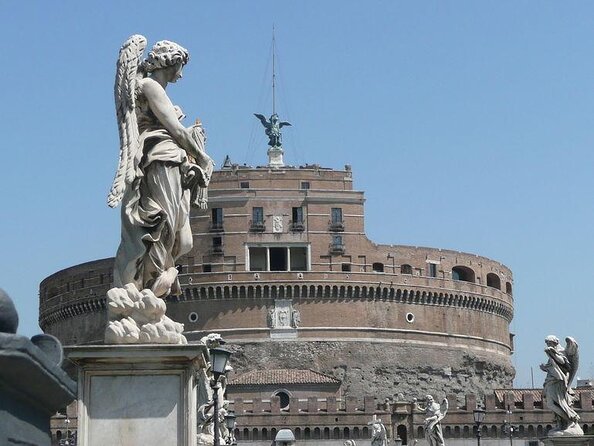
- Stop 1: The Popes fortress and how power shapes the view
- Stop 2: The Holy City and why pilgrims and faith still echo
- Stop 3: The pilgrims final road and the payoff of the storytelling
- Stop 4: A church erected for the crying painting
- Stop 5: Bernini’s Fountain of the Four Rivers in the famous square
- Stop 6: Rome’s hub for nightlife and restaurants
- What you learn about aperitivo culture (and how to use it)
- Included: 2 Spritz, and what that means for your budget
- The guide matters most, and Ana is a standout name
- Who this tour is for (and who should skip it)
- Planning tips so you get the most from the night
- Should you book the Spritzy Tour?
- FAQ
- What is the price of the Spritzy Tour in Rome?
- How long is the tour?
- What language is the tour offered in?
- What does the tour include?
- Are tips included in the price?
- Where does the tour start and when?
- Where does the tour end?
- How big is the group?
- What is the cancellation policy?
Key things that make the Spritzy Tour worth your 2.5 hours
- 2 included Spritz (alcoholic) helps you pace the evening without guessing costs
- Max 15 people means you actually get time for questions and conversation
- English-speaking guide keeps the stories clear, not half-mystery
- Aperitivo culture, not just sightseeing so you learn what you’re drinking and why
- A route you’d miss alone built around sacred sights and then dinner-and-drinks Rome
Rome aperitivo, with history stops built in
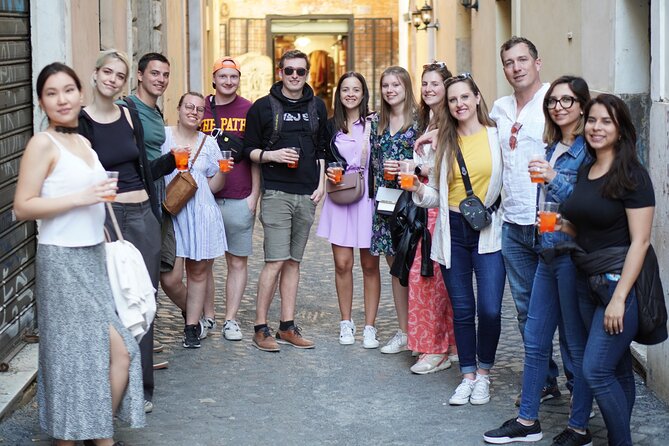
Rome evenings have a rhythm. First you wander. Then you sip something crisp. Then you eat. This tour is designed for that flow, with aperitivo culture at the center and a short history thread tying the stops together.
At a price of $57.99 for about 2 hours 30 minutes, you’re paying for guided storytelling plus two Spritz. That matters because it turns an often-chaotic “where do we go?” evening into a simple plan. You’re not just collecting photos. You’re learning the logic behind what Romans do when the sun starts to go down.
You can also read our reviews of more historical tours in Rome



Meeting at Ponte Sant’Angelo and starting right at 6:00 pm
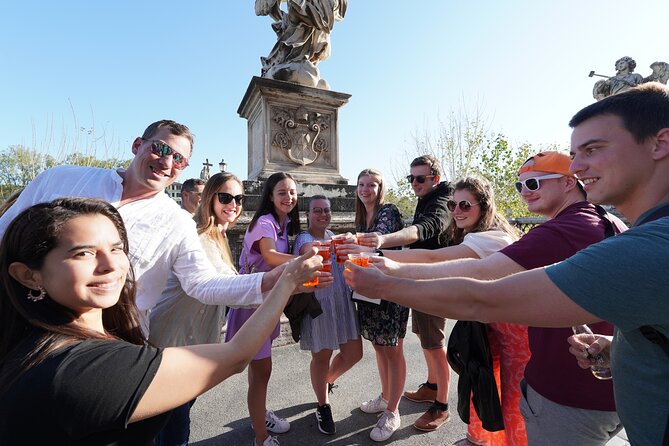
Your meet point is St. Angelo Bridge (Ponte Sant’Angelo) at 6:00 pm. Starting in the early evening is smart in Rome. It’s not too late for your energy, and the streets are usually lively enough that the nightlife stop later feels like a natural payoff.
The route ends at P.za Campo de’ Fiori, which is convenient for continuing on your own. It’s the kind of finish that lets you pivot instantly: gelato, dinner, a second round of drinks, or even just wandering without feeling trapped back where you started.
The small-group setup (max 15) and why it changes everything
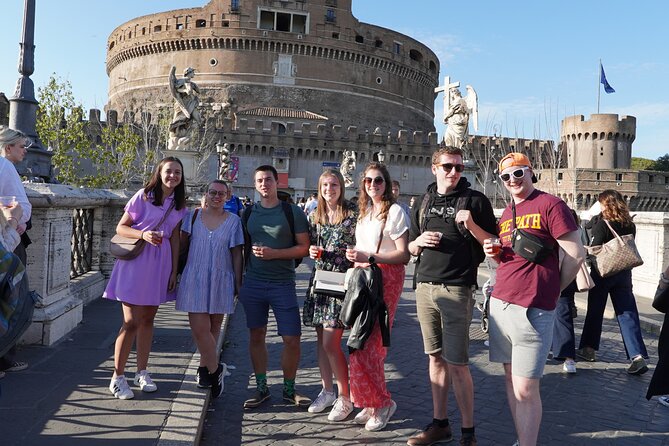
A tour capped at 15 travelers sounds like marketing until you feel it. In practice, the group stays tight enough that your guide can keep control of timing, but also flexible enough to respond to your questions.
In the reviews, the guide experience gets high praise, especially for a guide named Ana. That tells me the format is built for interaction, not just lectures. If you want local advice that you can use later, a smaller group is the difference between hearing tips and actually understanding how to apply them.
Stop 1: The Popes fortress and how power shapes the view

The first named stop is the Popes fortress. Even if you’re not a Roman-history superfan, this kind of landmark matters because it shows Rome’s long-running story: authority, religion, and the city’s relationship to the river.
What I like about starting here is the orientation. It gives you a framework for reading the rest of the evening. When the guide links the fortress to how Rome has been seen and used over time, it makes the later stops feel less random and more like a route with meaning.
Possible drawback: this is still a walking tour. If you’re hoping for lots of sitting time or a full museum-style experience, you’ll want to keep your expectations realistic.
Stop 2: The Holy City and why pilgrims and faith still echo
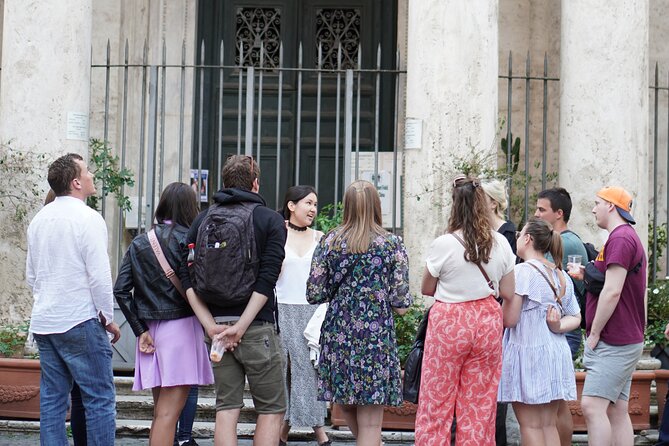
Next up is the Holy City stop. “Holy City” can sound vague, but on a walking route it becomes useful. Your guide can point out what makes Rome feel like a magnet for worship and pilgrimage, and how those traditions shaped the city’s routes and sights.
This is where the tour’s “history plus aperitivo” blend works best. You’re not studying dates. You’re understanding why certain areas matter—and then later you’ll see how Rome turns all that meaning into real-life nightlife and dining energy.






Stop 3: The pilgrims final road and the payoff of the storytelling
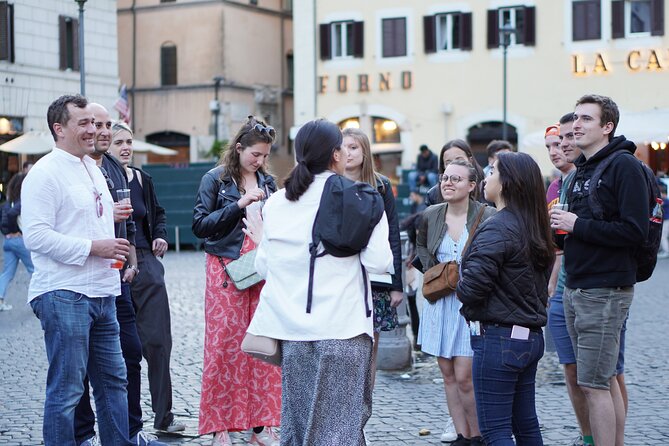
Then you move to the pilgrims final road. The idea here is pretty clear: pilgrims didn’t just arrive. They ended journeys at specific points, and the city evolved around that movement of people and prayers.
This stop is valuable because it connects dots you’d probably miss on your own. Rome’s streets can look like they’re just streets. But when the route is framed around a pilgrimage path, you start noticing transitions—how areas shift from sacred to social as the evening goes on.
Stop 4: A church erected for the crying painting

The itinerary includes a church erected for the crying painting. That’s an attention-grabber for a reason. It’s a reminder that art and belief have always been tied together in Rome, and stories like this are part of why certain churches attract lines, not just worship.
The practical value for you: you’ll learn how to talk about what you see without needing a textbook. You’ll also get a better sense of how faith-driven storytelling travels through time in the city—so your photos come with context instead of just angles.
Stop 5: Bernini’s Fountain of the Four Rivers in the famous square
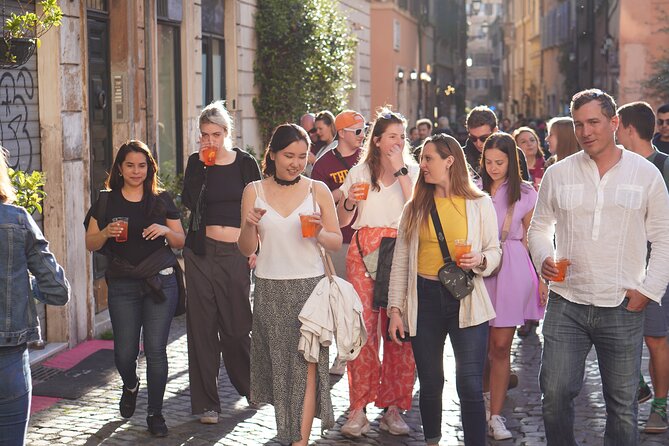
Next is the most famous square in the world, featuring Bernini’s masterpiece, the Fountain of the Four Rivers. This is the “big wow” moment in the route, because Bernini’s style gives the whole scene a sense of drama even before you think about facts.
Here’s what I appreciate: the stop isn’t treated like a quick photo dash. It’s also a hinge point in the tour. You’ve been hearing about pilgrimage, sacred space, and devotion. Now you’re about to step into Rome’s dinner-and-drink world.
Stop 6: Rome’s hub for nightlife and restaurants
The last stop is Rome’s hub for nightlife and restaurants. This is the part that makes the “Spritzy” promise feel real. After all the walking and story-setting, you’re guided toward where the evening energy lives.
This is also where the guide recommendations really matter. In the reviews, the guides are praised for sharing local suggestions. That means you can ask direct questions like where to go next for a drink, what to order, and how to keep the vibe going without wasting time wandering.
What you learn about aperitivo culture (and how to use it)
The tour highlights focus on aperitivo culture and popular drinks in Rome. That’s not just a fun theme. It changes how you order once you’re on your own.
Think of aperitivo as a social rhythm. It’s the moment you trade “I’m walking around” energy for “let’s sit, sip, and snack” energy. With the Spritz part, you also get a handle on what a Spritz is in the Roman aperitivo context, not just a generic bar drink.
And since 2 Spritz are included, you can treat the drinks like part of the lesson. You’re not just tasting. You’re calibrating your preferences for the rest of your trip.
Included: 2 Spritz, and what that means for your budget
Your ticket includes 2 alcoholic beverages (2 Spritz). That’s a real value point because it removes guesswork from your evening plan. Even if you’d buy drinks anyway, the tour gives you structure: you know when the drinks fit, and you know they’re part of the pacing.
Not included: tips. That’s normal, but it’s worth keeping in mind so you don’t feel surprised at the end.
The guide matters most, and Ana is a standout name
The reviews put a spotlight on the guide experience. One repeated theme is that the guide Ana is both fun and packed with useful context—mixing facts about the sites with drinks you’ll actually order.
That combo is what you want from this type of tour. If the guide only talks history, you might lose the aperitivo angle. If the guide only talks bars, you miss the value of the route. From the feedback, Ana hits the balance.
Who this tour is for (and who should skip it)
This works best if you want:
- A first-timer style Rome evening that’s more structured than just bar-hopping
- A small-group walk with a guide who answers questions
- A fun “learn what you’re drinking” experience with 2 included Spritz
- A route through areas that would be harder to connect on your own
Skip it if you:
- Don’t drink alcohol and don’t want alcohol tied into the tour theme
- Want a slower, seated experience with long museum time
- Are looking for a deep, all-day history program instead of an evening-style walk
Planning tips so you get the most from the night
This isn’t a tiny sample snack. It’s 2.5 hours of walking and story stops, ending near a lively square. Wear shoes you trust for uneven pavement and cobblestones.
Also, come ready to ask questions. If the guide offers local recommendations, ask for two categories: where to get a good sit-down meal, and where to find a second drink without repeating the exact same spot you already had.
If your group includes teens or non-drinkers, you’ll want to think ahead because the tour includes two Spritz in the experience structure.
Should you book the Spritzy Tour?
I’d book it if you want a Rome night that’s organized, social, and fun, with history that actually helps you see what you’re drinking and where you’re walking. The small-group size and the guide energy—especially with Ana mentioned in feedback—seem like the core value.
I’d skip it if alcohol isn’t your thing or if you prefer daytime sightseeing. This is an evening tour built around aperitivo culture, not a daytime monuments checklist.
If you’re on the fence, a simple test helps: do you want to spend your night guided and learning, or do you want total freedom with zero structure? This tour is for the first choice.
FAQ
What is the price of the Spritzy Tour in Rome?
The price is $57.99 per person.
How long is the tour?
The duration is about 2 hours 30 minutes.
What language is the tour offered in?
The tour is offered in English.
What does the tour include?
It includes 2 alcoholic beverages (2 Spritz).
Are tips included in the price?
No. Tips are not included.
Where does the tour start and when?
It starts at St. Angelo Bridge (Ponte Sant’Angelo, 00186 Roma RM, Italy) at 6:00 pm.
Where does the tour end?
It ends at P.za Campo de’ Fiori (00186 Roma RM, Italy).
How big is the group?
The tour has a maximum of 15 travelers.
What is the cancellation policy?
You can cancel for a full refund if you cancel up to 24 hours in advance of the experience start time. If you cancel less than 24 hours before, the amount you paid is not refunded.