REVIEW · ROME
Rome: Saints, Heretics & the Inquisition Small Group Walking Tour
Book on Viator →Operated by Treasures of Rome · Bookable on Viator
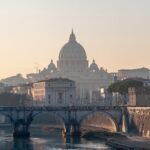
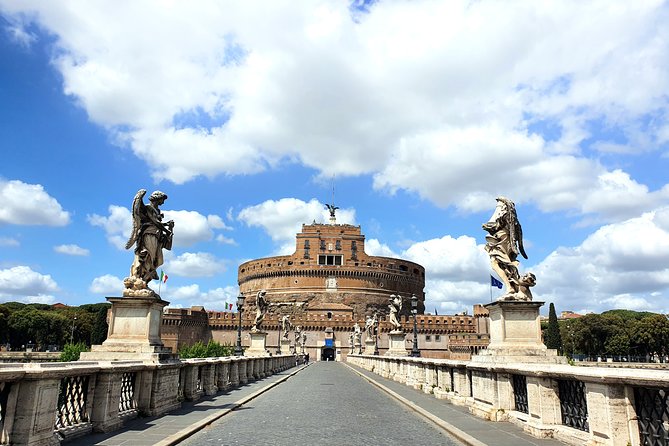
Church doors in Rome can feel random. This one’s a guided route through saints, heretics, and the Inquisition themes, with art and architecture used like evidence, not decoration. The walk starts at Ponte Sant’Angelo and moves fast enough to keep your morning interesting, but slow enough to notice details in the chapels and paintings.
I love two things most: the way the guide connects what you’re seeing to the point behind it—religious symbolism with real political and family drama attached. I also love that you get off the standard postcard path, with standout stops like Borromini’s work, Caravaggio paintings, and the Baroque design choices that make these churches feel like arguments you can walk through.
One possible drawback: you’ll spend a lot of time in churches that require dress—shoulders, back, and knees covered—and the tour needs good weather, so plan for sun or clouds, not downpours.
In This Review
- Key highlights to look for
- What this Saints, Heretics & the Inquisition tour is really about
- Meeting at Ponte Sant’Angelo and why the small group matters
- Stop-by-stop: from San Giovanni dei Fiorentini to the Pantheon
- Basilica di San Giovanni Battista dei Fiorentini
- Santa Maria in Vallicella
- Campo de’ Fiori
- Basilica di Sant’Andrea della Valle
- Piazza Navona, the Domitian stadium, and Borromini’s presence
- Chiesa di Sant’Agnese in Agone
- Chiesa di Santa Maria dell’Anima
- Church of St. Louis of the French
- Pantheon (you view it, you do not enter)
- Dress code and timing: simple rules that prevent wasted time
- Value check: why $60.46 can feel like a bargain
- Who this tour suits best (and who might want something else)
- Practical tips to get the most from the morning
- Should you book this Saints, Heretics & the Inquisition tour?
- FAQ
- How long is the Rome Saints, Heretics & the Inquisition Small Group Walking Tour?
- Where does the tour start and where does it end?
- Is the tour offered in English?
- Does the tour include entering the Pantheon?
- Is there an admission fee for the stops?
- How many people are in the group?
- What should I wear to enter the churches?
Key highlights to look for
- Symbol-first church visits: you’ll learn what the images are trying to say, and why the layout matters
- A tiny group (max 5 people): it’s easier to ask questions and keep the pace personal
- Off-average sights: Borromini, relics, and Caravaggio are more niche than the usual Rome loop
- Real “why this place” context: executions at Campo de’ Fiori and church patronage linked to power
- Free-entry stops plus big art moments: many locations are included without extra ticket cost
What this Saints, Heretics & the Inquisition tour is really about
This is not a generic highlights walk. The title points you toward a Rome that argued in marble, painted its beliefs on walls, and kept score through art, patronage, and relics. You’ll move church to church, but the focus stays on meaning: who funded what, what saints were used for, and how religious imagery could support power—or threaten it.
If you like history you can actually see, you’re in the right place. Rome’s best art isn’t just pretty. It’s a message, and this tour helps you read the message. Even outside the churches—like the square where public punishment once happened—you’ll get the context that makes the streets feel purposeful.
The experience is also very practical in how it teaches. Instead of drowning you in dates, the guide points out what to look for right now, then explains why it was put there. It’s the difference between looking at a painting and understanding what the painter was trying to win.
You can also read our reviews of more walking tours in Rome
Meeting at Ponte Sant’Angelo and why the small group matters
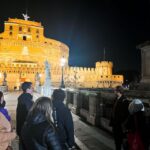
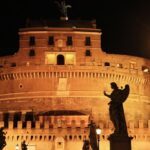
You start at Ponte Sant’Angelo, and the tour ends back at the same meeting point. That’s handy because you’re not guessing your way through the middle of the city afterward. And with a start time of 9:00 am for a 3 to 4 hour walk, you get to cover a lot while the streets are still manageable.
The small group limit of 5 travelers changes the whole tone. In a tiny group, you’re less likely to feel like you’re waiting while everyone else catches up. It also means the guide can adapt—one of the guides mentioned by name, Roberto, is described as adjusting the tour to match the group’s interests and language needs. That flexibility matters when you’re in churches, because attention shifts quickly: one person wants iconography, another wants architecture, and suddenly the visit becomes your visit.
English is offered, and you get a mobile ticket. You won’t be scrambling for paper, and it keeps the morning smoother.
Stop-by-stop: from San Giovanni dei Fiorentini to the Pantheon
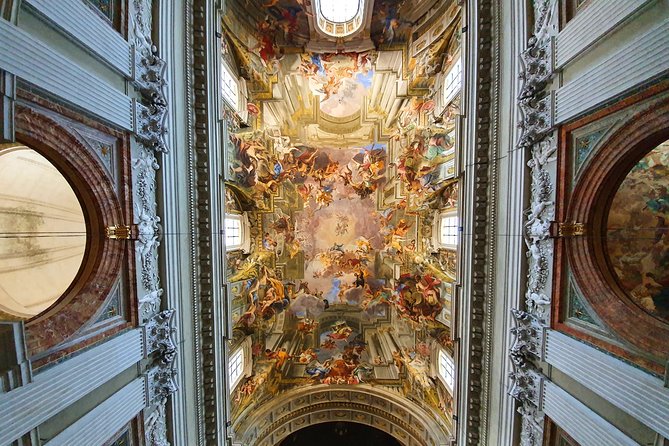
The itinerary is built around short, focused stops—most around 20 minutes—so you’re not stuck in any one place too long. You’ll also get a mix of church interiors and two major city squares, which helps you keep perspective.
Here’s how each stop works and what you should pay attention to.
Basilica di San Giovanni Battista dei Fiorentini
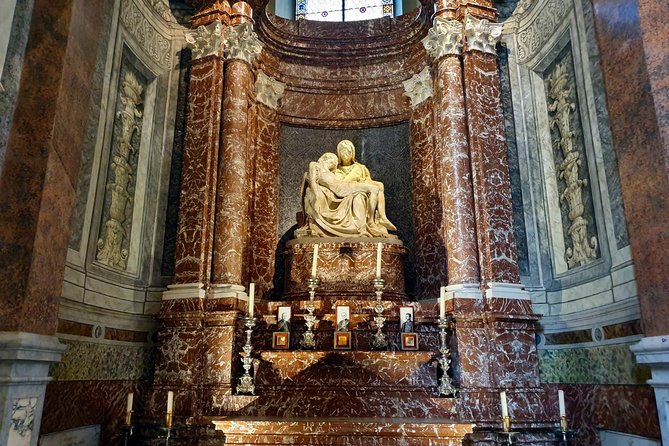
This is where the tour leans into architecture with meaning. The basilica is noted as the resting place of Master Borromini, who designed the altar. You’re not just admiring an old church—you’re seeing Florence’s artistic influence show up in Rome. The idea is simple: this church was built to display a specific style, and the guide helps you spot how that goal shapes the experience inside.
What I like about this kind of opener is that it sets a lens. By the time you reach your next church, you’ll already know what questions to ask: What does it want to impress? Who was it meant for? What was it trying to communicate?
Practical note: since it’s a church stop, dress code rules apply—covering shoulders, back, and knees.
Santa Maria in Vallicella
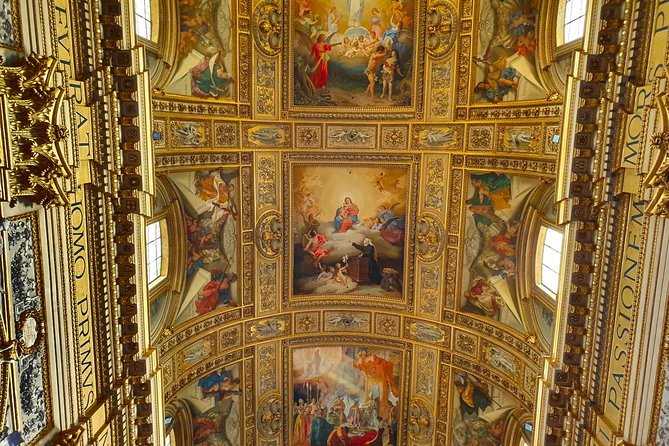
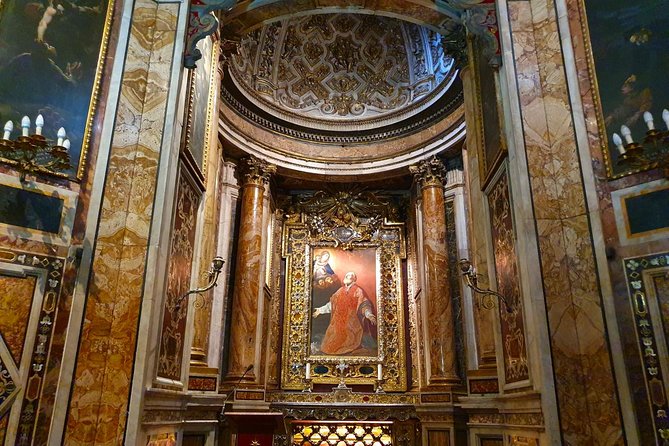
Next you’ll find a church tied to relics and baroque design. Santa Maria in Vallicella contains the relics of Saint Neri, and it’s also praised for one of the best baroque designs on the route.
This is a great stop if you’re curious about how religious practice shows up in space. Relics aren’t just an object. In Catholic tradition, they’re part of a bigger system of devotion, identity, and storytelling. Pair that with baroque style, and you get a church that wants you to feel something as much as you want to understand it.
The drawback here is also predictable: baroque churches can feel visually busy at first. Give yourself the full minutes. Let the guide explain what the design is guiding you toward.
Campo de’ Fiori
Then the tour shifts from art to power and public punishment. Campo de’ Fiori is described as a former field of flowers that was transformed into a place for executions. This is one of the tour’s smarter moves. It reminds you that Rome’s religious conflicts weren’t only inside chapels.
Instead of turning tragedy into a side story, the guide’s framing helps you connect how belief, authority, and fear played out in the open. If you’re the type who likes your history grounded in real streets, this stop will stick.
It also balances the schedule: after church interiors, you get a more open space where the guide can broaden the story.
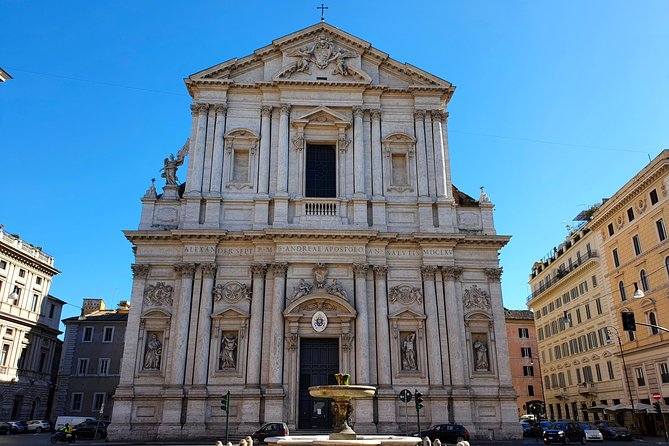
Basilica di Sant’Andrea della Valle
Back to the churches, and this one’s big. Sant’Andrea della Valle is described as one of the biggest churches in Rome, and you’ll focus on the famous Barberini chapel.
This stop is for anyone who wants to see how major families and major funds shape the look of a church. When you have a chapel connected to the Barberini name, you can expect a lot of deliberate design. The guide helps you interpret that design as messaging, not just decoration.
The only real consideration is stamina. Big churches can be grand, and 20 minutes can feel short if you’re a slow reader of details. Still, in a timed walk, you’ll get the important highlights without losing the morning.
Piazza Navona, the Domitian stadium, and Borromini’s presence
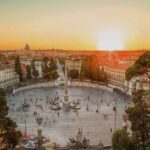
Piazza Navona gets a lot of attention in Rome because it’s photogenic. The tour gives you a deeper reason to care. You’ll learn it was built on the stadium of Emperor Domitian, which instantly changes how you see the square—this isn’t just a Baroque plaza sitting on nothing.
You’ll also connect the fountains and churches to specific artists. The fountain Fontana dei Quattro Fiumi is associated with Bernini, and you’ll see Sant’Agnese in Agone, designed by Borromini.
This stop works well because it connects multiple layers: Roman imperial structures, then Baroque Rome using that older space as a stage for religious and artistic identity. It’s a classic Rome trick—older power becomes the foundation for newer statements.
Chiesa di Sant’Agnese in Agone
This is the church that matches Piazza Navona’s story. It’s described as designed by Borromini and built for Pope Innocent X, where the relics of Saint Agnes are kept.
If you’re into religious art, this is likely one of the stops you’ll remember. The tour focus turns on patronage (who commissioned it) and relic significance (why this saint mattered). When the tour puts those together, the church feels less like a building and more like a claim.
In practical terms, plan to look slowly. When relics and baroque design are involved, the details often reinforce each other—composition, symbolism, and the feeling of designed drama.
Chiesa di Santa Maria dell’Anima
This church is pitched for its paintings and color. Santa Maria dell’Anima is noted for impressive paintings and vivid colors, and the tour uses it as a moment to recharge your eyes after the heavier themes.
This is a good stop if you enjoy seeing how Catholic iconography shows up through paint—faces, gestures, and visual emphasis that guide attention toward the theological message.
If you tend to rush, force yourself not to. Twenty minutes can disappear fast in a church full of color.
Church of St. Louis of the French
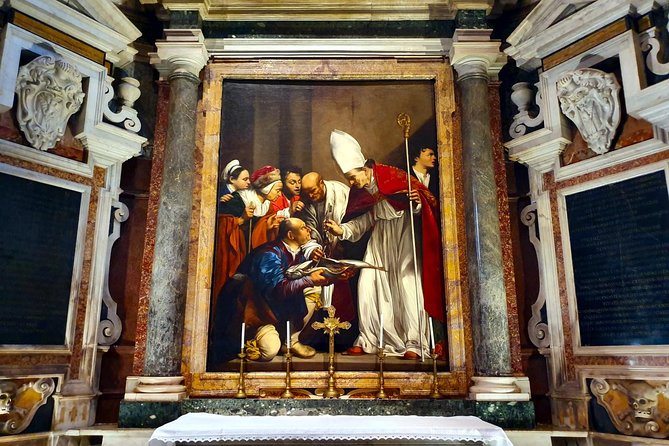
Now you hit one of the most art-centric stops on the route. The church of St. Louis of the French is described as containing three masterpieces from Caravaggio and one from Guido Reni.
Caravaggio is one of those artists whose presence changes the room. Even if you’re not deeply familiar with art history, the style is hard to ignore. The guide’s role here is key: you’ll get context for what you’re looking at, so you’re not stuck guessing what matters and what doesn’t.
This is also where the “specialty tour” idea becomes clear. If you came for the most famous Roman sights only, you might not expect Caravaggio to be part of a walking route like this. If you came for religion plus art plus meaning, it’s a strong fit.
Pantheon (you view it, you do not enter)
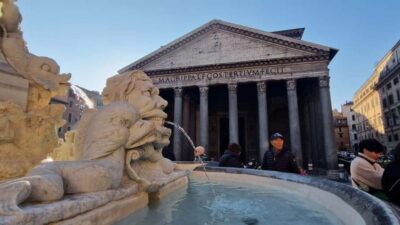
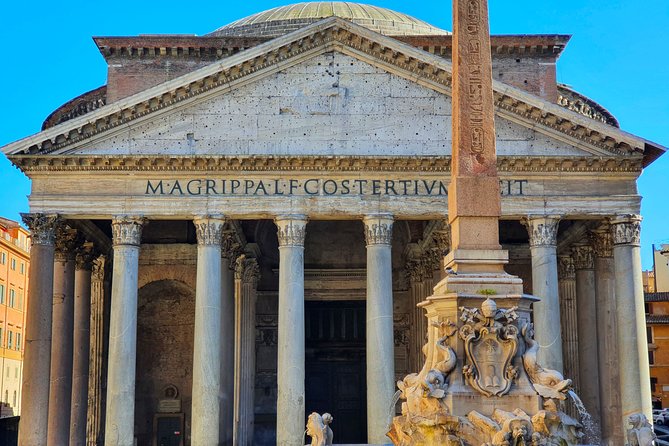
The last major stop is the Pantheon, one of Rome’s most iconic antique buildings, now transformed into a church. The tour notes clearly that you do not enter the Pantheon, but you’ll still get the connection between the old Roman structure and its later religious use.
Why include it without entry? In a shorter morning walk, the Pantheon is often about context and exterior understanding. You get the “big picture” without spending time on indoor rules or long queues.
Still, if you’ve never seen the Pantheon up close, you’ll want to treat those final minutes as a proper viewing moment. Stand where the guide suggests, and let the proportions do their work.
Dress code and timing: simple rules that prevent wasted time
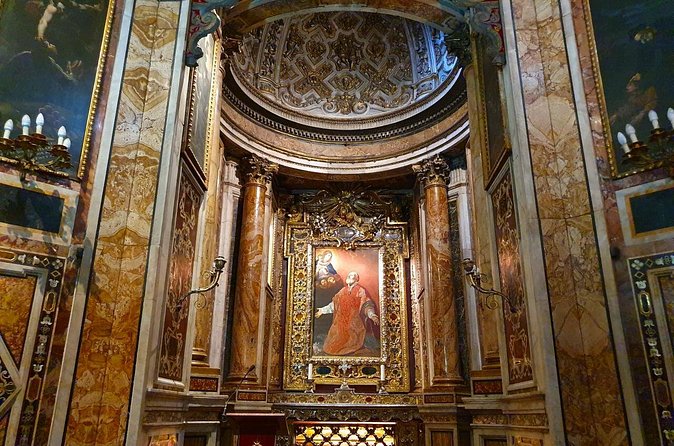
Church dress codes in Rome are not optional if you want to get inside. For this tour, shoulders, back, and knees must be covered. That means no tank tops, no bare knees, and no plans to rely on luck.
A light scarf or a packable layer can save the day. For bottoms, simple pants beat shorts if you want zero stress. This is especially important because the tour includes multiple churches in a short window. If you’re underdressed for the first one, the rest of the morning can turn into waiting outside, which is the opposite of fun.
Timing also matters. Most stops run around 20 minutes, so you’re moving fairly steadily. Wear shoes you can walk in for a few hours—Rome is a marathon of small distances.
And one more practical point: the tour requires good weather. If rain hits hard, you’ll be offered a different date or a full refund.
Value check: why $60.46 can feel like a bargain
At $60.46 per person for a 3 to 4 hour guided walk, you might wonder if it’s just paying for access. It’s not. The value is the pairing: you get a guided explanation focused on church art, relics, and the political-religious logic behind what you see.
You’re also not paying for each stop. The tour notes that admission is free for the listed stops. Even if you’re comfortable doing Rome on your own, you’d still be missing the structure—how one site feeds into the next. A guide turns scattered churches into a single story.
The small group size adds value too. In a group of up to 5 people, you’re not just being transported—you’re being guided. That can matter in churches, where questions pop up fast.
If you’re the type who enjoys learning while walking, this is a reasonable spend. If you’re only in Rome for the easiest checklist attractions, you might prefer a more general tour style.
Who this tour suits best (and who might want something else)
This one fits you best if you like religion as lived practice, not just as architecture. You’ll spend time on relics, saints, and the way baroque art and symbolism communicate ideas. The tour is also a good match if you care about artists tied to dramatic themes—Borromini, Caravaggio, Bernini.
It’s also a smart choice if you want churches that are off the average tourist circuit. The route includes places that many first-time Rome visits skip, so you come away with a sense of Rome that feels more personal and less “everybody saw the same postcard.”
You might consider skipping or switching tours if you want a broad, casual overview of Rome with less focus on religious imagery. This is specialty content. It’s still enjoyable, but it’s not trying to be everything to everyone.
Practical tips to get the most from the morning
Bring a little patience for the church rhythm. Even when the stops are short, your eyes need a moment to adjust to interior lighting and busy visual detail. I like arriving with a mindset of slow looking, not speed reading.
Also, think about your questions before you go. If you care about architecture, ask what the design choices are trying to do. If you care about art, ask about the symbolism behind a painting or sculpture. With a small group, your question is more likely to get a real answer.
Lastly, keep an eye on what the guide emphasizes. In this kind of tour, your payoff comes from paying attention to the specific elements they point out—because those are the pieces the route is built around.
Should you book this Saints, Heretics & the Inquisition tour?
Book it if you want a morning that feels like reading Rome with your feet. The combination of relic-focused churches, major artists, and the story logic behind symbolism makes this tour more than a walk past beautiful buildings.
I’d skip it if you’re chasing only the most famous sights or if the church dress code feels like a hassle. In that case, you’ll get less from the time spent inside.
If you do book, set yourself up for success: dress for church entry, wear good walking shoes, and accept that the experience runs on meaning. When you do that, the city starts to click—saints, heretics, and political power all sharing the same stone and paint.
FAQ
How long is the Rome Saints, Heretics & the Inquisition Small Group Walking Tour?
It lasts about 3 to 4 hours.
Where does the tour start and where does it end?
The tour starts at Ponte Sant’Angelo (St. Angelo Bridge) in Rome and ends back at the meeting point.
Is the tour offered in English?
Yes, it’s offered in English.
Does the tour include entering the Pantheon?
No. The tour notes that you do not enter the Pantheon.
Is there an admission fee for the stops?
The listed stops are marked as Free admission within the tour.
How many people are in the group?
The tour has a maximum of 5 travelers.
What should I wear to enter the churches?
You need shoulders, back, and knees covered to enter the churches.