REVIEW · ROME
Rome: Private City Sightseeing 2 Hours Tour by Golf Cart
Book on GetYourGuide →Operated by LINQUE · Bookable on GetYourGuide
You’ll see Rome fast, and with style. This private 2-hour electric golf cart tour turns major sights into a smooth, story-filled loop, with photo stops at the Colosseum, Trevi Fountain, Pantheon, and the city’s top piazzas. I really like the customizable route with a live guide, and I love that the cart gives you 360-degree views without the Rome pavement toll.
There is a catch: the timing can swing if the guide runs late, and because this is only two hours, a delayed start can mean fewer daylight-quality photo stops. One more thing to consider—this is built around exterior photo stops, not guided entry tickets.
In This Review
- Key highlights at a glance
- Rome in 2 hours: why this golf-cart format feels smart
- Pickup in central Rome: the 3 km Piazzale delle Canestre boundary
- Colosseum photo stop: the 15 minutes that give you context
- Circus Maximus: seeing the scale even when the structure is gone
- Piazza del Popolo: big views, quick orientation, easy photos
- Piazza Navona: fountains, corners, and a sense of place
- Trevi Fountain: coin toss energy and the iconic angle game
- Pantheon photo stop: seeing the shape that rules the street
- Campo de’ Fiori and quick-market Rome vibes
- Comfort and movement: the electric cart advantage
- Guide quality matters: Alex and Emilia are proof
- Price and value: what $94 is really paying for
- Who this tour suits best (and who should rethink it)
- Should you book this Rome golf cart tour?
- FAQ
- How long is the Rome private golf cart sightseeing tour?
- What sights are included on the route?
- Is this tour private?
- Do you include entry tickets to monuments?
- Is hotel pickup and drop-off included?
- What language is the live guide available in?
- How many people can fit in the golf cart?
- Is the tour wheelchair accessible?
- Should you book this Rome golf cart tour?
Key highlights at a glance
- Private guide + customizable route so you can spend more time where you care most
- Electric golf cart with 360-degree views for easy photos and comfortable sightseeing
- Hotel pickup and drop-off in central Rome, within a 3 km radius of Piazzale delle Canestre
- Iconic photo stops including the Colosseum, Trevi Fountain, Pantheon, and lively piazzas
- Access to restricted traffic zones that regular cars often can’t use
Rome in 2 hours: why this golf-cart format feels smart
Rome is big, and your feet can only handle so much before your brain starts tuning out. What I like about this tour is that it uses the golf cart to solve the two biggest sightseeing problems: getting from one “must-see” spot to another without wasting energy, and keeping you oriented while your trip is still fresh.
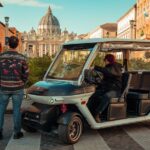
You get a quiet electric cart with 360-degree visibility, which matters more than it sounds. On a traditional walking route, you usually get one “front-facing” view, and the best angles get lost. Here, you can take photos from multiple sides as you roll past landmarks and open piazzas.
Because it’s private, your guide can shape the rhythm. Some people want quick photos and a clean overview. Others prefer more talk-time at fewer stops. Either way, you’re not stuck in a rigid group flow.
You can also read our reviews of more city tours in Rome


Pickup in central Rome: the 3 km Piazzale delle Canestre boundary
This is one of the most practical parts of the experience. You get hotel pickup and drop-off in central Rome, as long as your hotel area falls within a 3 km radius from Piazzale delle Canestre (the starting base for tours).
Why you should care: Rome’s center is confusing, and getting yourself to the right starting point can quietly eat time. Here, the pickup functionally protects your two hours, which is exactly what you want when you’re trying to see a lot without turning the day into a logistical puzzle.
Colosseum photo stop: the 15 minutes that give you context
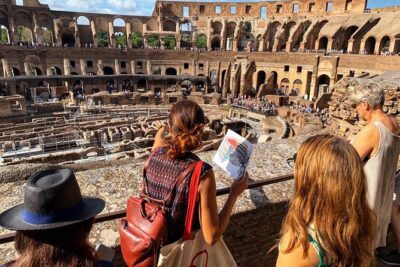
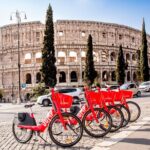
The tour typically starts with a Colosseum photo stop that lasts about 15 minutes. Important reality check: this is a photo stop, not an entry-ticket visit. So if you’re hoping for a full interior visit, you’ll need to plan tickets separately.
Still, this stop is valuable. The Colosseum is easier to understand when someone connects what you’re seeing with how Roman arenas worked, what it meant in its time, and why the site still dominates Rome’s skyline. You also get the chance to frame classic shots without hunting for the perfect angle on your own.
Practical tip: use this moment to take a few photos from different sides. The cart makes it easier to reposition for better compositions than you’d get standing still on a crowded sidewalk.
Circus Maximus: seeing the scale even when the structure is gone
Next comes Circus Maximus, also typically a 15-minute photo stop. Here’s the thing: you’re not looking at a well-preserved building. You’re looking at scale, location, and the kind of public spectacle Rome loved.
A good guide can help you read the site like a map—where the action would have been, what directions the crowds likely moved, and why this place mattered. Even if the physical “object” is less obvious than the Colosseum, it can click for you fast when you get the story.
If you like Rome because it’s more than marble—if you enjoy the way the city was organized—you’ll probably enjoy this stop a lot.
Piazza del Popolo: big views, quick orientation, easy photos
Piazza del Popolo is where the tour gives you a mental reset. In about 15 minutes, you can take in the open space, get oriented on surrounding streets, and capture photos that show Rome’s scale.
This is also a “breather” stop in the route. You’re moving by cart, but you’re also getting out—enough to look around and take in the square’s layout. It’s a helpful moment if you feel like you’ve been in museum-mode for too long.
One consideration: if your guide is tailoring the tour heavily toward what you like, you may spend a slightly different amount of time here depending on the day’s flow. Still, it’s usually designed as a photo-and-orientation stop rather than a long hangout.
You can also read our reviews of more private tours in Rome




Piazza Navona: fountains, corners, and a sense of place
Piazza Navona is one of those Rome stops that feels instantly real. You get a 15-minute photo stop, and it’s often the kind of place where the architecture and the open layout let you take pictures without constantly looking over your shoulder for bus crowds.
The value here isn’t just the view—it’s how the square functions. Your guide’s stories help you connect what you’re seeing to how people use these spaces now. If you care about daily life in historic cities, Navona gives you that without requiring you to commit hours.
If you’re a photographer, take a second before you move on. Squares like this can look different depending on the angle, and the tour schedule is tight enough that you want your best shots early.
Trevi Fountain: coin toss energy and the iconic angle game
Then you hit the emotional high point for many first-timers: Trevi Fountain. The tour includes a photo stop here that’s about 15 minutes, with time to toss a coin.
This is one of those landmarks where the story behind it matters as much as the sight itself. Your guide can give you the background and help you understand why it became the modern symbol it is. And because the tour is private and designed around photos, you’re not spending half your time searching for a workable viewing position.
Practical photo advice: think less about one perfect photo and more about a set. Try one classic wide shot, one tighter detail shot, and one angle that includes a little of the surrounding street. The cart and guide pacing make it easier to do that than a pure walking grab-and-go approach.
Pantheon photo stop: seeing the shape that rules the street
The route typically includes Pantheon, Rome for about 15 minutes as another photo stop. Like the Colosseum, this is not described as an entry-ticket visit, so expect exterior viewing and quick photography rather than a full inside tour.
Why it still works: the Pantheon is one of the fastest ways to understand Roman building ambition. Even from the outside, you can see why this place became a model. When your guide explains what you’re looking at, it turns the stop from a postcard moment into a real architecture lesson you’ll remember.
If you plan to enter later on your own, this photo stop is still useful. It helps you recognize the building on sight and know where to aim your attention during your later visit.
Campo de’ Fiori and quick-market Rome vibes
Finally, you usually end with Campo de’ Fiori (again, typically about a 15-minute photo stop). This area gives you a different flavor than the grand set pieces. It’s tied to everyday city rhythms, and it helps you feel like you’re seeing real Rome, not just the museum highlights.
This is a good last stop because it’s more human-scaled. By then, you’ve got landmarks in your head, and the square scene helps those landmarks connect into a working map of the city.
If you want to keep learning after the tour, Campo de’ Fiori is also a strong launch pad for wandering.
Comfort and movement: the electric cart advantage
One reason I think this tour can be a great value for the right traveler is how it protects your comfort. You’re moving around a lot in two hours, but you’re doing it on an electric cart with 2 to 7 seats, which keeps the effort low and the experience easy.
Also, you get commentary while you’re traveling. That means you’re not just “going from photo to photo.” The cart is basically a rolling classroom, and the wind-in-your-face feeling of being outside keeps it from turning into a stuffy bus tour.
And there’s a big practical bonus: the tour includes access to restricted traffic zones that are normally closed to regular vehicles. In Rome, that access can mean less time detouring and more time at the right spots.
Guide quality matters: Alex and Emilia are proof
The whole experience lives or dies on the guide. The best outcomes from this tour are exactly what you’d hope for: a guide who knows the streets and can explain what you’re seeing without turning it into a lecture.
I’ve seen great examples of this. Alex, listed as from South Tyrol, delivered a strong mix of street knowledge and Rome history, and the trip felt like it helped the visitor “feel like a local” by the end. Emilia was also praised as the absolute best guide, with personal touches like pointing out where a son could play chess after the tour. Those kinds of details go beyond facts—they make Rome feel approachable.
On the other hand, there’s one clear caution from a lower rating: one guide arrived more than 30 minutes late without advance notice, and that delayed start caused the tour to shift into night for part of the experience. That person also felt they didn’t see everything advertised and mainly remained around the Pantheon area. In a two-hour format, that’s a big deal.
So here’s my practical take: if you book, show up ready and on time, and be prepared that a late start can shrink the quality of daylight photos and the balance among stops.
Price and value: what $94 is really paying for
At $94 per person for a 2-hour private tour, you’re paying for convenience, a live guide, and transportation that gets you into areas typical cars can’t reach. You’re also paying for a format that prioritizes photo stops rather than full museum time.
That makes this a good match if you want:
- A fast introduction to Rome’s “greatest hits”
- Expert storytelling to connect landmarks
- Hotel pickup to protect your schedule
- Comfortable movement to reduce walking fatigue
If you want a slow, deep archaeological experience with long stops and lots of museum time, this probably won’t be your best use of money. Also note what’s not included: entry tickets and food. If you want to go inside the Pantheon or Colosseum, you’ll pay extra and time it separately.
Who this tour suits best (and who should rethink it)
I think this is ideal for:
- First-time Rome visitors who want a mental map quickly
- People who don’t love long walking days but still want big sights
- Couples or small groups who prefer private pacing
- Travelers who enjoy a guide’s stories and want photo stops handled for them
It may be less ideal if:
- You’re very ticket-driven (this is photo-stop focused)
- You’re sensitive to schedule changes in a short tour window
- You want a guaranteed “see every stop for the full advertised time” feeling—private customization is a strength, but it also means the exact emphasis can vary
Also, this tour is described as wheelchair accessible, which makes it a stronger option for mobility constraints than many walking-heavy alternatives.
Should you book this Rome golf cart tour?
Book it if you want a private, guide-led Rome overview in just two hours, with hotel pickup, electric cart comfort, and a route that can be shaped to your interests. The value is strongest when you treat it as an orientation and photo strategy, then follow up with any must-enter sites on your own schedule.
Skip it or plan carefully if daylight timing matters a lot for your photos, or if you’re expecting a full guided entry into major monuments. In that case, you may prefer a different format that includes tickets or longer on-site time.
If you do book, your best outcome will come from choosing the tour time thoughtfully and being ready when pickup begins—because in a short Rome loop, timing is everything.
FAQ
How long is the Rome private golf cart sightseeing tour?
The tour lasts 2 hours.
What sights are included on the route?
The tour includes photo stops at the Colosseum, Circus Maximus, Piazza del Popolo, Piazza Navona, Trevi Fountain, Pantheon, and Campo de’ Fiori.
Is this tour private?
Yes. It’s a private group tour.
Do you include entry tickets to monuments?
No. Entry tickets are not included.
Is hotel pickup and drop-off included?
Yes, hotel pickup and drop-off are included in central Rome, as long as your pickup area is within 3 km of Piazzale delle Canestre.
What language is the live guide available in?
The live guide is available in English, Spanish, German, and French.
How many people can fit in the golf cart?
The golf cart transportation is for groups of 2 to 7 seats.
Is the tour wheelchair accessible?
Yes, the tour is wheelchair accessible.
Should you book this Rome golf cart tour?
Yes—if you want the easiest way to cover major Rome highlights with a live guide, minimal walking, and a cart that makes photo stops simpler. Just remember this is mainly photo stops, not included monument entry, and a short tour means timing matters.