REVIEW · ROME
Rome: Pasta Cooking Class, Dinner & Wine in Authentic Restaurant
Book on Viator →Operated by GOURMETALY FOOD TOURS OF ROME · Bookable on Viator
Watching pasta come together in a centuries-old room is way more fun than it sounds. This small-group Rome pasta cooking class gives you hands-on training for Roman favorites like cacio e pepe and amatriciana, plus you get a real story-walk through the Jewish Ghetto while you cook. I especially love how personal it feels with a class limited to 10 people, and I love that the chef teaches with a practical, get-your-hands-dirty vibe (including seasonal fried bites). One thing to consider: it is not a kosher cooking class, and if you have a gluten allergy, this isn’t the best fit.
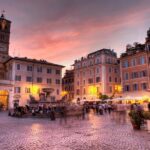
You start in Piazza Mattei, a standout square in the Jewish Ghetto area, and your host sticks with you the whole time to translate and add legends and food history about how this neighborhood eats. Guides I noticed from past groups, like Lisa, Benedetta, and Anastasia, are repeatedly praised for making the backstory feel clear and the kitchen instructions feel doable even with a language gap.
By the time you sit down to eat, the meal is more like dinner than a snack. You’ll have free-flowing wine and water during the class, and you’ll taste what you make plus a ricotta cheesecake-style dessert. Still, do keep an eye on allergens: milk, eggs, soya, mustard, nuts, and gluten can show up in the tastings, and they do not promise special accommodations for every need.
In This Review
- Key highlights in plain terms
- Why cacio e pepe and amatriciana feel different in Rome
- Meeting in Piazza Mattei and orienting in the Jewish Ghetto
- Inside a 12th-century eatery kitchen: how the workshop is set up
- The 2.5-hour flow: start to finish without feeling rushed
- Pasta dough to plating: your hands learn the Roman basics
- Seasonal fried bites: artichoke in winter, zucchini flowers in summer
- Wine, dinner-sized portions, and the ricotta and visciole finale
- Kids welcome, and dietary rules need a quick check
- Price and value: where the $104.25 actually goes
- Who should book this Rome pasta class
- Should you book it or pass?
- FAQ
- Is the class group size small?
- How long is the pasta cooking class?
- Is it offered in English?
- What’s included in the price?
- Can vegetarians or vegans join?
- Is this a kosher experience?
Key highlights in plain terms
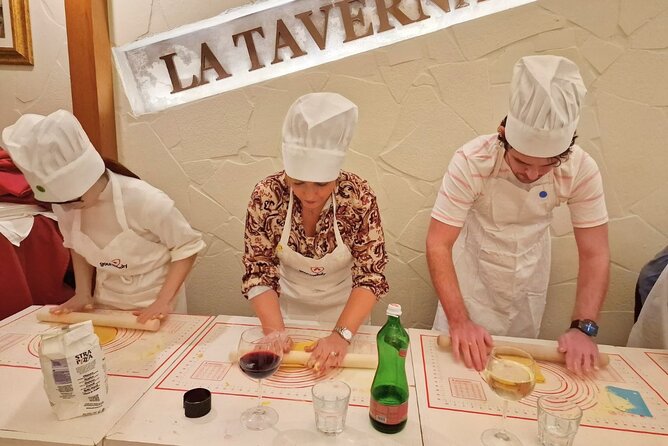
- Small group size (max 10) means more time with the chef and fewer standing-around moments
- Hands-on Roman pasta: homemade dough from scratch, then sauces like cacio e pepe and amatriciana
- Seasonal fried starter: fried artichoke in winter or zucchini flowers in summer
- Wine and water on tap throughout the workshop, so you’re not rationing sips
- Host + chef teamwork: translation and neighborhood food stories during the cooking
- Chef’s dessert finish: ricotta and black sour cherry (visciole) tart/cheesecake
Why cacio e pepe and amatriciana feel different in Rome
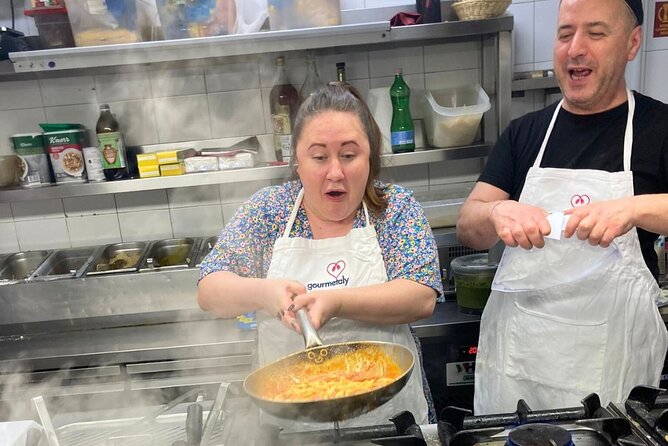
Roman pasta isn’t just about taste. It’s technique, and technique changes everything. In this class, you learn the approach behind two icons: cacio e pepe (pecorino romano and black pepper) and amatriciana (pecorino romano, guanciale, and tomato sauce). Even if you’ve cooked pasta before, you’ll likely notice that Roman sauce-making is more about timing and balance than “throw everything in and hope.”
The “why it’s valuable” part for you: once you understand the method, you can recreate it at home without chasing 15 specialty ingredients. The class also layers in another pasta style—tonnarelli all’arrabbiata with tomato, chili, and parsley—so you’re not leaving with just one trick.
And yes, you’ll eat what you cook. This is not a demo-and-leave situation.
You can also read our reviews of more cooking classes in Rome

Meeting in Piazza Mattei and orienting in the Jewish Ghetto
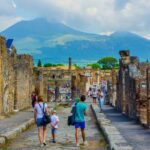
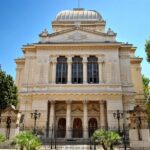
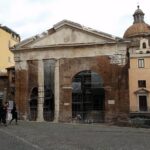
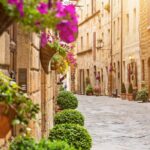
You meet at Via del Portico d’Ottavia, 8 and then the experience centers on Piazza Mattei in the heart of Rome’s Jewish Ghetto. That matters because the tour isn’t only kitchen-focused. Your host helps you connect food to place—explaining legends and local details about how this neighborhood shaped its flavors and dishes.
Past guests highlighted how host/translator support made a difference, especially when language barriers could have slowed everything down. Benedetta and Anastasia in particular got praise for going beyond basic translation and for adding food and life context that sticks.
Practical takeaway: give yourself a little buffer on timing. The meeting point is in a busy historic area, and you’ll enjoy it more if you arrive calm and ready to walk into a story-filled evening.
Inside a 12th-century eatery kitchen: how the workshop is set up
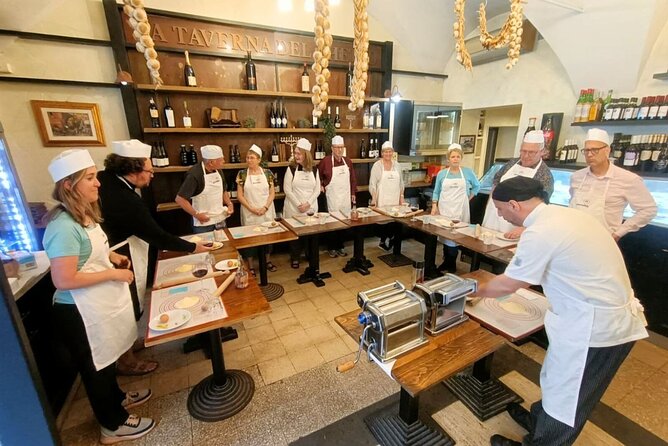
The class takes place in an ancient eatery inside a building associated with a 12th-century edifice (it’s been featured in Stanley Tucci’s Searching for Italy). That kind of setting can sound like a gimmick until you’re actually in the room—then you feel why this matters. Traditional Italian cooking isn’t performed in sterile spaces. It’s done close to the action, with people talking, tasting, adjusting, and laughing when something works (or when it needs a tweak).
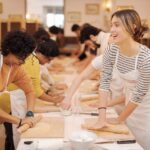
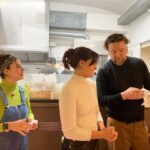
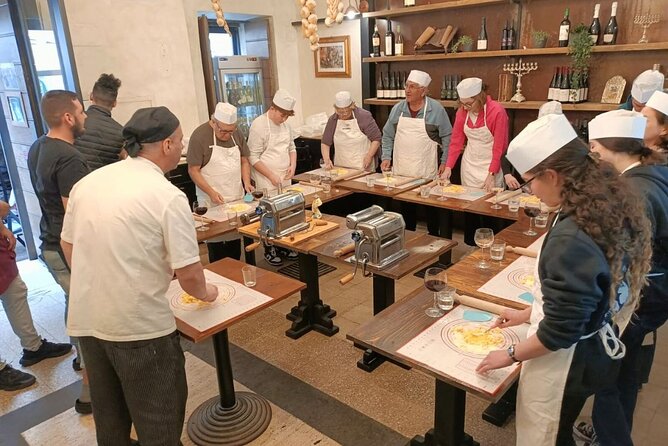
The group size is max 10 travelers, and that’s one of the biggest value drivers. You’re not just watching from across the room. You’re more likely to get correction on your pasta shaping and more likely to understand what the chef is trying to get you to do.
You’ll also have a steady flow of guidance. The host supports throughout—translating the chef and offering tips on the history and food legends tied to the neighborhood. That’s what keeps the experience friendly, not intimidating.
The 2.5-hour flow: start to finish without feeling rushed
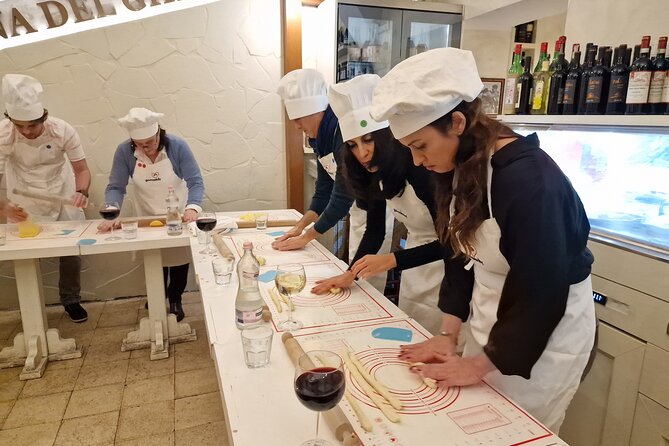
This is a 2 hours 30 minutes experience, roughly. The key is that the schedule is built to keep you active. You’re not just mixing once and waiting. You move through prep, frying, sauce-making, then cooking your own pasta under supervision.
Here’s the practical rhythm you can expect:
- You learn to make homemade pasta from scratch (dough work and shaping)
- You help with seasonal vegetable prep for frying (artichokes or zucchini flowers)
- You make two sauces using fresh ingredients
- You cook and refine your pasta with the chef watching closely
- You sit down to taste your creations plus dessert
Because this is a time-limited class, it’s a good idea to set expectations: you’re aiming for solid technique and a memorable outcome, not a perfectly restaurant-caliber pasta every single time. Most people leave with a stronger grasp of method than they had going in.
Pasta dough to plating: your hands learn the Roman basics
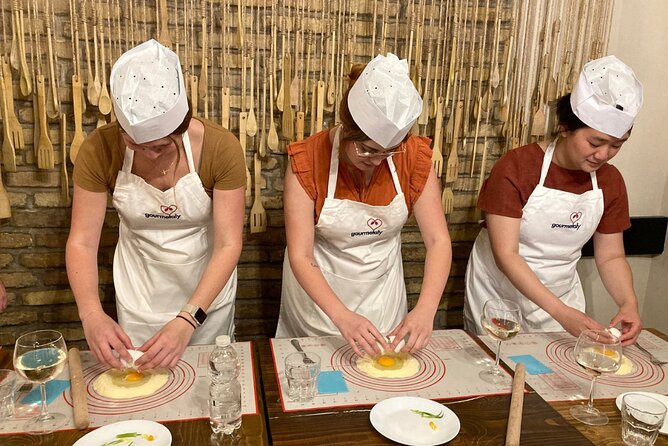
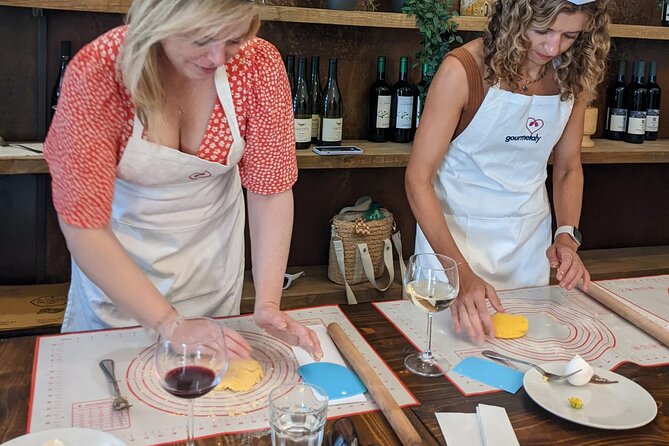
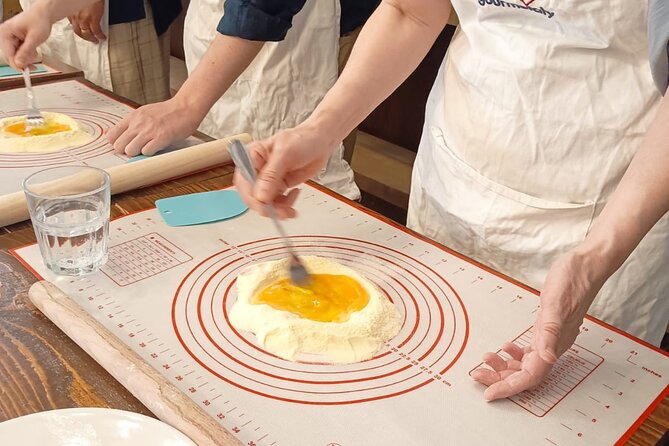
The “from scratch” part is a big deal. You’ll work with the dough and learn how to handle it so it’s suited for Roman-style cooking. Then comes the real test: pairing that pasta with sauce you made yourself.
For sauce technique, you’ll handle flavors that Italians treat like fundamentals:
- Cacio e pepe emphasizes the pecorino romano and black pepper balance
- Amatriciana combines pecorino romano with guanciale and tomato sauce
- Arrabbiata adds tomato, chili, and parsley for a sharper profile
This matters for you because these sauces are popular at home, but the “how” is what makes them taste right. In class, you get the chance to adjust rather than guess later.
And since you’re cooking under supervision, mistakes turn into teachable moments. That’s where the small-group setup really pays off.
You can also read our reviews of more wine tours in Rome

Seasonal fried bites: artichoke in winter, zucchini flowers in summer
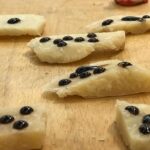
Before the heavier pasta moments, you’ll munch through a Roman-style fried starter called Fritto Romano. The exact seasonal piece changes:
- Summer: stuffed zucchini flower with mozzarella and anchovie
- Winter: fried artichoke
Two things I like about this. First, it’s snack-sized but still feels special—an easy way to understand Roman “street-to-table” flavors without needing a restaurant meal. Second, it adds variety to the class so you’re not stuck in one flavor lane until dessert.
One practical note: the zucchini flower and anchovy pairing (in summer) means this isn’t a bland option. If you’re vegetarian, you should confirm how the workshop handles it. The experience notes that it can accommodate vegans and vegetarians, but individual details aren’t spelled out beyond that general promise.
Wine, dinner-sized portions, and the ricotta and visciole finale
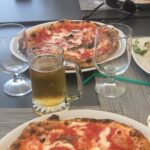
The tasting part is included, and it’s not shy. You’ll sit at your table, taste your creations, and then enjoy the chef’s “gift”: a famous ricotta cheesecake style dessert made with visciole (black sour cherry jam).
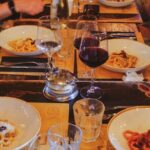
Add in wine and water served all along the cooking class, and you get an experience that feels like a full dinner evening. That also helps explain why many people call this one of the best meals they ate in Rome: you’re not just tasting random samples. You’re tasting the results of your own work, with wine flowing during the process.
If you’re planning this around a sightseeing day, build in a relaxed schedule. You’ll likely want time afterward to stroll, not jump straight into another museum run.
Kids welcome, and dietary rules need a quick check
This experience is described as suitable for everyone, and kids are welcome. That can make it a smart family plan, especially if you want an activity that doesn’t require long lines or a bus ride.
For diet: the workshop can accommodate vegans and vegetarians. That said, the information also notes that clients are responsible for health conditions and that they cannot guarantee special food requirements. Also, they list possible allergens in tastings: milk, eggs, soya, mustard, nuts, and gluten. And they note it is not recommended for those allergic to gluten.
So here’s my practical advice: if you’re managing dietary needs, contact the provider before booking and ask exactly what can be made. The class is flexible, but you shouldn’t assume every allergy can be handled safely.
Price and value: where the $104.25 actually goes
At $104.25 per person, you’re paying for three things that most cheaper cooking classes skip:
- Small group limit (10), which is the main driver of hands-on time
- Professional chef instruction plus the host/translator support for the whole experience
- All the included food and drinks, not just a tasting
You’re also getting extras that make it feel like a keepsake evening: a 100% cotton apron, a free cookbook, and a best restaurants’ guides booklet. And, importantly, the included food is described as enough to cover your dinner.
Is it expensive compared to buying ingredients at a market? Yes. But if your goal is to learn technique, cook under guidance, and eat a proper multi-part Roman meal with wine, the value math makes more sense.
Who should book this Rome pasta class
This is a great fit if you want:
- a hands-on cooking experience (not just watching)
- Roman classics like cacio e pepe and amatriciana
- a night with a local neighborhood angle in the Jewish Ghetto
- a group experience that still feels personal, thanks to the max 10 size
- a meal that doubles as dinner, with wine included
It might be less of a fit if:
- you’re gluten-allergic (it’s specifically not recommended)
- you need a strictly kosher meal (the restaurant and food are not kosher)
- you require very specific dietary substitutions beyond what’s offered in general terms
Should you book it or pass?
Book this cooking class if you’re the kind of traveler who likes to take home a skill, not just photos. You’ll likely love it if you care about Roman technique, enjoy neighborhood stories as you cook, and want a dinner-style evening built around pasta you made yourself.
I’d pause before booking if gluten is a concern for you, if kosher requirements are non-negotiable, or if your dietary needs are complex enough that you can’t rely on general accommodation. In those cases, ask careful questions first.
If none of those are dealbreakers, this one is a strong bet: small-group cooking, a real Roman menu, wine included, and a dessert that feels like a proper finish to the night.
FAQ
Is the class group size small?
Yes. This experience has a maximum of 10 travelers.
How long is the pasta cooking class?
It runs about 2 hours 30 minutes.
Is it offered in English?
Yes, the workshop is offered in English.
What’s included in the price?
It includes fresh homemade pasta, a seasonal fried specialty, ricotta and visciole tart (ricotta dessert), Italian wine and water, all cooking equipment, and you also get an apron plus a free cookbook and restaurant guide.
Can vegetarians or vegans join?
The workshops can accommodate vegans and vegetarians.
Is this a kosher experience?
No. It is not a kosher cooking class, and the restaurant/food provided is not kosher.