REVIEW · ROME
Rome: Pantheon Guided Tour with Entry Ticket
Book on Viator →Operated by Tix & Tours · Bookable on Viator
The Pantheon’s dome is a light machine. This guided tour helps you beat the crowd with a skip-the-line ticket, then walks you through how the oculus turns daylight into a moving spotlight. One heads-up: the explanations can sometimes drift into broader Roman context, so if you want only Pantheon specifics, keep that in mind.
I also love the stop-and-look approach inside the temple. You get pointed at the most impressive architectural features and photo moments, plus Raphael’s tomb. And with a maximum group size of 20, it stays manageable instead of feeling like a human conveyor belt.
Plan for logistics: meet at Piazza della Minerva 72 and the tour finishes at the Pantheon area. During the Jubilee, some monuments can be under restoration, so watch for any updates you receive before you go.
In This Review
- Key highlights at a glance
- Entering The Pantheon Faster With a Skip-the-Line Ticket
- Where You Meet and How the Timing Usually Feels
- Inside the Temple: Oculus Light and the Dome That Steals the Show
- Architectural Features and Photo Points You Can Actually Aim For
- Raphael’s Tomb and Why This Place Isn’t Just a Temple
- Group Size, Pacing, and What to Expect From Your Guide
- Rainy Day, Sunset Light, and the Best Time to Aim For
- Price and Value: Is $36.13 Worth It?
- Who This Tour Is Perfect For
- After the Tour: What to Do Next in the Pantheon Area
- Should You Book This Pantheon Guided Tour?
- FAQ
- How long is the Pantheon guided tour?
- Does the price include the entry ticket?
- Is the tour available in English?
- Where do I meet the guide?
- Where does the tour end?
- Are hotel pickup or drop-off included?
- Is food or drinks provided?
- What if some monuments are affected during the Jubilee?
- Can I cancel for a full refund?
Key highlights at a glance
- Skip-the-line entry so you spend your time looking up, not waiting.
- Oculus light lesson that explains why the dome feels magical.
- Architectural photo points where it’s easiest to frame great shots.
- Burial-chamber context and the chance to see Raphael’s tomb.
- Small group size (max 20) for calmer pacing and better listening.
Entering The Pantheon Faster With a Skip-the-Line Ticket
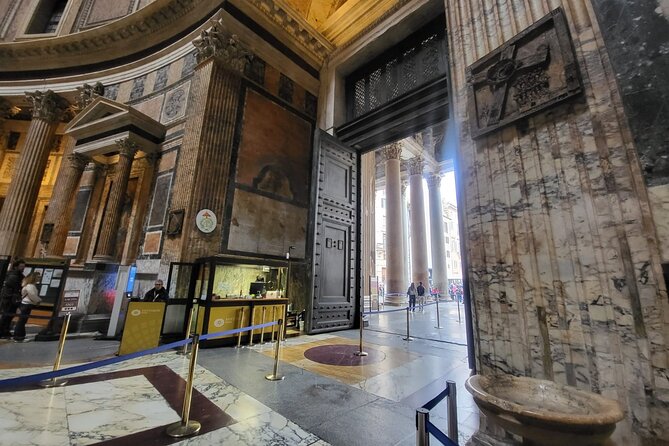
Rome’s Pantheon is one of those places where the building does most of the talking. The dome is the headline, but what makes it special is how fast you can get to the good stuff—especially in high season. This tour is built around skip-the-line entry, so you’re not stuck feeding frustration into a queue while your brain starts imagining gelato.
You should expect a guided experience that’s tightly focused on the Pantheon itself. The ticket you receive is not just for standing in the doorway. It’s paired with a Pantheon Museum guided exploration, which matters because it helps you notice details you’d likely miss if you walked in on your own.
For value, I like that the cost folds in the admission plus the guide. At $36.13, you’re paying for time saved and a guided narrative, not just access. If you hate lines (and in Rome, who doesn’t?), the “extra” here often feels like the main benefit.
You can also read our reviews of more tours and experiences in Rome



Where You Meet and How the Timing Usually Feels
You’ll start at Piazza della Minerva 72 (near the Pantheon area) and end around Pantheon Piazza della Rotonda. It’s convenient because you’re not negotiating a far-away pickup or bus ride.
The tour runs about 45 minutes to 1 hour, which is a sweet spot for the Pantheon. It’s long enough to understand what you’re seeing—dome, oculus, major architectural points—without turning the visit into an all-afternoon production. Also, smaller-group tours tend to keep the pace smooth, so you spend more time inside and less time herding your own attention.
Two practical notes:
- Arrive a little early so you can settle without rushing.
- During the Jubilee, parts of the area may be under restoration. If the provider sends updates, read them—sometimes meeting and timing are adjusted on the ground.
Inside the Temple: Oculus Light and the Dome That Steals the Show
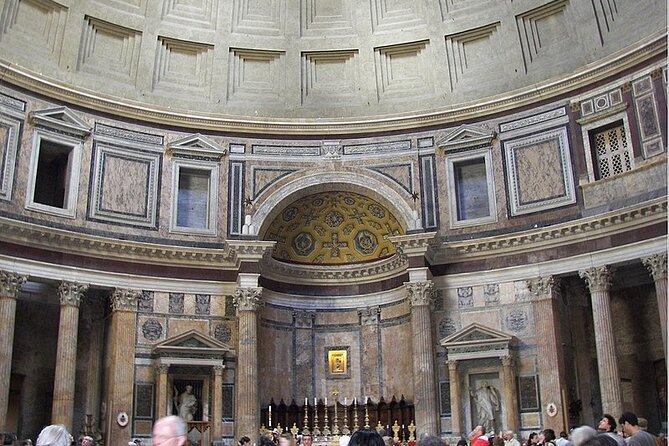
Once you’re in, the guide’s job is to make the Pantheon feel legible. You’re not just admiring a famous dome; you’re learning what makes it work. The big moment is the oculus—the open eye in the center of the dome—and how it brings light down into the temple.
This is the kind of explanation that changes your viewing. Without context, the opening looks like a cool design feature. With context, it becomes a timing tool. Light shifts as the day moves, and the oculus creates that signature glow that photographers chase for good reason.
And yes, weather can make it even better. If it’s raining when you’re there, the oculus can turn into a dramatic visual moment—rain streaking down through the opening. Even if you don’t plan for rain, it’s reassuring to know your guide will point out what you’re seeing instead of leaving you to puzzle it out.
Architectural Features and Photo Points You Can Actually Aim For
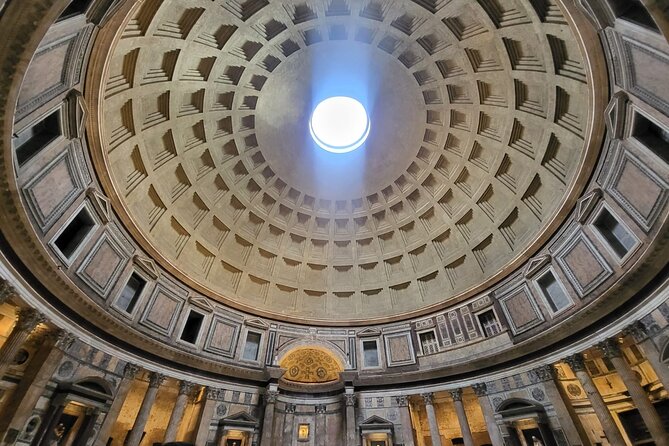
The Pantheon is crowded, which is exactly why a guide helps. When you’re inside, it’s easy to get swept along without noticing the parts that make the building feel engineered and artistic at the same time.
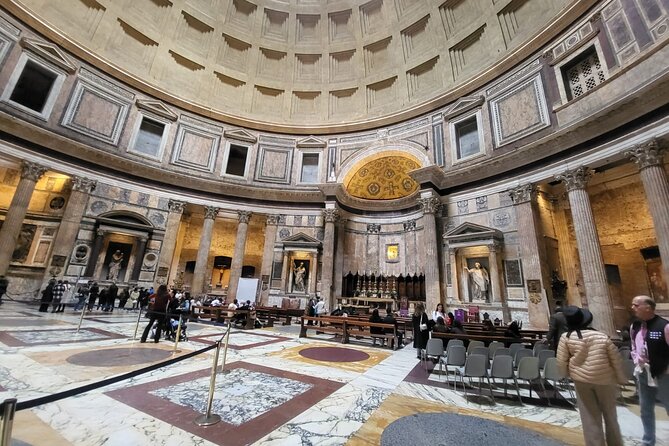
This tour focuses on the Pantheon’s standout architectural features and helps you hit the best photo points without getting lost in the crowd. That may sound like fluff, but it’s real value. When you know where to stand and what lines matter (dome to floor, openings to columns, sightlines inside the temple), your photos look more intentional and you feel more satisfied after you leave.
You’ll also get pointed toward sculptures and ancient artifacts. Even when you’re standing still, the guide can help you connect what you’re looking at to the larger story—why it exists, what it signaled, and how it fits into how Romans thought about public space.
Raphael’s Tomb and Why This Place Isn’t Just a Temple
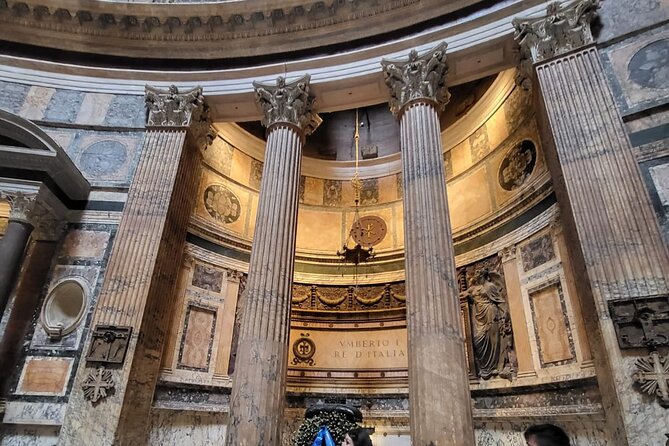
Here’s what surprised me in a good way: the Pantheon isn’t only a stop for architecture nerds. It has a life as a burial space, which changes the mood of your visit.
Part of this guided experience includes the temple’s use as a burial chamber and the chance to see Raphael’s tomb. That detail adds weight to the experience. You’re standing inside a building that has functioned across eras, and the guide helps you see it as continuity, not just a preserved monument behind glass.
This is also where a great guide makes the visit feel personal. In the group experiences I’ve seen firsthand through similar styles, what sticks isn’t just the fact of a tomb—it’s the way the guide frames what it means to have an artist placed in a space so tied to Roman religion and civic identity.
If you’re the type who likes meaning as much as visuals, this section is a strong reason to choose a guided tour rather than self-guided wandering.
You can also read our reviews of more guided tours in Rome






Group Size, Pacing, and What to Expect From Your Guide
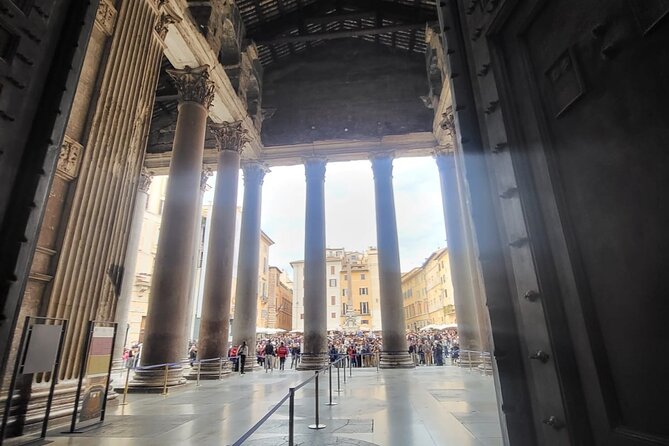
This group caps at 20 travelers, and that ceiling matters. In a bigger crowd, you lose the ability to stop, listen, and take one more look. In a group this size, you’re more likely to hear the story without shouting over a dozen other conversations.
The guides also vary, and you’ll see that in the names people share: Verdiana, Rea, Ati, Monica, Mahi, Lucy, and Mehrshad show up in the mix. The common thread in the best outings is clear storytelling and calm pacing—guides taking the time to connect construction details to what you experience inside the building.
Some guides also help with practical stuff like taking photos for your group. That’s a small thing, but in Rome, it can save time and reduce the awkward moment of asking a stranger to shoot your whole party.
One consideration: a few people noted that some guides spend extra minutes on surrounding Roman history rather than staying laser-focused on the Pantheon. That doesn’t mean the tour is bad. It just means that if Pantheon-only is your priority, be mentally ready for a little detour into the wider world.
Rainy Day, Sunset Light, and the Best Time to Aim For
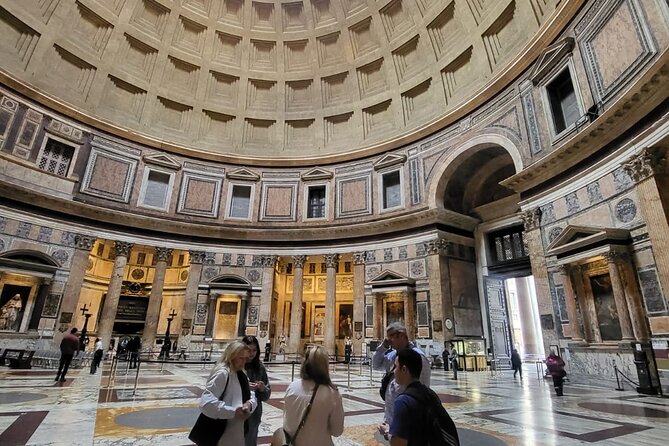
The Pantheon’s oculus is a light-and-shadow machine, which means timing affects what you notice. If the sun is cutting through when you’re inside, you’ll get that classic beam effect. If it rains, the oculus can turn into a visual scene where raindrops seem to fall into the space on purpose.
If you can choose among entry times, consider going later in the day when it’s easier to get unobstructed viewing. Some people specifically recommend the 4:00 slot because it can mean fewer people inside by the time the tour wraps. You’ll still be in a famous building, so it won’t be empty—but later can feel more comfortable for photos.
Price and Value: Is $36.13 Worth It?
Let’s talk value in a real way. You’re paying $36.13 for:
- Skip-the-Line entry
- A guided exploration of the Pantheon Museum areas
In practice, that value comes from two things: saving time and getting a story that makes the architecture click. If you’re the sort of traveler who likes to take your photos and move on, a self-guided visit might be enough. But if you want the Pantheon to feel like more than a postcard, a guided walkthrough earns its keep fast.
Also, this tour is offered in English, so if you’re traveling with limited Italian, you won’t have to hunt for explanations on your own. And since this style is designed for a short visit (about an hour), you’re not tying up half a day just to understand one building.
Who This Tour Is Perfect For
This is a strong fit if you:
- Want to reduce line time and spend your energy inside the temple
- Like architecture explained in plain language
- Care about the oculus and the Pantheon’s unusual light setup
- Want to see Raphael’s tomb with context (instead of just locating it)
It’s also a good option if you’ve never done a Roman guided visit before and want a clean first step. The Pantheon is a great “entry point” into Rome because it’s iconic and easy to understand once someone points out the key ideas.
If you’re a solo expert who already knows the building like a textbook, you might find the guided narrative less essential. But for most people, the combination of entry ticket + guidance + manageable group size is a practical win.
After the Tour: What to Do Next in the Pantheon Area
The tour ends near the Pantheon, which is convenient because you’re already in the center of the action. From there, you can keep exploring on foot—churches, small piazzas, and viewpoint hunting all start lining up quickly once you’re in the right neighborhood.
If you’re thinking about food afterward, plan for something simple nearby. You’re done with a structured visit, so you’ll enjoy wandering without a clock chasing you.
Should You Book This Pantheon Guided Tour?
Book it if you want a smooth, short visit where the line is handled for you and the guide helps you see the Pantheon in a smarter way. The skip-the-line entry plus the oculus explanation plus Raphael’s tomb context is a strong combination for the money.
Skip it or consider a different style if your ideal tour is ultra-focused on only the Pantheon with zero spillover into broader Roman context. It’s still the Pantheon—but the pacing of the talk can vary by guide.
If you’re flexible and want the building to feel alive, this tour is an easy yes.
FAQ
How long is the Pantheon guided tour?
It lasts about 45 minutes to 1 hour.
Does the price include the entry ticket?
Yes. Admission to the Pantheon Museum areas is included, along with a skip-the-line ticket.
Is the tour available in English?
Yes, it is offered in English.
Where do I meet the guide?
You meet at Piazza della Minerva, 72, 00186 Rome.
Where does the tour end?
It ends at Pantheon, Piazza della Rotonda, 00186 Rome.
Are hotel pickup or drop-off included?
No. Hotel pickup and drop-off are not included.
Is food or drinks provided?
No. Foods and drinks are not included.
What if some monuments are affected during the Jubilee?
Some monuments may be under restoration. Pay attention to any messages you receive about potential changes.
Can I cancel for a full refund?
Yes—free cancellation is available if you cancel at least 24 hours before the start time. If you cancel later than that, the amount you paid will not be refunded.