REVIEW · ROME
Rome: Ostia Antica Guided Tour in German with Tickets
Book on GetYourGuide →Operated by Römerin · Bookable on GetYourGuide
Ostia Antica feels like you stepped back. Ostia Antica, the Roman port city near Rome, has that rare mix of big archaeological sights and a real sense of sea proximity, so the history makes sense fast. With a German-speaking guide and included entry, you focus on the essentials: how people lived, worked, and moved through a working Roman city.
Two things I really like: the included tickets plus headsets help you see and understand without hunting for info on-site. And the guides seem built for clarity and storytelling, including German-language tour leaders such as Janina and Phillipp, with Phillipp noted as an archaeologist who knew the site deeply.
One consideration: the whole experience is about 3 hours, so it can feel tight if you want maximum wandering time, and there may be a bit of waiting/organization time before departure.
In This Review
- Quick hits you should know
- Ostia Antica: the Roman port city that makes life make sense
- Finding your guide at the DEUTSCHE RÖMERIN meeting point
- The entry routine: airport-style security you should plan for
- What 3 hours looks like on the ground
- Theatre and Forum: where public life played out
- Everyday city blocks: antique buildings and the city’s rhythm
- Neptune thermal bath: when bathing was part of the system
- Latrines: the stop that makes Roman life feel real
- Tickets and headsets: less friction, more understanding
- German-guided storytelling: Janina and Phillipp as examples of what to expect
- Price and value: where the money goes
- What to bring (and what not to bring) for comfort
- Rain or shine: planning for weather and footing
- Where the tour ends: park exit and the Ostia Lido option
- Who this Ostia Antica tour is best for
- Should you book this Ostia Antica guided tour in German?
- FAQ
- What language is the Ostia Antica tour offered in?
- How long is the guided tour?
- Are entrance tickets included?
- Are headsets included?
- Where do I meet the guide?
- What should I bring with me?
- Is the tour cancelled in bad weather?
- Is the tour wheelchair accessible?
Quick hits you should know
- Tickets and headsets included so you can concentrate on the ruins instead of logistics
- German-speaking guides with strong site explanations, including guide names like Janina and Phillipp
- Key highlights you’ll actually walk through: theatre, Forum, Neptune thermal baths, and latrines
- Airport-style security is required, so build in a little patience
- Ends in the archaeological park, with an easy choice to go back to Rome or continue to Ostia Lido
Ostia Antica: the Roman port city that makes life make sense
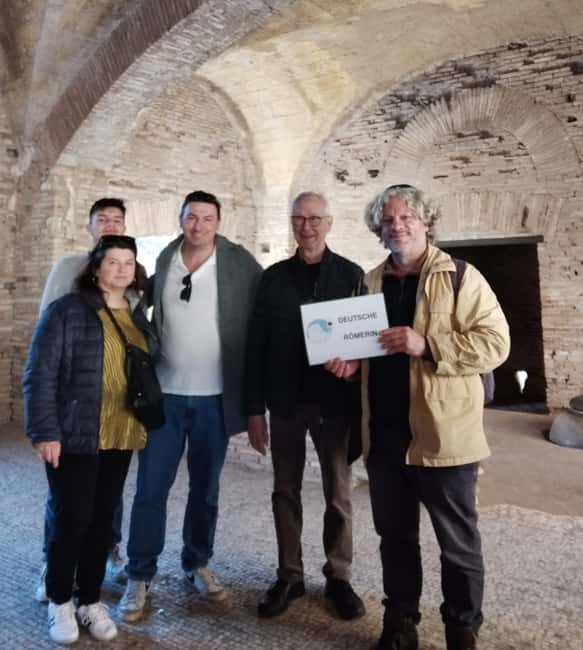
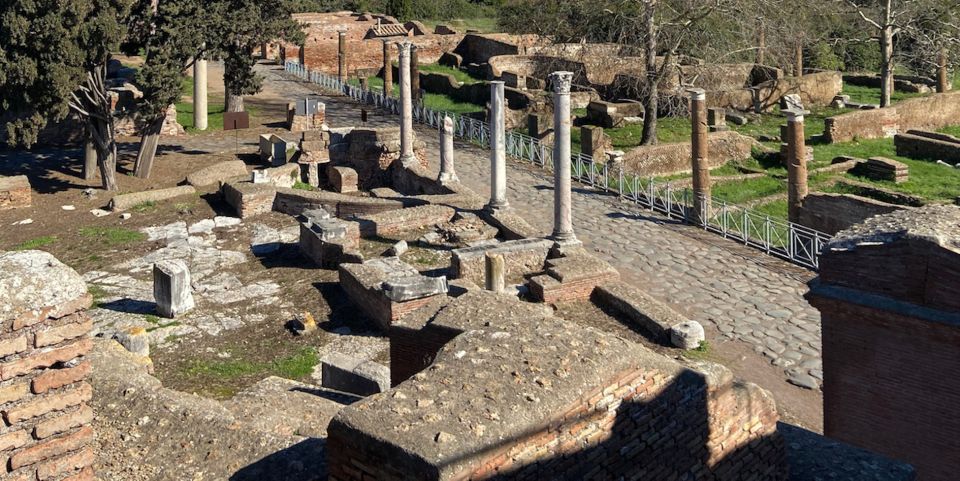
Ostia Antica isn’t just a pile of old stones. It’s a former Roman city that once functioned as a busy port, and the layout makes everyday life feel close. Even from the general setting, you get a sense that the sea mattered here, not just as scenery but as part of commerce and daily routines.
What I like is how the site is readable. You’re not only seeing monuments; you’re seeing spaces tied to daily movements: civic life in the Forum area, public gathering in the theatre, and the sort of hygiene infrastructure you wouldn’t always expect on first glance.
And because it’s a guided format, you get connections. For example, when you see public buildings beside practical ones, the city starts to feel like a system rather than separate attractions.
You can also read our reviews of more tours and experiences in Rome


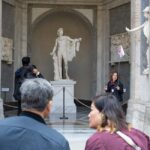
Finding your guide at the DEUTSCHE RÖMERIN meeting point
This tour runs in German and you’ll meet a guide holding a clear sign: DEUTSCHE RÖMERIN. The coordinates listed for the meeting point are 41.75925827026367, 12.300618171691895, which can be handy if you’re using maps offline or trying to avoid last-minute confusion.
Come ready to spot your guide quickly. At a site like this, a small delay can snowball into time lost in the heat, on uneven ground, or in security lines.
If you’re traveling with kids or teenagers, arriving on time also helps. You’ll start with momentum rather than waiting around, which makes the whole outing feel smoother.
The entry routine: airport-style security you should plan for
Before you get into the archaeological park, all visitors pass through airport-style security. This is not the quick “show and go” feeling you might expect at some outdoor attractions.
So wear layers that are easy to manage, keep your ID/passport accessible, and consider how you’ll handle bags. The tour notes that glass objects aren’t allowed, and that’s one more reason to travel light with what you carry.
It also runs rain or shine. If the weather turns, security and the first walking segment are still part of the plan, so comfortable shoes and grip matter.
What 3 hours looks like on the ground
The duration is listed as 3 hours, which is a sweet spot for seeing the main parts without turning it into a marathon. But you should calibrate expectations: you won’t get hours of free roaming, and you’ll be following a guided route.
This format works best if you want understanding. You’ll get the “why this mattered” layer as you move between areas, not just the “what you’re looking at” layer.
If you’re the type who loves to linger for photos and sketch details for long stretches, you may wish you had more time. If you’re more interested in the story and the key sites, three hours is a solid pace.
Theatre and Forum: where public life played out
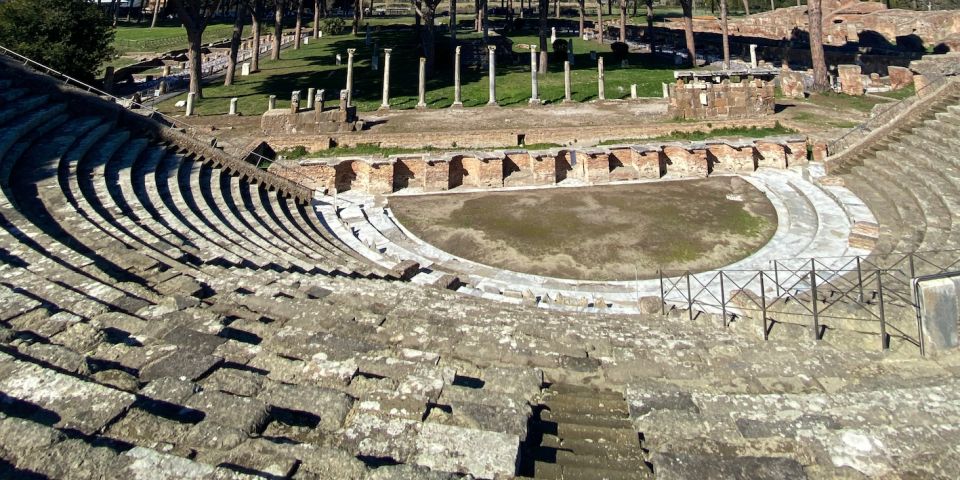
Early on, you’ll spend time in big civic zones, including the theatre and the Forum. These aren’t random stops. They help you picture how people gathered, how decisions were made, and how entertainment and civic life overlapped.
The theatre is the kind of structure that immediately clarifies what Romans valued in public spaces: visibility, acoustics, and social energy. The Forum section then shifts your focus from performance to governance and community rhythms.
If you’ve visited Rome before and found it hard to connect big-ticket sights to daily life, this is where things click. Ostia Antica is laid out so you can trace daily patterns: public meeting space, spectacle space, then practical city functions.
You can also read our reviews of more guided tours in Rome






Everyday city blocks: antique buildings and the city’s rhythm
After the big public areas, the tour moves you through antique buildings that show the texture of a working city. This is the part that often separates a “monument tour” from a “life-in-the-city tour.”
You get the feel of how streets and built spaces supported movement. Instead of only grand architecture, you see what was built for function: places meant for commerce, activity, and the routines of residents.
This is also where a strong guide changes everything. A guide can help you see how the buildings relate to each other and why certain zones were where they were.
Guides tied to this tour have been described as very professional and especially good at keeping explanations lively for different ages, including teenagers.
Neptune thermal bath: when bathing was part of the system
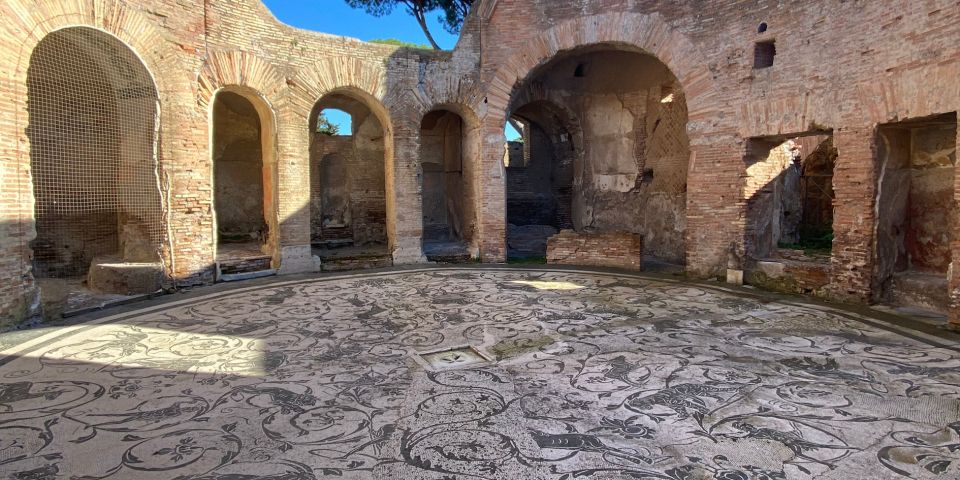
One of the specific named highlights is the Neptune thermal bath. Thermal baths in the Roman world weren’t only about cleanliness. They were social hubs, exercise spaces, and a daily ritual wrapped into a civic routine.
Even without going deep into technical detail, you’ll likely come away with a better sense of how infrastructure shaped behavior. The fact that this stop is named in the tour is a clue that you won’t just walk past it for a quick photo.
The bath complex also helps you understand the city’s design logic: this was a place where people flowed in cycles, not just a single building you happened to visit.
Latrines: the stop that makes Roman life feel real
The tour includes latrines, and honestly, this is one of the most useful stops for truly getting the daily-life angle. When you see sanitation infrastructure in context, you start to picture how Romans dealt with routine needs at a scale that fit a city.
It’s not a “gross-out” moment; it’s a perspective shift. It turns the city from ruins into a place with systems: hygiene, water use, and public space design that helped the city function.
If you’re traveling with teens, this is often the type of stop that holds attention because it’s concrete and human. It also helps you remember the tour as more than sightseeing, which is the whole point.
Tickets and headsets: less friction, more understanding
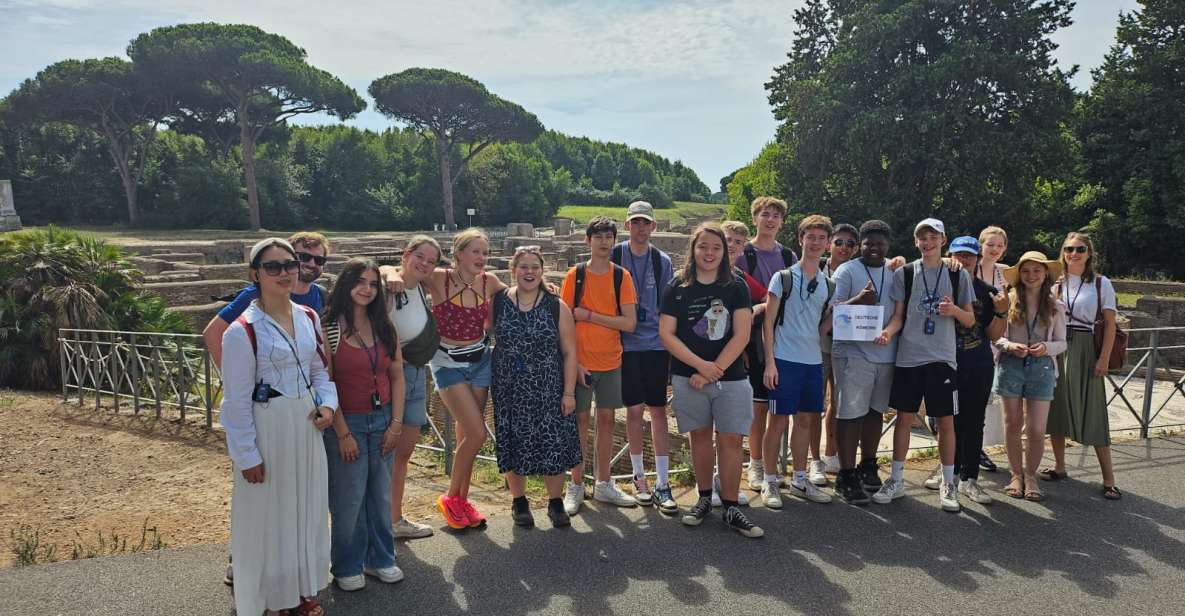
You get tickets and headsets included. That sounds simple, but on-site it matters. Headsets cut down on the need to constantly read small signs while trying to hear your guide.
It also helps with pacing. When you can listen clearly, you absorb the story as you move between areas, instead of stopping every few minutes to piece information together.
If you’re going in German, the headsets are especially valuable because they remove the stress of trying to track explanations while also scanning the site.
German-guided storytelling: Janina and Phillipp as examples of what to expect
This is a live German tour with city guides. What stood out in the provided guidance is the quality of explanation, and two guide names came up: Janina and Phillipp.
Phillipp was described as extremely professional and as someone with deep knowledge of Ostia Antica, including firsthand excavation experience. That kind of background usually shows in how answers land: not just what you’re seeing, but why it is the way it is.
Janina was also highlighted as engaging and able to keep the explanation interesting for teens. That matters because teens often tune out when the tour turns too lecture-like.
The takeaway for you: aim for this tour when you want a guide who can connect stones to daily Roman life. You’ll get more than a basic scan of ruins.
Price and value: where the money goes
The tour pricing is clearly tiered:
- €95 for adults aged 26 and over
- €79 for young people ages 18–25 (bring ID)
- €50 for children ages 13–17
- €40 for children ages 5–12
- Under 4: free
Here’s how I’d judge value. You’re paying for three concrete elements included in the price: the guided experience, the entry tickets, and the headsets. That combination reduces the common “nickel-and-dime” issue where you pay separately for admission and then struggle to hear explanations.
For families, the age bands make it easier to plan without surprises, and the presence of headsets helps everyone keep up. For young adults, the included ticket and headset bundle can be a good deal compared with booking entry separately and then trying to find a way to hear a guide.
One practical thought: because the tour is only three hours, you’ll get the most value if you’re okay with a focused route rather than lots of free wandering.
What to bring (and what not to bring) for comfort
The tour lists what to bring and what to avoid. Stick to it and your day runs better.
Bring:
- Passport or ID card
- Comfortable shoes (the ground can be uneven)
- Sunscreen
- A reusable water bottle
Not allowed:
- Glass objects
And a useful note: take water with you in a bottle format (the tour specifies no glass bottle). That’s especially important because it’s rain or shine, and summer sun can still catch you.
If you’re sensitive to heat, plan for it even if you’re not expecting a heatwave. Ostia Antica is outdoors, and walking time adds up.
Rain or shine: planning for weather and footing
The tour will run rain or shine. That means you should treat weather as a comfort issue, not a cancellation risk.
In wet conditions, shoes with good traction become even more important. Also, if it’s sunny, sunscreen and water matter because the tour still happens and you’re still walking between exposed areas.
Bring basic rain protection if you can, but keep it practical. You’ll be carrying it while walking, and airport-style security means you should avoid bringing complicated items that slow down the process.
Where the tour ends: park exit and the Ostia Lido option
The tour ends in the archaeological park. From there, you can go back to Rome or one stop further to the beach of Ostia (Ostia Lido).
This is a smart “choose your own finish” idea. If you’re visiting from Rome and want a more relaxed final chapter, that extra stop gives you a beach option without needing to plan a whole second outing.
Just remember: your legs will already be used. If you’re going to keep walking afterward, bring that water bottle and consider a quick snack plan.
Who this Ostia Antica tour is best for
This tour fits best if you:
- want a structured guided route through major sites without spending time figuring out what matters
- enjoy learning in German and benefit from headsets
- like the Roman daily-life angle, not only big monuments
It’s also a good match for teenagers who do better with explanations that have energy and concrete details, like sanitation and public life.
If you’re wheelchair users, note that it’s listed as not suitable for wheelchair access. If mobility is a concern, you’ll want to choose a different format that can accommodate your needs.
Should you book this Ostia Antica guided tour in German?
Book it if you want a focused, understandable introduction to Ostia Antica with tickets and headsets included, plus a live German guide who can explain the site’s key areas without turning it into a long lecture. It’s especially worth it if you care about how Romans lived, not just what they built.
Skip it (or rethink) if you’re the type who needs long free time to wander and photograph at your own pace, because the experience is 3 hours with a guided structure. Also, if you dislike waiting for any pre-departure organization, you may find the start feels a bit less immediate than you want.
FAQ
What language is the Ostia Antica tour offered in?
The tour guide provides the experience in German.
How long is the guided tour?
The duration is 3 hours.
Are entrance tickets included?
Yes. Entrance tickets are included in the price.
Are headsets included?
Yes. Headsets are included, which helps you hear the guide at the archaeological site.
Where do I meet the guide?
Look for the guide holding the DEUTSCHE RÖMERIN sign. The provided coordinates are 41.75925827026367, 12.300618171691895.
What should I bring with me?
Bring a passport or ID card, comfortable shoes, sunscreen, and a reusable water bottle.
Is the tour cancelled in bad weather?
No. The tour takes place rain or shine.
Is the tour wheelchair accessible?
No. The tour is not suitable for wheelchair users.