REVIEW · ROME
Rome Colosseum Ancient Rome Exclusive Private Guided Tour
Book on Viator →Operated by Tour In Rome by Tour in the City · Bookable on Viator
Three hours in Ancient Rome, without the stress. This exclusive private guided tour strings together the Colosseum with Palatine Hill and the Roman Forum, with timed entry so you spend more time looking and less time waiting.
I especially like the art-and-archaeology tone of the commentary and how guides keep things interactive, with time for questions and even helping you with photos. One consideration: crowd and security delays can still happen at the Colosseum, and the walking isn’t ideal if you have limited mobility.
In This Review
- Key things that make this Colosseum-Forum-Palatine tour work
- Why this private Colosseum-Forum-Palatine plan makes sense
- What you pay for (and what feels like good value)
- Meeting point and getting through Colosseum security smoothly
- Entering the Colosseum: first and second tiers, not just the floor
- Palatine Hill: Romulus and Remus, plus real ruins and views
- Roman Forum: the Sacred Way and the power behind the stones
- Bonus monuments near the route: Arch of Constantine to Curia Julia
- Arch of Constantine
- Arch of Titus
- Basilica of Maxentius and Constantine
- Temple of Venus and Roma
- Curia Julia and Capitoline Hill area
- How the timing really works: plan for heat, crowds, and flexible order
- Who should book this private tour (and who should skip it)
- Should you book this exclusive private Colosseum, Palatine Hill, and Roman Forum tour?
- FAQ
- How long is the Rome Colosseum, Palatine Hill, and Roman Forum private tour?
- Is this a private tour or a group tour?
- What language is the tour offered in?
- What’s included in the price?
- Are hotel pickup and drop-off included?
- Do I need a photo ID to enter?
- What meeting point do we use?
- Do I need to arrive early?
- Can the order of the sites change?
- Is it suitable for people with walking problems?
- Are children allowed?
Key things that make this Colosseum-Forum-Palatine tour work
- Private group pace: You tour as just your party, so you can ask questions without shouting over crowds.
- Timed Colosseum entry included: Your ticket and reservation fee are part of the package.
- First and second tiers at the Colosseum: You get those big-view moments, not only the floor-level basics.
- Palatine Hill storytelling: Legends like Romulus and Remus meet real archaeological layers, including the older settlement idea.
- Forum highlights with context: You walk past major named ruins and the Sacred Way/triumphal-route concept.
- Bonus monuments nearby: You also see the Arch of Constantine and Arch of Titus area, plus more Forum-adjacent sites.
Why this private Colosseum-Forum-Palatine plan makes sense
Rome can be overwhelming fast. The city is full of ruins, but the key sites also get jammed. This is built for the practical problem: you want the big-name highlights in a tight time window, without spending your trip wrestling with lines and wayfinding.
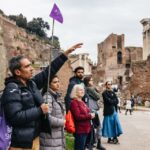
What makes this feel different is the format. You’re not in a cattle-car group. It’s a private group tour with a licensed local guide, so you can slow down, speed up, or linger when a detail catches your eye.
And the topic isn’t just dates and names. The guide approach leans toward how the sites worked and what people believed—so the Colosseum isn’t only impressive. It becomes understandable.
You can also read our reviews of more guided tours in Rome



What you pay for (and what feels like good value)
The price is $337.15 per person for about 3 hours 10 minutes (with a possible 20–30 minute timing variation). That’s not “cheap,” but it’s also not just you buying a ticket and hoping for the best.
Here’s what’s explicitly included:
- Colosseum entrance ticket (listed as €18 per person)
- Colosseum reservation fee (listed as €2 per person)
- A 3-hours Colosseum + Roman Forum + Palatine Hill private tour
- An official Professional Licensed Local Blue Badge Tour Guide
- Admission tickets noted as included for the Colosseum, Palatine Hill, and Roman Forum stops
So the money goes beyond entry. You’re paying for the guide, timing, and the flow between the sites. On your side, you get fewer wasted minutes. In Rome, those minutes matter.
There’s also a small planning bonus: the tour is typically booked around 45 days in advance. That usually means the operator is already used to managing the entry rhythm for this exact route.
Meeting point and getting through Colosseum security smoothly
The tour starts at Via Labicana, 96, 00184 Roma RM, Italy and ends in the Roman Forum area (00186 Rome). There’s no hotel pickup or drop-off, so you’ll want to build in a little extra time to reach the meeting point.
One practical detail that can make or break the start: you must arrive with a valid photo ID. Entry information has to match what’s booked. If the name or date of birth doesn’t line up with your ID, security can block you.
Colosseum entry also includes screening. Bottles and glass containers, alcoholic beverages, aerosols, backpacks, and bulky bags are forbidden. Medium and small shoulder backpacks can be taken, but they still get checked, screened, opened, and inspected. If you like traveling light, this is where that habit pays off.
Finally, there’s a built-in rule of the road: you’ll need to meet 15 minutes before departure time due to organization. Don’t treat that as a suggestion.
Entering the Colosseum: first and second tiers, not just the floor
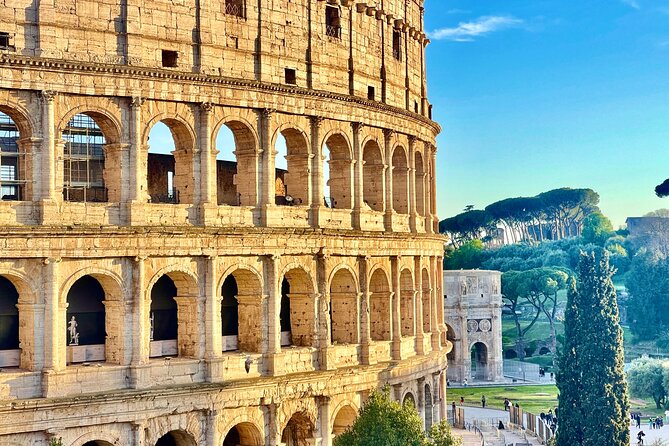
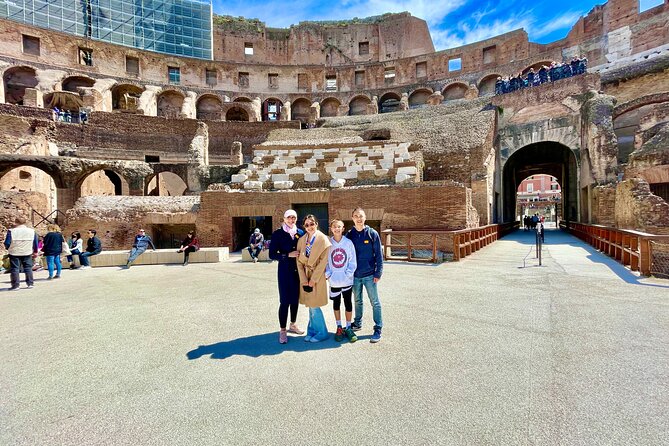
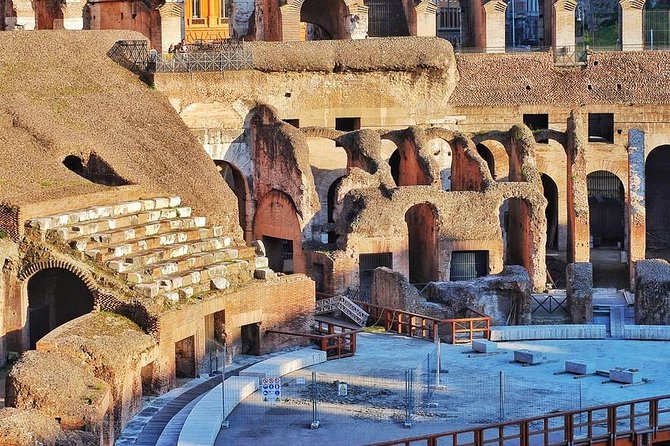
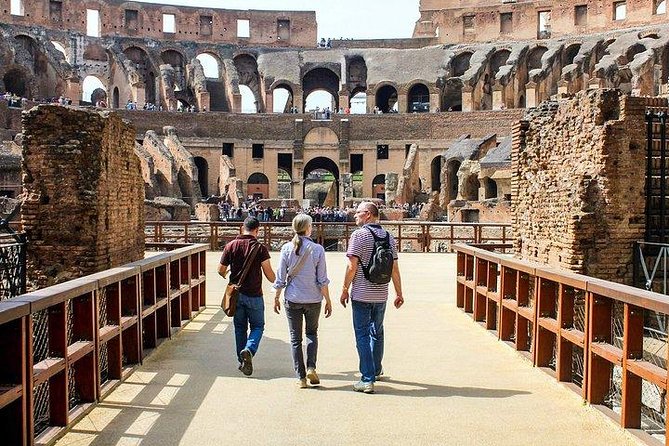
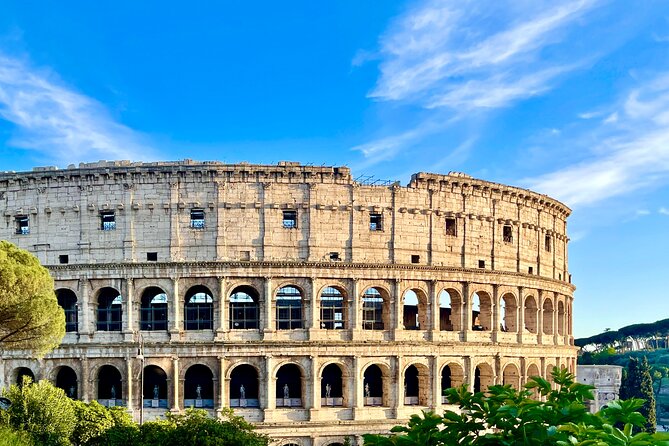
The Colosseum stop is about 1 hour 30 minutes, and the big win here is access to the first and second tiers for those sweeping viewing angles. The Colosseum is tall, and your brain needs multiple levels to “read” the space.
This is where a good guide earns their pay. The tour’s explanation isn’t only about the arena. You’ll get background on the amphitheater’s history and why the design worked the way it did. The guide is described as having an art and archaeology background, which matters because it’s easier to follow when someone connects materials, construction logic, and Roman culture.
Also, private pacing helps. If you want a photo from a specific sightline, you can usually get it without your whole group moving on every 30 seconds.
A small reality check: even with reservations, crowd flow and security can cause delays at the Colosseum. If you’re the type who plans the rest of your day to the minute, keep your schedule flexible.
Palatine Hill: Romulus and Remus, plus real ruins and views
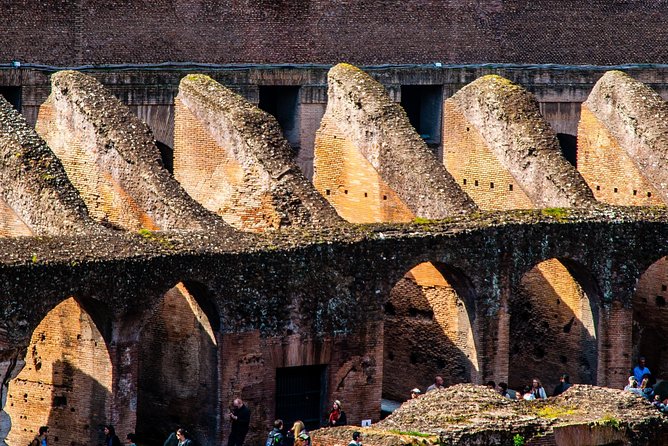
Palatine Hill is about 45 minutes, and this stop has two strengths. First, you’ll hear how the place ties to Rome’s earliest stories. Second, you’ll walk through layers that point to older settlement activity—described here as going back to the 9th century BC.
One standout theme is the mix of myth and urban geography. You’re guided through legend territory, including Romulus and Remus, raised by a wolf and then battling for control. Then you’re also shown the physical site ideas that help you picture where early Rome might have sat and expanded.
You’ll also see mention of:
- The Hippodrome, described as an elliptical sunken garden tied to the Palace of Domitian
- An impressive view out toward the Circus Maximus and down into the Roman Forum valley
That view is worth slowing down for. Palatine Hill gives you a sense of Rome as a system, not a pile of monuments.
If you’re a history-nerd, you’ll likely enjoy how guides connect the excavated details to the stories. One guide example included visual aids to help imagine structures in their original form, and there’s also mention of ongoing excavations on Palatine Hill that can reveal older foundations tied to the idea of early homes.
You can also read our reviews of more private tours in Rome


Roman Forum: the Sacred Way and the power behind the stones
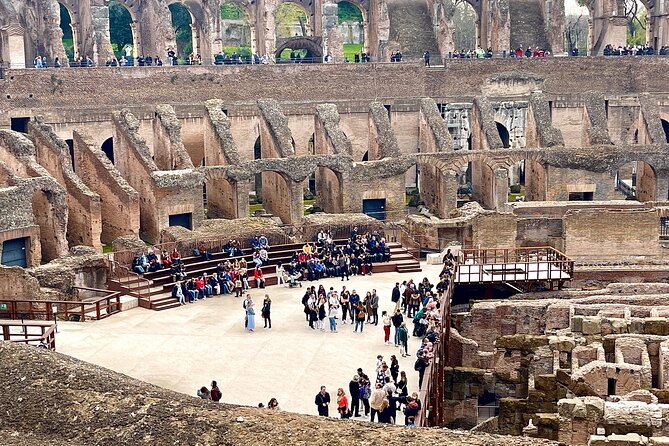
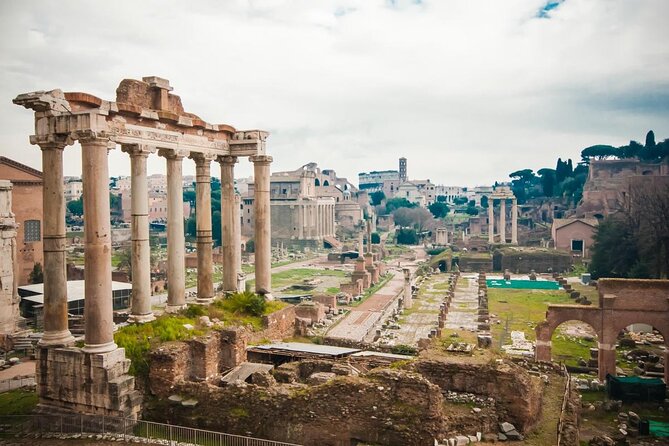
The Roman Forum stop runs about 45 minutes and is where the tour becomes more than scenic walking. The Forum is described as one of the most important archaeological areas in the world, and the guide is set up to help you recognize major ruins and understand what they signaled in Roman public life.
You’ll see several named highlights, including:
- Temple of Julius Caesar
- Arch of Titus
- House of the Vestal Virgins
- Senate House
- Basilica of Maxentius
- The Sacred Way, described as the triumphal road where centurions marched after battles and conquests
This is the part where good interpretation matters most. From street level, a lot of Forum ruins look similar—stone fragments, columns, low walls. With a guide who can connect the buildings to political and religious functions, the shapes start to tell you a story.
If you’re the type who likes to know the “why,” this stop is built for you. It’s also a good moment for questions, because the Forum invites curiosity: people want to know what happened here, not only what the site is.
One note: the tour order can vary depending on admission availability. In some cases, it may start on Palatine Hill and the Forum before the Colosseum. That flexibility helps when timing gets tight.
Bonus monuments near the route: Arch of Constantine to Curia Julia
After the core Colosseum-Palatine-Forum sequence, the tour includes additional historic landmarks in the same area. These aren’t just random photo stops; they add political meaning and architectural variety to what you’re already seeing.
Arch of Constantine
You’ll see the Arch of Constantine, set between the Colosseum and Palatine Hill. It’s dedicated to Constantine after his victory over Maxentius at the Battle of Milvian Bridge in AD 312. Commissioned by the Roman Senate and dedicated in 315, it’s also described as the largest Roman triumphal arch.
If you like scale and symbolism, pay attention to the dimensions given here: about 21 m high and 25.9 m wide. The guide can help you understand why this arch mattered beyond decoration—this is Rome using monuments like political receipts.
Arch of Titus
The Arch of Titus is described as a 1st-century AD honorific arch built around 81 AD by Emperor Domitian. It commemorates Titus’s deification and their victory over the Jewish rebellion in Judaea.
The panels depict the triumphal procession after the fall of Jerusalem in 71 AD, including one of the few contemporary depictions of artifacts from Herod’s Temple. The arch’s menorah imagery is also noted as becoming a symbol connected to the Jewish diaspora, and the menorah served as a model for the emblem used by the state of Israel.
This is one of those moments where you’ll likely look twice. It’s art and history—plus modern cultural meaning.
Basilica of Maxentius and Constantine
You’ll also spot the Basilica di Massenzio (Basilica of Maxentius and Constantine), described as the largest building in the Forum and the last Roman basilica built in the city. Even if you only see parts of it, it helps explain how Roman civic life used large covered spaces.
Temple of Venus and Roma
Another stop includes the Temple of Venus and Roma, thought to have been the largest temple in Ancient Rome. It was dedicated to Venus Felix and Roma Aeterna. The creation is credited to Hadrian, with construction starting in 121, inauguration in 135, and completion in 141 under Antoninus Pius. It was damaged by fire in 307 and later restored with alterations by Maxentius.
That timeline alone gives you a feel for Rome as a long-running project—not a one-time build.
Curia Julia and Capitoline Hill area
The tour also references:
- Curia Julia, built in 44 BC and one of the few Roman structures that survives mostly intact due to later conversion into the basilica of Sant’Adriano al Foro. Some modern elements date from the 1930s remodelling.
- The Capitolium (Capitoline Hill) area as one of Rome’s Seven Hills, tied to the Temple of Jupiter Optimus Maximus and the idea of the hill as a symbol of eternity.
These are the stops that turn your day from sightseeing into understanding how Rome organized power, ritual, and governance around specific buildings and hills.
How the timing really works: plan for heat, crowds, and flexible order
The official duration is about 3 hours 10 minutes, but expect the tour to vary by 20–30 minutes due to organization, weather, and site conditions. Rome doesn’t run on your watch. It runs on weather, crowds, and site rules.
There’s also the reality that the Colosseum can close parts of the site for events, strikes, or heavy rain, and you’ll get an alternative itinerary and a partial refund if that happens.
So I suggest a simple mindset: treat this like a high-value walking experience, not like a strict checklist. Wear shoes you can walk in for a while. Bring water you can drink after security screening rules allow it (or plan a break after the early stops).
Also, the tour is offered in English. If you like back-and-forth dialogue, a private format gives you the best chance to ask.
Who should book this private tour (and who should skip it)
This tour is a strong match if:
- You want timed entry and a smoother route through the biggest sites.
- You like asking questions and getting context, not just being walked from point to point.
- You want the Colosseum plus Palatine Hill plus the Forum in one concentrated window.
It may not be your best fit if:
- You have walking problems. It’s explicitly noted as not recommended for travelers with walking problems.
- You hate the idea that crowds and security can still cause access delays even when you’re pre-booked.
- You’re looking for a relaxed sit-and-stroll with almost no walking. This is structured around walking segments and museum-like ruins.
On the language and group side: it’s private and only your group participates. Pets are not allowed.
Should you book this exclusive private Colosseum, Palatine Hill, and Roman Forum tour?
Yes, if your priority is getting meaningful context at the exact sites that are otherwise tough to navigate on your own. The big value is the mix of private guiding plus timed Colosseum entry plus a route that connects the myth, the architecture, and the power structures behind the stones.
If you’re going, take the practical steps seriously: bring a valid photo ID, arrive on time (the 15-minute early meeting rule), and travel light enough to handle security screening rules.
Skip or rethink it if mobility is a concern, or if your day is tightly scheduled to the minute. Otherwise, this is the kind of tour that turns Rome’s highlights into a coherent story you can actually remember.
FAQ
How long is the Rome Colosseum, Palatine Hill, and Roman Forum private tour?
It’s approximately 3 hours 10 minutes, with possible variation of about 20 to 30 minutes due to organizational reasons.
Is this a private tour or a group tour?
It’s a private tour/activity, so only your group will participate.
What language is the tour offered in?
The tour is offered in English.
What’s included in the price?
The tour includes a 3-hour Colosseum, Roman Forum, and Palatine Hill private tour with an official licensed Blue Badge local guide, on-site assistance, and the Colosseum entrance ticket plus reservation fee. Admission tickets are also included for the Colosseum, Palatine Hill, and Roman Forum stops.
Are hotel pickup and drop-off included?
No. Hotel pickup and hotel drop-off are not included.
Do I need a photo ID to enter?
Yes. A valid photo ID is required to enter the Colosseum, and the information you provide must match your ID.
What meeting point do we use?
The start meeting point is Via Labicana, 96, 00184 Roma RM, Italy, and the tour ends in the Roman Forum area (00186 Rome).
Do I need to arrive early?
Yes. You must meet at least 15 minutes prior to the scheduled departure time due to organization.
Can the order of the sites change?
Yes. The order can vary depending on admission availability, and the tour may start at Palatine Hill and the Roman Forum before the Colosseum.
Is it suitable for people with walking problems?
It’s not recommended for travelers with walking problems.
Are children allowed?
Children can participate, but they must be accompanied by an adult. Child discounts can be applied only with a valid ID card.
If you want, tell me your travel month and whether you’re bringing kids or anyone with mobility limits, and I’ll help you decide the best time to go and how to pace the day around this tour.