REVIEW · ROME
Rome: Vatican Museums & Sistine Chapel Tour & Priority Entry
Book on Viator →Operated by Art Ticket & Tour · Bookable on Viator
Skip the Vatican crush, then see genius art. This tour is interesting because it pairs priority entrance with an accredited English guide, so you spend less time in lines and more time actually looking at the big masterpieces. You’ll cover the Raphael Rooms and the Pio-Clementine Museum before you head for Michelangelo’s Sistine Chapel, all in about two hours.
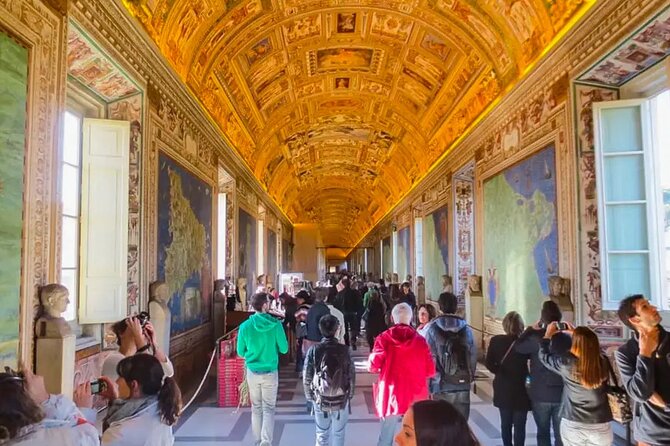
I especially like how the guide shapes what you see, from the meaning behind Raphael’s School of Athens to the stories behind classic sculptures like Laocoön and the Apollo of Belvedere. You’ll also pass through the Gallery of Maps, a strange, fascinating room that helps you understand how people imagined the world in the 1500s.
The main thing to consider is the time: it’s a compact visit, and if the group moves a bit quickly, some halls can feel a little short for lingering. Plan for a 2-hour guided pace and come wearing comfy shoes, because the Vatican is still the Vatican.
In This Review
- Key highlights worth your attention
- Priority entry at the Vatican Museums: what it really changes
- Where you meet and how the tour flows
- Raphael Rooms and the School of Athens: seeing the art’s idea, not just the face value
- Pio-Clementine Museum: Laocoön and Apollo of Belvedere in the right order
- The Gallery of Maps: the Vatican’s weirdly practical room
- Leonardo’s artwork stop: where the tour adds variety
- Sistine Chapel: why the guide’s prep matters
- English guide quality: accredited and small-group makes a difference
- Small-group pacing: the best and the only catch
- Price and value: what you’re paying for at $119.21
- What to wear and how to prep so the day goes smoothly
- Who this tour suits best (and who might pass)
- Should you book this Vatican Museums & Sistine Chapel priority tour?
- FAQ
- How long is the Vatican Museums & Sistine Chapel tour?
- What’s included in the price?
- What language is the tour offered in?
- Where does the tour start?
- Where does the tour end?
- Is food or transport included?
- What’s the group size limit?
- What should I wear for the Sistine Chapel?
Key highlights worth your attention
- Priority entrance to beat long entry lines and start with momentum
- Accredited Vatican official English guide who explains what you’re seeing
- Raphael Rooms with School of Athens and other Renaissance masterpieces
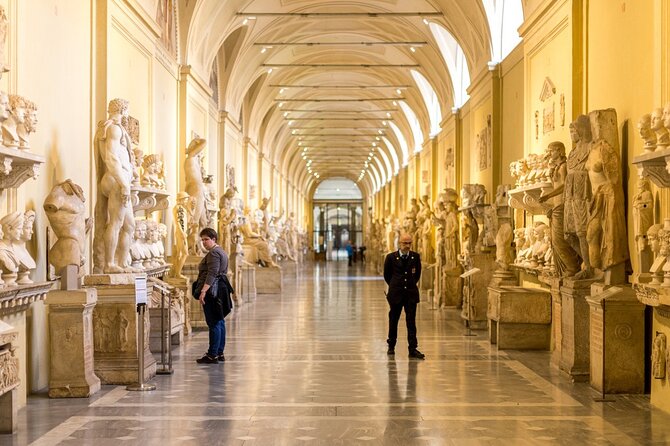
- Pio-Clementine Museum stops featuring Laocoön and Apollo of Belvedere
- Gallery of Maps showing 16th-century cartography and perspective
- Sistine Chapel focus with an efficient route that ends after your visit
Priority entry at the Vatican Museums: what it really changes
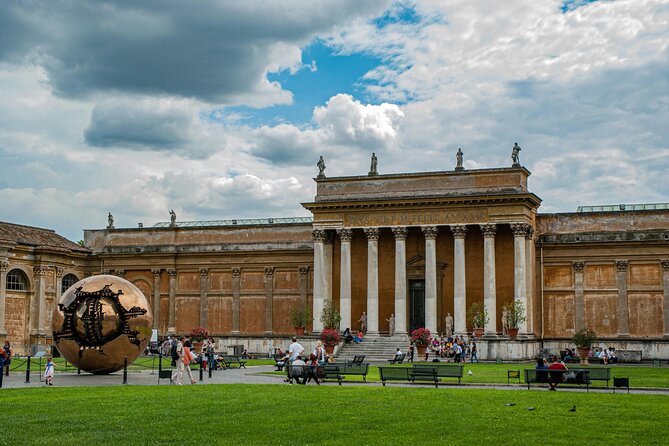
The Vatican Museums can feel like controlled chaos. This tour’s biggest practical advantage is that it’s built around skip-the-line tickets, so you’re not wasting the first part of your day stuck in a crowd.
That matters because Vatican time is precious. You’re paying to move through the museum with structure, then land at the Sistine Chapel when your eyes are ready—not when you’re already exhausted from shuffling forward in a queue.
You can also read our reviews of more museum experiences in Rome



Where you meet and how the tour flows
You start at Via Vespasiano, 71, 00192 Roma RM, near public transportation. That’s useful if you’re coming from the city center and want an easier approach than trying to guess where to park.
The tour ends after the Sistine Chapel visit, and you’ll exit onto Viale Vaticana. In other words, you’re not looping back to the meeting point. If you’re planning the rest of your day, think of this as a one-direction route: museum highlights in the first stretch, Sistine Chapel at the finish.
It’s also a small-group experience with a maximum of 15 people. That’s the difference between a guided story you can follow and a loud sprint where you only catch fragments.
Raphael Rooms and the School of Athens: seeing the art’s idea, not just the face value
Your tour begins with context. Before you even reach the Sistine Chapel, the guide points you toward sections that help you understand why Renaissance art looks the way it does.
One standout stop is the Raphael Rooms, where you’ll see the famous School of Athens. What makes this special on a guided route is that you don’t just spot figures and architecture—you get the meaning behind the composition and how it connects to Renaissance thinking.
You also get other Raphael masterpieces in the same complex area. That matters because Raphael’s style becomes easier to read when you see how the rooms relate to each other instead of treating each room like a random museum room.
Pio-Clementine Museum: Laocoön and Apollo of Belvedere in the right order
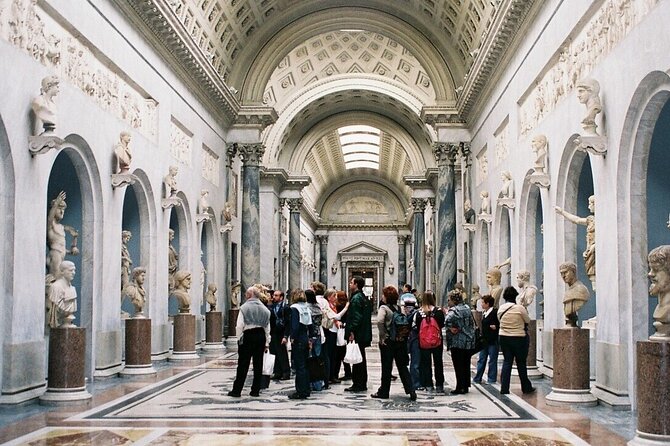
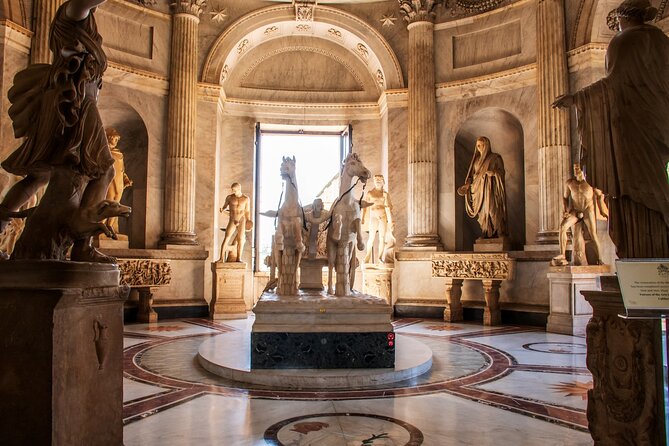
Next comes the Pio-Clementine Museum, where classical sculpture does what it was made to do: pull you into a moment frozen in time.
You’ll encounter legendary works like Laocoön and Apollo of Belvedere. The guide helps with the backstory of these statues and explains why they’re considered masterpieces of classical art.
This is one of the smartest parts of the itinerary because it gives your eyes contrast. You’re shifting from Renaissance fresco logic to the physical drama of marble bodies—pain, tension, balance. Even if you’re not a sculpture person, it’s hard not to react when you see those famous figures up close.
The Gallery of Maps: the Vatican’s weirdly practical room
Then there’s the Gallery of Maps, which is the kind of stop you’d normally skip because it sounds… niche. On this tour, it becomes a time-capsule lesson.
You’ll look at detailed 16th-century topographical maps, and the guide frames what you’re seeing: how people pictured the world centuries ago, and what that says about knowledge and power in that era.
This is also a good breather in the route. It’s still fascinating, but it’s visually different from paintings and sculptures, so your brain gets a reset before the Sistine Chapel.




Leonardo’s artwork stop: where the tour adds variety
Midway through the museum portion, you’ll have time to admire artwork attributed to Leonardo Da Vinci, specifically described here as a recreated Bible painting. This is a nice change of pace because the Vatican Museums are often pigeonholed as Raphael plus Michelangelo, so a Leonardo moment keeps the day from feeling repetitive.
The key here is how the guide uses the stop. You’re not just looking at a work and moving on. You’re given framing that helps you connect the artwork to the broader religious and artistic themes that run through the day.
Sistine Chapel: why the guide’s prep matters
The Sistine Chapel is where everyone wants to be, but the trick is how you get there. This tour is timed so you enter after you’ve already seen enough art and symbolism that your brain can start reading the fresco program instead of just staring upward in awe.
By the time you arrive, you’ve already moved through Renaissance thinking (Raphael Rooms), classical foundations (Pio-Clementine), and even older ways of mapping the world (Gallery of Maps). That buildup helps you notice connections instead of treating the Sistine Chapel as an isolated wow moment.
Important practical note: plan to follow the Sistine Chapel dress code. Keep shoulders and knees covered. A single stop can turn into a frustrating delay if you arrive dressed too casually.
English guide quality: accredited and small-group makes a difference
This tour includes an accredited Vatican official English-speaking guide. That’s not just a comfort detail—it affects how the time is spent.
In a place like this, a guide helps you focus. When you know what to look for, you don’t have to fight your way through crowd noise and signage. The route becomes an organized conversation with the building itself.
From feedback tied to the experience, guides like Maurizio (spelled in different ways in different places) are noted for being engaging and bringing wit, while still pointing out the details you’d miss on your own. If you get a guide with that style, you’ll feel like you’re learning the language of the art.
Small-group pacing: the best and the only catch
With a maximum of 15 people, you’re less likely to feel swallowed by the crowd. You can usually hear the explanations without standing three rows behind someone filming.
Still, the tour is only about 2 hours, and the museum corridors are long. One downside to keep in mind is that a fixed time can make the tour feel a bit rushed if you’re the type who wants to linger in front of every work.
If you want a slower museum day, consider using this tour as your structured highlight session, then do a separate unhurried follow-up at specific areas you care about most.
Price and value: what you’re paying for at $119.21
At $119.21 per person for a roughly two-hour guided experience, the price isn’t cheap—but it also isn’t just paying for a ticket. You’re paying for:
- Skip-the-line entry (time savings are real here)
- An accredited Vatican official guide
- A tight route that hits multiple signature stops
- A small group limit that helps the experience stay readable
If you were to do this by yourself, you’d likely spend the extra budget on transportation time, map reading, and the stress of managing the queue. In a museum where the main enemy is wasted minutes, priority entrance plus guidance is often the best use of money.
Also, because this sells with decent lead time (it’s commonly booked about 19 days ahead), booking sooner helps you get a slot that fits your schedule.
What to wear and how to prep so the day goes smoothly
Comfy shoes are non-negotiable. The Vatican is walk-heavy, and this tour includes moving through multiple sections before the Sistine Chapel.
Bring something practical like a light layer for indoor spaces, since museum temperatures can vary. And do yourself a favor: dress for the Sistine Chapel rules up front so you’re not scrambling for cover-ups right at the end of your walk.
If you rely on a phone for your ticket, note that this experience uses a mobile ticket. Make sure your device is charged so you’re not hunting for signal or battery near the entrance.
Who this tour suits best (and who might pass)
This tour fits best if you want structure and help reading masterpieces. If you like art but don’t want to spend your precious hours figuring out what matters most, this is a strong match.
It also works well if you’re trying to see both Renaissance painting and classical sculpture in one hit. You’ll get a broad sampler that still feels connected, not random.
If you prefer long, quiet wandering with no schedule pressure, you might find the pacing too tight. In that case, you could still enjoy the museum, but you’ll probably want a different format with more flexible time.
Should you book this Vatican Museums & Sistine Chapel priority tour?
Yes, book it if your priority is efficiency plus meaning. The combination of priority entry, a guided route through Raphael Rooms and key museum sections, and a Sistine Chapel-focused finish is a good value formula when the Vatican is crowded and time is short.
I’d book with extra confidence if you want the Sistine Chapel visit to feel earned, not rushed. The guide helps you get oriented before the ceiling, and the small group setup keeps the experience from turning into a stampede.
If you’re the kind of person who hates moving too quickly, consider booking a different option with more time for lingering. Otherwise, this one is a solid, practical way to tackle the highlights without wasting your day in lines.
FAQ
How long is the Vatican Museums & Sistine Chapel tour?
The guided tour runs for about 2 hours.
What’s included in the price?
The tour includes skip-the-line tickets and a 2-hour guided visit, plus an accredited Vatican official English-speaking guide.
What language is the tour offered in?
It’s offered in English.
Where does the tour start?
The tour starts at Via Vespasiano, 71, 00192 Roma RM, Italy.
Where does the tour end?
After the Sistine Chapel visit, the tour ends as customers exit the Museum on Viale Vaticana.
Is food or transport included?
No. Food and beverage are not included, and transport to the meeting point is also not included.
What’s the group size limit?
The maximum group size is 15 travelers.
What should I wear for the Sistine Chapel?
You should dress with shoulders and knees covered.