REVIEW · ROME
Rome: Micromosaic Jewelry Workshop
Book on GetYourGuide →Operated by Studio Cassio · Bookable on GetYourGuide
Turn tiny glass into wearable Roman art.
In about 2.5 hours, you’ll learn the craft of Roman micromosaic in a professional studio setting close to the Colosseum, then make a silver pendant using traditional glass techniques. You start with a short guide to how this art form developed and how the tiny pieces are meant to work together. You’ll leave with a finished piece, plus a sturdy jewelry box for safe storage.
I love that the workshop is hands-on from the first moments: you pick a silver pendant frame designed for this activity and then practice the key building blocks—texture, composition, and how to cut glass tile pieces. I also love the small group setup, capped at 7 participants, which makes it easier to get real one-on-one feedback when your pattern needs adjusting. The result is more than a craft lesson; it’s a genuine skill you can feel in your hands as the piece comes together.
One possible drawback: this is not a casual drop-in. If you want something purely observational or fast, you may find the focus on careful glass cutting and layout takes more patience than you expected.
In This Review
- Key Highlights Worth Your Time
- Studio Cassio Near the Colosseum: What Your Time Will Feel Like
- Roman Micromosaic 101: The History You Can Actually Use
- Choosing a Silver Pendant Frame: Make Your Piece Feel Yours
- Texture and Composition Lessons: The Skills Behind a Good Looking Pendant
- Glass Tile Cutting Practice: Where Patience Pays Off
- Building Your Pendant: From Rough Plan to Finished Roman Style
- Price and Value: Why $134.81 Can Make Sense
- Who This Workshop Fits Best (And Who Might Want Something Else)
- Practical Tips Before You Go
- Should You Book This Micromosaic Pendant Workshop?
- FAQ
- How long is the micromosaic jewelry workshop?
- Where does the workshop meet?
- What’s included in the price?
- What language is the instruction in?
- Are there age limits?
- What is the cancellation policy?
Key Highlights Worth Your Time
- Studio Cassio near the Colosseum: a focused workshop location, easy to reach from Cavour Metro on Line B.
- You choose the silver pendant frame: multiple shapes designed for this micromosaic process, so your starting point feels personal.
- Practical instruction on composition: you learn how texture and arrangement affect how the final pendant reads.
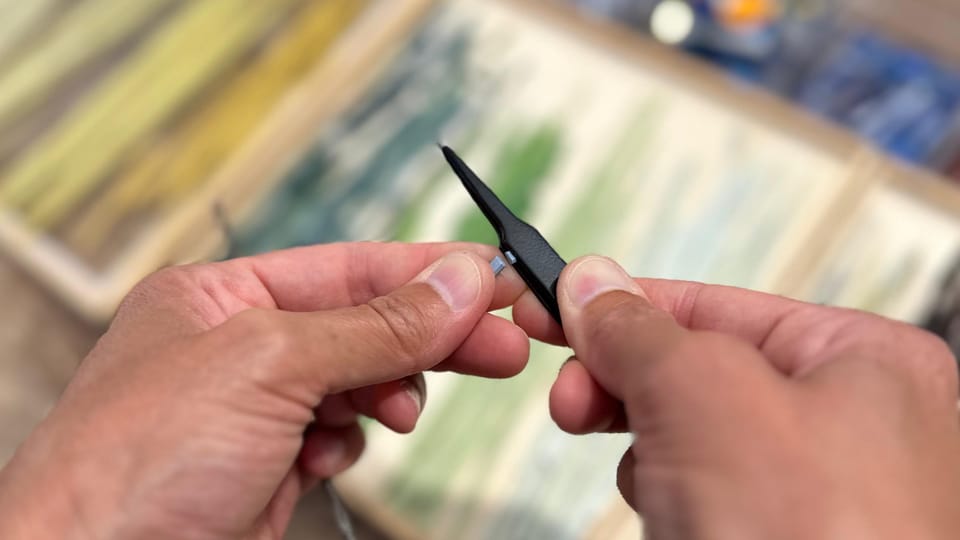
- Glass tile cutting technique: you practice the steps that make micromosaic look crisp, not messy.
- Master mosaicist guidance: you get tips and assistance right when you need it.
- Small group attention: limited to 7, which means less waiting and more direct help.
Studio Cassio Near the Colosseum: What Your Time Will Feel Like
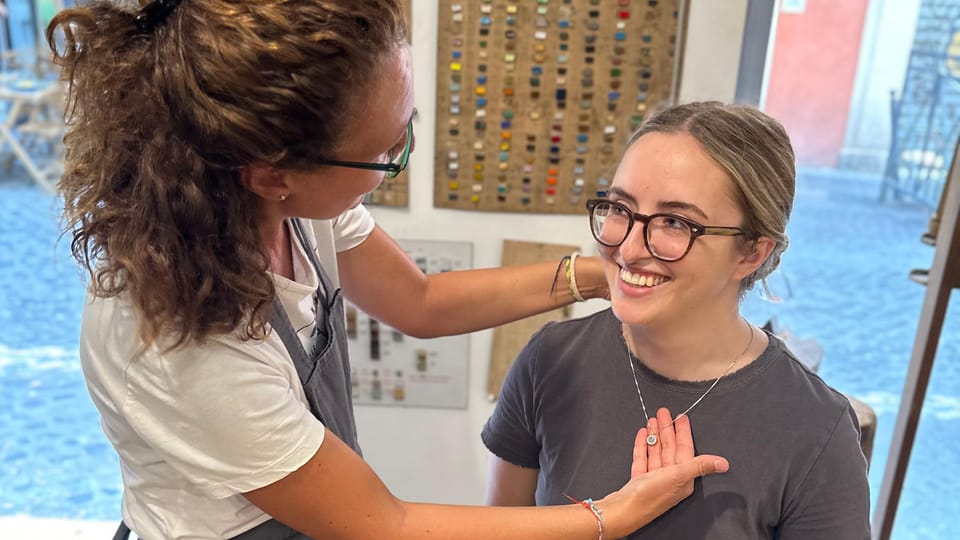
The workshop runs in a real mosaic studio environment, not a demo stage. Your meeting point is close to the Colosseum, and it’s just 2 minutes from Cavour Metro Station on Line B, so you can plan this as part of a normal day of sightseeing rather than an all-day mission.
Once you arrive, you’ll settle into a working rhythm quickly. The session is designed around building a pendant step-by-step, with enough structure that you won’t feel lost, but enough flexibility that your piece can look like your choices—not a carbon copy.
Expect a small group atmosphere. Limited to 7 participants, it stays calm and manageable, which matters when you’re working with tiny glass pieces where small mistakes can cost time.
And yes, they keep it practical. You’ll have bottled water and coffee and/or tea, which is a nice touch during a concentrated craft session.
You can also read our reviews of more tours and experiences in Rome



Roman Micromosaic 101: The History You Can Actually Use
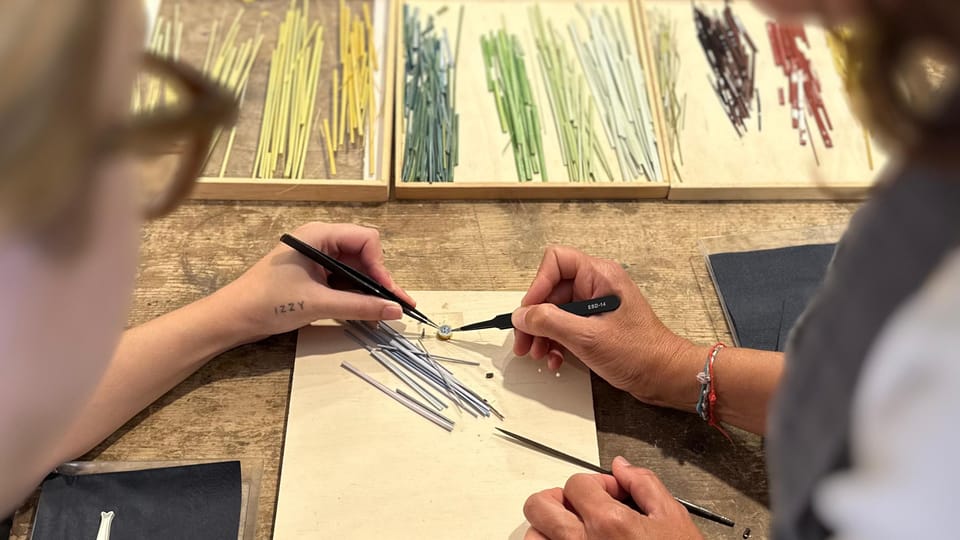
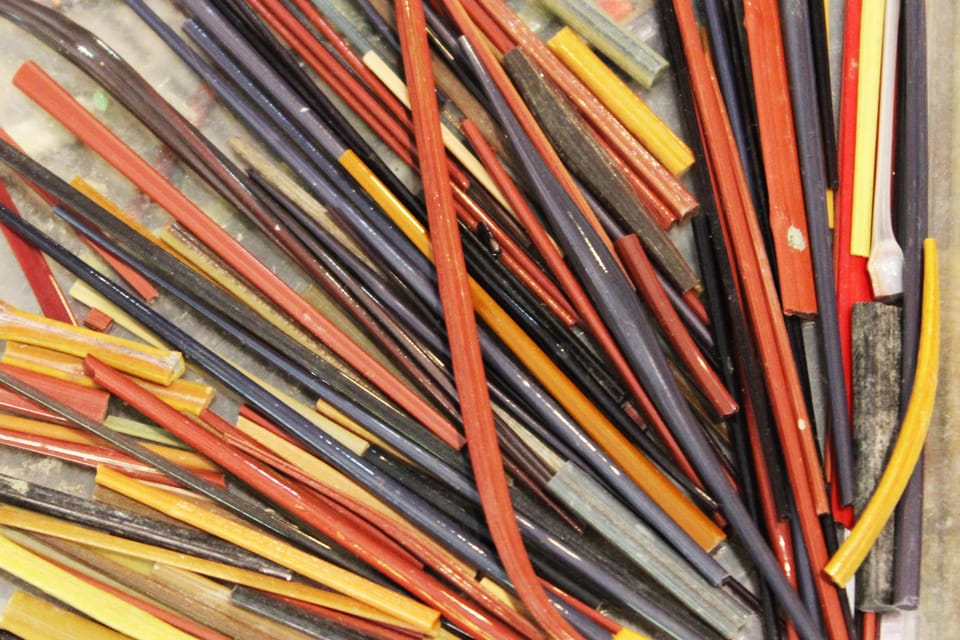
This workshop doesn’t treat history like a museum lecture. You start with an introduction to how Roman micromosaic techniques were made and why they were valued—especially the idea that small tesserae (tiny glass pieces) can create a detailed image or texture when arranged correctly.
The useful part is how that context connects to what you’re doing at the workbench. Roman micromosaic is all about control at a micro level: how you cut pieces, how you place them, and how you guide the viewer’s eye across the pendant.
If you care about authenticity, this matters. You’re not just assembling glittering bits. You’re using the same basic logic craftsmen have used for centuries: tiny materials + careful layout + a plan for texture and composition.
It also sets your expectations for the rest of the session. Once you understand what makes the technique look right, your own decisions start feeling more intentional.
Choosing a Silver Pendant Frame: Make Your Piece Feel Yours
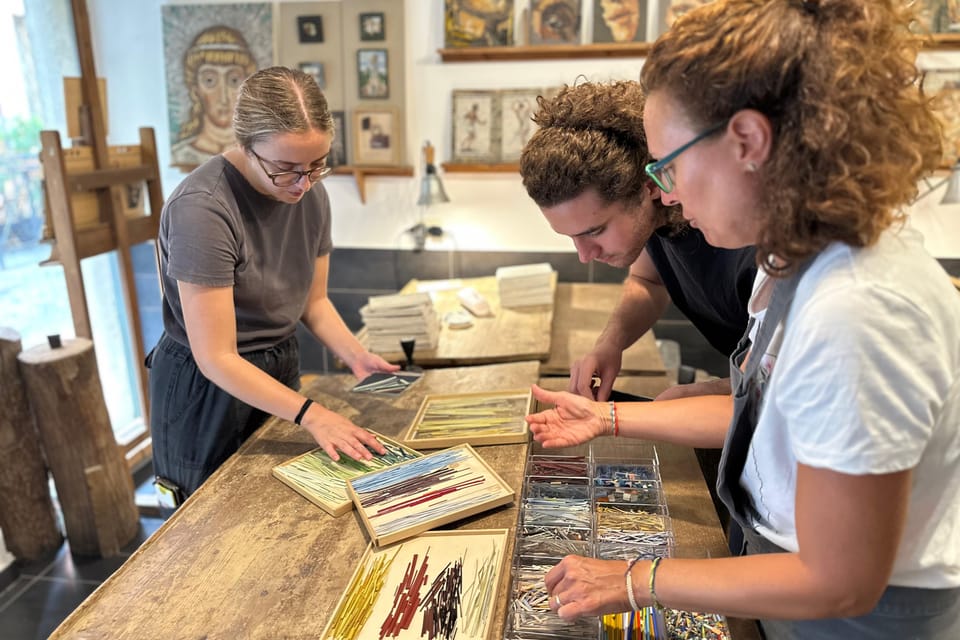
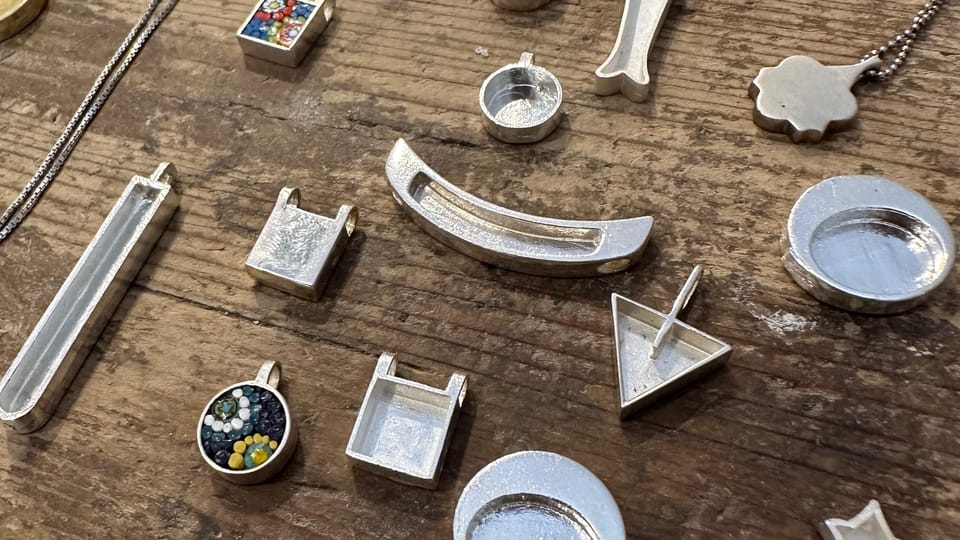
Before you start building with glass, you choose from a variety of silver pendant frames designed specifically for this workshop. This is a big deal for value because it shapes the whole final look: the pendant’s form influences how your design should sit, how much space you’ll have for texture, and how the surface will read once it’s finished.
You’ll pick from multiple shapes, and you’ll do it early enough that you can think about your composition as you work. It’s not one of those workshops where the “creative” part is only choosing a color option at the end.
This is also where the studio approach shows. The pendant frames are set up for the micromosaic process, so you’re not fighting the materials. That saves time and frustration—especially if you’re new to glass cutting.
Texture and Composition Lessons: The Skills Behind a Good Looking Pendant
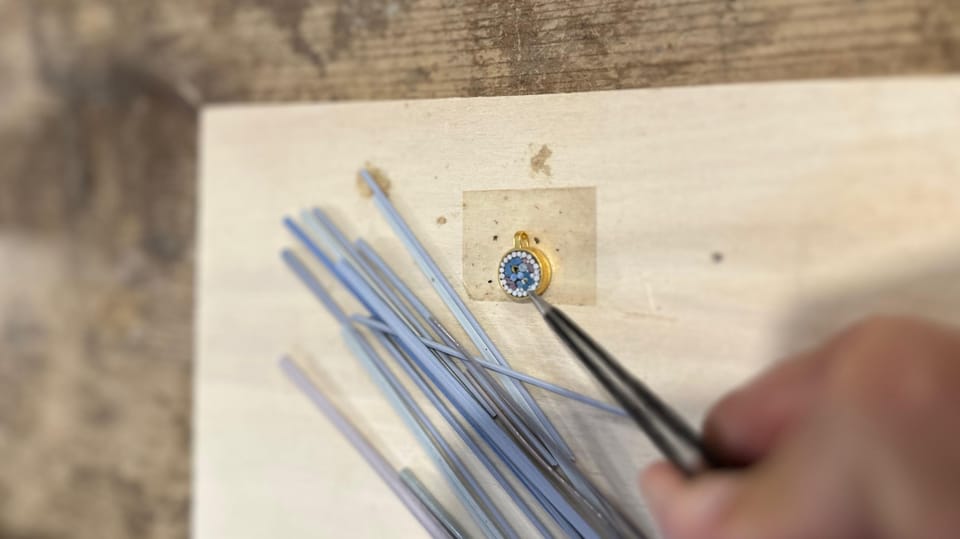
At the heart of micromosaic is how texture and composition work together. In this workshop, you practice those principles rather than just copying a sample.
You’ll learn to think in layers:
- Texture: how dense or varied the glass pieces are, and how that variation affects the feel of the pendant.
- Composition: how to arrange pieces so the design looks balanced from a normal viewing distance.
- Cutting strategy: using the way you cut to create the kind of edges and spacing that make the piece look deliberate.
This is the part that’s hardest to fake with a simple craft kit. The instruction turns it into a technique, not a guess. You get tips and assistance from a master mosaicist, which really helps when you’re unsure about how tight to make the layout or how to handle uneven areas on the frame.
What I like about the approach is that it respects your eye. You’re given guidance, but you still make the decisions. That’s why the finished pendant tends to feel personal instead of generic.
Glass Tile Cutting Practice: Where Patience Pays Off
The workshop includes hands-on practice with glass tile cutting. This isn’t a lightning-fast activity, and that’s part of the charm. Micromosaic looks so crisp because the maker controls the small pieces—shape, size, and edge quality.
If you’re the type who gets impatient when things aren’t instantly perfect, plan to slow down on purpose. The craft rewards steadiness. The good news: the instruction is there to help you find the rhythm.
This is also where the small group size helps. When you’re working with tiny pieces, you don’t want a long line to get feedback. You want to fix issues immediately—like piece sizing or placement—before they ripple through the design.
The overall tone from the instruction is patient and supportive. In the experience, that patience stands out as a major reason people feel confident throughout the session and walk away with something they’re proud of.






Building Your Pendant: From Rough Plan to Finished Roman Style
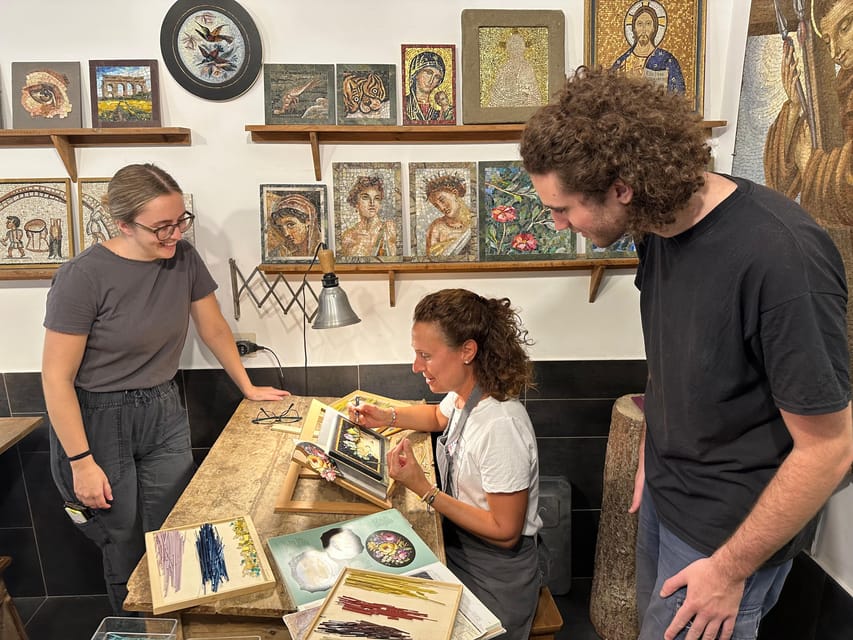
Once you’ve chosen your frame and practiced the core skills, you start assembling your pendant using traditional Roman micromosaic techniques in glass.
You’re essentially doing three things at once:
- Placing pieces with an eye for the design,
- Adjusting for how the surface and frame will accept the tesserae,
- Keeping everything consistent enough that the pendant reads as one clear piece of art.
The master mosaicist tips help you troubleshoot in real time. If your texture is getting too dense, you can adjust. If the composition starts to look off-balance, you learn what changes bring it back into alignment.
This hands-on construction is also the part that turns a workshop into a memory. You can actually see progress during the session, which is satisfying in a way that a quick souvenir stop never matches.
When you finish, you’ll have your own completed micromosaic pendant, framed in silver, with a sturdy jewelry box to store your artwork. It’s the kind of keepsake you can wear, not just hang on a shelf.
Price and Value: Why $134.81 Can Make Sense
At $134.81 per person, this isn’t the cheapest Rome activity. You should look at it as a skill-and-materials experience, not a typical attraction ticket.
Here’s what you’re paying for in practical terms:
- A guided studio session with a master mosaicist
- Access to premium micromosaic materials and tools
- A pre-designed silver pendant frame (with chain)
- Your finished pendant and a sturdy jewelry box
- A time block long enough to actually make something, not just watch
For me, the value question comes down to whether you’ll enjoy careful work and want a real output. If you enjoy crafts, patterns, and precision, you’ll likely feel the value immediately because your pendant is the product of real instruction plus your own decisions.
If you’re expecting a fast photo-op, then the price may feel steep for what you get. But if you want something that captures the feel of Rome through a hands-on craft, this delivers.
Also, it’s only 2.5 hours. That’s a sweet spot: long enough to learn and build, short enough to still enjoy the rest of your day near the Colosseum.
Who This Workshop Fits Best (And Who Might Want Something Else)
This workshop is a great match if you want an authentic, maker-style experience in Rome. You’ll probably enjoy it if you like:
- Learning a technique, not just making a craft
- Working slowly and carefully
- Wearing a souvenir that you helped create
It’s also a strong choice for people who want smaller-group attention. With a limit of 7 participants, you’re not stuck waiting your turn while your materials sit untouched.
It’s not suitable for children under 12, so plan accordingly if you’re traveling with younger kids.
If you dislike structured activities or you get easily stressed by fine-detail work, you might find it challenging. In that case, you may want to pick a workshop style that’s more forgiving.
Practical Tips Before You Go
A few small choices can make your session smoother.
First, treat the workshop like a focused class, not a sightseeing pause. Wear clothes you don’t mind getting a bit covered from studio work areas, and plan to stay with the group during the session flow.
Second, arrive with a mindset of adjusting. Micromosaic rewards tiny corrections. If your first layout feels different from your plan, that’s normal; the guidance is there to help you refine as you go.
Third, think about what you’ll wear the pendant with when it’s done. That mindset can help you decide on texture density and composition early, because you’ll care about the final look on skin and clothing.
Finally, if you speak either English or Italian, you’re set. The instructor supports English, Italian, and the workshop is designed for that language reach.
Should You Book This Micromosaic Pendant Workshop?
Book it if you want a memorable Rome souvenir that’s genuinely handmade and built through technique. The combination of a small group, instruction from a master mosaicist, and a clear final output—a silver micromosaic pendant in a sturdy box—makes it one of those experiences that feels worth the time.
Skip it if you’re looking for something purely passive, or if you know you don’t like detailed, careful work. This activity asks for patience. When that fits your style, the results feel personal and special.
FAQ
How long is the micromosaic jewelry workshop?
The workshop lasts about 2.5 hours. Starting times vary, so you’ll want to check availability for the specific time slot.
Where does the workshop meet?
The meeting point is close to the Colosseum, and it’s about 2 minutes from Cavour Metro Station on Line B. The activity ends back at the meeting point.
What’s included in the price?
Your price includes the introduction to Roman micromosaic technique and history, a choice of a high-quality silver pendant frame with a chain, premium micromosaic materials and tools, your finished pendant, a sturdy jewelry box, and bottled water and coffee and/or tea.
What language is the instruction in?
The instructor offers English and Italian.
Are there age limits?
Yes. The workshop is not suitable for children under 12.
What is the cancellation policy?
You can cancel up to 24 hours in advance for a full refund, and there’s also a reserve now, pay later option listed. Transportation to and from the workshop is not included.