REVIEW · ROME
Rome in Style: Panoramic Vespa Experience with Licensed Driver
Book on Viator →Operated by Rome by Vespa · Bookable on Viator
Rome looks different from a Vespa seat. I really like the Francesco-led route because the commentary lands right when you’re near each sight, and I also love that the Vespa makes Rome feel fast and breezy. The one thing to think about first is the self-drive requirement: you need the right licensing/permit and some two-wheeler experience, or you’ll be much happier riding as a passenger (or paying the driver option).
This tour is built around short, satisfying stops rather than long museum time. You get helmets, basic injury insurance, and a small-group vibe (max 20), and it’s offered in English with a mobile ticket. Plus, the Vespas are automatic in the style used for this experience, so you’re not constantly juggling gears.
Plan on a guided ride that can run a bit longer than the 2.5-hour estimate, depending on the flow of the day and photo moments. If you’re the sort of person who likes seeing landmarks and then getting away from the main crowds, Rome on two wheels can be a very smart use of a half-day.
In This Review
- Key Points Worth Knowing
- Why a Vespa Ride Is a Great Way to See Rome
- Getting Started at Via della Madonna dei Monti (Meet Francesco)
- Rione Monti: The Historic Streets Before the Main Monuments
- The Colosseum Stop: Photo Time Plus a Real History Lesson
- Spanish Steps: A Short Climb With a Bigger-View Payoff
- Piazza Navona and Bernini’s Four Rivers Fountain
- Castel Sant’Angelo: Hadrian’s Tomb to Fortress to Museum
- The Vittorio Emanuele II Monument Area (Big-Stone Rome Moments)
- Terrazza del Gianicolo: The Cannon Shot and the City Sweep
- Fontanone at Fontana dell’Acqua Paola (Your Panoramic Vespa Pause)
- Trastevere by Vespa: Pastel Streets, Flowers, and Local-Feel Vibes
- Price and Value: What $144.17 Buys You in Real Terms
- Self-Drive vs. Passenger: Pick What Matches Your Comfort
- Small Group Size and the Pace You’ll Actually Feel
- Should You Book the Rome in Style Vespa Experience?
- FAQ
- How long is the Rome in Style Panoramic Vespa Experience?
- Is the tour offered in English?
- Can I ride as a passenger instead of driving?
- What is the extra cost for the driver option?
- Are helmets and insurance included?
- Where do we meet, and what happens at the end?
Key Points Worth Knowing
- Licensed guide, Francesco-style routing: You’ll ride with a guide who’s also focused on keeping everyone together.
- Automatic scooter comfort: No gear shifting, which helps if you’re new to riding.
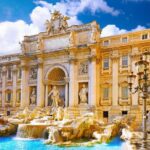
- Big sights plus scenic viewpoints: Colosseum, Trevi, and the viewpoints from Janiculum get equal time.
- Photo-friendly stops: Colosseum and Fontanone include chances to stage a shot with your Vespa.
- Driver vs. self-drive choice: You can ride as a passenger, or drive yourself if you meet the requirements.
- Small group size: Up to 20 people means less waiting around.
Why a Vespa Ride Is a Great Way to See Rome
Rome has a way of confusing your feet. You can walk great distances, hit a wall of scooters and cars, and still miss the places that feel most lived-in. A Vespa tour fixes that. Instead of treating Rome like a checklist, you move like a local through neighborhoods and viewpoints—still seeing the headline monuments, but also getting the streets and the angles that most people never reach.
The vibe here is “short story, then move.” Francesco’s commentary is designed for what you’re seeing right then, not for a long lecture you can’t use. And because the ride is paced with multiple stops, you don’t feel rushed, but you also don’t waste hours sitting still.
You can also read our reviews of more tours and experiences in Rome

Getting Started at Via della Madonna dei Monti (Meet Francesco)
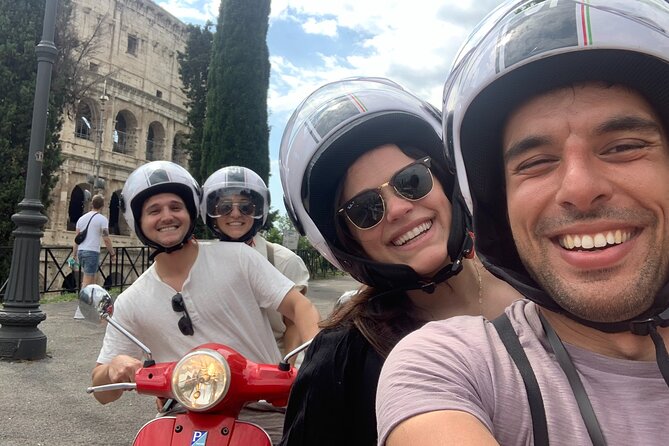
Your tour begins at Via della Madonna dei Monti, 57, in Rome’s Monti area. This matters more than you might think: starting in the historic center means you’re already close to the neighborhoods and views that make a Vespa feel worth it.
At the start, Francesco greets you and hands out helmets. If you chose the self-drive option, there’s a quick test drive first—so you can get comfortable before you’re in real traffic flow. That “practice first” step is huge. Rome is not the place to learn control of a two-wheeler for the first time.
Once everyone’s sorted, you hit the road and Francesco sets the tempo. The ride isn’t just about speed; it’s about getting you into the right streets and then stopping at the right moments to look, listen, and take photos.
Rione Monti: The Historic Streets Before the Main Monuments

Rione Monti is a strong warm-up because it’s old Rome in a way you can feel. You get cobblestone streets, classic stone buildings, and a sense of layers—without immediately jumping into the crowds around the biggest sites.
This first segment works like jet lag for your brain—in a good way. It helps you reset so that when you reach the headline stops, you understand what you’re looking at and why it matters. Francesco also uses this part of the ride to steer you toward smaller, local-feeling moments you might otherwise skip.
If you’re worried about whether you’ll be able to follow the route, Monti helps. It’s close enough to settle your nerves, then the tour builds toward the bigger, more iconic stops.
The Colosseum Stop: Photo Time Plus a Real History Lesson
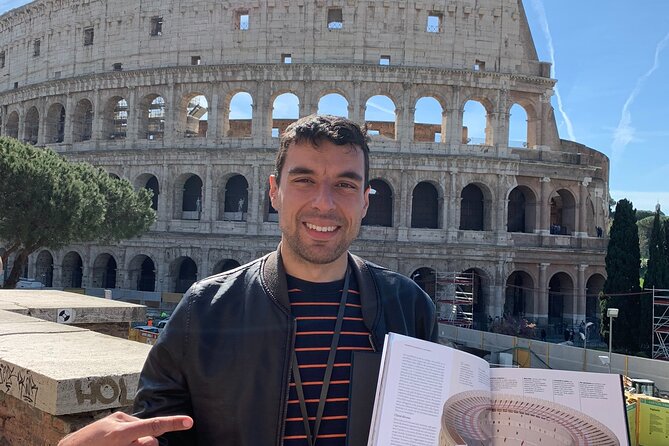
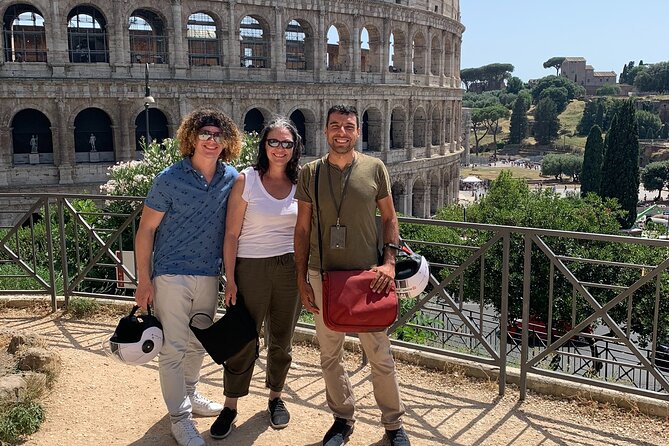
The Colosseum is the moment many people came for. And here, you don’t just roll past it—you get a guided stop right where it counts. Francesco provides a focused history lesson about the Colosseum, then gives you time to take a memorable photo with your Vespa in front of it.
Two practical notes. First, the Colosseum stop does not include an admission ticket for entering. Second, that’s not a weakness—it fits the format. You’re on a moving, time-sensitive ride, so the value is in seeing the monument’s scale and details from the outside with context, not trying to squeeze in a full interior visit during this 2.5-to-3-hour window.
If you’re doing Rome in limited time, this kind of exterior-and-explanation combo often feels more efficient than rushing through a museum line.
Spanish Steps: A Short Climb With a Bigger-View Payoff
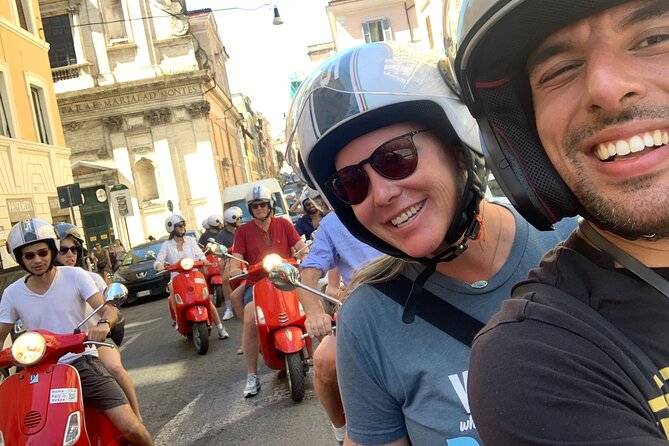
After Colosseum-level spectacle, the Spanish Steps offer a different kind of Rome: elegant, photogenic, and always busy. The stop here is short, but it’s timed for what you can do quickly—walk up the steps, soak in the architecture, and then get your bearings over the city from above.
From the top, the views can help you connect the dots. You can look out and spot familiar shapes and landmarks, which makes the rest of the tour feel more intentional. This is also a good moment to take a breath. Vespa touring can be exhilarating, but Spanish Steps gives you a pause where you don’t have to ride as much to enjoy the moment.
You can also read our reviews of more tours and experiences in Rome
Piazza Navona and Bernini’s Four Rivers Fountain
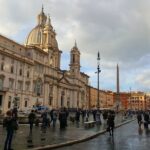
Piazza Navona is one of those Rome squares that feels like it was designed for people to linger. The tour stop brings you right to the Fountain of the Four Rivers at center stage. Francesco shares the story of the fountain and its significance, including that it was designed by Gian Lorenzo Bernini.
What I like about this stop is the way it turns a pretty square into something you can read. As you approach, you can see the figures representing the Nile, the Danube, the Ganges, and the Rio de la Plata. That detail matters, because it helps you understand why the fountain is famous beyond being a photo backdrop.
This is also a great break between viewpoint stops. You get a “stand, look, learn, move” rhythm without needing tickets or a formal visit inside anything.
Castel Sant’Angelo: Hadrian’s Tomb to Fortress to Museum
Castel Sant’Angelo is a visual story in stone. It began as a tomb built for Roman Emperor Hadrian in 135 AD. Later, it was transformed into a military fortress that helped protect Rome during the Middle Ages. Over time, it served as a Papal residence, then a prison during the Renaissance era, and today it’s used as a museum.
On a Vespa tour like this, you’re not planning an all-day museum session. The point is to grasp the building’s changing roles while you’re looking at the structure itself. Even without going inside, the exterior presence makes the timeline feel real. It also gives your route a satisfying shift—from baroque-era city life back to the heavy Roman foundations.
If you love buildings that show their age in layers, this stop is a strong anchor.
The Vittorio Emanuele II Monument Area (Big-Stone Rome Moments)
Later in the ride, you’ll reach a square known for the monument of Vittorio Emanuele II. Even if you’re not planning to go inside anything (visits inside monuments aren’t included), seeing this monument area from street level gives you a sense of how Rome commemorates and reworks its power stories over time.
This stop tends to work best as a “look and understand scale” moment. When you move by scooter, you can catch multiple angles quickly, and Francesco can help you read what you’re seeing without overloading you.
Terrazza del Gianicolo: The Cannon Shot and the City Sweep
Janiculum Hill is one of the best ways to reset your sense of distance in Rome. The tour includes a stop at Terrazza del Gianicolo, and if you book the morning tour at 12 o’clock, you may catch the daily cannon shot tradition.
This cannon shot dates back to the 19th century, when it was used to synchronize the clocks of the city. Watching it is one of those Rome moments that feels half-history, half-live event. When the cannon fires, the sound makes everything feel more immediate than a photo ever can.
Even without the cannon, Janiculum is about the view. From the top, you can see major monuments across Rome, including the Colosseum, the Pantheon, and St. Peter’s Basilica. It’s the kind of panorama that makes you understand why Rome has so many viewpoints built into its fabric.
Fontanone at Fontana dell’Acqua Paola (Your Panoramic Vespa Pause)
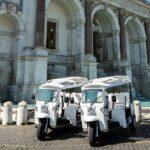
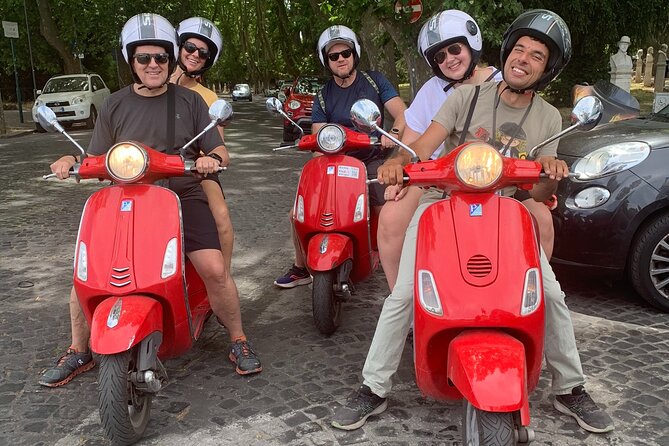
Next comes one of the prettiest reward stops: Fontanone, located at the top of the Janiculum hill, tied to Fontana dell’Acqua Paola. Francesco parks the red Vespa and you get a moment to soak in the view.
This is where the tour earns its “in style” promise. You look out over the Tiber River, spot the dome of the Pantheon, and see the Vittoriano in the distance. It’s a wide sweep, not a tight street-corner view, and it changes your mental map of the city.
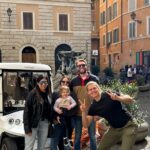
Francesco also offers to take a picture of you with your Vespa in front of the Fontanone. That shot is often what people remember later, because it mixes movement, setting, and the iconic Roman skyline.
Trastevere by Vespa: Pastel Streets, Flowers, and Local-Feel Vibes
Then you head to Trastevere, and the character shift is noticeable. Instead of monuments, you get winding streets and a more everyday Rome rhythm. The tour moves you through the backstreets where pastel-colored palaces and cobblestones make the ride feel like a movie set.
There’s also room for the senses here. The route includes moments where you can notice colorful flowers in bloom and enjoy the way the neighborhood smells and looks in real time. Francesco helps you focus on what’s around you so you’re not just riding past.
If you’re hoping to see a side of Rome beyond famous landmarks, Trastevere is where the tour starts feeling personal. The end result is that you don’t just collect sights—you get a neighborhood memory.
Price and Value: What $144.17 Buys You in Real Terms
At about $144.17 per person for roughly 2.5 hours, this isn’t a budget activity. But it can still be a smart value, depending on what you want from Rome.
You’re paying for four things:
- Time-saving movement: Instead of walking between far-apart sights, you cover more ground.
- A licensed, English-guide format: Francesco isn’t just pointing; he’s giving context at stops.
- Safety basics built in: helmets and basic injury insurance for passengers.
- A photo-ready, viewpoint-heavy route: the Janiculum and Fontanone stops are the kind of moments you’d struggle to set up on your own with confidence.
If you’re the type who spends the whole day just trying to get from A to B, a Vespa route can feel like buying back your time. If you prefer slow wandering and don’t want any riding, then this price is harder to justify.
Self-Drive vs. Passenger: Pick What Matches Your Comfort
One of the biggest decisions here is whether you drive yourself or ride as a passenger.
Self-drive is part thrill, part responsibility. You’ll do a test drive first, and Francesco will make sure you’re comfortable before you’re out in Rome’s streets. But you also need the correct licensing and paperwork. Based on a safety-focused note from a rider, you need an MC license endorsement and an International Driving Permit (AAA), plus motorcycle-scooter experience.
If you’re not sure you qualify, choose the passenger option. If you want the freedom of a guided ride without driving requirements, there’s also a Vespa with driver option that adds an extra €50 cash fee per passenger at check-in.
This is the right place to be practical. Rome rewards bold curiosity, but it doesn’t forgive unprepared driving.
Small Group Size and the Pace You’ll Actually Feel
The tour caps at 20 travelers, which keeps things from turning into a long conga line. The stop-and-go rhythm also helps: you get time at each main sight, but you’re not stuck for ages.
In practice, expect a tour that feels closer to a guided ride with curated stops than a slow walking tour. It’s one of those formats where being early, wearing comfortable shoes (for when you get off and walk a bit), and paying attention to instructions makes the whole thing smoother.
Should You Book the Rome in Style Vespa Experience?
Book it if you want Rome in motion: Colosseum-to-viewpoints-to-neighborhood streets, with a guide who talks through what you’re seeing. It’s especially worth it if you only have part of a day and you want to make it count without spending that time stuck in lines or figuring out routes.
Skip it (or plan passenger mode) if you don’t meet the two-wheeler requirements for self-drive, or if you prefer long, unhurried museum time. This is a “see a lot, learn fast, enjoy the ride” kind of experience, not a deep-dive into interiors.
If you’re comfortable with the idea of riding a scooter through busy central Rome—and you like the payoff of big exterior monuments plus a panoramic finish—this one is a fun, efficient way to do the city.
FAQ
How long is the Rome in Style Panoramic Vespa Experience?
It runs about 2 hours 30 minutes.
Is the tour offered in English?
Yes, it’s offered in English.
Can I ride as a passenger instead of driving?
Yes. There is an option to ride with a driver, or you can choose the self-drive option if you meet the driving requirements.
What is the extra cost for the driver option?
The Vespa with driver option has an additional €50 cash fee per passenger, paid at check-in.
Are helmets and insurance included?
Yes. The tour includes helmet use for each passenger and basic injury insurance for passengers.
Where do we meet, and what happens at the end?
You meet at Via della Madonna dei Monti, 57, 00184 Roma RM, Italy, and the tour ends back at the meeting point.