REVIEW · ROME
Rome: Guided Walking Tour in English or Spanish
Book on GetYourGuide →Operated by Global Experiences · Bookable on GetYourGuide
Rome is magic after dark, and this walking tour is built for that mood. You’ll stroll through Rome’s historic core with a local guide, pausing at major monuments like the Pantheon and Trevi Fountain while learning the layers behind the stones. It’s the kind of route where the city feels like an open-air classroom, but with practical, street-level storytelling.
Two things I’d put near the top: first, the focus on big-name sights and the connective tissue between them, so you understand why they’re where they are. Second, the guide-led time at each stop is long enough to actually hear the point of each place, not just snap a photo and move on. I also like that the tour includes a list of recommendations, so you’re not stuck wondering where to go next.
One drawback to consider: meeting up can take a little extra patience. Some start points are easy to miss in busy areas, and you’ll want to be ready to locate your guide quickly so the whole group doesn’t wait.
In This Review
- Key highlights worth showing up for
- Why a 2-hour Rome night walk feels different than day sightseeing
- A tour like this is also about direction
- Where you’ll meet your guide (and how to avoid the “where are you” moment)
- The opening stretch from Piazza d’Aracoeli or Piazza di Pasquino
- What to watch for on this first leg
- Monumento a Vittorio Emanuele II: more than a big structure
- Practical note
- Trevi Fountain at night: the stories behind the famous face
- How to make Trevi worth your time
- Pantheon time: the architecture lesson you’ll remember
- A quick reality check
- Piazza Navona: baroque energy in a square you can feel
- What makes this stop work on a night tour
- Trajan’s Column: a short stop with a storytelling focus
- If you like history that has teeth
- The smaller church moments: illusions and scandal-adjacent stories
- Ending near your drop-off: where the walk actually lets you continue
- Price and value: what $28 buys you in real terms
- The real value is the pacing
- Who this walking tour suits best
- One small tip for group comfort
- Should you book this Rome guided walking tour?
- FAQ
- FAQ
- How long is the Rome guided walking tour?
- What language is the tour offered in?
- Where do we meet at the start?
- Where does the tour end?
- What are the main stops on the walk?
- Do I need to pay for food during the tour?
- What should I bring?
- Is there a private group option?
- Can I cancel for a refund?
- Is there an option to reserve without paying right away?
Key highlights worth showing up for
- 2-hour nighttime walk through the center, designed for monuments lit up at dusk
- Major stops with real explanations, including Trevi Fountain and the Pantheon
- Two start options (Piazza d’Aracoeli or Piazza di Pasquino) and start location can vary by booking
- Guided time at each location, not rushed photo stops
- A mix of eras, from Italian unification context to stories tied to more recent Roman politics
Why a 2-hour Rome night walk feels different than day sightseeing
Nighttime in Rome isn’t just about romance. It changes how you read the city. Streets feel calmer, monuments pop with lighting, and you can actually linger in the spaces where people historically met, prayed, argued, and celebrated. In a short window like two hours, that matters.
This tour is timed to let you see top central landmarks in the evening/night light, without turning your day into a marathon. If your itinerary is packed, I like that it’s a focused hit of the historic centre rather than an all-day grind.
You can also read our reviews of more walking tours in Rome



A tour like this is also about direction
Rome can be disorienting fast. One guide on foot does something that maps can’t: they connect the dots between squares, buildings, and street corners. You learn what to notice as you walk, so your self-guided time afterward gets easier.
Where you’ll meet your guide (and how to avoid the “where are you” moment)
Your meeting point can vary depending on what option you booked, and the tour may start at places like Trajan’s Column or Piazza Navona, or at one of the listed starting options such as Piazza d’Aracoeli or Piazza di Pasquino. The key is to treat the exact meeting instructions like part of the itinerary.
From the way people describe their experience, two things help:
- Arrive a few minutes early and check your starting area carefully.
- If you’re having trouble spotting the group, use the contact options provided by the organizer so someone can help you find your way to the correct meeting point.
Guides such as Alina and Theo are noted for being clear about where you’ll go next, but even the best tour fails if you’re standing three blocks away. So, don’t underestimate the first 10 minutes.
The opening stretch from Piazza d’Aracoeli or Piazza di Pasquino
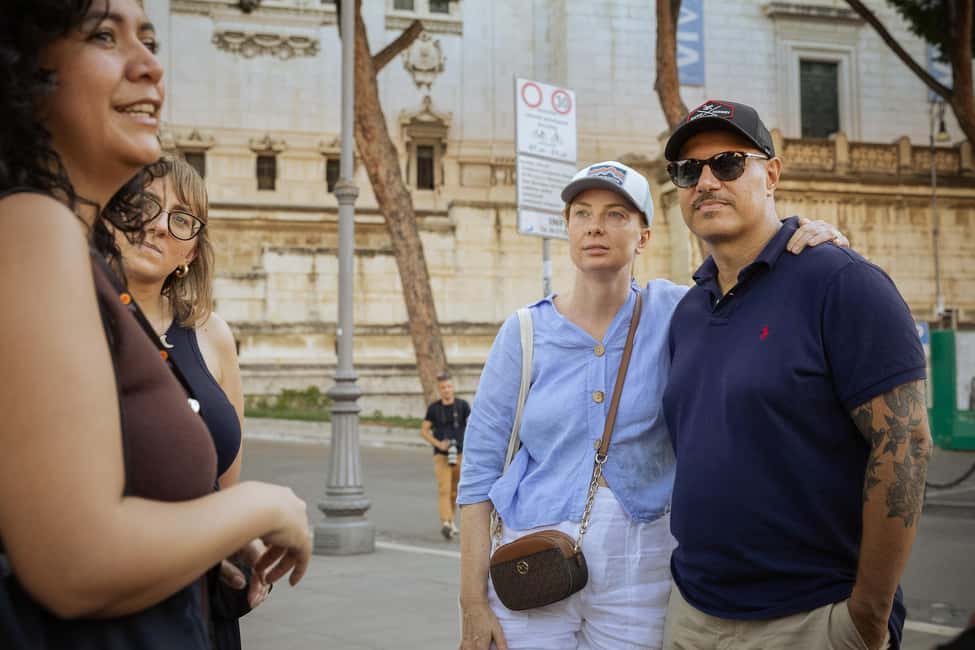
The tour’s start can be Piazza d’Aracoeli or Piazza di Pasquino (depending on booking). Either way, you’re stepping into a part of Rome where small streets lead into big storylines. This is a smart way to begin because you’re not starting in the middle of a landmark crowd with zero context.
You’ll also get that “getting your bearings” effect early. Your guide explains the history of the neighborhoods you pass through, so you start recognizing patterns: how squares connect to major monuments, and how power and religion shaped the layout of central Rome.
What to watch for on this first leg
Keep an eye out for:
- Architectural details and street sightlines that line up with the next major stop
- How the guide frames each place: not just what you’re looking at, but why it matters
- The way the story moves through Rome’s eras, from ancient to later periods
You can also read our reviews of more guided tours in Rome






Monumento a Vittorio Emanuele II: more than a big structure
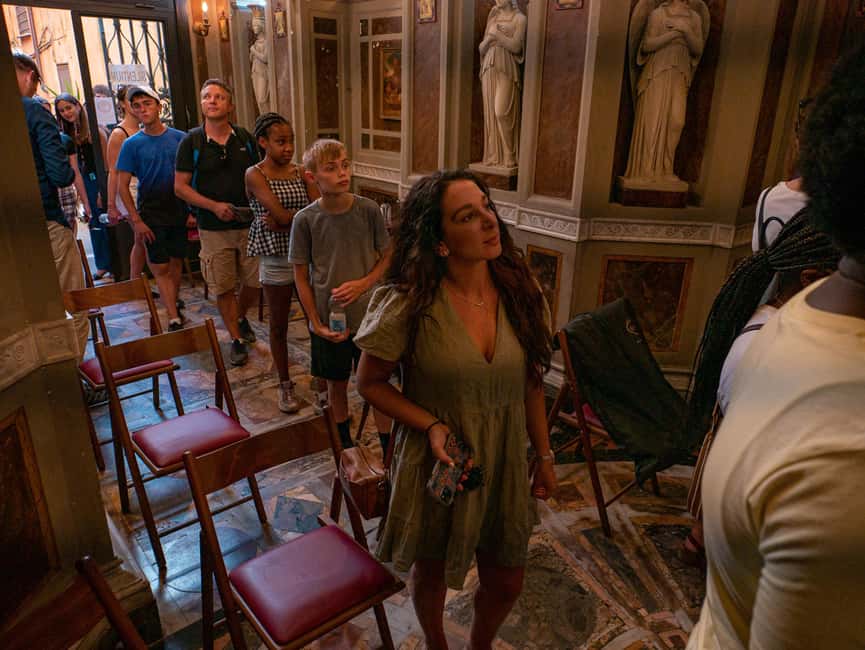
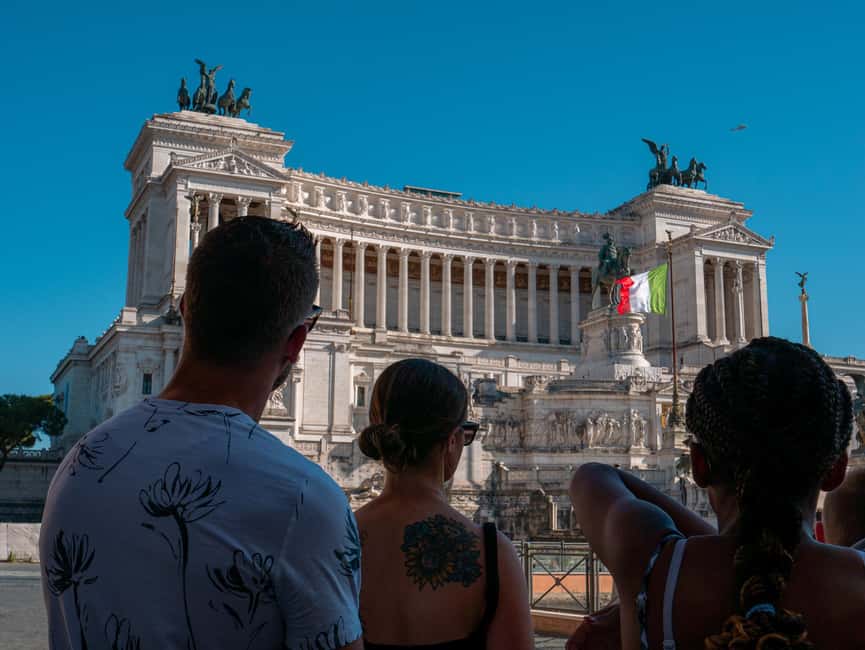
Next you head to the Monumento a Vittorio Emanuele II for about 10 minutes of guided time. This is one of those stops where the scale can feel overwhelming, so the guidance helps you see it as a statement about Italy itself.
You’ll also hear how some central squares relate to the unification of Italy and how later history added new layers. That “politics and place” angle is exactly what makes a guided walk worth it. Without explanation, you might see a monument. With explanation, you start reading the monument.
Practical note
This part works best if you’re comfortable stopping and listening outdoors. In the evening, the light is great for photos, but you still need a spot where you can hear the guide.
Trevi Fountain at night: the stories behind the famous face
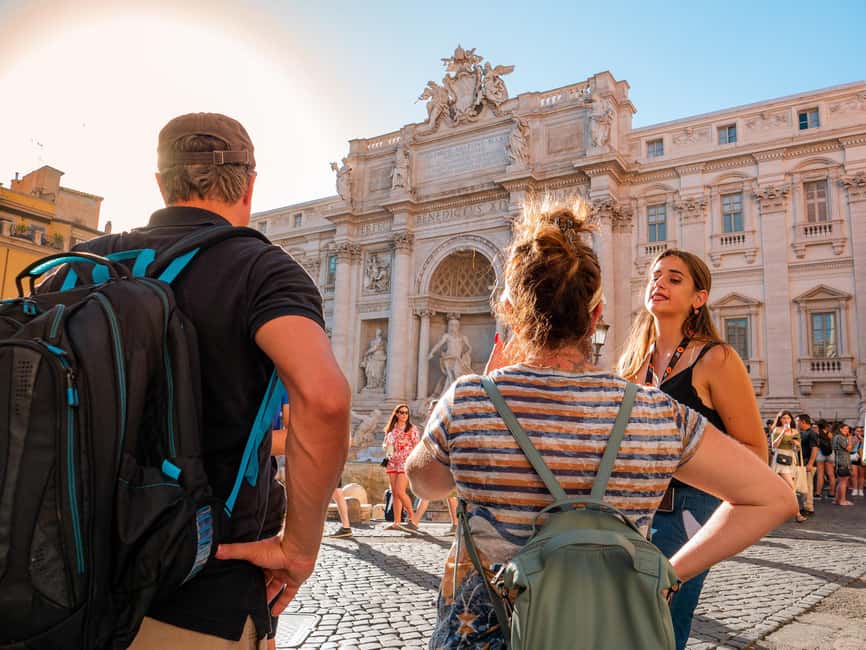
Then comes one of the most recognizable sights on earth: Trevi Fountain, with around 15 minutes of guided time. Even if you’ve seen photos, the fountain hits differently in person—especially when the lighting softens the edges and the crowd rhythm changes.
Your guide’s job here is to connect the fountain to the city around it. You’ll get history and meaning tied to the square and the monuments you’re walking between, so it doesn’t feel like a standalone postcard stop.
How to make Trevi worth your time
Try this:
- Stand where you can see both the fountain and the guide’s pointing direction.
- Listen for how the guide explains the statues’ orientation and symbolism, since that’s where the deeper payoff usually sits.
If you struggle with hearing, stay closer to the guide. Some portions of central Rome can make voices harder to catch, especially when the street gets busy.
Pantheon time: the architecture lesson you’ll remember
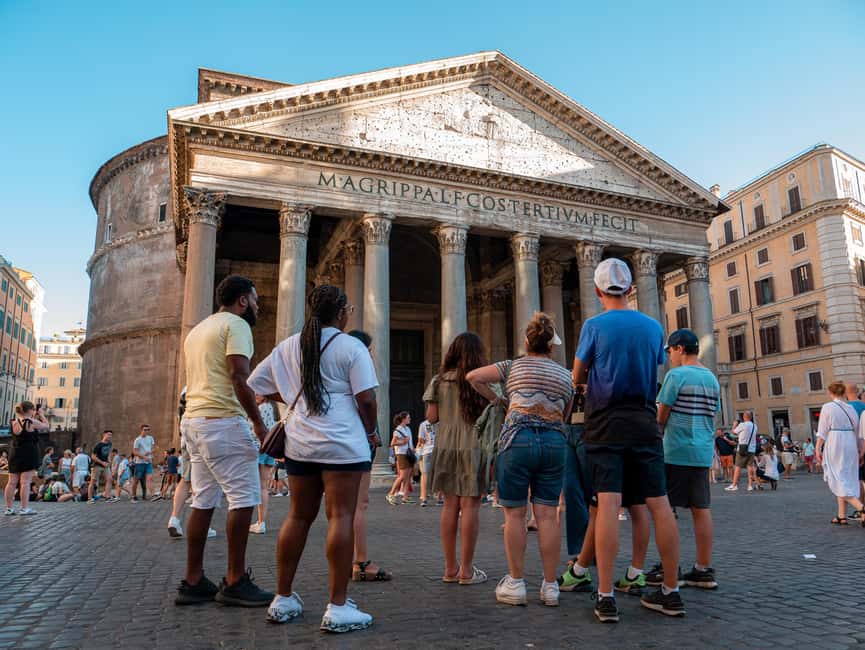
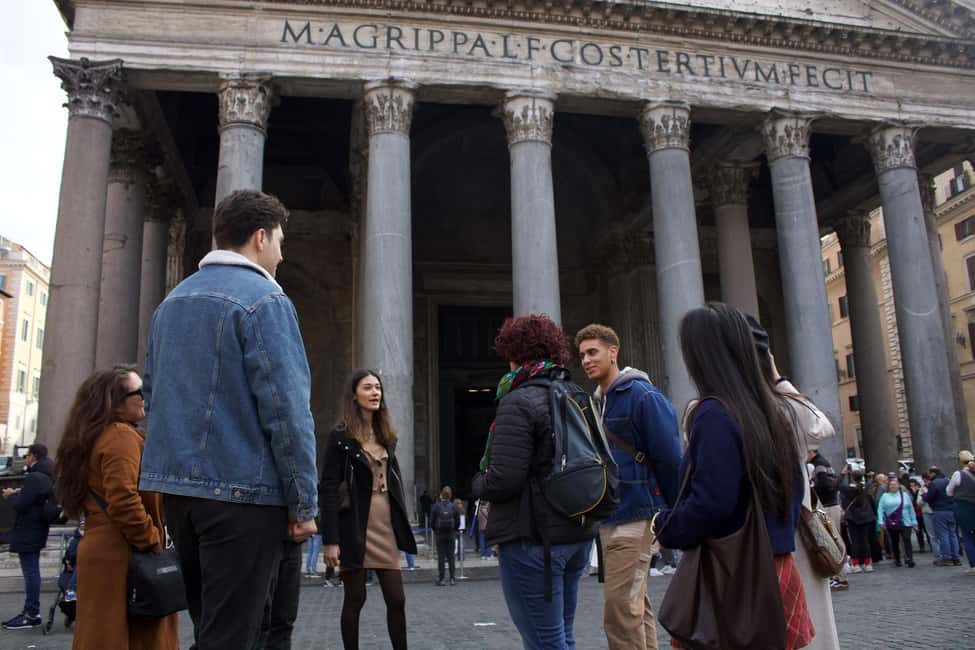
The Pantheon is next, with about 20 minutes guided. This is a favorite stop on many Rome walks because it’s not just famous—it’s visually powerful. In a guided format, you learn what to look for, and that turns the visit from wow-into-memorability.
Expect a guided look at the building’s design and the story the Pantheon represents in Roman life. The point isn’t to turn you into an architectural expert. It’s to give you a mental checklist so you can spot what matters: scale, form, and the way Rome’s past still shapes what you see today.
A quick reality check
You won’t want to treat this as a slow museum visit. It’s timed, so be ready to listen, look up, and move when the group does.
Piazza Navona: baroque energy in a square you can feel
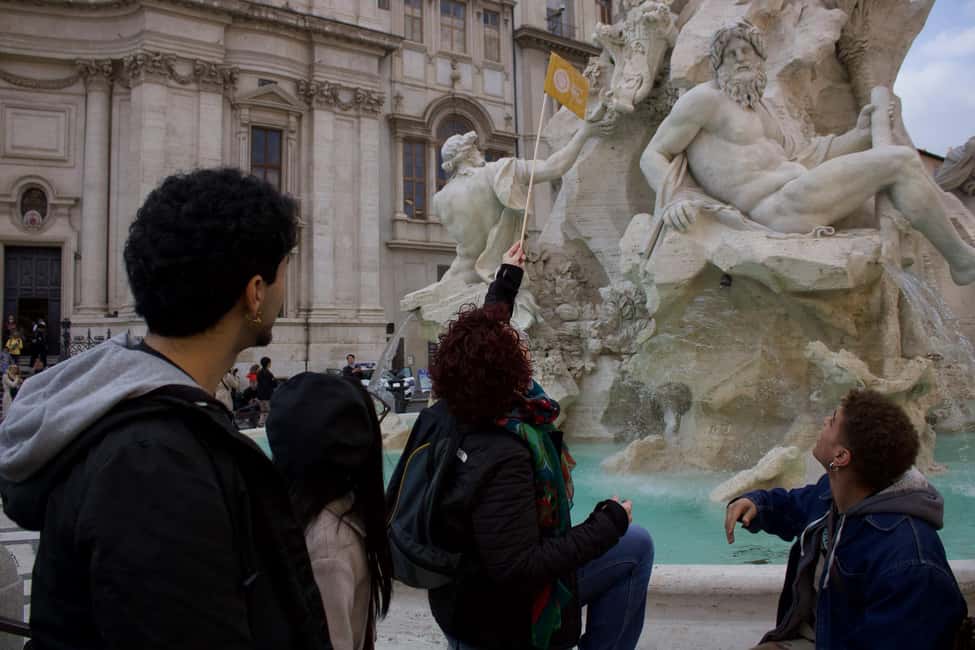
You’ll spend about 20 minutes at Piazza Navona, one of Rome’s most atmospheric squares. This is the kind of place where architecture and everyday life mix: buildings shape the edges, and the square pulls people into a shared rhythm.
Your guide will frame why this square matters historically, and you’ll likely learn how it fits into Rome’s bigger story as you connect it back to what you’ve already seen.
What makes this stop work on a night tour
Even if you’ve walked through squares in daylight, night adds a different quality. Lighting makes facades read more clearly, and the whole area feels more like an active public stage.
Trajan’s Column: a short stop with a storytelling focus
Next is Trajan’s Column for around 15 minutes. This is one of those Rome sights that rewards guided explanation because it’s not only about seeing a monument—it’s about understanding what it communicates.
You’ll get stories tied to Roman history, and the guide’s narration helps you read the monument as part of an era. It’s a great counterbalance to stops like Trevi and the Pantheon: instead of being purely about beauty, you get an emphasis on messages, power, and how Rome recorded itself.
If you like history that has teeth
This stop tends to land well for people who enjoy historical detail with real human stakes—less textbook and more “here’s what people were trying to do.”
The smaller church moments: illusions and scandal-adjacent stories
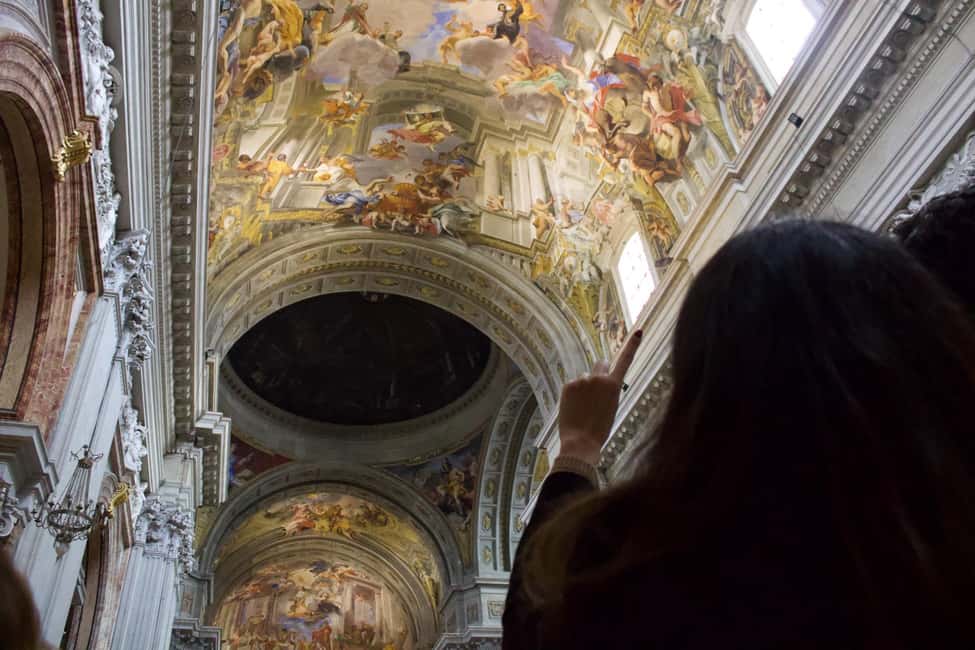
One of the more distinctive parts of this tour is that it doesn’t stay only on the biggest landmarks. Along the walk, you’ll pass by a small church and hear stories that go beyond typical sightseeing.
The church described on this tour includes:
- A hidden painted illusion
- Stories and scandals tied to Rome’s more recent politicians
That mix is exactly why I like a guided neighborhood walk. Rome is famous for ancient monuments, but the city’s ongoing drama also shapes how people talk about it today. The guide uses these moments to show Rome as a living place, not just a photo set.
Ending near your drop-off: where the walk actually lets you continue
The tour ends back near the meeting point, but the drop-off can vary. Your end point may be Piazza Navona or the Colosseum area, depending on your booking.
That flexibility is useful. If you’re continuing your evening, dropping you near major hubs saves you time. If you’re heading back for dinner, Piazza Navona is often a convenient anchor—well placed for wandering without getting lost immediately.
Price and value: what $28 buys you in real terms
At about $28 per person for a 2-hour guided walking tour, the value is mainly in what you avoid: confusion, wasted time, and shallow “check the box” sightseeing.
Here’s what’s included:
- A local guide
- The walking tour itself
- A list of recommendations
Not included:
- Food and drink
That’s a good trade for most people. You’re paying for interpretation and time at key sights, not for a restaurant plan. If you want to eat where locals actually go (or pick something that fits your budget), you can use the recommendations and stay in control.
The real value is the pacing
The guided time at each stop is long enough to matter: Trevi Fountain, Pantheon, and Piazza Navona all get more than a quick glance. That timing is where your money disappears less quickly than it would on a rushed tour.
Who this walking tour suits best
This tour is a strong choice if:
- You’re short on time but want a guided route through central Rome
- You want a clear structure for seeing major monuments in the evening light
- You like storytelling that connects eras, including the unification-era context
It also works well for solo travelers who want social momentum without committing to a full-day plan. And if you’re traveling with younger people, guides often pace in a way that keeps things moving without turning it into a lecture.
One small tip for group comfort
If you tend to get annoyed when tours move on while you’re still reading signs, this is still manageable. Just keep your attention on the guide. The tour is designed for walking between stops, so your job is to stay present at the edges of each monument.
Should you book this Rome guided walking tour?
Yes, if you want a smart, time-efficient way to see the classic monuments of Rome at night and you value a guide who ties places to stories instead of just listing facts. This is especially worth it when you’re traveling in English or Spanish and want the tour to run in a language you can relax in.
If you’re the type who hates meeting points and finds it stressful to locate a group, build in extra buffer at the start. Also, stay near the guide during quieter explanation moments so you don’t miss the details.
If you fall into the first group, book it. If the second group is you, still consider booking—just plan your arrival like you’re meeting a friend at a crowded train station: early, focused, and ready to ask for help fast.
FAQ
FAQ
How long is the Rome guided walking tour?
It runs for 2 hours.
What language is the tour offered in?
The live tour guide speaks English and Spanish.
Where do we meet at the start?
Meeting point can vary depending on the option booked. It may be at Trajan’s Column or Piazza Navona, or you may start at Piazza d’Aracoeli or Piazza di Pasquino.
Where does the tour end?
The activity ends back at the meeting point, with drop-off locations that can include Piazza Navona or the Colosseum area, depending on the option.
What are the main stops on the walk?
You’ll visit or pass by key central sites including Monumento a Vittorio Emanuele II, Trevi Fountain, the Pantheon, Piazza Navona, and Trajan’s Column.
Do I need to pay for food during the tour?
Food and drink are not included.
What should I bring?
Wear comfortable shoes and comfortable clothes.
Is there a private group option?
Yes, a private group is available.
Can I cancel for a refund?
Yes. Free cancellation is available up to 24 hours in advance for a full refund.
Is there an option to reserve without paying right away?
Yes. The tour offers reserve now & pay later, so you can book and pay nothing today.