Rome has murder on nearly every block. This evening Criminal Tour of Rome strings together key places tied to political violence, interrogations, and executions—without turning it into a history lecture. I love the 6:00 pm start for beating heat and crowds, and I love how guide Mike brings the stories to life right at street level.
You’ll walk a compact loop with breaks that stay focused: four main stops in about 2 to 3 hours, with lots of time for questions. One possible drawback: the subject matter runs dark (including WWII deportations), so it can feel emotional if you’re sensitive to that kind of history.
If you want your Rome layered—facts plus real atmosphere—this is a smart way to do it.
In This Review
- Key things to know before you go
- Why this “criminal Rome” tour is such a strong use of your time
- Price and logistics: what $69.50 buys you (and what it doesn’t)
- Meeting at Piazza della Minerva (and how the tour starts)
- Piazza della Minerva: Galileo’s trial site and the theme of judgment
- Largo Argentina: Caesar’s assassination in the open-air layers of Rome
- Portico di Ottavia: Nazi occupation deportation and why this stop lands
- Campo de’ Fiori: executions, a lively square, and the contrast you’ll feel
- Group size and guide style: why questions matter here
- What to bring: the small choices that keep the evening pleasant
- How to pair this tour with your Rome evening
- Should you book the Criminal Tour of Rome?
- FAQ
- What time does the Criminal Tour of Rome start?
- How long does the tour last?
- How much does the tour cost?
- Is the tour offered in English?
- Where do I meet the guide, and where does it end?
- Is private transportation included?
- Are tickets or entry fees included?
Key things to know before you go
Evening timing helps a lot: starts at 6:00 pm to cut down on daytime crush
Four major crime-linked stops: Galileo’s trial area, Largo Argentina, Portico di Ottavia, Campo de’ Fiori
Small group size: up to 20 people, so your questions aren’t swallowed
Mostly no extra entry fees: one stop includes admission; the others are free to visit
Theme stays concrete: you hear what happened and why it mattered, standing where it happened
Why this “criminal Rome” tour is such a strong use of your time
Rome is famous for art and ruins. This tour adds a different layer: justice, power, and punishment—and the people caught in the gears. Instead of reading about events later, you get the setting first: squares, alleys, and building edges that still shape how the city “works.”
I like that the pace fits an evening plan. You’re not committing to a half-day slog. In roughly 2 to 3 hours, you cover a lot of ground on foot without needing private transport. That matters because in Rome, last-minute taxis can be a hassle and expensive—so having a tight route is good value.
The tone is also practical. You’re given dates and context, but the real payoff is how the guide connects locations to the human consequences. One review called the experience personal in a way you don’t always get with bigger groups. That matches the format: small group, focused stops, and a guide who keeps the story moving.
You can also read our reviews of more tours and experiences in Rome.



Price and logistics: what $69.50 buys you (and what it doesn’t)
At $69.50 per person, this tour sits in the “more than a casual walk, less than a full-day commitment” zone. For your money, you get guided commentary at four set locations, plus all fees and taxes included. You also get a mobile ticket, which makes day-of logistics simpler.
What’s not included is private transportation. That’s normal for a walking tour, but it’s worth flagging: if you’re coming from farther out, plan your own way to the meeting point. The good news is it’s described as near public transportation, so you can usually connect easily.
One quiet value point: most travelers can participate, and it’s not described as involving challenging climbs. Still, it’s a walking tour. If you’re dealing with mobility limits, you’ll want to think carefully about whether 2 to 3 hours on uneven sidewalks is comfortable for you.
Meeting at Piazza della Minerva (and how the tour starts)
You meet at Piazza della Minerva 38, 00186 Roma RM, with the tour starting at 6:00 pm and ending back at the same place. That out-and-back style is underrated. You don’t have to figure out where your night “ends,” which is handy if you’re pairing this with dinner.
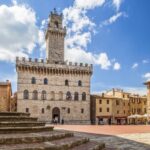
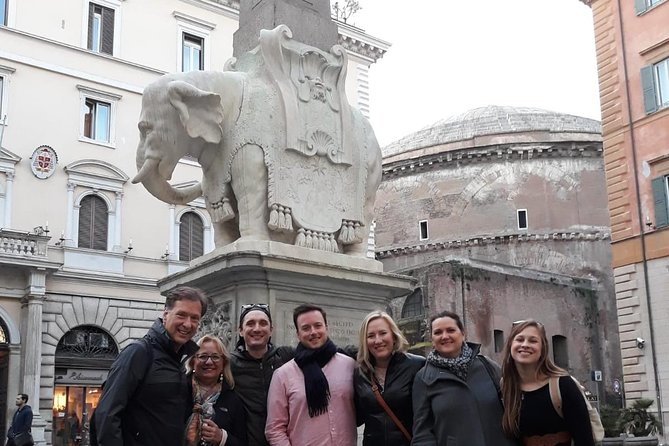
The first stop is Piazza della Minerva, and the guide uses the setting to introduce the theme. You start with Galileo Galilei’s trial location, and from there the story shifts into how Rome handled questions of guilt, belief, and punishment. Starting with a famous case does two things: it gives you a familiar anchor and it signals that this tour isn’t just gossip—it’s about how authorities worked.
Admission for this stop is included. That reduces the annoying part of planning: you don’t need to scramble for a ticket right away. It also keeps the tour rhythm steady—when a group has to break for payment, the evening energy can sag.
Piazza della Minerva: Galileo’s trial site and the theme of judgment
Galileo is a doorway into the tour’s bigger idea: crime and punishment in Rome weren’t only about street crimes. They were also about power—who got to define truth, and what happened when people challenged it.
At this first location, you’re not just hearing the name Galileo. You’re learning how the process of accusation and trial shaped the city’s history. That matters because the later stops get darker and more politically charged. If you understand the early framework—how judgment was delivered—you’ll follow the later events more easily.
A practical note: the tour gives about 20 minutes here. That’s enough time to orient yourself, hear the main story, and still move on before the evening gets too late. If you like to ask questions, this is a good stage to do it, since the group is usually still fresh and compact at the start.
Largo Argentina: Caesar’s assassination in the open-air layers of Rome
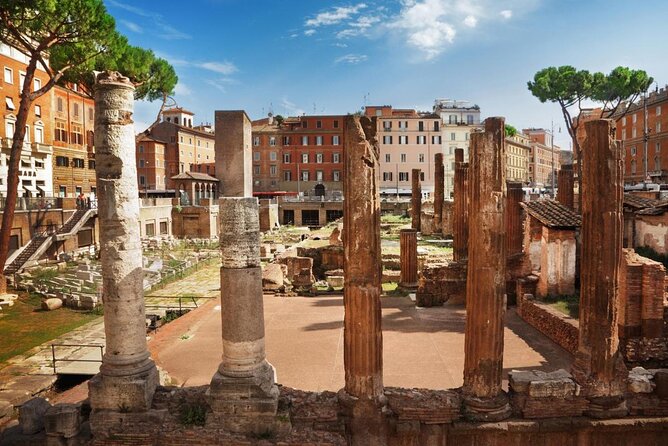
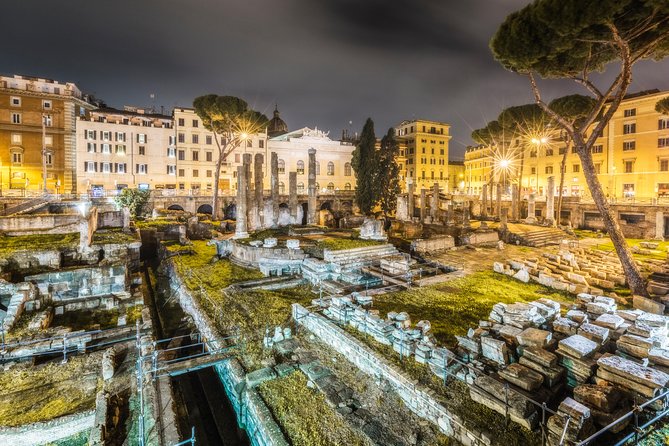
Next up is Area Sacra di Largo Argentina, one of those Rome places where modern feet step near ancient events. This stop focuses on the last days of Julius Caesar and the exact location of his assassination.
This is where the tour’s “stand where it happened” approach really clicks. The stories you’ve heard before—assassination, power struggles, the aftermath—become sharper when you’re standing near the space itself. The guide ties the politics to the physical city layout, so it feels less like a textbook timeline and more like a chain reaction.
Time-wise, it’s another 20-minute stop. That’s deliberate. You get enough detail to understand what happened, but you don’t spend so long here that your attention drops when the tour moves into the WWII section.
The entry fee here is listed as free, which is another small win. You keep momentum, you avoid extra costs, and you can put your focus on the narration and the atmosphere.






Portico di Ottavia: Nazi occupation deportation and why this stop lands
The third stop is Il Portico Di Ottavia, and the theme shifts to Rome under Nazi occupation during WWII. Here you hear about deportation—a subject that’s inevitably heavier.
This section is one reason to choose your emotional bandwidth. Some people appreciate it because it’s direct and place-based. One review specifically flagged that the WWII part felt confronting and emotional. That’s consistent with the reality of the topic, and it’s also part of why the tour can be so memorable: it refuses to treat WWII as distant trivia.
Still, the tour format keeps it manageable. It’s about 20 minutes again—enough time to connect the historical facts and the impact, without dragging you through trauma longer than you want. If you’re the kind of traveler who likes clarity, this is where the guide’s organization helps: you get a storyline rather than random facts.
Like Largo Argentina, this stop is free of additional admission. That makes it easier to stay present without turning the evening into a ticket-checking exercise.
Campo de’ Fiori: executions, a lively square, and the contrast you’ll feel
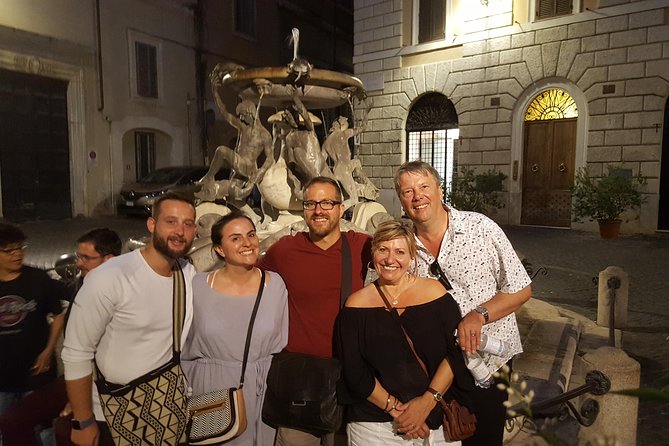
Then the tour reaches Campo de’ Fiori, a square that feels alive in the daytime and shifts in tone at night. Historically, this is tied to papal executions, and the guide explains why this site was used and how public punishment functioned as warning and spectacle.
This stop is about 30 minutes, the longest on the route. You can feel the extra time in how the guide links past and present. The square gives you contrast: crime and punishment in a place that later became a social hub. That contrast isn’t accidental. It’s part of how cities change while still carrying the memory of what happened there.
One small but real tip from the overall experience: the tour can make you look around. You’re not staring at your phone; you’re observing the square, the edges of buildings, the rhythm of the evening. If you’re a people-watcher, this is a fun place to do it while you connect that energy to the past.
There’s no admission fee noted for this stop. So you spend your money on the guide and the narrative, not on entry gates.
Group size and guide style: why questions matter here
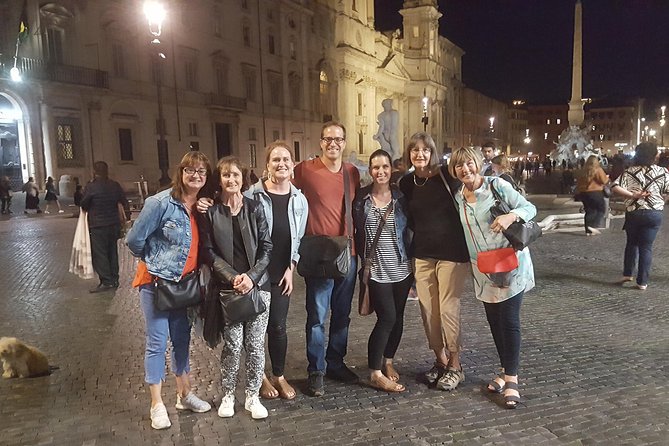
The tour caps at 20 travelers. That’s not just a comfort detail; it changes the whole feel. In small groups, the guide can pace the story to match the group. It’s easier to ask a question and get a real answer, especially when you’re walking between locations.
In the reviews, guide Mike comes up again and again: engaging, passionate, and willing to work hard for understanding. One review even said it felt personalized, like a near-private experience during their time slot. Another highlighted that he offered restaurant recommendations afterward, and even helped with getting to the taxi line at the end.
That’s the kind of practical kindness that makes a tour more than a lecture. If you like to plan dinner right after, this kind of local input is handy. If you’re tired at the end of a walk, having help orient yourself matters too.
What to bring: the small choices that keep the evening pleasant
This is an evening walking tour, so plan like it’s a walk first and a tour second. Bring comfortable shoes. The route isn’t described as having challenging climbs, but Roman sidewalks can still be uneven and slightly annoying after an hour.
Bring water if you run hot. Evenings help with crowds, but summer evenings in Rome can still feel full. And do keep in mind the tour is described as requiring good weather. If weather is poor, you’ll be offered a different date or a full refund.
Also, make sure you can access your mobile ticket. Nothing kills the start of a good walk like fumbling with Wi‑Fi. Download or save it before you leave your hotel.
If you’re traveling with a service animal, the tour allows it. If you’re bringing family, the tour notes that most travelers can participate, which is reassuring for mixed ages—just remember you’ll be on your feet.
How to pair this tour with your Rome evening
Because the tour ends back at the meeting point, you can treat it like a set piece in your itinerary. Book it as a first act, then move on to dinner with less stress about logistics.
If you’re the type who likes to “build a theme” across the day, this works well after you’ve already seen a classic highlight or two. You’ll get a different lens on the city. In one review, someone said the tour made them start watching a Rome-related series and looking for books mentioned by the guide. That tells me the guide provides enough direction that you can keep exploring after the walk—not just forget it later.
One more practical upside: starting at 6:00 pm means you can still do daytime sightseeing earlier. So you don’t have to choose between sun-soaked landmarks and an intense, story-driven evening. You can have both.
Should you book the Criminal Tour of Rome?
Yes, if you want Rome with a sharper edge. This tour is especially worth it when you like stories tied to specific places: Galileo’s trial area, Caesar’s assassination site, deportations tied to Nazi occupation, and the execution-history of Campo de’ Fiori. It’s also a strong pick if you’re tired of only seeing famous monuments and want the city’s darker machinery explained in a clear, walkable way.
Maybe skip or think twice if:
- WWII deportation material feels too heavy for you.
- You hate walking tours and would rather sit with your history.
- You’re looking for a light, family-friendly “fun facts” route.
If you book, do it with the right mindset: this is a crime-focused evening walk, built for good questions and clear storytelling. With guide Mike’s style and the small group size, it’s one of those experiences that makes the city feel less like postcards—and more like a living place with consequences.
FAQ
What time does the Criminal Tour of Rome start?
The tour starts at 6:00 pm.
How long does the tour last?
It lasts about 2 to 3 hours.
How much does the tour cost?
The price is $69.50 per person.
Is the tour offered in English?
Yes, it’s offered in English.
Where do I meet the guide, and where does it end?
You meet at Piazza della Minerva 38, 00186 Roma RM, Italy, and the activity ends back at the same meeting point.
Is private transportation included?
No. Private transportation is not included.
Are tickets or entry fees included?
All fees and taxes are included in the price. Admission is included for Piazza della Minerva, while the other stops are noted as free of admission fees.