REVIEW · ROME
Navova square underground with audioguide
Book on Viator →Operated by onceuponatimetours · Bookable on Viator
You don’t expect ancient stadium seats under a famous square. This Navona underground visit lets you drop below street level and connect the busy postcard view above with the Stadio di Domiziano ruins below.
I really like that the visit is built around a focused 45-minute audioguide that explains ancient sports from Greece to Imperial Rome, and I also like that you get an included admission ticket so you can plan your time instead of hunting around for entry.
One thing to think about: it’s priced higher than the simplest walk-in museum entry you might hear people mention, so you’ll want to decide whether reserving ahead (and having the audioguide included) is worth it for you.
In This Review
- Key things to know before you go
- Under Piazza Navona: why the Stadio di Domiziano matters
- The 45-minute audioguide: how ancient sports get explained
- Descending 5 metres underground: what your visit feels like
- Stop 1: Stadio di Domiziano—what you’ll see and why it’s worth your time
- Price and value: is $25.53 fair?
- When the underground beats the surface
- Practical timing: where it fits in your Rome day
- Weather matters more than you might expect
- Who should book this audioguide visit?
- Should you book the Navona Square Underground audioguide tour?
- FAQ
- How long is the Navona Square Underground audioguide visit?
- Is the audioguide available in English?
- Do I get an admission ticket as part of this experience?
- What will I receive after booking?
- How deep is the underground visit?
- Is the site accessible by public transportation?
- Is this suitable for most people?
- What happens if the weather is poor?
Key things to know before you go
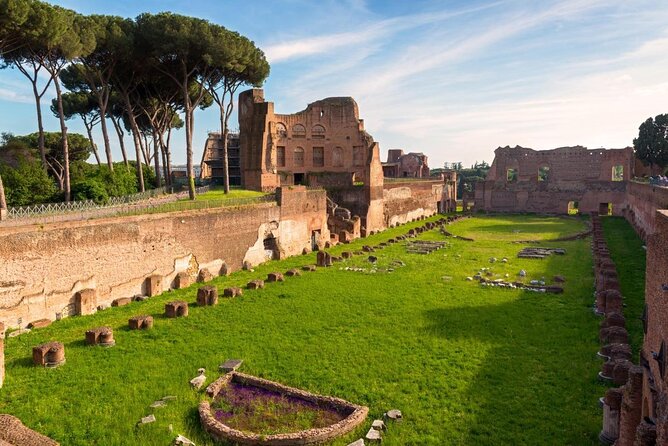
- Stadium of Domitian ruins under Piazza Navona at about 4.50–5 metres below street level
- UNESCO World Heritage setting, even though you’re underground
- English audioguide included, with kid-friendly content and visual aids
- Panels plus 3D video to make Roman sports practice easier to picture
- Admission ticket included, so you don’t need to buy separately
Under Piazza Navona: why the Stadio di Domiziano matters
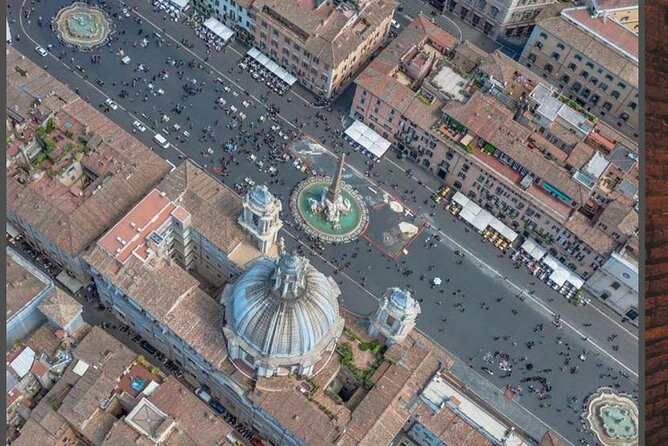
Piazza Navona is one of Rome’s most photographed squares. I like how this experience flips the script: you start at the surface, then go down to where the stadium story actually happened. The ruins you’re visiting are what remains of the Stadium of Domitian, located about 4.50 metres below street level in Piazza Navona.
What makes this site special is the kind of detail it focuses on. Rome has plenty of dramatic monuments, but here you’re looking at the first and only example of a masonry stadium up to now known in Rome. That wording matters. You’re not just seeing “something old.” You’re seeing a rare survival of a specific construction type—masonry—connected to Roman leisure and competition.
Because the location sits within a UNESCO World Heritage context, the underground visit also feels like more than a standalone ticket. You’re studying how one famous public space connects to another layer of ancient life. In other words: it’s not only about ruins; it’s about understanding what kind of place Piazza Navona once supported.
You can also read our reviews of more tours and experiences in Rome.



The 45-minute audioguide: how ancient sports get explained
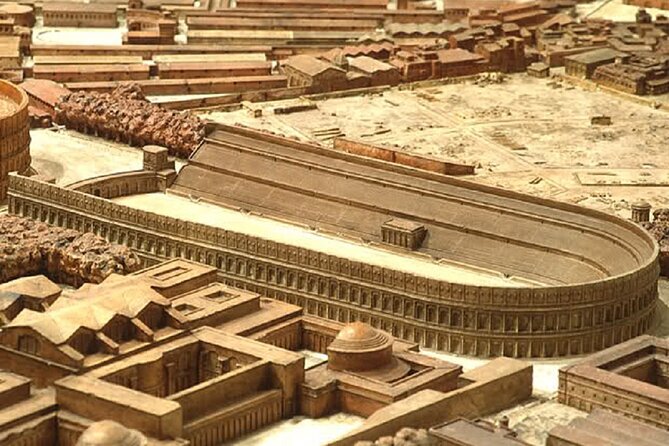
This is a short, self-paced visit with an audioguide—offered in English—meant to keep you moving and focused. The duration is about 45 minutes, which is a good length if you don’t want a whole-afternoon museum commitment.
The content is built around Roman sports and games. You’ll learn about sports practices stretching from ancient Greece to Imperial Rome, with extra attention on how the stadium relates to the square above it. I like that the story is organized around a theme you can actually hold onto: sports, games, and how Romans used public spaces for competition and entertainment.
It also helps that the experience uses more than audio. The underground levels include informational panels and 3D video, and the audioguide is available even for children. That combination means you’re not stuck trying to read tiny details while standing still. You can listen, look, and then use the visuals to place the ancient activities into context.
Descending 5 metres underground: what your visit feels like
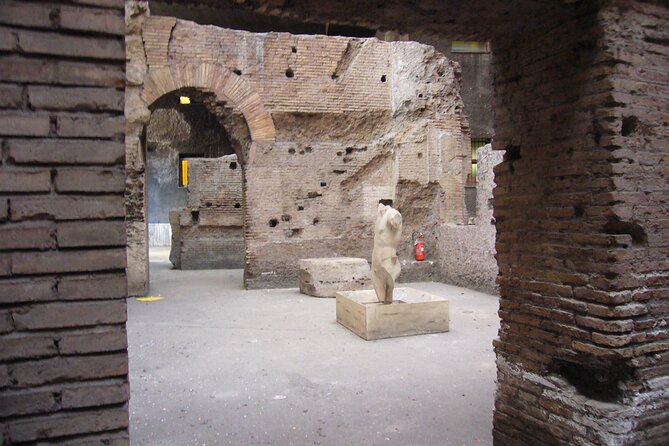
You’ll descend to the excavations at the level of the Roman Empire—going down about 5 metres beneath street level. That sounds like a technical measurement, but for your experience it changes the whole mood. The air feels different once you’re underground. The sound changes. You can focus on the ruins without the noise of traffic and fountains above.
You’re also stepping into a site that only recently became open to the public. The underground levels in Piazza Navona were first opened in 2014. That’s useful to know because it tends to mean the visitor experience is designed to be clear and readable, not a “go wander and figure it out” kind of setup.
The path is straightforward: descend, follow the story through the underground spaces, then come back up. The point is to connect specific ruins to the wider narrative of sport in ancient Rome. You’re not expected to build your own interpretation from scratch.
Stop 1: Stadio di Domiziano—what you’ll see and why it’s worth your time
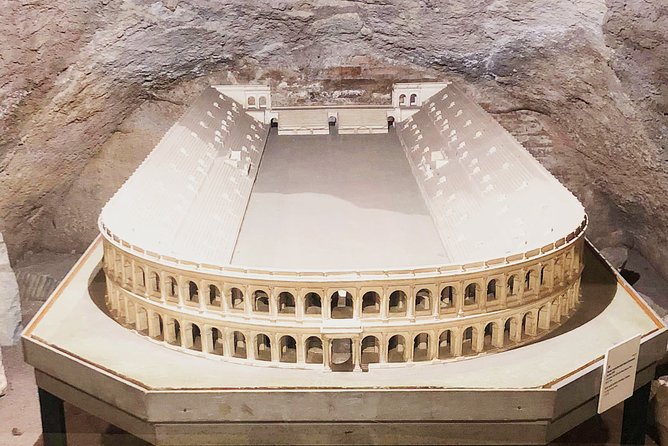
At the heart of this experience is Stadio di Domiziano – Navona Square Underground, the archaeological remains you come for. You’ll see what’s left of the stadium structure and get the context for why those remains sit under today’s famous square.
Here’s the value: you’re viewing a stadium in a way that makes sense. A lot of Roman sites are grand and obvious. This one is more subtle—you often only understand what you’re looking at after someone connects the shapes to the original function. That’s exactly what the audioguide and visuals are for.
Expect the story to connect the stadium with Piazza Navona itself. The experience doesn’t treat the underground as an unrelated detour. It frames the ruins as the background story of the square you already recognize. If you’ve ever looked at Piazza Navona and wondered why it feels like it has too much history for just fountains and baroque façades, this helps you fill that gap fast.
Drawback-wise, the site is intentionally focused. You’re not getting a long rotation of multiple major monuments. If you’re expecting a huge complex like a full-scale museum, you may find the visit compact. But if you want a clear, theme-driven underground stop, the length actually fits the material.
Price and value: is $25.53 fair?
This tour is listed at $25.53 per person, lasts about 45 minutes, and includes both admission and an English audioguide. That’s the core value equation.
Is it always the cheapest way into the site? Probably not. There’s a reason some people compare prices to the simple on-the-spot entry you might hear about. And it’s true: basic entry price can be lower when you buy directly. But when you book a guided audio-style experience ahead of time, you’re often paying for convenience and reserved access, plus the audioguide experience packaged with it.
Here’s how I’d judge value for you:
- If you hate ticket lines and want to lock in entry in advance, this format can feel like a bargain.
- If you’re flexible and don’t mind potential sold-out risk, you might prefer buying the cheapest possible entry directly.
- If you want the audioguide experience and the included storytelling, the price is easier to justify because you’re not paying separately for the interpretation.
One review theme worth taking seriously is that pricing can vary depending on where you book. Some platforms add fees and taxes on top of the base admission. So do yourself a favor: before you buy, check what the final total includes. If you want the lowest price, compare like-for-like totals (not just the base admission number).






When the underground beats the surface
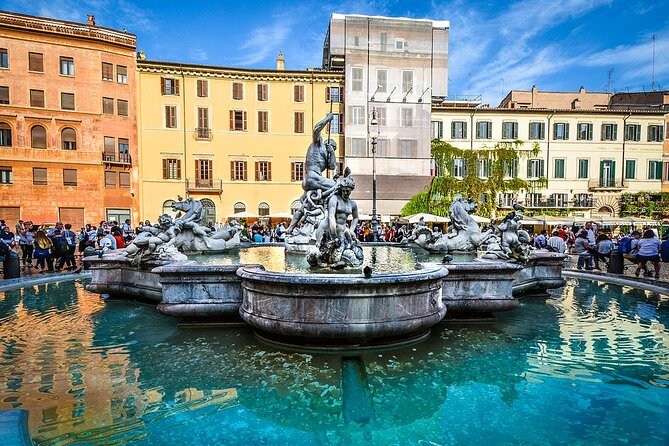
Piazza Navona is alive above ground—restaurants, people-watching, and baroque drama. But underground, the focus shifts to structure and function: how crowds gathered, how sports were staged, and how public entertainment shaped daily Roman life.
This is where the experience earns its keep. It gives you a reason to care about ruins you might otherwise walk past. Once you understand that the stadium story is tied to the square, Piazza Navona stops being only a pretty stop on a map. It becomes a layered location where different eras reused the same public-space logic.
Also, the short duration matters. Rome can wear you down. A 45-minute plan like this is a smart way to add depth without stealing half your day. You can pair it with other nearby sights on the same outing, and you won’t feel like you committed to a full-day project.
Practical timing: where it fits in your Rome day
This site is near public transportation, which helps a lot in central Rome. Underground visits still work best when you’re not rushing, so I’d aim to go at a time when you can take your time descending, reading the panels, and watching the 3D video.
If you’re traveling with kids, the content is designed to work for them too (the audioguide includes kid-friendly versions). A themed underground visit can be easier than a long historical walking tour because kids can anchor their attention on a single topic: how sports and games worked.
If you’re going solo, it’s also a good fit. Self-paced audio means you can spend extra time on the pieces that catch your attention—without worrying about keeping up with a group pace.
Weather matters more than you might expect
This experience requires good weather. That’s not a detail to ignore. Since it’s in a weather-exposed city neighborhood, conditions can affect whether the site runs as scheduled. If it gets canceled due to poor weather, you should expect to be offered another date or a full refund.
So if your trip is tight and you’re booking multiple outdoor and indoor stops, consider putting this underground visit on a day that’s less fragile weather-wise. Underground doesn’t always mean weather-proof when operations and access depend on the day’s conditions.
Who should book this audioguide visit?
I think this works best for you if:
- You love history that connects to daily life, not just big architecture.
- You want something off the main path without going too far from central Rome.
- You prefer self-paced learning with a clear storyline instead of standing in crowds waiting for a guide.
- You’re interested in how ancient societies used public space for entertainment and competition.
You might skip it if:
- You only want panoramic viewpoints and sweeping ruins.
- You prefer long, multi-room museum-style exploration.
- You don’t care about sports or games as a theme, since the audioguide is structured around ancient sports practices.
Should you book the Navona Square Underground audioguide tour?
If you’re deciding between a quick glance at Piazza Navona and a deeper stop that makes the square’s ancient layer click, I’d book this. It’s built for focus: one major underground site, a theme you can understand quickly, and an English audioguide that turns the ruins into a story you can follow.
Two practical tips to make your decision easier:
- Check the final price you’ll pay and confirm that admission and the audioguide are included in that total.
- Plan for a calm pace. The value is in using the visuals and panels, not sprinting through.
For a compact, well-shaped Rome experience with real context underfoot, this one earns its spot on your itinerary.
FAQ
How long is the Navona Square Underground audioguide visit?
It lasts about 45 minutes.
Is the audioguide available in English?
Yes, the experience is offered in English.
Do I get an admission ticket as part of this experience?
Yes, the admission ticket is included.
What will I receive after booking?
You’ll receive your ticket in PDF format. Show it at the entrance.
How deep is the underground visit?
You descend to the excavations about 5 metres beneath street level (around 4.50 metres is also referenced for the ruins’ location).
Is the site accessible by public transportation?
Yes, it’s near public transportation.
Is this suitable for most people?
The experience notes that most travelers can participate.
What happens if the weather is poor?
The experience requires good weather. If it’s canceled due to poor weather, you’ll be offered a different date or a full refund.