REVIEW · ROME
Rome: Golf Cart Tour Timelapse through History
Book on GetYourGuide →Operated by NotBoringTours · Bookable on GetYourGuide
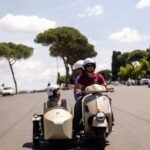
Rome tells its story at cart speed. This 3-hour Rome golf cart tour walks you through the city from the legendary origins of Romulus and Remus to the Kingdom, Republic, Empire, and Baroque era, with a live guide narrating the big shifts. I love the timeline structure because it helps Rome click fast, and I love that the cart pacing keeps you from turning this into a sore-feet day. One thing to consider: it’s sightseeing from the route with no site entry included, and you won’t make it to Trevi Fountain.
The guiding team includes people like Salvo and Mike, and the vibe is friendly and story-led, not just facts on repeat. If you want to see more landmarks with less effort, bring your camera and sun gear and you’ll be set.
In This Review
- Key Highlights You’ll Actually Feel
- Rome in a 3-Hour Timeline on a Golf Cart
- Starting Point at Villa Santa Marta (and the Expresso Backup)
- The Timeline You Follow From Legend to Baroque
- St. Peter’s Basilica Pass-By: Big Name, Short Time
- Castel Sant’Angelo Guided Time From the Cart
- Largo di Torre Argentina: Photo Stop With a Guided Moment
- Piazza Venezia, Trajan’s Market, and Rione Monti: The Middle Blocks
- Colosseum and Arch of Constantine: Where the Story Gets Loud
- Palatine Hill Views: Scenery and Scale
- Pincio Terrace: Aerial Views and Short Flex Time
- San Pietro in Vincoli: Michelangelo’s Moses, Time Permitting
- Pantheon and Santa Maria Sopra Minerva: Temples to Churches
- Campo de’ Fiori Finale: Last Photos, Best Energy
- Price and Value for a Rome Golf Cart History Tour
- Who This Tour Fits Best (and Who Might Skip)
- Weather, Shoes, and What to Bring
- A Quick Word on Wheelchairs and Mobility
- Should You Book This Rome Golf Cart Tour?
- FAQ
- How long is the Rome golf cart tour?
- How much does the tour cost?
- Are entry tickets to sites included?
- Does the tour include Trevi Fountain?
- What languages are the live guides?
- Is the tour wheelchair accessible?
- Where do I meet the tour?
Key Highlights You’ll Actually Feel
- Myth-to-Baroque narrative that connects major eras as you drive
- Colosseum + Pantheon as headline stops with guided time
- Hop-on photo windows at key viewpoints like Pincio Terrace
- Churches and ruins in one loop, including San Pietro in Vincoli and Santa Maria Sopra Minerva
- Cart comfort for 3 hours, plus a practical route that avoids long nonstop walking
Rome in a 3-Hour Timeline on a Golf Cart
Rome can be overwhelming. Streets feel like a museum hallway, and it’s easy to lose the thread between one ruin and the next church. This tour gives you a simple answer: ride, listen, and follow a story that moves through Rome’s eras step by step.
You spend the day moving by golf cart, with a live guide speaking in English or Italian. The course is built around the transformation of Rome over time: mythical beginnings (Romulus and Remus), then the Kingdom, the Republic, the Empire, and later the Renaissance and Baroque periods. Even if you only catch parts of the story at each stop, the pacing helps you keep the big picture.
What makes it feel different is that you’re not just collecting landmarks. You’re collecting meaning. The guide’s job is to explain why each place matters in the overall timeline, so the city feels like one connected walk across centuries.
You can also read our reviews of more historical tours in Rome



Starting Point at Villa Santa Marta (and the Expresso Backup)
Plan your meet-up carefully, because this tour has a clear meeting point and a practical backup.
You start at the office near Villa Santa Marta 12. The office can be closed on some days, and if that happens you’ll meet next door at a bar called Expresso. The route also references Via Santamaura 12 as the starting location, so be ready to confirm the exact spot with your provider when you arrive.
The tour ends back where you begin, which is a big deal if you’re trying to protect the rest of your day. You won’t be stranded across town.
The Timeline You Follow From Legend to Baroque
This is the heart of the experience: the history is organized like a time-lapse, with the guide moving you through major chapters of Rome.
Here’s how it’s framed:
- Mythical origins: the legends of Romulus and Remus and the founding idea of the Eternal City
- Kingdom of Rome: the early seeds of Roman society
- Roman Republic: shifts in governance and public life
- Roman Empire: the era of large-scale power and culture, reflected in major monumental sites
- Dark Ages, then revival: the story bends toward rebirth through the Renaissance and Baroque eras
- Key cultural markers: stops tied to major religious and architectural changes over time
You’ll still see huge, iconic buildings. But the real value is the through-line. When you reach the Colosseum or the Pantheon, you’re not just staring at a famous structure—you understand why it belongs in the story you were following minutes earlier.
St. Peter’s Basilica Pass-By: Big Name, Short Time
Early on, you pass by St. Peter’s Basilica on a scenic drive. This is exactly the right setup for a cart tour: you get the landmark in your field of view without spending time in long queues or walking routes.
The drawback is also clear: passing by means no entry and no linger. If you love architecture and want hours inside, you’ll need a separate plan after the tour.
Castel Sant’Angelo Guided Time From the Cart
Next you reach Castel Sant’Angelo, where the itinerary includes guided time along with passes and scenic driving. Even if your favorite part is usually getting close to details, this stop works because you’re combining movement with orientation: the guide helps you read what you’re seeing as you go.
Again, entries are not included, so treat this as guided sightseeing rather than a museum ticket day. If it’s rainy, the cart time can feel like a smart advantage—you’re not stuck under umbrellas for every transfer.






Largo di Torre Argentina: Photo Stop With a Guided Moment
At Largo di Torre Argentina, you get a photo stop plus guided time, and there’s a hop-on hop-off style pause. This type of stop is a good fit for cart touring: you can grab photos quickly, then listen to context while you’re there.
It’s also a reminder that the tour uses short windows strategically. You’re not trying to win an Olympic event for your camera roll. You’re using the guide’s timing to make each stop count.
Piazza Venezia, Trajan’s Market, and Rione Monti: The Middle Blocks
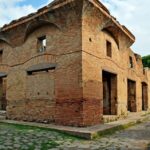
This part of the route is all about connecting neighborhoods and city texture. You’ll have guided time around Piazza Venezia, scenic passing by at Trajan’s Market, and scenic driving through Rione Monti.
Why I like this section: it’s where the tour stops feeling like a checklist and starts feeling like Rome as a real place. You’re not only seeing monuments; you’re seeing how the city moves around them.
The practical tradeoff: because these are pass-by or scenic-drive moments, you’ll get less standing time than at the big featured stops. If you want deep slow looking, this tour is more “guided reading” than “stand and stare all day.”
Colosseum and Arch of Constantine: Where the Story Gets Loud
When you reach the Colosseum, it’s a highlight for a reason. The tour includes a photo stop and guided time, plus a hop-on hop-off window of your own. The guide frames it as a symbol of Roman engineering, which helps you notice things beyond the obvious facade.
Right along the area, you’ll also see the Arch of Constantine with scenic views on the way. After the Colosseum, it’s one of those stretches where the guide’s narrative really helps you keep track of what you’re seeing and why it belongs together.
A quick reality check: even with the cart, the Colosseum zone can be intense. If you hate crowds, you’ll want to stay close to your guide’s plan and avoid wandering too far during the photo window.
Palatine Hill Views: Scenery and Scale
From the cart, you’ll get scenic views at Palatine Hill. This works well on a golf cart tour because Palatine’s biggest value is perspective—seeing the way the land and city layout create scale.
You won’t be doing a long hike here. You’ll be getting that “wow, this is huge” feeling without burning your whole afternoon on stairs.
Pincio Terrace: Aerial Views and Short Flex Time
Next up is Pincio Terrace, where the itinerary includes a photo stop, guided time, an aerial view component, and a 15-minute hop-on hop-off window.
This is one of the best moments to reset your brain. You’re higher up, you’re looking across the city, and you’re getting a real sense of where everything sits. The 15-minute flexible time matters too. If you want one great photo, you can focus. If you want a few minutes of quiet looking, you can do that too.
If you travel in warm months, this is also a good place to remember the basics: bring your water and take breaks. The tour is only 3 hours, but Rome sun can still be sneaky.
San Pietro in Vincoli: Michelangelo’s Moses, Time Permitting
At San Pietro in Vincoli, you’ll have a photo stop and guided time with a hop-on hop-off window of about 15 minutes. This stop is specifically called out as home to Michelangelo’s Moses, though the timing is labeled time permitting.
That wording is important. You might get the full experience of this highlight, or you might have less time than you hoped depending on the day. Either way, it’s a strong stop because it ties the timeline to art and religious presence, not just Roman monuments.
If seeing Michelangelo’s Moses is a must for you, treat that as your priority inside your schedule and don’t plan a tight follow-up right after this tour.
Pantheon and Santa Maria Sopra Minerva: Temples to Churches
The tour takes you to the Pantheon, with a photo stop and guided time plus hop-on hop-off access. The Pantheon is described as a temple turned church, which is exactly the kind of transformation that makes Rome’s timeline feel real.
Then you continue to Santa Maria Sopra Minerva, again with photo stop, guided time, and hop-on hop-off access. This church is described as Gothic in style and called out as a true treasure. On a cart tour, it’s a smart pairing: you move from one iconic conversion story (Pantheon) to another standout church style (Santa Maria Sopra Minerva).
The practical drawback at this stage: entry tickets are not included. So you’ll get guided context, but you may still need to decide later whether you want to pay separately to see more closely.
Campo de’ Fiori Finale: Last Photos, Best Energy
You finish at Campo de’ Fiori, with photo stop, guided time, and a 10-minute hop-on hop-off window. This is where the tour lands you in a lively square with a long list of past and present activity.
I like the finish timing. By the end of the 3 hours, you’ve already covered the big, heavy-hitter history. Ending here gives you an easy transition into the rest of your day—dinner, wandering, and people-watching.
Also, don’t forget the tour’s promoted panorama moment: Aventine Hill Orange Garden. Even though it’s not listed as a numbered stop in the same way as the others, it’s part of what the tour highlights as a viewing stop. Think of it as one of the sights that makes the route feel like more than just monuments on a loop.
Price and Value for a Rome Golf Cart History Tour
The price is $64.01 per person for a 3-hour tour, with starting times depending on availability. That sounds simple, but the value depends on what you want out of Rome.
Here’s the practical math:
- You’re paying for a live guide and a golf cart ride that reduces walking time across multiple major areas.
- You’re also paying for a structured narrative from myth to later eras, which is the part many walking tours don’t manage as cleanly.
- You do not get entrance tickets, so if your dream day is “I want to go inside everything,” you’ll need extra planning.
For most people, the best value comes from the comfort. One of the clearest themes from the experience is that you see a lot without wrecking your legs. If you’re traveling with limited time, or you’re trying to balance museums with real recovery, this format can be a smart spend.
If you’re on a tight budget and you only care about one or two monuments, you might get similar value from separate stop planning. But if you want the story connection across many sites, this tour is built for that.
Who This Tour Fits Best (and Who Might Skip)
This is a strong choice if:
- You want a guided storyline across multiple Rome eras
- You’d rather use a cart to reduce walking than plan your own loop of stops
- You like the idea of photo windows with quick orientation from the guide
- You’re worried about keeping up in heat or rain and want a plan that still moves
You might skip it if:
- You want long time inside major sites (entry tickets are not included)
- You need Trevi Fountain as a must-do (it isn’t on this route)
- You want a fully self-directed, slow neighborhood-by-neighborhood day
Weather, Shoes, and What to Bring
Even with a cart, you’ll be out around landmarks and viewpoints. Bring what keeps you sane:
- Comfortable shoes
- Hat
- Camera
- Sunscreen
- Water
You’re also not allowed alcohol and drugs, which is standard for guided activities but worth noting.
A Quick Word on Wheelchairs and Mobility
The tour is listed as wheelchair accessible, but with an important limitation: wheelchairs are allowed, yet they can’t be brought on the golf cart and must be left at the office. If you rely fully on a wheelchair, you’ll need to stay on the cart throughout the tour.
If this applies to you, confirm the best setup with the operator before you go, because the cart space rules could affect comfort and timing.
Should You Book This Rome Golf Cart Tour?
I’d book it if you want a time-saving way to understand Rome. The cart format makes it easier to fit in major landmarks without turning the day into a foot marathon. The best part is the guided timeline feel—my guess is you’ll leave with a clearer sense of how legends, empires, and later eras relate to the places you saw.
I’d hesitate only if your priorities are strictly “go inside everything” or if Trevi Fountain is your top must-see. This tour is built for guided outside viewing and story connection, not maximum ticket-purchase sightseeing.
If that matches your style, reserve your spot for a time that works with your schedule and plan your next steps around Campo de’ Fiori afterward.
FAQ
How long is the Rome golf cart tour?
It runs for 3 hours.
How much does the tour cost?
The price is $64.01 per person.
Are entry tickets to sites included?
No. Entry to sites is not included.
Does the tour include Trevi Fountain?
No. Trevi Fountain is not on this tour.
What languages are the live guides?
The live guide is available in English and Italian.
Is the tour wheelchair accessible?
Wheelchairs are allowed, but they can’t be brought on the golf cart and must be left at the office. If you rely fully on a wheelchair, you’ll need to stay on the cart throughout the tour.
Where do I meet the tour?
You meet at the office located at Villa Santa Marta 12. If the office is closed, you meet next door at the bar called Expresso. The activity ends back at the meeting point.