REVIEW · ROME
Rome: Family-Friendly Pizza Master Class
Book on GetYourGuide →Operated by Cavason Ltd · Bookable on GetYourGuide
Pizza magic happens in 60 minutes. In a small family-friendly class near Piazza Navona, you work with a real pizza chef and a stone oven, shaping dough and baking your own pie. I love the hands-on dough work (it feels doable, even if you’re not a kitchen person), and I love how patient the chefs can be with kids. One thing to consider: it’s a shared class, so the pace is group-based—and younger kids who get fidgety easily may find it a bit intense.
You’ll start in the historical part of town, then end with a relaxed sit-down to enjoy what you made. The instructor is English, and you’ll have a vegetarian option if you ask at booking. If your goal is a quick, authentic, family activity that doesn’t swallow your whole day, this fits nicely.
In This Review
- Key Points I’d Plan Around
- Where You Start: Piazza Navona Area and a Real Neighborhood Pizzeria
- Inside the Class: Stone Oven, Short Lessons, Big Hands-On Time
- Why the Stone Oven Part Is Value-Adding
- What You Learn: Dough Handling That Kids Can Do (With Help)
- The Three-Ingredient Pizza Approach (and How Toppings Fit In)
- Baking and Eating: Your Pizza Goes in, Then You Sit Down
- A Practical Timing Note for Lunch-Close Slots
- Shared Class Reality: Small Groups, Shared Pace
- Instructor in English: How That Helps Adults (and Kids)
- What This Is Really Best At: A Family Activity With a Skill Outcome
- Tips to Make Your Hour Go Smoothly
- Who Should Book This Pizza Master Class
- Should You Book It? My Honest Take
- FAQ
- Where does the workshop meet?
- How long is the Rome family-friendly pizza master class?
- Is the class in English?
- Is it a private class or shared with others?
- Can I get a vegetarian option?
- What happens during the lesson?
- Will we eat the pizza we make?
- Do I get the exact restaurant details before I go?
- What if I need to change plans?
Key Points I’d Plan Around
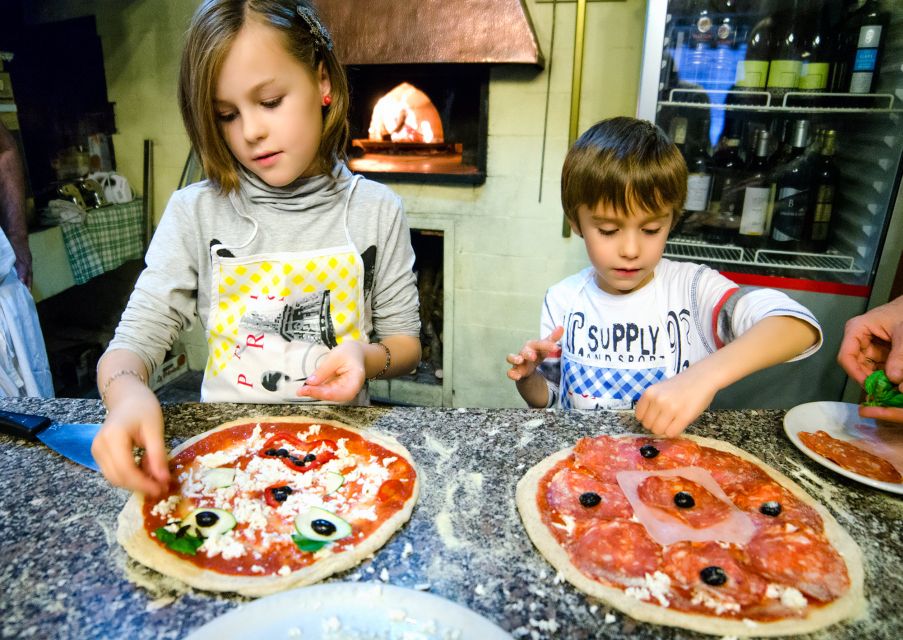
- Stone-oven pizza in the city center near Piazza Navona, so it feels special without a long commute
- Hands-on dough shaping with a real chef guiding the tricky parts
- Shared class format with a small group size, often around a dozen to mid-teens
- Kids and adults together, with a format that usually keeps everyone engaged
- Chef-led oven moment: you help with dough and assembly, then the chef handles the hot-oven step
- Vegetarian option available if you request it when booking
Where You Start: Piazza Navona Area and a Real Neighborhood Pizzeria
This class is set up right in the Rome you came for: a proper pizzeria tucked into the historical area near Piazza Navona. The meeting point is near the square, and you get the exact address and start time by email after booking. The coordinates provided put you in the right neighborhood, so you can plan your day without mystery.
What I like about the location is the practical side. You’re not leaving central Rome behind. After an afternoon of walking, it’s a nice reset to sit down in a cooking space that feels calmer than another museum stop.
For families, being near Navona also means you can time this like a chapter break: sights in the late morning, pizza class early afternoon, and then dinner plans afterward without racing across town.
You can also read our reviews of more tours and experiences in Rome

Inside the Class: Stone Oven, Short Lessons, Big Hands-On Time
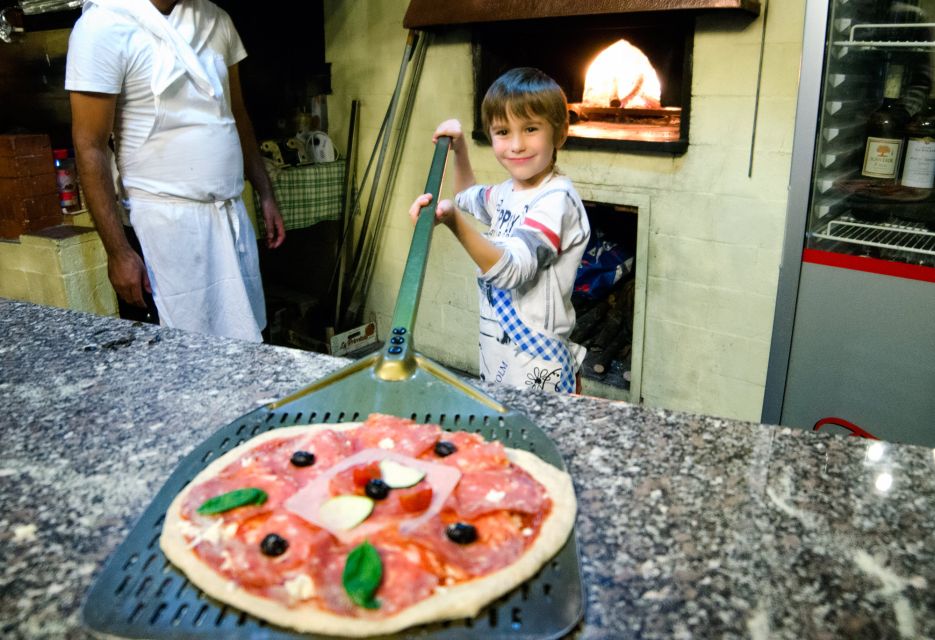
The workshop happens in a small pizzeria with a real stone oven. That matters more than it sounds. Wood/stone-oven pizza has a different bake—more heat in the crust, more snap, and a more classic texture than you’ll get from home-style baking.
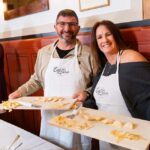
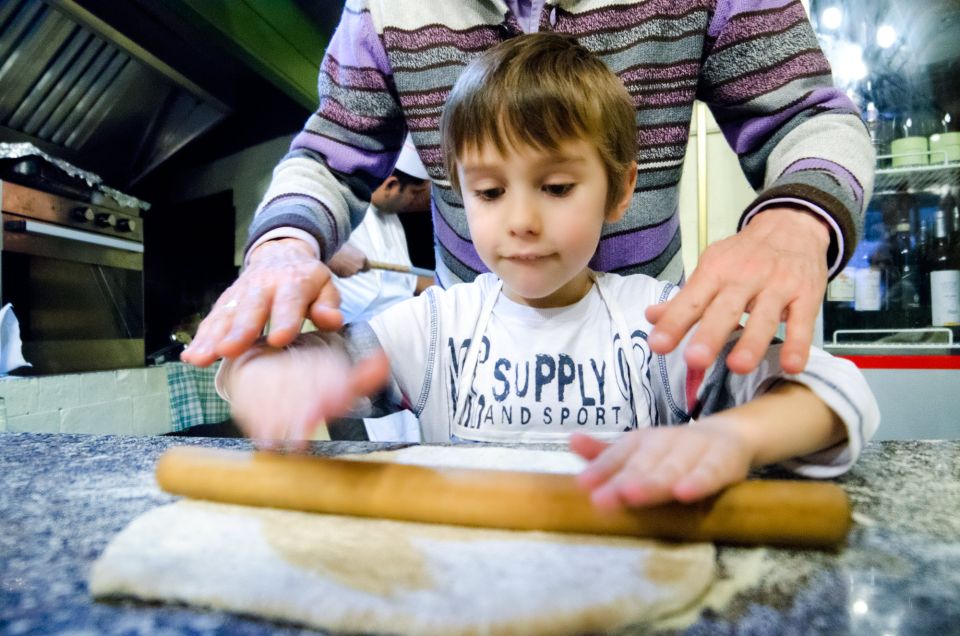
You’ll begin with an introduction from the chef and staff. Then you jump in: you prepare the dough, and you learn the motions—how to properly roll and squeeze it before it becomes your crust. This is the part that makes the class feel like a skill, not just a show.
One of the most consistent positives from past sessions is the chef’s attention to the room. Some classes have been led by hosts like Leo, Federico, or Gaetano, and the common thread is patience—especially when kids need extra repetition. In a shared group, that kind of calm teaching makes a huge difference.
Why the Stone Oven Part Is Value-Adding
Even if you only do this once on your trip, you come away understanding why Roman pizza works—how the dough behaves and what timing and heat change. That’s the difference between eating pizza and actually learning how to make it.
What You Learn: Dough Handling That Kids Can Do (With Help)
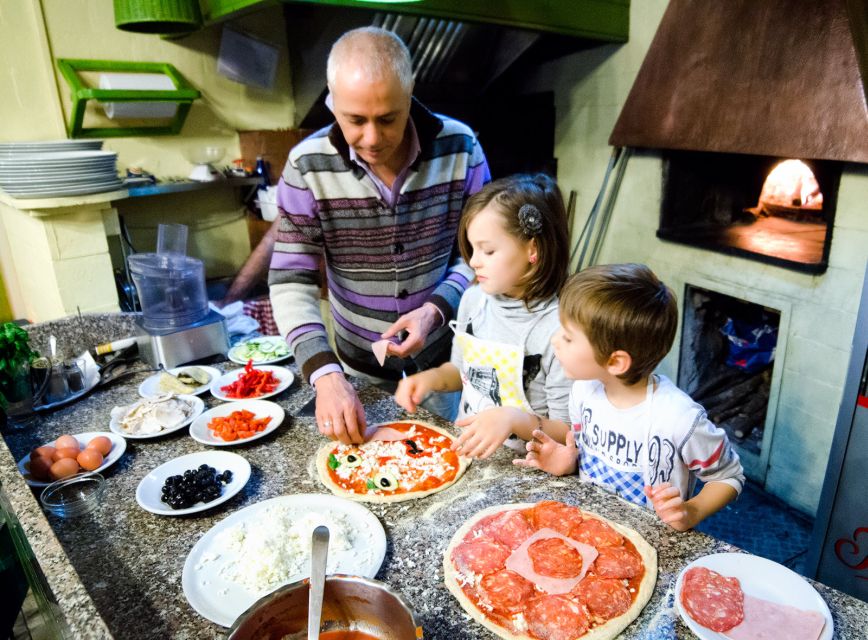
A big promise here is that you’ll become your own chef. In practice, that means you’re not stuck watching. You do the main physical steps: preparing the dough and then working it into shape, guided by the chef.
The chef’s coaching is built for a mixed group: adults who want to learn something real, and kids who need clear, repeatable instructions. Past classes have described hosts as especially patient when there are young chefs in the room.
Here’s the realistic rhythm:
- You start with dough basics
- You practice rolling and squeezing so the crust forms correctly
- The chef steps in when the heat and technique matter most
That last point is important. Pizza dough is forgiving, but the oven is not. So you get to participate without putting anyone in a risky situation.
The Three-Ingredient Pizza Approach (and How Toppings Fit In)
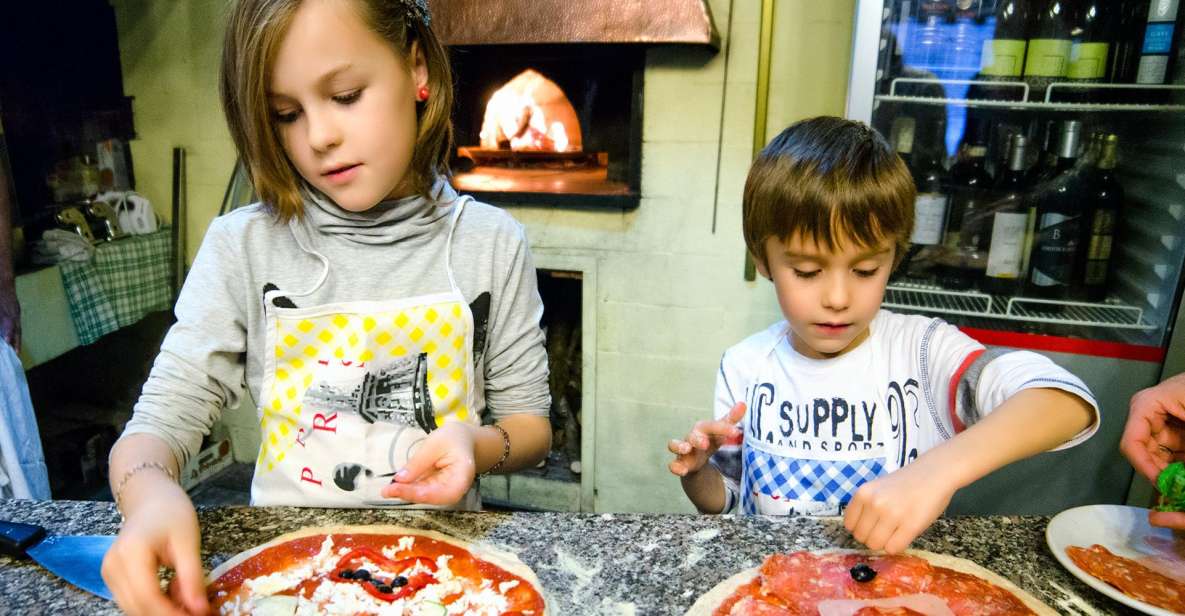
The class frames pizza as a simple lesson from only three ingredients as the core. After that, the chef shows how you move from base to finished pie.
You’re encouraged to use as many toppings as you like—within the logic of what a good Roman-style pizza needs. The point isn’t to win a topping contest. It’s to understand assembly: sauce placement, topping balance, and not overloading the dough so it bakes well.
In other words, you learn the structure of the pizza, then you personalize it. That’s a smart way to teach. Kids love options, adults like control, and both groups leave with something that looks like their kind of pizza.
If you’re vegetarian, you can arrange for a vegetarian option at booking. It’s worth planning ahead because it affects what toppings you’ll be choosing and how the staff organizes your time.






Baking and Eating: Your Pizza Goes in, Then You Sit Down
Once your crust and toppings are ready, the chef helps you put it into the oven. This is where the class shifts from active prep to rewarding payoff. You don’t stand around with nothing to do—you’re part of the process, and then you get to enjoy the result.
Then you sit down and eat what you made. One reviewer-style detail that I think matters for planning is comfort: after sightseeing, the seating can feel genuinely welcome, and at least one class has noted air conditioning as a plus.
Food-wise, the format is set up for both kids and adults. Kids often have juice available while they’re waiting for their turn, and adults may get wine. There can also be an appetizer during the time split between groups, which helps keep energy levels steady when you’re in a shared class.
A Practical Timing Note for Lunch-Close Slots
The class is listed as 1 hour, and start times vary by availability. In a shared setup, later start times can bump into the lunch rush feeling. If you’re sensitive to that—especially with kids—try to choose the earlier end of the day when possible.
Shared Class Reality: Small Groups, Shared Pace
This is a shared class with other people, and group size seems intentionally small. Past groups have been described as around 12 people and sometimes about 15 students. That’s big enough to feel lively, but small enough that the chef can still coach.
The downside of a shared group is the pace is not fully customized. If your child is very young or having an off moment, they may feel the group energy more than you’d like. One class was described as a bit much for a 4-year-old on a bad day, while being a hit for older kids and teens.
So my practical advice: if your kids are around elementary school age, you’ll likely get more out of it. For toddlers or 4-year-olds, be prepared for shorter attention spans and more supervision needs.
Instructor in English: How That Helps Adults (and Kids)
The instructor is listed as English, which is a real benefit in Rome. Cooking vocabulary can be tricky, and it helps to hear the directions clearly—especially for tasks like dough shaping where small differences matter.
When an instructor keeps directions simple and repetitive, kids follow better and adults don’t get lost. Past classes have highlighted a warm, welcoming tone, and that’s the kind of teaching style that turns kitchen stress into kitchen fun.
If you prefer to learn by doing, this class rewards that mindset. You’ll be more confident by the time your pie comes out.
What This Is Really Best At: A Family Activity With a Skill Outcome
Plenty of Rome activities are entertainment first. This one is entertainment plus a real skill outcome. You don’t just taste pizza—you learn what to do so you can recreate a version of it at home.
That’s why I’d place it in the “worth it” category for families. Kids get a story to tell (I made pizza in Rome), and adults get something tangible to practice afterward.
It’s also a good fit if you want an authentic experience without a stiff, museum-like pace. Cooking classes in small ovens tend to feel human—smells, noise, timing, and the shared table energy.
Tips to Make Your Hour Go Smoothly
You’ll do best if you come in ready to participate, not just observe.
- Wear comfy clothes you don’t mind getting a little dough dust on.
- If you have a vegetarian in the group, request it during booking so everything lines up.
- Expect the hot-oven part to be chef-led, while you do the dough and assembly steps.
- For kids, pick a slot when they’re usually at their best; the format is active, and shared pacing matters.
- Since you meet near Piazza Navona, plan this as part of your central walking route.
If you like cooking TV shows, you’ll enjoy this more than you might expect. The difference is you actually touch the dough.
Who Should Book This Pizza Master Class
This class is a strong match for:
- Families looking for a hands-on Rome activity near the center
- Adults who want a guided introduction to Roman-style pizza making
- Kids who like food projects and working in a group
- Anyone who wants a shorter activity that still feels authentic
It may be less ideal if:
- Your group needs a very quiet, no-stress experience
- You’re traveling with very young kids who struggle with crowds and active group pacing
- You want a deep, long multi-hour course (this is intentionally short at 1 hour)
Should You Book It? My Honest Take
Book it if you want an easy win in central Rome: a stone-oven pizza lesson near Piazza Navona, with a chef who can handle a mixed room and keep the experience moving. The value shows up in the hands-on portion—dough prep, rolling/squeezing, assembly, and then eating what you made.
Skip it only if your group needs something more restful or highly customized. The shared class format is part of the charm, but it does mean you’re following the group rhythm.
If your trip includes Rome sightseeing fatigue, this is one of those activities that feels like a reward with a purpose.
FAQ
Where does the workshop meet?
The meeting point is near Piazza Navona. The local operator confirms the exact address and meeting spot after you book.
How long is the Rome family-friendly pizza master class?
The duration is 1 hour. Start times depend on availability.
Is the class in English?
Yes. The instructor is listed as English.
Is it a private class or shared with others?
It’s a shared class with other people.
Can I get a vegetarian option?
Yes, a vegetarian option is available. You should advise the operator at booking if you need it.
What happens during the lesson?
You’ll learn how to prepare the dough, roll and squeeze it into shape, assemble your pizza with toppings, and then enjoy the pizza after baking help from the chef.
Will we eat the pizza we make?
Yes. You’ll sit down and taste the pizza you made in the early evening.
Do I get the exact restaurant details before I go?
Yes. You should receive the restaurant name/address and the workshop time by email within 12–24 hours of booking.
What if I need to change plans?
Free cancellation is available up to 24 hours in advance for a full refund. You can also reserve now and pay later.