REVIEW · ROME
Rome: City Highlights Moonlight Walking Tour
Book on GetYourGuide →Operated by Carpe Diem Tours · Bookable on GetYourGuide
Rome at night is different in the best way. This guided moonlight walking tour strings together the city’s biggest icons—Trevi Fountain, the Pantheon, and an illuminated Colosseum—without the daytime crush. I love that it slows the whole experience down with an expert guide who connects the monuments to stories you can actually remember. One thing to keep in mind: it’s still a walking tour, so you’ll want comfortable shoes and patience for crowds at the most popular stops.
What I like most is the way the route is built for atmosphere, not checklists. You spend meaningful time around Piazza Navona and then head into the quieter backstreets that make Rome feel livable at night. And if you get a guide like Domenica or Sila, the tour leans hard into a narrative style—so you’re not just seeing sights, you’re understanding why they mattered (and why they look the way they do).
The only real drawback is that there are no attraction entry tickets included, so you’ll be outside for most of it. If you’re hoping to go inside the Pantheon, churches, or the Colosseum during this specific outing, this won’t replace a ticketed visit.
In This Review
- Key Highlights Worth Your Evening
- Why This Moonlight Walk Works So Well in Rome
- Meeting Points and What to Expect From the Pace
- Piazza Navona: Ancient Seating, Bernini’s Fountain, and Real Local Context
- Pantheon at Night: Pass By, Gaze, and Get the Dome Explained
- Church of Sant’Ignazio, Galleria Sciarra, and the Value of Side-Street Stops
- Church of Sant’Ignazio di Loyola (guided time)
- Galleria Sciarra (guided time)
- Trevi Fountain After the Day Crowds: Quiet Photos and Coin-Toss Meaning
- Piazza Venezia and Trajan’s Column: How the Forums Area Reads in One Evening
- Via dei Fori Imperiali to the Colosseum Edge: Seeing Rome’s Scale Without Tickets
- What This Tour Gives You (That a Solo Night Walk Usually Doesn’t)
- Price and Value: Is $28 a Good Deal for This Kind of Night Walk?
- Who Should Book This Night Tour?
- Should You Book This Rome Moonlight Walking Tour?
- FAQ
- How long is the Rome City Highlights Moonlight Walking Tour?
- Where does the tour meet?
- What sights do we see during the tour?
- Are attraction tickets or entry fees included?
- What language is the tour guide?
- What should I bring?
- Is cancellation free?
Key Highlights Worth Your Evening
- Trevi Fountain in the quiet window: you’ll see it when the day crowds ease, then learn what’s going on beneath the marble surface
- Piazza Navona’s underground athletic past: the ancient “agones” story sits right under today’s fountain
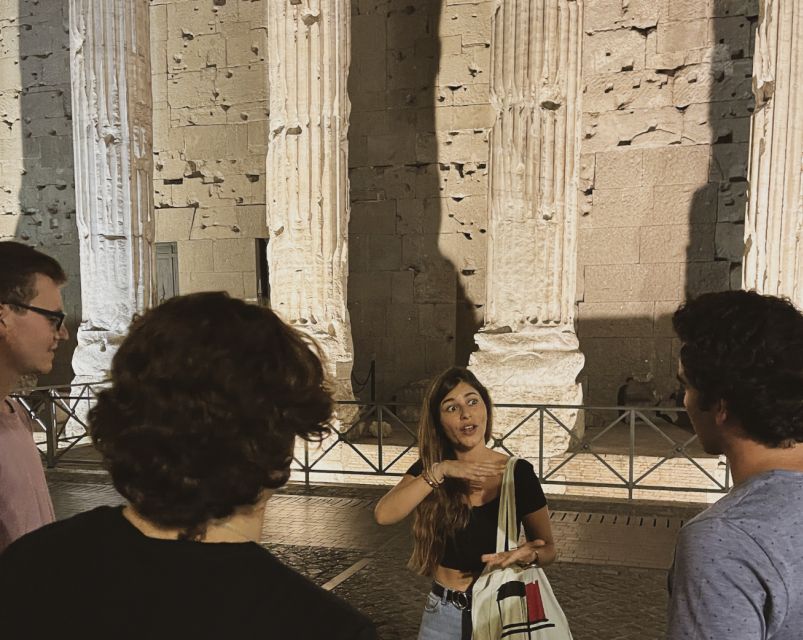
- Pantheon dome wow factor: you’ll get a quick, practical explanation of why the unreinforced concrete dome still grabs attention
- Evening Rome orientation: you get a fast sense of where everything sits—Capitoline Hill, Imperial forums area, and the Colosseum approach
- Illuminated Colosseum by the end: you finish with one of Rome’s most dramatic night views, without a long museum-style visit
Why This Moonlight Walk Works So Well in Rome
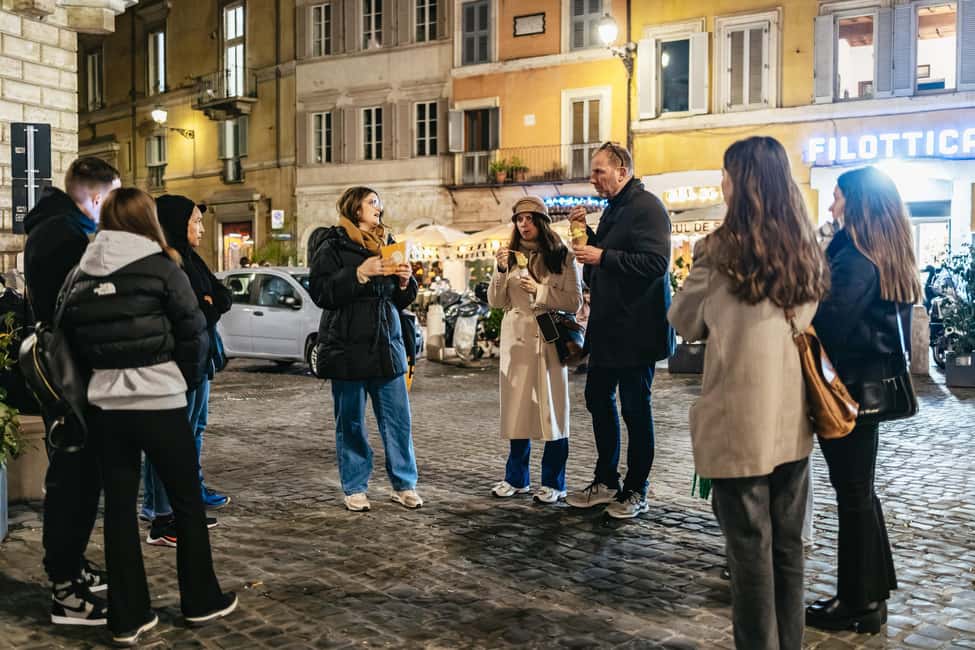
Rome’s daytime can feel like a theme park built out of stone. Night flips that. Streetlights turn corners into photo opportunities, statues soften in the glow, and the city feels more like a place people live than a machine built for day tours.
This is exactly the kind of tour I recommend for your first evenings—or any time you want a break from the heat. You’re out for about 2 to 2.5 hours, guided the whole way, and kept at a leisurely pace. The key value isn’t that you hit major names (you will), but that you learn how to read the city around them.
Also, the price—$28 per person—is fair for a guided walking route that covers several landmarks and includes multiple guided segments (not just a quick stop and a photo). It’s the kind of outing that gives you direction for the rest of your trip, especially if you’re juggling limited time.
You can also read our reviews of more walking tours in Rome

Meeting Points and What to Expect From the Pace
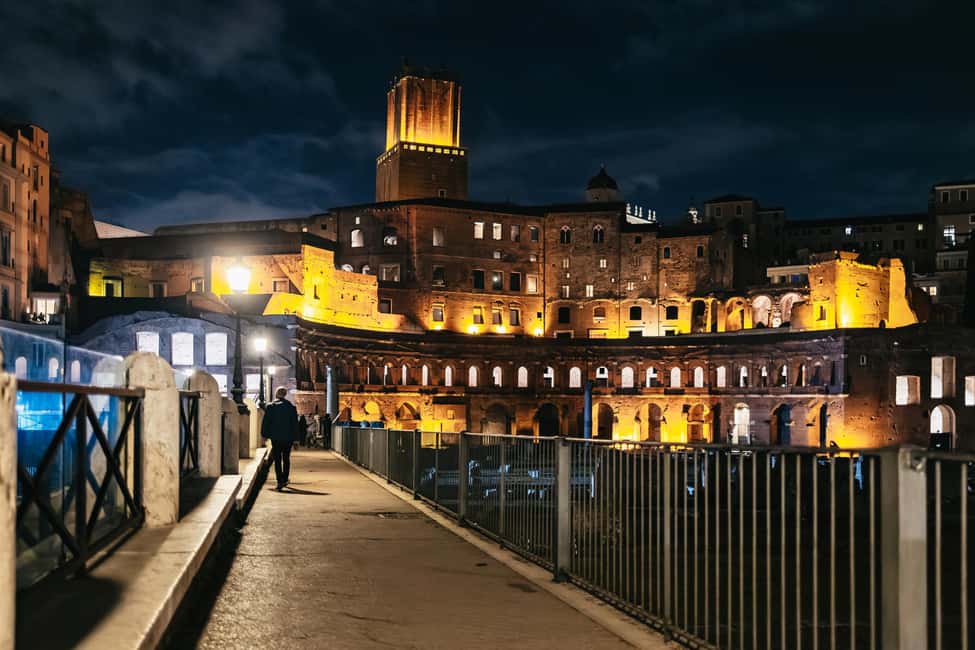
Your starting point can vary depending on the option booked, with two meeting locations listed: Piazza d’Aracoeli or Piazza di Pasquino. The route then brings you into the Piazza Navona area for the main start of the guided stops.
The tour generally ends back near where you started, but you’ll see a couple of potential end/drop-off locations around Piazza del Colosseo / the Colosseum area. Translation: it can be a great way to finish near where you might want to wander after the walk.
What I’d plan for:
- Wear comfortable shoes. Side streets at night are not always level and you’ll be on your feet for the full stretch.
- Bring comfortable clothes for evening air. Rome nights can feel cooler than you expect after a hot day.
- Expect guided time at several stops and pass-by time at others. It won’t feel rushed, but it also won’t be a slow “wander and chat” all night.
And one more practical note: no entry tickets are included. That means you’ll see monuments from the outside, in the best night-light conditions—but you won’t automatically get inside access.
Piazza Navona: Ancient Seating, Bernini’s Fountain, and Real Local Context
Most first-time Rome walks hit Piazza Navona like a photo stop. This one uses it like a story hub.
You start with Piazza Navona, where the guide sets the scene: in ancient times, the area was tied to athletic contests, and the present-day piazza sits above that older framework. That small detail changes how you see the place. You stop treating it like a neat square and start treating it like a built-over space that kept its meaning across centuries.
Then the centerpiece: Gian Lorenzo Bernini’s Fountain of the Four Rivers. This is one of those monuments where the sculpture is only half the point. The other half is interpreting the symbols and allegory the guide points out while you’re standing right there.
If you want a simple “why it matters” takeaway, it’s this: Piazza Navona is where Rome’s layers feel obvious. You can glance around and understand how the city keeps reusing location, not just rebuilding it from scratch.
Pantheon at Night: Pass By, Gaze, and Get the Dome Explained
From Piazza Navona, it’s only a short walk to the Pantheon area. You’ll have time to pass by and take in the monument’s silhouette and shape under the lights.
Here’s the part I really like: you don’t just hear “it’s famous.” You get context about what makes it technically impressive—especially the unreinforced concrete dome. That detail matters because it explains why people still talk about it like it’s a puzzle.
Also, seeing the Pantheon at night helps with your mental map. The big exterior lines become easier to recognize from farther away later, when you’re wandering on your own.
A drawback? Since entry isn’t included, you won’t have that inside-level experience during this tour. But if you’ve got another day planned for ticketed sights, this is a strong complementary night intro.
Church of Sant’Ignazio, Galleria Sciarra, and the Value of Side-Street Stops
This tour adds two stops that many “big-name-only” walks skip: the Church of Sant’Ignazio di Loyola and Galleria Sciarra.
You can also read our reviews of more city tours in Rome



Church of Sant’Ignazio di Loyola (guided time)
You’ll spend about 30 minutes here with the guide. The value of this stop is contrast. After major outdoor icons, a church stop lets the evening become more human-scale—quiet streets, calmer pacing, and a chance to notice details you might otherwise rush past.
Galleria Sciarra (guided time)
Then you shift into Galleria Sciarra, also with guided time. This sort of stop is what makes a night tour feel like you’re traveling through the city instead of standing in front of it. You’ll likely find the atmosphere changes quickly in these interior-ish spaces, which is exactly what you want after long outdoor walking.
Practical consideration: these are indoor or semi-indoor moments, so dress comfortably and be ready to stand for parts of the explanation. If you’re sensitive to crowds in enclosed spaces, keep that in mind during peak season.
Trevi Fountain After the Day Crowds: Quiet Photos and Coin-Toss Meaning
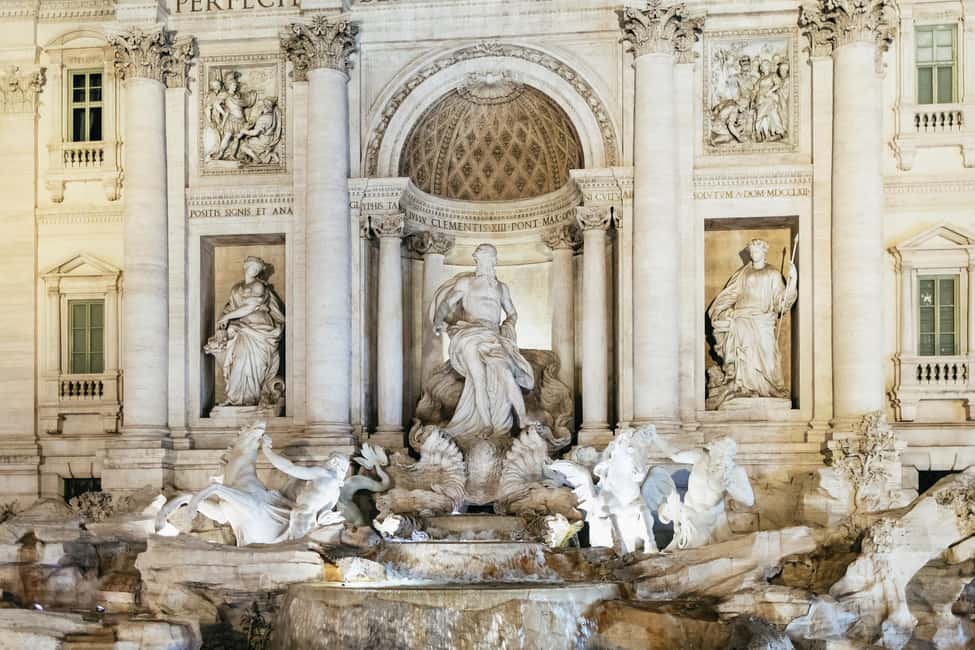
Trevi Fountain is the kind of sight everyone thinks they know. Then you see it at night and realize it’s a different experience entirely.
This tour places Trevi Fountain at the quietest time of day (or close to it). You’ll have guided time—around 30 minutes—so it’s not just a quick selfie lane. The guide helps you interpret the symbols built into the fountain’s design, so you’ll understand more than the surface drama.
You’ll also get the classic moment: tossing a coin over your shoulder to help guarantee your return to Rome. Even if you treat it as fun folklore, it’s a good pause point—an intentional “stop, look, listen, then move on.”
Photo tip (real-world): bring your phone camera settings off auto if you can. Night shots around bright fountains can overexpose quickly, and your goal is to keep the marble details from turning into a white blur.
One balanced note: Trevi is still Trevi. It can draw visitors even at night. The benefit here is that you’re seeing it with less chaos than the daytime peak.
Piazza Venezia and Trajan’s Column: How the Forums Area Reads in One Evening
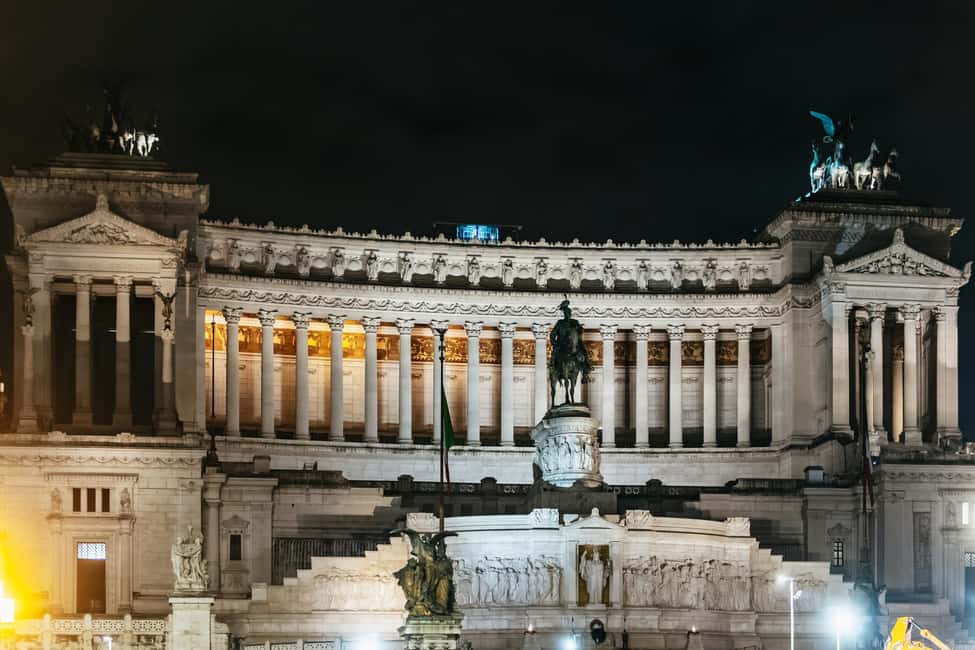
After Trevi, you’ll work your way toward Piazza Venezia for guided time (about 20 minutes). This is a strategic part of the route because it anchors you to Capitoline Hill and the area leading toward the Altar of the Fatherland.
Why I like this segment: it helps you understand the geography of Rome’s power centers. You’re looking at a big, open public space, but the guide turns it into a reference point for where the ancient world sat.
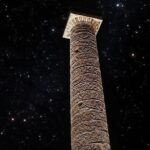
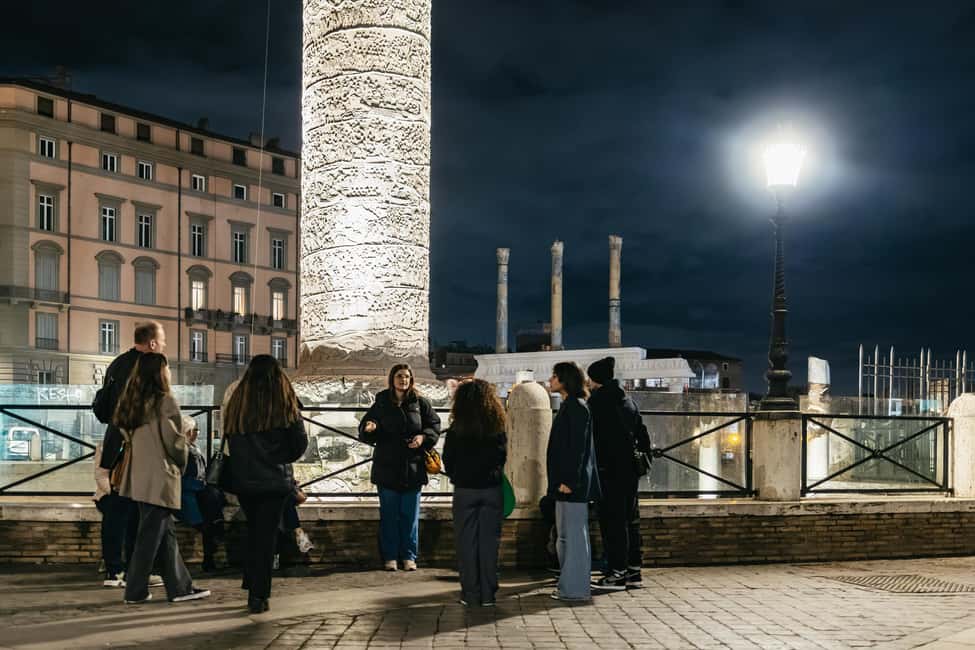
Then you pass Trajan’s Column (about 20 minutes pass-by time). It’s short here, but that works in your favor. Instead of getting lost in museum-level detail, you get a clear sense of what it represents and how it fits the broader narrative of empire.
Via dei Fori Imperiali to the Colosseum Edge: Seeing Rome’s Scale Without Tickets
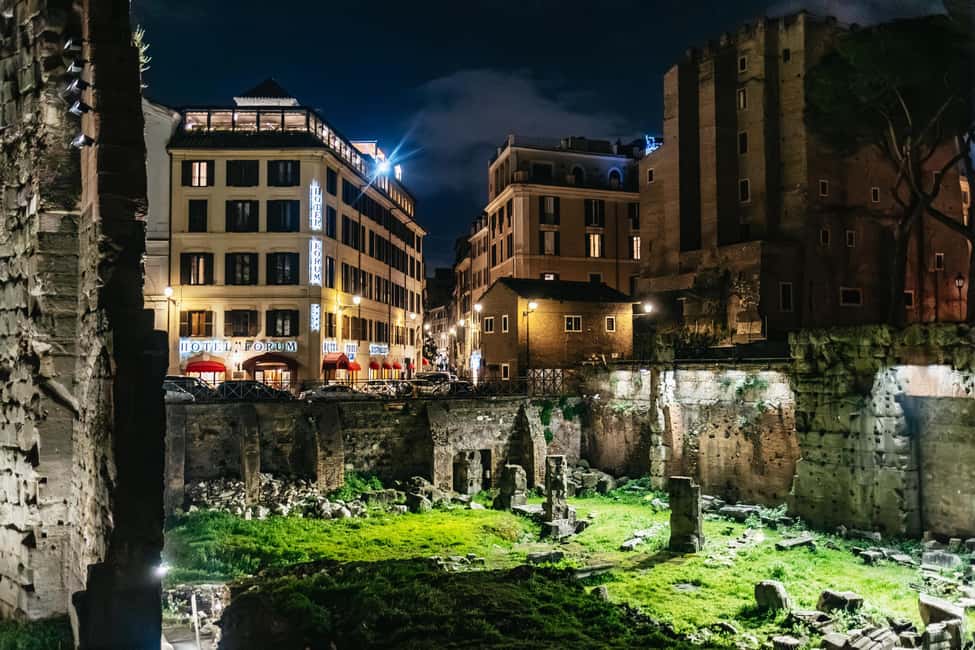
The final stretch is where the tour earns its “moonlight” promise.
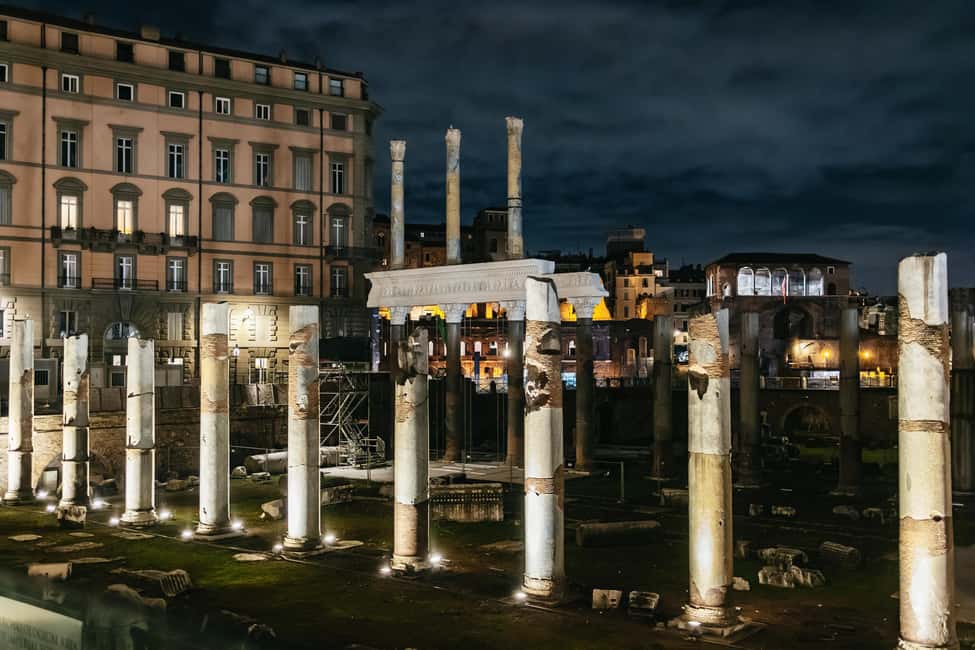
You’ll head down Via dei Fori Imperiali, which is described as a boulevard cutting through ancient Rome. You’ll pass Trajan’s Column and be guided alongside the forums of Trajan, Augustus, and Nerva, plus learn a bit more about the empire and its legacy.
This is a smart use of time. The route lets you grasp the size and continuity of the ancient core without needing to coordinate tickets or transit. You’re walking along a corridor where the scale is visible even in night light.
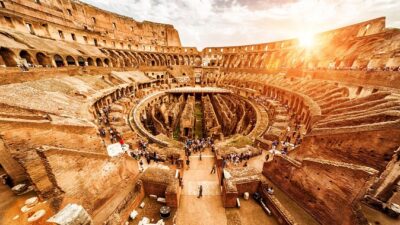
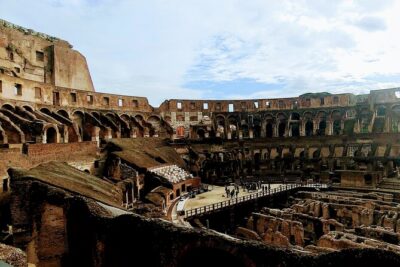
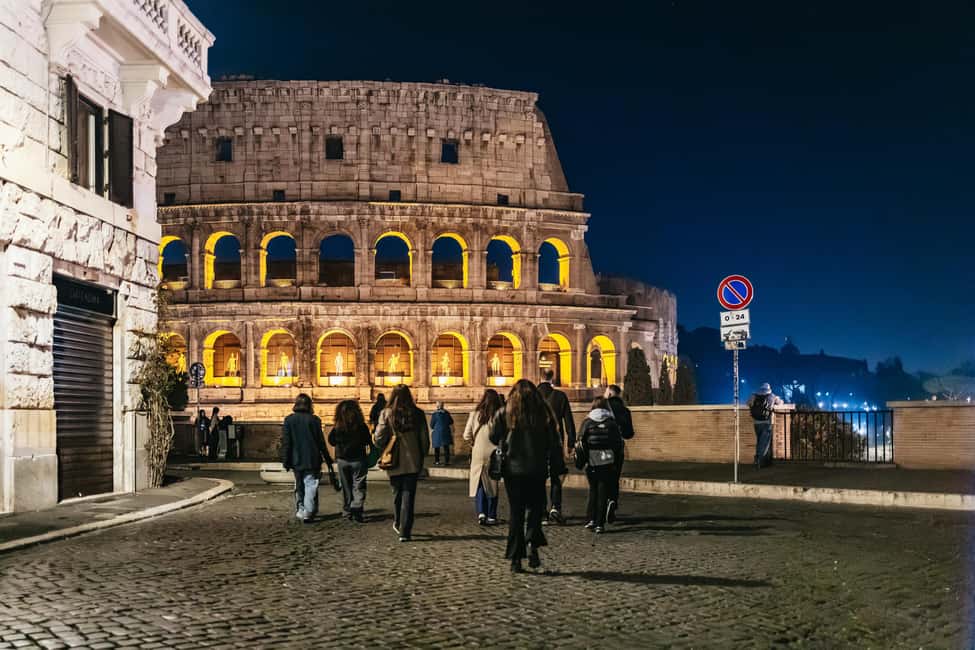
Then comes the big finish: the tour ends outside the most famous monument of all—the Colosseum—with illuminated views under moonlight. You’ll get the sense of the monument’s drama and setting, and you’ll also be well-positioned for whatever you want to do next in the area.
One consideration: because entry isn’t included, you won’t get the inside experience of the Colosseum on this tour. But if your goal is to see it dramatically and get oriented quickly, this is a strong and efficient way to do it.
What This Tour Gives You (That a Solo Night Walk Usually Doesn’t)
Rome at night is romantic, but it can be confusing. This tour solves the “I saw things, but do I understand them?” problem.
You get:
- Clear sequencing: you move from piazza to monument to historic corridors in a logical flow
- Guided meaning: symbols at Trevi, architecture notes at the Pantheon, stories around Piazza Navona
- Orientation help: you learn where major zones sit relative to each other, especially around the Capitoline Hill and the forums stretch
And the guide style matters. From the names that show up for this experience—Pauline/Paulina, Domenica, Vladimir, Sila, Sarah, Chenge, Alina, Anna—the common thread is a narrative approach and a focus on making the city feel alive, not just instructive.
If you want a night tour that doubles as a mini course and a confidence boost for your self-guided exploring afterward, this is a good fit.
Price and Value: Is $28 a Good Deal for This Kind of Night Walk?
For $28 per person, you’re paying for a guided, time-based walking route that covers multiple landmark areas, several guided stop segments, and a final Colosseum exterior experience.
Here’s how I’d judge value:
- If you can afford to buy time instead of planning tickets and logistics for multiple sites, this price makes sense.
- If your priority is inside access to major monuments, you’ll still need separate tickets later, since entry isn’t included.
- If you’re trying to beat daytime crowds, the scheduling around Trevi at a quieter time is a real benefit.
In short: it’s good value if you want a guided evening overview with major sights and context, not if you want a ticketed, inside-heavy itinerary.
Who Should Book This Night Tour?
This works especially well for:
- First-time Rome visitors who want major highlights in a single evening
- People who dislike daytime crowds and heat, but still want iconic sights
- Travelers who learn best through storytelling and clear explanations rather than map-walking alone
- Anyone short on time who wants a night “orientation layer” for the rest of the trip
If you’re the type who absolutely needs to go inside monuments the same day, you might treat this as the night companion to a daytime ticket plan.
Should You Book This Rome Moonlight Walking Tour?
Yes, if your goal is to see Rome’s top icons under lights, learn the meaning behind what you’re seeing, and get your bearings fast without ticket hassle. The timing around Trevi and the pacing through Piazza Navona to the Colosseum area make it a smart use of an evening.
Hold off or plan differently if:
- you specifically want interior access to the Pantheon, churches, or the Colosseum during this booking
- your walking tolerance is limited, since it’s still a full-on nighttime walk
If you’re flexible and you’re bringing good shoes, this is one of those Rome experiences that makes the rest of your trip easier.
FAQ
How long is the Rome City Highlights Moonlight Walking Tour?
It lasts about 2 to 2.5 hours. Starting times vary, so check availability for the schedule.
Where does the tour meet?
Meeting points can vary depending on the option booked, including Piazza d’Aracoeli and Piazza di Pasquino.
What sights do we see during the tour?
You’ll visit or pass by major highlights including Piazza Navona, the Pantheon, Trevi Fountain, Piazza Venezia, and you’ll end outside the Colosseum area.
Are attraction tickets or entry fees included?
No. Entry to attractions is not included, and there are no food or drink inclusions.
What language is the tour guide?
The live guide is available in English and Spanish.
What should I bring?
Bring comfortable shoes and comfortable clothes for a nighttime walking experience.
Is cancellation free?
You can cancel up to 24 hours in advance for a full refund.