REVIEW · ROME
Rome: Caravaggio and Baroque Art Private Guided Tour
Book on GetYourGuide →Operated by Tour in the City - Travel Agency Rome - · Bookable on GetYourGuide
Caravaggio gets real when you walk the streets. I love how this private tour ties Caravaggio’s light-and-shadow drama to the exact churches and urban corners where his work still lives, not a distant slideshow. I also like the balanced Baroque mix, from major paintings to quick architectural stops that keep things moving without rushing. The one drawback to plan for: you do need the right outfit for church entry, and there’s a moderate amount of walking in about 3 hours.
If you want the story behind the paintings, you’ll get it. The tour is led by a professional art historian guide and includes skip-the-line admission for the key sites, so you spend more time looking and less time waiting. I’ll also point out that the order and exact logistics can shift, which is normal in central Rome.
In This Review
- Key Things That Make This Tour Worth It
- Caravaggio’s Rome: why this private route works
- Piazza del Popolo meeting point and the walk-it-starts-here feel
- Basilica of Santa Maria del Popolo: two Caravaggio canvases
- Palazzo Madama, Giustiniani Palace, and Montecitorio: Caravaggio’s Rome in government buildings
- St. Louis of France and the Contarelli Chapel: The Life of St. Matthew
- Sant’Agostino: Madonna of the Pilgrims
- Church of St. Ignatius of Loyola: Baroque architecture with art-world stories
- Pantheon passing moment: a quick history checkpoint
- Piazza Navona wrap-up: Four Rivers, Bernini vs Borromini, and Caravaggio’s ending
- Your guide and the headset detail that matters
- Timing and pacing: what you’ll realistically see in 3 hours
- Price and value: what you’re paying for at $158.60
- Dress code and practical rules: avoid getting turned away
- Who this tour suits best
- Should you book this Caravaggio and Baroque private tour?
- FAQ
- Where does the tour start?
- How long is the tour?
- Is this a private tour?
- What is included in the price?
- What is not included?
- What are the dress requirements for church stops?
- Is cancellation flexible?
Key Things That Make This Tour Worth It
- Caravaggio in context: you see major works where they were installed, not treated like museum trophies
- Real Baroque highlights: Contarelli Chapel, Bernini and Borromini show up in the same day’s walk
- A guide who explains the why: expect stories about Caravaggio’s life in Rome, tied to what you’re seeing
- Skip-the-line access at the stop-specific sites included on the route
- Headsets for larger groups (only if your group is over 8), so you can actually hear the guide on the move
Caravaggio’s Rome: why this private route works
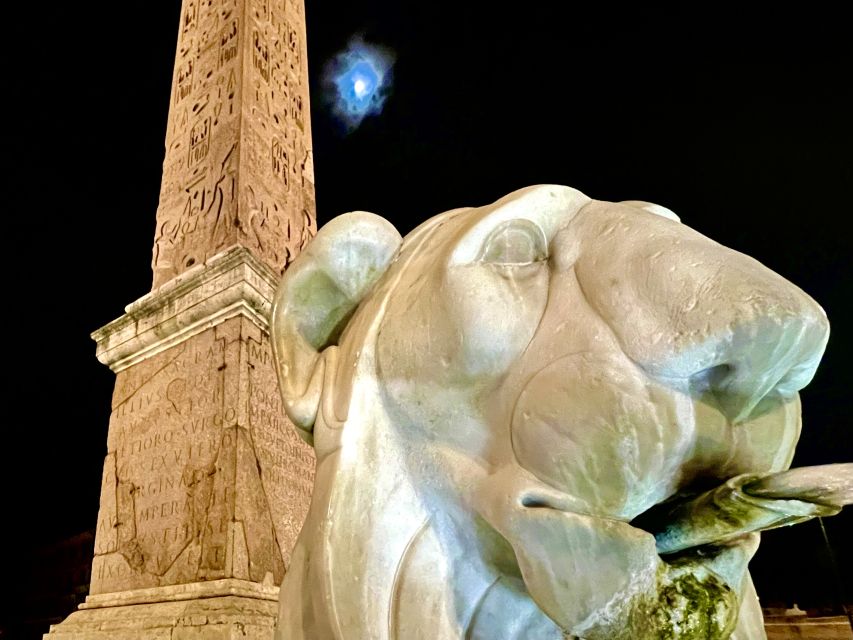
This tour is built around one idea: Caravaggio plays differently in a church than he does behind glass. The big payoff is that you’re surrounded by the Baroque world he helped define—paintings, architecture, and the dramatic stagecraft of religious art all in one walking sequence.
I also like the way the route balances heavyweights with smart pacing. You get multiple focused interiors, plus short outside moments where your guide can point out places Caravaggio was connected to (or at least tied to the same neighborhoods) and where later Baroque masters worked their magic.
One practical note: this isn’t a sit-and-stare marathon. You’re in and out of churches several times, so if you’re the kind of person who hates stepping in and out of places of worship, you may find the pace a touch intense.
You can also read our reviews of more guided tours in Rome



Piazza del Popolo meeting point and the walk-it-starts-here feel
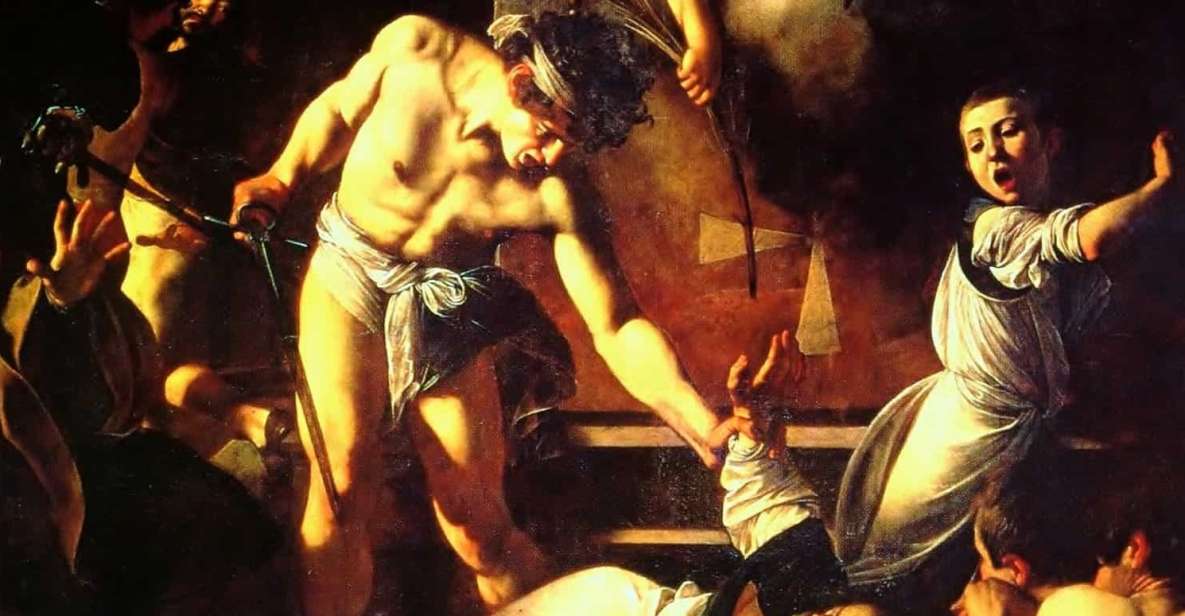
The tour begins at Piazza del Popolo, 7, next to the obelisk in the middle of the square. Your guide will be holding a sign with your name, which helps a lot when you’re joining a private group in a busy tourist hub.
You’ll start with a short guided orientation around Piazza del Popolo itself. That little chunk of time matters because it helps you understand how Rome’s street-and-square layout sets up the next stops. In other words, you’re not just being marched to a list—you’re getting bearings fast.
If you arrive late, you’ll feel it. This kind of meeting point has constant foot traffic, and it’s specifically asked that you arrive 10–15 minutes early.
Basilica of Santa Maria del Popolo: two Caravaggio canvases
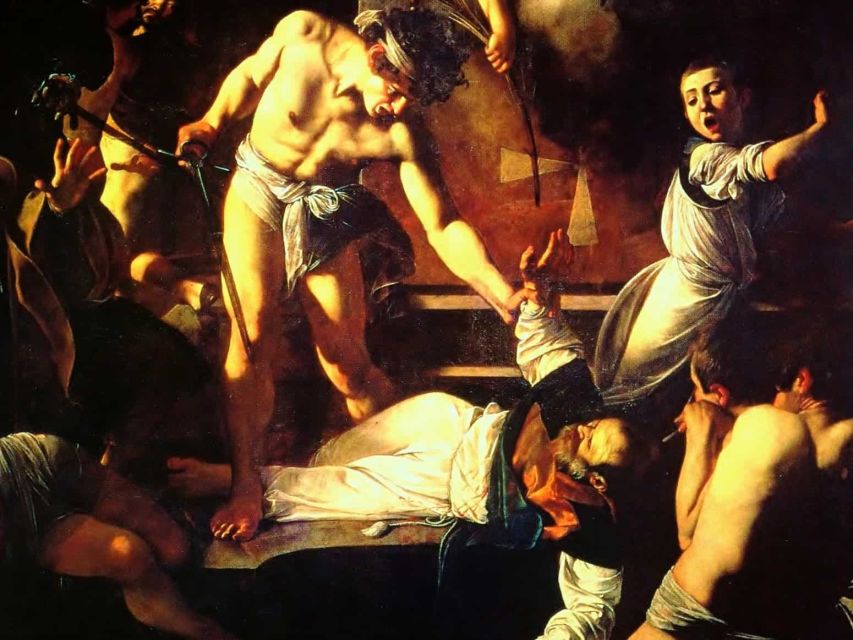
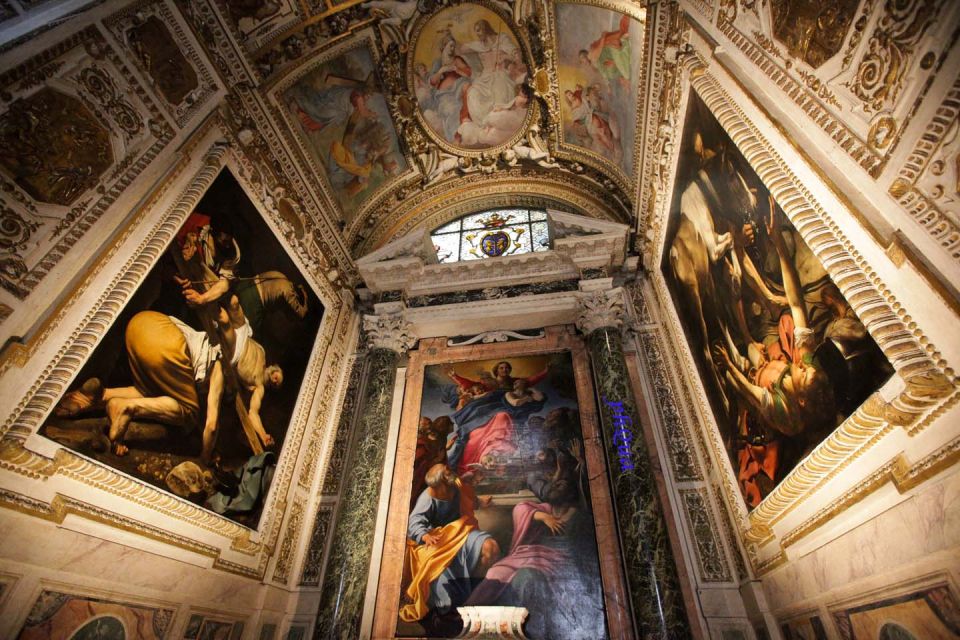
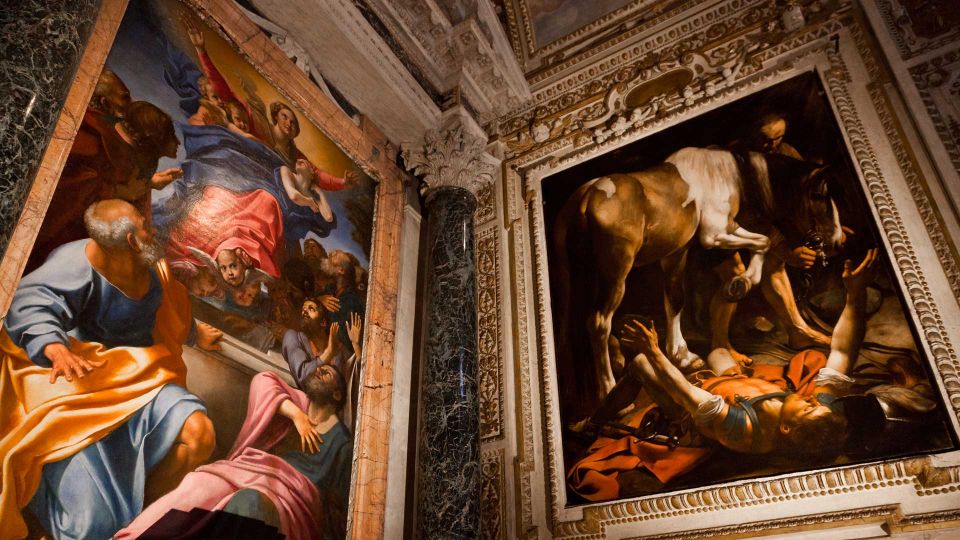
Next up is Santa Maria del Popolo, where you’ll spend about 15 minutes with guided focus. This is where the tour starts to earn its reputation.
You’ll encounter two powerful canvases by Caravaggio:
- The Crucifixion of St. Peter
- The Conversion of St. Paul
What I find useful here is your guide’s emphasis on light and shadow—the way Caravaggio uses contrast to steer your eye and crank up emotion. Even if you’ve seen reproductions before, seeing these paintings inside a real church space changes the experience. The dramatics aren’t abstract. They’re part of the room.
Drawback to consider: 15 minutes can feel short if you want to linger. The upside is that a private guide can adjust attention to what you care about most, but you still have a tight 3-hour schedule.
Palazzo Madama, Giustiniani Palace, and Montecitorio: Caravaggio’s Rome in government buildings
After the churches, you’ll do a few pass-by stops that help you map Caravaggio-era Rome onto modern Rome.
Your guide points out:
- Palazzo Madama (now the seat of the Italian Senate)
- Giustiniani Palace (currently houses Senate offices)
- Palazzo di Montecitorio (the seat of Italy’s Chamber of Deputies)
You’re not walking inside these palaces on this tour. Still, the benefit is storytelling in real places. Rome is full of buildings with new jobs, and these are a great example: the structure stays, but the function changes. That helps you understand how the city layers history rather than swapping it out.
This section can feel like a breather between heavier art stops. If you’re hoping for frequent interior visits, keep expectations on the practical side: this tour uses pass-by moments to keep the schedule realistic.
St. Louis of France and the Contarelli Chapel: The Life of St. Matthew
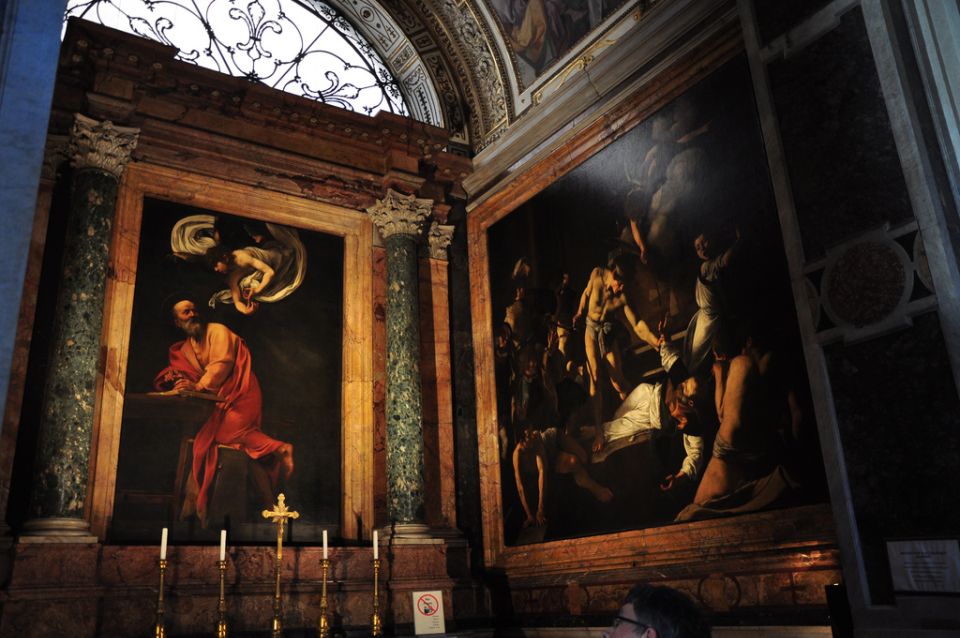
One of the biggest art moments on the route is at the Church of St. Louis of the French, where you’ll have about 20 minutes of guided time.
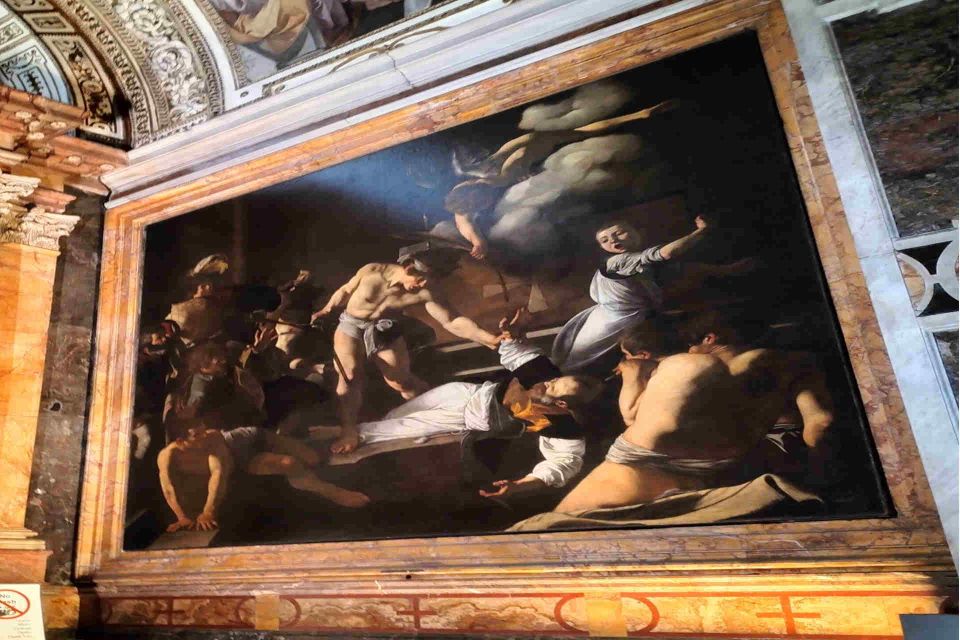
Here you’ll see Caravaggio’s cycle of The Life of St. Matthew in the Contarelli Chapel. This is the sort of work that rewards you even if you’re not an art expert. The drama isn’t subtle, and the figures feel like they’re caught mid-action.
In a guided setting, you’ll also learn why Caravaggio’s approach mattered in Rome—how his style fit the Baroque craving for immediacy. Your guide should help you connect what you’re seeing to his life in the city during a tense period, which makes the religious subject feel more human and less distant.
Timing note: 20 minutes is enough to get a strong overview with guidance, but not enough to read every corner of detail on your own. If you want extra time here, plan to return later independently.
You can also read our reviews of more private tours in Rome



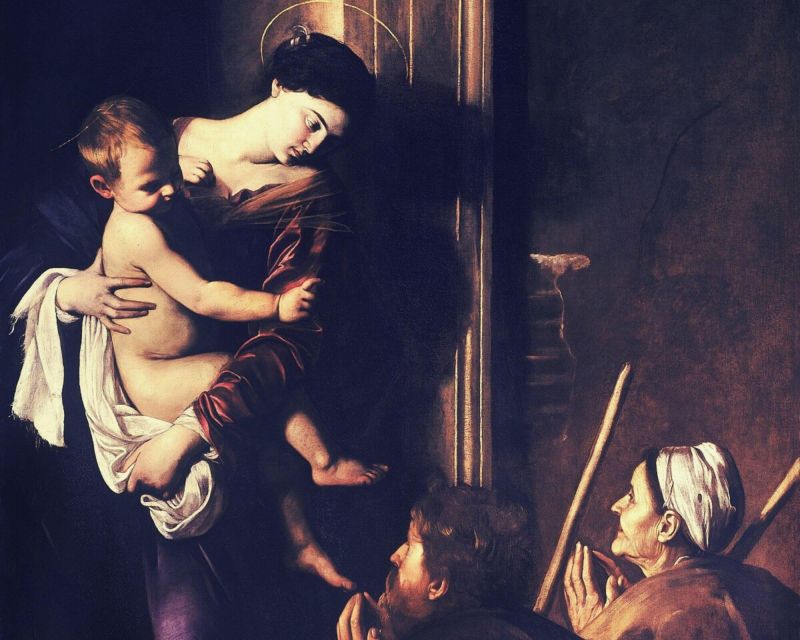
Sant’Agostino: Madonna of the Pilgrims
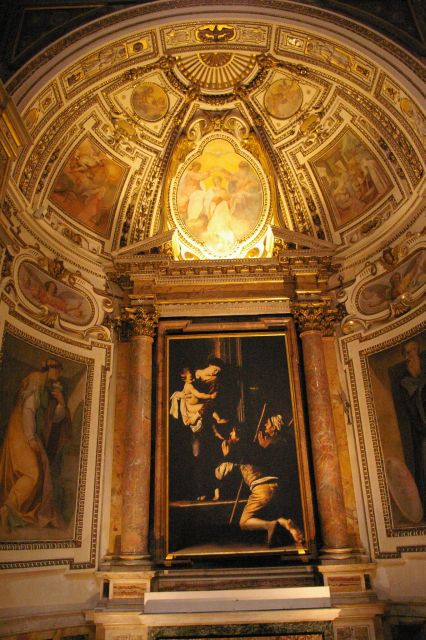
Next is the Basilica of St. Augustine (Sant’Agostino) with about 15 minutes guided. This is where the tour shifts from a narrative cycle to a more direct emotional register.
You’ll have a chance to see Madonna of the Pilgrims. The point of including this work is balance: the route doesn’t stay only in one kind of Caravaggio brilliance. You get different religious themes and different ways the drama lands on the viewer.
If you’re trying to decide whether Caravaggio is your thing, this stop is a useful test. You’ll either feel the pull of his staging and lighting choices—or you’ll realize your taste leans more toward architecture or other Baroque painters.
Church of St. Ignatius of Loyola: Baroque architecture with art-world stories
At Church of Sant’Ignazio di Loyola, you’ll get about 15 minutes guided. The tour calls this out as an architectural gem of the Baroque era, and in practice that usually means your guide will steer you toward what makes the building feel theatrical.
Even if the focus is mixed between art and architecture, the real value is how your guide connects design choices to the Baroque goal: religious spaces that feel like a performance.
This stop also helps break up the Caravaggio-heavy portions. It’s a reminder that Baroque Rome isn’t just paintings—it’s buildings, light, and the way people move through space.
Pantheon passing moment: a quick history checkpoint
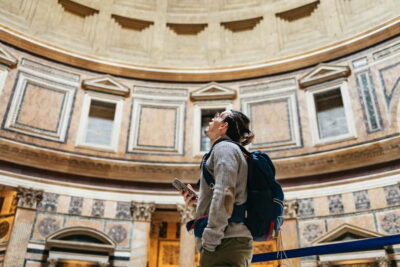
You’ll pass by the Pantheon for about 10 minutes. This isn’t a long stop, but it’s a smart inclusion because it puts Baroque Rome in dialogue with earlier classical grandeur.
Your guide will share its fascinating history, and that context helps you see the bigger picture. Baroque art didn’t appear from thin air—it responded to older forms while pushing drama, emotion, and theatrical effect.
If you’re a Pantheon super-fan, you’ll probably want more time later. For this tour, the Pantheon works as a reset point before you head to Piazza Navona.
Piazza Navona wrap-up: Four Rivers, Bernini vs Borromini, and Caravaggio’s ending
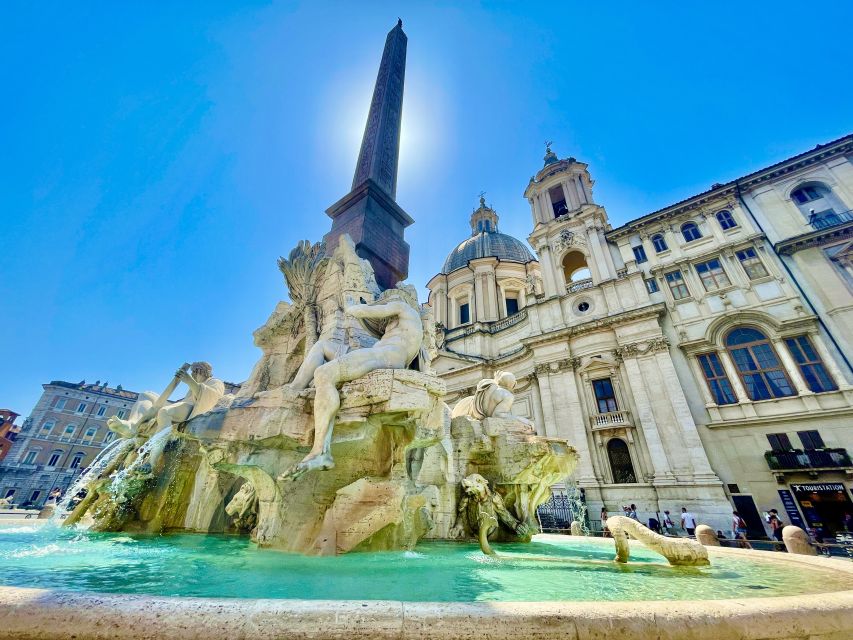
The final stretch lands in Piazza Navona, where you’ll spend about 15 minutes guided. This square is famous for a reason: it’s built for the kind of eye-level storytelling Baroque artists loved.
Your guide then focuses on:
- Bernini’s Fountain of the Four Rivers (about 10 minutes)
- the striking façade of Borromini’s Sant’Agnese in Agone
One of the most interesting parts of this ending is the guide’s attention to the artistic rivalry between Bernini and Borromini. Hearing those stories while standing in the actual square helps the architecture and sculpture make emotional sense. It’s not just design trivia. It’s a conflict between styles, egos, patrons, and public taste.
The tour also ties this finish to the tragic conclusion of Caravaggio’s life in Rome, so the day doesn’t end only on famous names. It ends with the human arc behind the art.
One logistics quirk to keep in mind: your meeting point is Piazza del Popolo, but the listed finish is Piazza Navona. Plan onward time based on the end location shown in your booking details, and confirm the exact handoff point with your provider if anything looks unclear.
Your guide and the headset detail that matters
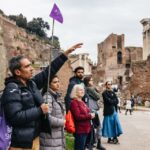
This is a private walking tour with a professional art historian guide. On paper, that sounds standard. In real life, it changes what you hear at each stop—especially for Caravaggio, where small choices (lighting, gesture, staging) are what make the work click.
In one of the standout experiences shared for this tour, the guide was named Emilio, described as outstanding. If your confirmation lists a different guide, the important takeaway is the same: you want someone who can translate visual choices into clear stories.
Headsets are included, but only for groups over 8 people. If you’re booking a smaller group, you might not get headsets, so pay attention at the inside stops where the guide will likely speak from close range.
Timing and pacing: what you’ll realistically see in 3 hours
The schedule is tight but not frantic. You’re looking at a total of 3 hours, with guided time at key interiors and short pass-by segments elsewhere.
A rough sense of how it’s structured:
- quick orientation in Piazza del Popolo
- two focused stops at Santa Maria del Popolo and major church interiors
- several pass-by moments where your guide connects buildings to story
- a final arc through Pantheon’s area and into Piazza Navona
Because it’s private, your guide can adjust to your questions. That’s the hidden advantage of a private format: if you’re stuck on one painting or curious about a specific Baroque detail, you can usually ask and get context without slowing everyone else.
Still, don’t expect long self-guided wandering. This is a guided route designed to hit major works and major spaces within a walking-day window.
Price and value: what you’re paying for at $158.60
At $158.60 per person for a 3-hour private guided experience, you’re paying for three things that add up in Rome:
First, you’re paying for a professional art historian rather than a general guide. Caravaggio is where expertise matters. If you’re going to spend time with his work, it’s worth getting the stories behind the lighting and the life context.
Second, the tour includes privileged skip-the-line admission for the included sites. Skip-the-line matters most in central Rome when queues can chew up your day.
Third, the route covers multiple major Baroque and Caravaggio targets without hotel pickup. No hotel transfer is included, which helps keep costs focused on the guided experience and access.
What’s not included is also clear: food and drinks. Plan to grab a snack before or after, especially since you’ll be indoors and then outdoors again.
Dress code and practical rules: avoid getting turned away
This tour includes multiple churches, and the rules are strict enough that you should treat them seriously.
You’ll need:
- shoulders covered
- knees covered
Not allowed:
- shorts
- short skirts
- sleeveless shirts
If you show up in summer heat wearing less-than-covering clothes, you risk being refused entry. Rome is beautiful, but it’s also strict about worship spaces.
Comfort matters too. You’ll be doing moderate walking, so wear comfortable shoes you trust for uneven stone.
Who this tour suits best
This works best if you want art history that feels grounded in place. If you care about Caravaggio’s use of light and shadow, you’ll likely love the direct, guided look at his paintings in the churches where they’re meant to be seen.
It’s also a good choice if you like Baroque art but want a route that doesn’t get stuck in one building or one style. You get Caravaggio, plus Baroque architecture and a taste of the Bernini–Borromini story.
If you hate walking and you prefer museums only, you might feel squeezed by the church-hopping format. This tour is built for people who can handle short moves and quick guided stops.
Should you book this Caravaggio and Baroque private tour?
Yes—if you want Caravaggio and Baroque Rome to feel connected instead of like a list of monuments. The blend of skip-the-line access, an art historian guide, and major stops like the Contarelli Chapel plus Piazza Navona makes good use of your limited time.
Book it especially if you’ll benefit from a clear story while you look, not just a free-for-all look without guidance. If your outfit is church-ready and you’re comfortable with moderate walking, you’re set.
If you’re unsure, ask yourself one question: do you want the meanings behind what you’re seeing? If yes, this tour is an efficient and satisfying way to get that in just 3 hours.
FAQ
Where does the tour start?
The meeting point is at Piazza del Popolo, 7, next to the obelisk in the middle of the square. Your guide will have a signboard with your name.
How long is the tour?
It lasts about 3 hours. Starting times depend on availability.
Is this a private tour?
Yes. It’s a private walking tour for your group.
What is included in the price?
The price includes a professional art historian guide, the private walking tour, privileged skip-the-line admission, and headsets (only if the group is over 8 people).
What is not included?
Food and drinks are not included, and there is no hotel pickup or drop-off.
What are the dress requirements for church stops?
You must cover shoulders and knees. Shorts, short skirts, and sleeveless shirts are not allowed, and you risk being refused entry if you don’t comply.
Is cancellation flexible?
Yes. You can cancel up to 24 hours in advance for a full refund.