REVIEW · ROME
Rome Explorer Pass: 2 to 7 Attractions – Includes Colosseum
Book on GetYourGuide →Operated by Go City - EMEA · Bookable on GetYourGuide
A phone ticket can make Rome feel easier. The Rome Explorer Pass bundles entry to 2–7 major attractions, including the Colosseum, and runs on a digital guide you manage in the Go City app. I like that you can mix big-name classics with add-on experiences like hop-on hop-off transport and food tours without buying separate tickets. One thing to watch: many of the most popular choices need reservations, so planning ahead matters.
What I really like is the flexibility—your pass stays valid, then kicks into a tight window once you use it. You also get built-in guidance: audio tours, reserved entrances, and app instructions to reduce ticket-stress. The possible drawback is simple: if you pick only 2 attractions, the value can feel less impressive, since the pass works best when you stack multiple stops.
In This Review
- Key things to know before you plan
- How the Rome Explorer Pass Works (activate once, then pace yourself)
- Colosseum time: entry plus audio and multimedia support
- Vatican Museums and Sistine Chapel: skip-the-line tickets with a key closure note
- Pantheon with reserved entrance and audioguide
- St. Peter’s Basilica plus Cupola and breakfast-style guided options
- Castel Sant’Angelo and other reserved highlights
- Hop-on Hop-off bus and river cruise: see more with less stress
- Imperial Rome walking tour and skip-line museum time
- Pizza, gelato, espresso, and cooking: food experiences built in
- Espresso and music-style add-ons: pick what matches your mood
- Building a smart 2-to-7 stop itinerary without wasting pass days
- Price and value: when $100.82 makes sense
- Who should book the Rome Explorer Pass?
- Should you book this Rome Explorer Pass?
- FAQ
- How many attractions are included in the Rome Explorer Pass?
- Does the pass include the Colosseum?
- How long is the pass valid?
- Where do I activate the pass?
- Do I need reservations?
- What if the Sistine Chapel is closed during my dates?
- What do I get besides attraction entry?
- What do I need to bring with me?
- Is transportation included?
- Can I cancel, and how late?
Key things to know before you plan

- 2–7 attractions is the core idea: choose your number first, then build your days from over 45 options.
- Activation starts your clock: use your first attraction, then you have 30 days to finish the rest.
- Reservations are a make-or-break detail: for several top experiences, the app will tell you to book ahead.
- Sistine Chapel timing can matter: it’s listed as temporarily closed, with a return expected mid-May.
- You can mix classic sights with food: pizza, espresso/gelato/tiramisu, and guided tastings show up in the selection.
How the Rome Explorer Pass Works (activate once, then pace yourself)

The Rome Explorer Pass is built around one clear rhythm: pick a pass for 2, 3, 4, 5, 6, or 7 Rome and Vatican attractions or activities, then spend the validity period exploring at your own speed. The pass is usable within your purchase window, but it only becomes active when you attend your first included experience. After that first visit, you get 30 days to use the remaining attractions you bought.
You don’t pick up a paper book of tickets. You plan and access everything through the Go City app. Before you go, you’ll want a charged smartphone. When you arrive, the start point is flexible: you activate your pass at any of the included attractions or tours. That flexibility helps if your schedule changes due to weather, long lines, or how your day actually plays out.
The other big “how it works” detail is that the pass includes a digital guide with attraction info and instructions for booking visits. Think of it as a workflow tool: it tells you what to do for each experience and how to sync your pass.
You can also read our reviews of more tours and experiences in Rome.



Colosseum time: entry plus audio and multimedia support
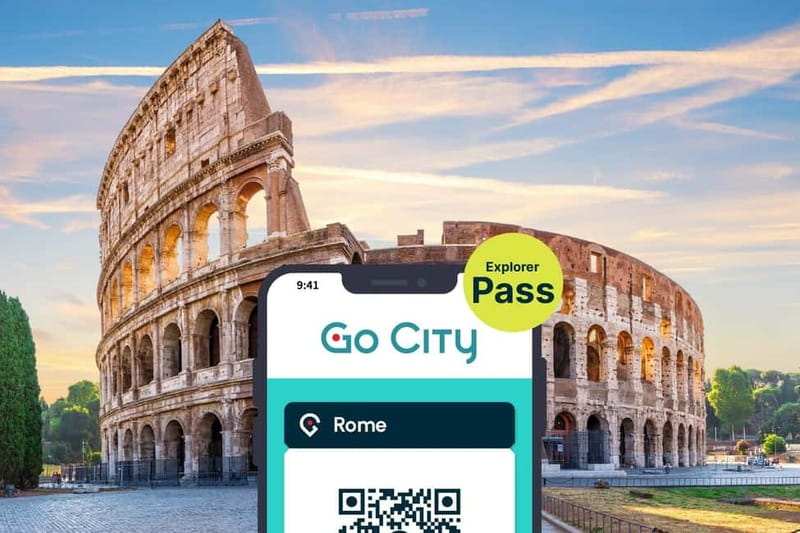
The Colosseum is included, and it comes paired with audio tour and multimedia video for the Colosseum, Roman Forum, and Palatine Hill. For many people, that’s the sweet spot of a Rome pass: one of the city’s most time-consuming classics packaged with self-guided storytelling.
In practice, the audio and multimedia add value because you can go through at your own pace instead of rushing to match a group. You also get a clear structure for what to notice while you walk.
One consideration: the pass doesn’t replace your need to plan around the popular sites. Where reservations are required, the app will guide you. So if the Colosseum is one of your anchor stops, I suggest choosing it early in your trip window so you’re not juggling availability later.
Vatican Museums and Sistine Chapel: skip-the-line tickets with a key closure note

If you want one high-impact day, the Vatican Museums and Sistine Chapel option is one of the strongest inclusions on the pass list. It’s described as escorted skip the line tickets with guided support.
Skip-the-line matters here because Vatican entry can be unpredictable. When your pass includes a line-saving approach, you spend more of your time walking the rooms and less time stuck in the guesswork of ticket counters. The escorted element also helps you find your way through the flow of entry.
The important caveat is seasonal: the Sistine Chapel is listed as temporarily closed, with an expected re-open mid-May. If your dates fall near that window, you’ll want to check the Go City app for the latest availability for the exact experience you’re planning.
Pantheon with reserved entrance and audioguide

The Pantheon is included with reserved entrance and an audioguide. This is a different kind of value than a big guided group tour. Reserved entrance helps you skip the friction of trying to time entry on the spot, and the audioguide supports a calmer visit where you can move at your own speed.
This is the kind of stop that pairs well with a slower morning or a late afternoon when you don’t want your day to feel like a race. If you’re the type who likes to wander, reserved entrance plus an audioguide is a solid combo.
St. Peter’s Basilica plus Cupola and breakfast-style guided options

The pass lists a guided option for St. Peter’s Basilica and Cupola, including breakfast and an audioguide of the papal tombs. It’s marked with reservation requirements, so you’ll want to watch your app instructions and lock in a time when the schedule opens up.
Why this inclusion matters: it’s not just another ticket. It’s a guided structure with extras, and that usually means less decision-making once you’re there. Breakfast also turns the morning into something planned, which can be a real relief when you’re stacking multiple must-sees.
If you like starting your day with a clear plan, this is a good anchor. If you hate early mornings, you might prefer to swap it for other included options and keep your schedule gentler.



Castel Sant’Angelo and other reserved highlights

The pass includes Castel Sant’Angelo as a reserved option. The data provided doesn’t spell out the format in detail beyond that it’s included, but the practical takeaway is this: if your pass includes reserved entry experiences, you should expect a tighter plan on the day you choose them.
In other words, reserved options usually reward you for planning. If you’re the “I’ll decide the day-of” type, be careful about stacking too many reservation-based items on the same day.
Hop-on Hop-off bus and river cruise: see more with less stress

One of the smartest uses of a Rome Explorer Pass is transport that stretches your sightseeing time. The pass includes a Big Bus Rome Hop-On Hop-Off 1-Day Discover Ticket, which is a low-effort way to hop between neighborhoods and major stops.
It also includes a Hop-on hop-off River Cruise ticket for 24 hours. For many people, that’s a practical win because it adds a different viewpoint without forcing a full-day commitment.
There’s also a Big Bus Rome Catacombs guided tour with bus transfer. Catacombs can add a long outing, so having bus transfer bundled is useful if you don’t want to coordinate transport on your own.
If you want to spend less time in transit planning and more time deciding what to do when you actually reach a neighborhood, these included transportation options are where the pass starts to feel genuinely convenient.
Imperial Rome walking tour and skip-line museum time

Beyond the headline monuments, the pass includes calmer, more focused add-ons. One standout option is an Imperial Rome Walking Tour that includes the Colosseum exterior. Since it’s listed as part of the pass selection, it’s a nice way to connect areas you’d otherwise hit in isolation.
The pass also includes Capitolini Museums with skip line entry. Museums often succeed or fail based on how much time you lose to waiting. Skip-line access helps you get inside faster, which keeps the day from turning into a queue marathon.
If you’re balancing a trip full of big sites, these kinds of experiences help you spread your energy out. You get variety without abandoning the Rome Explorer Pass model.
Pizza, gelato, espresso, and cooking: food experiences built in

This pass doesn’t treat food as an afterthought. It includes multiple options, including:
- a 1-hour pizza-cooking experience
- an Espresso, Gelato and Tiramisu Tour
- a Sunset pizza tour near the Colosseum
- a Pizza Terrace Menu in the Prati District
Food is one of the easiest ways to make Rome feel personal, and guided or scheduled tastings reduce the guesswork. With these, you’re buying time and structure: you show up, follow the plan, and you’re not spending your day hunting for a good place to sit.
If you’re someone who wants your trip to feel like more than photos, build one food stop into the middle of your trip. It acts like a break from monuments while still keeping your itinerary moving.
Espresso and music-style add-ons: pick what matches your mood
Alongside sights, the selection also includes experiences like a classical music concert. The data doesn’t describe exact venues or timing, but the broader point is that the pass gives you choices that aren’t just about standing in front of famous stone.
This matters because Rome can overload your senses. By choosing at least one non-monument experience, you give yourself a day that feels different from the others.
Your best strategy is to alternate styles:
- one day heavy monuments
- one day museums and guided walk
- one day transport-based exploring plus food
Building a smart 2-to-7 stop itinerary without wasting pass days
A pass works only if you use it like a plan, not like a gamble. Start by picking your anchor attractions: the ones you absolutely don’t want to risk. In this pass, the obvious anchors are Colosseum and Vatican Museums and Sistine Chapel, plus Pantheon if it’s on your list.
Then follow the reality check: the most popular options require reservations. So once your anchor dates are known, reserve early from the Go City app based on the digital guide instructions.
One more scheduling tip: don’t compress every reserved item into a single day. When you have one or two experiences that need a specific time, you still want room for buffer. Rome timing is not always predictable, and the pass already asks you to manage reservations.
Also remember how the clock works: your 30-day window starts after activation. If you activate right at the start of your trip, you have more time to recover from anything that gets pushed back.
Price and value: when $100.82 makes sense
At $100.82 per person, the Rome Explorer Pass is designed for savings when you stack multiple paid attractions. The offer says you can save up to 50% on entry to top attractions, based on sample itineraries.
Here’s the practical value equation I’d use:
- If you choose only 2 attractions, the pass might feel like a convenience purchase rather than a slam dunk value, especially since the lineup includes several reservable experiences.
- If you choose 4 to 7 attractions, you’re more likely to hit the savings angle because the pass bundles multiple entry tickets and experiences into one price.
- If your list already includes Colosseum and Vatican area experiences, the pass becomes more compelling because those tend to eat time and planning. This pass packages them with audio, escorted entry, and reserved access options.
In short: the pass feels like a win when you commit to using more of what it includes, not when you treat it like a single special ticket.
Who should book the Rome Explorer Pass?
I think this pass is best for people who:
- want a self-guided pace but like structured help from a digital guide
- are doing a first or early trip to Rome and need help building a mix
- prefer bundled value over buying individual tickets one by one
- like pairing big sights with lighter experiences like hop-on hop-off transport and food tours
It might be less satisfying if you hate reservation planning. Because reservations are required for some popular choices, your enjoyment depends on doing a little prep in the Go City app.
Also, if you’re traveling around the time when the Sistine Chapel is listed as temporarily closed, you’ll want extra flexibility in your plans and to confirm updates in the app.
Should you book this Rome Explorer Pass?
Book it if you’re aiming for a 2–7 stop Rome plan and you’re willing to use the Go City app to reserve where needed. The value jumps when you use multiple included entries like Colosseum, Vatican Museums, and Pantheon, plus at least one add-on such as the hop-on hop-off bus or river cruise. The digital guide approach is especially helpful if you want to avoid ticket-counter chaos.
Don’t book it if you only want one or two attractions and you prefer spontaneous, no-planning days. With a pass like this, you get the best payoff when you actually use the bundled experiences.
If you want my quick rule: choose a number you’ll genuinely complete within the 30-day activation window, then reserve early for the time-sensitive stops.
FAQ
How many attractions are included in the Rome Explorer Pass?
The Rome Explorer Pass lets you choose an option that includes entry to any 2, 3, 4, 5, 6, or 7 Rome and Vatican attractions and activities.
Does the pass include the Colosseum?
Yes. The pass includes Colosseum, Roman Forum and Palatine Hill with an audio tour and multimedia video.
How long is the pass valid?
The pass is valid for 30 days to 2 months, depending on starting times. Also, passes are valid for 1 year from purchase date and only become activated when you use your first attraction. After activation, you have 30 days to use the remaining attractions you purchased.
Where do I activate the pass?
You start by activating your pass at any of the attractions or tours included on the Rome Explorer Pass.
Do I need reservations?
The most popular activities require reservations, and you should use the instructions in the digital guide and the Go City app to manage them.
What if the Sistine Chapel is closed during my dates?
The information provided notes that the Sistine Chapel is temporarily closed, with an expected re-open mid-May. You should check the Go City app for the latest availability for your specific dates.
What do I get besides attraction entry?
You get a digital guide packed with attraction information and instructions, plus formats like audio guides, reserved entrances, escorted skip-the-line tickets, or guided tours depending on the selected attractions.
What do I need to bring with me?
Bring a charged smartphone, since access and instructions are managed through the Go City app.
Is transportation included?
Transport is not included, unless it is part of a specific activity (for example, options that mention bus transfer).
Can I cancel, and how late?
You can cancel up to 24 hours in advance for a full refund.