REVIEW · ROME
Rome: Caracalla Baths Express Small-Group or Private Tour
Book on GetYourGuide →Operated by Touriks · Bookable on GetYourGuide
Roman calm, in one focused hour. This Caracalla Baths experience turns a huge set of ruins into a guided, time-saving visit at Rome’s best-preserved imperial thermal complex. I especially like the sterilized headsets, which keep the guide’s narration clear, and I also like the small, controlled format (max 10) that makes the tour feel easier to follow. One drawback to consider: a longer walk tied to the Circo Maximus area can eat into your time inside, so the pace may feel a touch rushed if you stop often.
For about 1 hour, you’ll follow what a typical day at the baths looked like in the 3rd century AD, while learning how the ancient engineers pulled off underfloor heating and maintaining comfortable temperatures. It’s not a “quick photo stop” tour. It’s a “see the layout and understand the system” tour, with mosaics and monumental rooms that quietly steal the show.
In This Review
- Key things I’d pay attention to
- Caracalla Baths in an Hour: What You Actually Get
- Meet at Circo Massimo: The Start That Keeps You Calm
- Entering the Baths: Seeing a Complex, Not Just Ruins
- A Typical Day at Caracalla: The 3rd-Century Storyline
- Roman Engineering That Still Feels Like Magic: Heating and Temperature
- Mosaics and Motifs: Small Details You’ll Actually Notice
- Skip-the-Line Entry and Sterilized Headsets: The Small Things That Matter
- Private or Small Group: Who This Tour Suits Best
- The Pace Question: When the Circo Maximus Walk Feels Like Too Much
- Price and Value at $70: Worth It If You Want the Explanation
- What I’d Do Differently Next Time
- Should You Book the Caracalla Baths Express Tour?
- FAQ
- How long is the Caracalla Baths Express tour?
- How much does it cost?
- Where do I meet the guide?
- What is included in the tour price?
- Do I need to buy tickets in advance?
- What languages are offered?
- What group size should I expect?
- Is the tour wheelchair accessible?
- What should I bring?
- Are there restrictions on bags?
- Can I get a refund if I cancel?
Key things I’d pay attention to
- Skip-the-ticket-line entry so you spend your hour in the baths, not waiting outside.
- Sterilized headsets for clear listening, even when the ruins are echo-y.
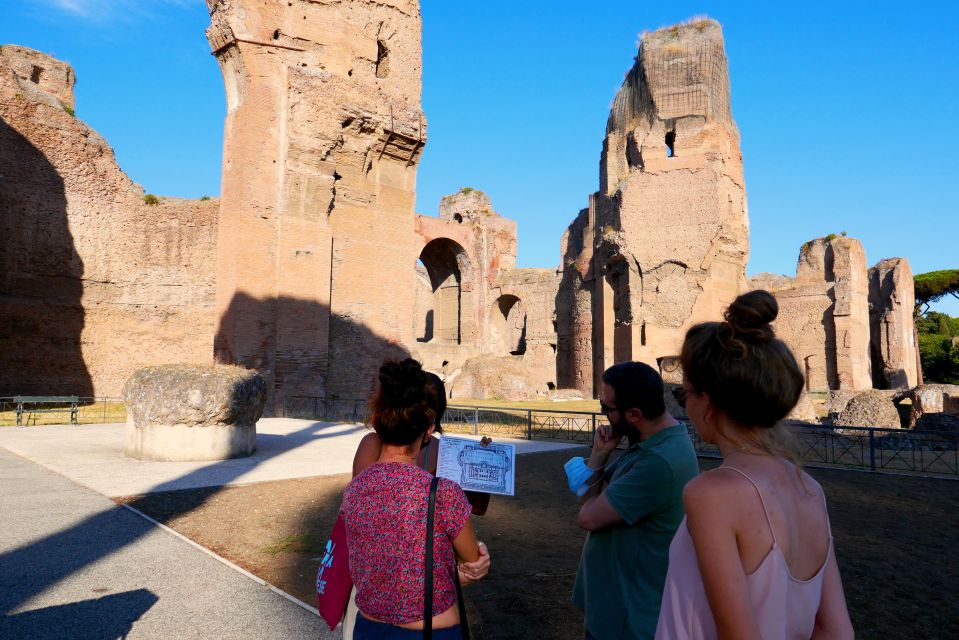
- Professional archaeologist guide who explains the baths as a functioning daily routine, not just stones.
- A maximum of 10 participants, which helps keep questions from getting lost.
- Underfloor heating and temperature control, one of the most impressive engineering stories in Rome.
- Time-saving express pacing, which is great for first-timers, but it means you’re not lingering for long.
Caracalla Baths in an Hour: What You Actually Get
Caracalla Baths aren’t just another Roman ruin. They’re a leisure center built for scale, comfort, and routine. The reason this tour works is simple: you get an expert guide’s structure, plus the key highlights, in about 60 minutes—enough to understand the “why” behind what you’re seeing.
I like the way the guide sets up the visit as a sequence. You’re not wandering randomly through walls and arches. You’re walking through the typical flow of a day at the baths in 3rd-century Rome, so the complex starts to make sense as a system. That approach is especially useful if you’ve only got a limited window in Rome or you want something more focused than a self-paced stroll.
The value is also practical. With entrance fees included, plus on-site assistance and a guide who helps you keep moving, this is built for time-efficient sightseeing. At $70 per person for a guided hour, the math usually works best when you care about learning something and you don’t want to spend your limited Rome time bouncing between ticket lines and loose directions.
You can also read our reviews of more private tours in Rome



Meet at Circo Massimo: The Start That Keeps You Calm
The meeting point is easy to find if you arrive a few minutes early and know what to look for. You’ll meet your guide at the exit of the Metro Station Circo Massimo, in front of the FAO building, and you should look for a yellow label with TOURIKS written on it.
I recommend you treat this as a “get there early” activity. The tour starts on schedule, and the group is small (max 10), so waiting around can throw off the pacing. Also, the meeting area matters: it’s near Circo Massimo, which is why one concern can come up later—some tours include more walking in that area than you’d expect.
Your “starting location” is listed as Viale Aventino, 3, but the practical reality is that you’ll begin at the metro exit meeting point. Either way, plan to be on time, keep your phone charged, and bring your passport or ID since that’s what’s required.
Entering the Baths: Seeing a Complex, Not Just Ruins
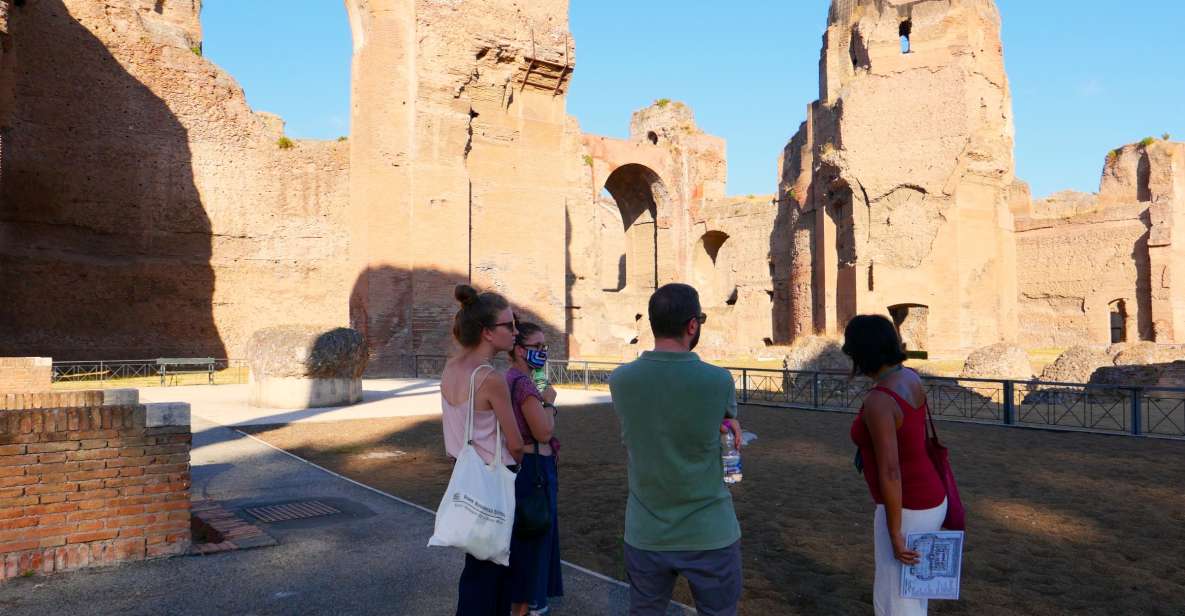
The tour’s main moment is what you do with your time once you’re inside: you’ll explore the monumental Caracalla thermal complex with a guide who brings the place to life.
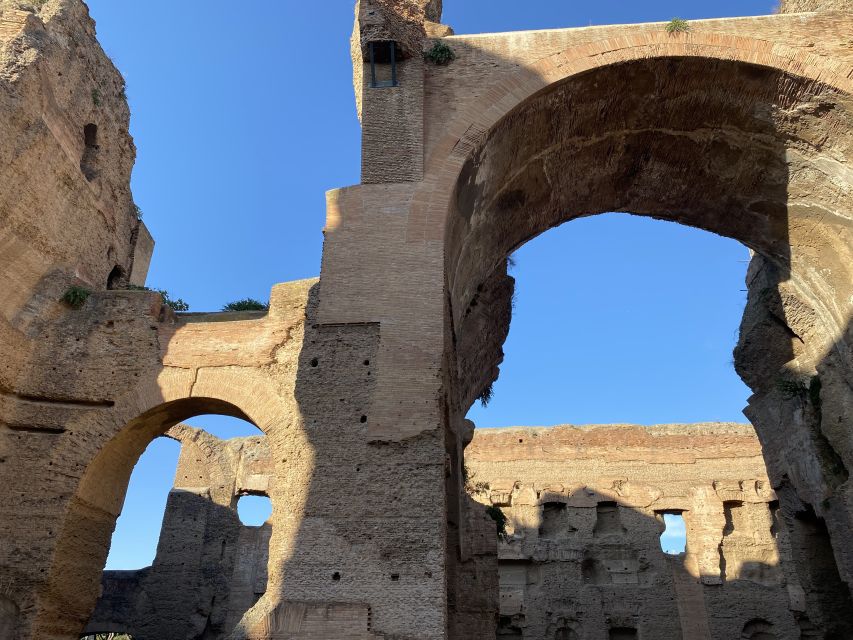
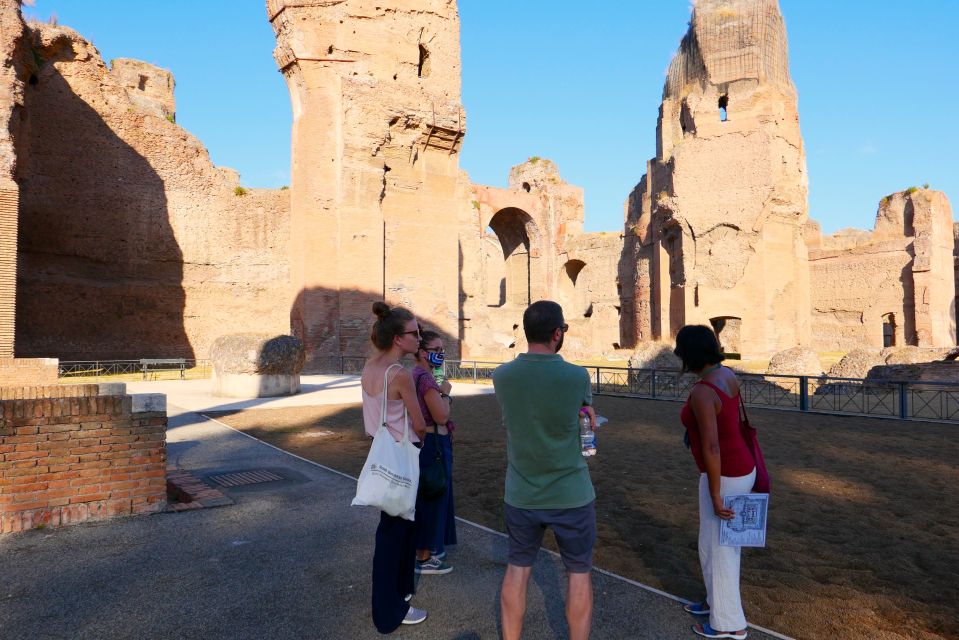
What makes the visit feel complete is that you’re led through the space as a working bath center. You’ll see the gigantic walls and move through monumental rooms, which is important here because Caracalla is vast. Even when the site is peaceful, it’s easy to miss the logic of the layout if you’re on your own.
This is also where the tour’s “express” style shines. Instead of trying to cover everything with a long loop, the guide hits the points that help you understand the overall plan. One visitor summed it up as feeling like the tour gave a much better sense of the scale and quality of the complex. That’s exactly what you should hope for: you leave feeling oriented and impressed, not just having taken pictures.
Expect the vibe to be quieter than many big-name Roman sites. It’s not always crowded, and that calm makes it easier to hear the guide. The headsets help, too—especially if you’re near other groups or the architecture causes sound to bounce.
A Typical Day at Caracalla: The 3rd-Century Storyline
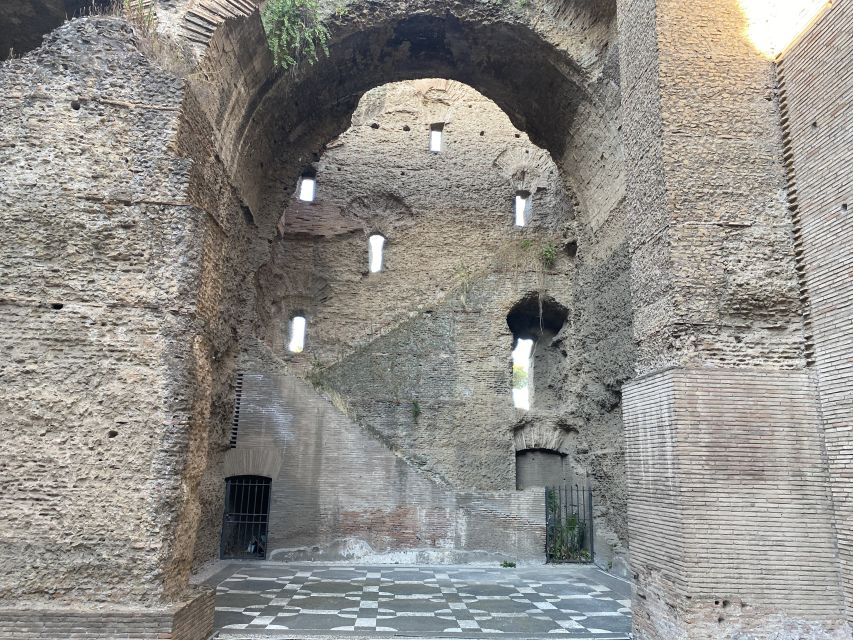
One of the best things about this tour format is that it treats Caracalla like a routine. You’ll go through the exact steps of a typical day at the baths in the 3rd century AD, with the guide explaining the purpose behind different spaces.
This matters because Roman baths weren’t only about washing. The tour frames them as a wellness setting for body and mind, and you’ll hear about the wide range of services associated with that idea. That “services” angle can be surprisingly memorable because it turns bathing culture into something broader and more human than just architecture.
You’ll also get a sense of how the site functioned at the level of daily life: where you move, what the different rooms are for, and how the space was designed to support that flow. Even without getting overly technical, the narrative makes the ruins easier to read.
And the payoff is your understanding. When you walk through a room and the guide explains its role in the day, you start noticing patterns—doorways, passageways, and the way the spaces connect. It turns “cool ruins” into “I get how this worked.”
Roman Engineering That Still Feels Like Magic: Heating and Temperature
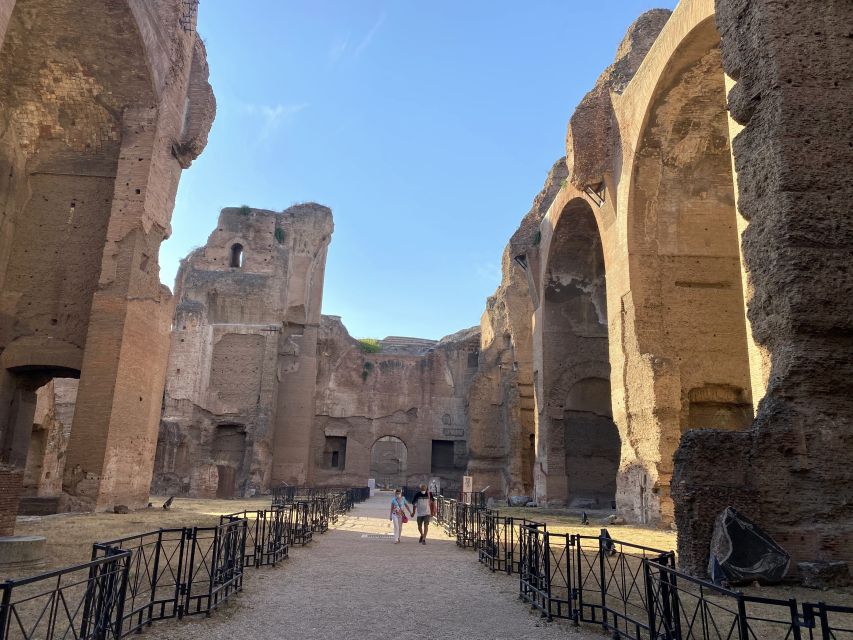
If you only remember one part of the Baths of Caracalla after your visit, make it this: the ancient engineering behind comfort.
The tour highlights the labor-intensive underfloor heating system and how the Romans maintained desired temperatures in different rooms. That’s a big deal because it’s one thing to see a wall. It’s another to understand that the floor itself could be part of the climate-control system.
In practical terms, the guide helps you connect the dots between what you’re looking at and how the heating system would have worked. Even if you’re not a “science person,” the story usually lands because it’s so visual once you’re thinking about heat, airflow, and room use.
I also like that the tour doesn’t treat engineering as trivia. It links it to daily life: comfort wasn’t a luxury; it was part of the experience. That’s why the explanations about temperature matter. They change how you view the rooms—you stop thinking of them as empty shells and start picturing activity.






Mosaics and Motifs: Small Details You’ll Actually Notice
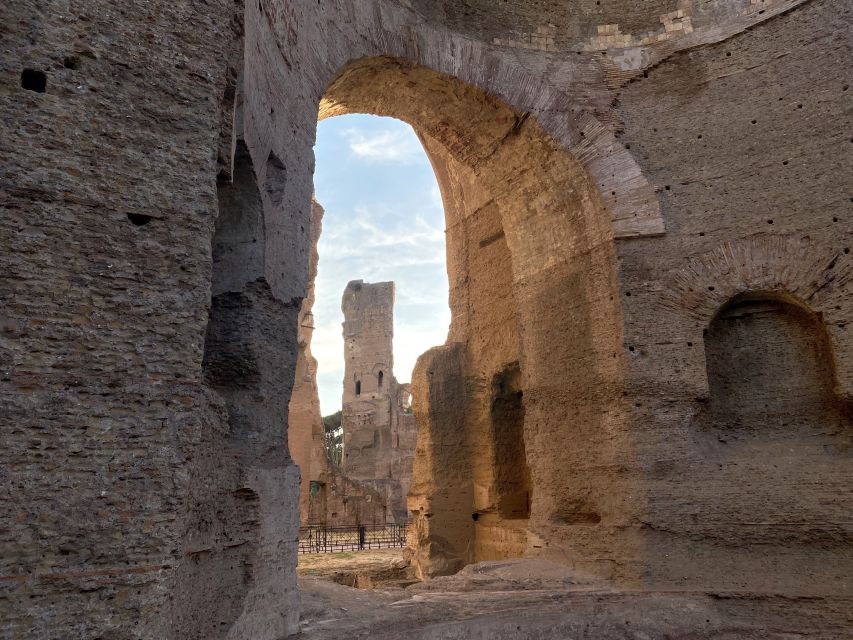
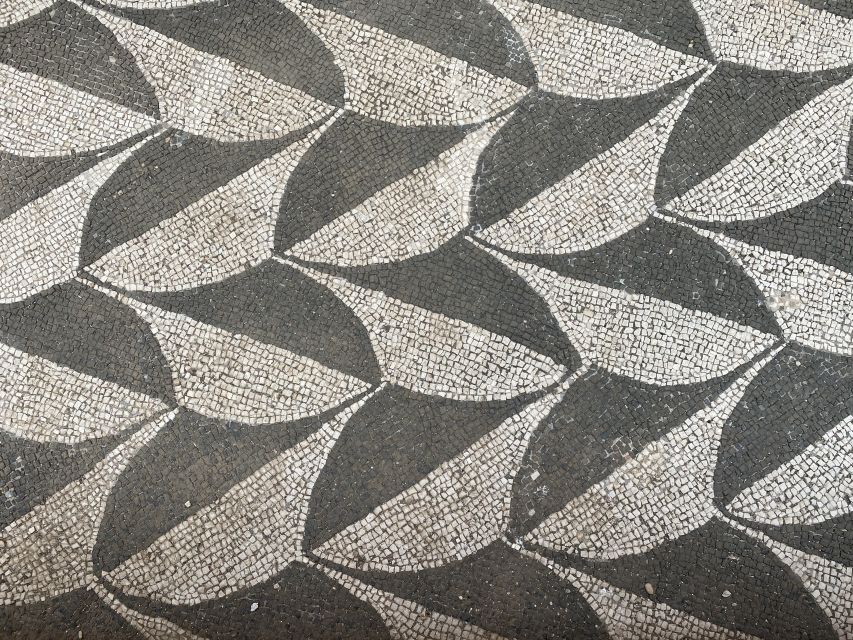
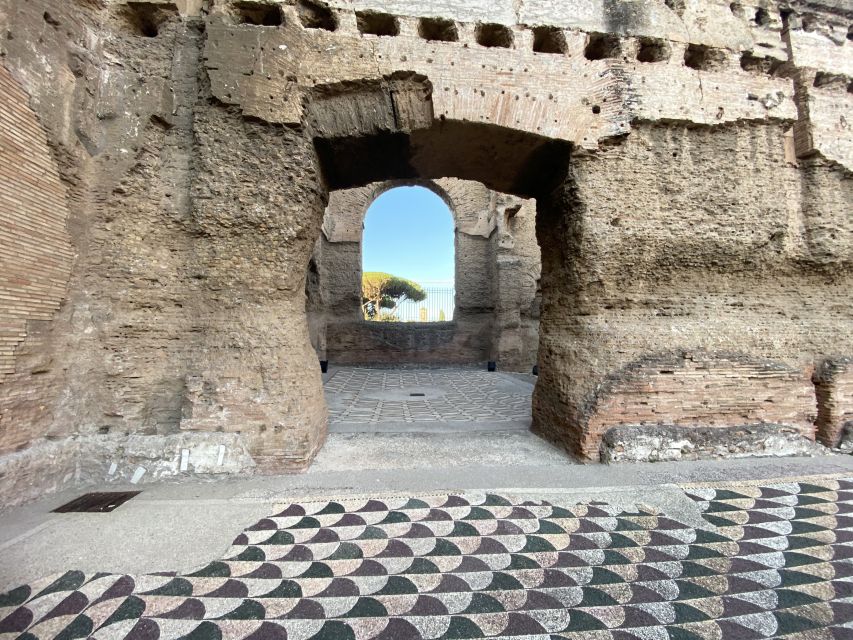
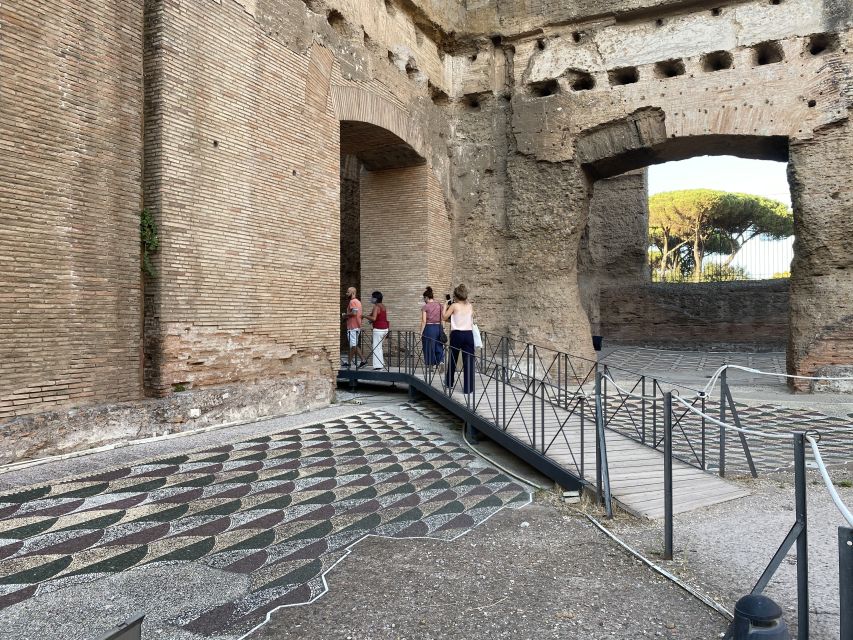
Caracalla isn’t only about scale. You’ll also get a closer look at geometric motifs on mosaics, which is where Roman design shows its calm confidence.
The mosaic details are the kind of thing that can be easy to miss if you’re moving fast or if you don’t know what to look for. With a guide, you get pointed attention. That helps you see the craftsmanship rather than just passing over it.
It’s a good stop for people who like texture and design—especially if you feel burned out by Rome’s grand monuments and want something that feels more intimate. A short highlight can be a relief, and in this tour, the mosaics are one of those “oh wow, look closer” moments.
Skip-the-Line Entry and Sterilized Headsets: The Small Things That Matter
Two choices here make the experience easier than many standard tours.
First, you get skip the ticket line entry. That matters because time at major sites in Rome often disappears faster than you expect. With an express format, wasting time outside would break the whole point of the tour.
Second, the guide provides sterilized headsets. This is not just comfort—it’s focus. If you struggle to hear in louder settings, headsets make the difference between listening for facts and just capturing photos. It also helps when the group moves in and out of spaces where sound carries.
You’ll feel the “small-group control” too. With a maximum of 10 participants, the guide can manage pacing and keep the group from scattering. In a place like Caracalla, that cohesion helps you stay oriented as you move between large rooms.
Private or Small Group: Who This Tour Suits Best
This tour offers both private and small-group options, so it can work for different travel styles.
I’d point it toward:
- First-timers who want a structured introduction to Caracalla without spending half a day.
- People who like architecture but also want the story of how it worked.
- Travelers who prefer smaller groups (max 10) and clearer audio.
It may not be ideal for you if you want a long, slow, “read every stone” session. At one hour, the guide covers key elements, but you won’t have time to linger in the deepest corners for long photo pauses.
One small practical note: the tour is wheelchair accessible, which is helpful for planning. But the most important factor for most people is the pacing—because it’s an express tour, the guide keeps things moving.
The Pace Question: When the Circo Maximus Walk Feels Like Too Much
Because the meeting point is by Circo Massimo, the experience can include extra walking in that general area. One person felt the walk from the Circo Maximus area took about 15 minutes, which made them feel rushed inside the baths.
So here’s my balanced advice: if you’re very sensitive to walking time, plan to go in with realistic expectations. The tour is built to be an hour long at the site, but the “total experience” can feel a little longer depending on how the route is handled that day.
If you want slower pacing and more time inside, you might consider stretching your day at Caracalla yourself before or after the tour. If your goal is learning and efficiency, this format is still a strong fit—you just won’t get to linger endlessly.
Price and Value at $70: Worth It If You Want the Explanation
At $70 per person for a 1-hour guided tour, the price can look steep if you’re thinking only about ticket value. But this tour’s value comes from what’s bundled:
- Entrance fees included
- A professional archaeologist guide
- Sterilized headsets
- Skip-the-ticket-line
- Full on-site assistance
- A maximum group size of 10
In Rome, paying for a guide can be worth it when the guide gives structure and context you can’t easily replicate on your own in an hour. Caracalla is a big site with lots of room to get lost visually. An archaeologist guide who explains heating systems and the daily routine helps you get “meaning per minute.”
So I’d judge it as good value if you want more than sightseeing. If you’re the type who loves understanding how ancient places function, this price lines up well with that goal.
What I’d Do Differently Next Time
If I were building the perfect day around Caracalla Express, I’d do two things:
1) Arrive with a quick plan for what you care about: engineering, mosaics, or layout. The tour covers all of them, but knowing your priority helps you enjoy the pacing.
2) Keep the rest of your schedule flexible. The one-hour format plus the small-group flow means you’ll likely feel “done” quickly, which is great—but don’t book something right on top of it unless you’re comfortable with the timing.
Also, bring light. No luggage or large bags are allowed, so travel ready means a day bag only. Bring your passport or ID so nothing slows you down.
Should You Book the Caracalla Baths Express Tour?
Book it if you want a short, high-signal guided visit to one of Rome’s most impressive bath complexes. The best reasons are the combination of skip-the-line entry, headsets, and an archaeologist guide who explains the site as a working daily routine, including underfloor heating and mosaic details. The small maximum of 10 participants helps keep everything manageable.
Skip it (or pair it with extra self-time) if you’re highly sensitive to walking or you know you want more than an hour in the ruins. The express style is efficient, but it doesn’t cater to slow-browsing.
If you’re weighing options, think of this tour as the fast way to build a solid mental map of Caracalla—so you can enjoy the rest of the site (or Rome) with confidence.
FAQ
How long is the Caracalla Baths Express tour?
The tour lasts 1 hour.
How much does it cost?
The price is listed as $70 per person.
Where do I meet the guide?
Meet at the exit of the Metro Station Circo Massimo, in front of the FAO building. Look for a yellow label with TOURIKS written on it.
What is included in the tour price?
Included are entrance fees, sterilized headsets, a professional archaeologist guide, and full on-site assistance.
Do I need to buy tickets in advance?
Ticket line time is reduced because the tour offers skip the ticket line.
What languages are offered?
The live guide is available in German, Italian, English, Portuguese, French, and Spanish.
What group size should I expect?
The tour has a maximum of 10 participants. Private or small-group options are available.
Is the tour wheelchair accessible?
Yes, the activity is listed as wheelchair accessible.
What should I bring?
Bring a passport or ID card.
Are there restrictions on bags?
Yes, luggage or large bags are not allowed.
Can I get a refund if I cancel?
The activity offers free cancellation up to 24 hours in advance for a full refund.