REVIEW · LE DOMUS ROMANE DI PALAZZO VALENTINI
Rome: Palazzo Valentini Roman Domus Multimedia Experience
Book on GetYourGuide →Operated by TOURISTATION · Bookable on GetYourGuide
VR in a Roman ruin makes time flip fast. I love the way the VR headset reconstructs daily life in a Roman domus, and I also love the Trajan’s Column segment that lets you see the bas-reliefs up close. The main catch: it’s not suitable for claustrophobia or wheelchair users, since you’ll be wearing headsets during the experience.
Before you even reach the Domus, you start at TOURISTATION ARACOELI for a short multimedia video that places the Domus in the larger Rome story. Then, about an hour later, you shift from watching to exploring with an audioguide headset and a phone app option, so you can follow along without needing a live guide. One more consideration: some parts feel like helpful context rather than the main event, but the Domus VR is clearly where your time goes.
If you choose it, the optional FOROF experience adds contemporary art and even smell-based storytelling tied to archaeology. That combo can turn a standard museum visit into something more like a “present-day in the ruins” moment, not just a look-but-don’t-touch history lesson.
In This Review
- Key Things To Know Before You Go
- Finding TOURISTATION ARACOELI: Your First Rome Landmark
- The 25-Minute Rome Multimedia Video: A Quick Setup, Not a Full Lecture
- VR at Palazzo Valentini: Reconstructed Domus Life You Can Actually See
- Reading the Floors and Walls: What Mosaics Teach You
- Trajan’s Column: A Virtual Close-Up of the Dacia Story
- FOROF Experience (If Selected): Archaeology Meets Contemporary Art and Scent
- Languages, Timing, and How You’ll Follow the Story
- Price and Value: Is $35 Worth It?
- Practical Considerations: Shoes, Bags, and Who Might Struggle
- Should You Book This Palazzo Valentini Roman Domus VR Experience?
- FAQ
- Where do I meet for the Palazzo Valentini Roman Domus experience?
- How long does the experience take?
- Is the 25-minute multimedia video included?
- What is included in the admission ticket?
- What languages are available?
- Is food or drink included?
- Do I get a guided tour at Palazzo Valentini?
- Can I bring luggage or large bags?
- Are pets allowed?
- Is this experience suitable for wheelchair users or claustrophobia?
- Can I add the FOROF experience?
Key Things To Know Before You Go
- 25-minute multimedia video first, shown at the Touristation office, setting up the Domus and famous nearby monuments
- Headset-based VR reconstruction of rooms, walls, mosaics, peristyles, kitchens, baths, furnishings, and decorations
- Trajan’s Column in virtual close-up, including the story of the Dacia campaign and bas-reliefs
- FOROF option (if selected) for archaeology plus contemporary art, in hypogeum spaces linked to Basilica Ulpia
- Audioguide in many languages, plus a city app download for extra listening on your phone
Finding TOURISTATION ARACOELI: Your First Rome Landmark
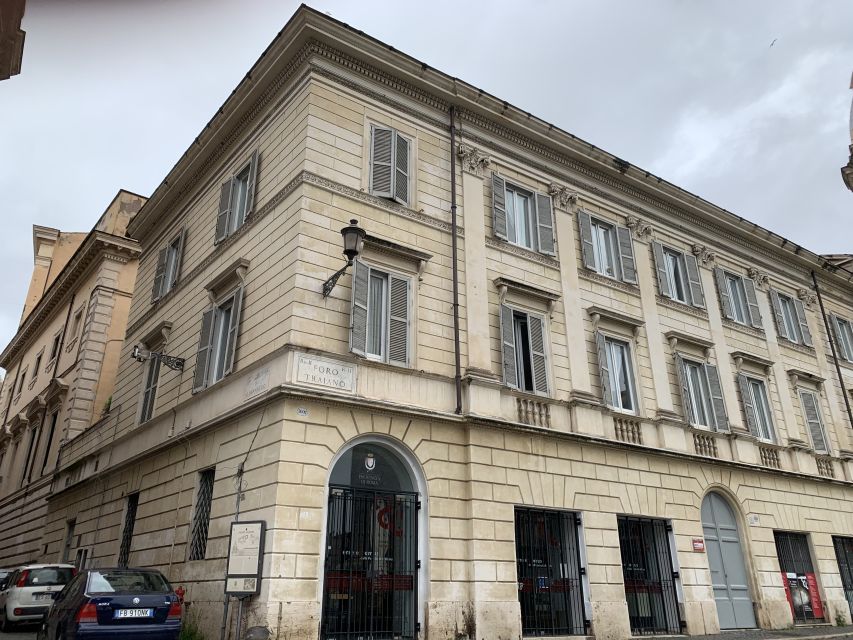
Your experience starts at TOURISTATION ARACOELI, Piazza D’Ara Coeli, 16. Look for a fountain and orange flags out front, because Rome is full of entrances and signage that can look similar when you’re hungry or jet-lagged.
Plan to arrive a little early. The session begins with a multimedia video first, and that video matters because it gives you a visual map of Rome’s big monuments—Colosseum, Roman Forum, St. Peter’s Basilica, Castel St. Angelo, Circus Maximus, and Ara Pacis—before you ever put on the headset.
This is a good setup for first-timers. Even if you’ve seen Rome photos for years, the Domus part makes more sense when you’ve got the wider city scale in your head.
The 25-Minute Rome Multimedia Video: A Quick Setup, Not a Full Lecture
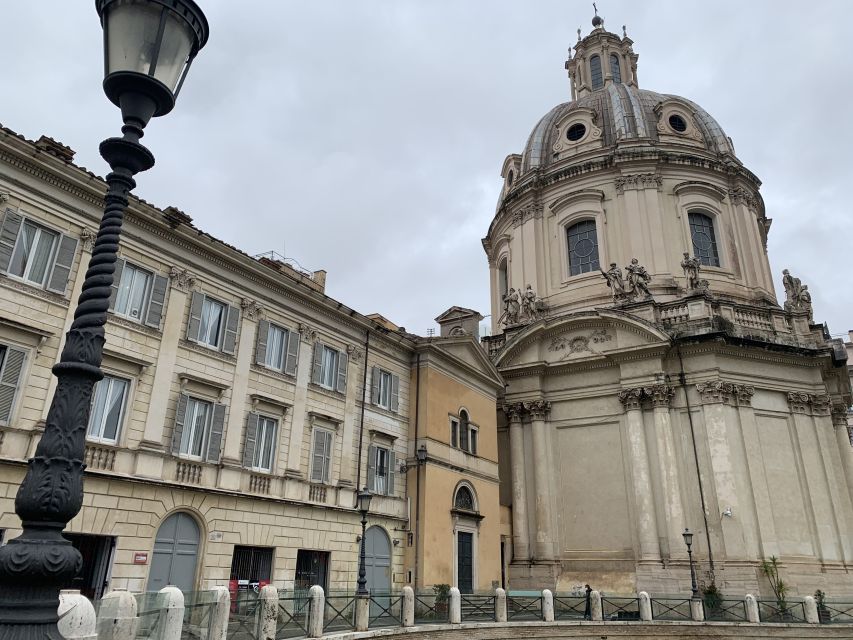
Inside the Touristation office, you watch a 25-minute multimedia video that compares the past and present of key Rome monuments. The goal is simple: give you orientation. You’ll connect what you’ll see in the virtual Domus to what those monumental sites meant in Roman life and power.
For me, this is one of those “don’t roll your eyes” moments. A short montage can feel like background noise in other places. Here, it functions like training wheels. It helps you understand why the Domus area was important and how it connects to the rest of central Rome—ancient, medieval, and modern layers.
If you’re the type who wants to get straight to the reconstructions, keep your expectations honest. This video is useful, but the real payoff comes later, inside the Domus VR section.
VR at Palazzo Valentini: Reconstructed Domus Life You Can Actually See
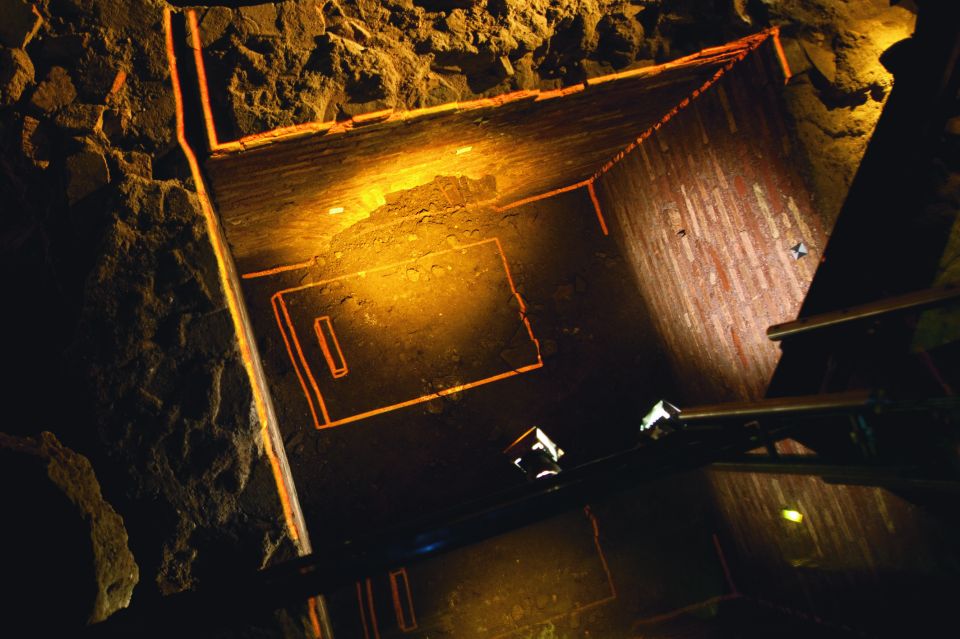
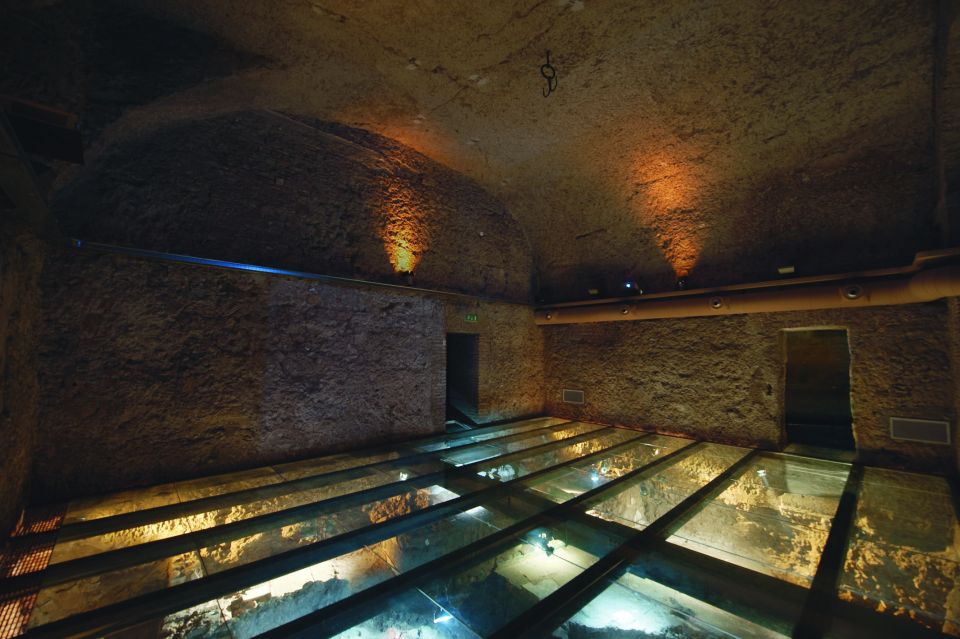
After the video, you start exploring the Ancient Roman Domus about an hour later. Then you wear a headset and the spaces come back to life.
What makes this part special is the level of building detail you’re shown. Instead of a single “room with artifacts” approach, you get virtual reconstructions of:
- rooms and decorated walls
- mosaics and polychrome floor design
- peristyles
- kitchens and baths
- furnishings and interior decorations
This matters because a Roman domus wasn’t just architecture. It was a whole system for living—social space, practical space, and status space, all in one. When you can see how different areas connect, the building feels less like a ruin and more like a functioning home.
Practical tip: wear the headset comfortably and take a moment to get adjusted. The experience is not designed to be “look around for 30 seconds.” It’s meant for focused listening through the audioguide headset, so give yourself that minute to settle in.
Also, you’ll be walking through virtual reconstructions, not real corridors. Keep expectations realistic: this is interpretation through multimedia, not a literal archaeological stroll.
Reading the Floors and Walls: What Mosaics Teach You
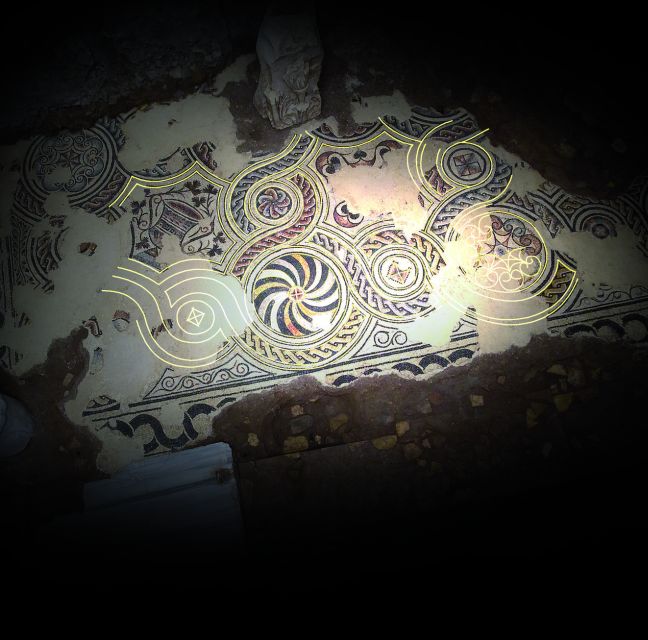
One thing I always look for in Roman sites is the ground. You’re going to see that here—mosaics and decorated floor patterns are a central part of the Domus VR.
Roman floor art wasn’t only pretty. It signaled wealth, taste, and the household’s identity. In this experience, seeing mosaics alongside other decorated areas helps you understand the domus as a complete environment. You’re not just spotting a single masterpiece. You’re seeing how visual design sits next to everyday functions like baths and kitchens.
If you like art and design, this is where the experience pays off. The polychrome floors and the way rooms are reconstructed make you pay attention to color choices and layout, not just “there were mosaics.”
Trajan’s Column: A Virtual Close-Up of the Dacia Story
At some point during the virtual journey, you’ll have the chance to observe how Trajan’s Column looked in older times. The experience includes a virtual reconstruction that gives you a close-up view of the bas-reliefs and the story they tell.
This segment is about Trajan’s military campaign—the conquest of Dacia (in present-day Romania). It’s a rare kind of history lesson: the narration isn’t just dates and names. You’re seeing the visual narrative in a way that regular viewing often can’t match, especially if you’ve only ever seen photos or distant views.
For you, this is useful if you want Rome history that links art to politics. The column becomes more than a famous landmark—it becomes a medium for storytelling and power.
FOROF Experience (If Selected): Archaeology Meets Contemporary Art and Scent
Want something that feels less like a museum and more like an event? The optional FOROF experience does exactly that.
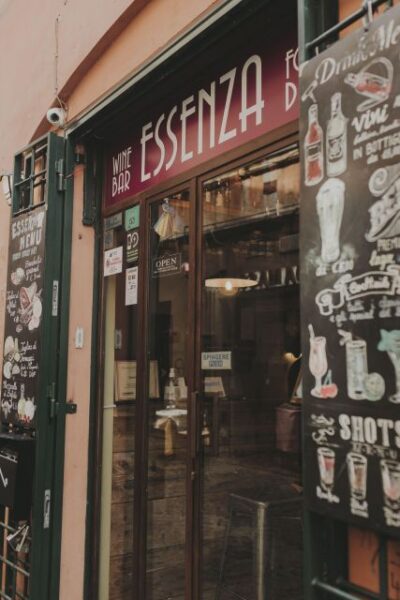
FOROF is described as a permanent and continuous reality in Rome that proposes a connection between contemporary art and archaeology, in a regeneration process inspired by cultural cafes of the 20th-century avant-garde. It’s located at Palazzo Roccagiovine, opposite Trajan’s Column at the Imperial Fora.
What’s especially interesting is that FOROF preserves elements connected to Basilica Ulpia in hypogeum environments. The materials mentioned include colored marble from the Basilica Ulpia pavement and remains of the eastern apse dating to the 2nd century A.C. So you’re not choosing between modern art and ancient remnants. You’re getting them together.
The experience also includes an olfactory component. FOROF ESSENZA aims to return the spirit of a place, using an olfactory storytelling approach developed by Laura Bosetti Tonatto, described as a professional “nose” known worldwide.
If you’re someone who enjoys contemporary art but sometimes finds it untethered from reality, this pairing could click for you. It ties a modern sense experience—smell—back to ancient site context.
Languages, Timing, and How You’ll Follow the Story
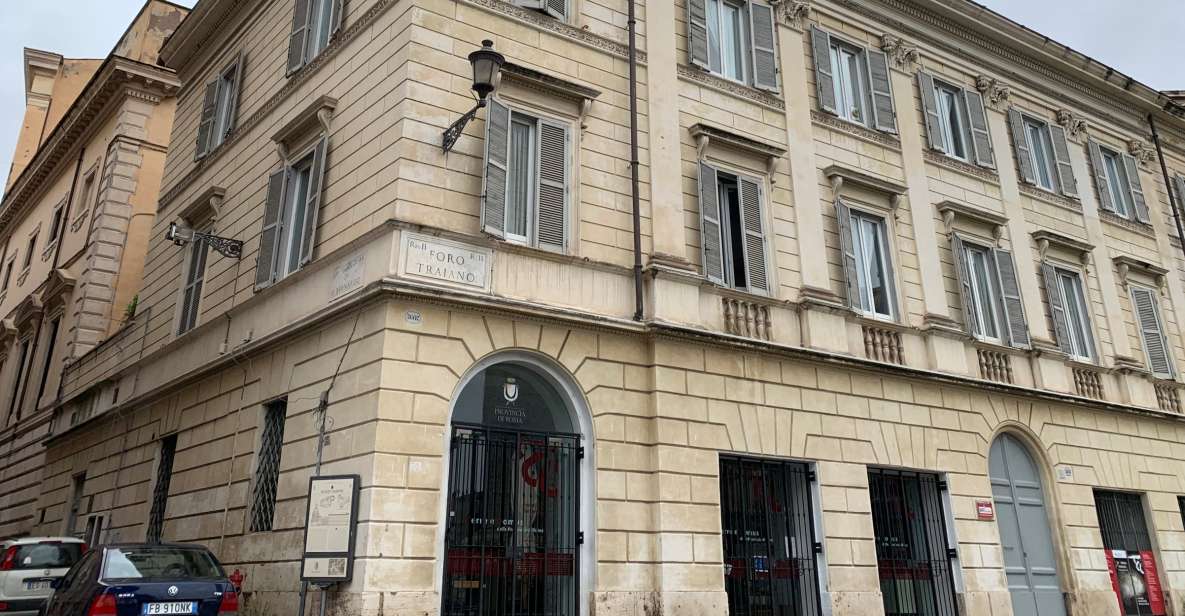
The overall duration is 2 hours, and the schedule depends on starting times. You’ll start with the 25-minute multimedia video and then begin the Domus exploration one hour later.
For language support, the audioguide headset for the Ancient Roman Domus includes English, French, German, Italian, Spanish, Russian, and Japanese. The languages specifically listed for the Palazzo Valentini experience are English, Italian, Spanish, French, and German.
In plain terms: you should be well-covered as an English speaker, and you’ll likely find comfort in other major European languages too. If you’re bringing a child, make sure you can show the required ID for children.
One more practical note: this is not presented as a guided tour at Palazzo Valentini. You’re using the audioguide and phone app rather than following a live guide group. That can be a big plus if you like learning at your own pace, but it also means you won’t get spontaneous “ask a question” moments from a person in front of you.
Price and Value: Is $35 Worth It?
At $35 per person, the big value point is what’s included. You get:
- admission ticket to the Ancient Roman Domus museum
- a 25-minute Ancient Rome multimedia video
- an audioguide headset for the Domus
- a city app audioguide download
And if you select it, you can add the FOROF experience.
So you’re not paying just for a ticket to see a room. You’re paying for a structured multi-format learning experience: video context, then VR reconstructions, plus guided audio support.
Is it worth it for your style of travel? If you like Roman ruins but wish someone would connect the dots between architecture and daily life, this will likely feel efficient. The VR part saves you from having to imagine what’s missing, and the Trajan’s Column segment gives you a strong narrative anchor.
If you’re the type who prefers purely real, walkable ruins with minimal tech, you may treat this as a complementary stop. But even then, the price-to-content ratio feels fair because it bundles multiple media layers under one ticket.
Practical Considerations: Shoes, Bags, and Who Might Struggle
A few rules and reality checks before you commit:
- Wear comfortable shoes. Even with VR, you’re moving between spaces before and after the headset portion.
- Don’t bring large bags or pets.
- It’s not suitable for wheelchair users, and it’s not suitable for people with claustrophobia. If that’s even a mild concern for you, treat the headset experience as a potential issue, not a gamble.
- If you’re traveling with kids, bring the required identification.
Also, food and drinks are not included. Plan a snack or plan for a nearby meal after you’re done, because after two hours of audio and visuals, you’ll likely want something simple.
Should You Book This Palazzo Valentini Roman Domus VR Experience?
I’d book this if you want a clear, fast way to understand an Imperial Roman domus—not just scattered ruins, but a sense of spaces and functions. The combination of VR reconstructions, audioguide support, and the Trajan’s Column segment makes it a strong choice for first-time Rome visits or for anyone who likes learning through visuals as much as through reading.
I wouldn’t book it if you need full wheelchair accessibility, or if headsets make you uneasy. In those cases, your comfort matters more than any “educational value.”
If you can do only one Roman “architecture but make it understandable” stop, this is a solid one. And if you add FOROF, you get a rare blend: Imperial-era archaeology paired with contemporary art, plus a sense-driven twist. That’s the kind of Rome moment that feels current, not just old.
FAQ
Where do I meet for the Palazzo Valentini Roman Domus experience?
You report at TOURISTATION ARACOELI, Piazza D’Ara Coeli, 16. There is a fountain and orange flags in front of the office entrance.
How long does the experience take?
The duration is 2 hours. Starting times vary, so check availability for the slot you want.
Is the 25-minute multimedia video included?
Yes. A 25-minute Ancient Rome multimedia video is included as part of the experience.
What is included in the admission ticket?
Included are the admission ticket to the Ancient Roman Domus museum, the multimedia video, an audioguide headset for the Domus, and a city app audioguide download on your smartphone.
What languages are available?
The audioguide headset for the Ancient Roman Domus includes English, French, German, Italian, Spanish, Russian, and Japanese. The Palazzo Valentini experience lists English, Italian, Spanish, French, and German.
Is food or drink included?
No. Food and drinks are not included.
Do I get a guided tour at Palazzo Valentini?
No guided tour at Palazzo Valentini is included. You use the audioguide headset and the city app download.
Can I bring luggage or large bags?
No. Luggage or large bags are not allowed.
Are pets allowed?
No. Pets are not allowed.
Is this experience suitable for wheelchair users or claustrophobia?
No. It is not suitable for wheelchair users or people with claustrophobia.
Can I add the FOROF experience?
Yes, the FOROF experience is included if you select that option.