REVIEW · ROME
Rome: Campo de’ Fiori, Trastevere and Jewish Ghetto Private Tour
Book on Viator →Operated by Eyes of Rome · Bookable on Viator
3 neighborhoods in 3 hours can work. This private walk threads together Campo de’ Fiori, the Roman Jewish Ghetto, and Trastevere in a way that helps you connect the dots between eras, streets, and stories. Two things I really like: you get a guide who can answer questions as you go, and the route includes major local landmarks like the Giordano Bruno statue and Basilica of Santa Maria in Trastevere. One consideration: it’s a steady walking tour, so if you’re sensitive to cobblestones and crowds, plan your pace and shoes carefully.
If you choose morning or afternoon, you can match the mood to your day. I also like that you start at a very clear meeting point in Campo de’ Fiori and end near Piazza Trilussa, so you can keep exploring afterward with an easy handoff to local life. The possible drawback is that during the Jubilee, some sights may be under restoration or closed for extraordinary celebrations, so you may need to adapt on the fly if anything is temporarily unavailable.
Key highlights I’d plan around
- Campo de’ Fiori’s market core and the Giordano Bruno statue as your starting anchor
- Roman Jewish Ghetto street-level context, from Via del Portico d’Ottavia into medieval and Renaissance corners
- Ponte Sisto + the Tiber viewpoint moment, handy for photos and a quick skyline perspective
- Trastevere at walking speed, ending near Piazza Trilussa where the neighborhood energy lives
- Santa Maria in Trastevere plus major mosaics, including Pietro Cavallini’s late-13th-century work
- One-way hotel transfer option if you want to reduce logistics and just get walking
In This Review
- Why This Private Walk Feels Smarter Than Random Wandering
- Campo de’ Fiori: Market Life, Giordano Bruno, and Instant Local Energy
- The Roman Ghetto: Via del Portico d’Ottavia to Medieval Streets
- Ponte Sisto and the Tiber Moment Before Trastevere
- Trastevere Streets: Piazza Trilussa and the Pleasure of Going Slow
- Santa Maria in Trastevere: Old Church, Big Mosaics, and an Old Fountain
- Guide Power: How Elisa and Marta Make the Story Stick
- Price and Value for a 3-Hour Private Tour in Rome
- Logistics That Matter: Timing, Walking, and What Might Close
- Who Should Book This Tour (and Who Might Skip It)
- Practical Tips to Get More From the Walk
- Should You Book This Rome Private Tour?
- FAQ
- How long is the Rome Campo de’ Fiori, Trastevere and Jewish Ghetto private tour?
- What’s the price per person?
- Is this tour private or shared?
- Is pickup available?
- Are there admission tickets required at the stops?
- Do I need anything to enter or use tickets?
- What if monuments are closed during the Jubilee?
- Is the meeting point clearly identified?
- Is there any age requirement for booking with minors?
Why This Private Walk Feels Smarter Than Random Wandering
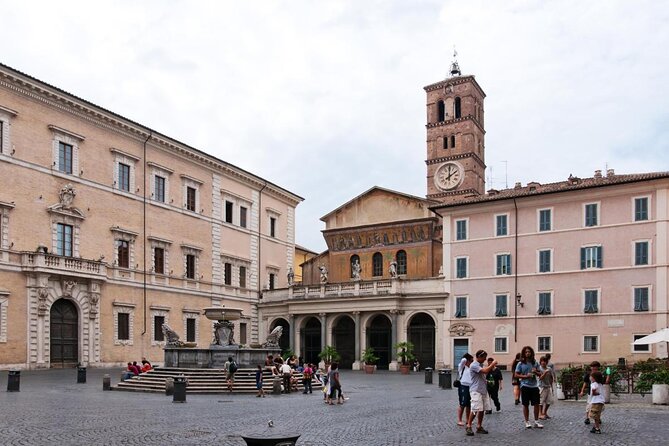
Rome can overwhelm you fast. This tour gives your feet a simple job: move through three historic districts while your guide does the heavy lifting of context and connections.
I like that it’s private, so the pace is adjustable. You’re not stuck pacing with a large group or waiting for everyone to catch up, which means you can ask questions when something catches your eye—an inscription, an architectural detail, a street name, or a “why is this here?” moment.
Also, the guide is a blue badge professional. That matters because you’ll get clear, historical framing rather than just a list of stops.
Campo de’ Fiori: Market Life, Giordano Bruno, and Instant Local Energy
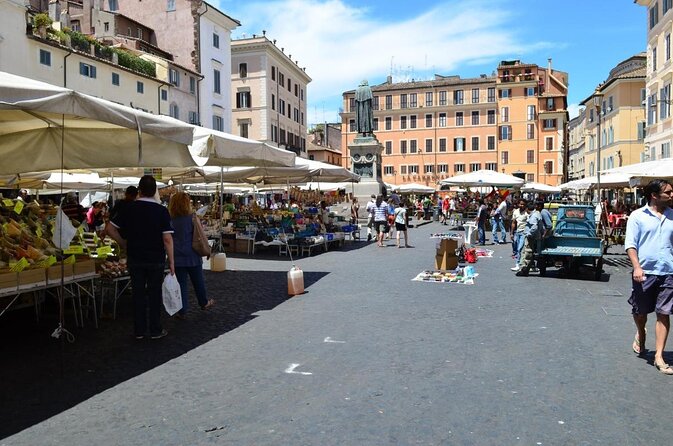
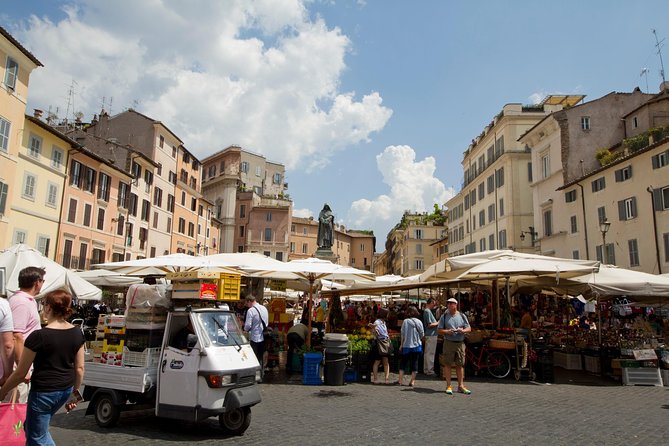
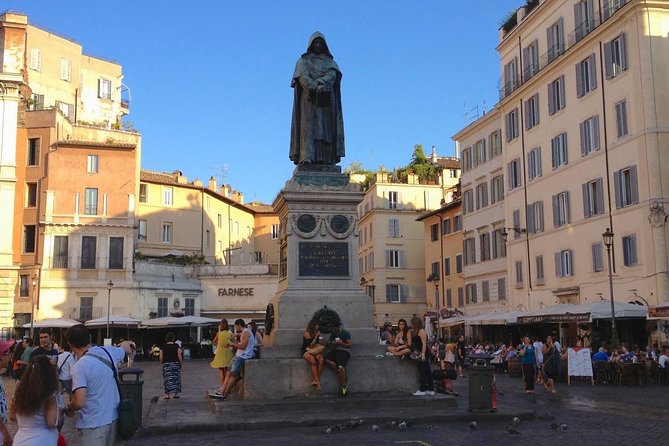
You start at the Monumento a Giordano Bruno in Campo de’ Fiori. The statue is a strong way to open the walk because it immediately connects the square to a real, dramatic story: Giordano Bruno, executed in 1600 for heresy, with the statue created by Ettore Ferrari and erected in 1889.
From there, you’re right in the heart of one of Rome’s most recognizable squares—especially if you’re there in daylight. Campo de’ Fiori is known for its colorful street market, and the guide’s job is to help you understand why this place works so well in the city fabric. A market square isn’t just commerce; it’s a social stage that has shaped daily life for generations.
You’ll also get the “night answer” to this square. Campo de’ Fiori turns into a lively zone of cafés, pubs, and bars after dark. Even if you’re visiting in the day, this is helpful context, because it explains why locals still treat this area like a default meeting spot.
A practical benefit here: the stop is about 30 minutes, so you get orientation fast. If you’re thinking, I want to learn Rome without spending my whole day standing around—that’s the vibe.
You can also read our reviews of more private tours in Rome



The Roman Ghetto: Via del Portico d’Ottavia to Medieval Streets
The second leg gets more focused and more emotionally charged, in the best way. The tour moves to the Roman Jewish neighborhood using Via del Portico d’Ottavia as the gateway.
This street matters because it’s not just a postcard area. It’s described as medieval homes mixed with kosher food stores and restaurants serving Jewish specialties—so you see a layered picture: older architecture, community life, and modern Rome all overlapping.
Your guide’s interpretation is what makes this section useful. You’re not only looking at buildings; you’re learning how this area connects to the wider city story in complicated ways. The Roman Ghetto today is one of Rome’s cooler zones, but it earned that current identity through a long history of pressures, policies, and survival. A good guide helps you keep those realities in mind without turning the walk into a lecture.
Also note a few specific landmarks you’ll likely mention in this zone:
- Porticus Octavia (Octavian Portico), built in 168 BC by Gnaeus Octavius to commemorate a naval victory over Perseus of Macedonia.
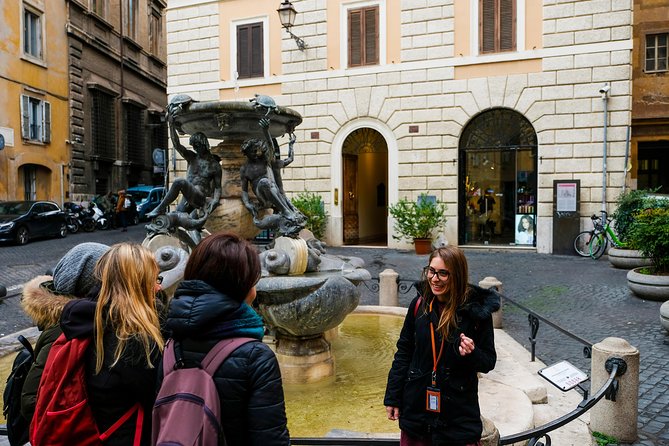
- Piazza Mattei’s famous fountain nearby (work credited to Giacomo della Porta, built between 1580 and 1588; sculpted by Taddeo Landini), which you may encounter as part of the walk through the area.
Even in a short 30-minute segment, you can come away with a clear sense of where the neighborhood is and why its streets feel distinct.
Ponte Sisto and the Tiber Moment Before Trastevere
Right after the ghetto, the walk crosses the city’s rhythm into Trastevere, and the path gives you a key “pause point” at Ponte Sisto.
Ponte Sisto is one of the most popular bridges in Rome and connects the historic center to Trastevere. It’s also a strong viewing spot: you get an especially noted perspective toward St. Peter’s Church and the Rome skyline. If you care about photos that don’t feel staged, bridges often do the job because the view has depth, and the crowds move around you.
This is the kind of stop that’s short but worth it. The goal isn’t to park your feet for an hour; it’s to reposition your eyes before you enter a neighborhood that moves at a different tempo.
Trastevere Streets: Piazza Trilussa and the Pleasure of Going Slow
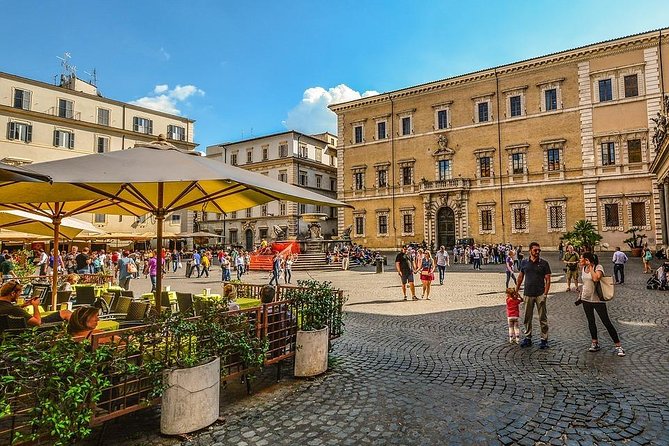
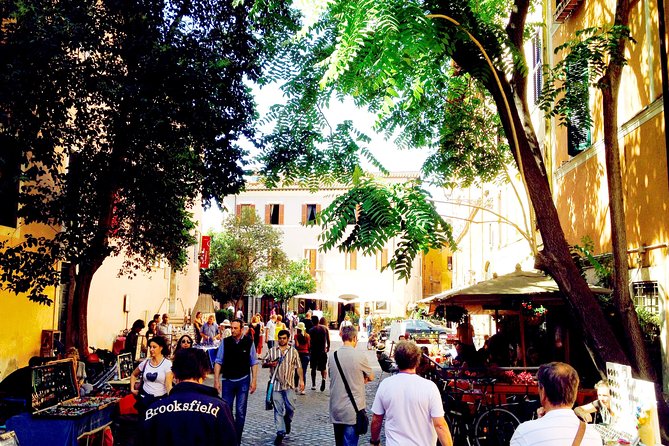
Trastevere is where the walk turns into pure street atmosphere. You’ll wander curving alleys and piazzas, and you’ll immediately see why this neighborhood is a favorite for both visitors and locals.
This segment is about 1 hour, which is long enough to feel like you’re not just checking boxes. You can notice the small changes—how side streets funnel foot traffic, how piazzas create pockets for conversation, and how restaurants and bars tuck into the edges of everyday life.
A key marker here is Piazza Trilussa, near the end of the tour. It’s known for a lively atmosphere, especially at night, and it’s next to Ponte Sisto. There’s also a monument to the poet Trilussa, so even if you don’t memorize everything, you’ll leave with a clear mental map of where you are and what kind of neighborhood energy to expect next.
The tour ends around Piazza Trilussa (Piazza Trilussa, 00153 Roma RM). That’s a smart finish point because it’s already set up for your next move: dinner, a drink, or an easy wander without needing a second transport plan.
Santa Maria in Trastevere: Old Church, Big Mosaics, and an Old Fountain
After Piazza Trilussa, the walk adds two more pieces that give Rome some of its “can’t-miss” weight.
First is the Piazza di Santa Maria in Trastevere area, where you’ll connect the square to the Basilica of Santa Maria in Trastevere. The basilica is commissioned during the third century by Pope Callisto I (as noted in the tour info), so you’re dealing with one of the city’s long-run religious sites.
Then comes the basilica itself. It’s described as one of the oldest churches in Rome, with:
- basic floor plan and wall structure dating back to the 340s,
- much of the structure dated to 1140–43,
- an early sanctuary built by Pope Callixtus I (221 and 227), later completed by Pope Julius I,
- important mosaics from the late 13th century by Pietro Cavallini.
Even if you’re not a “mosaics person,” this is one of those places where the guide’s framing helps you understand why it matters. You’re seeing how Rome layers its style over time without erasing what came before.
Right in the square, you’ll also encounter the fountain in Piazza Santa Maria in Trastevere. It’s believed to be the oldest fountain in Rome, with dating claims reaching back to the 8th century. The current work is credited to Donato Bramante, with later additions by Gian Lorenzo Bernini and Carlo Fontana. If you like tracing artistic influence the way you’d trace street names, this is a perfect “quick but deep” moment.
This finale section is about 30 minutes total (10 minutes for the piazza and 20 minutes for the basilica), so it doesn’t eat your evening. It gives you a finish that feels meaningful.




Guide Power: How Elisa and Marta Make the Story Stick
The biggest quality signal here is the guiding style. In the feedback I was given, Elisa is described as enthusiastic and very knowledgeable, with strong history and the ability to make the area feel inviting. Another praised guide, Marta, is noted as engaging and informative, with the sense that you’re walking with a friend who knows the streets well.
What you should expect from a guide like this (and what makes this tour worth paying for) is interaction. It’s not just “follow me.” You get time to ask questions, and the tour is paced so the history lands in your brain while you’re still standing in the place it connects to.
The guide also connects practical needs to the sightseeing. In Campo de’ Fiori, the emphasis is on tips for the best Italian aperitivo spots and where to find a traditional dinner—useful advice because Trastevere can be a lot of fun, but it’s also easy to end up in an overpriced tourist trap without guidance.
Price and Value for a 3-Hour Private Tour in Rome
At $260.46 per person for a private tour lasting about 3 hours, you’re paying for three things: a blue-badge guide, a private experience (only your group), and a route that concentrates on areas most people only glance at from the outside.
Is it expensive? Compared to self-guided roaming, yes. But compared with what you’d spend on a couple of paid museum entries plus a less organized walk, it can be good value—because the tour includes admission ticket free time at each listed stop.
You also have options that can reduce friction:
- Pickup is offered, and there’s an upgrade that includes a one-way transfer to or from your hotel.
- You get a mobile ticket (less paperwork stress).
- The tour notes group discounts, which can help if you’re traveling with friends or family.
In plain terms: if you want the shortest path from place to understanding—without spending your day researching every corner—this private format is the rational choice.
Logistics That Matter: Timing, Walking, and What Might Close
This tour runs as a walking experience with a few short stops, so plan for cobblestones, stairs in parts of Rome, and crowd moments in popular squares. The duration is flexible enough to keep it comfortable, but it’s still a walk—bring shoes you trust.
The tour offers a choice of morning or afternoon time. That’s not a tiny detail. Morning tends to feel more manageable for photos and reading facades; afternoon and early evening can be better if you want to catch that Campo de’ Fiori and Trastevere energy shift.
Two other timing considerations:
- It’s near public transportation, which helps if your pickup plan changes.
- During the Jubilee, some monuments may be under restoration or closed due to extraordinary celebrations. If you get a message about changes, treat it as normal Rome housekeeping and follow the guide’s lead.
Who Should Book This Tour (and Who Might Skip It)
This tour fits best if you:
- want three neighborhoods in one go but still want the experience to feel personal,
- like history that connects to real street life (not history that stays inside walls),
- enjoy a “question-friendly” pace.
You might skip it if you:
- prefer fully independent wandering with no guide input,
- want only major ticketed sights and don’t care about older churches, fountains, and neighborhood storytelling,
- need minimal walking time.
If you’re traveling as a couple, a small group of friends, or with older kids who can handle a few blocks of walking, private usually makes the day easier and less stressful.
Practical Tips to Get More From the Walk
- Start with comfortable shoes. You’ll be on sidewalks and mixed surfaces for the full ~3 hours.
- Come ready to ask questions. This tour is designed for that, not for silent sightseeing.
- If you have dietary interests, pay attention to the ghetto area’s kosher shops and food references—this is the kind of context that makes dinner choices easier later.
- If anything is under restoration during the Jubilee, roll with a guide-approved alternative. The value is your route logic, not a single perfect photo.
Should You Book This Rome Private Tour?
I’d book it if you want Rome to feel connected, not chopped into separate attractions. The mix of Campo de’ Fiori, the Roman Jewish Ghetto, Trastevere, and then Santa Maria in Trastevere gives you three different “Rome moods” plus a clear historic anchor at the end.
It’s also a strong pick if you like guided storytelling and you want recommendations you can use immediately—like where to go for aperitivo or dinner after the walk. If you’re unsure, consider the one-way transfer option to simplify your day.
FAQ
How long is the Rome Campo de’ Fiori, Trastevere and Jewish Ghetto private tour?
It’s about 3 hours (approx.) for the walking experience.
What’s the price per person?
The price is listed as $260.46 per person.
Is this tour private or shared?
This is a private tour/activity, so only your group participates.
Is pickup available?
Pickup is offered, and there’s also an upgrade option that can include a one-way transfer from or to your hotel.
Are there admission tickets required at the stops?
The tour details list admission tickets as free for the stops included.
Do I need anything to enter or use tickets?
You’ll receive a mobile ticket.
What if monuments are closed during the Jubilee?
The tour notes that during the Jubilee, some monuments may be under restoration or closed due to extraordinary celebrations. Pay attention to any messages sent about changes.
Is the meeting point clearly identified?
Yes. The start point is Monumento a Giordano Bruno, Campo de’ Fiori, and the end point is Piazza Trilussa.
Is there any age requirement for booking with minors?
If your booking includes minors under 18, it must be accompanied by at least one adult. Bookings made exclusively by unaccompanied minors aren’t accepted.