REVIEW · ROME
Rome: Trevi Fountain Underground Small Group Tour
Book on GetYourGuide →Operated by ROME WITH SILVIA · Bookable on GetYourGuide
Trevi Fountain has a second life underground. This tour takes you below the marble-famous facade to see the aqueduct remains that fed Rome’s fountains and neighborhoods, right under where you’ll be snapping photos above. You’re not just hearing trivia; you’re moving through archaeological layers that explain how the area kept evolving.
I love the Vicus Caprarius site itself, especially the way the Roman water system connects to what came after it—imperial homes, later buildings, and the infrastructure that kept water flowing. I also like that you get headsets and an official English-speaking guide, so you can follow the story without leaning in or guessing at details.
One thing to consider: this tour is time-structured and starts in a tiny square, so you’ll want to be there on time and not hang around the wrong entrance. Also, it’s not suitable for wheelchair users, since this is an underground archaeological visit with limited access.
In This Review
- Key things to know before you go
- What Trevi Fountain Underground really offers
- Piazza dei Crociferi: the meeting point that catches people off guard
- Vicus Caprarius under Trevi Fountain: where the story becomes physical
- Roman homes and water tech: domus, medieval layers, and Hadrian’s water tank
- Trevi Fountain above ground: the quick photo stop that adds context
- Guide quality matters: what I’d watch for with English narration and headsets
- Price and time: is $71 worth it?
- Who should book this Trevi Fountain Underground tour
- Who should skip or think twice
- Should you book this Trevi Fountain Underground Small Group Tour?
- FAQ
- What underground site will I see on the Trevi Fountain tour?
- How long is the Trevi Fountain underground portion?
- How long do I get at Trevi Fountain itself?
- How much does the tour cost?
- Where is the meeting point?
- What should I bring and wear?
- Is the tour wheelchair accessible?
Key things to know before you go

- Vicus Caprarius – the City of Water: the archaeological area directly beneath the fountain
- Aqua Virgo aqueduct remains: see evidence of one of Rome’s aqueducts under Trevi
- Stratification you can walk through: Roman, medieval, and imperial layers in one stop
- A short Trevi Fountain photo moment: a guided look above right after the underground visit
- Skip-the-line entry: use a separate entrance for the underground area
- Rain or shine: the tour runs in all weather conditions
What Trevi Fountain Underground really offers

Trevi Fountain is one of those Rome sights you think you know. You’ve probably seen it in movies and photos, and it’s famous for the coin toss ritual that’s tied to the idea of coming back to Rome. But this tour changes your perspective fast: you go from the tourist scene at street level to the practical world beneath it.
The real draw is the Roman aqueduct infrastructure under the fountain. The area you visit is known as Vicus Caprarius – the City of Water, and it’s connected to Aqua Virgo, the aqueduct system famous for carrying clean, clear water into the city. Instead of just looking at Trevi as an artwork, you start to understand it as part of a bigger water network.
This is also a rare kind of access. You’re not touring a museum display behind glass. You’re walking through an archaeological space where different eras overlap, showing how Rome reused and rebuilt the same geography over centuries. That layering is exactly what makes this feel different from a standard “Trevi Fountain tour.”
You can also read our reviews of more tours and experiences in Rome.



Piazza dei Crociferi: the meeting point that catches people off guard
Your tour starts at Piazza dei Crociferi, a small square near Trevi Fountain. It’s easy to miss if you’re distracted by the crowds around Trevi itself. The guide is recognizable by a sign with the Rome with Silvia logo, so look for that before you move.
The most practical tip here is simple: do not wait at the entrance of the archaeological site. For this tour, you want to be where the meeting point is, with your group, before the walk-in and check-in rhythm begins. If you show up late, you risk losing the start of the experience.
Wear comfortable shoes. The tour takes you underground, and even if the pace is guided and orderly, you still want stable footing. Bring your passport or ID card as well. And dress for the weather you’ll actually get that day, because the tour runs rain or shine.
Vicus Caprarius under Trevi Fountain: where the story becomes physical

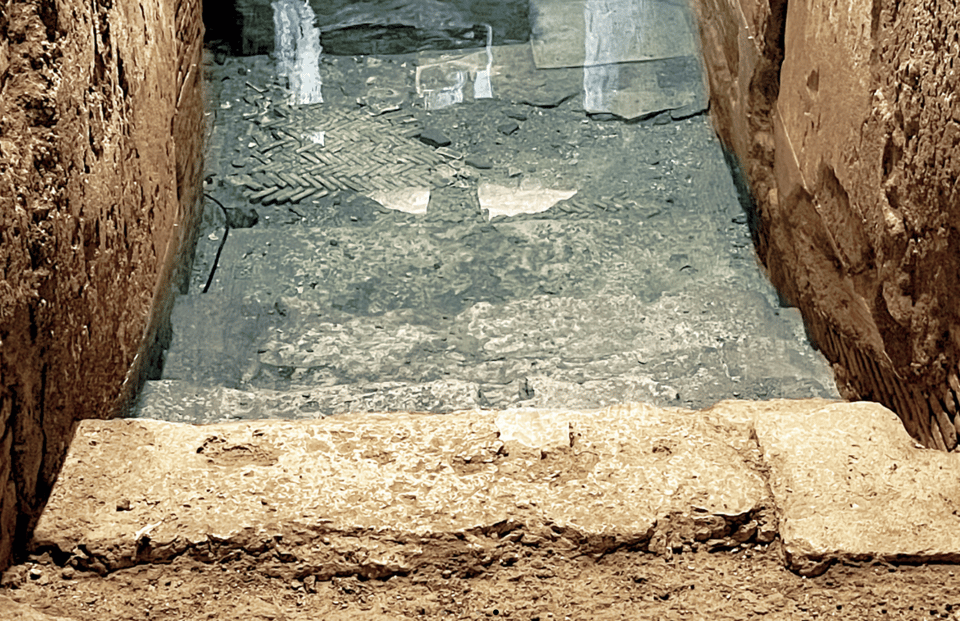
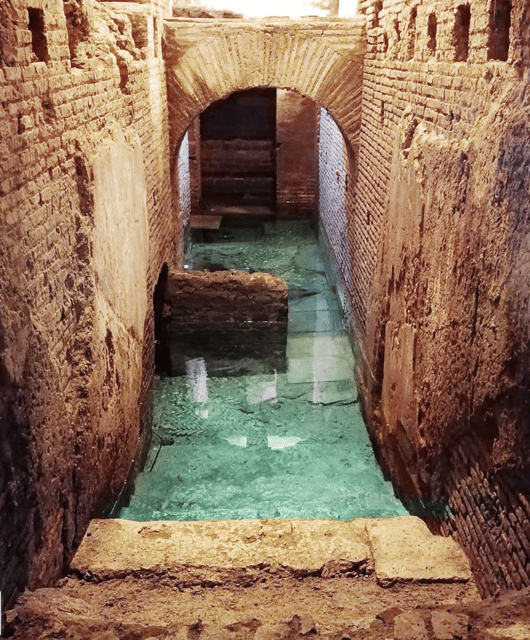
The underground visit is the heart of the tour, and it lasts about 45 minutes with the guide. You’ll spend that time at Vicus Caprarius – the City of Water, an archaeological area located under Trevi Fountain. This is where the water story turns from legend into something you can see.
One of the most interesting aspects is that this site didn’t appear out of nowhere. It came to light during renovation works at the former Cinema Trevi in 1999, and it finally opened for visitors in 2004. That timeline matters because it explains why the space can feel like a real slice of Rome rather than a staged attraction.
As you tour, you’re looking at remains tied to Aqua Virgo, which was one of the aqueducts bringing water into Rome. The name Aqua Virgo is often linked to the idea of pure or clear water, and there’s also a romantic legend about how a young woman led thirsty soldiers to a spring—virgo meaning young woman in Latin. Even if you take legends with a grain of salt, the point is that Rome built stories around the water it depended on.
You’ll also get context about how this area fits into Rome’s broader “city of water” system. The guide will connect the dots between the aqueduct and what travelers see today at Trevi Fountain above. That contrast is the magic trick: you realize that the fountain you’re admiring is only the visible tip of a much larger system.
Roman homes and water tech: domus, medieval layers, and Hadrian’s water tank
Underground, you’re not stuck at one Roman ruin and done. The tour includes more than the aqueduct remains, and it’s part of why the visit feels more complete than a quick stop.
Along with the aqueduct area, you’ll also visit a domus of the Imperial era. A domus is a home, so this turns the space into more than infrastructure. You see how water delivery mattered for everyday life, not just for monuments.
Then you move through medieval houses, which adds a second layer to the story. Rome didn’t pause after the Roman period. It reused spaces, rebuilt over older structures, and lived on top of the past. Seeing those different phases in one underground circuit helps you understand Rome as a living city, not a frozen postcard.
One of the key elements in the tour is the castellum aquae associated with the Aqua Virgo aqueduct. This is described as a monumental water tank built by Emperor Hadrian to optimize water supplies to the Campo Marzio area. That detail is more than name-dropping. It shows that Roman water management was engineered, planned, and scaled up for real urban needs.
So when the guide talks about aqueducts and distribution, you’ll have a better mental picture. Rome wasn’t just transporting water. It was routing it, storing it, and controlling where it went next.
Trevi Fountain above ground: the quick photo stop that adds context
After the underground part, you’ll have a photo stop and guided moment at Trevi Fountain. That above-ground time is shorter than the underground visit, so think of it as a chance to reconnect with what you just learned.
Now you’re looking at Trevi with more than tourist eyes. You can start noticing how the fountain sits in the urban layout and how it feels like a public statement built on the same water logic that powered older parts of the city. Even if you’ve seen Trevi before, this is the point where it clicks.
You’ll also hear references that connect Trevi Fountain to popular culture. The tour framing often points to Federico Fellini’s La Dolce Vita, where Anita Ekberg’s iconic scene helped turn Trevi into worldwide shorthand for Rome. It’s a useful context cue. You walk into the underground part already knowing Trevi’s fame, and you leave understanding what made water delivery possible in the first place.






Guide quality matters: what I’d watch for with English narration and headsets
This tour depends on the guide doing two things well: explaining what you’re seeing underground and keeping it organized enough for people to follow in a real space.
The operator provides official English speaking guidance plus headsets, which is a big deal in Rome’s busy tourist environment and especially in underground areas where sound can get tricky. With headsets, you’re not competing with nearby noise as much, and you can focus on the narration.
I’ve also learned that guide experiences can vary. The tour brand includes Rome with Silvia, and you may meet guides named Virginia or Sylvia depending on the session. Most of the time, the experience is described as clear and friendly. But it’s also clear that timing and pacing matter—if you arrive late, the tour can be strict about moving on.
Practical takeaway: be there early enough to feel calm. Don’t treat it like a “we’ll meet whenever” situation. This is one of those experiences where the start matters, and once you’re inside the underground route, you want to be fully ready to listen.
Price and time: is $71 worth it?
At $71 per person, this isn’t a budget “quick stop” add-on. But the value comes from what you get for that money: guided access to archaeological remains under one of Rome’s most famous landmarks, plus entry tickets included and skip-the-line entry through a separate entrance.
The underground portion is around 45 minutes, and you also get a short guided/photo moment back at Trevi Fountain. That mix is smart. You get enough time underground to understand the aqueduct and the layers of the site, then you still return to the landmark above for context.
If your goal is only to see Trevi Fountain from street level, you can do that on your own for free. But if you want the part that most people never experience—walking through the remains tied to Aqua Virgo beneath the fountain—this price starts to look fair.
Who should book this Trevi Fountain Underground tour
This is a strong match if you like:
- Roman engineering stories, especially aqueducts and water systems
- Archaeology that shows Rome’s layers instead of one era in isolation
- Tours where the walking route stays manageable and the guide explains what you’re seeing
It’s also a good pick for people who want something different from the usual “look at the monument” Rome routine. Instead of only seeing Trevi as a famous surface, you’re getting the practical world beneath it.
Who should skip or think twice
- If you need wheelchair access, this is not suitable.
- If you don’t enjoy guided explanation and prefer purely independent exploring, you might find the narration pace less to your taste. (Underground sites are most rewarding when you’re willing to listen and look at what’s right in front of you.)
Should you book this Trevi Fountain Underground Small Group Tour?
Book it if you want Trevi Fountain in a new way. The payoff is the underground portion: Vicus Caprarius, the Aqua Virgo aqueduct remains, and the imperial and medieval layers that connect to water management under Emperor Hadrian. With headsets and an official English guide, it’s set up so you can follow the story without straining.
Skip it if your visit style is strictly minimal time and maximum freedom. This experience is guided and time-structured, and the underground setting isn’t designed for everyone.
If you’re on the fence, I’d make the decision based on one question: do you want Rome’s famous sights, or do you want the systems that made them possible? This tour leans hard toward the second option.
FAQ
What underground site will I see on the Trevi Fountain tour?
You’ll visit Vicus Caprarius – the City of Water, located under Trevi Fountain, and you’ll also see remains related to the Aqua Virgo aqueduct. The experience also includes stops such as an Imperial-era domus area and the castellum aquae connected to Hadrian’s water management.
How long is the Trevi Fountain underground portion?
The guided underground visit is 45 minutes.
How long do I get at Trevi Fountain itself?
You’ll have a photo stop and guided tour for about 15 minutes at Trevi Fountain.
How much does the tour cost?
The price is $71 per person.
Where is the meeting point?
Meet at Piazza dei Crociferi, a tiny square near Trevi Fountain. Your guide will have a sign with the Rome with Silvia logo.
What should I bring and wear?
Bring your passport or ID card and wear comfortable shoes. Dress in weather-appropriate clothing, since the tour runs in rain or shine.
Is the tour wheelchair accessible?
No. The tour is listed as not suitable for wheelchair users.