REVIEW · ROME
Rome by Night Walking Tour
Book on Viator →Operated by Nicom Tours · Bookable on Viator
Night walks turn Rome into a movie.
This Rome by night walk is interesting because it strings together the big-name sights when the streets feel cooler and the buildings look softer under lights. I like that the route is made for comfortable evening pacing (instead of baking in the daytime), and I also like that you get guided history and architecture from a real professional. One possible drawback: if your group’s audio doesn’t carry well, you may feel like you’re seeing a lot but understanding less, which has happened for some people.
I also appreciate the small-group approach: the tour caps at 15 travelers, so it’s easier to ask questions and stay with the leader in Rome’s alley maze. And if you’re lucky with your guide pairing, you’ll get standout hosting like Irene, Catia, Laura, Valentina, Reneta, or Claire, who were praised for clear storytelling and photo help. Just be ready for a fair amount of walking and plan on being out until dark settles in.
Key takeaways
- Evening start at 6:00 pm: you hit iconic monuments while they’re lit up and the heat eases.
- Small group (max 15): easier to hear the guide and keep up on narrow streets.
- Pantheon and Trevi after dark: two of Rome’s most photographed stops, timed for better lighting.
- Colosseum viewing is exterior: you’ll learn facts from the outside, not do an inside visit.
- Piazza Navona finale: fountains, atmosphere, and anecdotes to close out the walk.
- Some groups use headsets: reviews mention radios/ear buds, which can make a big difference in how much you get.
In This Review
- Rome by Night Walking Tour: who it’s for and what it delivers
- The 6:00 pm start: beating heat and timing the best photos
- Meeting at Piazza del Colosseo: logistics that can make or break the first 10 minutes
- Pantheon at night: what you’re really seeing when the streets get quiet
- Trevi Fountain after dark: the icon, the stories, and the coin moment
- Capitoline Hill and Piazza Venezia: ancient-city views with modern landmarks
- Colosseum exterior stories: what you gain without an inside ticket
- Piazza Navona: ending with fountains and better night atmosphere
- Price and value: is $54.31 a good deal for 3 hours?
- What could go wrong (and how you can reduce the odds)
- Who should book this Rome by Night walk?
- Should you book Rome by Night with Nicom Tours?
- FAQ
- What time does the Rome by Night Walking Tour start?
- How long is the tour?
- How much does the tour cost?
- Where do I meet for the tour?
- Where does the tour end?
- Is food included?
- What language is the tour offered in?
- Is there a group size limit?
- Do I need to pay admission for the stops?
- Is luggage storage available?
- What if the tour gets cancelled due to low participation?
Rome by Night Walking Tour: who it’s for and what it delivers
This is the kind of Rome tour I’d recommend when you want two things at once: you want your feet moving, and you want your brain fed. The whole idea is simple. Start early evening, before full night, and then move through Rome as the monuments light up and the sidewalks thin out.
The itinerary is built around famous landmarks you’ve probably already seen in photos—Pantheon, Trevi Fountain, Colosseum (exterior), and Piazza Navona—plus a historic “in-between” feel around the ancient-city area. A guide connects the dots: what you’re looking at, how it was used, and what makes it architecturally special.
For $54.31, you’re not paying for a museum ticket or a big-ticket attraction entrance. You’re paying for a guide, a controlled walking route, and a time-efficient way to cover multiple major sights in about 3 hours. That can be a smart value if you’re trying to get your bearings fast, especially on your first night.
Still, this is a walking tour. If you’re hoping for mostly short stops with frequent sitting down, you might find it tiring. And if you’re sensitive about sound, keep in mind that one review flagged difficulty hearing the guide without amplification—other reviews praised headsets, so it can go either way depending on the setup.
The 6:00 pm start: beating heat and timing the best photos
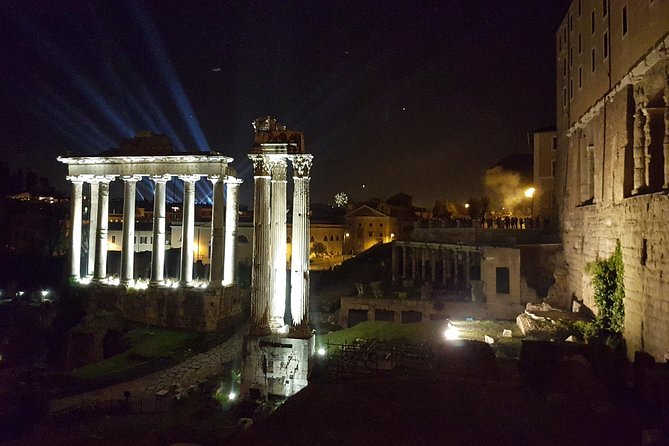
A 6:00 pm meeting time is a sweet spot in Rome. You begin while there’s still daylight in the sky, which makes it easier to orient yourself. Then you’re walking into full dark, so the sights shift from daytime “wow” to night “wow.”
This timing matters for three reasons:
- Comfort: evening is usually easier on legs and lungs than midday.
- Lighting: monuments and fountains look dramatic under lights.
- Crowds: you tend to get a calmer feel than peak sightseeing hours.
Even so, I’d treat the night timing as a goal, not a guarantee. One review said the tour didn’t deliver a night view of the Colosseum the way they expected. That doesn’t mean it won’t happen on your date—it just means Rome’s real-life timing (traffic, pace, and exact scheduling) can affect what’s fully illuminated when you reach a stop.
You can also read our reviews of more walking tours in Rome

Meeting at Piazza del Colosseo: logistics that can make or break the first 10 minutes
You start at Piazza del Colosseo (00184 Roma RM) and the tour ends back near that same meeting point. It’s near public transportation, so getting there is usually straightforward.
What can trip people up is finding the group quickly. At least one review described the meeting point as chaotic and mentioned communication problems when someone arrived late. That’s not the tour’s fault in a technical sense, but it is a practical issue for you.
Here’s how to stack the odds in your favor:
- Arrive a bit early and be ready to show your mobile ticket.
- Choose a clear landmark to wait by, not just a random edge of the plaza.
- Keep your phone charged. If communication depends on texting, low battery can turn into an avoidable headache.
- Expect no luggage storage. If you’ve got a big bag, plan to keep it under control before you meet.
Since the group is capped at 15 travelers, the meeting moment matters. If you miss it, you might be out of luck because there’s no mention of a built-in catch-up policy.
Pantheon at night: what you’re really seeing when the streets get quiet
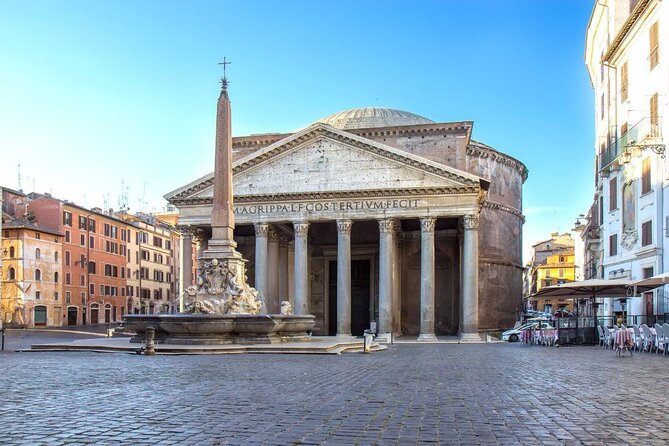
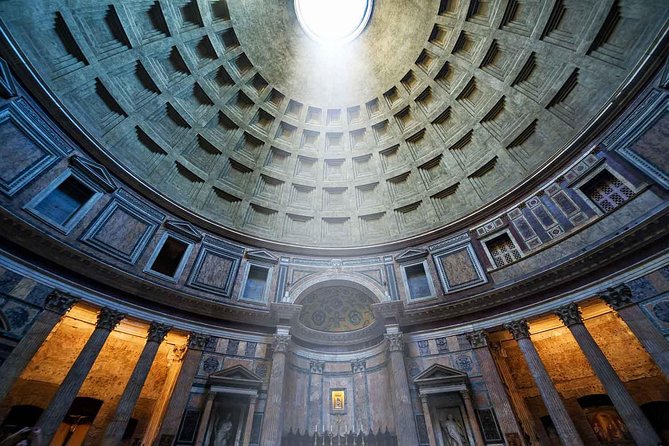
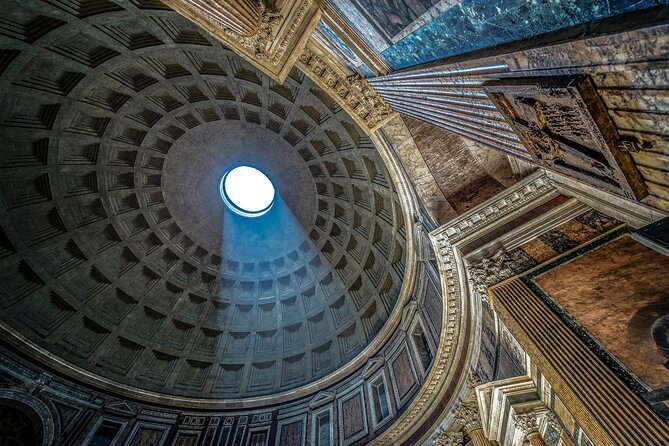
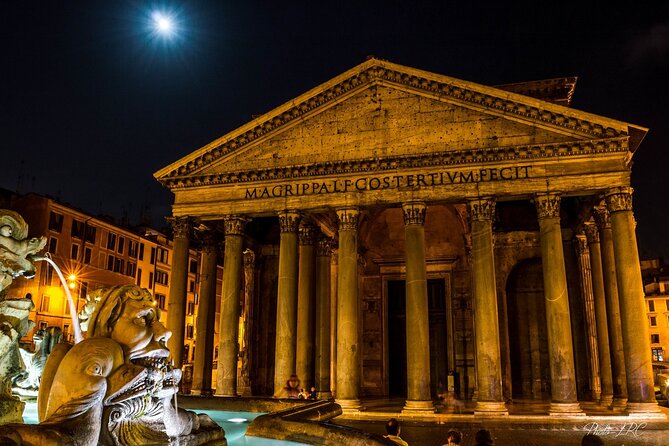
The Pantheon stop is one of the main anchors of the evening. Even if you’ve seen photos before, the first time you face it in person at night hits differently—partly because the street scale feels tighter and partly because the dome silhouette looks extra sharp against the darker sky.
This stop is also timed well: you’ll have about 30 minutes for photos and context. That’s long enough to take a few shots from different angles and still listen to the guide’s framing before moving on.
Practical note: Rome’s sidewalks can be bumpy and narrow around major landmarks. Wear shoes that can handle uneven pavement. And if you’re a photography person, arrive ready to shoot quickly—Rome isn’t a quiet studio set; people come and go, and your photo timing will depend on what you can do in a short window.
One more real-life tip: if you care about hearing the guide clearly, positioning helps. If your tour uses headsets, you’ll generally be in good shape. If not, standing too far off the guide can make details harder to catch.
Trevi Fountain after dark: the icon, the stories, and the coin moment
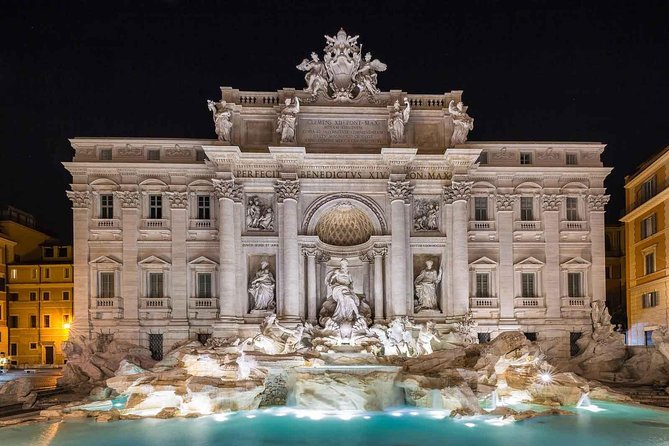
Then it’s on to Trevi Fountain, one of the most famous scenes in all of Rome. This is the stop that people either love immediately or feel stuck because they can’t figure out where to look.
In the evening, Trevi has an advantage: the illuminated fountain gives it a “stage” feeling. You get about 45 minutes here, which is a generous window for such a compact, popular area. It gives you time to:
- find a decent view,
- take pictures without rushing,
- and listen without that constant fear of running out of time.
There’s also a small cultural option: you can toss a coin for luck (your own expense). It’s not required, but it’s part of the Trevi mythos, and your guide will usually weave it into the stories of the fountain.
A heads-up for value-minded visitors: this stop is famous enough that you might wonder if a guide is “necessary.” My take: it is, at least here, because the guide’s role shifts from trivia to helping you understand what you’re looking at and how Trevi fits into Rome’s broader story.
Capitoline Hill and Piazza Venezia: ancient-city views with modern landmarks
This tour includes a shift into the “ancient city” vibe, and it does it with a smart contrast: you’ll look at monumental Rome from viewpoints tied to the old empire, then you’ll get the feeling of how Rome kept building on top of itself.
One of the stops is Piazza Venezia, where you’ll admire the Altare della Patria. This monument is not an ancient ruin, but it’s still part of Rome’s identity—especially if you’re trying to connect architecture across centuries. It gives you a sense of scale: you can stand in the modern symbolic heart of the city and look toward the deeper layers underneath.
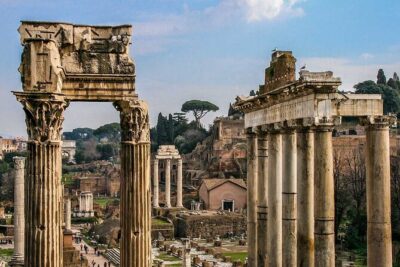
The tour also aims to show Roman Forum ruins from Capitoline Hill area, at least as a glimpse. That’s a good approach if you’re not trying to do a full ruin ticketed visit that eats half a day. You still get the emotional payoff of seeing the forum’s surviving structure—just without the full excavation experience.
If you’re sensitive to walking uphill, this is where you’ll feel it. Nothing is described as extreme, but Rome’s topography means “easy walking” still might include slopes.
You can also read our reviews of more evening experiences in Rome

Colosseum exterior stories: what you gain without an inside ticket
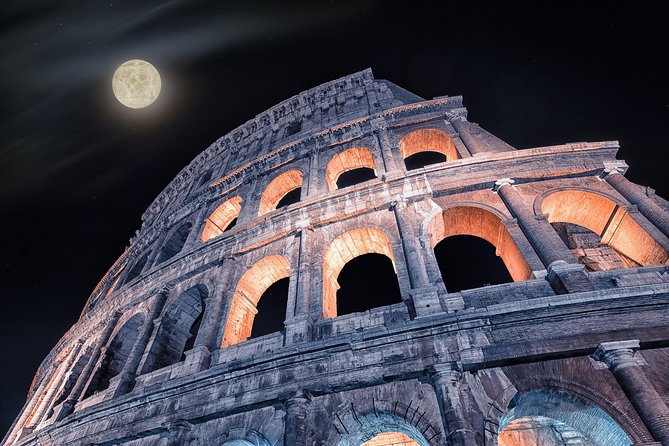
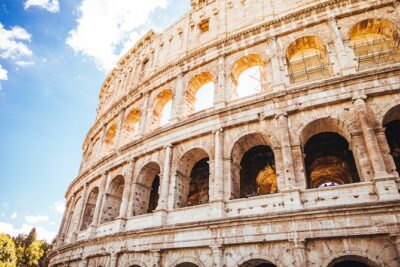
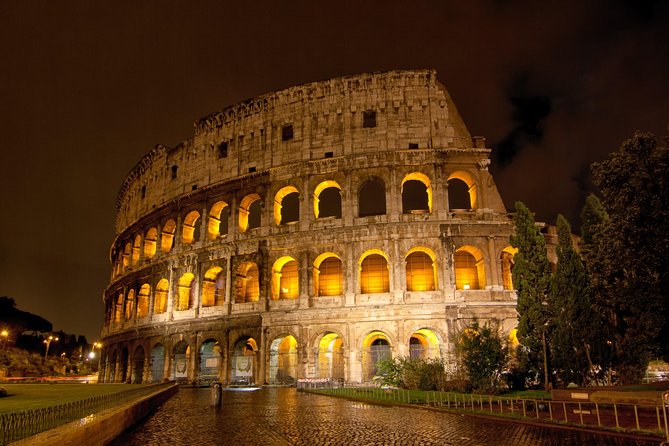
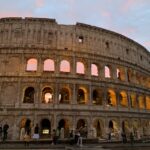
The Colosseum is the big finish in the evening’s pacing. The tour focuses on the exterior walls, with a guide sharing facts and details that many people miss when they only do quick sightseeing snaps.
Seeing it at night has a different mood than daytime. During the day, the Colosseum is a landmark. At night, it feels more like a stage set for history. You’re still seeing the modern-day structure, but the lighting helps it feel cinematic, and your guide’s commentary gives it a sense of purpose rather than just scale.
Still, manage expectations. One review said the Colosseum wasn’t seen at night the way they had hoped, which suggests timing can vary. Also, since this is an exterior experience, you won’t get the inside-only details that come from a ticketed visit.
What you do get, if the guide is strong, is the connection between:
- what the amphitheater was built to do,
- how it worked as a social machine,
- and why certain architectural choices mattered.
In past experiences on tours like this, the best value comes from hearing the “small facts” your guide knows and most people skip. This tour has multiple guide reviews that praised strong, fun narration and history tied to what you can actually see.
Piazza Navona: ending with fountains and better night atmosphere
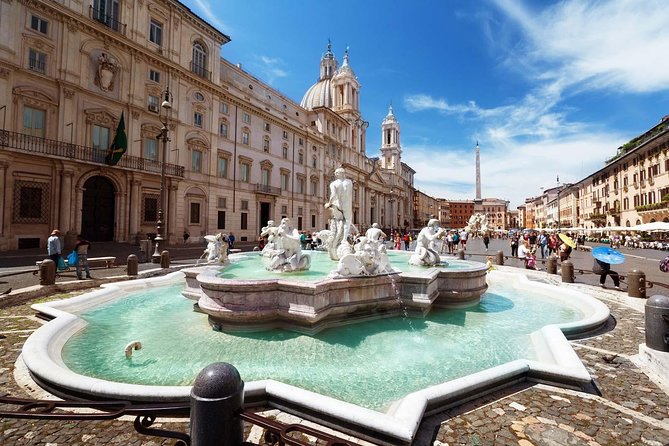
Your last major stop is Piazza Navona, with time around 30 minutes. This is a smart ending point because the square feels lively at night, even when it’s calmer than the hottest daytime crowds.
Piazza Navona is famous for its three fountains by Bernini, and your guide will share anecdotes that help you look beyond the obvious. The stories matter here. Without a guide, many people just point and photograph. With a guide, you’re more likely to notice how the fountains fit into the square’s design and why the artistic choices were so deliberate.
If you want a final “take a breath” moment, this is it. After several stops of walking and listening, you’ll have a small window to linger, take photos, and get your bearings for dinner afterward.
Price and value: is $54.31 a good deal for 3 hours?
Let’s talk math and value, not hype. At $54.31 per person for about 3 hours, this tour costs about the same as a decent guided museum slot, but it covers a cluster of Rome icons in one evening. That matters if you only have a day or two and you’re trying to avoid wasting time moving between sites.
You also get:
- a professional guide,
- a small group (max 15),
- and a route designed for evening sightseeing.
The itinerary notes admission ticket free for the listed stops. That’s important because it suggests you’re mainly viewing from public areas or without ticketed entry costs for each landmark. You’re paying for guidance and time efficiency, not a stack of individual admissions.
One caution: the reviews include a handful of experiences where the tour duration ran short, or the guide was hard to hear. That’s why I treat any walking tour as “worth it if the guide quality and logistics are solid.” When it works, it’s a great intro to Rome—especially if you’re doing it early in your stay.
And if you’re considering timing, note that this tour averages being booked about 45 days in advance. That usually means spots fill up, so don’t wait until the last minute.
What could go wrong (and how you can reduce the odds)
Rome is Rome. Even a good tour can have rough edges. Based on what’s been reported, here are the main issues to watch for:
- Hearing the guide: some people reported trouble hearing without amplification, while others praised headsets/radios. If you get headsets, use them properly and don’t wander far from the group.
- Meeting point confusion: a few reports focused on difficulty locating the guide. You’ll reduce risk by arriving early and keeping your ticket ready.
- Tour length: one review said it lasted about 1.5 hours instead of the advertised length. Weather, group pace, and guide decisions can affect timing.
- Night-view expectations: if you want the Colosseum fully lit, build in flexibility. Scheduling can shift what’s most dramatic when you arrive.
- Last-minute cancellations: this experience requires a minimum number of travelers. If it cancels due to low participation, you’ll be offered a different date or a refund, but it can still disrupt your evening plan.
If you’re traveling solo, you’ll probably be okay as long as you stay with the group. If you’re with kids or someone who hates walking, ask yourself honestly if “3 hours” plus Rome’s sidewalks is manageable.
Who should book this Rome by Night walk?
This tour fits best if you:
- love walking and want a guided route that hits multiple icons,
- want history and architecture explained while you’re actually in the right spot,
- want an evening option to avoid daytime heat,
- and appreciate photo guidance for the best angles.
It’s also a strong choice as an early trip activity. Some guide reviews specifically praised the tour as a way to get your bearings for the rest of your stay, which is exactly what an evening introduction can do.
Skip it or reconsider if you:
- hate walking on uneven streets,
- need lots of seating time,
- or you’re very dependent on quiet, hands-free listening and amplification is a must for you.
- You also might think twice if you require very predictable timing down to the minute, because Rome’s evening flow can change the pace.
Should you book Rome by Night with Nicom Tours?
Yes, with smart expectations.
Book it if you want a high-value intro loop through Rome’s top landmarks when the city feels cooler and the lighting makes even familiar sights look new. Choose it early in your trip if you want to orient yourself quickly. And if hearing the guide matters, look for the indication that your group will use headsets/radios, since reviews suggest that makes the tour easier to follow.
Don’t book it if you’re looking for an inside Colosseum experience, a long museum-style session, or guaranteed perfectly timed night views of everything. Also, arrive early and plan for the practical reality of a meeting point in a busy city plaza.
If you do it right, this is one of those “Rome in one evening” walks that turns the city into a story, not just a checklist.
FAQ
What time does the Rome by Night Walking Tour start?
The start time is 6:00 pm.
How long is the tour?
It’s listed as approximately 3 hours.
How much does the tour cost?
The price is $54.31 per person.
Where do I meet for the tour?
The meeting point is Piazza del Colosseo, 00184 Roma RM, Italy.
Where does the tour end?
The activity ends back at the meeting point.
Is food included?
No. Food and drinks are not included.
What language is the tour offered in?
The tour is offered in English.
Is there a group size limit?
Yes. The tour has a maximum of 15 travelers.
Do I need to pay admission for the stops?
Admission ticket is listed as free for the stops in the itinerary.
Is luggage storage available?
No. Luggage storage is not available.
What if the tour gets cancelled due to low participation?
If it’s canceled because the minimum number of travelers isn’t met, you’ll be offered a different date/experience or a full refund.