REVIEW · ROME
Rome by Night Walking tour Including Piazza Navona Pantheon and Trevi Fountain
Book on Viator →Operated by Raphael Tours & Events · Bookable on Viator
Night in Rome changes everything. This guided Rome by Night walk links major sights on pedestrian-friendly streets you won’t get to by car, starting in Campo de’ Fiori after the day crowd fades.
I like two things right away: first, the timing. You see the classic big-hitters—Piazza Navona, Trevi Fountain, and the Pantheon area—with cooler evening air and less shoulder-to-shoulder crowding. Second, you’re not just floating from landmark to landmark. The guide tells stories as you walk, and it really helps you notice details you’d otherwise miss.
One possible drawback: this tour is mostly a guided look at exteriors and street-level details. If you’re expecting a light-show night with dramatic lighting effects, or you’re hoping to go inside the Pantheon, don’t build that expectation. The focus is the walk and the city’s layers, not entry tickets.
In This Review
- Key highlights worth your attention
- Starting in Campo de’ Fiori: the statue you’ll keep seeing in your head
- Piazza Navona at night: Bernini’s fountains and the square’s original job
- Pantheon time: classic Rome, handled with street-level realism
- Piazza Colonna: the Column of Marcus Aurelius in plain sight
- Trevi Fountain at night: coin wish, but also crowd control
- Piazza Farnese: the Farnese family and why Pope Paul III still echoes
- The human factor: guides and the “make Rome make sense” effect
- Price and value: what $288 buys you in Rome at night
- Who should book this Rome by Night walk
- Should you book it?
- FAQ
- How long is the Rome by Night walking tour?
- Where does the tour start and end?
- Is this tour private?
- What language is the tour offered in?
- Which landmarks are included?
- Is a mobile ticket included?
- Can children participate?
- FAQ
- What’s the cancellation policy?
- Is there an admission ticket included?
Key highlights worth your attention
- Campo de’ Fiori at dusk: meet in the square and learn the story tied to the Giordano Bruno statue
- Piazza Navona’s fountains: Bernini’s masterpieces are front and center in an easier-to-see nighttime setting
- Roman power symbols: Piazza Colonna and the Column of Marcus Aurelius show how propaganda works in stone
- Trevi after dark: the coin wish plus a more relaxed photo rhythm than daytime
- Farnese connection: Piazza Farnese ties to the powerful Farnese family and Pope Paul III’s legacy
- Private-group feel: only your group joins, and guides can adjust to how your party moves
Starting in Campo de’ Fiori: the statue you’ll keep seeing in your head
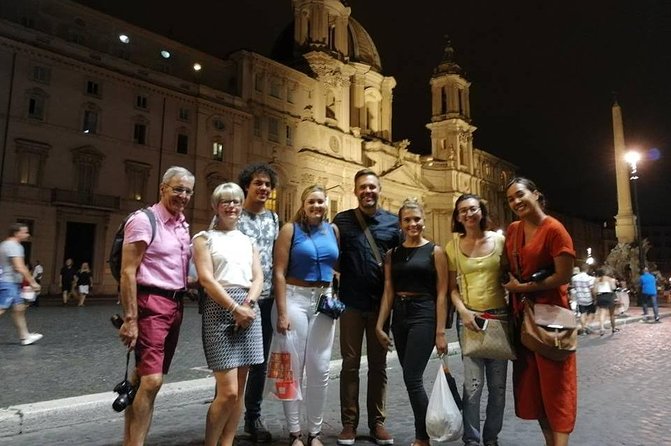
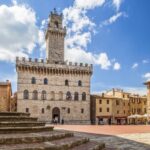
The tour starts in Piazza Campo de’ Fiori, a square that feels like Rome’s living room even when it’s quiet. This is a smart place to begin because you get your bearings fast, and you’re already in the center of real city life—not a themed area built for tourists.
A neat early moment is the Giordano Bruno stop. There’s a bronze statue in the middle of the square, and your guide uses it as a jumping-off point for who he was and why he mattered. Bruno’s story is one of those Rome threads where ideas, power, and public punishment all show up in the same place. That gives the rest of the night extra meaning as you move toward the big monuments.
If you’re coming from a full day of museum time, plan to pace yourself the first few minutes. The first stretch is where your feet decide the pace, and the guides on this route tend to keep things moving but not frantic (based on how many people praised the guide’s good pace).
You can also read our reviews of more walking tours in Rome

Piazza Navona at night: Bernini’s fountains and the square’s original job
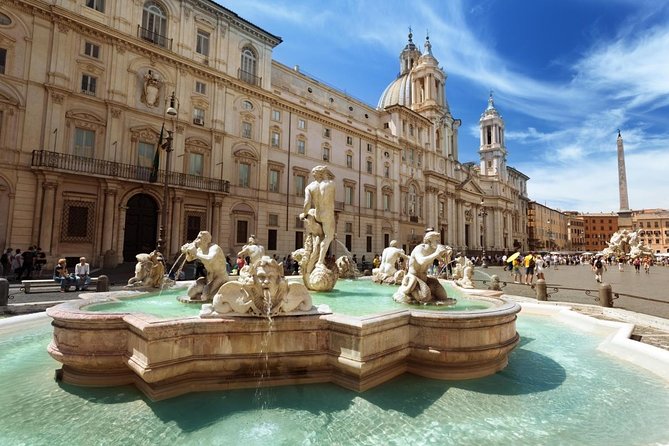
You’ll then roll into Piazza Navona, and it’s hard not to understand why people call it one of Rome’s showpiece squares. At night, the atmosphere shifts from daytime foot traffic to something more photogenic. You can actually look up at details, not just dodge strollers.
The fountains in the center are the stars, credited to Bernini in how this tour frames them. Your guide also points out what this square was originally for—so you’re not just seeing a pretty piazza, you’re seeing how Rome reused space across centuries. That change in perspective is the whole point of doing it at night: the stones look quieter, and the stories land better.
One practical tip: if you want photos without turning it into a marathon, pick your “main” angle at Navona early. People stop and wait at the same sightlines by habit. A guide-led walk helps you avoid wandering too long while the light fades.
Pantheon time: classic Rome, handled with street-level realism
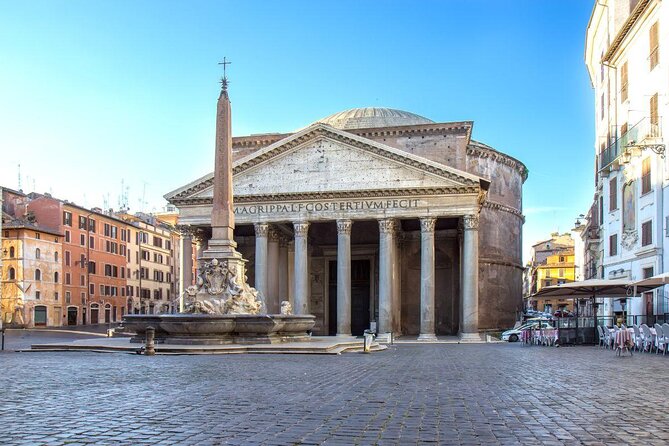
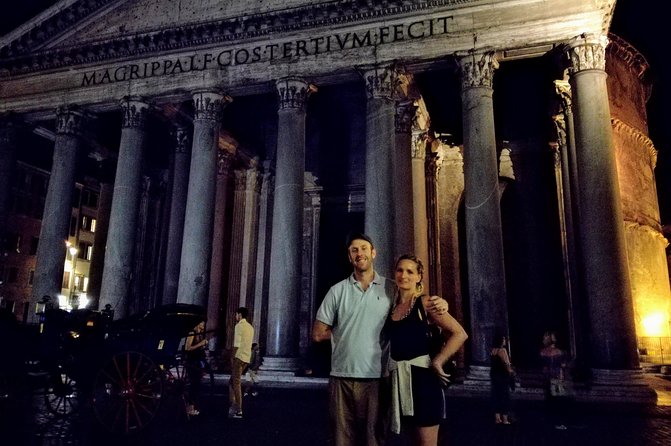
The tour highlights include the Pantheon, and that matters because it’s one of the easiest places to think you already understand—until you see it in context with the city around it.
Here’s the key thing to know before you fall in love with the idea of going inside: this walking experience focuses on what you can see from the street and nearby viewpoints. Some guides and routes on this theme don’t include interior access, and at least one guide specifically managed expectations that you would not enter places like the Pantheon.
So I’d treat the Pantheon stop as a “notice the scale, the setting, and the street approach” moment. Do that and it’s still worth it. The Pantheon is Rome at full confidence, and even from outside you can appreciate the way it dominates the skyline and pulls the surrounding streets toward it.
If interior access is a must for you, you’ll want a different kind of ticket-based tour. If you’re happy with outside views and expert explanations, this fits well into a first-night game plan.
Piazza Colonna: the Column of Marcus Aurelius in plain sight
Next up is Piazza Colonna, which is close enough to modern government that you get an immediate contrast: Rome today sitting beside Rome’s oldest “message boards.”
Two things get attention here:
- You’ll see the Italian House of Parliament from the square.
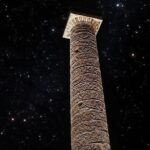
- You’ll look at the Column of Marcus Aurelius, described through its detailed reliefs telling the story of wars conducted by the Emperor against the Germans.
That reliefs-focused approach is more than trivia. It shows you how Roman leaders talked to the public before TV, newspapers, or even mass printing. You’re essentially learning how political storytelling was carved into stone—then placed so people would pass it every day.
Also, this is a good moment to slow down for a minute. By the time you reach Colonna, your brain is starting to connect the route’s “why.” If your feet feel okay, take advantage of that and ask your guide questions, especially about what you’re seeing in the reliefs.
Trevi Fountain at night: coin wish, but also crowd control
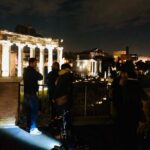
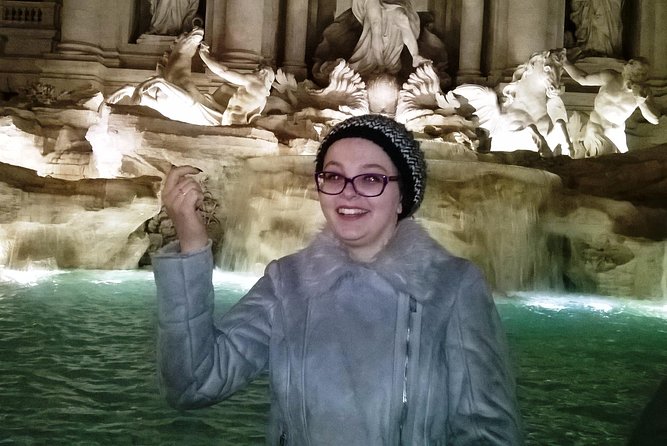
You can’t really do a Rome first-visit night walk without Trevi Fountain, and the tour makes that clear. The plan includes time to enjoy the night atmosphere here, plus the classic tradition—toss a coin and make a wish—in the way many visitors imagine it.
At night, Trevi changes character. The fountain still draws people, but the vibe is different than midday. You can often get better photos without spending all your energy in the most rigid photo “waiting spots.”
Two things I’d do:
- Decide your photo priority before you reach the center of the crowd.
- Stand still long enough to watch the flow of people for a minute. Trevi is chaotic by nature, but in this tour’s timeframe you can usually catch calmer moments.
Keep your expectations grounded: you’ll see the fountain’s magic, but you won’t get the kind of private, empty-space scene you see in postcards. The guide’s value is in helping you see it as a place, not just a photo spot.
You can also read our reviews of more evening experiences in Rome

Piazza Farnese: the Farnese family and why Pope Paul III still echoes
From Trevi’s bustle, you’ll move toward Piazza Farnese. This square is named for the Farnese family, described as one of the most powerful families in Renaissance Rome. That family connection matters because it turns a pretty piazza into a lesson in how wealth shaped the city.
A specific highlight here is that Pope Paul III—who restored the Sistine Chapel—was a member of the Farnese family. That’s the kind of link that makes your walk feel less like sightseeing and more like stepping through Rome’s power map.
If you like history that shows up in architecture and names, this stop is a good payoff. If you don’t care about political lineage, it can still be enjoyable as a calm square moment where you can reset your legs after Trevi.
The human factor: guides and the “make Rome make sense” effect
The biggest theme behind the high ratings is the guide. People praise guides by name—Manuel, Thomas, Matias, Matteo, Virginia, Claudia, and Alexandra show up in the comments—and it’s clear the best nights hinge on the person leading your group.
Across the reviews, the most repeated strengths are:
- Guides explain what you’re seeing in a way that makes you want to look closer
- The pace stays friendly, not rushed
- The route works even if your group ends up very small
One review even mentions Matteo waiting for missing participants and checking to make sure everything was okay, which tells me this provider trains guides to handle real-world timing issues instead of simply dragging people along.
That said, there are a couple of caution flags. Some comments complain the tour title makes it sound more like a “night lights” experience than it actually is, and others note that a guide may have been less polished than the top performers. This is normal in any guide-driven product. The best move is to view the tour as a guided walk focused on monuments, stories, and street-level viewing—not as a lighting festival.
Price and value: what $288 buys you in Rome at night
At $288.43 per person for about 2 hours, you’re paying for something Rome can’t replace: a good guide plus a night route that avoids the day crush.
Is it worth it? For me, the value depends on your goal:
- If you want a fast first intro that helps you understand why these places matter, a guided night walk is efficient. You cover a lot of famous stops in a concentrated block of time.
- If you already know Rome’s monuments well and you’re comfortable planning a self-guided route, you may not need the price tag.
- If you want a customized, private feel, that’s where this style tends to win. Your group is the only one on the tour, so you don’t get that “herding cats” energy that can ruin a walk.
Also, the itinerary uses a nighttime window where you can often enjoy the views with fewer crowds. That matters. You’re not just paying for facts; you’re paying for the pacing and the experience quality.
Who should book this Rome by Night walk
This tour fits best if:
- It’s your first night in Rome and you want a sense of direction.
- You want to see Piazza Navona, Trevi Fountain, and the Pantheon area without spending the whole night trapped in the busiest daytime lines.
- You like stories that connect people to places, from Giordano Bruno to the Farnese family to Marcus Aurelius.
It’s less ideal if:
- You only care about dramatic night lighting and light decorations.
- You expect guaranteed interior access to major stops like the Pantheon.
- You’re not comfortable with a focused 2-hour walk.
A practical mindset helps here. One review notes the difference between doing this early vs. late in your trip. If you schedule it right after you arrive, you’ll carry the guide’s context into the rest of your days and you’ll notice more on your next strolls.
Should you book it?
If you want a first-night Rome orientation that feels personal, this is a strong pick. The route hits major icons—Campo de’ Fiori, Piazza Navona, Pantheon area, Piazza Colonna, Trevi Fountain, and Piazza Farnese—and the guides earn their good reviews by making the city’s details click.
Book it if your idea of a good night is walking, learning, and taking photos while the streets feel calmer.
Skip it (or at least adjust expectations) if you’re hunting for a true “lights and spectacle” experience or if you need interior access. For that, you’ll want a different kind of tour with the right tickets.
FAQ
How long is the Rome by Night walking tour?
It runs for about 2 hours.
Where does the tour start and end?
The meeting point is Piazza Campo de’ Fiori, and the tour ends at Trevi Fountain (Piazza di Trevi).
Is this tour private?
Yes. It’s listed as a private tour/activity, so only your group participates.
What language is the tour offered in?
The tour is offered in English.
Which landmarks are included?
You’ll see stops connected to Campo de’ Fiori, Piazza Navona, Piazza Colonna, Trevi Fountain, Piazza Farnese, and the Pantheon area as part of the highlights.
Is a mobile ticket included?
Yes, the experience includes a mobile ticket.
Can children participate?
Children are allowed, but they must be accompanied by an adult.
FAQ
What’s the cancellation policy?
Free cancellation is available up to 24 hours in advance for a full refund.
Is there an admission ticket included?
The experience includes an admission ticket item under the guided tour component (as listed with the tour stop).