REVIEW · ROME
Rome: Golf Cart City Tour with Hotel Pickup & Gelato
Book on GetYourGuide →Operated by Travel in Rome · Bookable on GetYourGuide
Rome moves fast; this slows it down. With hotel pickup and a guided golf-cart ride, you get major sights in one smooth afternoon without wrestling streets or buses. Guides such as Stefano and Morgan tend to make the history feel human, not like a textbook.
I love the way this tour builds in an included gelato stop, so the ride ends on a very Rome note. And I like that it keeps things easy on your feet, which matters when you want photos and context without a long slog.
One drawback to plan for: this is mostly a look-from-the-road experience (photo stops and short stops), so if your must-do list requires going inside major monuments, you’ll want separate tickets for those.
In This Review
- Key highlights at a glance
- Why a Golf Cart Tour Makes Sense for Rome
- Hotel Pickup and a Smooth Start (Max 7 People)
- The Colosseum Area, Arch of Constantine, and Roman Forum Views
- Circus Maximus, Aventine Hill, Mouth of Truth, and Aventine-Layered Views
- Santa Maria Maggiore, Via Veneto, and the Aurelian Walls
- Villa Borghese, Pincio Terrace, Piazza del Popolo, and Augustus
- Piazza Navona, Pantheon Area, and the Rome-Classic Walking Block
- Trevi Fountain, Spanish Steps, and Piazza di Spagna Photos
- Gelato Stop: Real Italian Ice Cream in an Italian Gelateria
- Price and Value: What You’re Paying For at $143.48
- Who Should Book This Tour (and Who Might Want Something Else)
- Should You Book This Rome Golf Cart City Tour?
- FAQ
- How long is the Rome golf cart city tour?
- Does the tour include hotel pickup and drop-off?
- What’s included besides the golf cart tour?
- Which major landmarks are included on the route?
- How big is the group?
- What languages are available for the live guide?
- Is the tour wheelchair accessible?
- Are luggage or large bags allowed?
- Can I cancel for a full refund?
- Is there a reserve and pay later option?
Key highlights at a glance
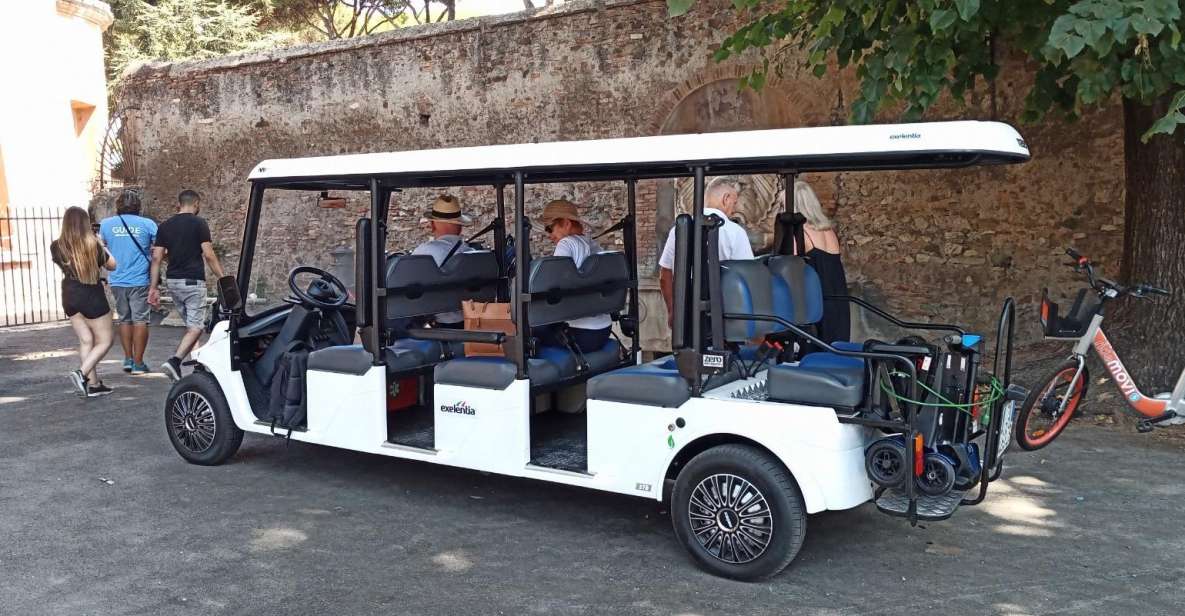
- Hotel pickup and drop-off that saves you time and stress before you even start sightseeing
- Small group (max 7) for a more personal pace and plenty of photo pauses
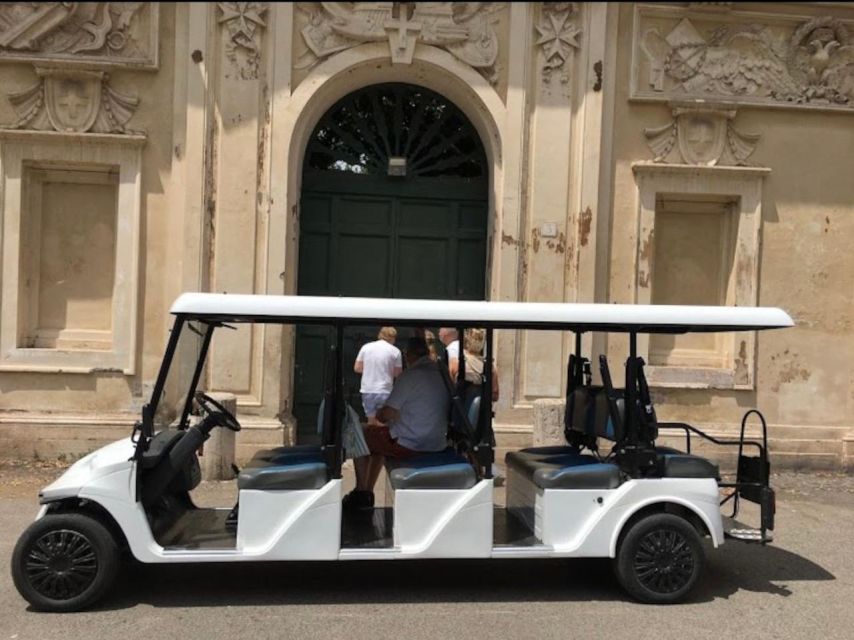
- Golf-cart comfort that works well for families, couples, and seniors with limited mobility
- Top Rome sights in 3 hours, including Colosseum area views, Pantheon area stops, and Trevi by day
- A real Italian gelateria stop with ice cream plus water during the tour
Why a Golf Cart Tour Makes Sense for Rome
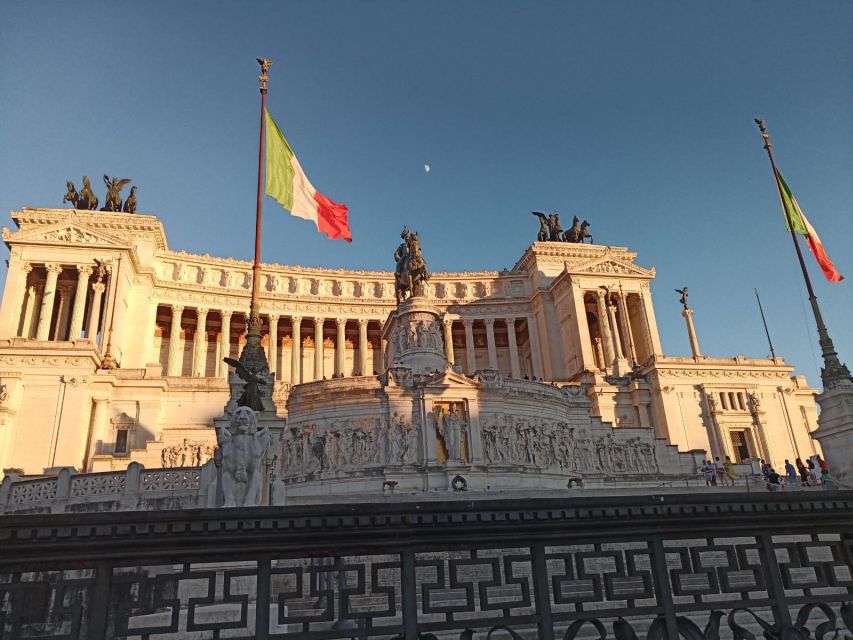
Rome can be a beauty and a workout at the same time. Cars are scarce, scooters act like they own the road, and walking “just a few streets” can turn into a full-length adventure. A golf cart tour is a smart middle ground: you still see Rome’s landmarks up close, but you’re not burning your whole day on stairs, uneven sidewalks, and traffic fumes.
This one is also built for real-life sightseeing. You don’t meet at some distant corner and then play transit roulette. You get hotel pickup and drop-off, so the day starts clean. Once you’re in the cart, you’re surrounded by big-picture views that you can’t easily get when you’re stuck waiting in a crowded area.
The vibe is casual, too. The cart is fun, you’re moving often enough to keep energy up, and you can ask for photo moments without feeling like you’re holding up a marching line. Several guides mentioned in customer feedback—like Stefano and Claudio—are the type who can switch from driving to storytelling without turning it into a lecture.
That said, set expectations. This tour is designed to show you the big-name Rome sights quickly, mainly from the outside or with brief stops. You’ll still get the wow factor, but you won’t get the same “stand inside and explore for hours” experience you’d get with monument-entry tours.
You can also read our reviews of more city tours in Rome


Hotel Pickup and a Smooth Start (Max 7 People)
The best part of any city tour is whether it removes friction. Here, pickup and drop-off are included, and the operator will pick you up from your hotel or another place within the golf cart range. That matters in Rome, where the right pickup spot can be the difference between a pleasant morning and a stressful hunt through narrow streets.
This is also a small group limited to 7 participants. In practice, that usually means:
- More room to hear your guide over the noise of the city
- More flexibility when you want extra photos
- Less risk that you’re stuck watching the back of someone else’s head
Another quiet win: the tour runs for about 3 hours, so it fits nicely between lunch and dinner plans. If you’re trying to see a lot without committing your entire day to logistics, this schedule is the sweet spot.
You’ll also have multilingual live guiding. English, Spanish, Portuguese, and Italian are offered. That matters because good language support makes the history click faster—especially when your guide is pointing out specific structures you’d otherwise miss.
And yes, it’s wheelchair accessible. The cart format helps when walking is difficult, and several feedback comments praised how guides handled mobility needs with care, including helping participants get in and out and adjusting the pace.
The Colosseum Area, Arch of Constantine, and Roman Forum Views
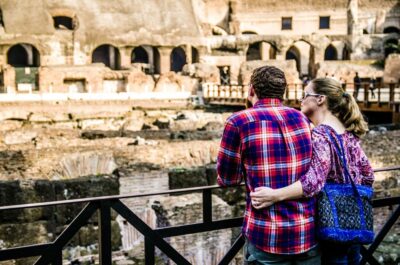
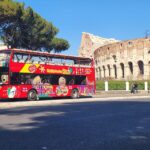
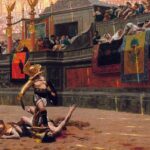
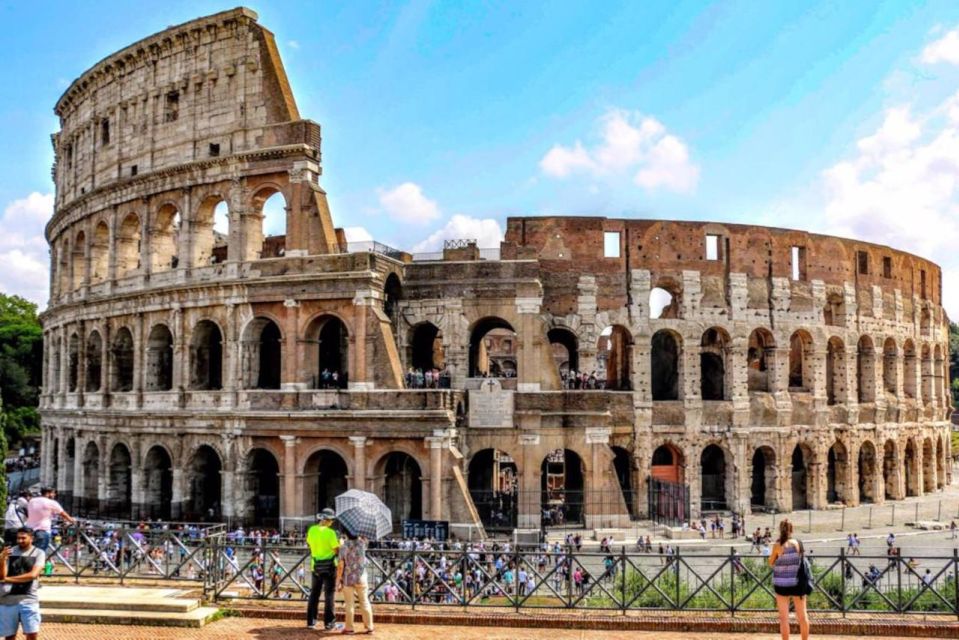
The tour’s first big “Rome postcard” moment comes early: you see the Colosseum area from the road with time for photos and sightseeing. The Colosseum isn’t just a big oval building—your guide frames what you’re looking at with the idea of gladiatorial spectacle and how the space once worked. Even if you’re not stepping inside, hearing that context while you’re staring at the façade makes it feel less like a photo and more like a place that mattered.
Next is the Arch of Constantine, including a quick story of imperial power and victory. You’ll get a photo stop and then move on, but this kind of stop is valuable because it gives you a “why this is here” moment. The arch can look like decoration if you don’t know what it’s signaling.
Then you roll into the Roman Forum area—the “beating heart of ancient Rome” concept your guide will explain. The Forum can be confusing from a distance because it’s an archaeological layer cake. From the outside, you may not grasp every building right away, but your guide helps you connect the layout ideas: temples, basilicas, squares, and the sense that this was the public stage of the empire.
A practical note: if you’re hoping for long photo time at every site, this tour is built for short, efficient stops. The upside is you get multiple major landmarks in one morning or afternoon. The downside is you won’t have hours to wander freely on your own.
Circus Maximus, Aventine Hill, Mouth of Truth, and Aventine-Layered Views
After the Colosseum area, the route shifts toward other iconic-but-different parts of central Rome. You’ll pass or stop around Circus Maximus, which changes the mood from stadium-oval to ancient entertainment space. Even with a short stop, the “you are near something huge and ancient” feeling lands fast once your guide places it in context.
From there, the tour heads toward Aventine Hill and nearby viewpoints. Aventine can feel more residential and calmer than the busiest streets around Trevi or the Spanish Steps. That contrast is part of what makes the tour enjoyable—you’re not stuck only in the loudest tourist corridors.
You’ll also have a stop at the Mouth of Truth area for a photo moment. Whether you care about the pop-culture association or not, it’s one of those places that works well as a quick win. You get the image, you get the “I saw it” moment, and you keep moving.
If you’ve walked Rome before, you know how easy it is to lose the thread of where everything sits. This cart format helps you see the links: how hills, ruins, and major streets connect. And because the stops are brief, you don’t lose half your day just getting from A to B.
Santa Maria Maggiore, Via Veneto, and the Aurelian Walls
This portion of the tour is less “big ancient arena” and more “Rome as a living city.” You’ll pass by Basilica of Santa Maria Maggiore, one of the four papal basilicas in Rome. Your guide may point out the golden mosaics and talk about its long timeline. Even if you can’t do a full interior visit here, it’s still a meaningful sight, because it shows how Rome’s layers of power didn’t stop when the empire fell.
Then there’s Via Veneto, famous for the Roman Dolce Vita era—cafés, luxury hotels, and all that cinematic energy. It’s one of those streets where the vibe matters as much as the buildings. Rolling past it in a cart is an easy way to get the atmosphere without getting stuck in heavy foot traffic.
Finally, you’ll admire the Aurelian Walls from the outside. These ancient fortifications show up in Rome in fragments, and people often miss the bigger idea: the city was once walled and defended for centuries. Seeing those walls ties the story together. Rome wasn’t just art and ruins; it was also a place that had to protect itself.
If you’re the kind of person who likes to know why a view exists, this stretch delivers.





Villa Borghese, Pincio Terrace, Piazza del Popolo, and Augustus
Now you get to the greenery and the viewpoints. The tour moves into Villa Borghese Park, described as a green heart of Rome. You’ll be around gardens, fountains, and artistic areas. This break from dense streets is useful. Even if you don’t walk far, your brain gets a reset from the urban grind.
Then you head to the Pincio Terrace for panoramic views and photos. If you’ve ever stood at a viewpoint and thought, okay, now I understand the city—this is that moment. Rome looks different from above: the scale becomes clear, and the “where does everything fit” question starts to make sense.
Next is Piazza del Popolo, including time to see its iconic layout. The elliptical square, the obelisk, and the twin churches are the kind of details your guide will point out so your photos don’t feel random. It’s also a practical stop because it’s open and photo-friendly.
The tour then includes the Mausoleum of Augustus, a monumental tomb of the first Roman emperor, restored for what you can see today. For many people, Augustus is a name they’ve heard but never fully pictured. This brief stop helps you connect the name to an actual place in the city.
This segment is great for:
- Couples who want scenic photos without hiking
- Seniors who want views with fewer stairs
- Families who need a slower rhythm
- Anyone who wants variety beyond ruins
Piazza Navona, Pantheon Area, and the Rome-Classic Walking Block
By this point, you’ve had big sights and viewpoints. Now the tour swings into Rome’s “walkable showpieces,” with short stops and breaks.
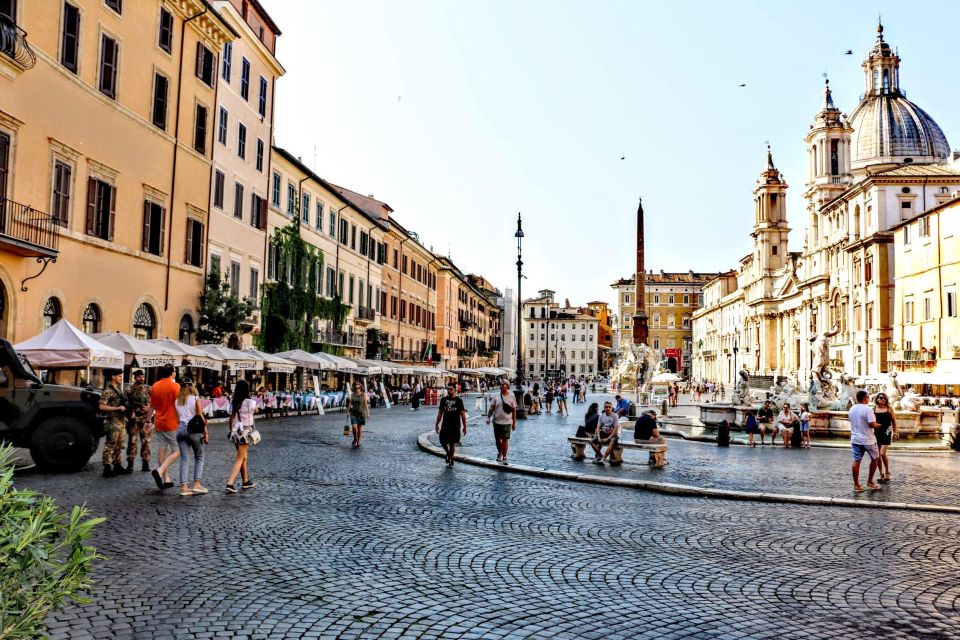
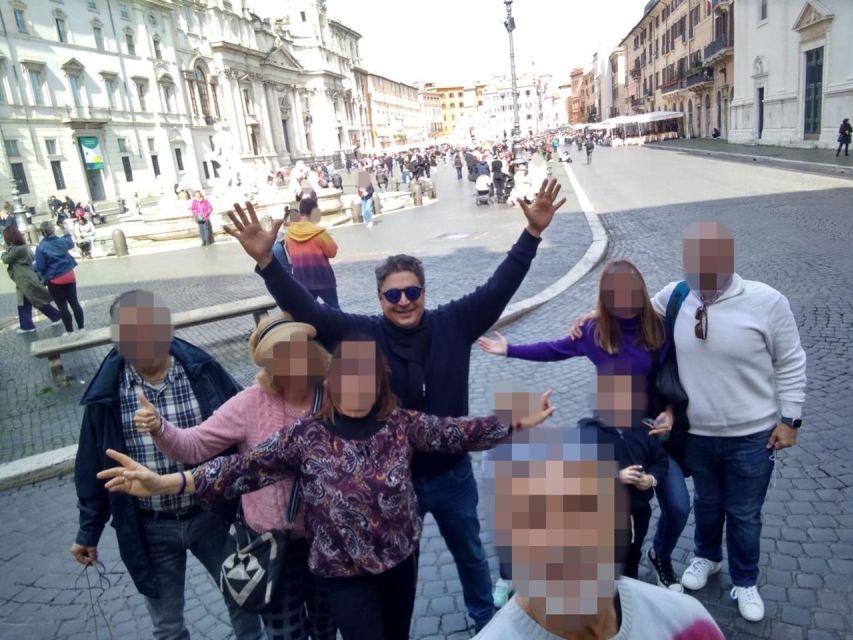
You’ll visit Piazza Navona, one of the livelier squares in the city, with baroque fountains including Bernini’s Fountain of the Four Rivers. Even in a short timeframe, the square’s shape and fountain focus helps you understand why it’s a favorite. You’re not just seeing buildings; you’re seeing public space designed to be watched.
Then comes the Pantheon area. Your stop is mostly for sight, photo, and walking. The Pantheon’s dome is the defining feature, and it’s hard to underestimate how visually strong it is even from close by. If you’ve only seen pictures online, seeing it in person helps your eyes calibrate. The geometry feels purposeful, not decorative.
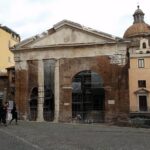
There’s also a quick stop for the Temple of Hadrian in Piazza di Pietra, including its imposing columns in the middle of modern Rome. That contrast is why Rome feels unique. Ancient structures don’t sit in museums here; they sit among today’s streets.
The pace here is intentionally short-stop style. It’s ideal if you want the highlights without turning the whole afternoon into a long walking slog. Just keep in mind: Rome sidewalks can be uneven, and even short walks add up if you’re tired.
Trevi Fountain, Spanish Steps, and Piazza di Spagna Photos
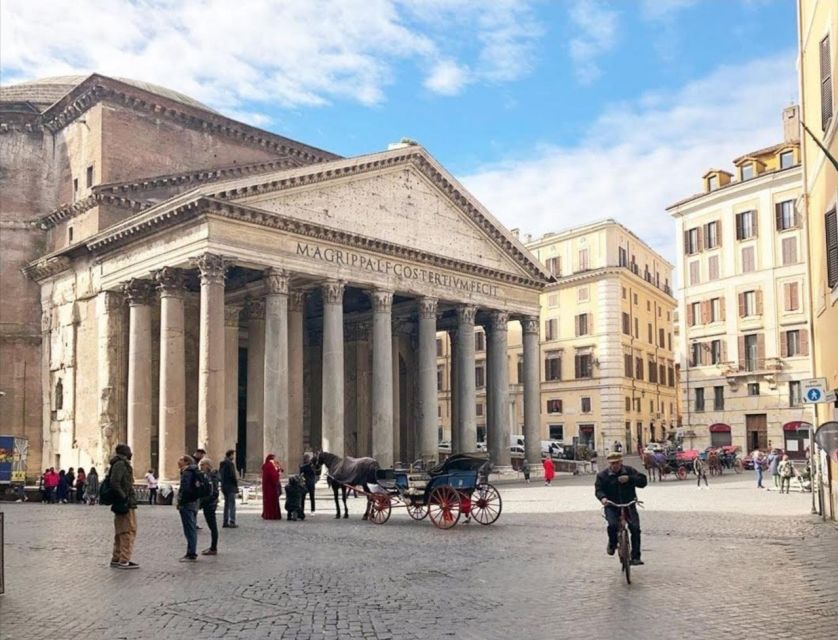
Now we get to the romance part of the itinerary. You’ll reach Trevi Fountain, with time for photos and a visit. Tradition says throwing a coin ensures you return to Rome. Even if you don’t care about the superstition, the fountain is still one of those “how is it so famous” experiences. It’s both grand and oddly intimate when you stand close.
Next is Piazza di Spagna and the Spanish Steps area. This is the kind of stop that works well for quick wandering because it’s full of visual anchors: stair angles, the square layout, and people watching (in a good way). Your guide helps you frame what you’re seeing so you’re not just taking the same wide shot everyone takes.
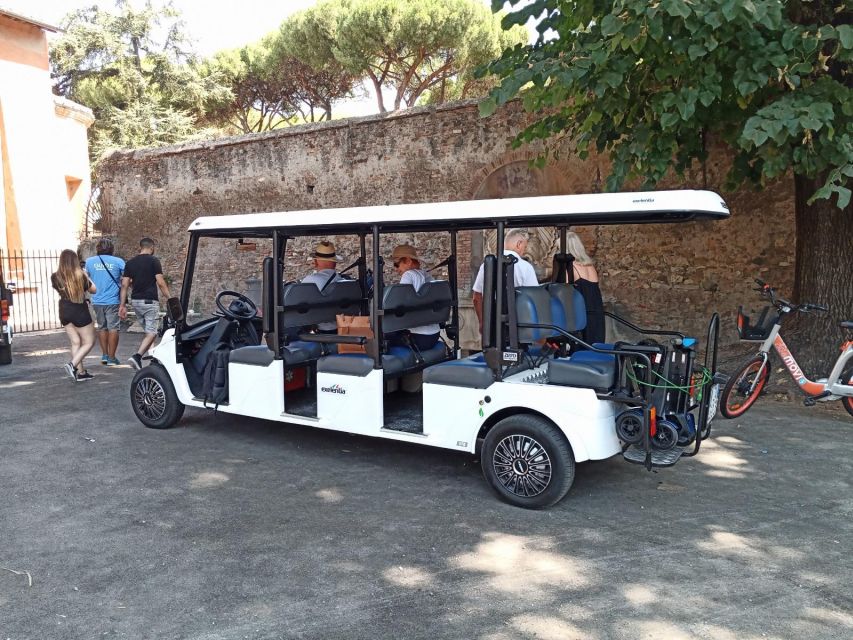
If you’re traveling in winter, plan for comfort. The tour mentions transparent covers and warm fleece blankets during colder months. That’s a small detail that matters because cold turns “fun photo stop” into “let’s move quickly.”
Gelato Stop: Real Italian Ice Cream in an Italian Gelateria
The included dessert is not just a random extra. You stop at an authentic Italian gelateria for gelato. This is the kind of included moment that makes tours feel like more than transportation. It also helps you slow down without needing a restaurant reservation.
In feedback, guides were praised for choosing a great gelato spot and making it feel like a real part of the day, not a rushed sugar pit stop. You’ll also have water provided, which is honestly useful in Rome when you’re moving under sun or winter air.
One practical tip: gelato choices can feel overwhelming when you’re hungry and excited. If you want to keep it simple, pick one classic flavor plus something seasonal. Your guide may offer suggestions during the stop.
Price and Value: What You’re Paying For at $143.48
At about $143.48 per person for a 3-hour tour, you’re paying for more than sightseeing. You’re paying for three big things that Rome normally makes expensive in time and hassle:
- Door-to-door hotel pickup and drop-off (huge if taxis are hard to grab at your location)
- A live guide who can explain what you’re seeing and keep the day flowing
- Efficient transport in a vehicle designed for short, photo-friendly stops
The small group cap at 7 participants also adds value. With fewer people, you’re less likely to feel rushed or stuck behind someone for the best angles.
Is it cheaper than DIY? Sure, if you’re only counting transport. But DIY in Rome often costs time: figuring out where to park your day, who has the best route, and how to keep everyone from overheating. This tour compresses those decisions for you.
Also remember what’s included: ice cream (gelato) and water. Those add up when you’re buying snacks repeatedly while you hop from sight to sight.
Who Should Book This Tour (and Who Might Want Something Else)
This tour is a strong match if you want:
- A 3-hour overview of Rome’s top sights
- Hotel pickup because your time is precious (or taxis are messy)
- Less walking for kids, seniors, or anyone managing an injury
Feedback also points out how guides like Stefano and others adapt when mobility is limited, including helping people in and out of the cart and taking photos. If you’re nursing a cast, a sprain, or just don’t want to spend your day on uneven pavement, this format can be a lifesaver.
It may not be the best fit if your ideal Rome day is all about entering monuments and spending long inside. This tour focuses on getting you views and stories fast, not on ticket-based exploration.
Should You Book This Rome Golf Cart City Tour?
Yes—if your priority is seeing a lot with minimal hassle. The combo of hotel pickup, a small group, and an included gelato stop makes it a good “first or second day” option when you want orientation fast.
Before you book, check two things in your own plans:
- Are you okay with mainly outside views and short stops rather than long interior visits?
- Will you be traveling light? Luggage or large bags aren’t allowed, and you’ll want to keep things easy for the cart.
If those match your style, this is a very practical way to experience Rome’s biggest hits in one afternoon without turning your trip into a logistics project.
FAQ
How long is the Rome golf cart city tour?
The tour duration is 3 hours.
Does the tour include hotel pickup and drop-off?
Yes. Hotel pickup and drop-off are included, and pickup is available from your hotel or another place within the golf cart range.
What’s included besides the golf cart tour?
Included are a live guide, ice cream (gelato), and water.
Which major landmarks are included on the route?
You’ll see or stop at key sights such as the Colosseum area, Arch of Constantine, Circus Maximus, Piazza Navona, the Pantheon area, Trevi Fountain, and the Spanish Steps area, plus Piazza del Popolo and other viewpoints.
How big is the group?
The group is small, limited to 7 participants.
What languages are available for the live guide?
The live guide is available in English, Spanish, Portuguese, and Italian.
Is the tour wheelchair accessible?
Yes, the tour is wheelchair accessible.
Are luggage or large bags allowed?
No. Luggage or large bags are not allowed.
Can I cancel for a full refund?
Free cancellation is available up to 24 hours in advance for a full refund.
Is there a reserve and pay later option?
Yes. You can reserve now and pay later to keep your travel plans flexible.